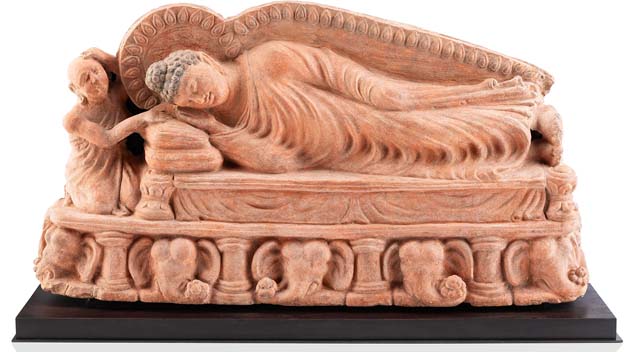
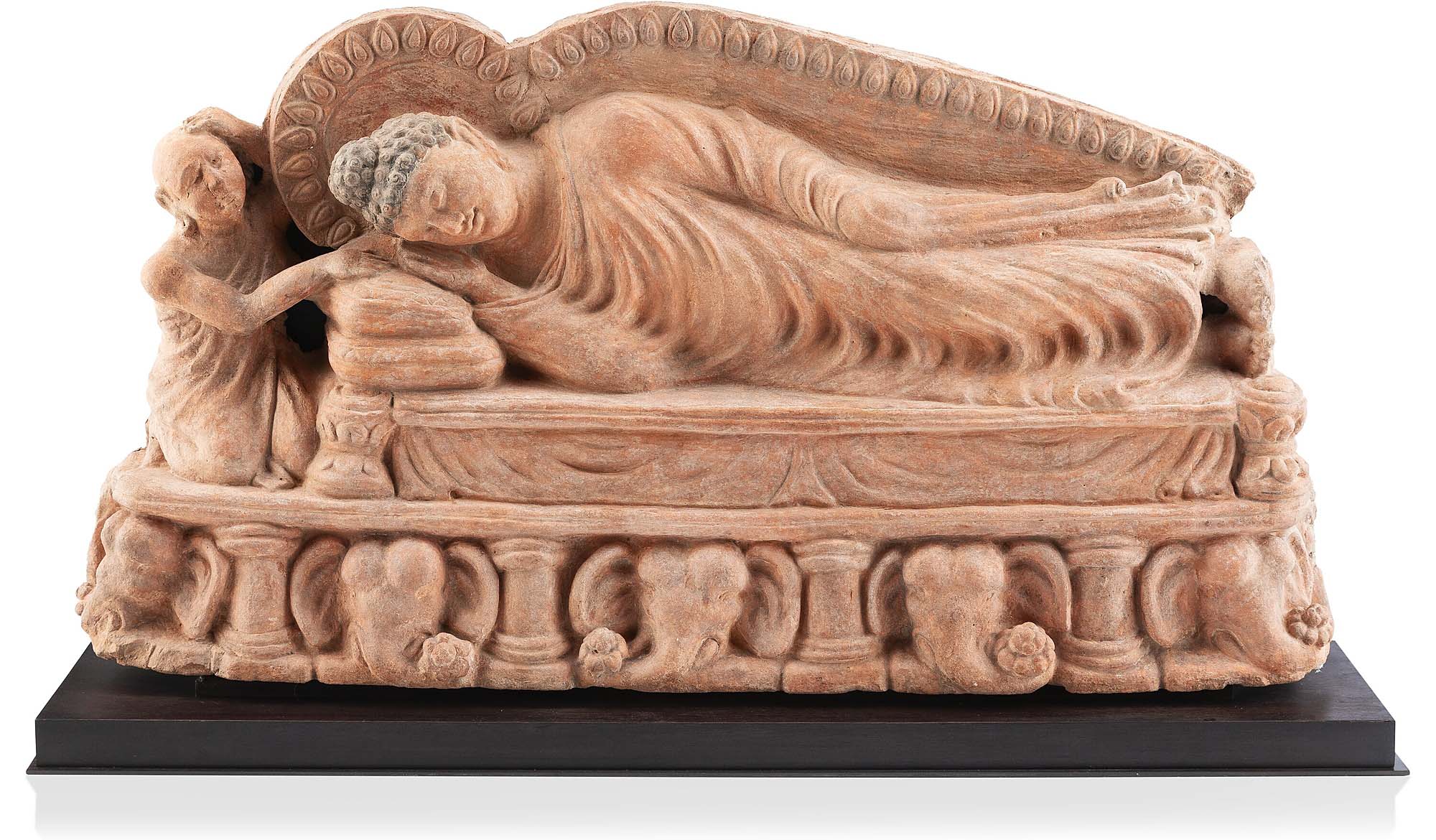
Awakening bidders and achieving the sale’s top price was this the Fifth or Sixth Century Gandharan figure of Buddha in Mahaparinirvana, terracotta and wood-mounted, 18½ inches long overall; it rose to $30,000 ($25/35,000).
Review by Carly Timpson
DALLAS — After a five-day preview exhibition in New York City where Asia Week was in full-swing, Heritage Auctions brought its curated collection back to Dallas for its March 25 Asian Art Auction, which realized $651,207. In total, the auction saw 516 bidders and had an 84 percent sell-through rate by value. The 294-lot auction was flush with of fine and decorative Asian artistry, highlighted the Chinese and Japanese paintings collection of American-born Nihonga artist Robert Crowder (1921-2010), who was also known by his Japanese artist name, Shoji Kuroda.
“Our buyers are bidding from all over the world, about half from North America, and half from the rest of the world. Amongst the top ten lots, half sold to domestic US buyers and half to overseas,” said Charlene Wang, Heritage’s consignment director of Asian art. “This auction reflects the depth and diversity that serious collectors look for during Asia Week. From imperial portraits and marked Qing porcelains to rare Japanese narrative handscrolls and modern print masters, the auction offers works that speak to scholarship and connoisseurship.”
Achieving the sale’s highest price of $30,000 was a Gandharan figure of Buddha in Mahaparinirvana. The reclining terracotta and wood-mounted Buddha, made in the Fifth or Sixth Century, depicted a “serene and introspective” expression, conveying “solemnity and quiet grace, capturing the profound doctrinal significance of the Buddha’s release from the cycle of rebirth,” as described by the auction catalog.
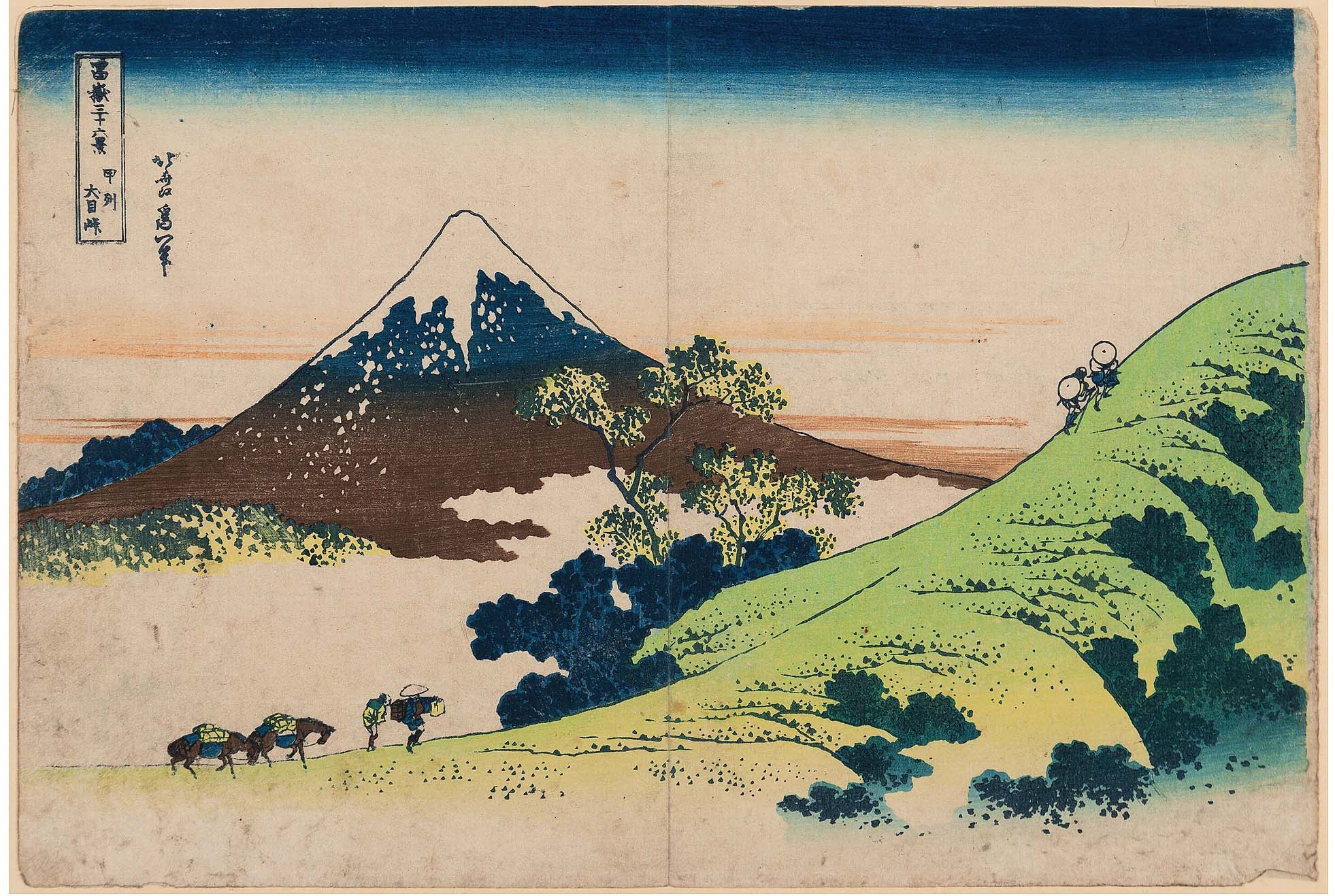
“Inume Pass in Kai Province (Kōshū Inume tōge),” from “Thirty-Six Views of Mount Fuji (Fugaku sanjūrokkei)” by Katsushika Hokusai (Japanese, 1760-1849), circa 1830-31, woodblock print, 10 by 15 inches, realized $18,750 ($2/4,000).
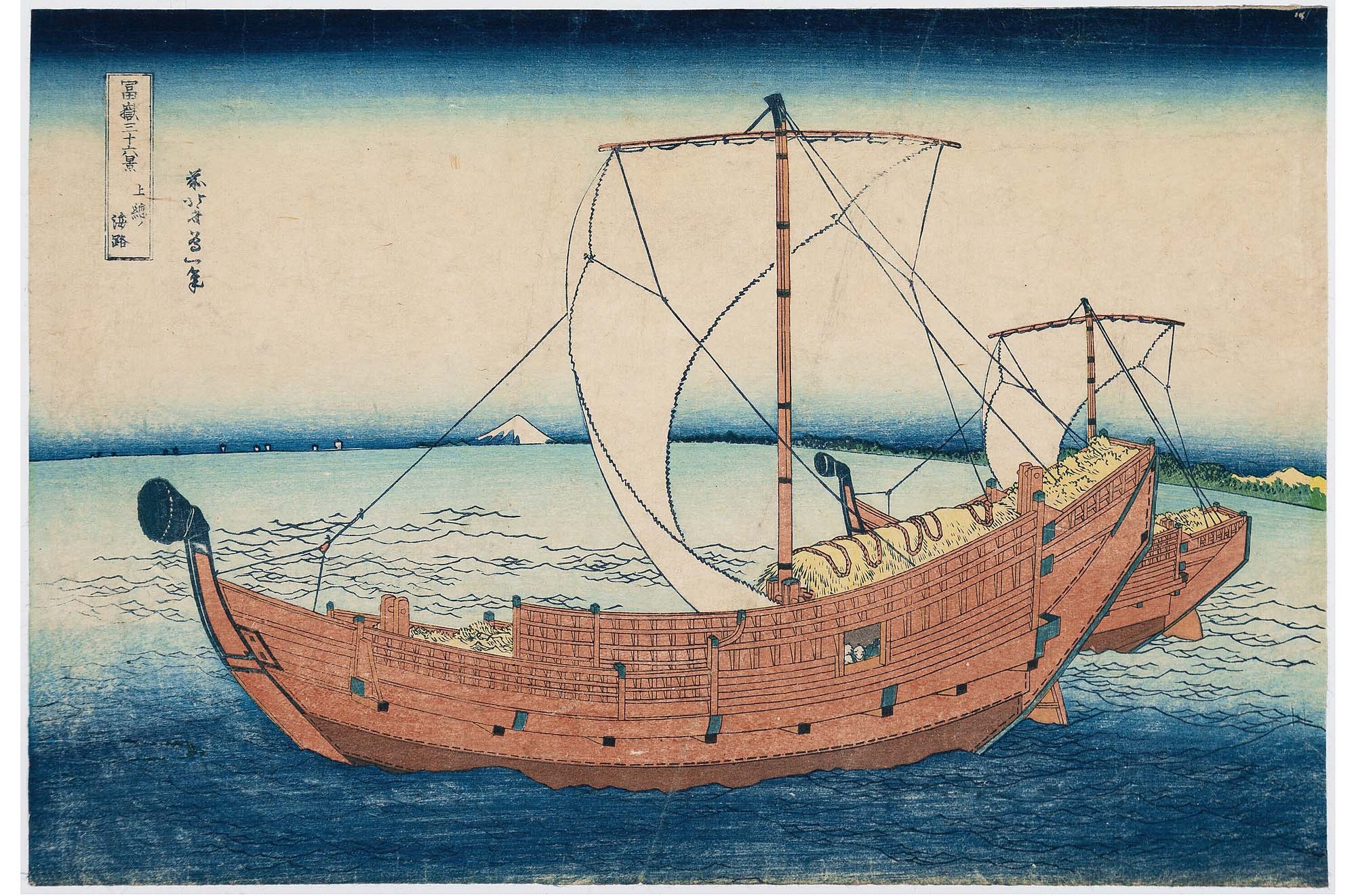
The next three following lots, in terms of price, were prints by Japanese Edo-period ukiyo-e painter and printmaker Katsushika Hokusai. From Hokusai’s circa 1830-31 series “Thirty-Six Views of Mount Fuji,” the woodblock prints all surpassed their estimates. Leading the selection, “At Sea off Kazusa,” which was signed “Saki no Hokusai Litsu Hitsu,” brought $20,625. Depicting an orange-red ship on blue waters, the print presented well with vibrant colors. “Inume Pass in Kai Province,” showing figures and horses passing through the mountains, was published by Nishimuraya Yohachi (Eijudō), signed “Hokusai aratame litsu hitsu” and realized $18,750. The same price was achieved by “Ushibori in Hitachi Province,” a marshy scene featuring a worker on a large boat. This print had the same publisher and was signed “saki no Hokusai litsu hitsu.”
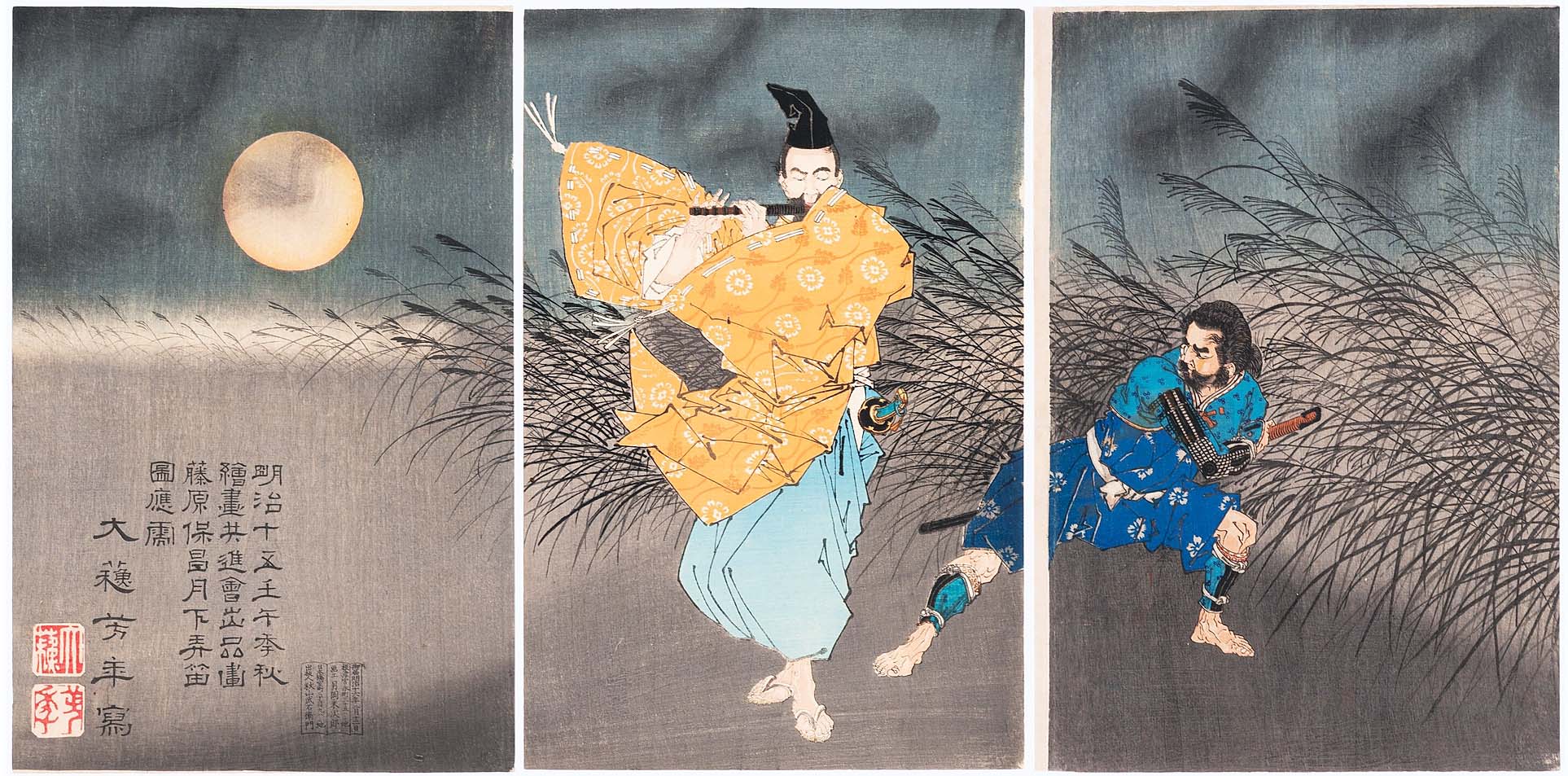
Other Japanese woodblock prints also rose beyond estimates, including Tsukioka Yoshitoshi’s 1883 triptych “Fujiwara no Yasumasa Playing the Flute by Moonlight.” Published by Akiyama Buemon and bearing the printer’s seal “Suri Tsune,” the signed and sealed print was bid to $16,250. “Spring Moon at Ninomiya Beach (Haru no tsuki, Nonomiya Kaigan)” by Kawase Hasui (1883-1957), dated March 1932 (Shōwa 7) and depicting a luminous moon over water with a large tree in the foreground, finished for $9,375 ($1,5/2,500). And Yoshida Hiroshi’s (1876-1950) “Sailing Boats: Forenoon (Hansen, gozen),” from the 1926 series “Seto Inland Sea (Seto Naikai shu)” earned $9,375 ($1,5/2,500).
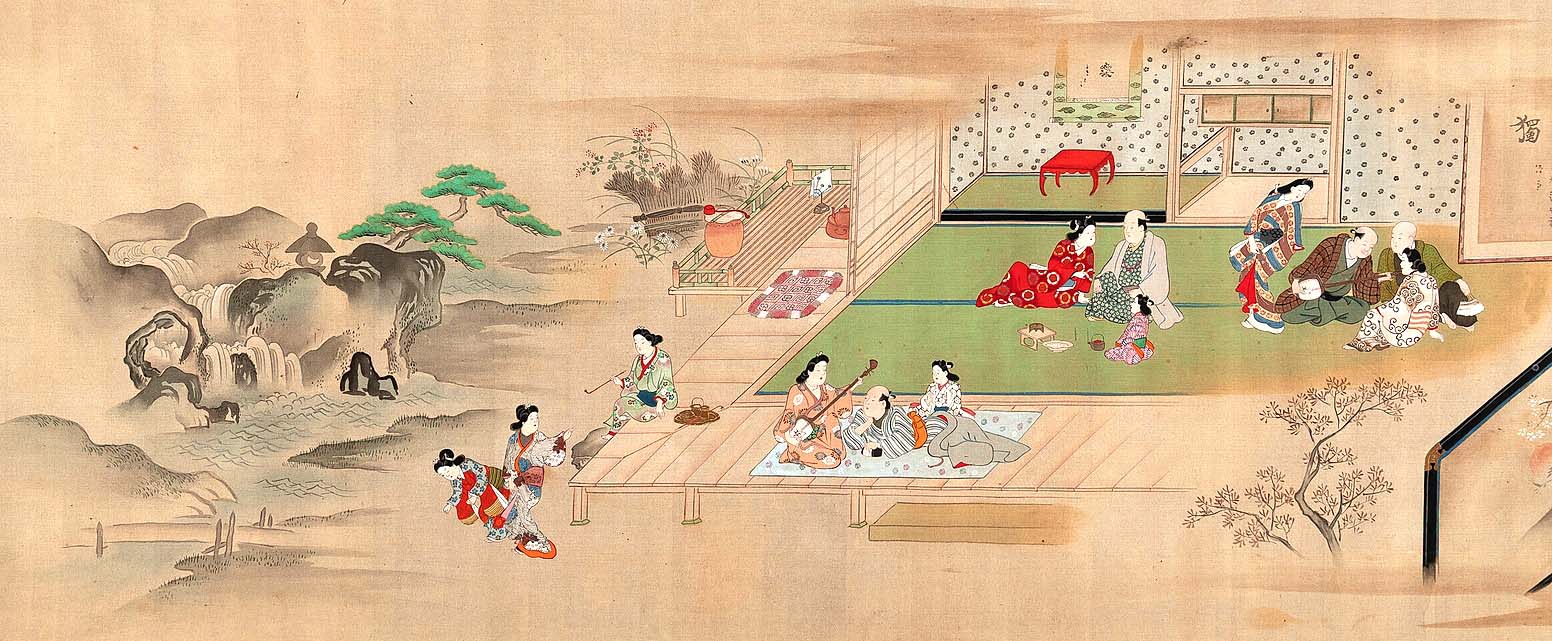
This detail photo is from an Eighteenth/Nineteenth Century Hishikawa School handscroll of scenes in theatre teahouse, ink and color on silk, 13⅞ by 335½ inches, which earned $17,500 ($700-$1,000).
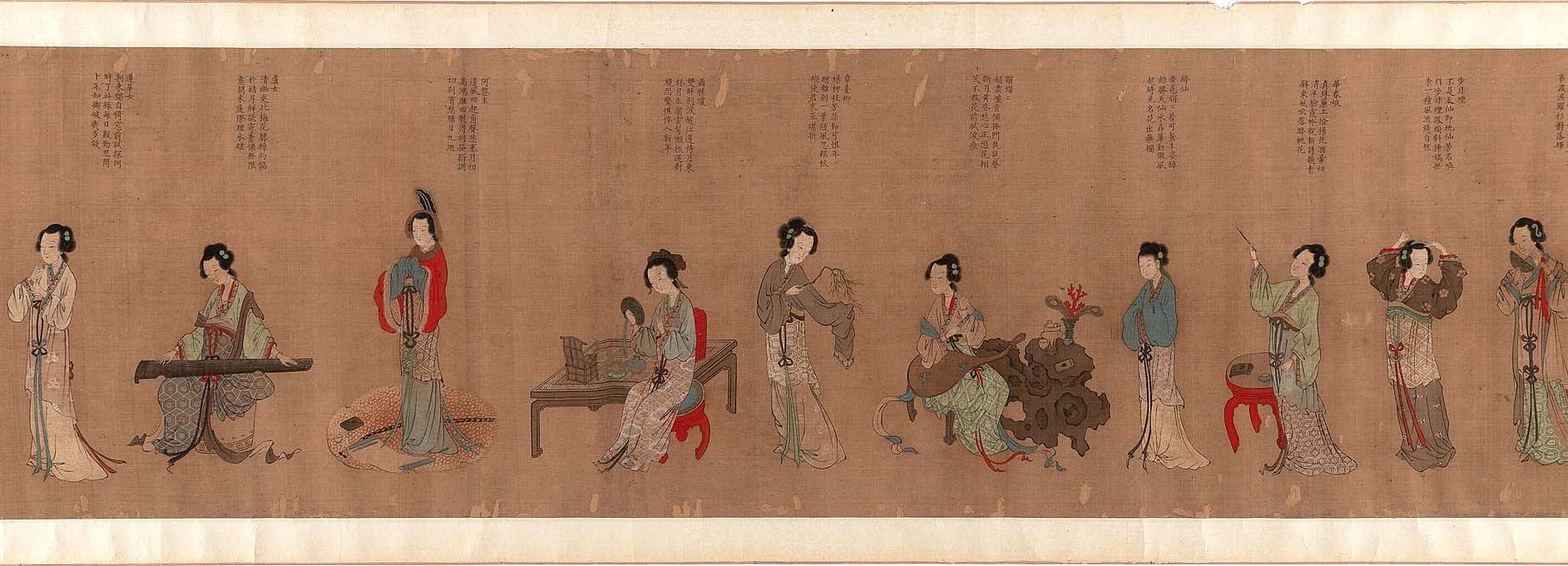
A Hishikawa School handscroll of scenes in theatre teahouse came from the Crowder estate and finished for $17,500, far surpassing its $1,000 high estimate. Painted in ink and color on silk in the Eighteenth or Nineteenth Century, the scroll was accompanied by a Japanese fitted wood box. The Crowder collection also consigned “Beauties,” a handscroll after Qiu Ying, which realized $15,000, and “Bamboo,” a Nineteenth Century example after Wu Zhen.
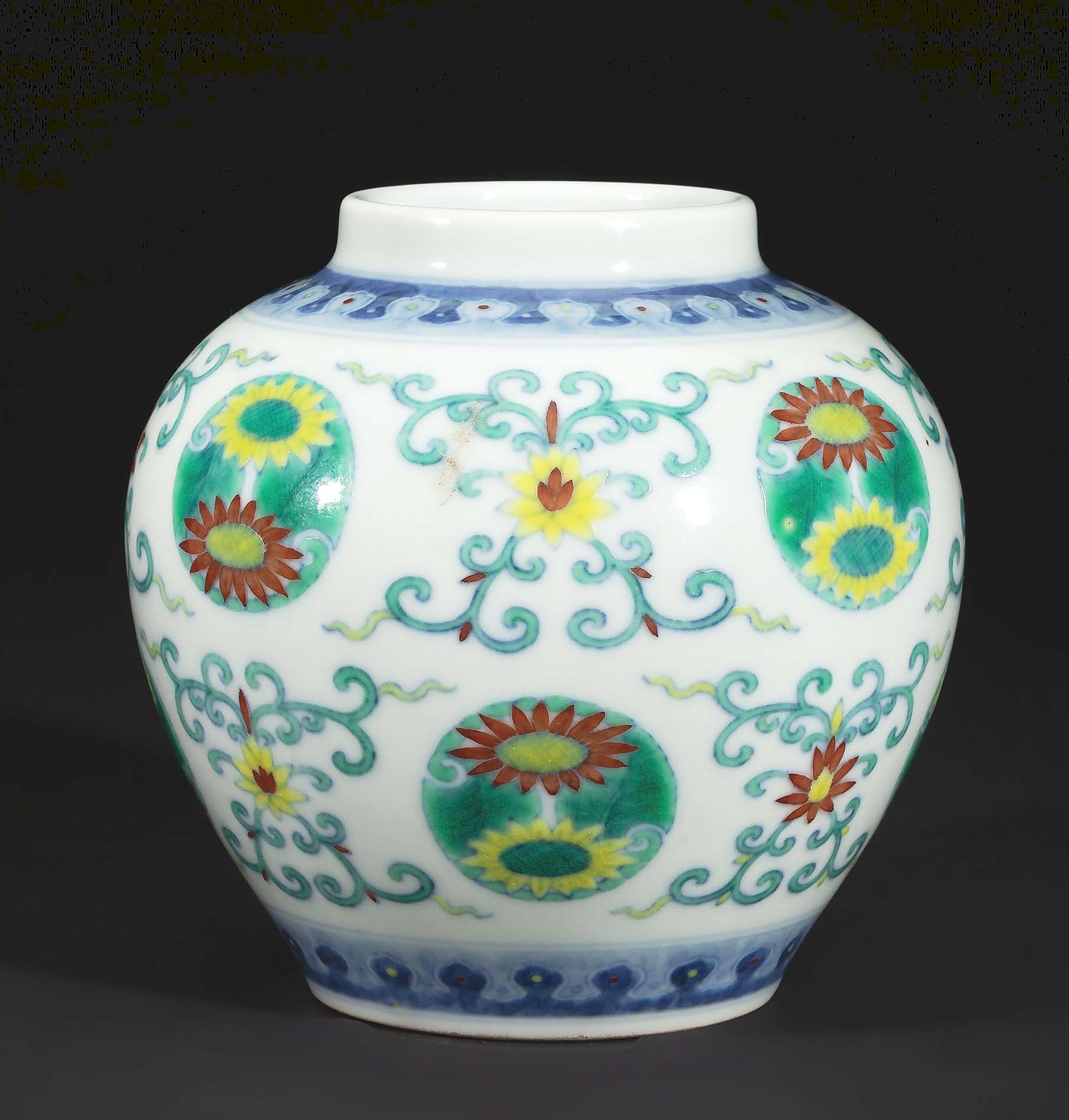
A Chinese doucai enameled jar from the Twentieth Century led the selection of porcelain at $16,250. With a six-character Daoguang mark to its underside, the ovoid-form jar featured chrysanthemum, lotus and scrolling foliate decoration as well as top and bottom bands of ruyi heads.
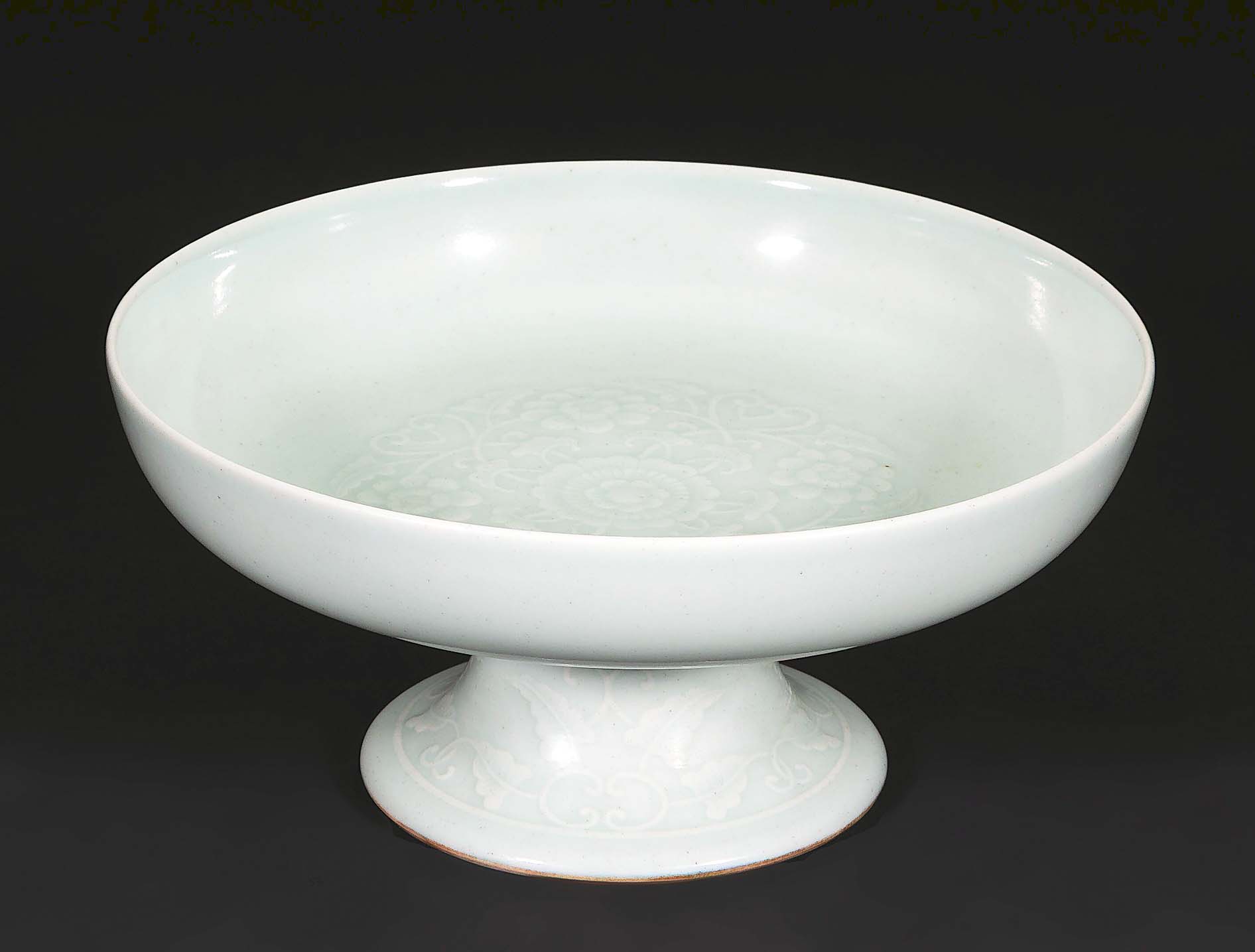
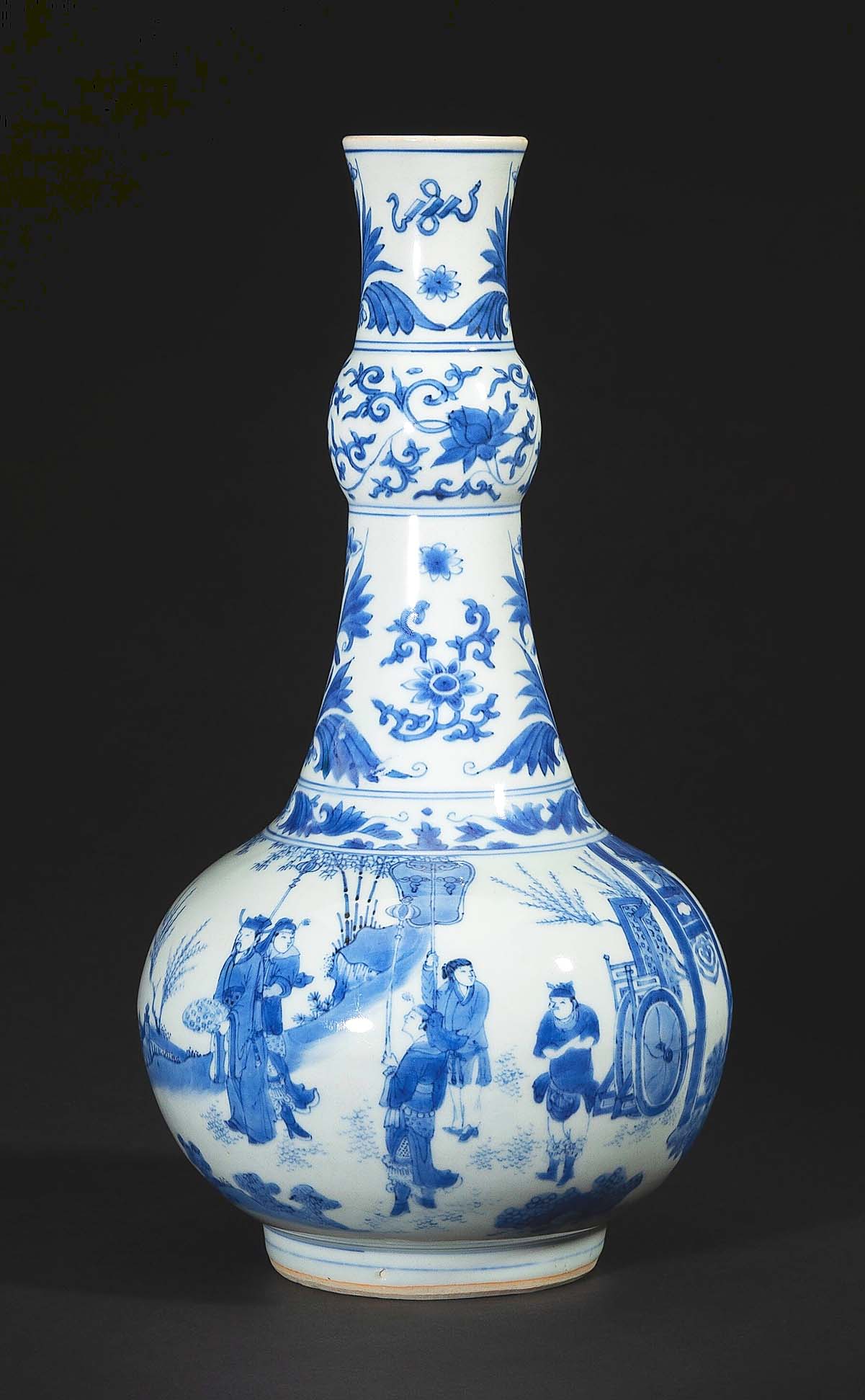
Other notable examples included a Twentieth Century Chinese celadon-glazed stem dish with lotus blooms and foliage on its interior and a blue six-character Qianlong mark to its underside ($10,625); a transitional-period blue-and-white bottle vase from the early Seventeenth Century that depicted officials in a courtyard on its globular body ($9,375); a pair of pale celadon-glazed cong-form vases, late Qing dynasty, molded in high-relief with trigrams and having a six-character honorary Qianlong mark ($9,375); and an iron-red and gilt dragons charger with a six-character Guangxu mark ($7,813).
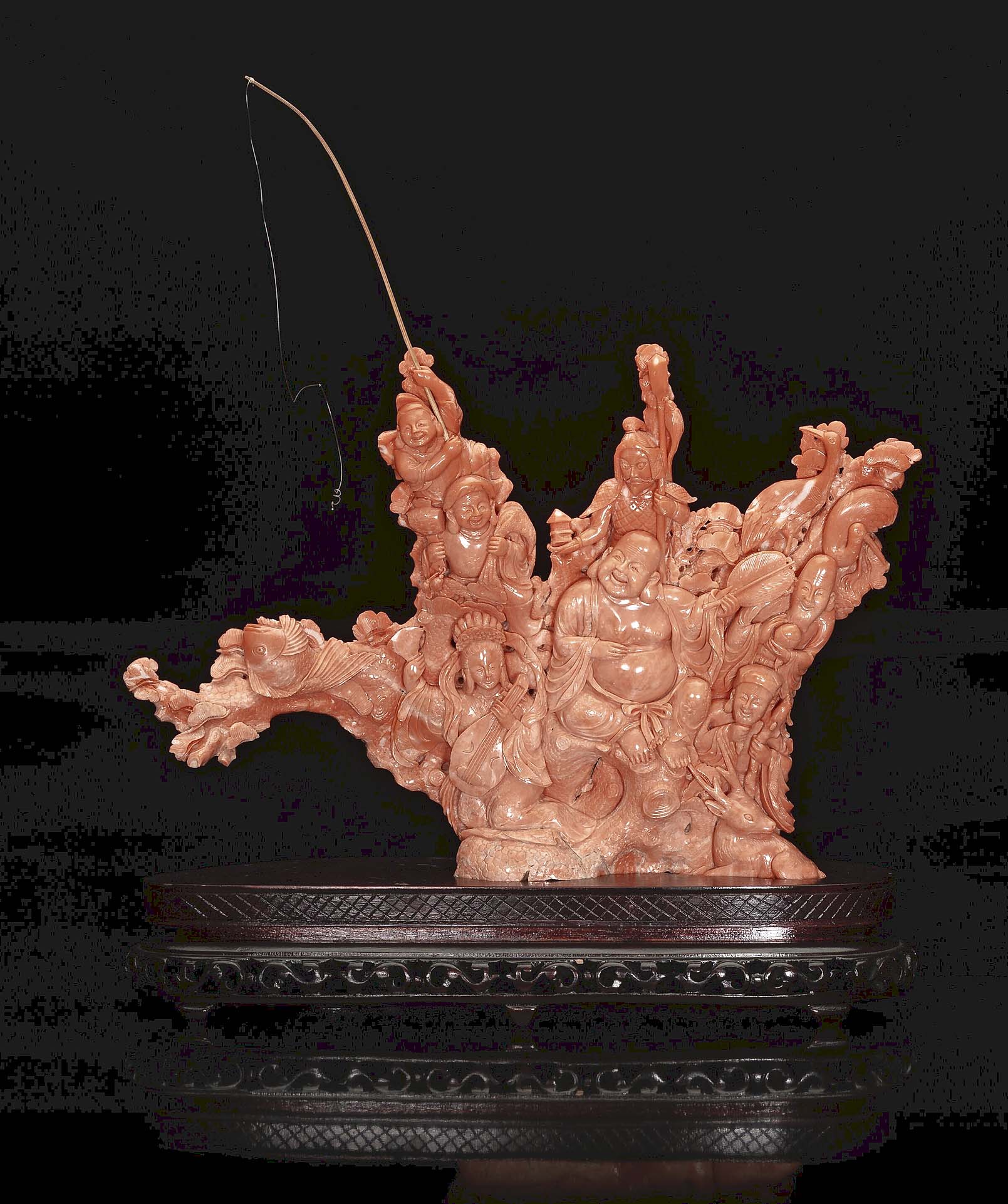
A Chinese carved red branch of coral depicting seven Daoist deities finished at $15,000, the top of its estimate range. The Twentieth Century figural group, paired with a carved wooden base, included a spray of animals, fish and foliage, and one figure was holding a removable fishing rod.
Prices quoted include the buyer’s premium as reported by the auction house. For information, www.ha.com or 214-528-3500.