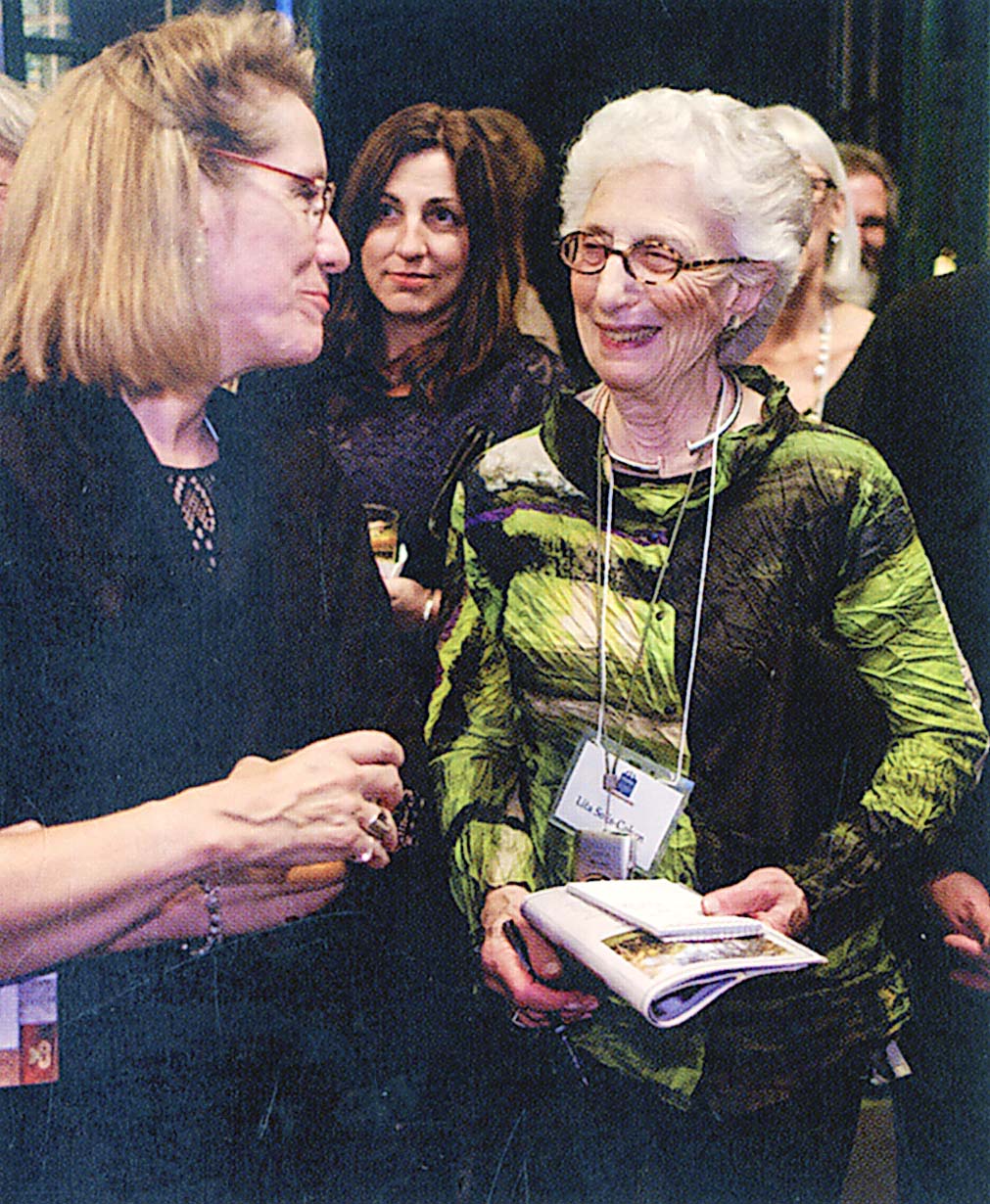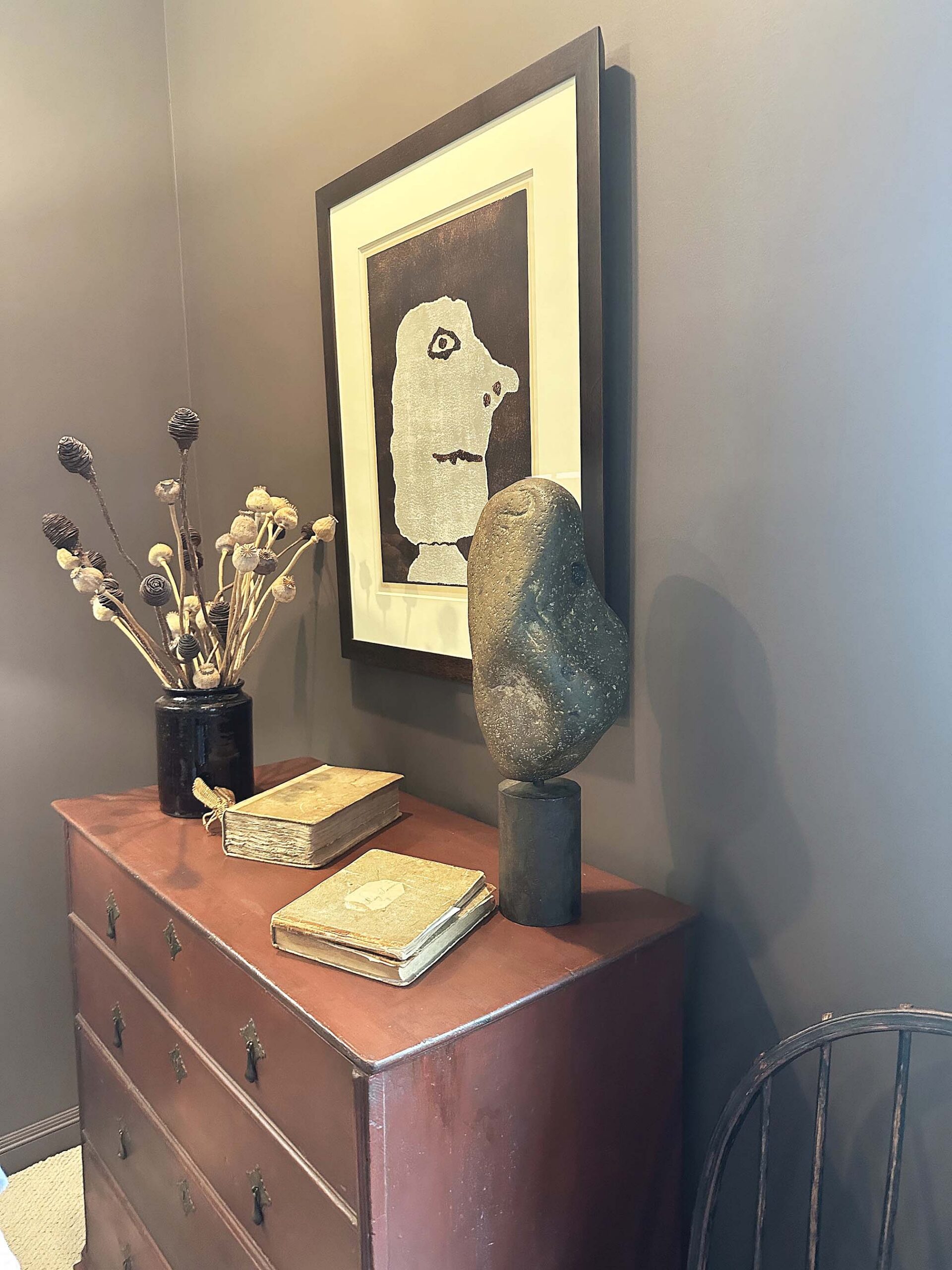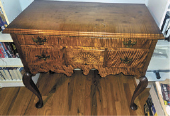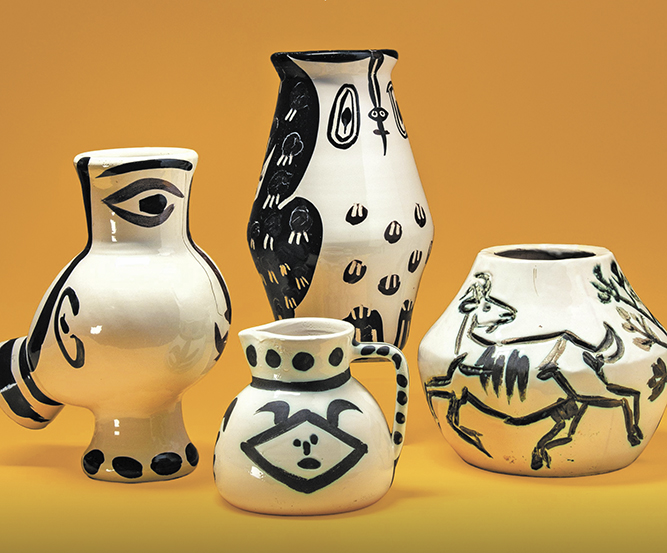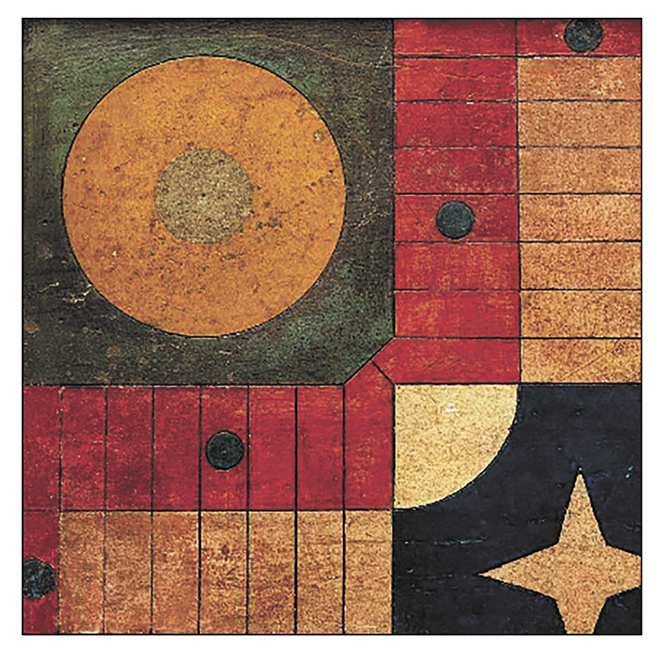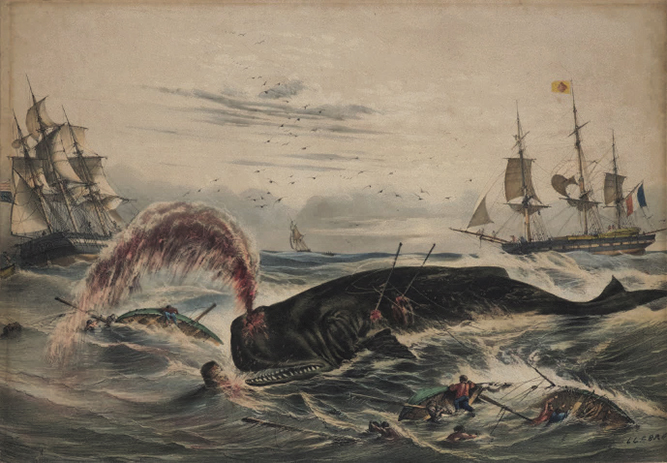

Lita Solis-Cohen relaxes at home. Image courtesy Ann Lawrence Morse.
By Andrea Valluzzo
LAFAYETTE HILL, PENN. — Lita Solis-Cohen, 95, has lived a scholarly and art-filled life bookended by a fierce devotion to learning and a passion for the art, craftsmanship and history in American antiques and decorative arts.
Where most people have clothes and supplies in their closets, hers are mostly filled with books and catalogs. They line every shelf in her office and are all organized by subject. And there are more in the clothes closet, along with a complete run of the Magazine Antiques. Her bedroom closet houses bound volumes of all 53 years of Maine Antique Digest (MAD). She has written for MAD since becoming its first staff reporter in 1975, two years after its founding.
She’s now senior editor at the monthly publication and remains its only full-time reporter. Despite no longer driving her own car, she still gets out and covers antiques shows and events in person, and covers many online only. In the October edition, she reviewed Freeman’s June auction of American Art and Pennsylvania Impressionists, along with Hake’s June Anti-Slavery and Civil Rights sale that featured the Rex Stark collection.
It is her expertise in, and devotion to, finding art in antiques — whether covering antiques shows in tony venues like the Park Avenue Armory, the famed Garbisch auction at the 480-acre estate known as Pokety Farms in Cambridge, Md., or flea markets — that has earned her a loyal following among readers and the respect of dealers and auctioneers in the trade. Prior to writing for Maine Antique Digest, she wrote for The Magazine Antiques and had a twice-a-week column on antiques for the Philadelphia Inquirer that was nationally syndicated in 35 papers around the country.
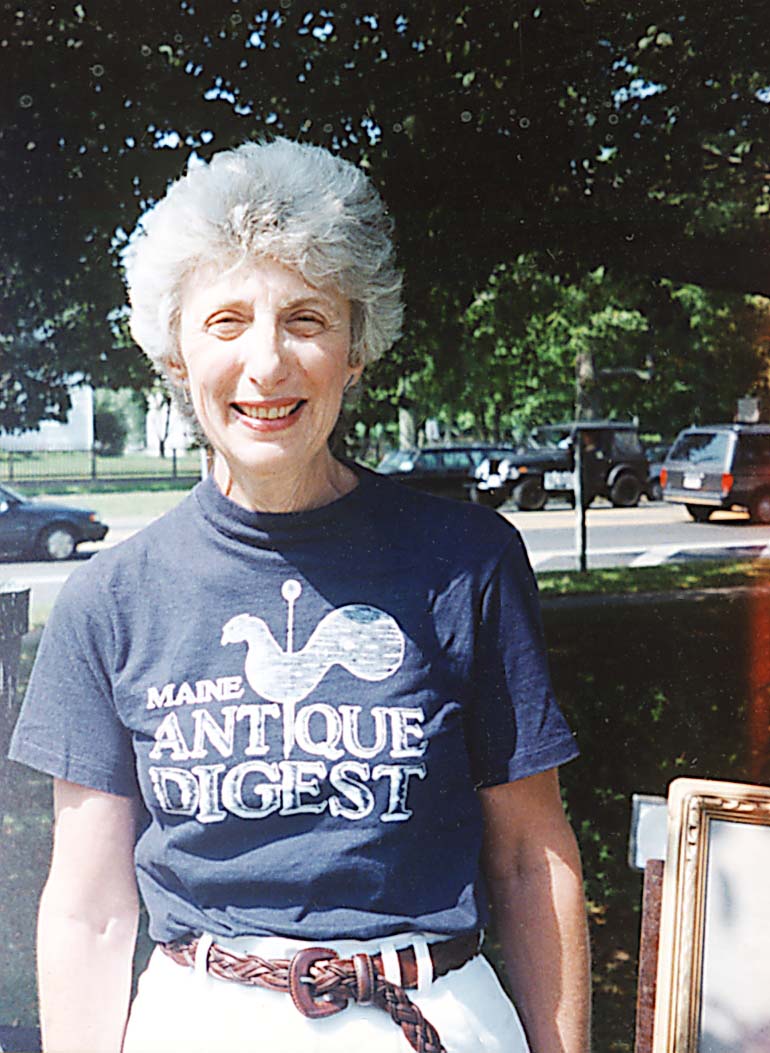
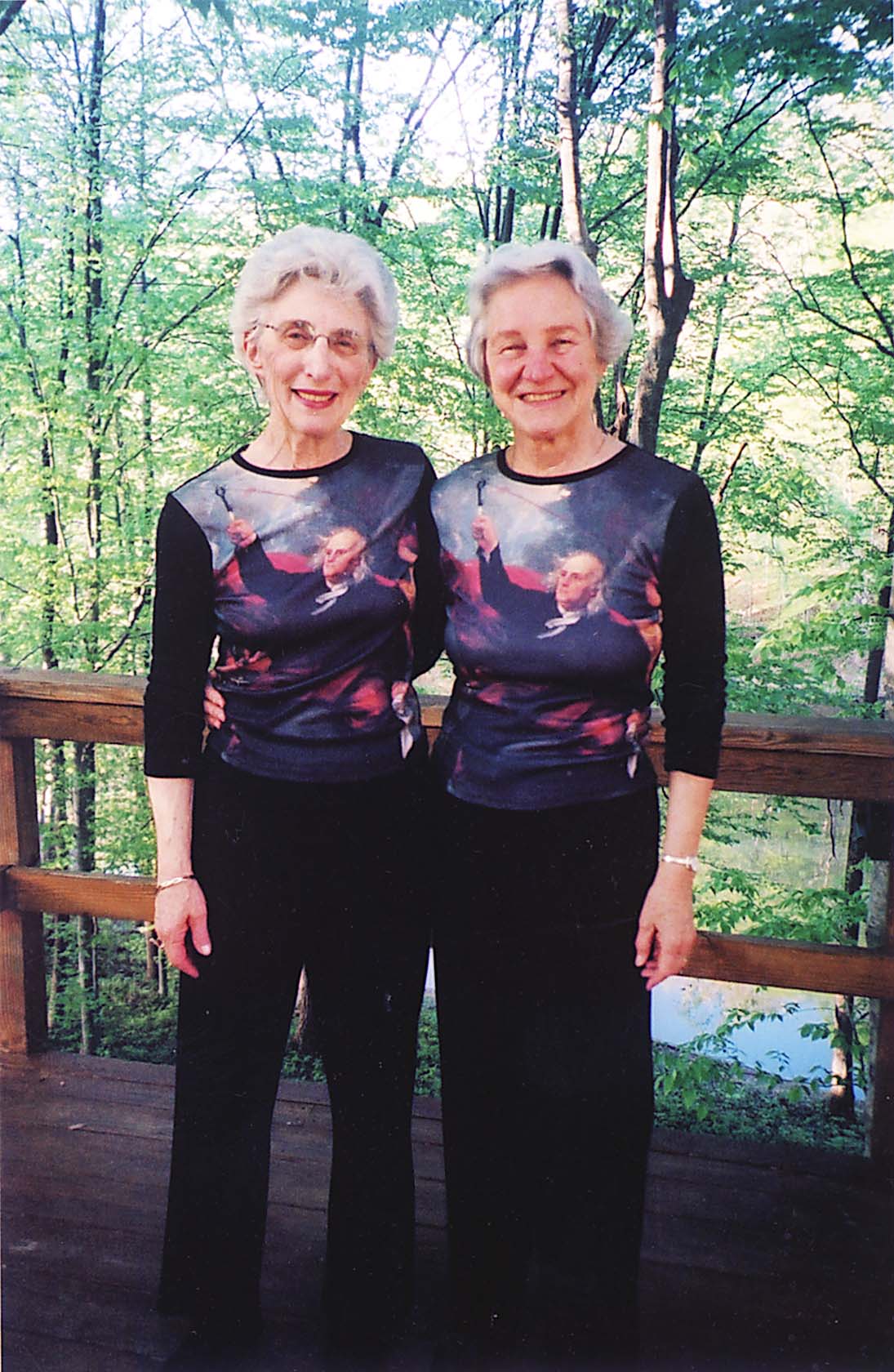
Maine Antique Digest founder Sam Pennington bought the staff T-shirts that Lita wore at shows.
Her contributions to the antiques and arts field are immeasurable but are led by educating readers through her articles on shows, auctions and publicizing exhibitions and symposia at museums as well as the journals museums publish.
Some of her most notable stories were reprinted in Maine Antique Digest: The Americana Chronicles, which she edited.
Published in 2004, it was organized into three parts by decade, offering readers a view of a 30-year bull market for Americana with a centerfold of scandals. Stories covered a range from the infamous fake Brewster chair and forger Mark Hofmann, to the 1999 farm sale of the Koch estate that set several folk art records.
“Lita is a phenomenon. I often say, ‘She’s the best in the world at what she does,’” said Clayton S. Pennington, editor of Maine Antique Digest. “Incredibly well-versed in American decorative arts, she approaches her job with dogged determination, backed by decades of experience. She has a steel-trap memory, encyclopedic knowledge and always goes the extra mile to get a story correct.”
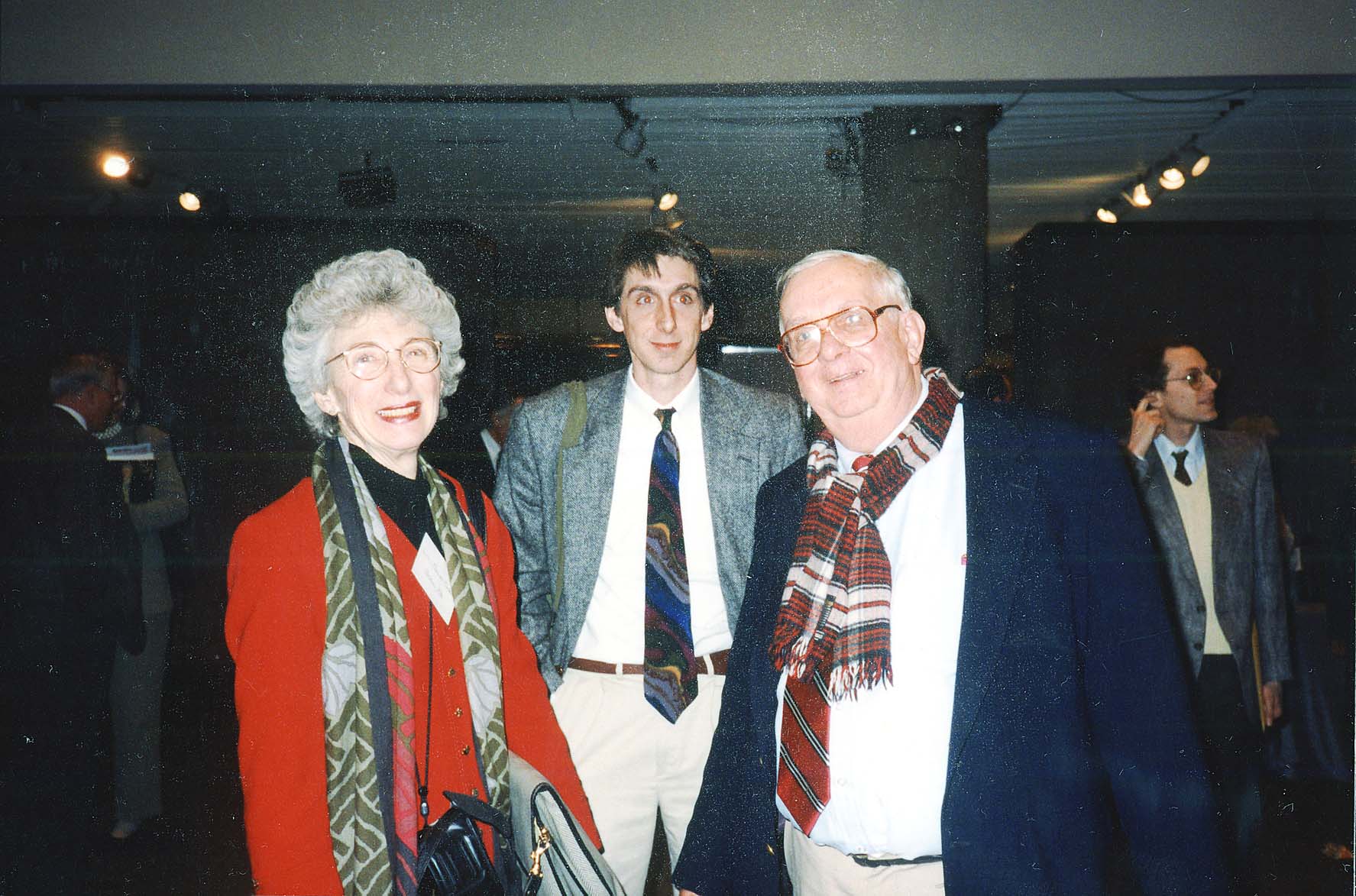
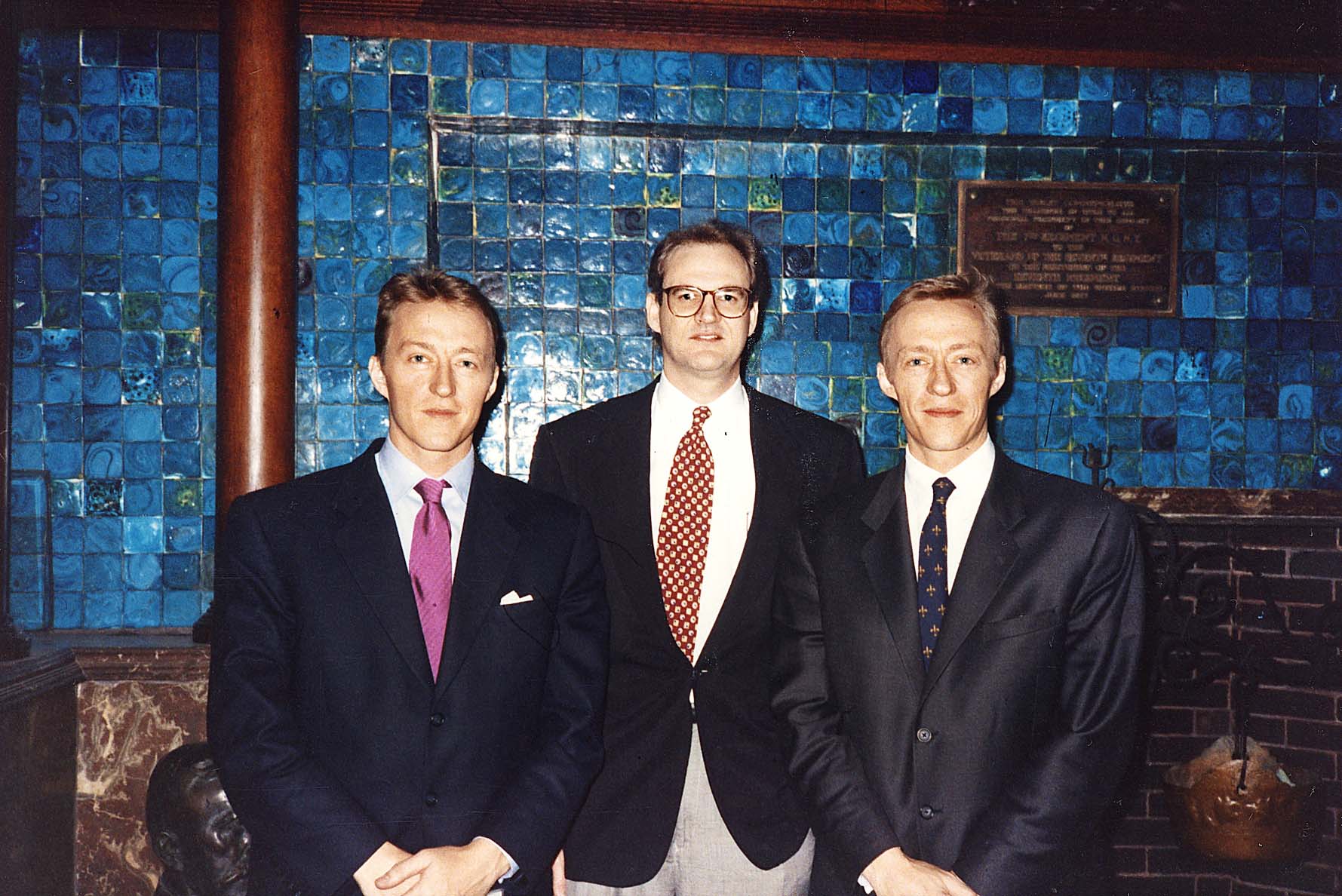
Enjoying Americana Week in New York City in January 1994 during Sotheby’s Little sale were Lita and Sam Pennington and in the middle, Clayton Pennington, on his first trip here. Clayton, Sam’s son, is now editor of MAD.
“She’s a joyful warrior — there’s no other field she’d rather report on. She loves the stuff, she loves the people and she loves the work. She’s always concerned with involving new people in the antiques world, whether as collectors or in the trade. She is tireless in pursuing the truth and never shies away from learning something new or asking the tough question,” he added.
In recognition of all her work, the Antique Dealers’ Association of America (ADA) is presenting Lita with the ADA Award of Merit at its annual awards dinner November 6 at the Delaware Antiques Show in Wilmington, Del.
It will not be her first honor. In January 202, she received the Eric M. Wunsch Award for Excellence in the American Arts in from the Wunsch Americana Foundation.
If one takes a moment to contemplate all that Lita has accomplished and the hundreds of thousands of words she has written, it’s not surprising to learn she’s always been driven. She grew up in a Philadelphia suburb and attended Cheltenham High School in Elkins Park, located just outside Philadelphia’s borders, graduating in 1948. Nearly 40 years later, the school recognized her as part of its 100 Club, honoring 100 distinguished graduates at the school’s 100th anniversary celebration in January 1984.

Lita is pictured with her children, Sally and Danny, in 1959.
Lita graduated from Bryn Mawr College (Class of 1952), which armed her with the tools for research and writing. She got a fellowship at the Francis Henry du Pont Winterthur Museum, in its second class, which included Charles Hummel, Milo Naeve, G. Carroll Lindsay and Raymond Clark. When the misogynistic director Dr Carl John Rees found out she was going to be married during spring vacations, he told her she would lose her fellowship. When Charles Montgomery urged Rees to change his ruling, the director said, “My wife left Wellesley her junior year and never regretted it; you already have a Bryn Mawr degree. What will you do with another?” Lita then transferred to the University of Pennsylvania.
After her April 1954 wedding to Leon Solis-Cohen, she went back to her first job in the education department at the Philadelphia Museum of Art and spent the next 20 years teaching school classes, giving gallery talks and training docents. In 1973, she became the antiques writer at the Philadelphia Inquirer. Her relationship to the museum and other historical organizations in the area has lasted for decades. For the Inquirer she covered the transfer of John and Elizabeth Cadwalader’s furniture to the Philadelphia Museum of art by gift and purchase. When record prices are made at auction, her stories often make front page news.
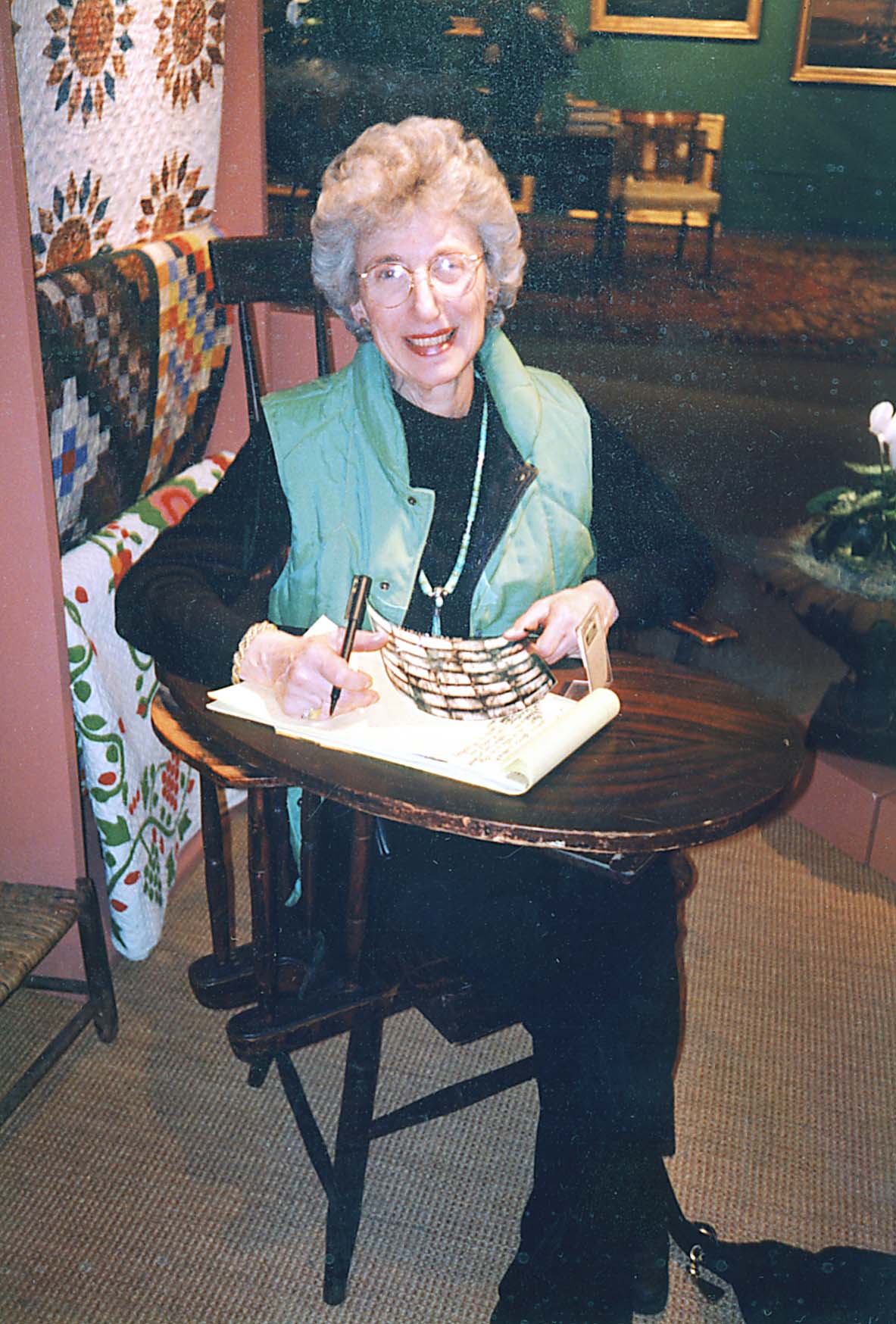
Lita working at an antiques show before there were digital cameras or iPhones.
Lita considers her greatest contribution to the field the discovery of The Price of Cabinet and Chair Work, the 1772 price book published by the Philadelphia Tory printer James Humphreys, Jr. In the summer of 2003, a neighbor Tom Howland found it tucked away in a pile of books he had inherited in the 1960s.
“Tom put this pile of books on my dining room table, and I picked up this pocket-size book and ran to the phone and called Alan Miller and told him what I had in my hand — the price book of Philadelphia furniture, with all the charges for a high chest of drawers, dining tables, tea tables, couches with crooked legs and more!” she said. “Alan Miller, a conservator and carver from whom I had learned so much and quoted often, agreed to come to lunch and take a look. Then we had to decide where it should go and convince the owner not to auction it but to give it to the Philadelphia Museum of Art, where the furniture in the price book is on view.”
Curator Alexandra A. Kirtley had a facsimile published and wrote a companion booklet in 2005; the two small booklets, paired together in a slipcase, are available for purchase at the PMA bookstore, marked down to $4.49 at press time.
By the 2000s, Lita and her husband Leon, who died in 1993, had raised and educated their two children, Sally and Dan, having taken them to historic sites on every spring vacation, sending them to Europe and instilling in them an appreciation of history. Sally is the mother of Lita’s grandchildren, Emily and Simon, who also grew up going to museums and historic sites. “Emily and her husband, Josh, and Simon and his wife, Betsy, appreciate good design, and Simon and Betsy’s year-old daughter, Harper, plays with well-designed toys and books and will get finger paints as soon as possible,” she said.
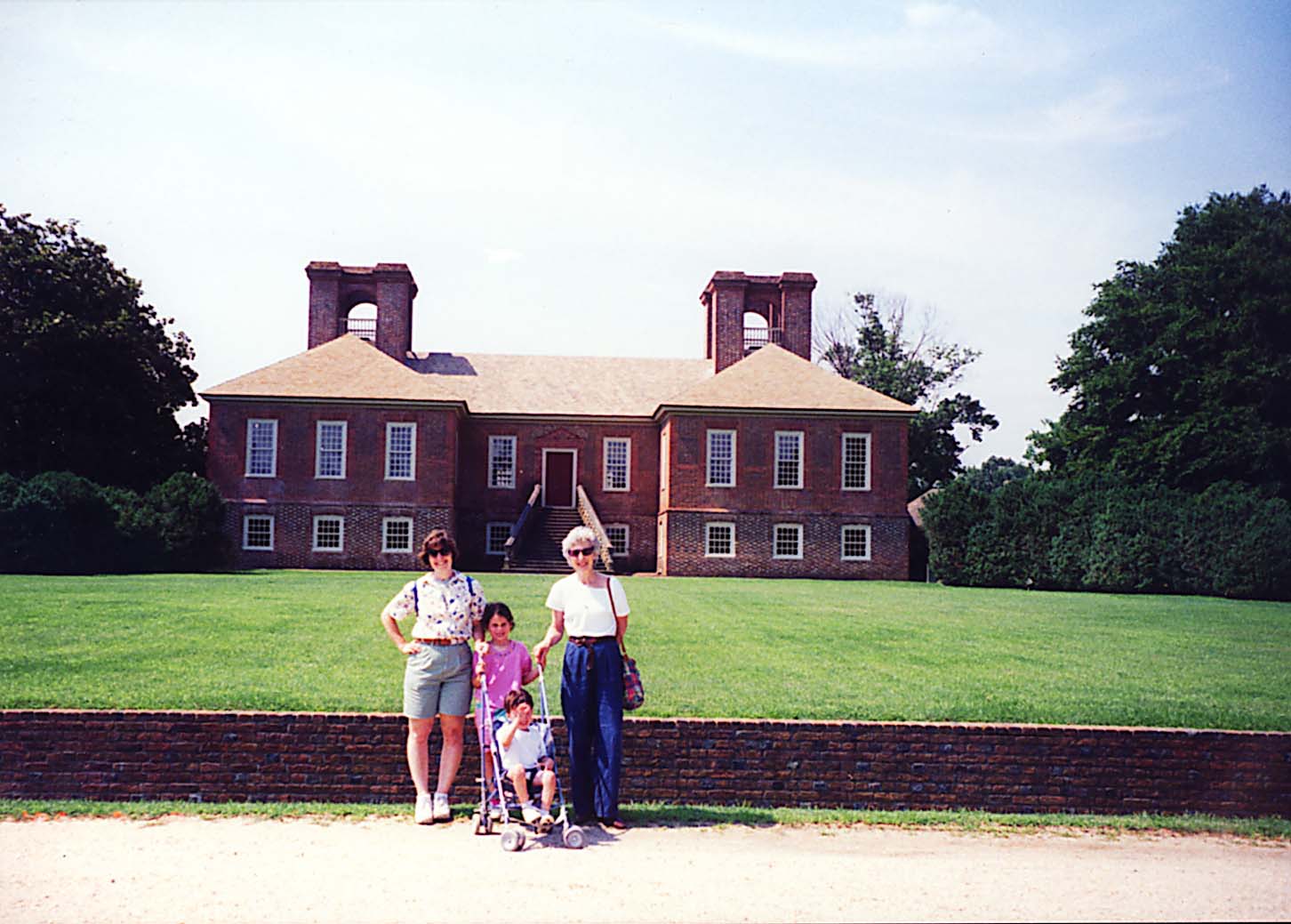
At left, Sally Solis-Cohen with her children, Emily and Simon, accompanied Lita on a visit to Stratford Hall, the Lee family house in Virginia, during a spring break.
Long before she first picked up a pen to write about antiques, however, art was part of her life. “I had an incredible education in art,” Lita explained. “I took painting art lessons from the time I was six. My father took me to every Pennsylvania Academy of Fine Arts annual exhibition. Aunt Donna and Uncle Dan in New York City took me to Parke-Bernet when I was a teenager. I also went to a camp in Maine where there was a silver shop, run by Adda Husted-Andersen, who apprenticed to Georg Jensen, and as a ten- to 11-year-old, I learned how to hammer and planish and solder silver. As a teenager, I became a junior counselor. It was enormously helpful when I went to Winterthur, and at the museum when I lectured on silver because I knew how it’s made.”
A tireless reader, Lita said she has read most of the books and catalogs on her shelves; many were review copies. She is dedicated to sharing her knowledge hoping to get people to look carefully and become astute collectors. “I’ve learned as much from the trade and collectors as I have from academics … I learn something new every day. I suppose that has kept me living so long.”
“I suppose I have been responsible for making some members of the trade stars on the Antiques Road Show,” she said. “When my daughter Sally was taking the Sotheby’s Works of Art course, in London, she played hooky one day and went out and watched the filming of the Roadshow at a country house. That night, she called home and asked if she could have $3,000 to buy the rights to bring the show to America. We said sure, but a day later she called and said ‘a man named Dan Farrell bought the rights, but he doesn’t know anything about antiques; he’s in the television business.’ I told him that I’d help him. When she came home, Dan Farrell came for the weekend and I gave him my Rolodex. And that’s how David Rago, Noel Barrett, the Keno twins, the staff of several auction houses and the rest of my sources got on TV and became famous. Sally and I worked with Dan Farrell, filmed a staged Roadshow at Skinners with Monty Hall as host, and peddled it to Public Broadcasting Service (PBS) stations across America for 12 years before Dan Farrell got Chubb to sponsor the show at WGBH in Boston and they made it a success.”
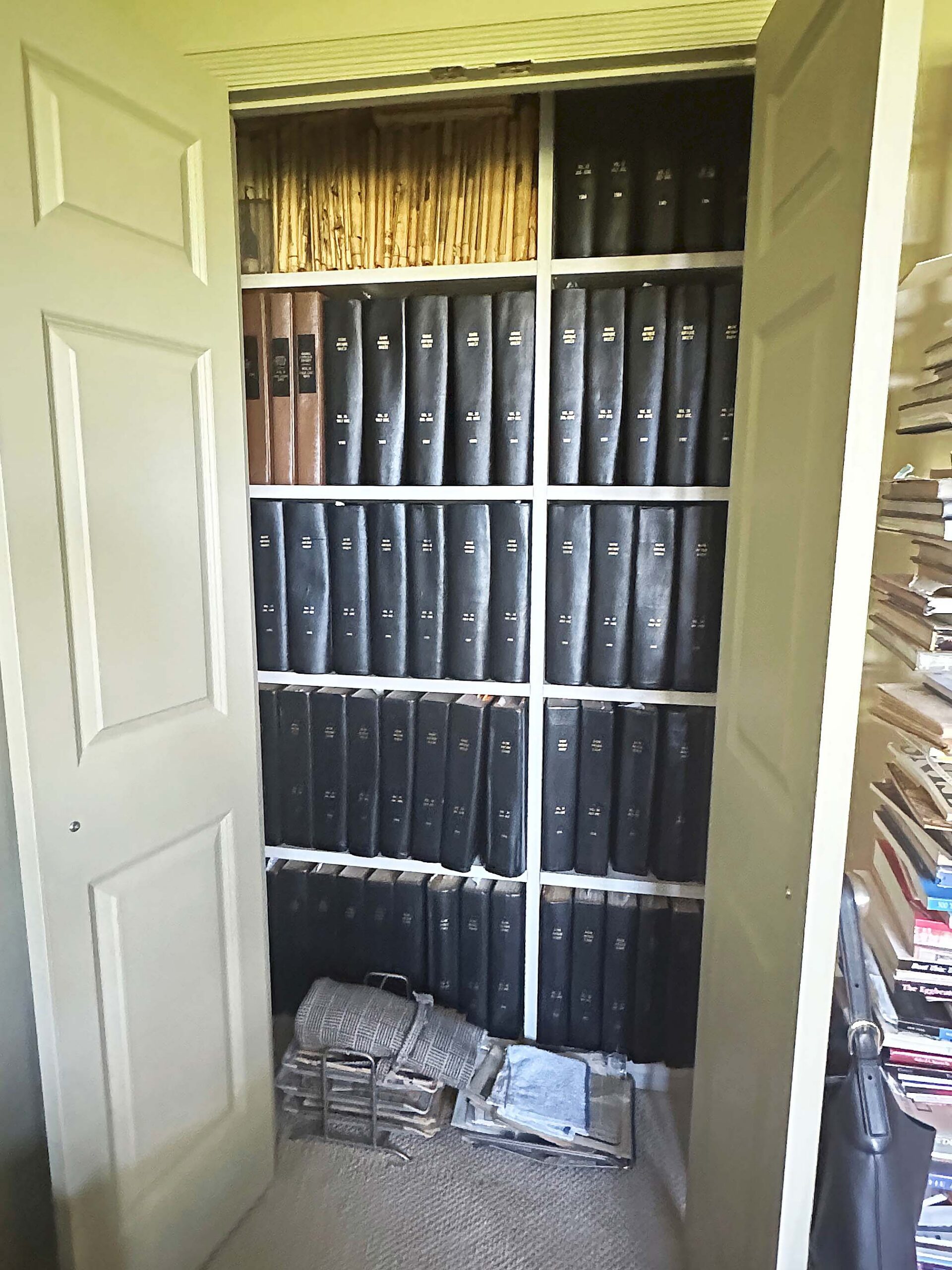
Lita’s bedroom closet contains most of the 53 years of Maine Antique Digest in bound volumes. The rest are in her walk-in closet!
Asked to name some of her most memorable assignments, she said she enjoyed her Q&A columns that put dealers in the spotlight and updating the lists at the back of MAD’s Americana Chronicles listing furniture that sold for $1 million and folk art that brought more than $500,000. “When the magazine was 40 years old, I updated my lists and did it again for the 50th. The lists showed how taste has changed and new categories are embraced,” she said.
Clayton Pennington, son of MAD founder Sam Pennington, noted that over the years, Lita has reported on major events in the world of Americana, including the Stewart Gregory auction in 1979, the Garbisch sale in 1980, the first piece of American furniture to sell over $1 million in 1986 at Christie’s, the sale of the $12.1 million desk-and-bookcase at Christie’s in 1989, the Little sale in 1994, the discovery of the John Head account book and many more. “She’s just as comfortable under a tent at a country auction as she is in the posh salesrooms of New York City,” he said.
The 2026 ADA Award of Merit dinner is Friday, November 6, at 6 pm, at the Delaware Antiques Show, 815 Justison Street in Wilmington, Del. Tickets are $95 each and include admission to the antiques show and free parking.
For information, www.adadealers.com.