By James D. Balestrieri
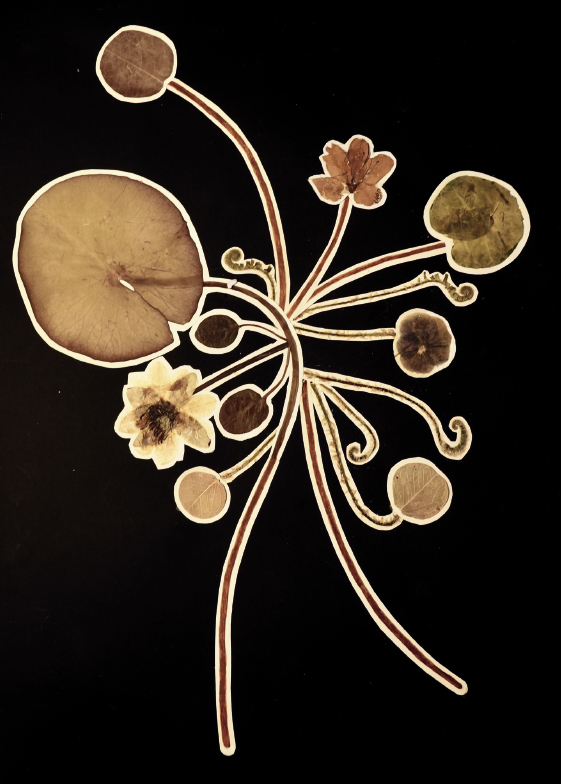
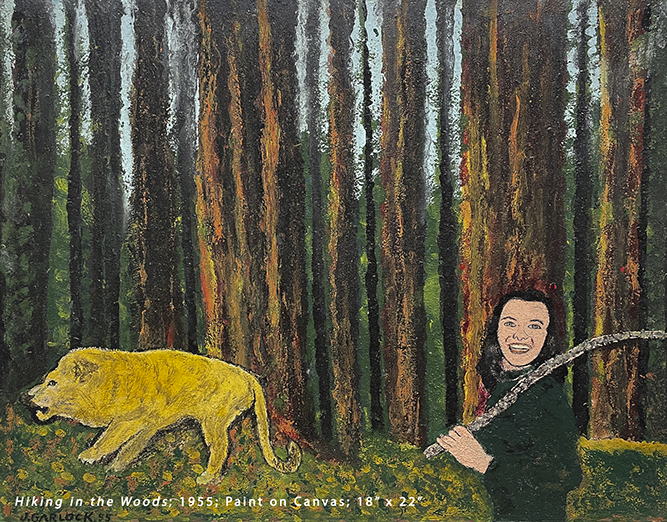
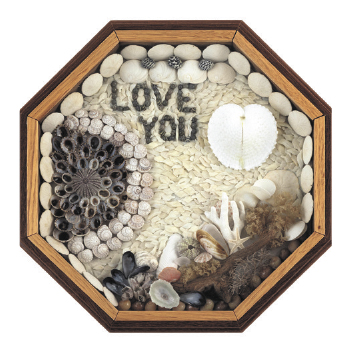
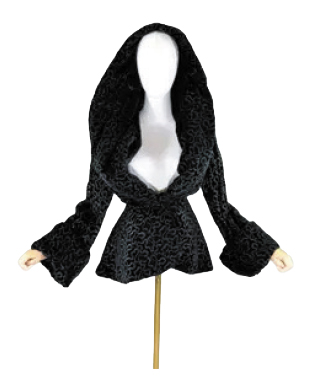
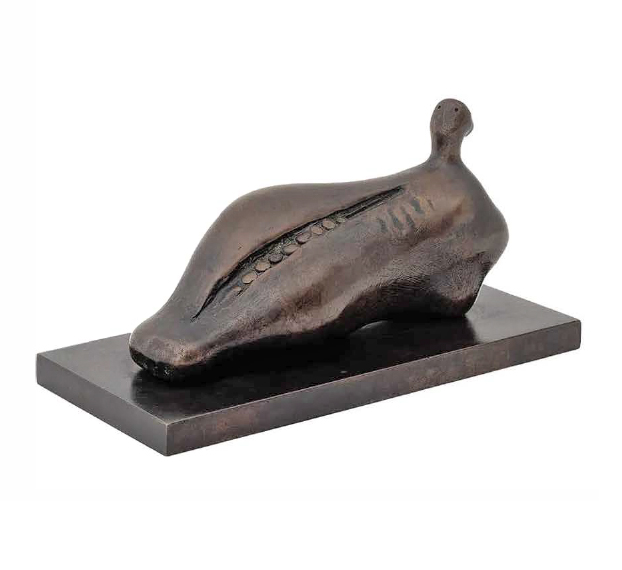
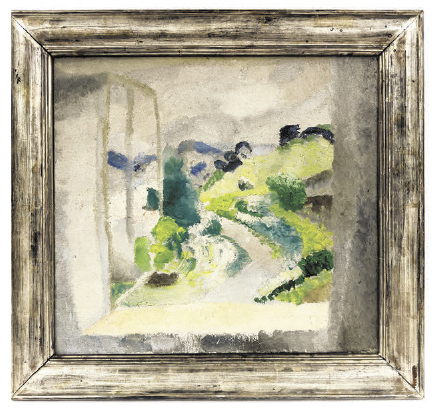
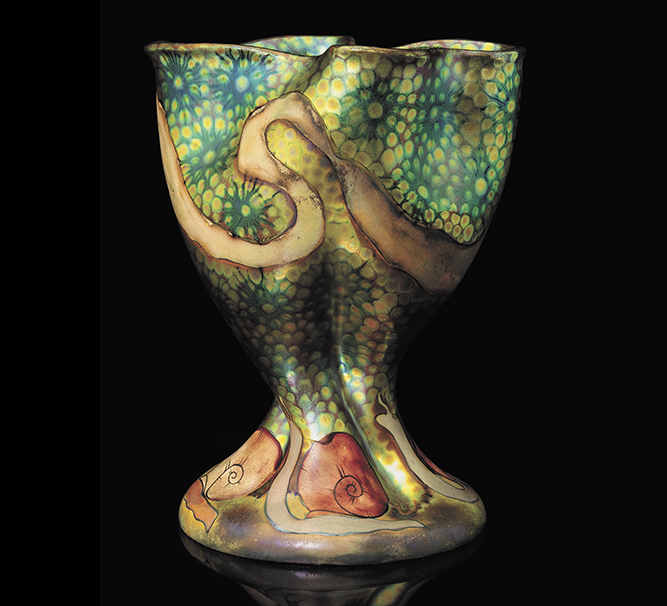
NEW YORK CITY — Before you read this, look at the images that accompany this essay. Consider them individually, then compare them. Are you curious, enthralled, appalled, dismissive? Do you want to know more? Do you recoil? Do you say to yourself or out loud to the person beside you, “I could do that.” Jean Dubuffet (1901–1985) collected these works and thousands more under the banner of a term he coined: Art Brut — brut meaning crude, unformed, raw. The French painter, sculptor and printmaker would grant not only the validity but the necessity of all your visceral reactions. But, to your “I could do that…,” he might reply, “True. Why don’t you?”
It is easier to define Art Brut by what it is not than by what it is. Art Brut is not a movement, like Impressionism. It is not a school, like the Hudson River School. It does not name a group of artists, like the Taos Founders or the Ten. It is, in a way, Outsider art, but it is not folk art, with its handmade, handed-down traditions of naiveté and craft. Art Brut shares something with asylum art, yet it is not concerned with finding clues to pathologies in the productions of the institutionalized. Children’s art begins as Art Brut, but as soon as children want their art to imitate the world of their parents, Art Brut questions the purity of the impulse.
Despite all that it is not, the exhibition “Art Brut in America: The Incursion of Jean Dubuffet,” at the American Folk Art Museum through January 10, is fascinating, not in the facile way that we throw that word around, but in the way that the sun, scintillating on the water, or a fire, licking and crackling in the darkness, fascinates us into a kind of waking trance. If it sometimes takes an effort to confront these works, it takes even more to tear yourself away from them.
Art Brut is found art, art that arises directly from the impulse to make art, art that does not know it is art: doodles and scrawls, the productions of obsessions and distractions. It is art before artfulness, art that would surprise the artist if the artist knew it was art. It is a beautiful cat the color of cappuccino foam padding out of a shock of ruddy weeds and lemony brush beside the train tracks at the moment — as I write this — when the train stops to let another train pass. Art Brut is accidental art, a car crash between the psyche and the image. (The images of the cat and the car crash should give you the flavor of Dubuffet’s own, extensive writings on art and his insistence on setting down the lightning immediacy of first reactions.)
In 1945, just as the horrors of World War II were both winding down and coming to light, Jean Dubuffet began amassing an assemblage of works that would become the foundation for the Collection de l’Art Brut, based in Lausanne, Switzerland. From late 1951 until 1962, the collection was displayed at the Creeks, the East Hampton, N.Y., home of wealthy artist Alfonso Ossorio, and was available for private showings for artists like Jackson Pollock, Henri Matisse, Mark Rothko and scores of others. Some were enthralled by what they saw; many seemed indifferent. Few, in hindsight, were entirely unaffected, for, while Dubuffet found Art Brut at the edges of education, culture and sanity, he also insisted that this same impulse slept in the breast of every one of us, that it was a common birthright, even if it came forth uncommonly and expressed itself idiosyncratically, under unusual conditions.
Perhaps the best definition of Art Brut in English is the translation of Dubuffet’s own words by his friend Ossorio for a 1949 exhibition of the works in New York: “We mean by that term works done by people uncontaminated by artistic culture, works in which the sense of mimicry, contrary to what happens among intellectuals, plays little or no part, with the result that their makers draw all (subjects, choice of materials used, means of transposition, manner of writing, etc) from their own being and not from hangovers of classical or fashionable art. We witness here the artistic process in all its purity, raw, reinvented on all its levels by the maker, starting solely from his own impulses. … Many of the objects shown are the work of inmates of psychiatric hospitals. We see no reason for making of these works, as is so often done, a special department. All contacts that we have had (and they are many) with our more or less confined comrades, have convinced us that the mechanisms of artistic creation are exactly the same in their hands as they are among people reputedly normal.”
Jean Dubuffet was himself uncommon. The son of a prosperous French wine merchant — could this be the origin of the word “brut,” as in Champagne brut? — he was a Modernist who despised Modernism. Nevertheless, Dubuffet is a seminal figure in post-World War II art. He sought and employed new and nontraditional materials restlessly, daring — almost willing — his art to destroy itself. He scratched portraits into paint mixed with dirt and sand, faces innocent in execution and frank in expression, rising above ugliness to become, in their own way, beautiful. He covered supports in crinkled gold and silver foil in an attempt to convey the energy of the births of stars and universes.
But he is perhaps best known for his large-scale paintings and sculptures of abstract outlined forms in reds, blues and whites. These pieces hit the eye like interlocked layers of diacritical and punctuation marks of some unknown language or, perhaps, like a child’s bucket of toys — wooden letters, toy soldiers and animals, toy cars and trucks — strewn on the floor in a jumbled heap.
Look again at the works illustrated here. Augustin Lesage’s 1932 “Composition symbolique, amour pour l’humanité (Symbolic composition, love for humanity)” is a mandala to some lost faith of Byzantium, while Adolf Wolfli’s 1921 untitled (Saint Adolph bitten in the leg by the snake) is sheet music for a melody heard in a dream, something you hear while the avant-garde composer John Cage sits at the piano and plays nothing for four minutes and 33 seconds (which he did in 1952), Robert Gie’s “Distribution d’effluves avec machine centrale et tableau métrique (Distribution of emanations with central machine and metric table),” executed (there is an interesting word for how this piece came into being) circa 1916, is reminiscent of the scifi drawings some of my grade-school classmates dreamt up during dreary filmstrips about soil. Are the figures connected by the energy of life or in the simultaneous shock of electric death, or in their sudden awareness of that death?
We all share a touch of pareidolia, seeing wolves and ships and faces in clouds, but Pascal-Désir Maison-neuve’s shell art “Le Diable (The Devil)” transforms objects we generally see as beautiful into a visage that taunts us with its wild, spiraling eyes.
Francis Palanque scrawled on crushed eggshells. Jeanne Tripier out-Rorschached Rorschach in sugar and ink. Jean Marchand and Juliette Bataille worked in bits of string and yarn they found. Art Brut is a primer for contemporary practice.
It is hard these days to imagine any corner of human experience that might be somehow untainted, unmediated by culture. Philosophers of French Structuralism and Post-Structuralism — Barthes and Derrida, for example — might have argued that Dubuffet’s quest was nothing more than an exercise in futility. But, like all Holy Grails, the journey may well be more important than the object of the quest. Perhaps no single Art Brut work shows the artistic impulse in full, made visible, yet the shadow of the impulse shimmers in each of them in ways that sent, and continue to send, shock waves.
If we collect art in order to partake, in some way, of some narrow slice of the impulse that gives rise to the work in the first place, the desire to see that impulse made manifest speaks to a need to connect on an even deeper level. Something in us wants access to a precognitive plane, wants — to borrow from William Blake — to experience innocence. In books, plays and films from Candide to Huck Finn, from Forrest Gump to Nell, we create characters through whose eyes we try to see the world as if for the first time. In music — think Philip Glass, hip-hop and our keen interest in traditional music from around the world — we discard tonality and return to the rhythms of our bodies and the earth. In the visual arts — Richard Serra’s bioform art, Ugo Rondinone’s giant cyclopean figures, Maya Lin’s site-specific works at Storm King — ephemeral art, art that is meant to decay, to rust, to vanish, is a thing, a movement.
Yet to assert that Art Brut, or any of the works I have just mentioned, seeks meaning in the savage, the primitive, the aberrant, is to contradict what Dubuffet was all about. Dubuffet, as the catalog describes it, famously shared a meal with the art critic Clement Greenberg, and the argument between them — surely about Art Brut’s rawness versus Greenberg’s endeavor to present Modern art as an outgrowth of a carefully considered aesthetic, unless it was about the peas — led to the two men dining at separate tables.
No, the art and artists Dubuffet discovered and championed are more akin to the sensitive souls in H.P. Lovecraft’s weird fictions (The Call of Cthulhu springs immediately to mind) who channel visions of a primordial past that are also prescient harbingers of an unimaginable future. For a time, these characters paint and sculpt incredible, impossible, grotesque works, automatically. Then something transpires; the impulse recedes. They snap out of their personae, sometimes cease making art altogether. But their works remain as a testament and puzzle. Further, and this is the point, the art does not really stop. It just stops being made where we can see it.
Art Brut does not express otherness or indulge in nostalgia for a lost Eden. What it offers is a glimpse into an archetypal impulse buried deep within, inside all of us, one we carry everywhere, at all times, an impulse hard to recognize, still harder to tap, impossible to maintain, an impulse that is nevertheless essential to our sense of ourselves as a species. On some conscious, or unconscious, level, we are all always making art.
See “Art Brut in America: The Incursion of Jean Dubuffet” at the American Folk Art Museum. Look at your doodles. Look.