By Kate Eagen Johnson
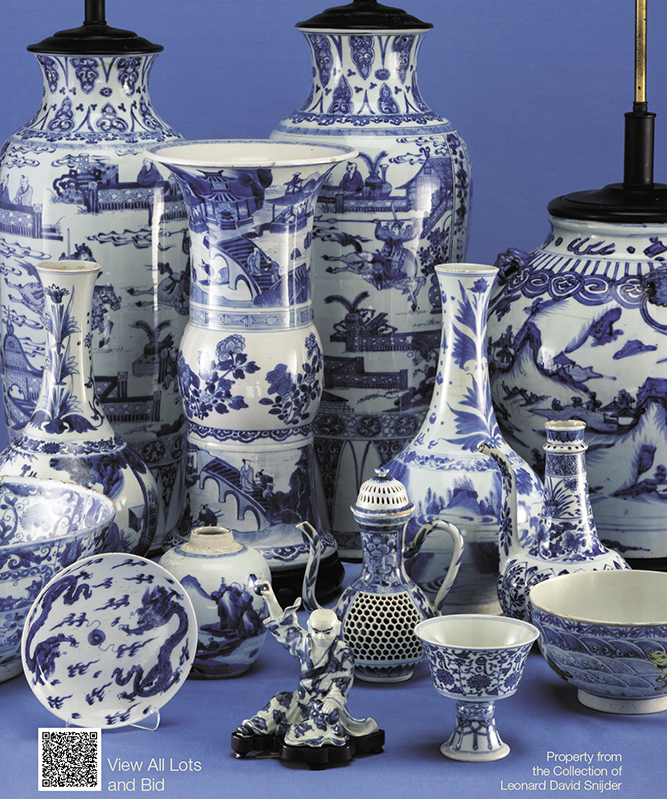
SALEM, MASS. — “Anyone who decorates with ceramics today has Amalia van Solms to thank.” Karina Corrigan, the Peabody Essex Museum’s H.A. Crosby Forbes curator of Asian export art, underscored the influence of this Seventeenth Century tastemaker, the wife of the stadtholder Frederik Hendrik, whose early enthrallment with Asian porcelain led her to form a personal collection of 1,400 pieces and, in fact, to popularize the grouping and display of ceramics in home design.
Van Solms is one of myriad intriguing figures encountered in “Asia in Amsterdam: The Culture of Luxury in the Golden Age” on view at the museum to June 5. The exhibition was co-organized by PEM and the Rijksmuseum in Amsterdam. (The Rijksmuseum mounted a version of the exhibition in late 2015.) All are encouraged to partake of this astonishing array of splendid objects, 200 in number and drawn from more than 60 collections, as well as the provocative stories these works represent.
Charting the impact of international trade and resulting cross-cultural fertilization has been a recurring theme among art museum exhibitions of late, and it is an especially appropriate one for the Peabody Essex Museum to explore. PEM can trace its origins to the East India Marine Society founded in 1799. The multipronged mission of that association, comprised of Salem captains and supercargoes who had sailed around the Cape of Good Hope or Cape Horn, included the collection and display of “natural and artificial curiosities” acquired on far-flung voyages. Undoubtedly, these early global traders would have applauded the “Asia in Amsterdam” exhibition and catalog project so fitting with their founding vision.
In conversation, Corrigan stated that one of the exhibition’s primary goals “was to give a better sense of the extraordinary city that Amsterdam was in the Seventeenth Century. It was vibrant and complex. We also want visitors to know how pertinent engagement with Asia was to the development of the city and to the Dutch Republic as a whole.”
The Seventeenth Century is heralded as the zenith of Dutch trade with Asia. The instigator and agent was the VOC (Verenigde Oostindische Compagnie) or Dutch East India Company, in existence from 1602 to 1799. Considered the first multinational corporation — with a network consisting of 600 trading posts — the VOC promoted an exchange of ideas, products, arts and design that reverberated both West and East.
At the most basic level, VOC’s imports to the Netherlands served up a novel feast for the senses. The Dutch donned clothing made of soft and shimmering silks and jewelry ornamented with diamonds and pearls, sipped aromatic teas from dainty porcelain cups and sprinkled delectable spices into dishes savory and sweet. This surge of luxury goods and consumables resulted in a stimulation explosion and a revolution in daily living.
On the other side of the globe, Dutch traders stationed in Asia commissioned furniture and other decorative art objects from local and regional craftspeople. Some of these objects blended Western and Eastern attributes. As a rule, expatriate merchants left these household items behind if and when they returned to the Netherlands, thus little is known about furnishings that speak to the flip side of the coin, “Amsterdam in Asia.” Rare examples of these fusions are “dissected” stylistically, culturally and technically in the exhibition and catalog. They include a Coromandel Coast cradle, which catalog contributor Dave van Gompel considers “one of the finest pieces of East Indian furniture from the VOC period.”
Catalog editors Karina Corrigan; Jan van Campen, curator of Asian export art at the Rijksmuseum; and Femke Diercks, curator of European ceramics at the Rijksmuseum, have collaborated on a concise yet substantial introduction. In it they summarize the implications of these trade objects from the perspectives of social history and art history, including how they were used and displayed in places where the Dutch lived and labored and how they influenced the creations of artists and artisans working in the Netherlands. These curators do not shy away from recognizing the less appealing circumstances surrounding luxury trade items. These objects of intense beauty and extraordinary craftsmanship often possessed a dark side.
A team of 30 scholars researched and wrote the seven essays and 100 object entries in the catalog. These experts reveal how craftspeople in China, Japan, India, Indonesia and elsewhere in Asia tailored their creations to meet the needs and expectations of a diverse clientele. As stated in the catalog, “The potters of Jingdezhen and Arita, the silversmiths of Batavia, and the textile dyers of Surat and the Coromandel Coast adeptly altered the designs and shapes of their wares to cater to many different European and Asian markets and to satisfy Dutch conceptions of Asia.”
Catalog contributors also call attention to the human cost of producing such art objects and consumables and to the oppression and violence that was systemic in colonialism and mercantile empire building. Consider the massacre Governor-General Jan Pieterszoon Coen set in motion in 1621 to secure a Dutch monopoly of the nutmeg trade. It resulted in the death of more than 10,000 Banda Islanders. The searing event is still commemorated by the Bandanese through a ceremony that is interpreted in the exhibition via a video presentation.
On the lighter side, art and antiques dealers will likely enjoy the catalog essay “East Indies Shops in Amsterdam” by Jaap Van der Veen and its assortment of fun facts about early arts retailing. Rather like an antiques district today, more than a dozen East Indian import shops were concentrated on one street and an adjoining alley in Amsterdam during the Seventeenth Century. Baren Janszoon van Kippens, a significant and possibly the earliest retailer of East Indian goods in Amsterdam, was known by the marvelous nickname “Porceleyn.”
The exotic wares van Kippens and other merchants offered were not just for the wealthy, but for customers of varying means. As an example, a 1640 mediation document mentioned how two men had entered into a partnership to buy and sell India goods “from and to people ranging from the greatest to the least, including apprentices and sailors.”
In the essay, the 1664 probate inventory of shopkeeper Adriaen Claeszoon Bleeker provides a snapshot of his East Indies store stock, which included Japanese porcelain, teas, lacquer ware, textiles from various parts of Asia, nearly 2,000 rattan walking canes, Japanese prints and Indonesian shadow puppets. Aside from hand fashioned goods, these shopkeepers also imported novelties from the natural world, including seashells and “live” creatures. Van der Veen cited a 1655 incident reminiscent of the Monty Python “Dead Parrot” sketch, where a customer complained to a shopkeeper who had sold him a cockatoo that the bird reached him “hanging from a chain, being very nearly dead” and later died.
Corrigan explained that the exhibition as installed at PEM is divided into five major sections focusing on Networkers, Tastemakers, Thought Leaders, Fashionistas and Innovators. In her explication of Networkers, she turned to the 1665 group portrait of “Pieter Cnoll and Cornelia van Nijenrode with Their Daughters and Malay Slaves.” She described how Cornelia, the daughter of a VOC official and a Japanese courtesan, had married Pieter Cnoll. They lived in Jakarta. “They were a power couple. You see it in the silk, the diamonds and pearls and in the carved ivory box and fan their daughters are carrying. They are displaying the luxuries available.”
Corrigan highlighted another person in the painting. “The family is shown with two of the 50 slaves who were part of the household. … We know a lot about Untung, the male slave depicted. He was the parasol bearer for Pieter Cnoll, a trusted and powerful position within the household. The two men would have been very close. But when Peter died and his son inherited, Untung lost his position. He became a resistance fighter against the VOC.” Thus Untung turned into a network disruptor.
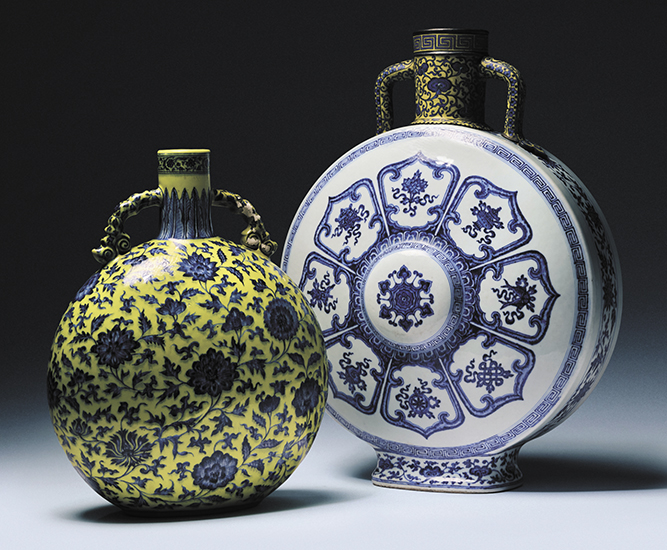
A recent issue of House Beautiful spotlighted blue and white delftware as a 2016 decorating trend, one more reminder of Asia’s powerful and long-lived influence upon Dutch and, by extension, Western culture and design. It is remarkable how interior decorating and collecting traditions, preferences and schemes born of the Seventeenth Century still hold currency today and are so standard that we hardly give them a second thought.
“Asia in Amsterdam” illustrates how the VOC’s relentless pursuit of global trade transformed the city of Amsterdam into a commercial and cultural world capital and how Asian luxury wares and consumables were literally “part and parcel” of the Netherlandish Golden Age. It also conjures up a bit of the fiery excitement these imports sparked upon arrival. Museumgoers susceptible to porcelain mania, lacquer lust and other fine and decorative arts passions should be forewarned.
A 356-page catalog of the same title accompanies the exhibition.
PEM has planned a symposium titled “Consuming Luxury: Asia in Amsterdam” for Saturday, April 16. The program will consider the influence of these imports on a broad range of topics, from paintings, textiles and interiors to cuisine and ideas. There is a fee and reservations are required by April 8.
The Peabody Essex Museum is at 161 Essex Street. For information, www.pem.org or 866-745-1876.