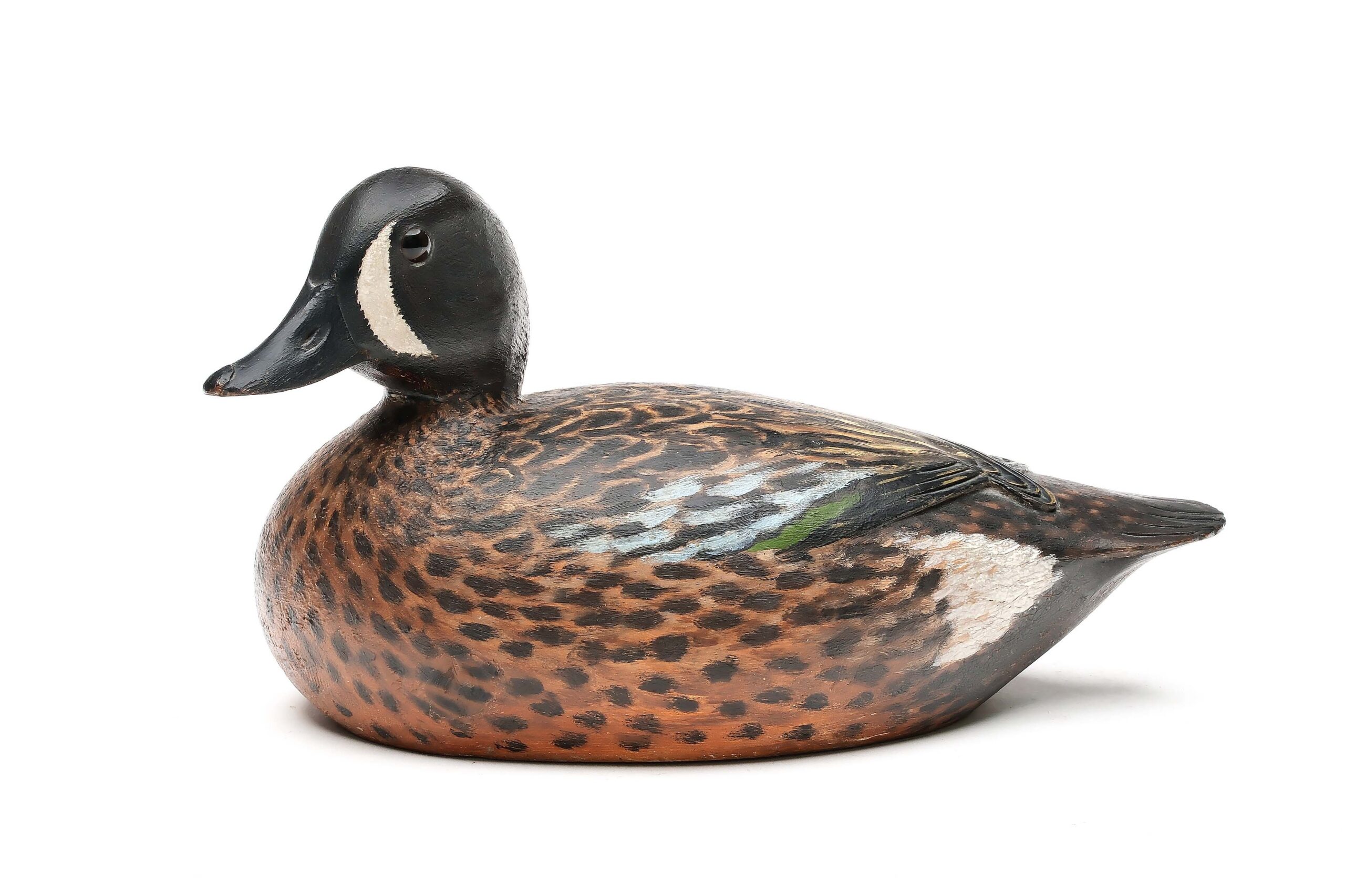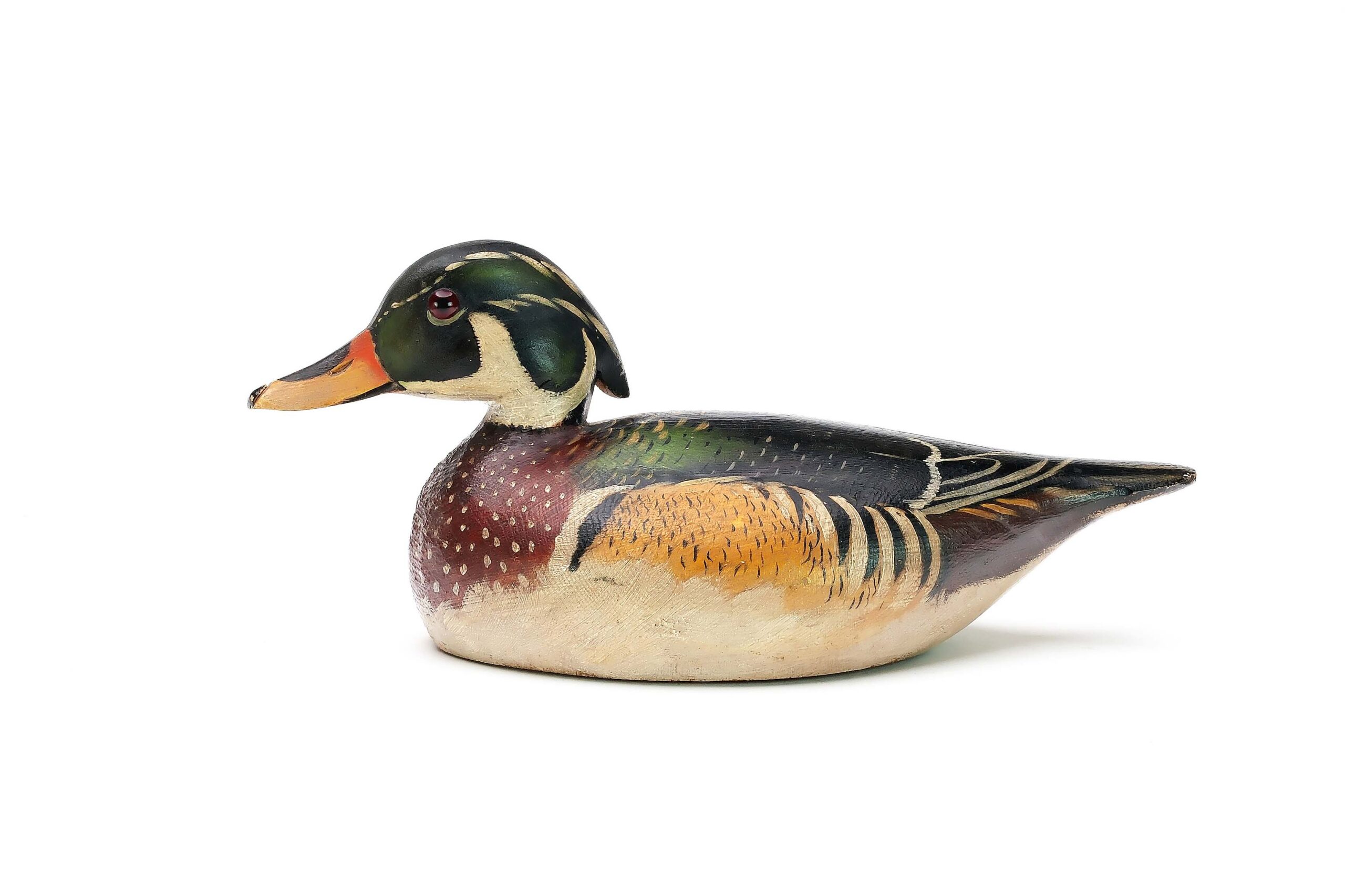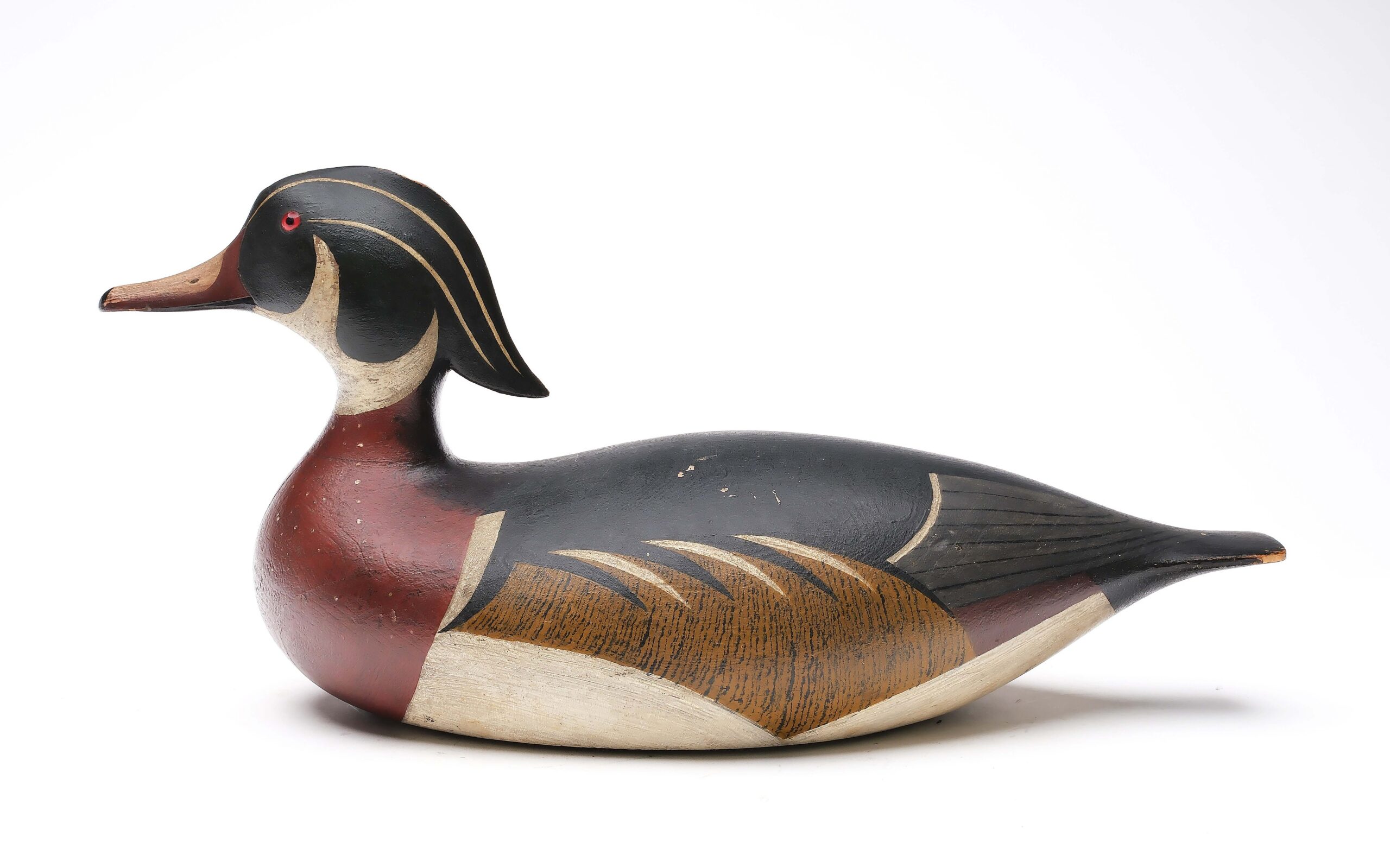
Setting a new world record price for any decoy ever sold at $1,250,000 was this wood duck with an extended crest by Joseph Lincoln (1859-1938), Accord, Mass., 15½ inches long, which was part of the Cook collection ($400/600,000).
Review by Kiersten Busch
LOMBARD, ILL. — April 23-24 saw 635 lots cross the block in Guyette & Deeter’s Decoy and Sporting Art Auction, which was held in conjunction with the North American Decoy Collectors Association’s Vintage Decoy & Sporting Collectibles Show, April 21-25. “We could tell from early interest that the sale was going to be strong,” said owner Jon Deeter. “A mix of new and seasoned buyers had been preparing for the sale.” The sale set 28 new auction records for different artists, totaled $9,895,947 and earned a sell-through rate close to 97 percent.
Highlighted most honorably on the first day was session one of the James and Diane Cook collection (Minneapolis), a series that is being called the “Super Bowl” for decoy collectors. “Our company has handled most of the legendary collections,” Deeter explained. “Leading up to this, we have handled the Goldberger, Haid and Harmon collections. While they were not as large, they were also significant and important collections.” According to the firm’s post-sale press release, the Cook collection grossed $7,390,260, with an average lot price of $53,553 and earning 20 of the records.
From the Cook collection, an “exceedingly rare and important” wood duck with an extended crest by Joseph Lincoln of Accord, Mass., was the first to cross the block and took the top-lot crown, selling for $1,250,000 — a new world record price for any decoy ever sold. One of three known Lincoln wood ducks with its original paint and in untouched condition, the decoy had well-documented and extensive provenance and measured 15½ inches long. Also carved by Lincoln was a 15¼-inch-long widgeon, which realized $81,600 and had provenance to the Shelburne Museum, the Joel Barber collection and the Cook collection.
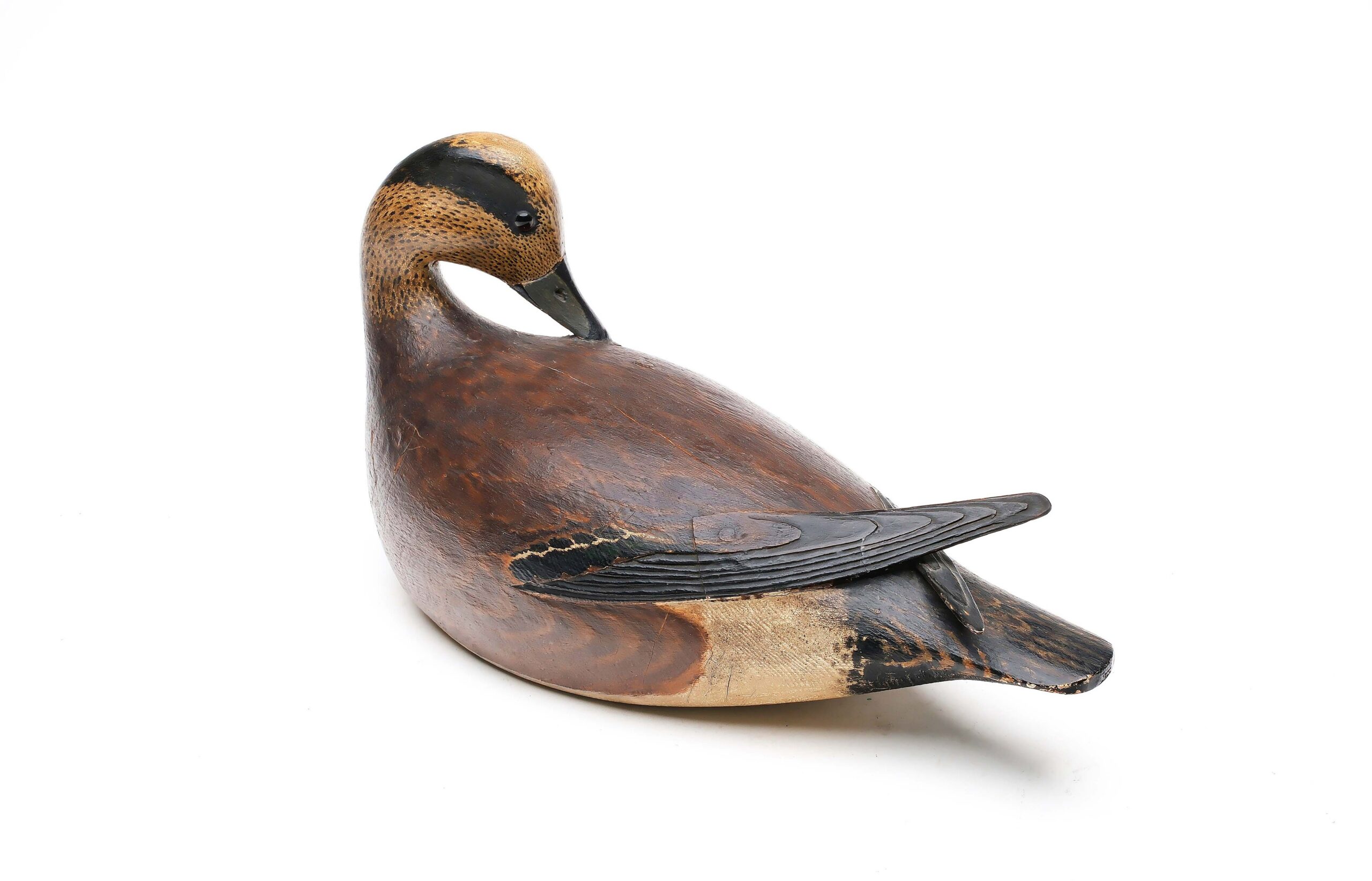
$1,080,000 was a new world record for an A. Elmer Crowell (East Harwich, Mass., 1862-1952) decoy, which was awarded to this pre-brand preening widgeon model, 13½ inches long, made for Dr John C. Phillips ($400/600,000).
The Cook collection comprised the auction’s first 132 lots, and the second to cross the block, a pre-brand preening widgeon model with applied, raised and crossed wingtips by A. Elmer Crowell (East Harwich, Mass.), was also the second lot to earn over $1 million. The model was originally made for Dr John C. Phillips and sold, after a battle between two collectors, for $1,080,000, achieving a new world record for the maker.
Ten additional decoys made by Crowell crossed the block on day one, ranging in price from $8,400 for a decorative robin standing on a wooden branch, to $276,000 for a relief-carved bluewing teal with crossed wingtips. The latter was also made for Phillips and featured the maker’s oval brand on its underside. Another notable Crowell decoy was an early decorative walking curlew in near-mint original paint and patina, which realized $192,000.
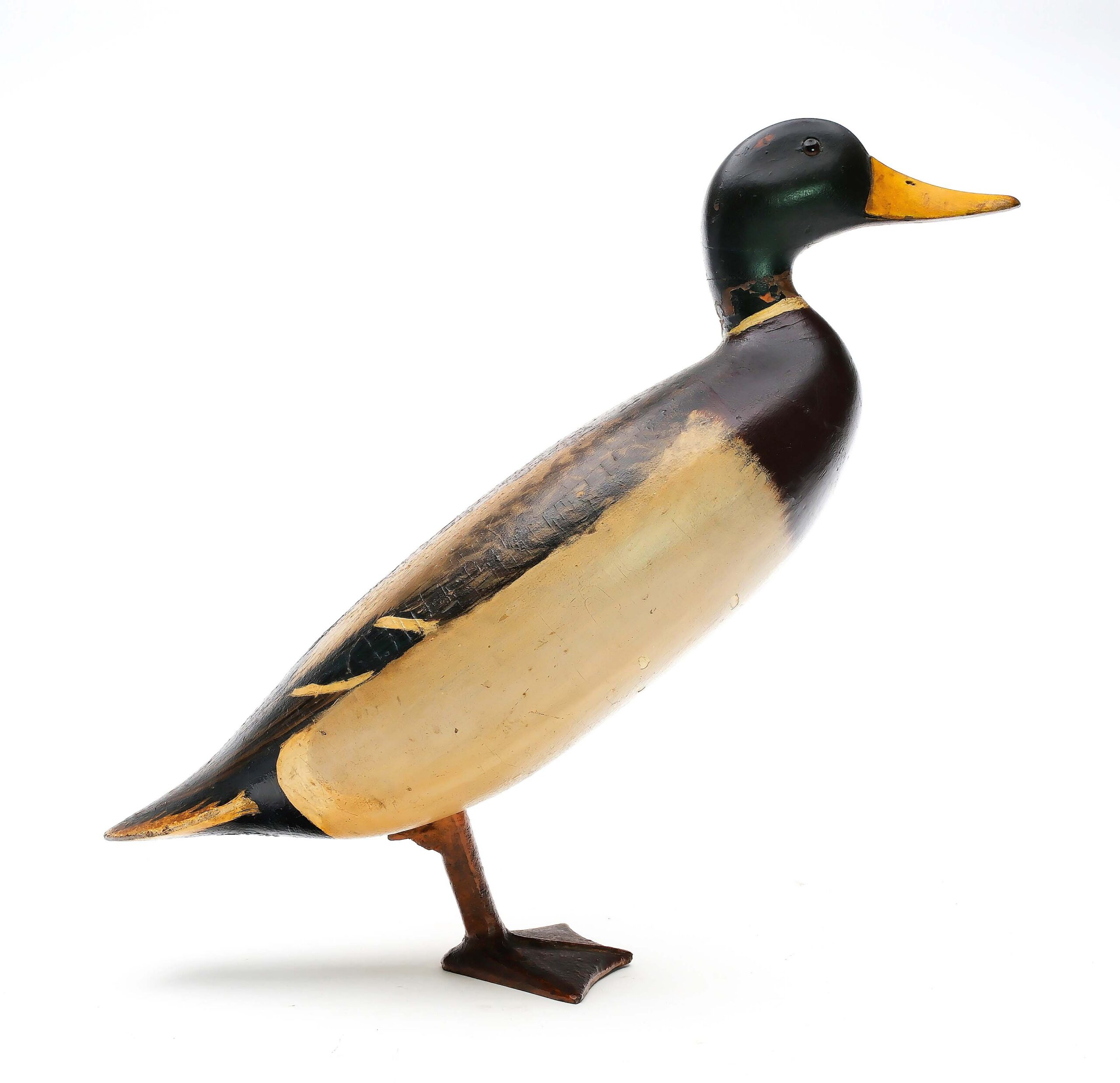
Peoria, Ill., decoy carver Charles Schoenheider, Sr, was represented by two lots, led at $276,000 by a hollow-carved standing mallard ice duck with a removable iron foot, believed to be the only standing mallard by the maker. It was depicted on the front cover of The Great Book of Wildfowl Decoys edited by Joe Enger and in Decoys – North America’s One Hundred Greatest by Loy S. Harrell, Jr. A 14½-inch-long bluebill example, hollow-carved with comb feather paint details, realized $9,600 against a $4/6,000 estimate.
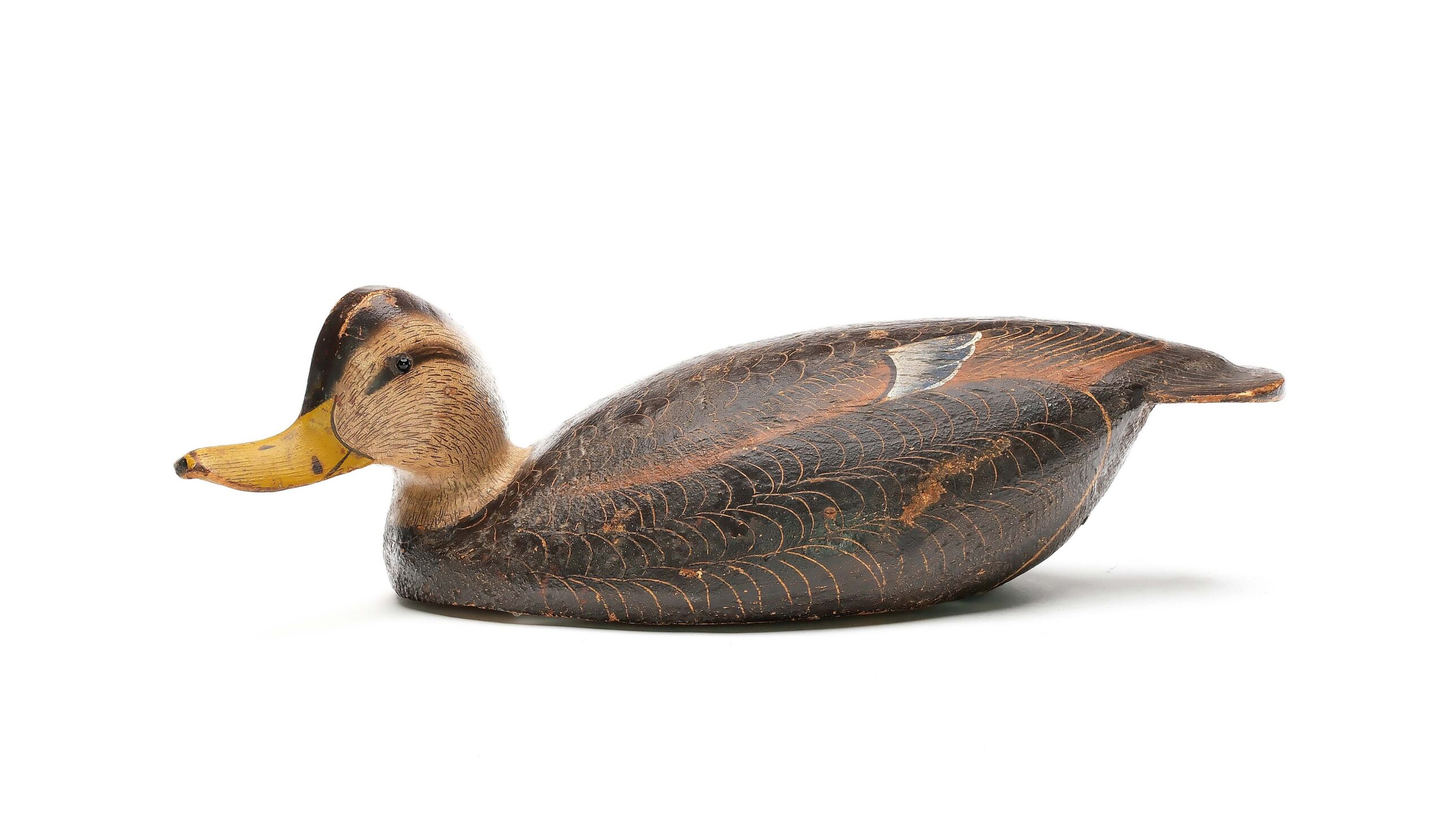
This turned-head black duck by the Ward Brothers, Crisfield, Md., 1921, 16 inches long, had extensive publication history and realized $252,000, besting its $60/90,000 estimate.
An early turned-head black duck, carved in 1921, made $252,000 to lead four lots of decoys by the Ward Brothers (Crisfield, Md.) on day one. Despite some minor wear, the decoy retained its original paint, including feather paint detail, as well as “Ward’s Decoys Crisfield MD” painted on its underside. It was pictured in Gene and Linda Kangas’ book Decoys: A North American Survey and The Ward Brothers’ Decoys by Ronald J. Gard and Brian J. McGrath.
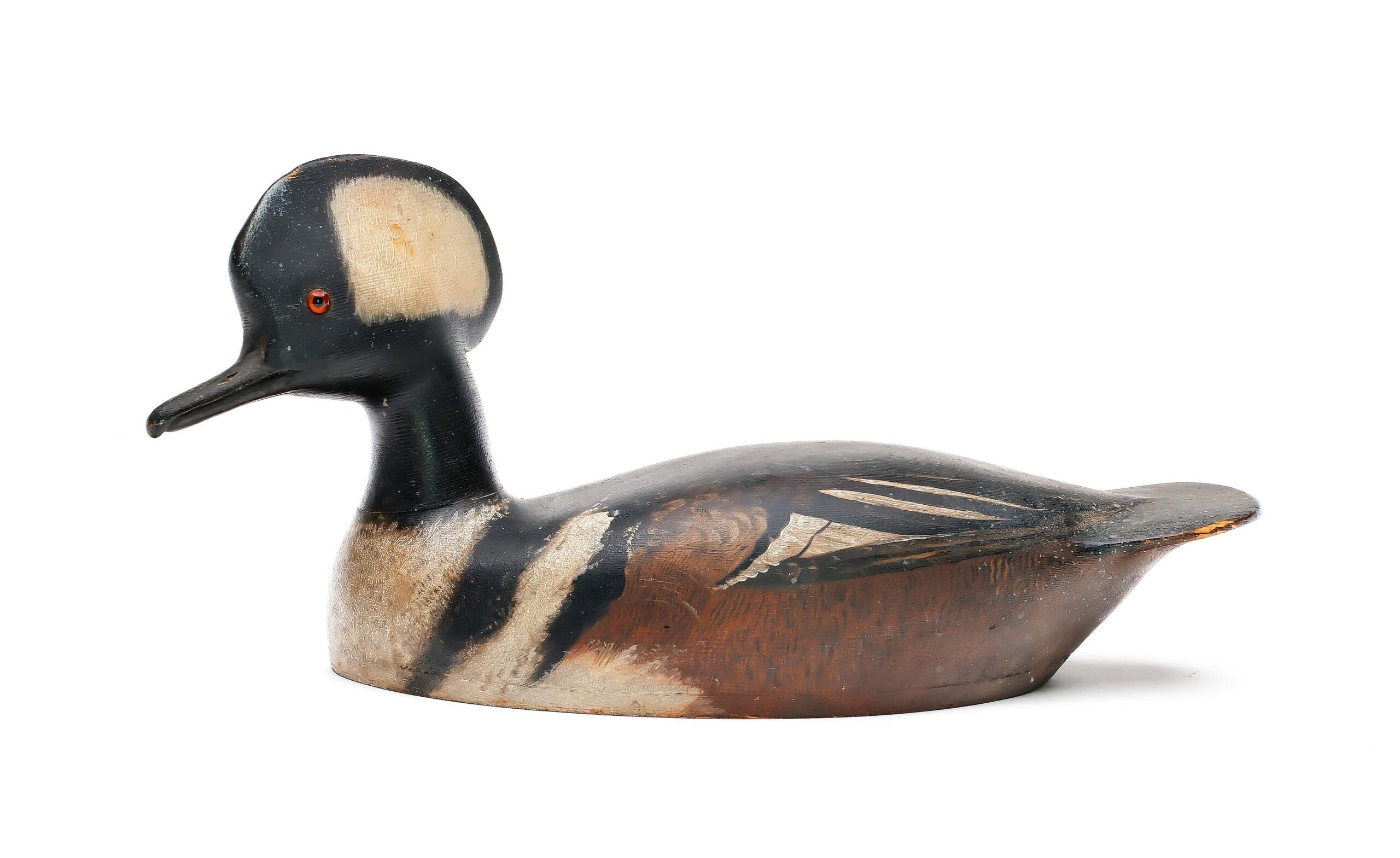
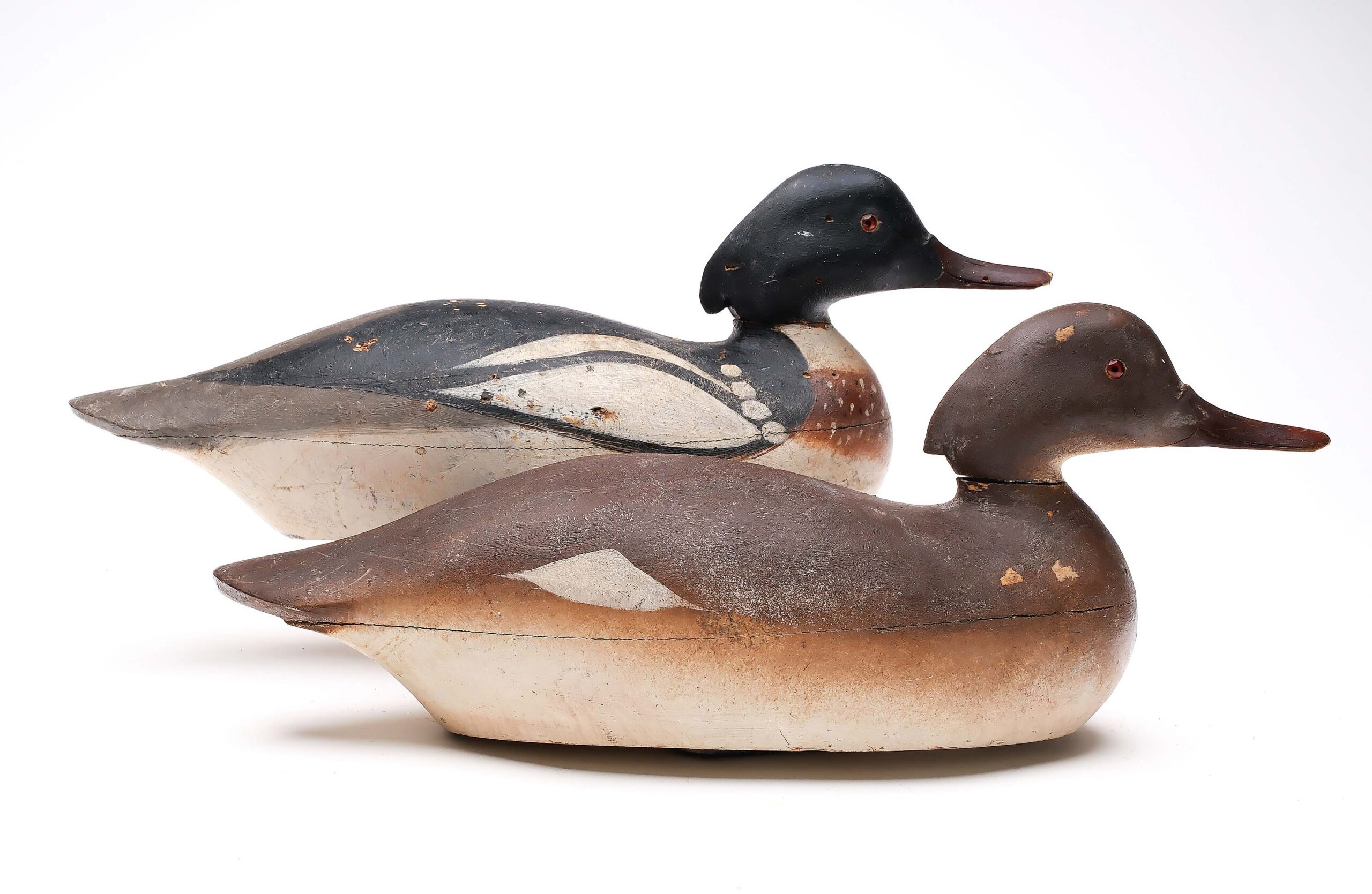
Just over 40 lots of decoys from the Mason Decoy Factory of Detroit crossed the block, with a rigmate pair of red-breasted mergansers flying to the top of the selections at $180,000 ($50/80,000). The hollow-carved and premier-grade figures had early head styles and extended crests and, according to catalog notes, were “one of only two known pairs.”
The highest-priced decoy on day two was also carved by the Ward Brothers. A rigmate pair of mallards carved for the White Mallard Club in 1936, they had horseshoe-shaped lead weights on their undersides, slightly turned heads and deep eye groove carving. The pair had provenance to the Oliver Smith collection and swam to $54,000.
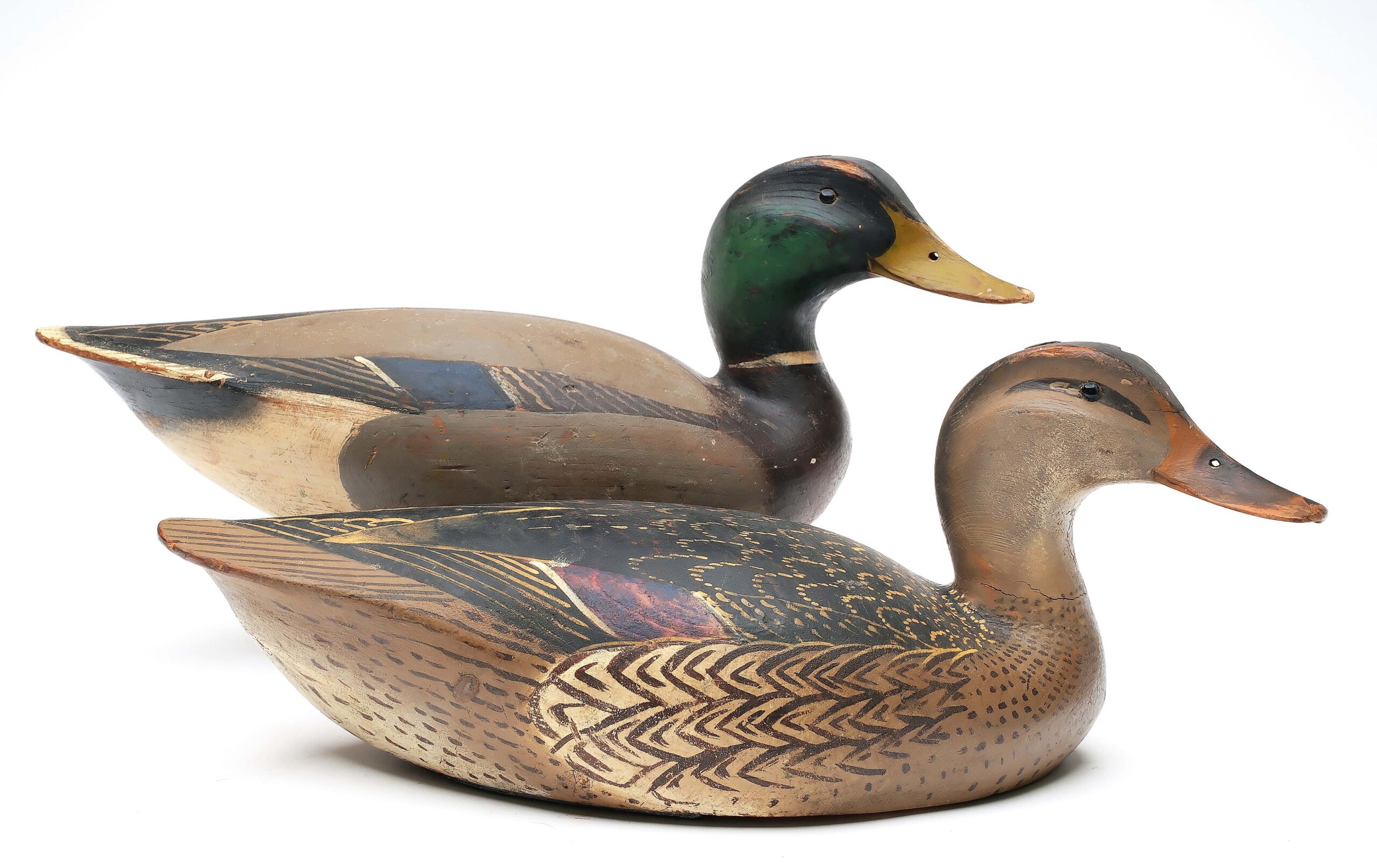
Consigned from the Oliver Smith collection, this rigmate pair of Ward Brothers (Crisfield, Md.) mallards, 1936, 17 inches long, was carved for the White Mallard Club and earned $54,000, the highest price of the second day of the sale ($30/50,000).
Fifteen additional Ward Brothers lots crossed the block, ranging in price from $2,400 for a pintail hen with a balsa wood body and large cedar tail, to $16,800 for a black duck with tack eyes in their 1936 style, which had provenance to the Paul Loder collection.
Twenty Crowell decoys were sold on day two, led by a wood duck with an extended crest and slightly turned head from the Deborah and Martin Maloy collection, which crossed the block for $51,000. Another notable selection was a pintail with a slightly turned head in its original paint, which measured 19¼ inches long and flew to $48,000.
Sonoma Creek, Calif., carver Richard Janson was represented by five lots including a pair of greenwing teals with deeply carved relief wing feathers, which were depicted in Waterfowl Decoys of California by Michael R. Miller. In never-rigged and never-weighted condition, the pair glided to $48,000.
A rigmate pair of canvasbacks with mild to moderate wear, measuring 14¼ and 15¼ inches long each, carved by James T. Holly of Havre de Grace, Md., excelled, realizing more than four times its $6/9,000 estimate at $42,000. Another decoy by Holly, an “extremely rare” pintail with scratch feather paint detail on its back, was marked “Doug T” in red paint on its underside and realized $24,000.

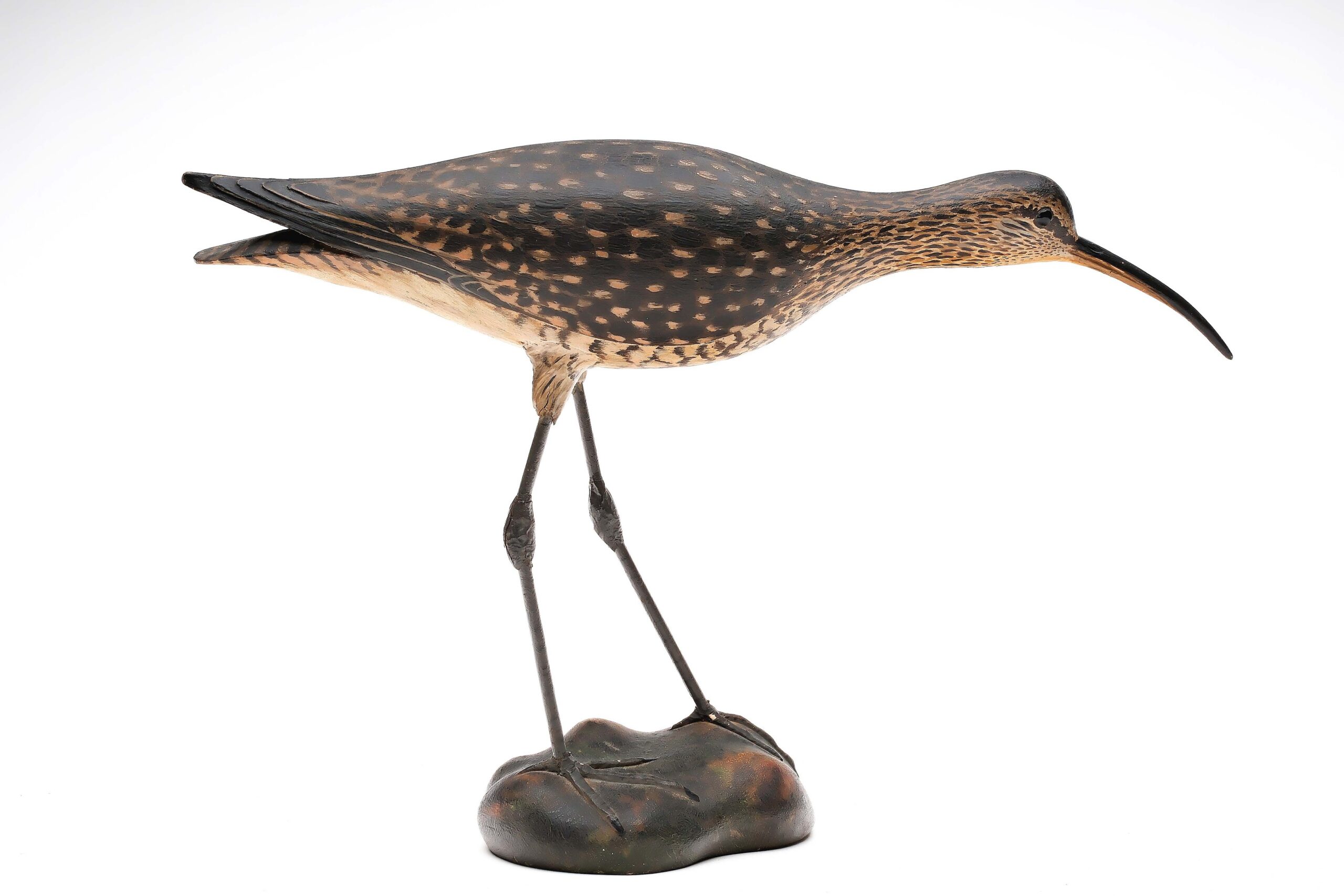
Carved by Nathan Cobb, Jr (Cobb Island, Va., 1825-1905), this 15¼-inch-long running curlew had extensive provenance and publication history and realized $48,000 ($50/80,000).
Additional highlights from day two included a large running curlew by Nathan Cobb, Jr (Cobb Island, Va.), which was bid to $48,000. The decoy had a split tail carving, and a serif “N” carved on its underside. According to catalog notes, the decoy was “found with the two Cobb curlews in the Shelburne Museum collection by Richard Moeller of New Jersey in the 1950s.” It also had provenance to the Robert Gresham collection, a private Southern collection and had publication history in Southern Decoys of Virginia and the Carolinas by Henry A. Fleckenstein, Jr.
Also notable were a pair of unused rigmate red-breasted mergansers with inlayed neck seats and extended crests by Irving Jewett Wallace of Small Point, Maine ($30,000) and an eider in original paint with a long inlet neck seat and relief bill carving from Matinicus Island, Maine ($30,000). The latter, carved circa 1890, was branded “W.L. Ames” to its underside for Captain Wilmer L. Ames (1853-1933).
The Cook collection will continue to be sold across four additional auctions — the second session will be during the firm’s next two-day auction on July 24-25, held at the Country School in Easton, Md.
Prices quoted include the buyer’s premium as reported by the auction house. For information, www.guyetteanddeeter.com or 410-745-0485.