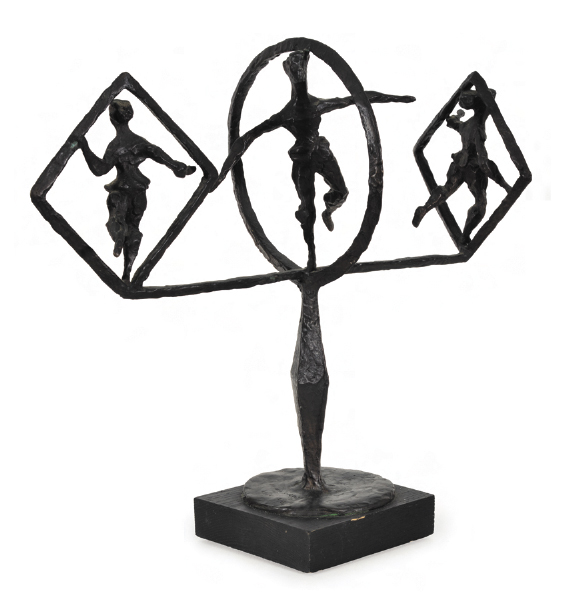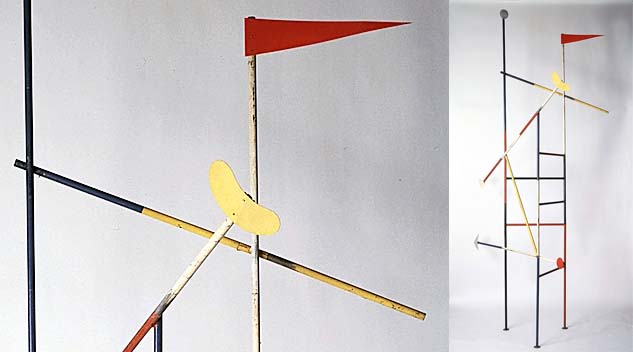
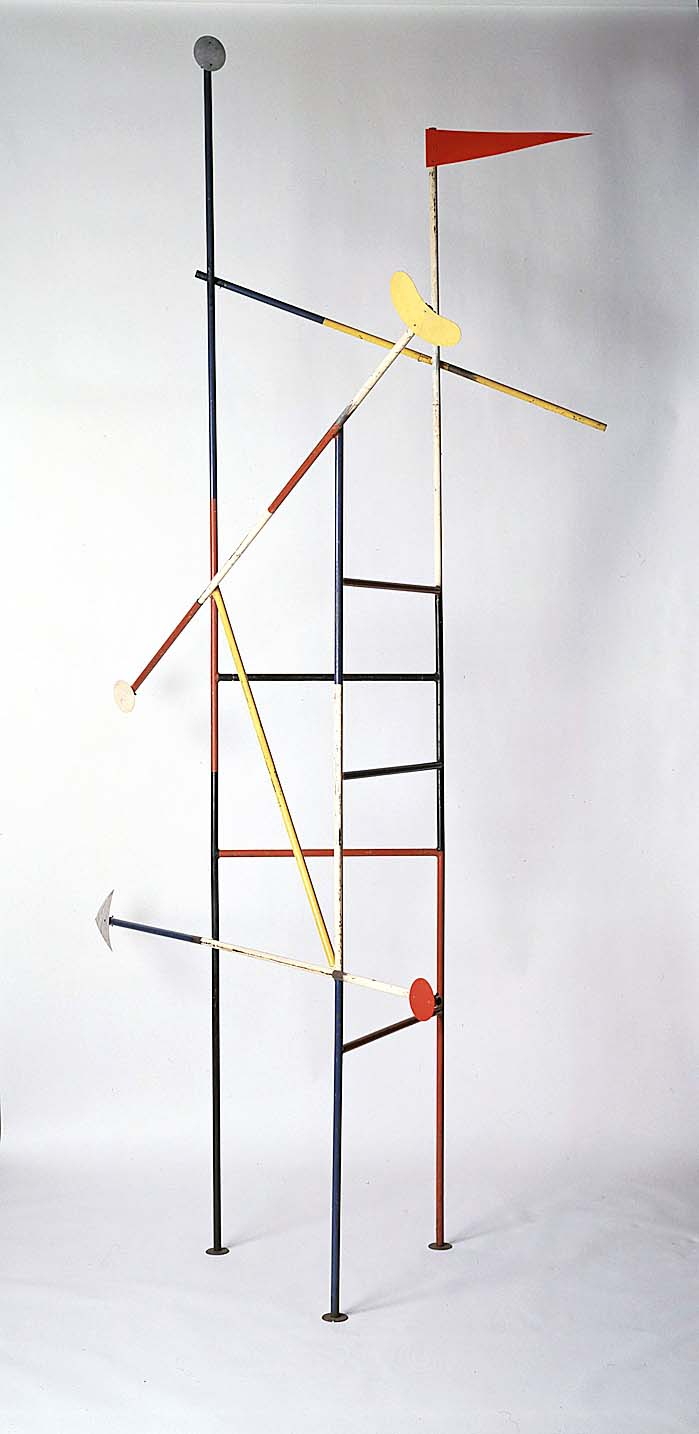
“Jungle Gym” from “Stephen Acrobat” by Isamu Noguchi, 1947, steel, plastic and paint. The Isamu Noguchi Foundation and Garden Museum, New York. The Noguchi Museum Archives, 00189. Photo by Kevin Noble. © 2025 The Isamu Noguchi Foundation and Garden Museum, New York / Artists Rights Society (ARS), New York.
By Kristin Nord
ATLANTA — Isamu Noguchi (American, 1904-1988) is widely regarded as one of the Twentieth Century’s most accomplished and influential artists, known for his innovative sculptures, public art and designs. He was born in Los Angeles to a Japanese poet father and an American writer mother; he split his early years between the United States and Japan. His bicultural background would deeply influence his aesthetics and helped to shape his world view.
Although Noguchi declared in 1949, “I am not a designer,” his actions belie his pronouncement — as his work exemplifies the broadest definition of design across media, including sculpture, furniture, lighting, playgrounds, landscapes and theatrical sets. On April 10, the High Museum of Art debuts “Isamu Noguchi: ‘I am not a designer,’” which will run through August 2, the artist’s first design retrospective in nearly 25 years, featuring many never exhibited and rarely seen works spanning all facets of his creative output.
“The High has a long and unique history with Noguchi, having sponsored what became his only playground built in the United States during his lifetime: ‘Playscapes,’ which opened in 1976. Located in Atlanta’s Piedmont Park, just a few minutes’ walk from the museum, that project has been beloved by the city’s residents over the past 50 years,” the High’s director, Rand Suffolk, commented recently. Creating art with civic purpose was of central importance for Noguchi, who over the course of his career blended the aesthetic and utilitarian to address the social concerns of the day.
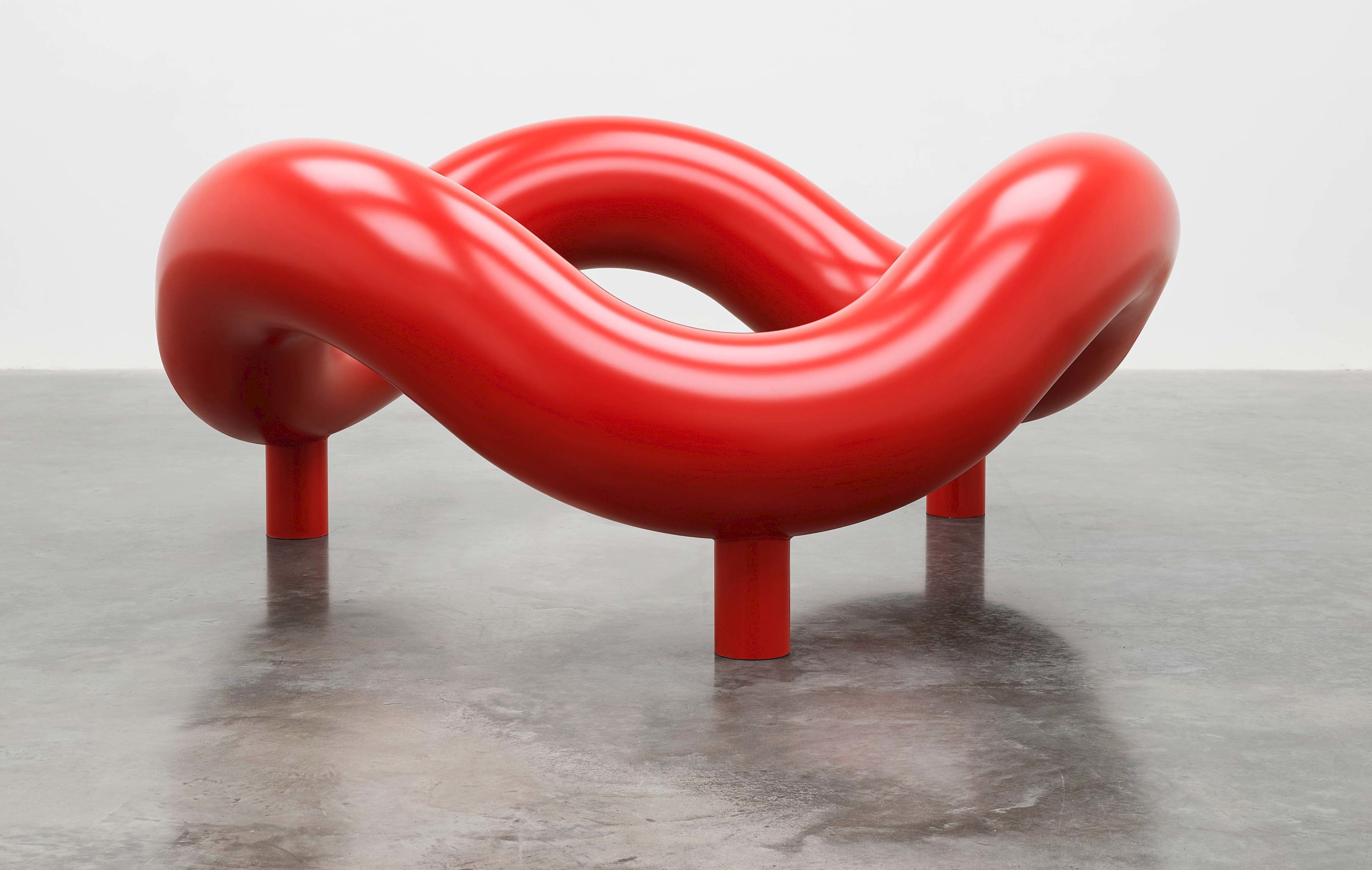
“Play Sculpture” by Isamu Noguchi, fabricated by Lippincott’s LLC (established 1966), designed circa 1966-76, this example fabricated 2025, painted steel. White Cube. © White Cube. © 2025 The Isamu Noguchi Foundation and Garden Museum, New York / Artists Rights Society (ARS), New York. Photo by David Westwood.
“This touring exhibition is an incredible opportunity to bring so many of his rare and important works together and to share them with Atlantans, who have directly benefited from his community-oriented design for decades.”
The exhibition was a labor of love for Monica Obniski, the High Museum of Art’s curator of decorative arts and design, and Marin R. Sullivan, independent curator and sculpture historian. A major thrust of the show has been its focus on the sculptor’s interdisciplinary approach — Noguchi’s preferred mode of working — and will feature nearly 200 objects drawn from an international array of institutional and private lenders.
“Today we think about design as expansively as Noguchi thought about sculpture during his lifetime — or put another way, what Noguchi broadly classified as sculpture is something far closer to what we now understand as design,” said Obniski. “By exploring Noguchi’s work holistically, but intentionally from a design perspective, this exhibition offers a revisionist history that more fully accounts for the diversity of his projects and the crucial role collaboration played across this practice.”
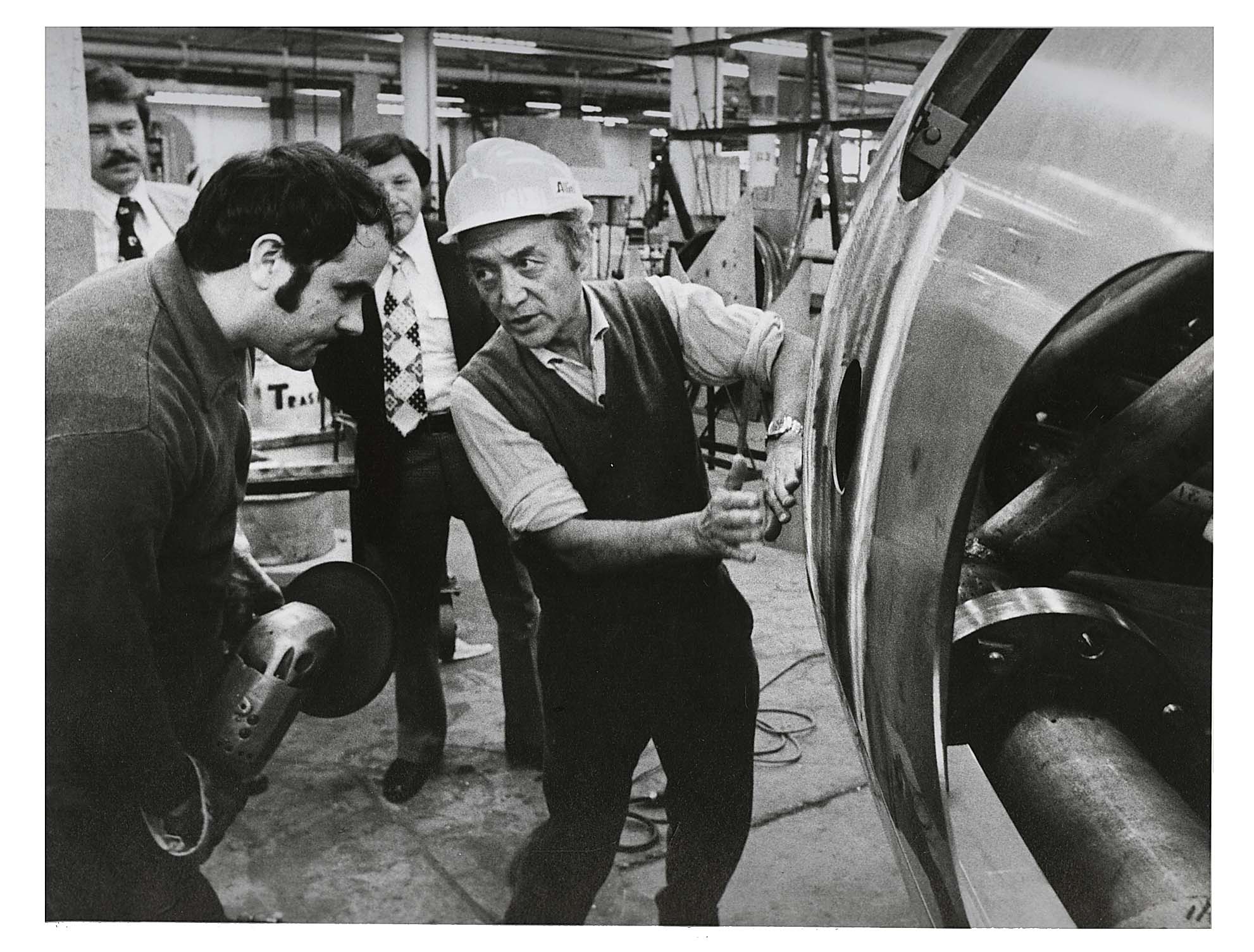
Isamu Noguchi working on the Horace E. Dodge Fountain for Philip A. Hart Plaza at Allied Bronze, Queens, N.Y., 1974-75. The Noguchi Museum Archives, 04034.
“Noguchi collaborated with creative designers, fabricators, architects and clients who helped him imagine and realize the possibilities of generous and inclusive space,” Obniski noted.
From sculptural models of potential and unrealized designs, including “Play Mountain” (1933), to tables designed with manufacturers including Knoll and Herman Miller, one gets a crash course in the reach and talent of this polymath.
There is a model of a house Noguchi designed in collaboration with architect Kazumi Adachi and several large-scale installations, notably the interactive “Play Sculpture,” designed circa 1966-76, one of Noguchi’s pieces of play equipment. The artist had won early acclaim as a classical portraitist but moved in earnest toward Modernism after a Guggenheim Fellowship enabled him to apprentice in Paris with Constantin Brancusi. During his time in the studio with Brancusi, he absorbed Brancusi’s methods and ideas. Hayden Herrera, in Listening to Stone: The Art and Life of Isamu Noguchi, wrote that he initially struggled to free himself from his academic training. Stone carving was new to him and was demanding — far beyond the skills “that I had so quickly learned of the tricks and easy effects of clay,” he said.
Yet it was there, “in that space still full of blocks of wood and marble, pedestals and tables, capitals and columns that the intentionality of architecturally scaled, functional sculpture was made most manifest,” art historian Anna Chave wrote. In Brancusi’s studio and at the countless sites Noguchi visited over the next 18 months, he began to develop a visual and conceptual lexicon.
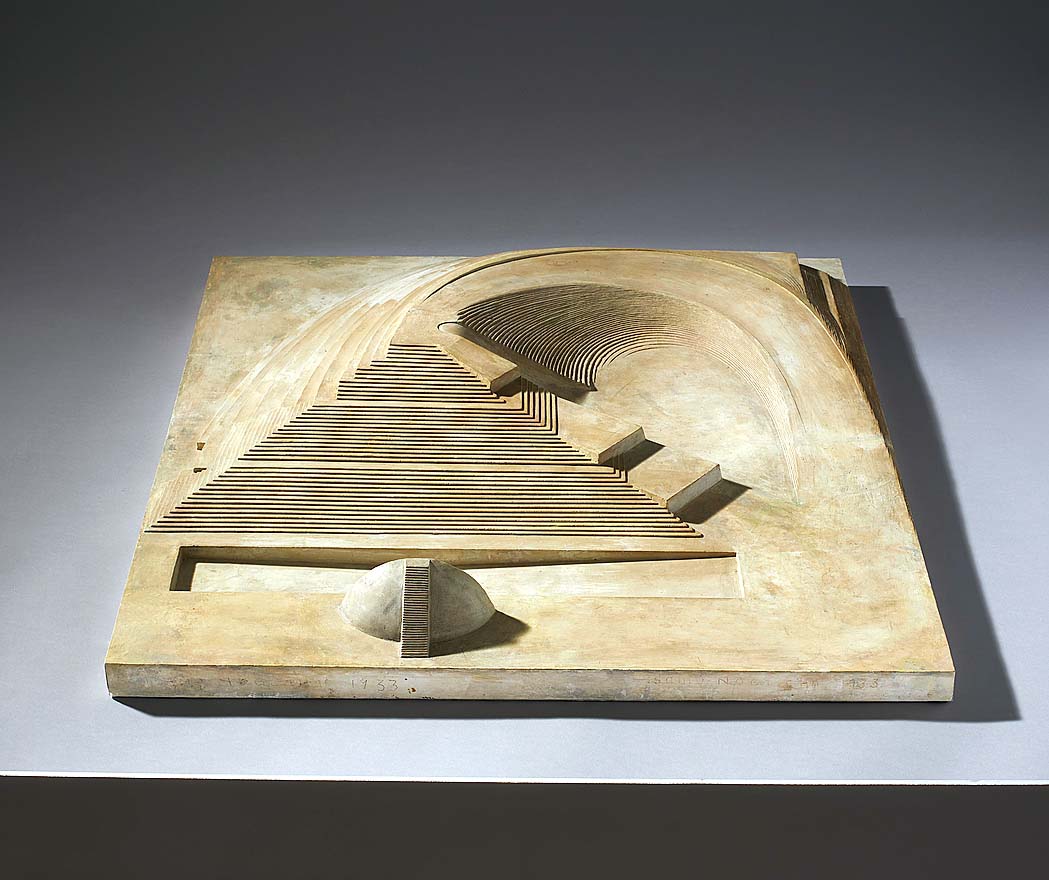
“Model for ‘Play Mountain’” (unrealized) by Isamu Noguchi, 1933, plaster, High Museum of Art, Atlanta, purchase with funds from the Decorative Arts Acquisition Endowment, 2024.175. © 2025 The Isamu Noguchi Foundation and Garden Museum, New York / Artists Rights Society (ARS), New York.
“What Brancusi does with a bird, or the Japanese do with a garden is to take the essence of nature and distill it — just as a poet does,” Noguchi wrote.
“Both sculptors were, in their own ways, obsessed with beginnings, whether those of their own lives, the cultural traditions with which they identified or the whole of civilization. They possessed a desire to reconnect sculpture to a (perhaps fanaticized) past when art claimed a ‘vital ritual and social stature,’ while simultaneously making the case that it could help design a more beautiful world in present,” Chave said.
Noguchi, as a young man of Japanese and American heritage, faced discrimination and setbacks. At times, he confessed he felt he did not belong in either culture. Then came the Japanese bombing of Pearl Harbor. Although exempt as a New York resident from the forced relocation program authorized by Executive Order 9066, Noguchi voluntarily entered the Poston War Relocation Center in Arizona, in May 1942. He had lofty plans to design gardens, recreation areas and arts programs for Poston’s incarcerated families but found instead no money or moral support for his vision.
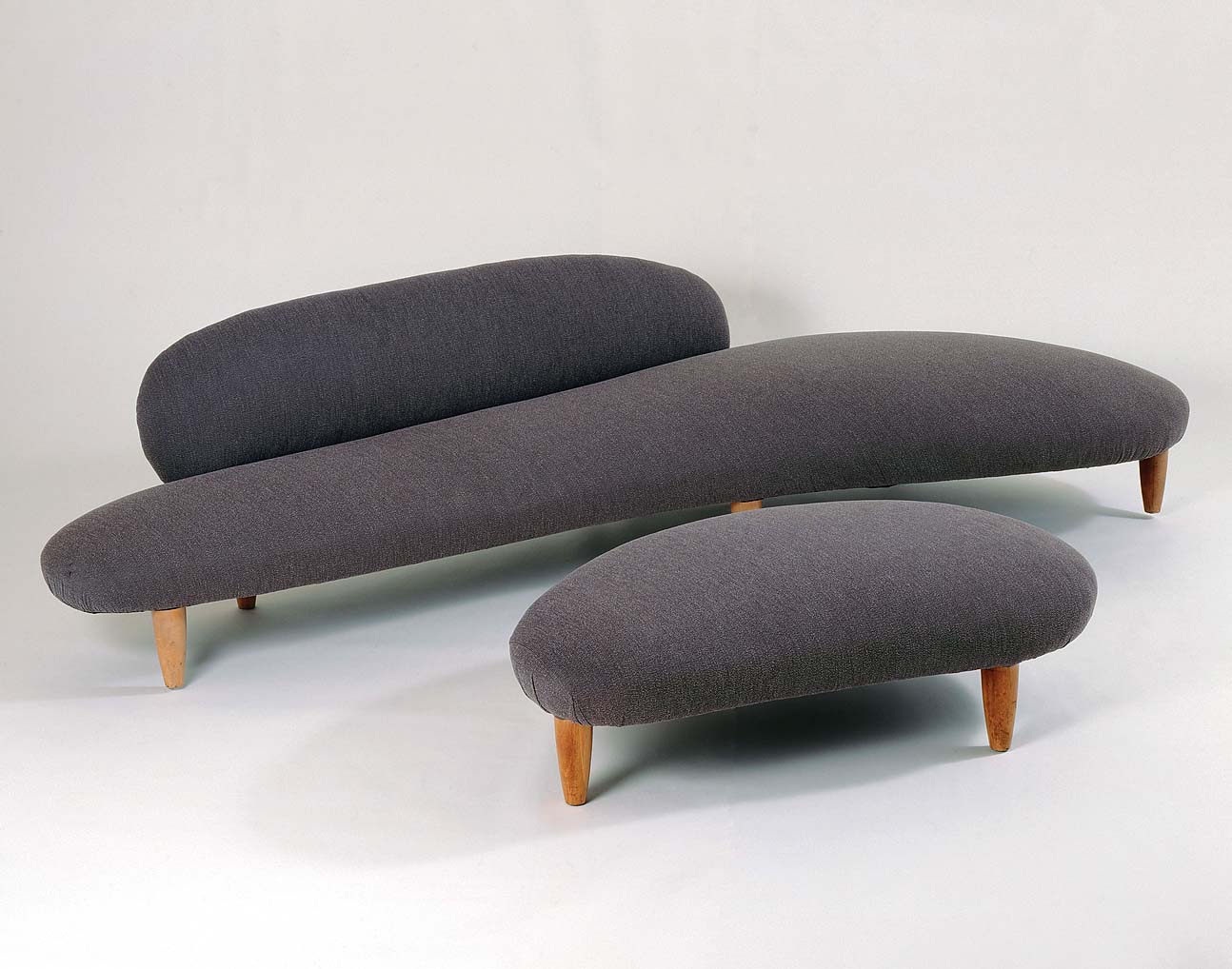
Couch (IN-70) and Bench (IN-71) by Isamu Noguchi, manufactured by Herman Miller Furniture Company (established 1923), designed 1948-49, made 1949-51, wood, maple laminate and replaced cotton upholstery. Milwaukee Art Museum, gift of Gilbert and J. Dorothy Palay. Photo by Efraim Lev-er. © 2025 The Isamu Noguchi Foundation and Garden Museum, New York / Artists Rights Society (ARS), New York.
In the immediate post-war period, as well, Obniski noted, “there was a lingering bias against artists who operated in or adjacent to the spheres of industrial design or who remained committed to a more public, or civic, address in their work.” Noguchi remained an outlier of sorts, committed to his utopian faith in public art’s transformative powers. “Sculpture is no good if it’s just put in a gallery,” he said. “It must be a part of daily living.”
Among his remarkable collaborations were with leading modern dance companies, most notably with the great Martha Graham: He worked with her on sets for 20 productions. Graham, for her part, allowed him to sculpt space and to make his set part of the dancers’ movement. The stage set for choreographer Graham’s very rarely performed Seraphic Dialogue (1955), which is on display, illustrates the brilliance of their work together.
Over and over again, Noguchi drafted plans for playgrounds, which he asserted were the highest embodiment of his vision that art could be “beyond personal possession.” Yet most of his proposals were rejected. Noguchi’s abstract sculptural forms often evoked ancient civilizations, an open-ended invitation to explore and make your own rules. In the end he would comment ruefully that some of his best designs were those that were never built.
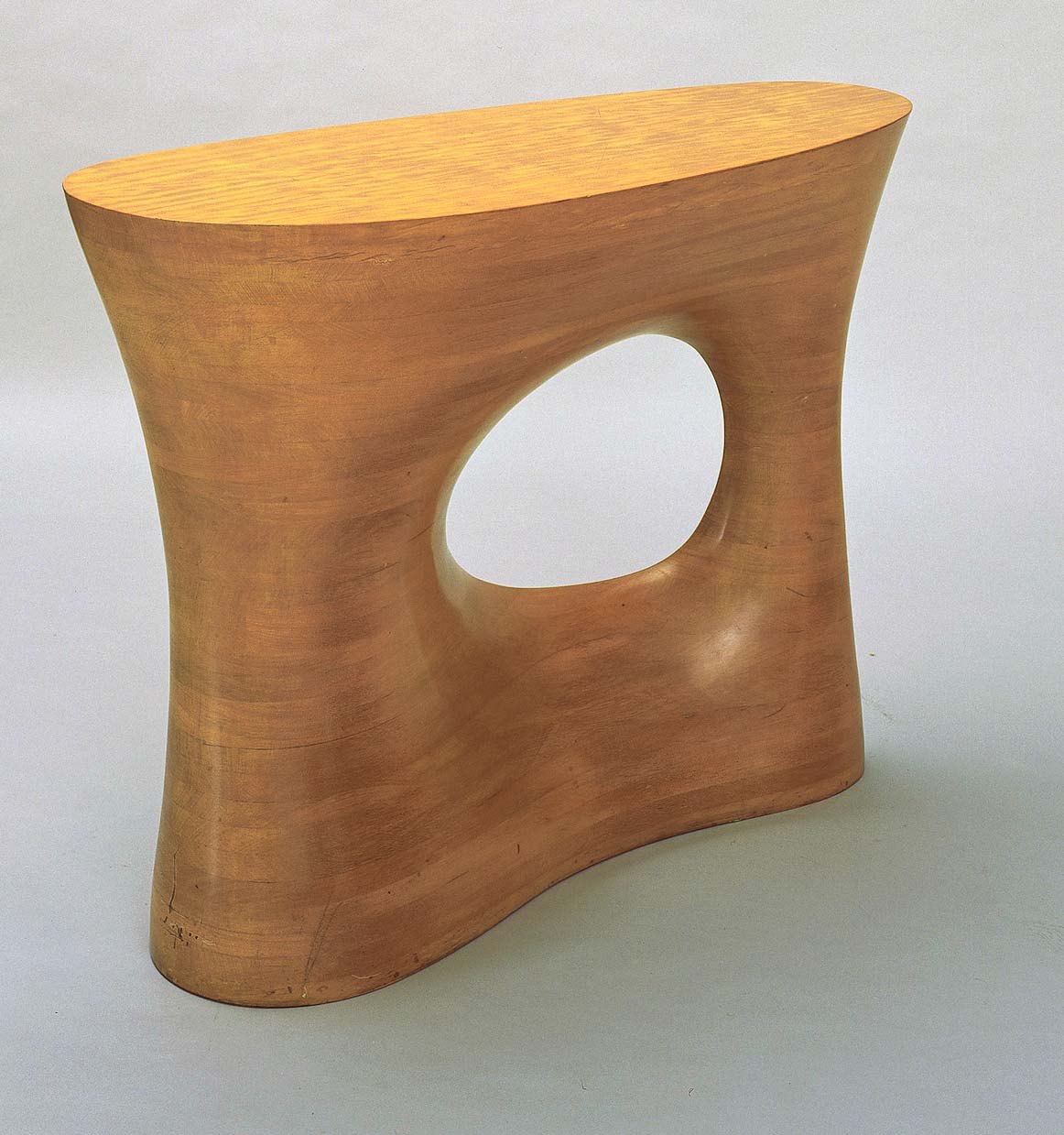
Table by Isamu Noguchi, circa 1941, laminated and carved avodire. The Museum of Modern Art, New York, The Philip L. Goodwin Collection (gift of James L. Goodwin, Henry Sage Goodwin and Richmond L. Brown). Digital Image © The Museum of Modern Art/Licensed by SCALA / Art Resource, NY. © 2025 The Isamu Noguchi Foundation and Garden Museum, New York / Artists Rights Society (ARS), New York.
Visitors able to catch this traveling show at one of its venues will see many of his sculptural models for potential and unrealized projects, such as the recently rediscovered plaster for “Play Mountain” (1933) tables and stools designed for manufacturers like Herman Miller and Knoll and a house model Noguchi designed in collaboration with architect Kazumi Adachi. “This exhibition seeks to reposition his design practice, sometimes considered ancillary to his “real” work, to reinforce that it was not merely a backdrop for his sculpture,” Obniski said.
Noguchi created his magical “Akari” series, a term meaning “light as illumination,” after observing traditional lantern construction in Gifu, Japan. His modernist coffee table (designed in 1944), his Bakelite “radio nurse” (designed in 1937) and rocking stools (designed 1954-55) were among his other iconic works manufactured for the home. All these will be on display.
“His art’s vitality,” art critic Margaret Sheffield wrote, “not only in its exterior forms but the resonating forces within, marks even his most elegant works with a feeling of primordial energy. The quality of inner force, of incipient creation, demonstrates that to an astonishing degree, Noguchi achieved the goal he gave himself at the age of 21, ‘to view nature through nature’s eyes.’”
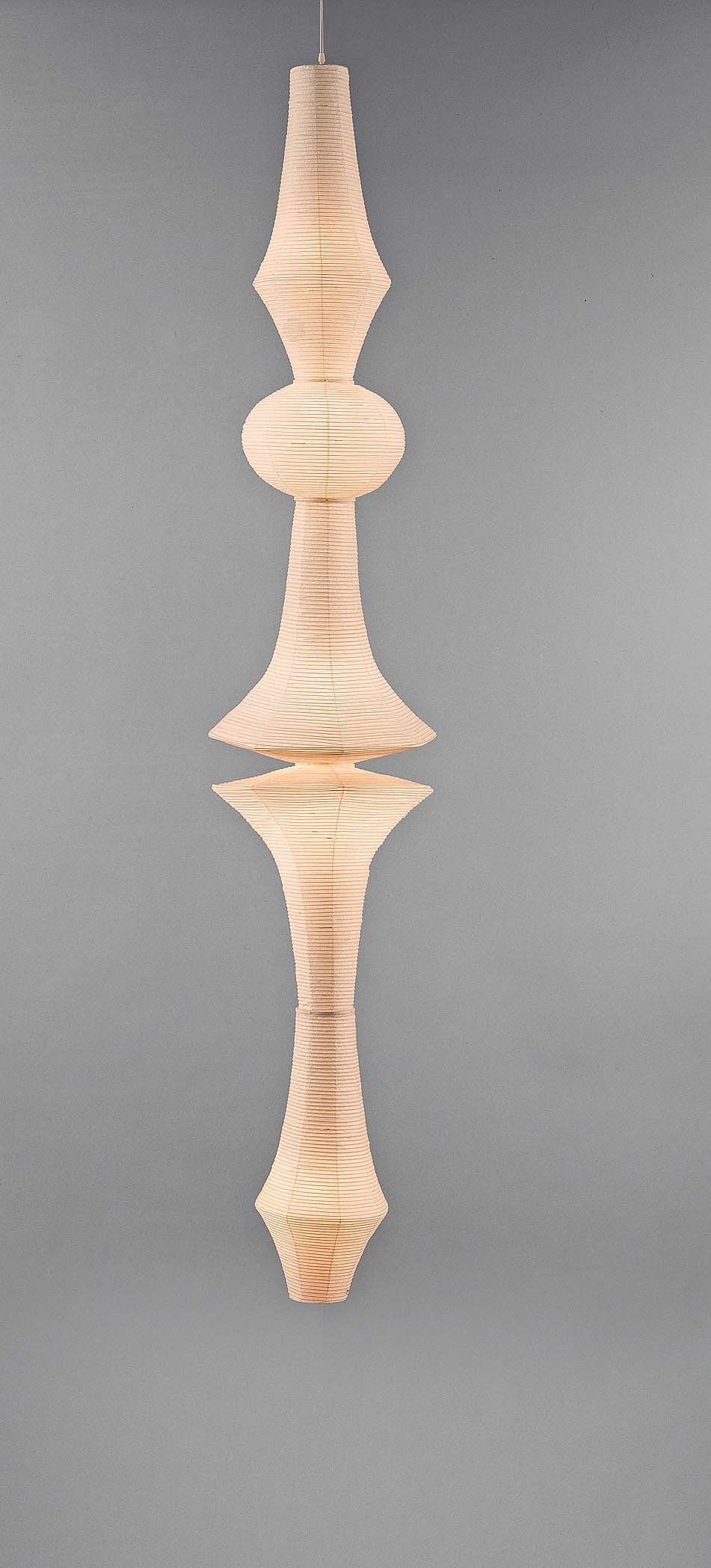
“Akari (model E)” by Isamu Noguchi, fabricated by Ozeki & Company, Ltd (established 1891), designed 1951-54, manufactured beginning 1954, mulberry bark paper, bamboo and wire. The Isamu Noguchi Foundation and Garden Museum, New York. The Noguchi Museum Archives, 152735. Photo by Kevin Noble. © 2025 The Isamu Noguchi Foundation and Garden Museum, New York / Artists Rights Society (ARS), New York.
After its run in Atlanta, the exhibition travels to the Peabody Essex Museum in Salem, Mass., September 19-January 3, and the Memorial Art Gallery at the University of Rochester (N.Y.) February 13-June 6, 2027. A comprehensive 383-page catalog, published by Rizzoli Electa in association with the High and edited by Olinski and Sullivan, accompanies the exhibition.
The Isamu Noguchi Garden Museum, which opened in 1985, is a treasured oasis in Long Island City, Queens, N.Y. Located in what historically was a bleak area of industrial warehouses and small factories — Noguchi has left behind his gift to the city — with light filled galleries of his work and a 8,500-square-foot walled sculpture garden. There, one can revisit his sets for Graham, his furniture designs and his unrealized projects. His biographer, Hererra, noted, “Noguchi always insisted on the continuity of his work. The areas are all aspects of the same thing.”
Herrera added, “to his mind there was no progress in art history or in his development. An artist simply did the best he could at any moment. Also, his definition of art was broad. In his view gardens, theater sets, furniture, and playgrounds were all sculpture. ‘Call it sculpture when it moves you so.’”
The High is at 1280 Peachtree Road Northeast. For information, www.high.org or 404-733-4400.