KILLINGWORTH, CONN. — Lewis W. Scranton has spent his life reconnecting the past. A preservationist at heart, the 79-year-old Connecticut native has waged a highly personal battle to save, bit by bit, house by house, a once agrarian state now all but overcome by development. He is drawn to early architecture and open spaces, but it is objects, with their power to summon memory, that most compel him, and context, disappearing in our hypermobile society, that animates him.
Like Henry David Thoreau, who “traveled a good deal in Concord,” Scranton has journeyed far while rarely straying from home. A rock-ribbed New Englander whose looming stature — he stands 6 feet, 5 inches tall — earned him the sobriquet “the lanky Yankee,” Scranton has lived in Killingworth, a sparsely settled tract in the south central part of the state, for the past 50 years. He grew up 15 miles away on the coast in Guilford, in an 1870s house on State Street, two blocks from the town’s historic green.
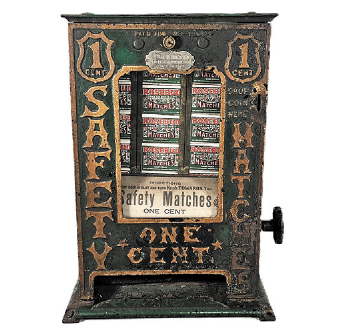
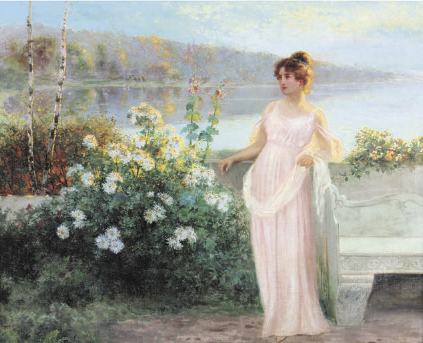
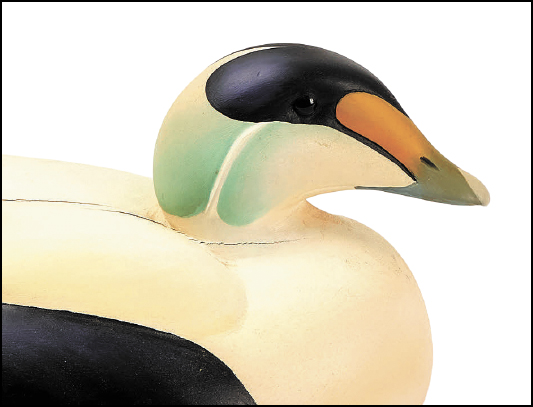
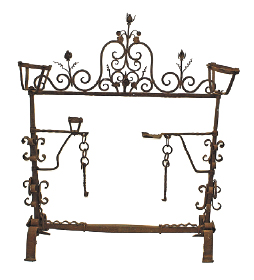
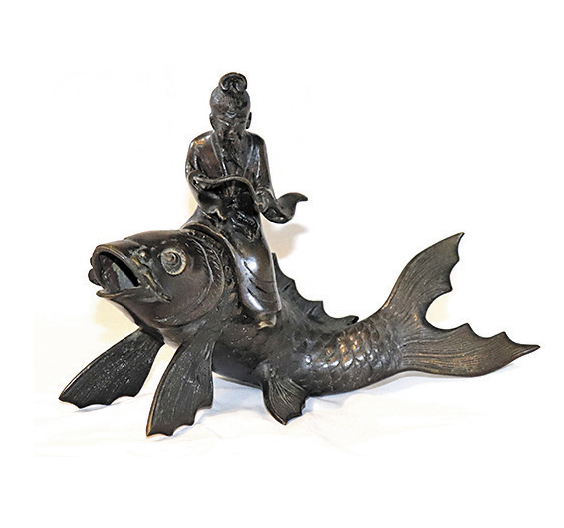
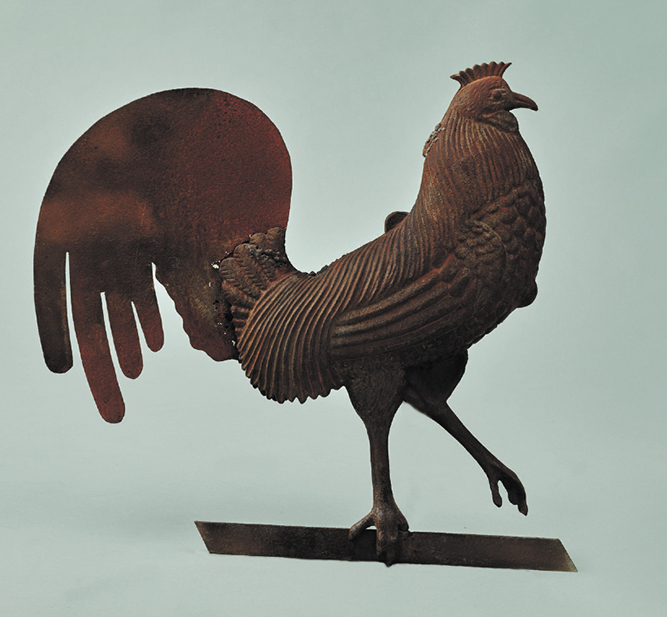
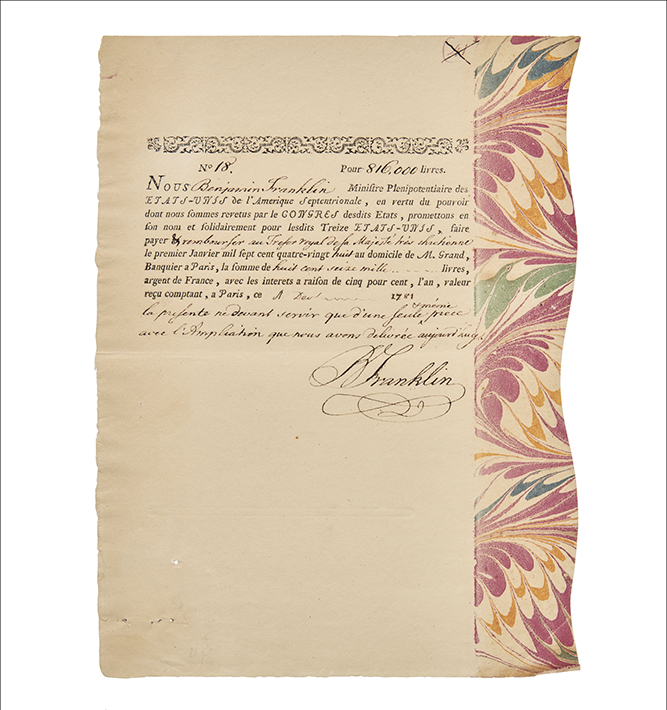
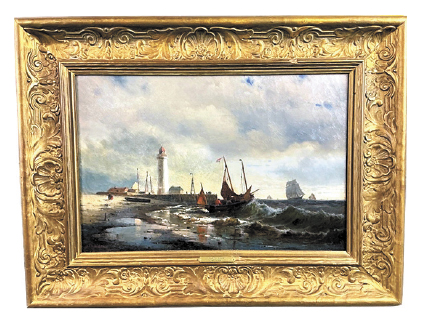
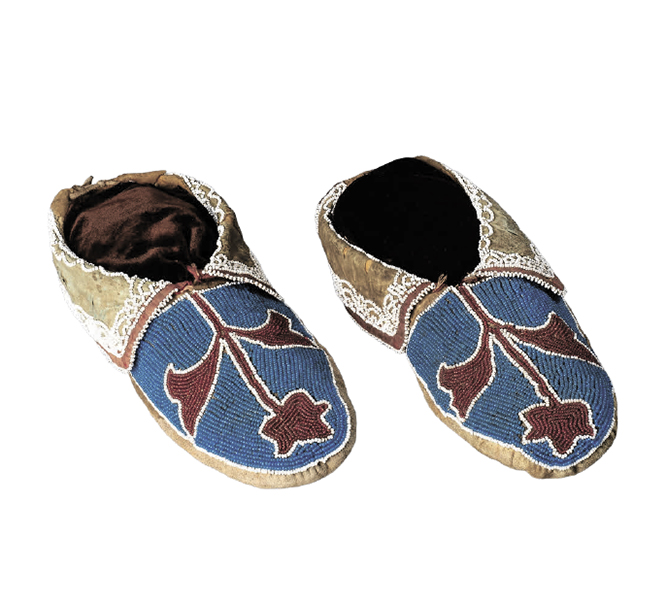
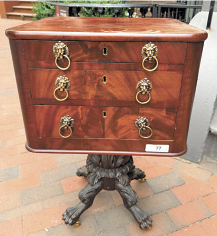
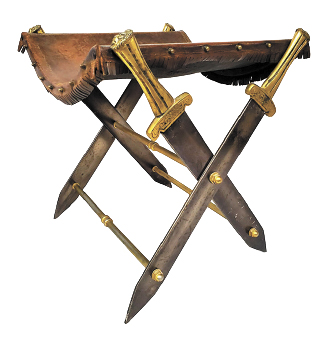
Skinner Inc will auction Scranton’s notable assemblage of New England antiques under a tent on his lawn on Saturday, May 21. Stephen L. Fletcher, Skinner’s executive vice president and director of American furniture and decorative arts, explains, “Several years ago, Lew made me promise that I wouldn’t retire before Skinner auctioned his personal collection. He wanted it to be an old-fashioned sale, with runners but without estimates, reserves or buyer’s premium. I told him he had a deal. I’ve been doing business with Lew for over 30 years and it’s always been a pleasure. He has such sincere enthusiasm for the material.”
“I am doing this now for three reasons. One, I’m turning 80 on June 17. Two, my children only want the family pieces. Three, I don’t want to leave this for the kids to do when I’m gone,” Scranton says.
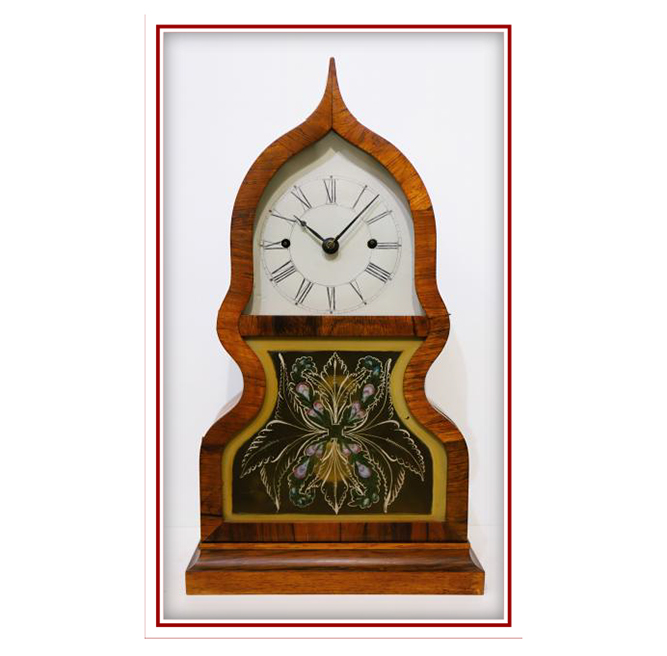
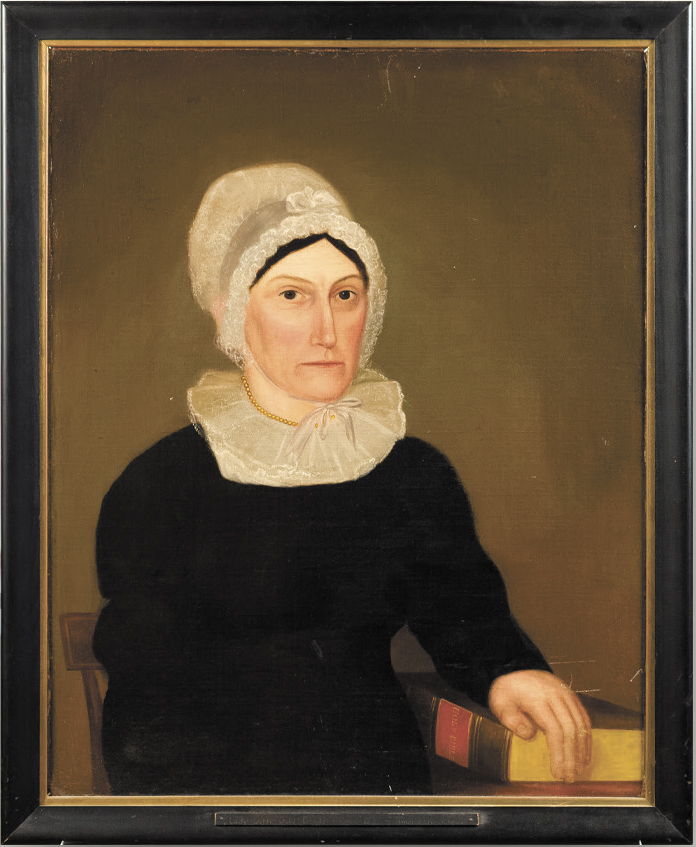
The Friday afternoon preview on May 20 will offer an informal chance to tour Scranton’s 1730 house with his collection still in situ. The ensemble is recorded for posterity in a fully illustrated catalog, compiled by Scranton from his own meticulous records and augmented by Christopher D. Fox, Skinner’s associate deputy director of American furniture and decorative arts.
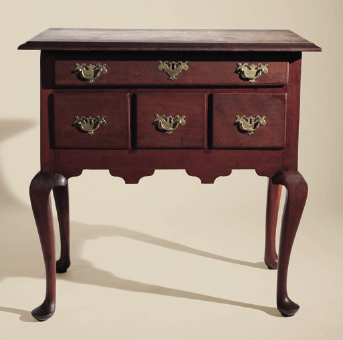
Fox notes, “What I really enjoy about Lew’s collection is the good, early utilitarian material. These are the things that people used every day in the Eighteenth and early Nineteenth Centuries, and they are in such wonderful condition.”
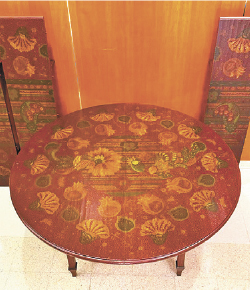
Scranton bought his first antique, an unusual drop leaf tavern table like one he noticed in Wallace Nutting’s Furniture Treasury, after an excursion to Fort Edwards, N.Y., in 1956. Though sheer persistence and against long odds, he acquired quantities of furniture, pottery and other artifacts made along Connecticut’s coast from Norwalk to Old Saybrook, establishing himself as a top authority on the region’s decorative arts along the way.
Scranton was reared in a family attentive to heritage if not antiques. His father descended from John Scranton, an emigrant English farmer who put down roots in Guilford when the settlement, an outgrowth of nearby New Haven Colony, was founded in 1639. His mother was a Wilcox, from a family that moved up the coast from Stratford in 1664.
“My father used to say that the old New England families had slow horses. Lew’s people stayed put and knew everyone,” says Colchester, Conn., dealer Arthur Liverant, Scranton’s friend and colleague of nearly half a century.
By 1890, when Eva B. Leete, another member of one of Guilford’s founding families, began selling old furniture, glass and other heirlooms, the small shoreline community was well on its way to being a popular destination for antiquers. A 1931 advertisement in The Magazine Antiques described the town as “one of Connecticut’s historic beauty spots” and Guilford’s old Peletiah Leete house, home to the Leete’s Island Antique Shop and Tearoom, as “venerable and romantically picturesque.”
“The old-time dealers were wonderful people. They were great characters and possessed so much knowledge,” says Scranton. “Madeline Beebe was a good local dealer and there were the Dews. If they got something with paint on it, they immediately took out the belt sander.”
In a corner of the old kitchen that serves as Scranton’s living room sits a faded red blanket chest over two drawers. Scranton bought the piece, which has ball feet and dates to about 1720, in 1958 from Robert Avery Smith, an antiques dealer whose first wife, a family friend, was a Leete from Guilford. Scranton first visited the Smiths with his mother and later became a regular visitor to the quaint Rockingham, Vt., house chockablock full of country furniture and accessories. Scranton continues to trade with Stephen Corrigan and Douglas Jackman, dealers who bought Smith’s center-chimney Colonial in 1985. Corrigan notes, “Smith was one of the old-time, really good dealers in Vermont. He had beautiful things, some of which were still in the house when we acquired it.”
Scranton, who has a keen appreciation for the natural world, studied floriculture at the University of Connecticut and, following his graduation in 1956, worked as a grower in Guilford and Madison, Conn. When his uncle gave him tickets to a concert at Yale’s Woolsey Hall, Scranton invited a college acquaintance, Janet Hetzel of Southport, Conn., to join him. The couple married in 1959 and, after Scranton joined the US Army, spent a year and a half in Germany, where the first of their two daughters was born. Widowed in 2010, Scranton remains close to his daughters and his two grandchildren, who live in Maryland.
Scranton spent most of the 1960s selling vintage real estate, an occupation that dovetailed with his growing interest in antiques, and helped pave the way for his future career. He became a full-time dealer in 1968, when, as a rookie, he was invited to exhibit at the Connecticut Fall Antiques Show.
“I was off and running. Business was good and it flourished for many years,” he recalls. Primarily a show dealer, he at one point participated in as many as 30 events a year, among them the New Hampshire Antiques Dealers Show, a favorite, and the ADA Antiques Show. He laments the state of the market today and notes, “A lot of the little country shows and all the wonderful old flea markets are gone.” Many of his closest friends — among them Ron and Penny Dionne, Paul and Karen Wendhiser, Steve and Lorraine German, and Barbara and Charlie Adams — are other dealers.
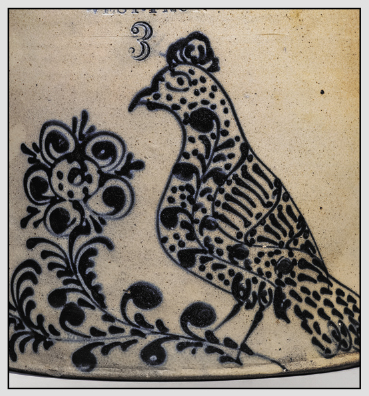
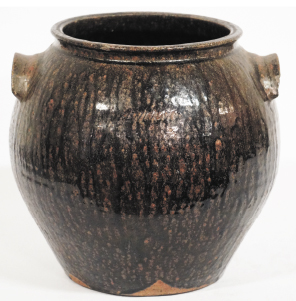
Scranton insists he has no favorite pieces. “I love them all for what they are,” he protests. Pressed, he confesses an affection for New England redware, painted tin and silhouettes. Of the sale’s nearly 400 lots, 70 are redware. Scranton has succeeded in attributing much of the pottery to specific makers, kilns or communities.
“Lew loved redware and so did we,” says Penny Dionne, who recalls meeting Scranton for the first time in the early 1970s. “Fran Phipps put on a little outdoor show in Haddam, Conn. We went back to Lew’s house afterward. He was always very generous with his knowledge and happy to share.”
One prize in the upcoming sale is an oval platter, 14 inches long, with spectacular green, yellow and manganese slip decoration. Scranton acquired it from Stephen-Douglas Antiques at the York Antiques Show in 1999, not long after Steve Corrigan wrestled it away from New Hampshire auctioneer Dick Withington, who displayed it over his kitchen sink. As Corrigan recalls, “Dick initially declined to sell me the platter. Then, out of the blue, he called to say he was looking to raise cash to invest in municipal bonds. Dick said he’d gotten the platter as partial payment for an auction he’d conducted in Connecticut.” Indeed, Scranton remembers seeing the plate in a Norwalk, Conn., home many years before.
A modest cylindrical jar, glazed green and marked “6” in yellow slip, captures Chris Fox’s interest. The specialist explains, “It’s a rather simple-looking piece, attributed to Nathaniel Seymour of Hartford, Conn. That ‘6’ clearly meant something to somebody. It’s a curiosity that has a larger backstory, something I find particularly interesting.”
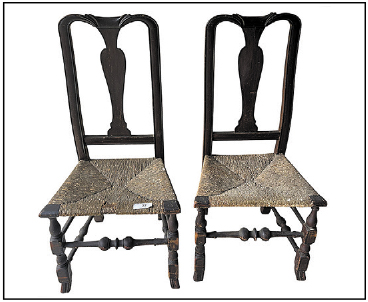
Scranton has a purist’s love of early Connecticut furniture and is known for his expertise in chairs with pierced heart crests. In his dining room, surrounding a large pine hutch table acquired from Nathan Liverant and Son in 1986, is an assembled set of eight circa 1740–70 black painted, heart and crown side chairs attributed to the Parmele family of Guilford. Scranton owns stylistically related chairs attributed to Andrew Durand of Milford, Conn., and to makers from Stratford.
“I’d been after it for 45 years,” the collector says of an exceeding rare red and white painted six-board chest he acquired from a descendant of the Dudley family. Initialed “NS,” the Guilford piece dates to about 1710 and has unusual heart pendants on each of its slightly flared bootjack ends. “My assumption is that there was a cabinet man by the name of Stone in Guilford who made this for his daughter, who married into the Dudley family.”
Returning home from a Withington auction in 1979, Scranton and Penny Dionne dropped in on Massachusetts dealer Pam Boynton. As the women chatted in the kitchen, Scranton poked around the front room, where Boynton kept her best things. He was startled to find a circa 1700 Guilford lift top, ball foot blanket chest with paneled sides. He remembered the piece from the collection of Ruth Stone Chittenden Terhune, a Guilford descendant whose family for a time lived near him in Killingworth.
Terhune sold the chest to the Armstrong brothers of Mystic, who flipped it to George and Benny Arons of Ansonia. The chest migrated to the Midwest, where it was purchased at Garth’s by Indiana dealer David Pottinger before turning up again in Boynton’s parlor. Scranton scrambled to buy the piece, parting with a favorite hutch table to do so.
“It was expensive, beautiful and right up Lew’s alley. He was determined to bring it home,” Dionne recalls.
Nothing better illustrates Scranton’s youthful outlook than his ambitious restoration of the house on Firetower Road, undertaken at an age when most are eyeing retirement. The residence — Lew and Janet called it the “Snake Pit” after excavations for a new foundation dislodged vipers, 46 of which were carried away in pillowcases to new homes — was derelict when the Scrantons acquired it in 2002. The couple spent a year and a half uncovering old fireplaces, fixing tumbled down stone walls and clearing underbrush from the overgrown landscape, a 20-acre plot abutting 650 acres of state forest. When they moved, it was from an even older Cape on Roast Meat Hill Road, just two and a half miles away.
“Most people would have bulldozed this place, but I’ll never tire of living in an old house. It just has so much character,” Scranton reflects. The couple added a master suite and a modern kitchen, moved the barn and erected a carriage shed. One of Killingworth’s eight surviving one-room schoolhouses serves as the dealer’s by chance or appointment shop. Scranton briefly considered uprooting again — how would he manage in an empty house after his collection sold? – but instead decided to move his inventory in from the schoolhouse. Though he has cut back on shows, he has no plans to retire.
“Lew’s passion for antiques will be with him forever. It’s rather amazing that he chose to sell, but he did. As the steward of these pieces, I guess he wants to see who will take them way. He wants to bid them farewell with everyone present,” suggests Penny Dionne.
What in his professional life has given him greatest pleasure? Lewis W. Scranton, with just a touch of the stoicism one expects of a descendant of old Connecticut stock, shrugs. “I can’t answer, really. It’s the combination of all the stuff together. I just love looking at these wonderful old things.”
Skinner’s sale of the Personal Collection of Lewis Scranton is planned for Saturday, May 21, at 10 am. The preview is on Friday, May 20, from 12 to 5 pm and on Saturday, May 21, from 8 to 10 am. For information about absentee bidding, call 617-874-4318. For general inquiries and directions, 617-350-5400, or go to www.skinnerinc.com, where all lots may be viewed online.