By Laura Beach
NEW YORK CITY — Folk art went mainstream in 1974. “The Flowering of American Folk Art” opened in February at New York’s Whitney Museum of American Art before traveling to Virginia and California. Between January and November, Colonel Edgar Garbisch and his wife, the former Bernice Chrysler, auctioned portions of their sprawling collection at Sotheby Parke-Bernet. Sensing a market opening, the auction house created a department of American folk art and named 25-year-old Nancy Druckman its director. Over the next 42 years, Druckman brokered the field’s most important single-owner auctions, the trajectory of her experience inseparable from that of the field itself.
I sat down with Druckman at the Yale Club in Manhattan, eager to hear her thoughts on the field’s past and predictions for its future. The expert left Sotheby’s in March, but is no less passionate about her work. She misses the daily interactions with colleagues, but is as invested as ever with her clients, the collectors with whom she formed tight bonds and continues to advise. “They have been the center of my existence,” she says.
Attributing the Americana movement, resurgent in the last quarter of the Twentieth Century, to the 1976 Bicentennial has always seemed too easy. “Postage stamps and cup plates,” agrees Druckman, who believes the seeds of the craze were planted decades before, in the baby-boom years of the late 1940s and 1950s. “Shelburne Museum, Historic Deerfield, Winterthur opened to the public. Millions of schoolchildren visited such places,” she says, describing the midcentury era as the “gestation period” for the bull market that lasted, with barely a pause, to the Great Recession.
Druckman discovered folk art on a trip to Colonial Williamsburg with her mother and two friends soon after the Abby Aldrich Rockefeller Folk Art Collection opened in 1957. “If an 8-year-old can have an electrifying experience, this was it. I wanted to spend my life in that world. It was a place to learn about American history in a format that made you feel ‘you were there,’ to celebrate the patriotism, creativity, talent and forbearance that was such a source of national pride after World War II,” she says.
Williamsburg was an environment removed from Manhattan’s Upper West Side, where Druckman attended PS 166 before enrolling in Fieldston, the Bronx preparatory school. Her father dealt in loose diamonds. Like the folk art collector and gems dealer Ralph Esmerian, her future client, Druckman’s father was “aesthetically very astute. He had an inherent sense about what made something great,” a trait she sees in many born collectors. Her mother, who worked in the fashion industry before her marriage, dabbled as a painter and a potter.
Druckman discovered her professional calling in the 1960s at Chatham College, then a small school for women in Pittsburgh’s affluent suburbs. “I was sitting in an art history survey course and thought, I can do this,” she says. She arranged an interview with Henry Geldzahler (1935–1994), a family acquaintance. Picking up the phone, the Metropolitan Museum of Art curator of contemporary art told a colleague in the Met’s American Wing, “I have a young lady here with me. I don’t know how she can love those funny-looking portraits, but she seems very committed to the material. She doesn’t strike me as the kind of person who will disappear into motherhood and matrimony.”
Geldzahler’s unfiltered observation about the bright, articulate, ambitious student was largely correct. Nancy and Michael Druckman, married since 1971, balance careers and an active social schedule with travel. They are particularly fond of Paris, where they own a pied-à-terre. “It’s a walking city, with beauty everywhere your eyes alight, and the food is pretty good,” the expert remarks with a characteristic mix of humor and reserve.
Druckman is mostly kidding when she says she wants to be tall, blonde, wealthy and Italian in her next life. Still, it is sometimes hard to square the affection this chic New Yorker feels for folk art. She explains, “I created a romantic relationship with this material. I go back to Albert Sack’s assessment of what makes American furniture great. It’s something about the elegance of the proportions, the clarity and openness of the designs.”
After college, Druckman worked briefly as a sales assistant at the investment banking house Goldman Sachs while taking graduate level classes at New York University’s Institute of Fine Arts. “I wasn’t agitating to make a career at Goldman because I knew it wasn’t for me. There are moments in time when you have a degree of clarity, objectivity and maturity. I thought, I want to do something I really care about, which is work in the arts.”
Richard M. Keresey, a friend from Institute days who joined Sotheby’s Antiquities department in 1970, helped Druckman get an interview at the auction house, then on Madison Avenue at 77th Street, near the Carlyle Hotel. Druckman’s first task as an assistant in the American Decorative Arts department was helping with the November 1973 sale of folk art assembled by pioneering dealer Edith Gregor Halpert (1900–1970). Druckman’s colleagues included George Peabody Gardner III, called Peabo, and Ronald DeSilva, a Winterthur-trained expert who later decamped to Christie’s before going out on his own. Sotheby’s department grew to include William W. Stahl Jr, who arrived in 1974, and rose to the position of vice chairman; Leslie Keno, in 1980; and Wendell Garrett, in 1990. Stahl left in 2009, Keno in 2013. Garrett died in 2012. The sole remaining member of her group, Erik Gronning, joined the auction house in 2004.
Druckman found the commercial art world a contrast to what she had known at the Institute. “An art historian can accumulate evidence forever. An auctioneer must decide quickly. We ask, ‘Is this rare and, if so, what is it worth?’ The skill sets are different.”
If the Halpert auction provided the first inkling that the material, as Druckman puts it, “had a constellation of interest around it that was significant,” the Garbisch sale was transformative. Deciding to refocus their collecting on naïve painting, the Garbisches shipped boxes of small items — fraktur, embroidery, watercolors — to Sotheby’s. “Ron and I cataloged that first sale together. He dictated and I typed. As folk art took off and became too much for Ron to handle by himself, it was like, ‘Ok kid, you’re on.’ I had a lot of flexibility and grew with each collection.”
The Garbisch sales culminated in May 1980, with Sotheby’s onsite auction of the contents of Pokety, the couple’s retreat on Maryland’s Eastern Shore, grossing a record $3.9 million. As reported by Lita Solis-Cohen in Maine Antique Digest: The Americana Chronicles, Bill Cosby, bidding through Sotheby’s chief auctioneer John Marion, bought a Newport kneehole desk for a record $250,000. Between the third and fourth Garbisch sales, Druckman and her colleagues landed the estate of Stewart E. Gregory, who built his superlative folk art collection with the advice of the formidable dealer Mary Allis.
“Mary was uncompromising but, oh, what a tastemaker. It was a time when dealers played a great role in educating clients. The deal was a cliffhanger. Sotheby’s had just introduced the ten percent buyer’s premium and Mary was not amused. John Marion, Bill Stahl and I caught a train to Wilton, Conn., to beg forgiveness for the company’s impertinence.” As Stahl, who knew change was coming after his good friend Eric Shrubsole threw business to Christie’s, recalls, “I said, ‘Miss Allis, would the buyer’s premium have prevented you from buying that important painting last weekend?’ Mary thought for a moment, said no and that was the end of it. It was just a question of figuring out how to structure the deal.”
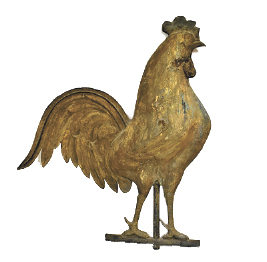
In the end, buyers were so excited by the Gregory material that the premium made no difference. The Indian Mashamoquet brought $25,000, a record auction price for a weathervane. Druckman, who has handled many exceptional pieces more than once, got $29,000 for a nearly life-sized figure of a racetrack tout by Rhode Island carver Charles Dowler. The sculpture resurfaced at Sotheby’s in 1981 and again in January 2016, where it fetched $454,000 as part of the Stephen and Petra Levin auction, Druckman’s last single-owner sale for Sotheby’s.
Between 1970 and 2000, rising prices dovetailed with scholarly advances. Specialization was the trend. Stahl observes, “When Sotheby’s bought Parke-Bernet in 1964, chairman Peter Wilson brought specialization across the Atlantic with him. In New York, the first specialist, so to speak, was Kevin Tierney, followed by Armin Allen, Michael Conforti, Jim Lally, John Block, Robert Woolley, Tish Roberts and Barbara Deisroth — a whole generation of specialists. Edward Cave came on board to organize the program at Sotheby’s. There was tremendous interest and respect for knowledge and expertise. When the market was good, niche areas and small departments could make money in New York City.”
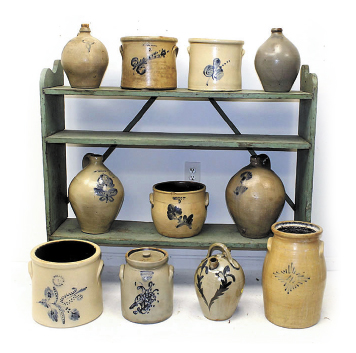
Folk pottery got a push in 1978 when Sotheby’s sold a redware lion by Pennsylvanian John Bell for an unprecedented $18,000. The auction record for American pottery rose to $483,000 including premium by 2015 when Jerry Lauren, who emerged as a major collector and one of Druckman’s best clients, acquired an eagle-decorated Henry Remmey stoneware water cooler at Crocker Farm.
There was new interest in American schoolgirl needlework, touched off by Sotheby’s January 1981 auction of the Theodore H. Kapneck sampler collection. Druckman developed a warm friendship with the handsome, well-dressed Philadelphian, who lunched on eggs Benedict and Bloody Marys with her at the Carlyle when he was in town. After his death, Kapneck’s 172 samplers realized $641,300. A charming Pennsylvania sampler by Matilda Filbert went for $38,000 to Betty Ring, a scholar and collector from Texas. When the Filbert sampler came up again in 2012 in Ring’s sale, it made $122,500.
Druckman’s groundwork primed the market for Sotheby’s 1996 sale of the Hannah Otis canvaswork chimneypiece to a consortium bidding on behalf of the Museum of Fine Arts, Boston, for $1.2 million, still the standing auction record for American needlework.
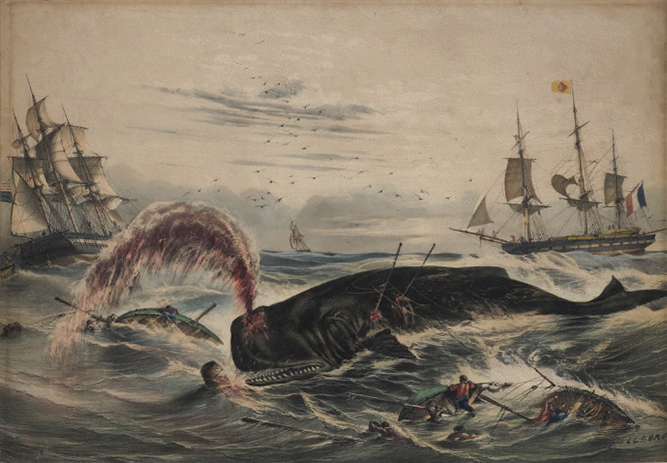
Sotheby’s took scrimshaw and other marine arts to new levels with the Barbara Johnson Whaling Collection, auctioned in 1981 and 1983. “It was a comprehensive selection, ranging from paintings to harpoons and guns. Just coping with the magnitude was a challenge,” the expert recalls. Proceeds exceeded $2.2 million, with an inlaid Nantucket cane reaching $24,200; a swift, $20,900; a whaler’s logbook, $22,000; and a crimper, $19,800.
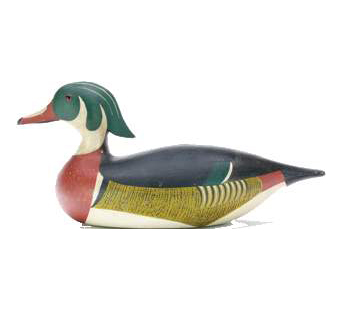
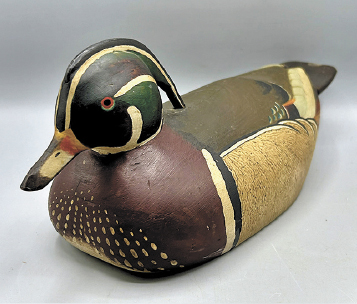
Druckman puts the beginnings of the contemporary market for wildfowl decoys to 1973 and 1974, when Cape Cod auctioneer Richard A. Bourne auctioned the William J. Mackey Jr collection over eight sessions. Sotheby’s built on Bourne’s success in 1979, when a Canada goose in the Gregory collection realized $12,500, and again in 2000, when Sotheby’s partnered with Guyette & Schmidt to sell the collection of Dr James McCleery. The trove included a $684,500 preening Canada goose by Elmer Crowell. The standing auction record for a decoy belongs to Guyette & Deeter and Christie’s. The partners got $856,000 for a red-breasted merganser hen by Lothrop Holmes in 2007.
Sotheby’s and its chief rival, Christie’s, were busy transforming the art market, tapping into the era’s two most potent business phenomena, global communications and direct marketing to consumers. “We had sold Old Master paintings in London, Amsterdam and Monaco, but now we were introducing American decoys, to give one example, to a much broader network. Selling McCleery in New York spoke to longtime collectors, but it also broadcast the field internationally,” Druckman reflects.
Buying habits were changing, as well. Collectors were moving away from the kind of soup-to-nuts recreations inspired by period-room installations at institutions such as the Metropolitan Museum of Art and Winterthur. The 1986 sale of Don and Faye Walters’ collection was memorable not only for the treasures it yielded — one was Dapper Dan, the colorful, near life-sized carving of a barber shop tout, sold for $258,000 to Ralph Esmerian, who subsequently gave it to the American Folk Art Museum — but for the broader change in sensibility it signaled. “The Walters had great taste and were interested in abstraction and clarity of design,” Druckman notes.
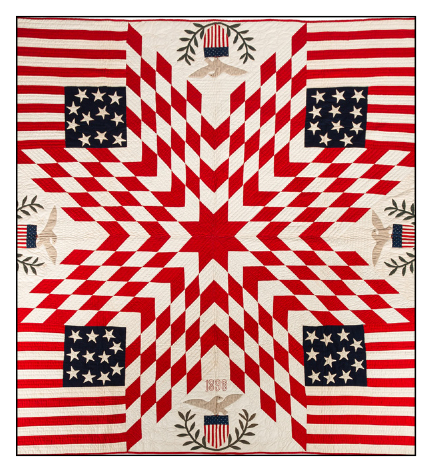
Druckman admires the leadership talent of “big personalities,” people like the late Jean Lipman, a folk art collector who edited Art in America and collaborated on The Flowering of American Folk Art, and Robert Bishop, the visionary director of the American Folk Art Museum who died in 1991. She says, “Bob was just a magician. Do you remember the Great American Quilt Festivals? Ten thousand people must have attended them at their height in the 1980s. And the 23 books he wrote? He fed an audience that was hungry for it.”
Increasingly sophisticated and eager to explore new avenues, collectors turned to Twentieth Century material by Outsider and self-taught artists. By the late 1990s, the American Folk Art Museum employed a curator for contemporary self-taught art. In 1999, following the death of Herbert Waide Hemphill Jr (1929–1998), a founding trustee of the museum, Sotheby’s auctioned remnants of Hemphill’s estate, the prime portion having gone to the Smithsonian American Art Museum between 1986 and 1998.
“Hemphill’s collection was probably the largest aggregation of that material that had been auctioned,” says Druckman, who, anticipating the market’s direction, put drawings by the blue-chip master Bill Traylor on the block in 1997 as property from Joe and Pat Wilkinson. Traylor’s “Man With A Plow” fetched $365,000 when it resurfaced in the Esmerian sale in 2014.
Between 1985 and 2007, Sotheby’s sales of American decorative arts and folk art totaled $465 million, reaching a peak of $39.5 million in 2006. Records tumbled. Twenty lots brought $500,000 or more.
“A rolling, aggregating series of sales, exhibitions and publications reinforced the marketplace and the idea that this was valuable, important, interesting material. For better or worse, we live in a world where celebrity, money and record prices attract attention. One thing fed off another,” says the expert. Shopping mall magnate A. Alfred Taubman (1924–2015), who bought Sotheby’s in 1983, seized the opportunity to promote art as an alternate asset class, leveraging the market by creating loans against works of art.
“There was a real void in the market. Taubman saw it and filled it. It changed the business,” says Druckman.
Over many years, Druckman shaped knowledge and taste with heavily researched catalog entries and carefully staged presentations of property. Collector Ray Egan, in another allusion to Albert Sack’s influential taxonomy, says, “Nancy orchestrated American folk art’s rise in importance. She wasn’t an academic, but she defined what was good, better and best.”
Landing the Bertram K. and Nina Fletcher Little collection was a team effort facilitated in part by Nina Little’s friendship with Wendell Garrett, her longtime editor, and his former wife, Elisabeth D. Garrett Widmer, by then both at Sotheby’s. Offered in January and October 1994, the collection realized a record $12.3 million, achieving new benchmark prices for primitive portraits by Reuben Moulthrop and Winthrop Chandler, among others.
“Negotiations went on for months before the Little children agreed. It was a long, hot summer. Sotheby’s CEO Dede Brooks was fabulous. She wanted every journalist and institution in the country to preview the sale, so we set up two floors at our warehouse for viewing,” says Druckman. Stahl, who has enjoyed what he calls “a long, happy, symbiotic alliance with Druckman,” adds, “This sale was not going to be handed to anyone on a silver platter. It wasn’t so much the terms, which were very favorable. It was more a matter of the family believing that the team on York Avenue was stronger than Rockefeller Center.”
If negotiations often took months, client relationships developed over many years. “I remember being with Nina Little in her sitting room in Brookline, Mass., before there was even a glimmer of a sale. The great Winthrop Chandler overmantel painting — the most haunting, beautiful, elegiac piece ever painted — hung over her little slant-front desk, on which sat her Royal typewriter. There was the Thomas Moses view of Portsmouth Harbor and a wainscot chair from Edna Greenwood. The chair had later casters, but Nina insisted on leaving it as it was. Nina appreciated the totality of an object — its cultural, historical, genealogical and aesthetic dimensions. And she lived with those pieces in such an understated way.”
Working with collectors was Druckman’s greatest education. “Collectors are fully vested — financially, emotionally and in every other way. You see through them what is compelling about the material. Single-owner sales have a consistency of vision that I find interesting,” she says. The affection was mutual.
“We’ve become very good friends. Nancy is really one of a kind: charming, loyal, thorough with her research and documentation, responsive in every way. She is enormously supportive of the field. She never misses an important event and knows her clientele,” says Donna Schwartz, whose folk art collection began with a Micah Williams portrait acquired from Mary Allis many years ago.
Ray Egan agrees. “Years ago, when I was first coming to New York on business with Bristol Myers, I’d head over to Sotheby’s if there was a preview. Nancy was always charming and knowledgeable. If she didn’t know something, she’d get back to me. Once she learned what I liked, she’d always call to let me know when she got something of interest. And she was flexible. I bought a rare but filthy pair of A. Ellis portraits after Nancy, initially hesitant, made arrangements that allowed conservator Tom Yost to evaluate their finish for me. After several attempts, the pictures cleaned up beautifully and I have them to this day.”
With the 1983–84 book and exhibition “Let Virtue Be A Guide To Thee: Needlework in the Education of Rhode Island Women 1730–1830,” Betty Ring emerged as a scholar of national importance. Her interest in early American needlework found her frequently on the East Coast, where she developed a circle of close, supportive friends, Druckman among them.
“Betty pulled off a scholarly coup before the internet. She was on the back roads going to these little historical societies and had the mental apparatus to keep up with it all. She was gaga over the aesthetics of things. ‘Oh, Nancy, it was just gorgeous!’ she would say to me. She especially loved the silk embroideries — their lavishness, beauty, polish and elegance. While she may not have articulated it forcefully, she was also very interested in social history.”
Ring’s affection for her friend is evident in her many notes to Druckman, penned in neat, vertical script on ivory stationery engraved with the researcher’s posh Houston address. “Dearest Nancy,” Ring wrote in January 1997, “….I can never thank you enough for all the kind, thoughtful, generous things you have done for me; all the encouraging things you’ve said — the constant booster-uppers, as well as all the helper-outers… You are a very, very, exceptional person, and I realize you can never, never really know what knowing you has meant to me, and all the events you have made possible that have been such highlights in my life — it would take pages to list them!”
Ring’s declining health led ultimately to the sale of her needlework collection, auctioned by Sotheby’s in January 2012 for $4,389,503. The firm dispersed Ralph O. Esmerian’s folk art collection two years later after the jeweler, caught in the downdraft of the 2007 recession, was convicted of fraud committed in an attempt to save his failing business. The Esmerian auction was Druckman’s biggest ever, grossing $12,955,943 and setting benchmark prices in nearly every category.
Druckman had known Esmerian for nearly a decade when in 1984 he acquired “Girl in Red Dress with Cat and Dog” by Ammi Phillips from the Californian William Carnochan for a rumored $1 million. She liked Esmerian personally and admired his generous support of the American Folk Art Museum, where he for many years served as president.
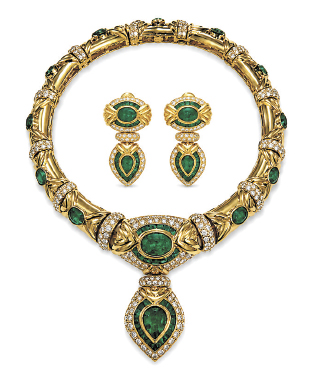
“I learned a lot about aesthetics from Ralph,” says Druckman. “You could see it even in the jewelry he handled: his understanding of craftsmanship, his eye for the clarity of colors in the stones and sophisticated sense of pattern. It was visual for him. That’s what thrilled him. He just had this voracious reaction to quality. You could show him toothpicks or cigar store Indians and he’d pick the best. It was some sixth sense.”
Beyond the heavily footnoted catalogs and branded sales that catapulted the market in the 1980s and beyond, Druckman will be remembered as an indefatigable dealmaker. “Some people are more tenacious than others. Where some see an impediment, others see a way to get around it. Nancy is wonderful with clients. She connects like few people can, in part because she truly loves the material,” says Erik Gronning. Stahl concurs, “She’s very focused and has a lovely way with people.”
“Never underestimate Nancy. She cut amazing deals and she would just would not give up. You could say ‘Nancy, I’m sorry,’ and she’d come back to you three more times. Nancy is gracious and lovely, but believe me, when it comes to competing for a collection, she’s a badger,” says Ray Egan. As it happens, part two of the Raymond and Susan Egan collection, auctioned by Northeast in 2006 for $5,952,000, was the one that got away.
“We competed very hard but lost it. It was a big disappointment, but, like childbirth, you forget the pain,” Druckman says.
In some important respects, the market has come full circle since 1974. The international auction houses educated the buying public, only to see the model they perfected adopted by competitors with lower fixed costs. Specialty auction houses are on the rise, while departmentalism is declining at the industry giants. As Stahl sees it, “These are big businesses. What they are doing is not necessarily a bad thing. Not at all. Before Taubman bought Sotheby’s, a group of us came up with a scheme for a boutique auction house that would sell paintings, jewelry and collections. It makes a lot of sense.”
Gronning rejects the notion that the Americana market’s best years are behind us. “The Twentieth Century was the age of discovery. This is the age of knowledge. We are brokers, just as we’ve always been, but with a different set of tools at our disposal. While pieces are coming back on the market from decades ago, we know so much more about them now. The internet’s vast reach is a perfect means to publicize this scholarship, but it will never replace first-hand observation.”
Druckman’s departure leaves Sotheby’s without a specialist in American folk art, the market it substantially developed, for the first time in more than four decades. Forward-looking Christie’s recruited Cara Zimmerman from the Philadelphia Museum of Art in 2014 and is building a following for Outsider and self-taught art. Earlier this year, Zimmerman wrangled a record $785,000 for “Boxer,” a circa 1936 limestone carving by William Edmondson. In 2015, she saw $401,000 for a work on paper by Henry Darger.
“I am very lucky. We are really working to build up this area and give it its own identity. There is a vibrant collecting atmosphere with ties to traditional folk art, but also to the Modern, postwar and contemporary areas. There is a lot of crossover collecting. What is so fascinating about the current environment is that we have now museum shows, established collections and stable primary markets. It makes sense now to build the collector base and introduce more artists to the market,” says Zimmerman, whose trailblazing path resembles that forged by Druckman years before.
Edith Gregor Halpert and the museum director Juliana R. Force (1876–1948) come to mind when one thinks of women who shaped the way we view folk art today. In her cultivation of her era’s most influential collectors and stewardship of its defining sales, it is impossible not to think of Druckman, as well. Unlike the flamboyant Halpert and Force, Druckman offers little of a private nature for public consumption. Her thoughts about her own role may be gleaned by what she has to say about her mentor, Sotheby’s former chairman and auctioneer John L. Marion: “He was and continues to be warm, kind and well-centered — arguably one of the most-talented auctioneers in the history of art world. He is even handed, even tempered, blessed with a marksman’s eagle eye, in control of the room at all times and able to create a flow in the bidding that carries you along…. He appreciated and applauded the specialist’s talent and knowledge, kept our eccentricities in check, loved art and had a real sweet spot for Americana.… I absorbed and was nurtured by his fairness, steadiness and talent.”
As we get up to leave, I ask Druckman if she had ever imagined a different path for herself. “Not really,” she replies. “It all just came together for me. I was 24 when I started and I’ve been doing it for 43 years. It was just aggravating enough to know that it was a real job, but it fit me like a glove. I’ve had a wonderful time and met fabulous people who are still a meaningful part of my life. I was just very lucky.”