CHARLOTTE, N.C. — In 1965, the Mint Museum acquired the M. Mellanay Delhom collection of more than 2,000 pieces of early English, European and Asian ceramics. Delhom, as part of the deal, became the Mint’s curator of ceramics. To celebrate the 50th anniversary of this acquisition, the museum has mounted a stunning exhibit, “Portals to the Past: British Ceramics 1675–1825.”
The Mint Museum has refined and added to its ceramics collections over the years and is today recognized for its commitment to presenting works of clay as art, ancient to contemporary. Appropriately, it has the largest institutional collection of pottery from North Carolina, plus holdings of Native American ceramics. The Delhom-Gambrell Reference Library houses more than 4,000 volumes on ceramics and other decorative arts. One treasure is the Jesuit priest Jean-Baptiste du Halde’s 1736 The General History of China, describing porcelain to Europeans for the first time.
In conjunction with “Portals to the Past” and in association with D. Giles Ltd, the Mint Museum published British Ceramics 1675–1825. Divided into sections on earthenware, stoneware and porcelain, the 272-page catalog includes more than 175 color illustrations of objects in the exhibit. Each item is thoroughly identified and discussed in context. The book features essays on the Delhom collection, its formation and acquisition by the museum. Catalog entries are by noted experts, among them the Mint Museum’s curator of decorative arts Brian D. Gallagher, Diana Edwards, Pat Halfpenny, Maurice Hillis, Letitia Roberts and Margaret Ferris Zimmermann. The book is a worthwhile addition to the library of any dealer or collector interested in early British ceramics.
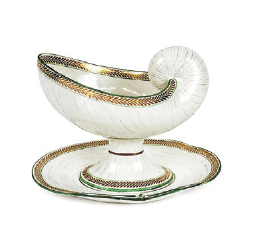
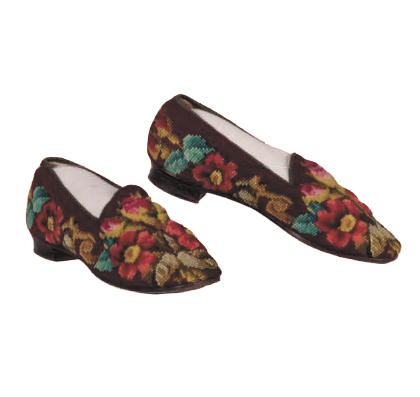
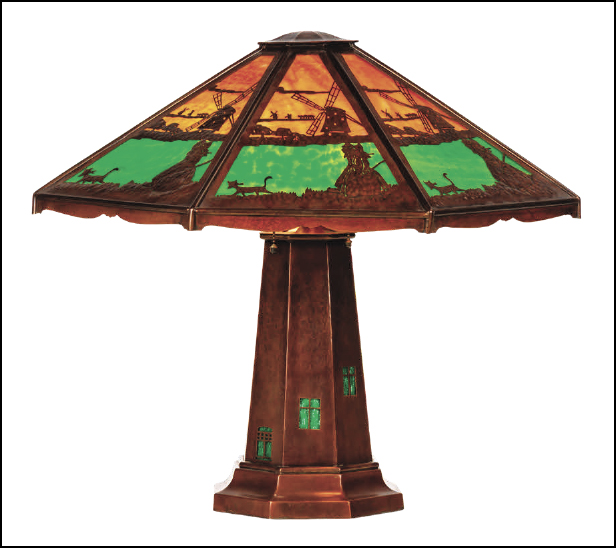
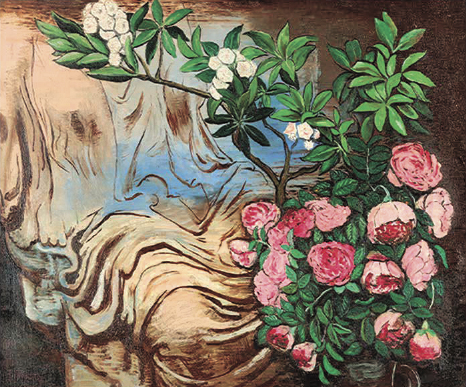
The exhibit is displayed chronologically in three galleries. The first gallery features Seventeenth and early Eighteenth Century material, including redware, stoneware and delft. The second gallery displays mostly mid-Eighteenth Century objects, while the third gallery contains ceramics from the late Eighteenth and early Nineteenth Centuries. More than 200 highlights are interpreted by function, style, manufacturing technique, maker and other themes, encouraging visitors to engage with the objects in myriad ways. The exhibition features many items that have never before been on view, as well as contemporaneous works of art in other media from the Mint’s holdings, such as paintings, furniture, fashion and silver.
The Mint Museum owns important examples of redware, both salt-glazed and dry-bodied stoneware from Staffordshire; tin-glazed earthenware from Bristol, Liverpool and London; and cream-colored earthenware from Derbyshire, Staffordshire and Yorkshire. Notable Eighteenth Century porcelain factories represented are Chelsea, Bow and Vauxhall in London, Longton Hall in Staffordshire, Worcester and Bristol, among others. The Wedgwood portion of the collection is particularly strong and includes creamware, basalt, pearlware, lustres, jasper and jewelry. Selection criteria included rarity, craftsmanship, provenance and the degree to which an example was representative of a type of ware, or method of production or decoration.
Part I one of the exhibit and catalog is devoted to earthenware. Earthenware is fired at a relatively low temperature and is porous, opaque and usually has a red or tan body. Potters were constantly experimenting with ways to improve the ware and its decoration. By the Sixteenth Century, they learned that adding iron to the glazes resulted in rich, dark colors. By the end of the Seventeenth Century, they knew that adding flint resulted in more durable and whiter wares. They made advancements early in the Eighteenth Century by using “ball” clay from Devonshire and Dorset. Adding tin to a lead glaze resulted in the white, opaque surface common to delft. Although attractive, the finished products were subject to chipping.
“Portals to the Past” features a rare complete set of delft Merryman plates dated 1693. Each of the six plates includes text, part of the Merryman rhyme that was popular on delft plates from about 1680 to 1750. A delft plate dated 1699 shows the strong influence of Chinese porcelain on Western ceramics.
Cream-colored earthenware, or creamware, was one of Mellanay Delhom’s favorites. Her collection and the exhibit include a wide selection. First developed in Staffordshire about 1720, creamware utilized the newly accepted ball clay and flint. Numerous potters, including Thomas Whieldon, experimented with the ingredients. Josiah Wedgwood is credited with perfecting the ware about 1760. Wedgwood and Whieldon were partners in the late 1750s, when much experimental work was done. Creamware was durable, lightweight and thin as porcelain. It provided an excellent medium for painted decoration, transfer printing and openwork. The earliest glazes were the tortoiseshell glazes developed by Whieldon, but used by numerous potters in the Staffordshire district. Wares with that glaze are generically known as Whieldon.
The exhibit includes several pieces of solid agateware, time-consuming to make and relatively scarce. Clays of different colors were rolled together, then cut into slices and rolled into sheets that could then be further worked, creating very colorful pieces. The technique was patented by Samuel Bell in 1729 and used by many potters, including Wedgwood when he was in partnership with Whieldon. The presentation features mugs and teapots. Among tortoiseshell-glazed wares are a number of teapots, some with applied decoration. The form of a covered tureen was inspired by silver of the same period. A footed cream jug of circa 1750–1765 clearly shows the relationship to contemporary silver pieces.
Creamware was often hand painted in bright enamel colors with a wide variety of scenes. Subjects appealed to the potters’ customers: agricultural scenes, buildings, topographical scenes, flowers, portraits and many more. Some potters employed painters, while others sent their wares out be finished by specialized decorating shops. A plate from Wedgwood’s Husk service, his first commission for Catherine the Great of Russia, is displayed. It was decorated by Wedgwood’s recently established decorating studio in Chelsea, under the supervision of David Rhodes, a master painter.
Many creamware pieces were decorated with underglaze transfers, a process developed in the 1750s. Some examples depict King George III and his wife, Queen Charlotte. There are also transfer decorated jugs, frequently referred to as Liverpool jugs, decorated with American scenes.
Part II of the catalog is devoted to stoneware. Stoneware differs from earthenware in that it is fired at a much higher temperature and so is vitrified, opaque and resonant. John Dwight, a Fulham potter, patented his formula for making stoneware in 1672. The fired color varies from brown to gray, depending on kiln conditions. Pieces are often salt glazed. The process involved adding salt to the kiln during firing. As it melted, the items in the kiln were covered with the glaze. Josiah Wedgwood developed his black basalt, which he called “Etruscan,” and jasperware from stoneware recipes. He perfected jasperware in 1775 by adding sulfate of barium, known as cawk, to stoneware, giving it a satin-matte finish.
The show includes several fine pieces of Wedgwood, among them black basalt busts of Junius Brutus and Demosthenes, jasperware vases, bowls, teapots and more. Other salt-glazed pieces include teapots in rare forms, among them a reclining camel teapot, a puzzle jug dated 1767, leaf-shaped tableware, numerous enamel decorated plates and more.
Early English porcelains are represented by pieces from Chelsea, Bow, Limehouse, St James’s, Derby, Vauxhall and Worcester. Longton Hall and West Pans are considered together because William Littler, manager of the works at Longton Hall, moved on to West Pans in Scotland when Longton Hall failed in 1760. In 1998, the museum mounted an exhibition devoted to items produced at both sites by Littler.
Products of Liverpool are also considered together since there were eight factories in operation there. Liverpool wares were widely distributed and much was exported to America. Shards of Liverpool wares have been excavated at Colonial Williamsburg in Virginia, in Portsmouth, N.H., and at other archeological sites. Several outstanding pieces from these early manufactories can be seen in the exhibit. The catalog includes brief historical summaries of each of these factories.
One of the most elaborate pieces on display is a 17¼-inch-tall covered potpourri vase, circa 1754–1757, made by Longton Hall. The front and back are hand painted with scenes of fantastic birds in landscapes. The vase, especially its high-domed lid, is encrusted with an extensive variety of applied flowers. A pair of songbirds is applied over each of the painted scenes. The lid is pierced, but the holes are hidden by the flowers. The overall effect is astonishing.
A three-piece garniture of covered potpourri vases from Derby, circa 1760–1765, is also heavily encrusted with flowers surrounding an applied female mask. A blue and white pickle stand, from Bow, circa 1752–1755, will also impress visitors. It is molded in the form of a rocky outcropping, with pierced cavelike openings, and is heavily encrusted with seaweed, corals and a variety of shells. Three birds’ nests are filled with eggs and there were originally six removable shell-shaped cups. There are several porcelain figures and tableware utilizing various decorative techniques.
There are only four known examples of a molded sculpture known as “Dear Eliza.” Made by Richard Champion’s factory, the figure has a lengthy gilt inscription indicating that it was a memorial to Champion’s eldest daughter, who died in 1779. It is thought to be the last dated piece made at that factory. Champion brought the piece with him when he emigrated to the United States in 1784. The piece has been illustrated in several books on English porcelain. Delhom liked to joke that she moved to Charlotte in search of “Dear Eliza.” She did her homework, tracking the piece down to a Champion descendant and acquiring it for the museum. “Dear Eliza” was one of Delhom’s favorite pieces. She was that sort of passionate collector.
“Portals to the Past: British Ceramics 1675–1825” is on extended view at the Mint Museum Randolph and is well worth a visit.
Thanks to Brian D. Gallagher for his assistance with this article.
The Mint Museum is at 2730 Randolph Road. For information, www.mintmuseum.org or 704-337-2000.