PORTSMOUTH, N.H. — Ron Bourgeault, founder and owner of Northeast Auctions, has built one of the most successful auction companies in the United States. He sells millions of dollars worth of antiques annually and has grossed almost one-third of a billion dollars since his first auction in 1970. How did he do it? The short answer: hard work. The long answer is both interesting and instructive. Bourgeault’s attention to personal relations, a theme running throughout his career, has been essential.
If Bourgeault, who was born in 1946, were to say he was drawn to antiques all his life, it would be a fairly accurate statement. His parents supported his interest, though they were not into antiques themselves. When Bourgeault was just 7, a neighbor in North Hampton, N.H., gave him a group of Travelers Insurance Company calendars printed with images from Currier & Ives. He found the reproductions fascinating. After moving to a new home nearby, Bourgeault was given several boxes of “old stuff” that another neighbor’s late wife bought as box lots at local auctions. In first grade at the time, the budding dealer set up a toy antiques shop in his basement.
At 8, Bourgeault walked into Hymie Webber’s antiques shop in Hampton, N.H. and asked for a job. Webber hired him to dust furniture and do other simple tasks, instructing him, “You wait on old ladies. If dealers come in, then you come and get me.” The salary was a dollar a day. Webber also conducted auctions, for which Bourgeault often worked as a runner. One day, Bourgeault, only 9, was told to finish selling the box lots. That was the beginning of Bourgeault’s career as an auctioneer. Webber took an interest in his avid, capable student, who looked to the older man as a mentor and capitalized on relationships with the dealers who were Webber’s customers.
Bourgeault says, “One of the most important lessons I learned from Hymie was that prices will always go up and down. It’s not a straight line up.” There were other good lessons. “I remember going on a house call with Webber when I was about 10. I’d pretty much memorized Warman’s Antiques and Collectibles Price Guide. Webber told me to pick out items that I thought would be salable. I selected a group of things from a china closet and put them on the lady’s table. She looked at the stuff and started thinking about how pretty some things were. She decided her daughter would like this piece and someone else would like that piece. She wound up putting everything back and we left without buying anything. Hymie told me, ‘Next time put everything on the floor. Old ladies don’t like to bend over.’ Lessons like that were my Harvard education.”
Bourgeault names other mentors, among them Howard Oedel, Russell Carrell, Albert Sack, Brock Jobe, R. Scudder Smith, Sam Pennington and Jonathan Fairbanks. “Jonathan Fairbanks had just moved to Boston when I met him at the Theta Charity Antiques Show in Houston. He was a great teacher. He really knew how to look at stuff. Attorney Frank Coolidge taught me about estate law. I learned other important things along the way. For example, every antique has a story. We have to make those stories interesting to as wide an audience as possible. It’s how we tell the stories that matters. Another key lesson was that no deal is a good deal unless it is good for both people.”
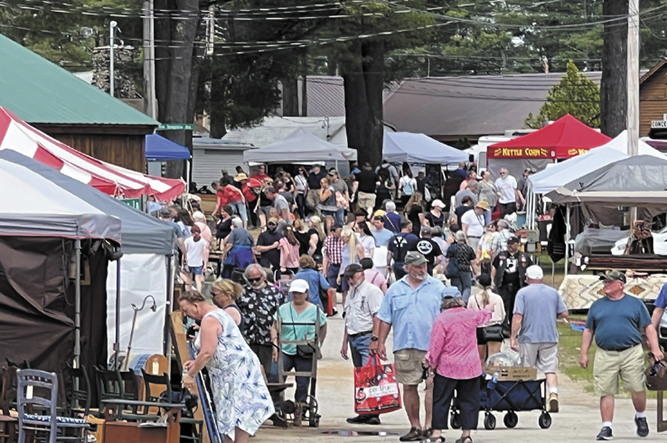
Bourgeault did his first antiques show when he was 14. “I was still working at Webber’s. Each year, they brought in containers of antiques from England, things like Staffordshire dogs and brass candlesticks. Mal and Sarah French were Webber’s customers. They liked brass candlesticks of a certain size. As we unpacked the containers, I’d put aside the candlesticks that I knew they’d like. One day, when I was 14, I asked them for a booth in their Exeter, N.H., antiques show. Mal didn’t really want to give a kid a booth, but Sarah did. That’s when I started doing shows. My parents drove me and helped me.”
With the support of Howard Oedel, then president of the New Hampshire Antiques Dealers Association, Bourgeault joined the New Hampshire Antiques Show. He was the youngest dealer ever to have his own booth. He says, “Once I was old enough to drive, I was able to do the shows by myself, but I often shared a booth with Barbara Taylor, a dealer friend.” At 23, he started exhibiting at the Theta Charity Antiques Show. The late needlework authority Betty Ring purchased three of her first samplers there from him.
Bourgeault also participated in Heart of Country in Nashville, Tenn. “The Southern shows were important to me and I was making good money. Southern customers liked Classical and Empire furniture, as well as other things that weren’t hot in New England. I was able to buy things up here that could be sold with good mark-ups down there.”
When he was invited to do the Winter Antiques Show in 1972, Bourgeault, then 26, was again the fair’s youngest exhibitor. For the next few years, he concentrated on doing charity shows managed by Russell Carrell in high-income communities like Grosse Pointe, Mich., and Lake Forest, Ill. He also took part in top charity events in Atlanta, Boston and Washington, D.C.
“I was president of the New Hampshire Antique Dealers Association and doing their show. In those days, if the show drew a strong gate, dealers would get a rebate on their booth rent.” Bourgeault could be called the originator of what has come to be known as Antiques Week in New Hampshire. In 1978, he conducted his first auction at the Center of New Hampshire on the weekend preceding the NHADA show. The other events we now associate with Antiques Week followed.
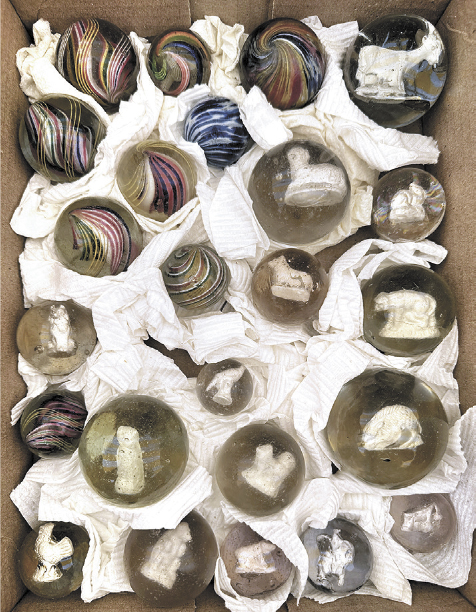
Participating in shows contributed substantially to Bourgeault’s later success. Shows provided the opportunity for social interaction with wealthy collectors and museum curators, who, when they later decided to sell, consigned their property to someone they knew personally. Citing one example, Bourgeault, who loves early American glass, says the Jansen-Dyer shows in Boston and Brattleboro, Vt., provided him with a wealth of contacts in the specialty.
Bourgeault kept a shop in Salem, Mass., for about three years before relocating his shop to Hampton, N.H. The Salem shop was across the street from the Essex Institute and near the Peabody Museum, a location that drew visiting collectors and curators. Bourgeault eventually closed his shop to concentrate on shows, which were more profitable. He says, “The shows were more work, but I really enjoyed them, even though it was kind of a gypsy lifestyle, traveling and often being away from home for weeks at a time. But shows were where the business was. Many of the people I met during those years became lifelong friends.”
The auction business developed gradually. His first auction was in 1970 when he sold the Fitzpatrick collection of historical flasks. Robert Hall, an auctioneer in Dover Foxcroft, Maine, needed help conducting his sales after his partner died. Hall asked Roger Bacon if he knew of someone who could do some selling for him. Bacon recommended Bourgeault, who worked with Hall for a few years while continuing to exhibit at shows.
In 1979, at the invitation of curator Brock Jobe, a good friend, Bourgeault did a charity auction for Historic New England, then the Society for the Preservation of New England Antiquities (SPNEA). SPNEA had been given “a barn full of antiques” in Littleton, N.H., belonging to the Batchelders, a wealthy family from Chicago who spent time in the White Mountains and had hoped to open an antiques shop.
“It was a treasure house and a fun experience,” Bourgeault recalls.
In the early 1980s, Bourgeault met the late Eddy Nicholson, a wealthy businessman who relocated his company, Congoleum Corporation, to Portsmouth, N.H. Nicholson wanted to build a collection of American furniture. When he asked Boston’s Museum of Fine Arts to recommend an expert who might assist him, the MFA suggested fellow Hampton resident Ron Bourgeault.
“When we met for the first time, it was at his home. We sat in his living room and not an antique was to be seen. He told me that he wanted an American piecrust tea table for that room. I told him to settle for highboys, lowboys, chairs and things like that because American piecrust tables hardly exist. They’re almost all in museums. Nicholson said to me ‘You didn’t hear me. I want an American piecrust table.’”
Bourgeault continues, “One day, Christie’s called and said they were going to be selling an exceptional piecrust table that January. It was a Philadelphia Chippendale tilt-top tea table of about 1760 to 1770. Christie’s expected it to bring between $500,000 and $800,000.”
“We went to New York City and had lunch with Dean Failey, the head of Christie’s Americana department. Nicholson decided he wanted to open the bidding at $550,000. He wound up buying the table for $1,045,000 in January 1986. When it was hammered down, he looked at me and I knew exactly what he was going to say, ‘Remember what I told you the first night we met? I want an American piecrust table.’”
The piecrust table set a record price for American furniture at auction. When Christie’s sold the Nicholson collection for $13,586,678 in January 1995, the piecrust table resold to Leigh Keno for $2,422,500. Not everything in the collection did so well. Bourgeault remembers, “Nicholson owned an Essex County, Mass., great chair that descended in the family of Reverend Stephen Batchelder, a founder of Hampton, N.H. When that chair came up at Sotheby’s the first time, I told Nicholson that he had to bring it back to Hampton. It was expected to sell for $40,000 to $60,000. Nicholson told me that, since I wanted that chair to come home, I could do the bidding, but I was supposed to stop when he uncrossed his arms. I wound up bidding $528,000 including premium.”
Bourgeault continues, “Eddy asked me, ‘What idiot bought that chair?’ I said, ‘You did.’ When Christie’s resold the chair, it brought only about a third of that because there had been a similar chair in the sale of the collection Bertram K. and Nina Fletcher Little in 1994 that had been bought by one of the underbidders. I couldn’t help but remember the rule Hymie Webber taught me years earlier. Prices don’t go in a straight line. Sometimes they up, sometimes they go down.”
Bourgeault spent a portion of the next few years advising Nicholson as he built his formidable collection. They went to important auctions together and visited major dealers and museums wherever they were. They traveled first-class. A helicopter would pick them up at Nicholson’s house to take them to the airport, where a private jet might wait. A stretch limousine would be waiting on the tarmac to whisk them away when they arrived.
Bourgeault concludes, “Nicholson was an astute businessman. He taught me some good lessons and encouraged me to go into the auction field. He said, ‘Do something no one else does. That’s the way to build your market share.’ It was good advice. It prompted me to provide free auction catalogs for the general public. No one else did that then and most still don’t. It helped get good crowds to my sales. It got to the point where I was distributing around 5,000 catalogs for each sale.
“In 1988, I did my first sale with an illustrated catalog, which I gave away. That was my first million-dollar sale. The cover lot was a Newport chest on chest that brought $140,800. A French painting by Jean Beraud made $121,000. As time progressed, I was looking forward to selling a single item for a million dollars. It almost happened in 1995 when I sold the Doggett family Chippendale serpentine front bombe chest for $992,000. I finally made it when I sold the Susan and Ray Egan collection in 2006. Their wonderful steam train weathervane brought $1,216,000. It had everything going for it. Rarity, great original surface and a well-documented provenance. It came off a depot in Woonsocket, R.I., in the 1960s. And it was 61 inches long.”
At $5,952,000, the Egan sale is the auctioneer’s highest grossing single-owner sale to date. All lots were unreserved and there were no published estimates. Several lots besides the train weathervane brought six-figure prices. Bourgeault says, “The Egans selected the pieces with great taste. Nearly everything was pristine. The market was strong and prices reflected the quality of the material.”
The list of Northeast’s major single-owner sales is impressive. It includes the Shaker collection of Drs John R. Ribic and Carla M. Kingsley, which grossed $2.42 million as part of a three-day, $9.37 million auction in 2008. Bourgeault credits the Virginia Ramsey-Pope Cave collection, which grossed $2.45 million in 2000, with establishing his reputation for selling folk art. The Miriam and Arthur Spector collection fetched $1.7 million in 2004; the Dinah and Stephen Lefkowitz folk art collection brought $2,117,232 in 2007; and the Harvey and Isobel Kahn collection made $1.26 million in 2013. Last August, Northeast sold the collection of Mr and Mrs Jerome Blum for $2,690,410.
Initially assisted by China Trade authority Carl Crossman, Northeast Auctions has showcased the field of marine, China Trade and sporting art. The sales began in 1993 with the collection of John Howland Ricketson III (1902–1986) and have evolved into an annual mid-August event in Portsmouth. They hit a high in 2008 when Northeast realized $3.45 million from the maritime art and artifacts collection of J. Welles Henderson.
One of Bourgeault’s favorite sales was the $1,819,000 auction of property from the Livingston family in 2000. “The Livingstons were intimately involved with so many facets of the story of America. The house was like a time capsule with good American furniture, early silver and landscape paintings. The Livingstons had ties to other notables in New York’s Hudson Valley, including the painter Frederic Church. I really enjoyed listening to family members telling their stories,” he says.
Perhaps not surprisingly, Bourgeault is engaged in the preservation of historic Portsmouth. In 1994, Northeast conducted its first sale at Treadwell Mansion, which Bourgeault purchased in 1992. Treadwell Mansion dates to 1818, a time when Portsmouth required all houses over one story to be brick as a precaution against fire. Over the years, Treadwell Mansion served as an Elks Lodge, hotel, hospital and private residence.
In 1993, Bourgeault bought an Eighteenth Century house, now used as gallery space during auction previews, across the street from Treadwell Mansion. Since 1991, the auctioneer has lived a few blocks further down on Pleasant Street in a 1789 Federal house once owned and handsomely furnished by the wealthy local merchant Jacob Wendell (1788–1865), who acquired the residence in 1815. As documented in “The Wendell Family Furniture at Strawbery Banke Museum” by Gerald W.R. Ward and Karin E. Cullity, published in Chipstone Foundation’s American Furniture 1993, the museum received substantial gifts of furnishings from Wendell descendants Penelope and Gerrit van der Woude and from Bourgeault, who has also loaned important works to the institution.
When Sotheby’s auctioned residual contents of the house in January 1989, Bourgeault acquired the colored engraving of Portsmouth Harbor that now hangs in his front hall and four painted and dated 1815 leather fire buckets inscribed “J. Wendell”. The buckets are marked with the insignia of the Friendly Fire Society.
“They’re pretty boring buckets. I’ve sold much better ones, but at least they’re back in the house,” says Bourgeault, who also acquired and loaned to Strawbery Banke a rare, signed patent timepiece of 1811 by the Boston craftsmen Simon Willard and decorative painter John R. Penniman, who signed the panel.
As for the future, Bourgeault says, “I’m happy doing what I’m doing now. I don’t have a bucket list. Life is like a railroad track. As the train moves down the track, there are always switching stations. Sometimes you follow a switch and sometimes you don’t. I’m satisfied with the switches I’ve taken and the train always gets back on the track. I’ve met many wonderful people over the years. I especially like the collectors who are passionate about their collections and who are looking to learn more. People who don’t collect lead empty lives.”