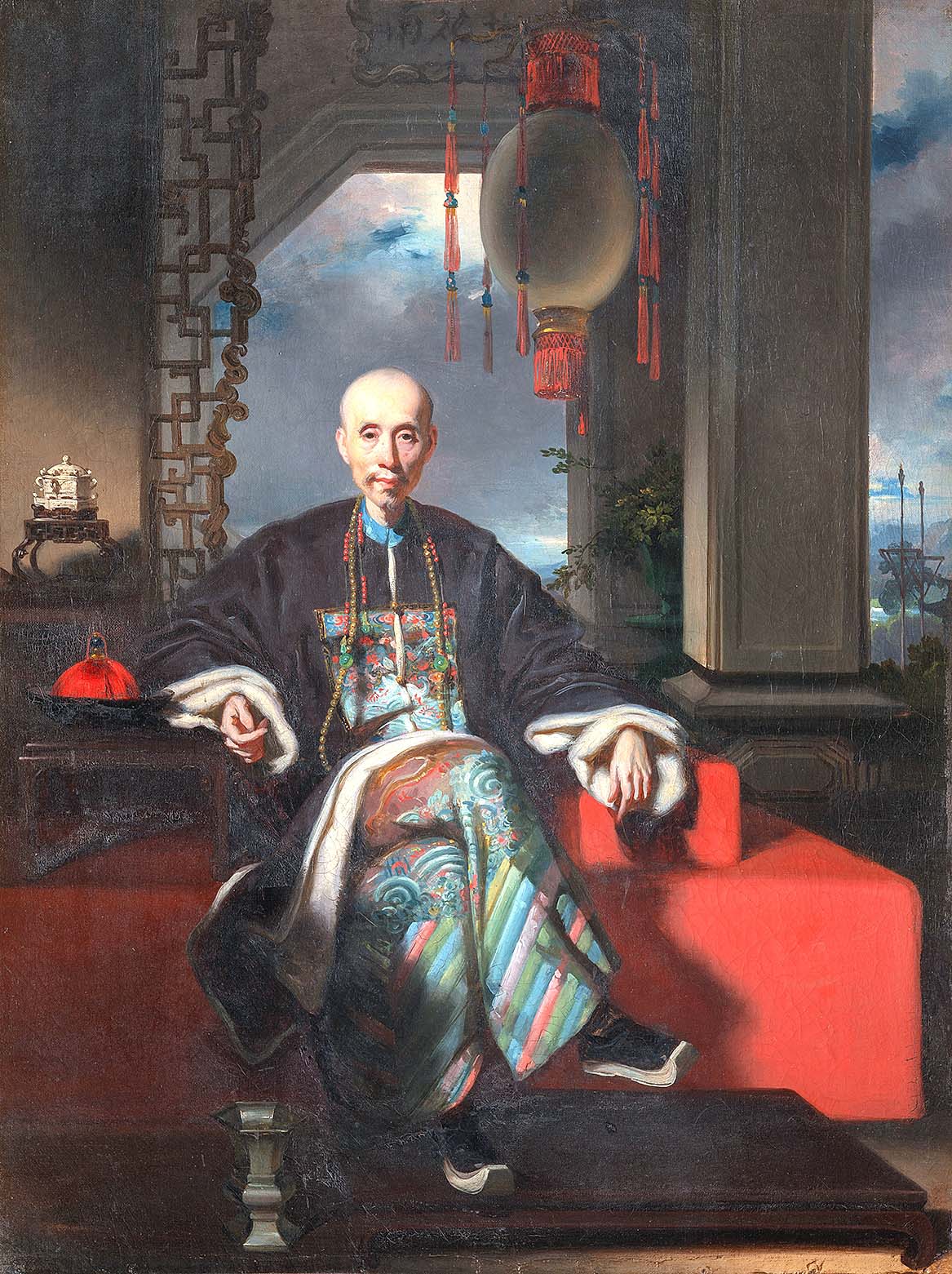
Houqua portrait (1769-1843), in the style of George Chinnery (1774-1852), Canton, China, circa 1825, oil on canvas. Gift of Mrs B. Brannan Reath III, 1988.010. Photo courtesy of Independence Seaport Museum.
By Madelia Hickman Ring
PHILADELPHIA — Museum exhibitions resonate with viewers and visitors in different and, occasionally, unexpected ways. For me, whose namesake Madelia Payne was the daughter of China trade mariner Captain John Payne and who perished at sea alongside the ill-fated ship the Bark Madelia that also bore her name, “Seeking Profit and Power: Philadelphia, China Trade and the Making of America” is personal. The installation, on view at the Independence Seaport Museum (ISM) through January 3, 2028, was an opportunity for me to learn more about a little-known part of my own family’s history.
Museums around the United States are using this Semiquincentennial year to explore their collections in new and different ways. Using that lens, “Seeking Profit and Power” looks at the role Philadelphia had in shaping our nascent nation’s trade ambitions and relations with China.
The topic was previously covered in “Philadelphians and The China Trade, 1784-1844,” a 1984 collaboration between the Philadelphia Museum of Art and the Philadelphia Maritime Museum (before its name was changed to the ISM in the 1990s). While there are certain parallels with the previous show, “Seeking Profit and Power” will “focus more on the story of the trade itself although not forgetting the Philadelphians who sought that trade and the Asian merchants who provided the goods,” according to Peter S. Seibert, ISM’s president and CEO.
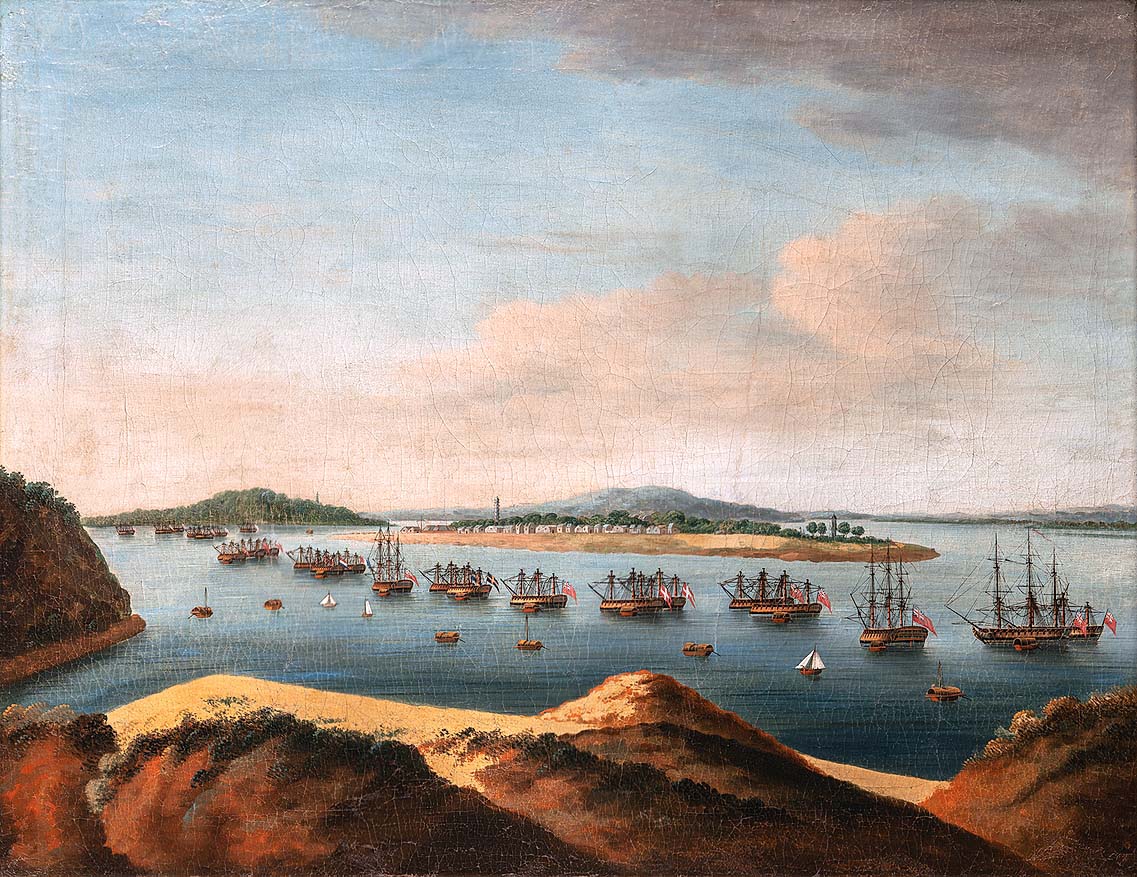
“Whampoa Reach,” unidentified Chinese artist, China, circa 1815, oil on canvas. Acquired through exchange, courtesy of Friends of the Museum, 1978.036. Photo courtesy of Independence Seaport Museum.
To ensure the exhibition reflected the latest scholarship, an advisory committee was formed to support guest curators Susan Gail Johnson and Brett Palfreyman, PhD. This included James R. Fichter, associate professor, University of Hong Kong; John Rogers Haddad, professor, Penn State University at Harrisburg, Penn.; Dael Norwood, assistant professor, University of Delaware; John D. Wong, associate professor, Hong Kong Institute for the Humanities and Social Sciences; and Kariann Yokota, associate professor, University of Colorado Denver.
A few discoveries were made along the way. A ship model of a Chinese patrol boat that was in the ISM collection was carefully restored and is a wonderful example of the type of vessel that American ships would have encountered when arriving or departing a Chinese port. Another example is a group of documents — donated from the Whitall collection in 1984 — that includes personal accounts of a trip to China and details the dangers of the voyage.
Seibert noted that a new appreciation for the ship captains was also developed as the exhibition preparations advanced. “We know that the trip could take a long period of time depending upon seasons and storms, but what I did not know was how many stops they made along the way including backtracking. Ships would leave here bound for Holland and then spend time there before continuing on to Asia, often with other stops in Africa, etc. We tend to think of the captains being brilliant mariners, but they also had to be amazing traders who could operate across diverse language and cultural bounds long before they got to China.”
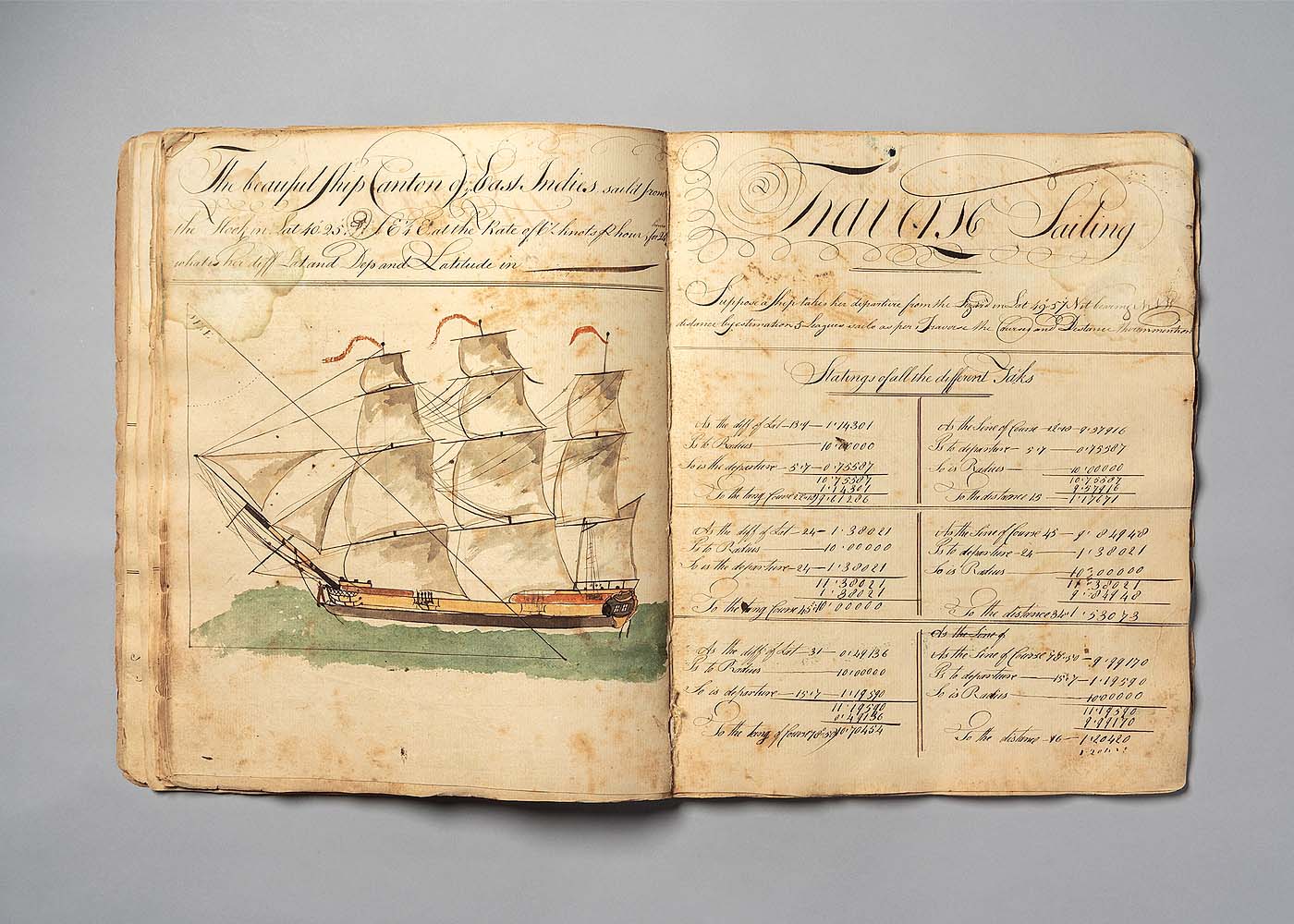
Navigation workbook, featuring illustration of the ship Canton by Cornelius van Buskirk (1776-1863), Philadelphia, circa 1799, bound paper, watercolor. Gift of Mrs Schuyler Cammann, 984.054. Photo courtesy of Independence Seaport Museum.
Five themes divide the exhibition. “Making a Nation” focuses on why the United States opened direct trade with China. Here, visitors will find Chinese-made porcelains that were coveted — and highly taxed along with Chinese tea — by the controlling British government prior to the Revolution, as well as printed documents that tell of “tea party” protests by colonists.
On February 22, 1784, the Empress of China left New York City harbor for Guangzhou, which Westerners called Canton. The 360-ton ship was backed in part by Philadelphia financiers and captained by Philadelphian John Green; she returned 15 months later with a hold full of Chinese goods. Some surviving artifacts from the ship can be found in “Making a Nation,” including a few official documents addressed to Chinese officials, a Chinese porcelain bowl and painted paper hand fan, as well as the sea chest used by Captain Green.
In this section as well are documents and objects that show how the United States visually defined our national identity. Some of these — eagles and flags — were commissioned from Cantonese porcelain painters to be painted onto plates, bowls and tea sets. The States service, designed by a Dutch China trader and given to Martha Washington, depicts 15 states as equal links in an unbreakable chain. Surviving examples are rare, and a saucer from the service was loaned to the show from Mount Vernon. It is shown alongside a Chinese-made dinner plate owned by George Washington that features the emblem of the Society of the Cincinnati.
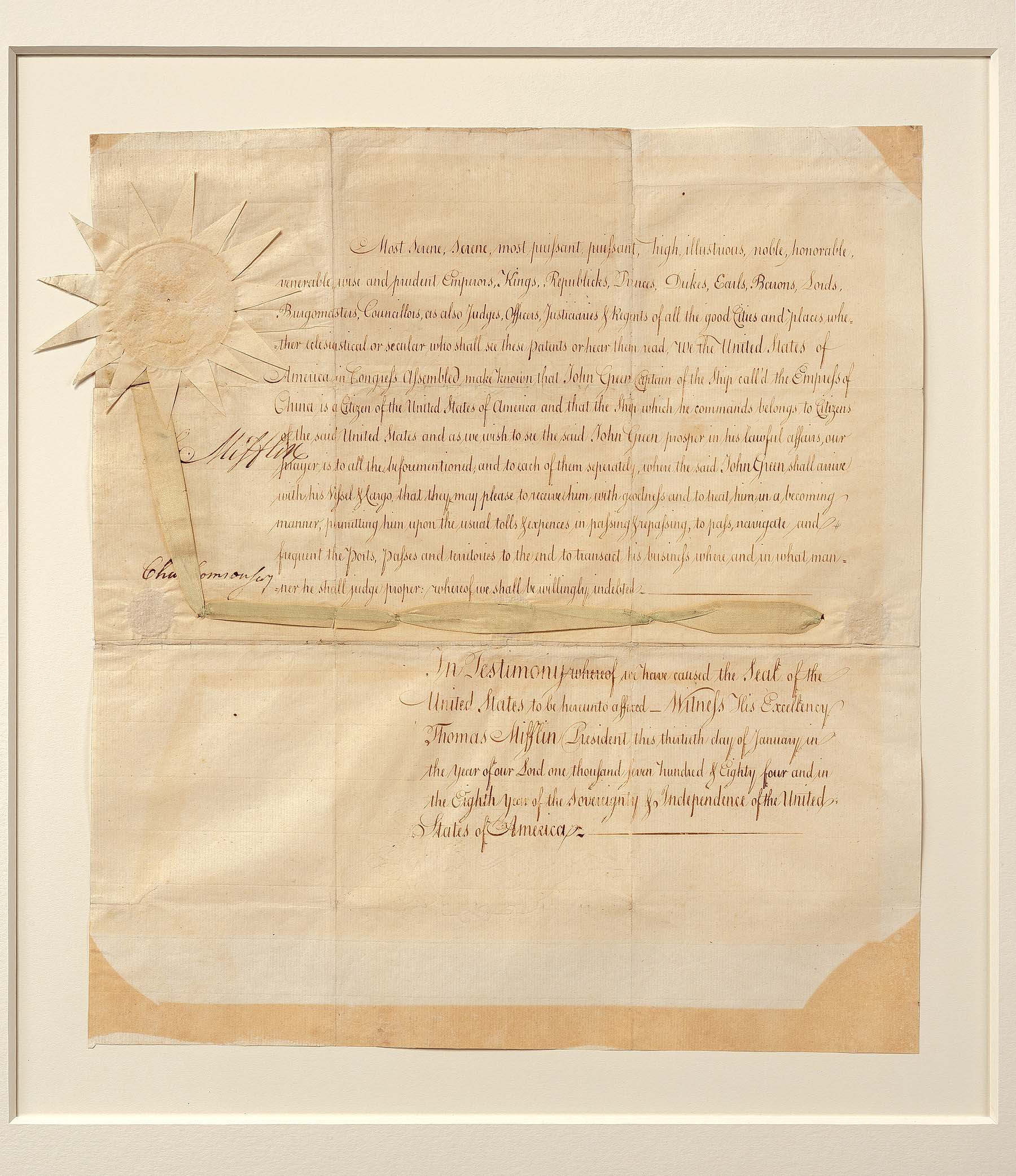
Sea letter, Empress of China, Congress of the Confederation of the United States, January 13, 1784, Annapolis, Md., paper. Acquired through exchange, courtesy of Friends of the Museum, 1981.038.006. Photo courtesy of Independence Seaport Museum.
It was a tremendous technical and logistical feat to travel from Philadelphia to China, and the section “Making it Work” highlights this effort. Maps, navigation books, logbooks and journals, ship pictures and models join paintings of sea captains, wage documents and manifests that outline the extraordinary planning necessary for each voyage.
From paintings of Smyrna Harbor and prints of Liverpool and Cape Town, visitors to the exhibition will have a glimpse of what mariners would have seen along their journeys, as well as views of what awaited them upon their arrival in Macao, the Pearl River and, lastly, Canton. A view of Whampoa Reach, painted by an unidentified Chinese artist around 1815, shows the volume of maritime traffic, with ships in a line. With only 13 Chinese merchants originally authorized to work with foreigners, an unsigned list of authorized Hong merchants would have been invaluable to traders.
In “Making Money,” we learn that while early Americans acted as unofficial diplomats, they were, essentially, businessmen who wanted to maximize their investments. This meant they had to find goods or commodities the Chinese wanted in return. Among these were opium they could acquire en route through Türkiye, sandalwood from the Pacific Islands, animal furs from Native territories and ginseng from the Appalachian Mountains. Traders could use Spanish reales for payment, and there are examples of that in this section, which accompany receipts for ginseng and a late Nineteenth Century seedpod for an opium poppy.
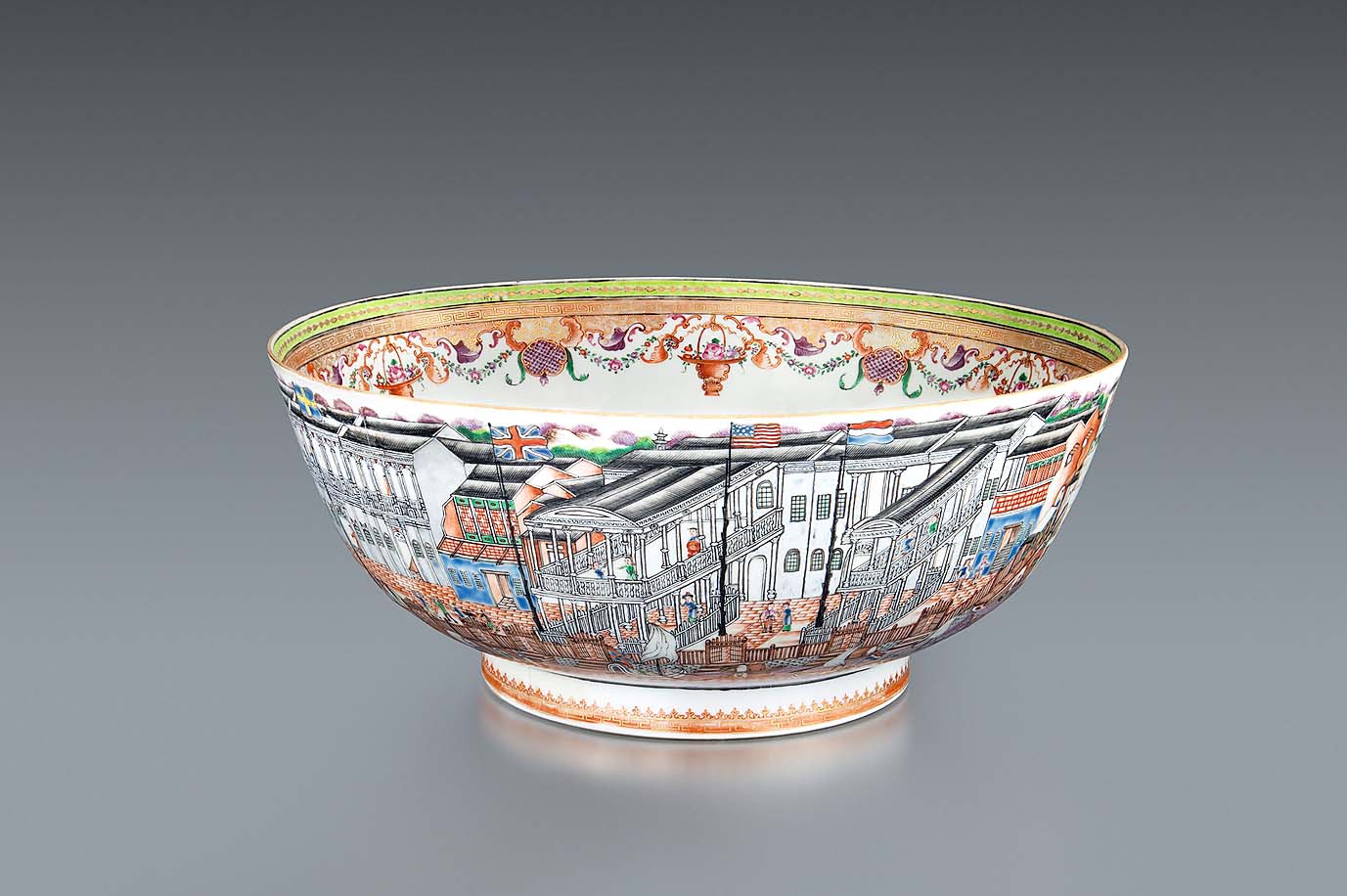
Punch bowl, manufactured in Jingdezhen. China; decorated in Canton, China, circa 1784, porcelain. 2.1.HRD.1554. Photo courtesy of Dietrich American Foundation and Independence Seaport Museum.
The array of sought-after commodities of Chinese tea, porcelain and other goods that were traded is on glorious view in “Making Money.” Following tea as the most important Chinese product was porcelain, which was shipped in crates and provided ideal ballast onboard ships. Most porcelain pieces were mass produced in Jingdezhen, then painted and fired in Canton 600 miles away. A painting of a potter’s shop in its original Chinese lacquer frame, a bowl depicting a ship with American flags and many other examples of porcelain with family armorials are on view.
Several recent acquisitions were made ahead of the show by Seibert, who admits to being a “big collection builder.” Among these is his favorite, a rare sample cup and saucer, which has various painted rims customers could choose from when placing an order; it can be seen in this section, too.
Chinese textiles were popular among consumers in the United States with silk, silk crepe, silk floss and a type of cotton cloth called “nankeen” among the varieties that were brought back. Americans showed off their sense of style by wearing Chinese fabrics and filling their homes with fashionable Chinese goods; goods that looked Chinese but made elsewhere sparked the “Chinoiserie” style.
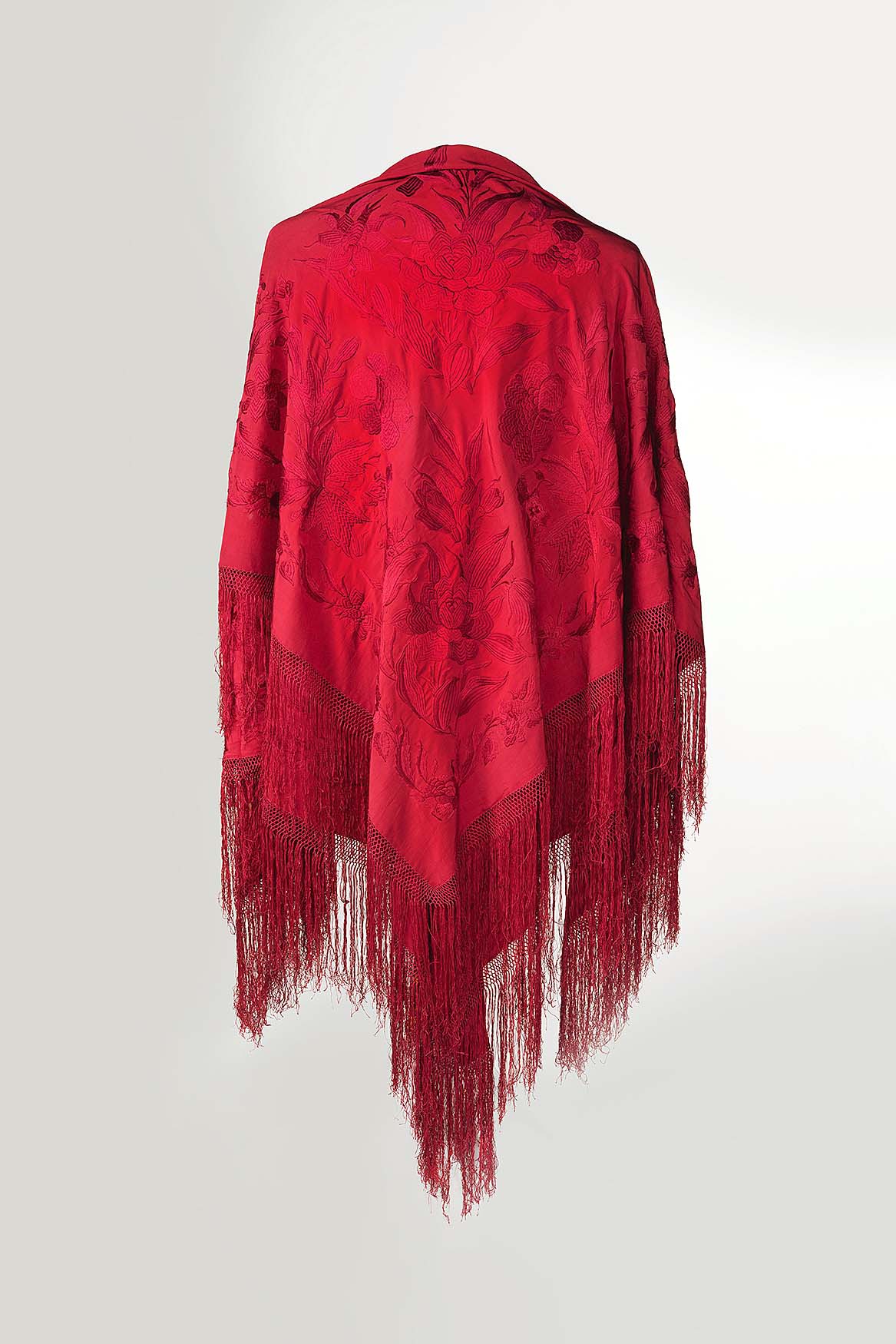
Embroidered shawl, acquired by Rodney Fisher (1798-1863), unidentified maker, Canton, China, mid Nineteenth Century, Chinese silk crepe, embroidered with silk floss. Acquired through exchange, courtesy of a Friend of the Museum, 1977.040.002. Photo courtesy of Independence Seaport Museum.
The show’s gallery text notes that hundreds of thousands of hand fans were imported during the Nineteenth Century, made from a variety of materials that included sandalwood, ivory, tortoiseshell, mother-of-pearl, lacquer and painted paper and silk. One late Eighteenth Century example, made for Dorothy Dale from ivory, is exhibited, housed in its giltwood, glass and silk frame.
Furniture and other decorative articles, among art and toys, were also imported, including lacquer sewing, card and tea boxes.
“Encountering Each Other” explains how the Chinese and US cultures learned about one another through the goods that they traded. Literature for “Seeking Profit and Power” details how Americans were anxious to appear as equals to Europeans in the “United Nations” of the Hongs of Canton. One Hong merchant in particular — Wu Bingjian, who was known as Houqua — sold most of the tea consumed in the United States and became the richest made man in the world in doing so; a portrait of him painted around 1825 is on prominent display in this section.
Closing out the show is “The Old China Trade,” which explores the end of the era and the place it still holds in American memory. Noting that in the beginning, China’s trading advantage allowed it to strictly limit foreign commerce. But China’s position weakened as Western powers, flush with profits from smuggling opium, pressed for broader access. China’s defeat in the First Opium War against Great Britain in 1842, and a later series of civil wars, damaged the empire’s power over trade.
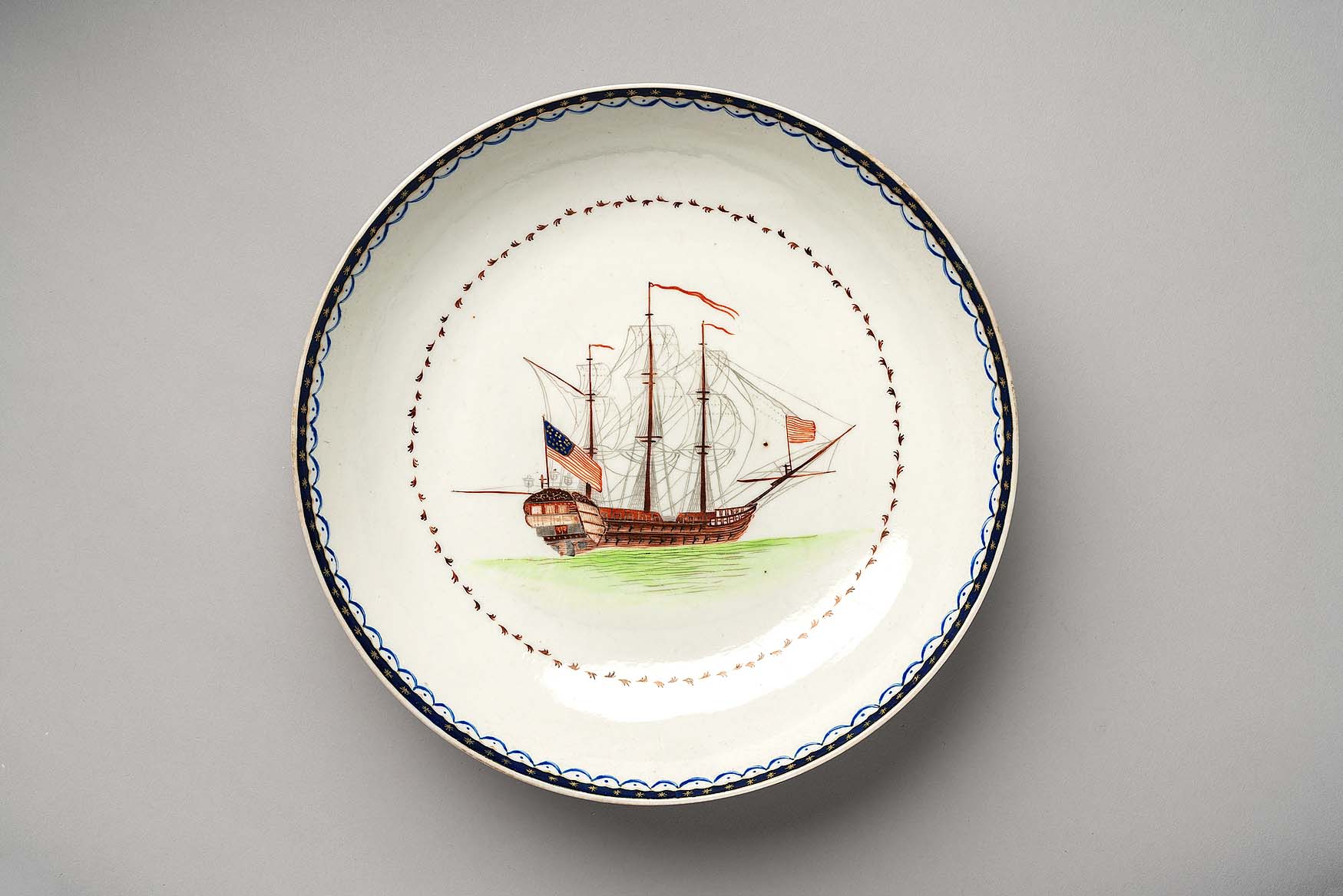
Bowl, ship with American flags, unidentified maker, manufactured in Jingdezhen, China, decorated in Canton, China, circa 1790s, porcelain. Acquired through exchange, courtesy of Friends of the Museum, 2023.038. Photo courtesy of Independence Seaport Museum.
A Chinese contingent launched a wildly popular exhibition of Chinese goods at the 1876 Philadelphia Centennial Exhibition; “Seeking Profit and Power” includes some of the items displayed there. Among these, an ivory model of a Chinese pleasure boat and drawings, photographs and books from the 1876 World’s Fair.
By the early Twentieth Century, it was possible for consumers in the United States to order China trade patterns from US manufacturers, and the examples made in New Jersey and Pennsylvania can be seen alongside their Asian-made counterparts.
Summing up the organizers’ hopes, guest curator Johnson said, “Our goal for the exhibition is to show visitors that a teacup is more than just a teacup — it is an object that tells a story about sailing halfway around the world, America’s taste for luxury goods and how the nation’s founders imagined that trade with China might help establish the newly independent nation as a player on the world stage. We hope visitors will never look at a teacup the same way again.”
Independence Seaport Museum is at 211 South Christopher Columbus Boulevard. For information, www.phillyseaport.org or 215-413-8655.