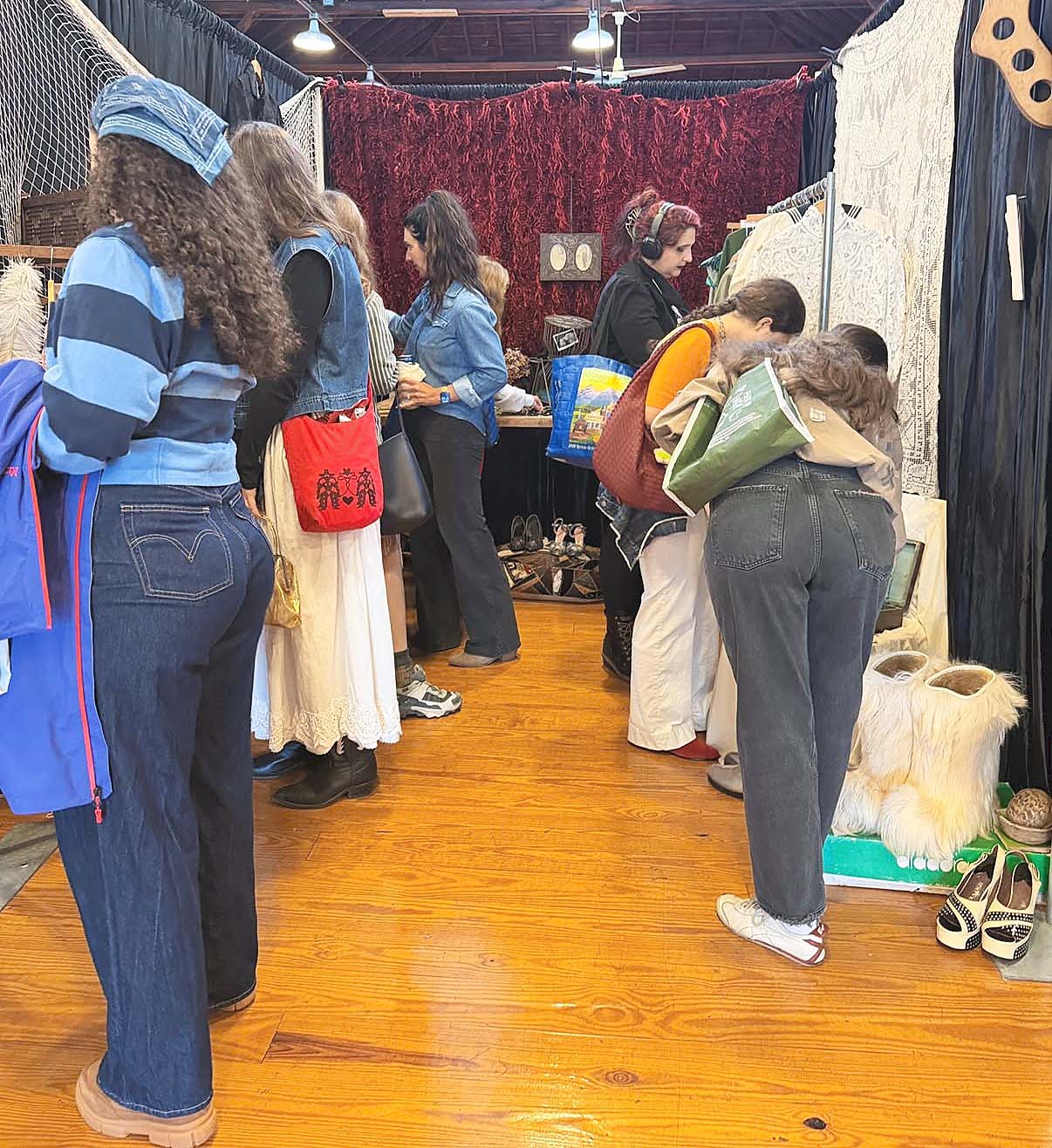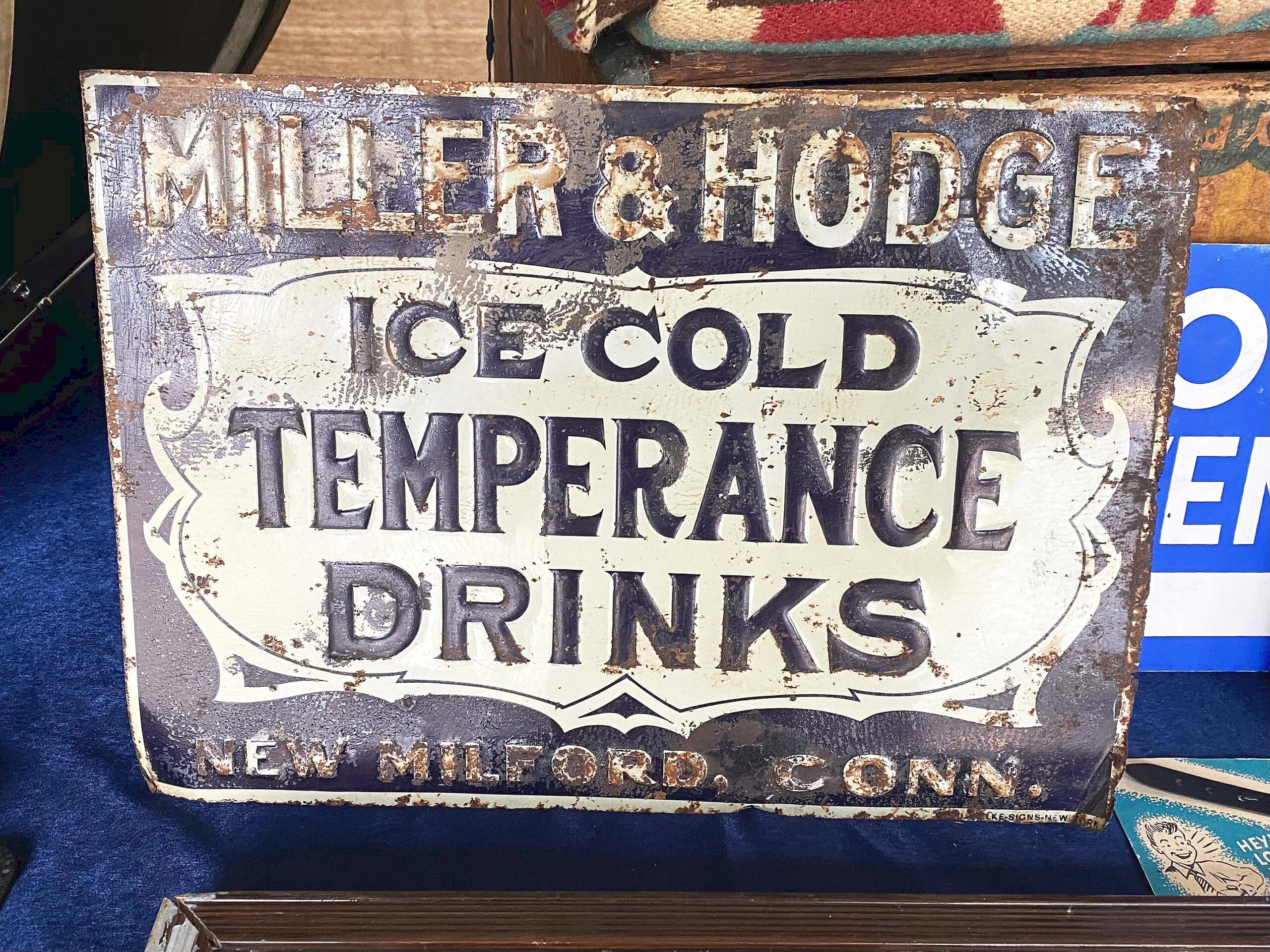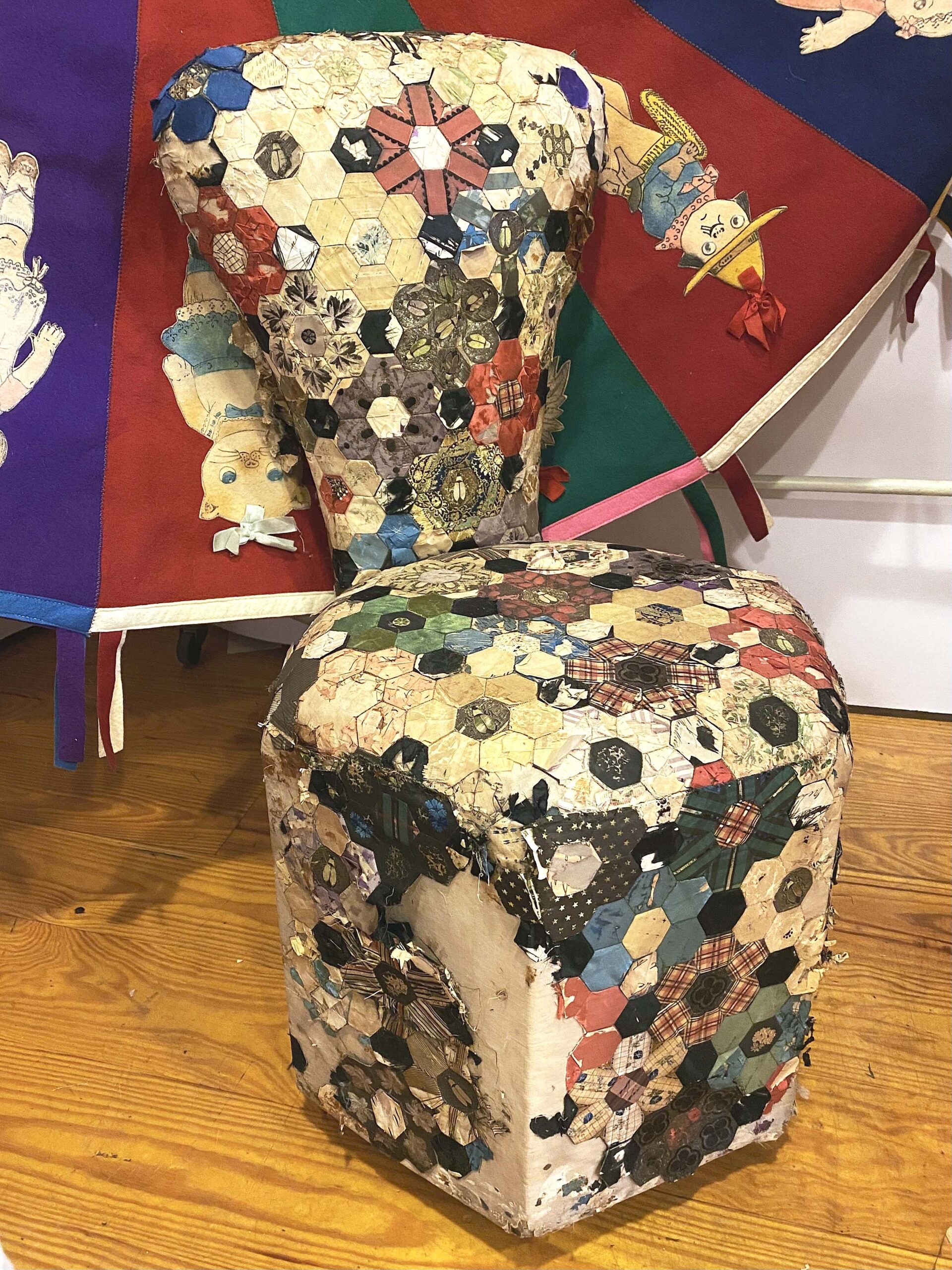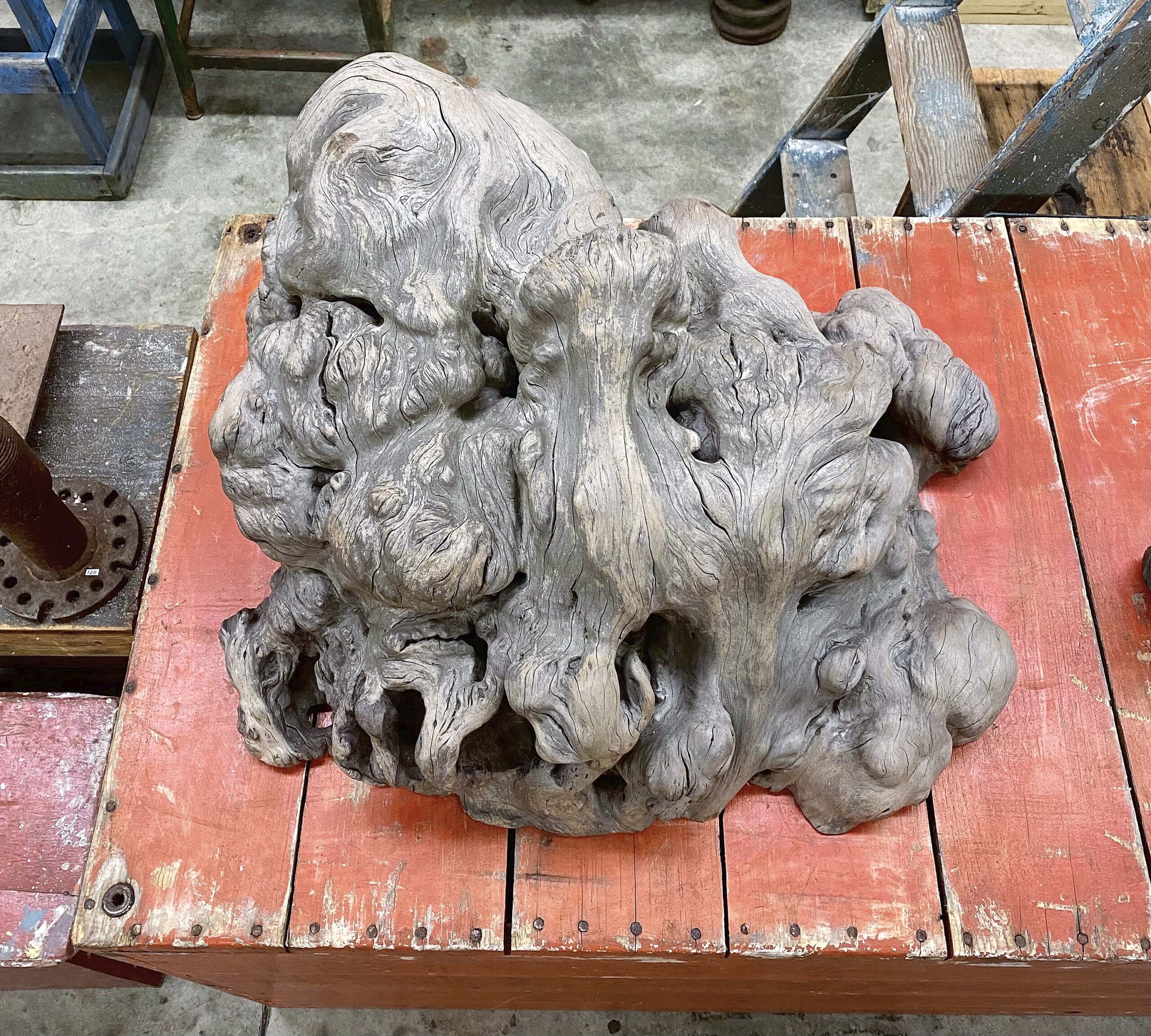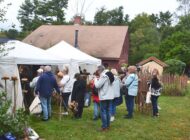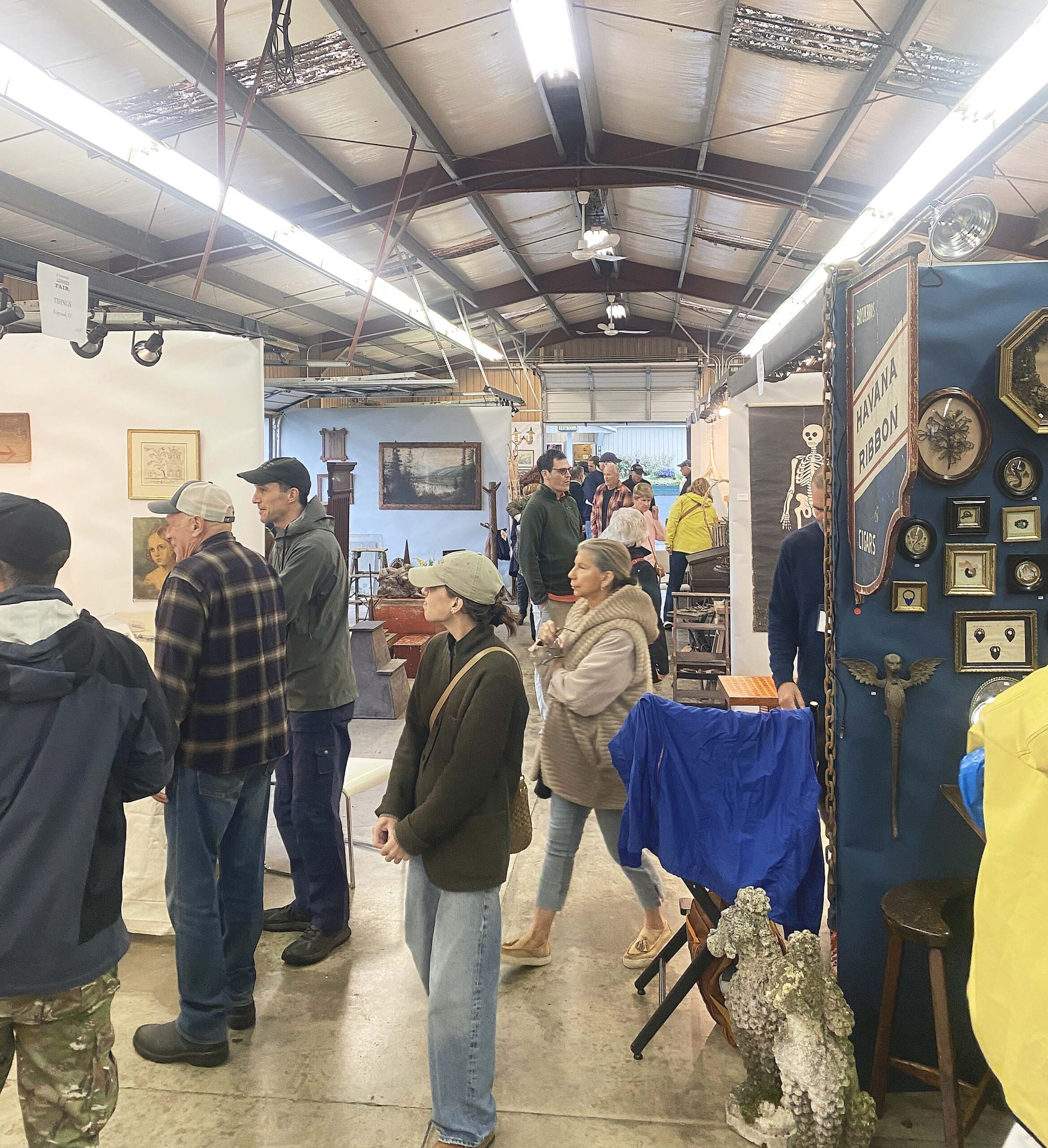
The floodgates opened as more than 2,000 customers stomped their wet but welcome boots onto the Taconic’s fairgrounds.
Review & Onsite Photos by Z.G. Burnett
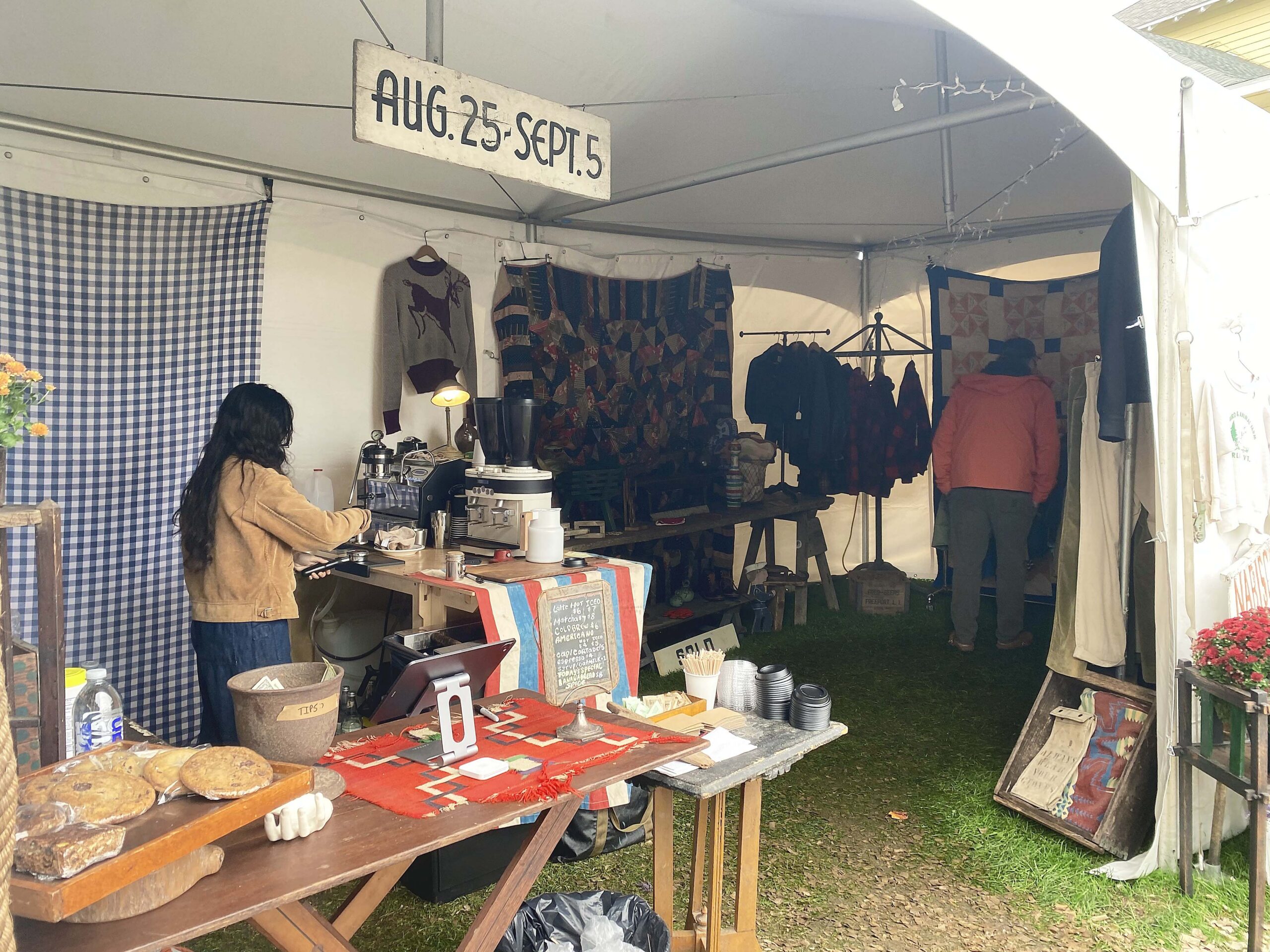
CHATHAM, N.Y. — Showrunners can never truly know what the weather will bring. On the morning of September 26, dealers of the second annual Taconic Antiques Fair put finishing touches on their booths with high hopes for the show despite a dismal forecast for the weekend. Last year’s premiere was an unprecedented success, and the pressure to maintain or even surpass last those numbers was mounting. As one of the Northeast’s most highly-anticipated markets, Taconic braced itself for the punishing wind and rain from the fall season’s first Nor’easter. Outdoor exhibitors were the most anxious, literally battening down the hatches of their tents and positioning tarps to be ready for quick coverage of objects that could easily be damaged by moisture.
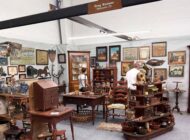
Every Taconic dealer is hand-picked for their specific eye for antique and vintage goods and/or selling experience by the fair’s organizer, Chance & Patina. Most have long-standing careers in the business and many are hardened Brimfield veterans, regardless of age. Each has come across the other either in person or online at some point, and the general atmosphere is genuine camaraderie.
Though exhibitors with similar products tend to know each other better, there’s less of a cliquey attitude than is felt at other fairs on a similar scale, and this is intentional. “We’re really creating something different here,” commented one founding showrunner. “It’s not that the unwritten rule is ‘don’t be a jerk,’ it’s that our exhibitors already know behavior like that isn’t acceptable [for] moving this business into the future.”
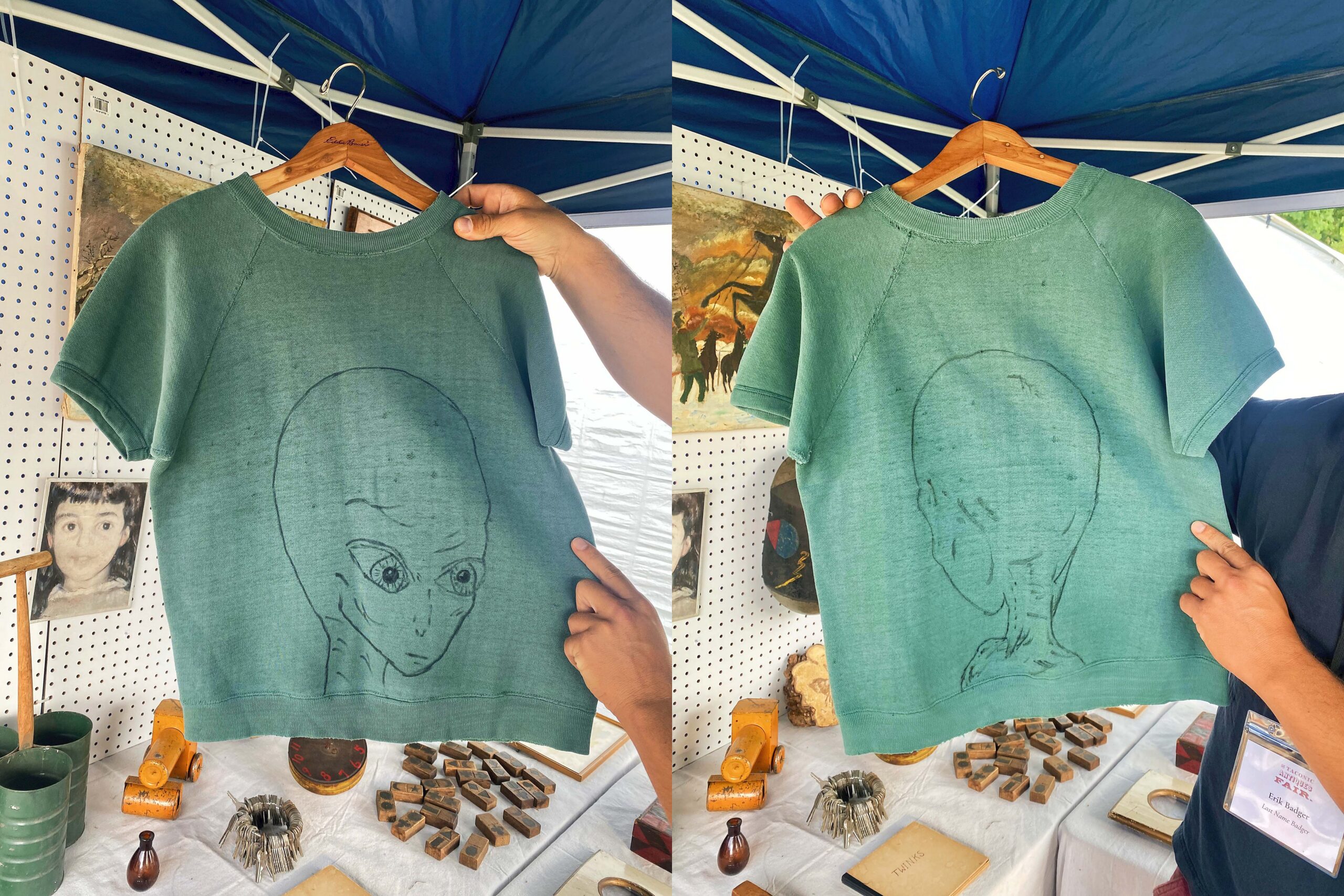
This vintage sweatshirt was illustrated with a gray alien at some point in its existence, and sold promptly on the fair’s first day. Last Name Badger, Putney, Vt.
Another development of antiques culture is that trends that have popped up in and around Taconic. L.L. Bean’s canvas Boat and Tote bags are perennial favorites, but here they are largely not for sale as vendors need them to transport their own goods. “It’s part of the [dealer] uniform,” one commented, holding their nearly wrecked 1980s tote with pride.
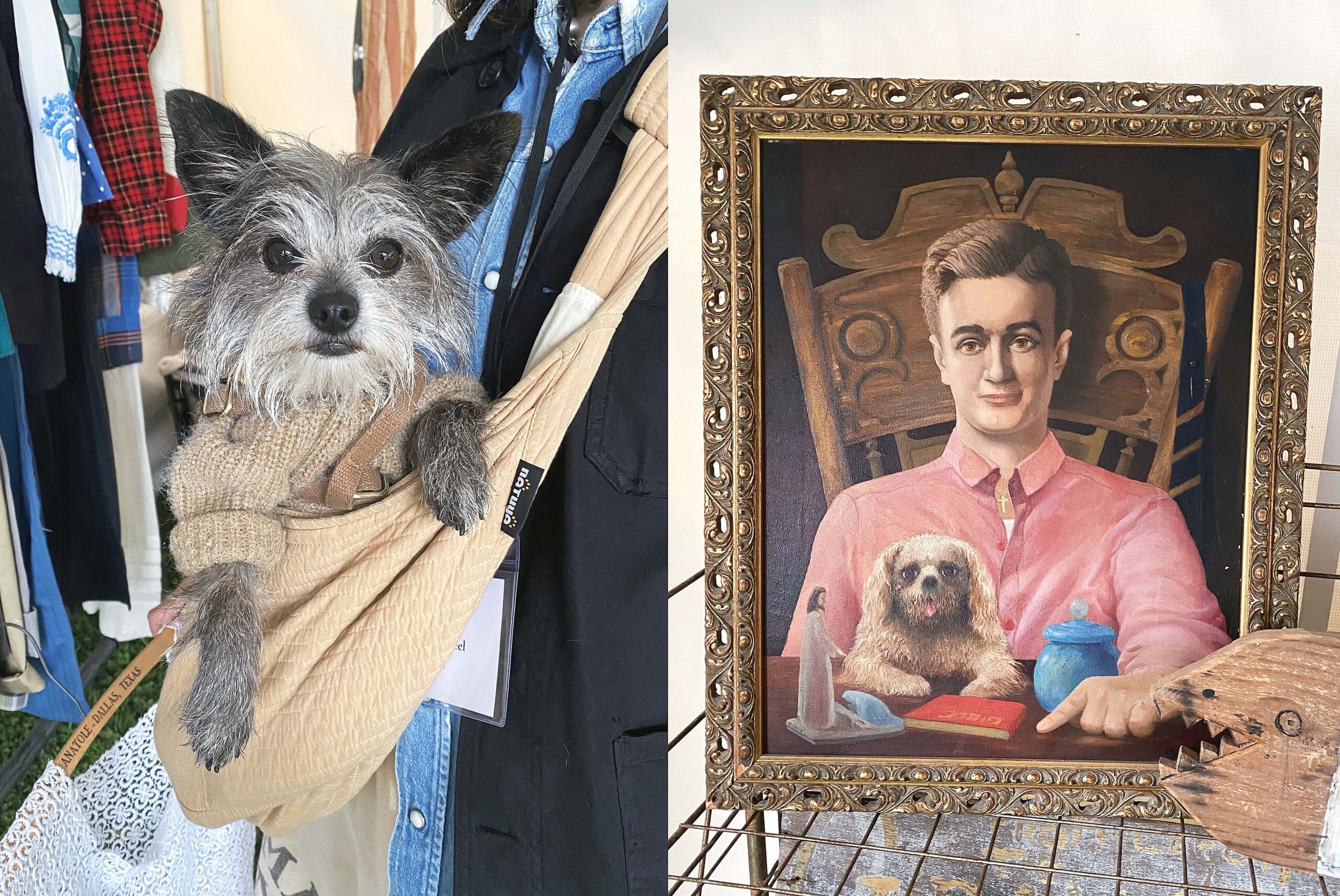
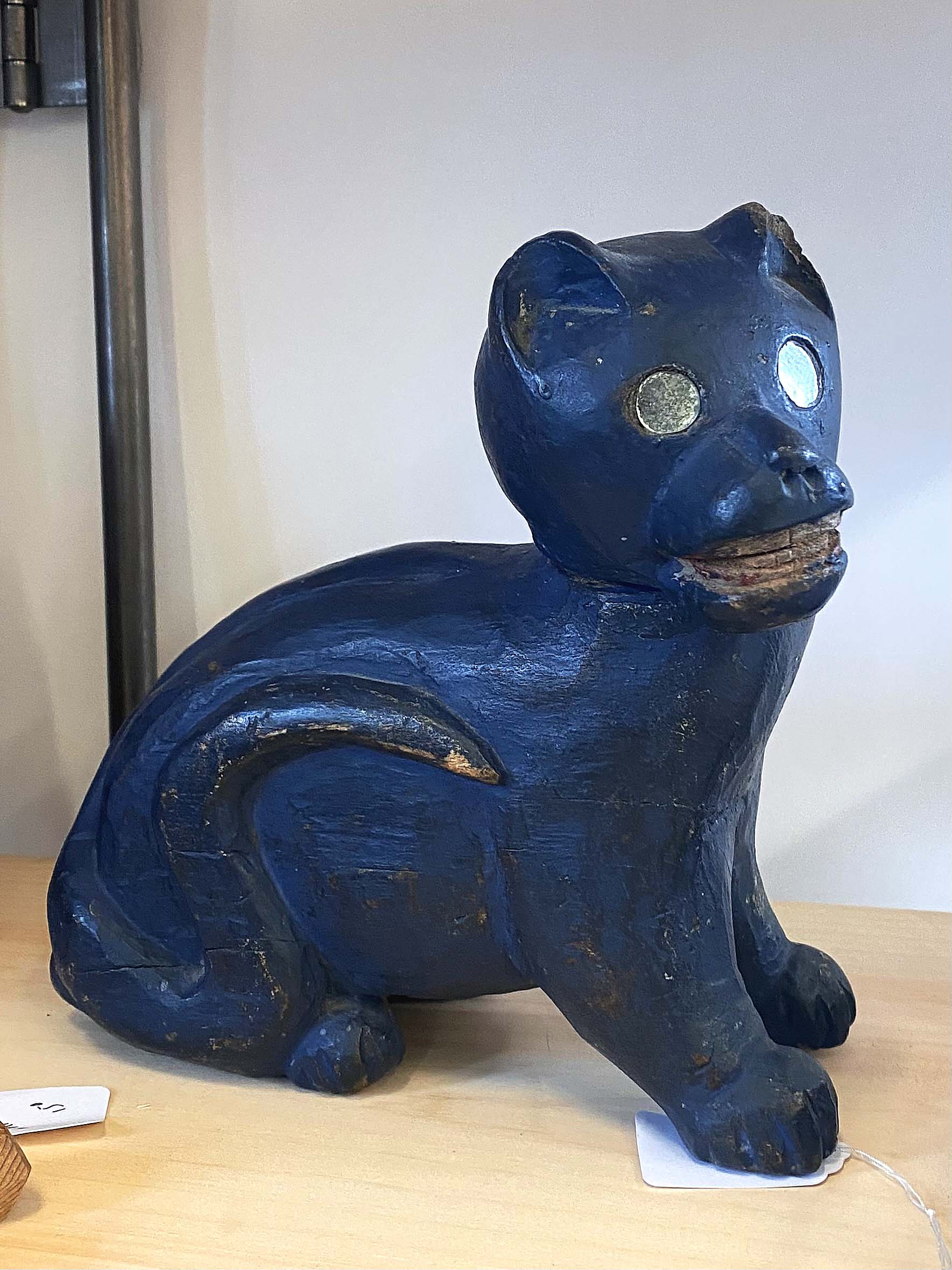
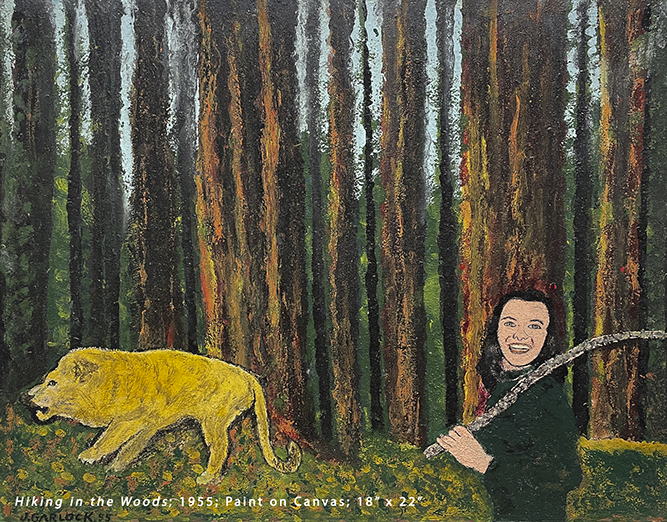
This year, there was a large number of leather animal-form footstools designed by Dimitri Omersa for Abercrombie & Fitch. Pigs were especially favored. Less exclusive folk and Outsider art animals were abundant, giving the market what it wanted in the form of “weird little guys.”
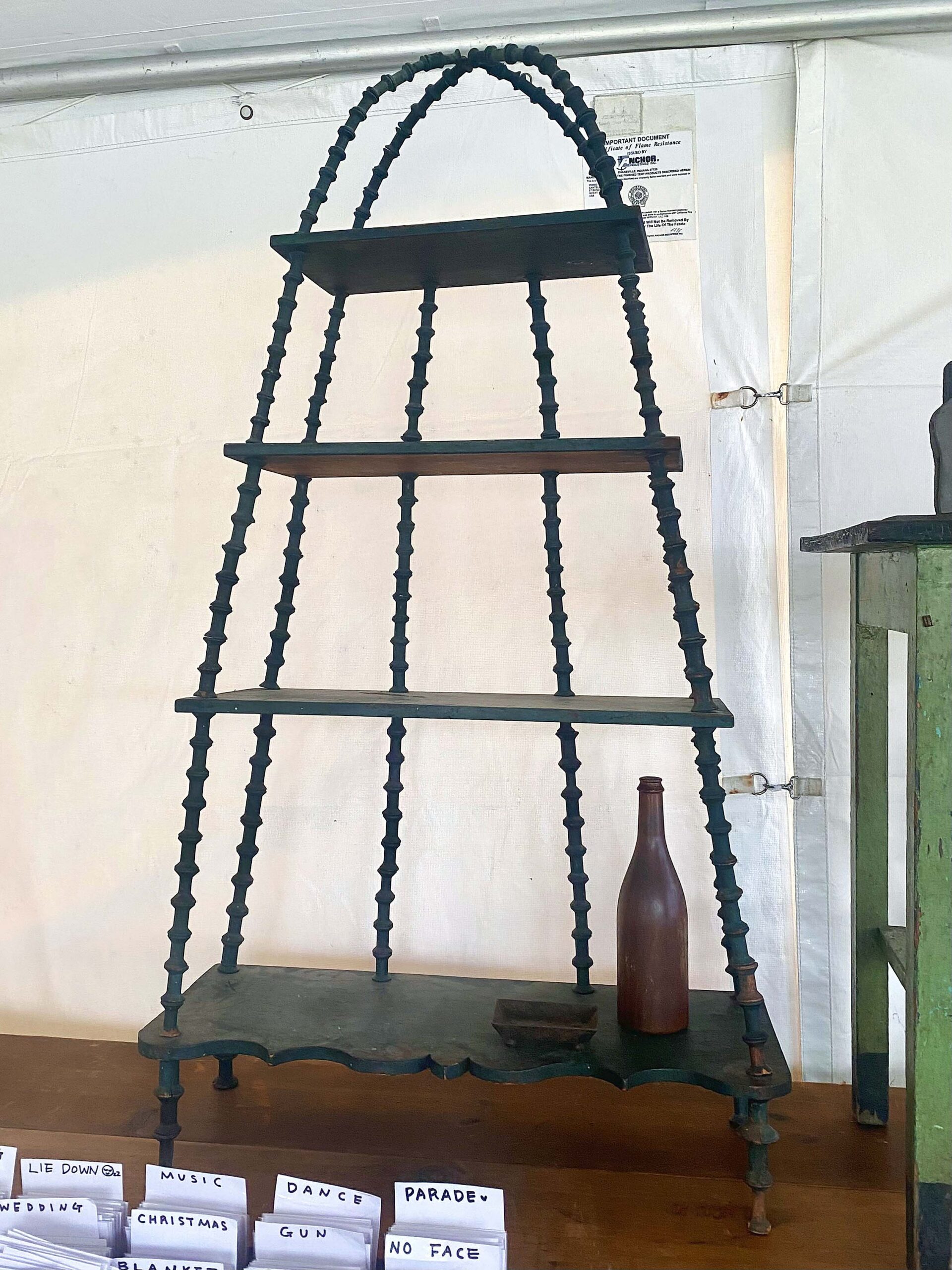
Tramp art furniture sold rapidly at last year’s show, and this year’s installment exhibited so much furniture and décor constructed from spools that it almost seemed planned. It was not.
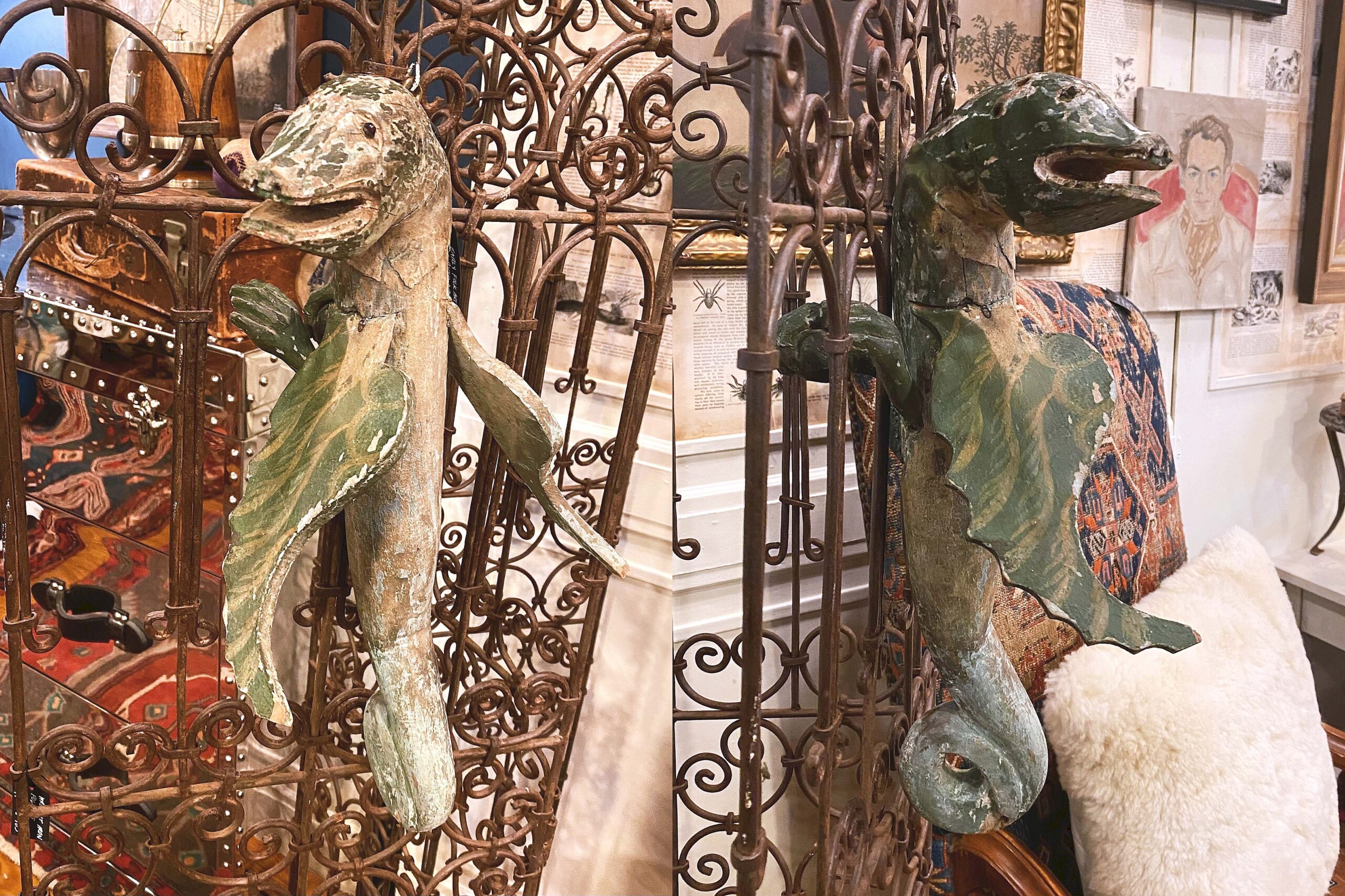
Francis Crespo Folk Art & Antiques, Lancaster, Penn., is a prominent purveyor of the aforementioned animals and brought a rare, highly unusual exemplar. The Aetosaurus dinosaurs lived during the Triassic period (circa 201-231 million years ago), excavated by European and American paleontologists of the mid to late Nineteenth Century. Crespo offered a wood model of what one may have looked like, carved and painted sometime after their fossils’ discovery. Because the genus is known, it was likely made after 1899, when English scientists Richard Lyedekker and Henry Alleyne Nicholson named it. The carving was found in Michigan, but did not find a new home by the fair’s end.
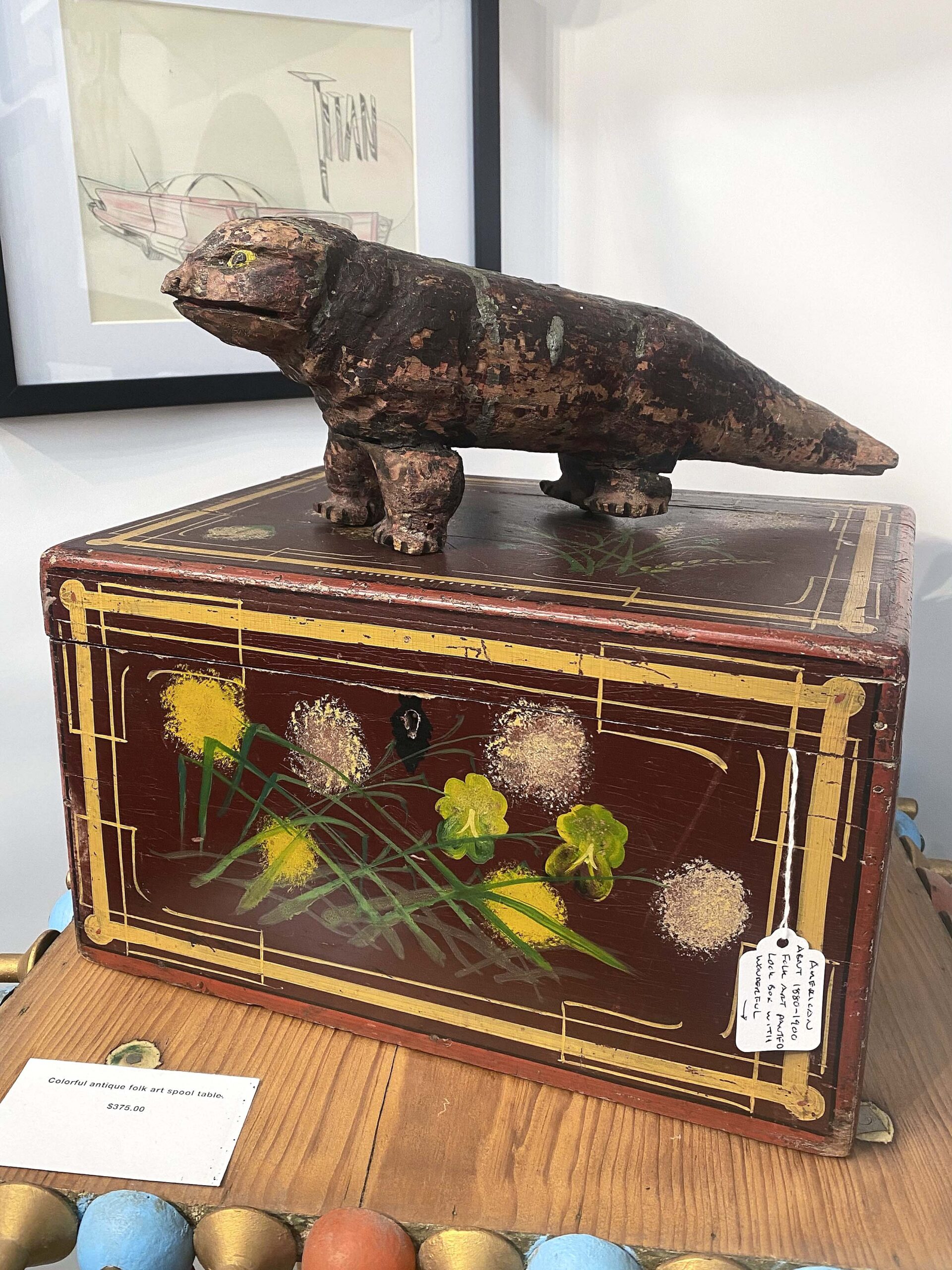
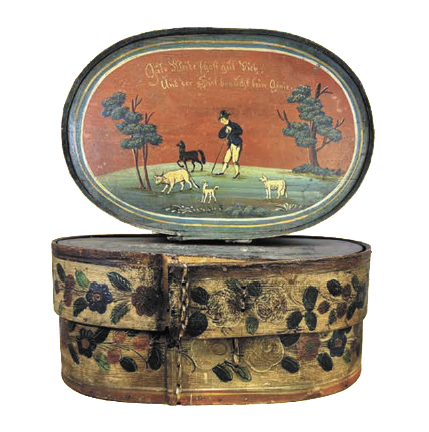
Have you ever seen Nineteenth Century folk art of a dinosaur? Francis Crespo Folk Art & Antiques displayed this Aetosaurus on an American painted lock box of the same era, in turn on a multi-colored spool table. Lancaster, Penn
Instead of a specimen rendering, Susan Wechsler of South Road Art & Antiques, Stanfordville, N.Y., showed a utilitarian object that, for some reason lost to time, became a sheep. Decorated wooden slide boxes from the Nineteenth Century are not scarce, yet this unique form was further enlivened by its radiating grain painting. According to Wechsler, the popular technique was achieved with a layer of translucent glaze made of beer or vinegar that was combed onto its surface. It was meant to mimic the grain of more expensive woods, and here also replicated the texture of a sheep’s wool.
Kevin Duffy, Candler Arts, Atlanta, presented another genre of animal art, a carved fox or coyote head from a totem pole. Both animals play significant roles in creation stories from indigenous peoples of the Pacific Northwest, where monumental totem poles function as heraldic devices, historic records and event markers. These are often carved from a single piece of wood, so whether this singular head was once part of a larger sculpture or made for stacking is unclear. Though totem poles are not objects of worship, the animal’s intense expression and age certainly gave it presence in Duffy’s booth.
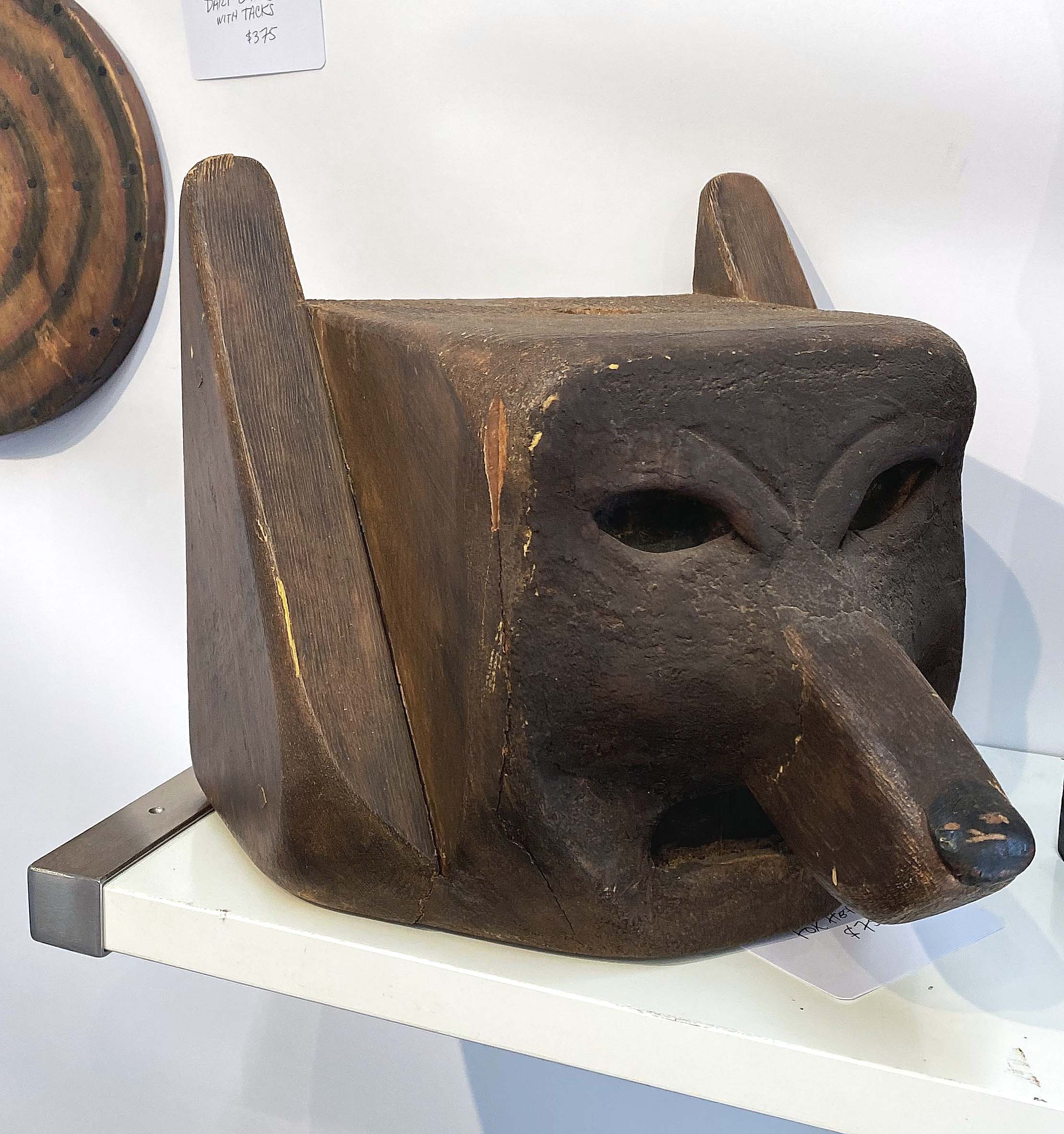
This striking carved head of a fox or coyote was once part of a totem pole and retains its monumental energy, even separated from its pole-fellows. Candler Arts, Atlanta, Ga.
By the end of September 27, the Taconic Antiques Fair had far surpassed its previous gate numbers. Despite a few downpours and strong winds, the weather held out. Its indoor spaces were crowded with shoppers through Saturday, made more so by the number of local young families pushing strollers that doubled as shopping carts.
First-time dealers to Taconic were relieved and excited by healthy sales, and many expressed their intention to return next year. A number of second-timers reported a noticeable improvement in sales since last year. Some exhibitors were even low on product by the second day, having sold even some of their backup stock on the first. We can only imagine how this market might grow if the Taconic Antiques Fair is blessed with perfect fall weather next year.
The Taconic Antiques Fair occurs annually in early fall. For information, www.taconicantiquesfair.com.