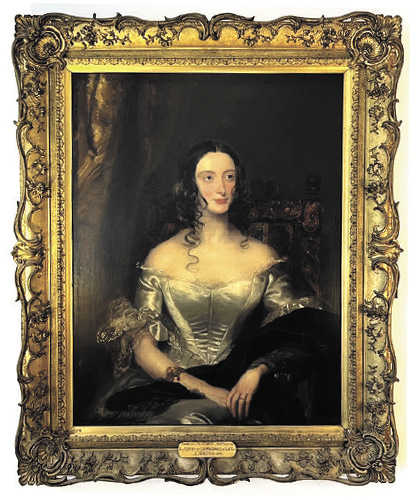
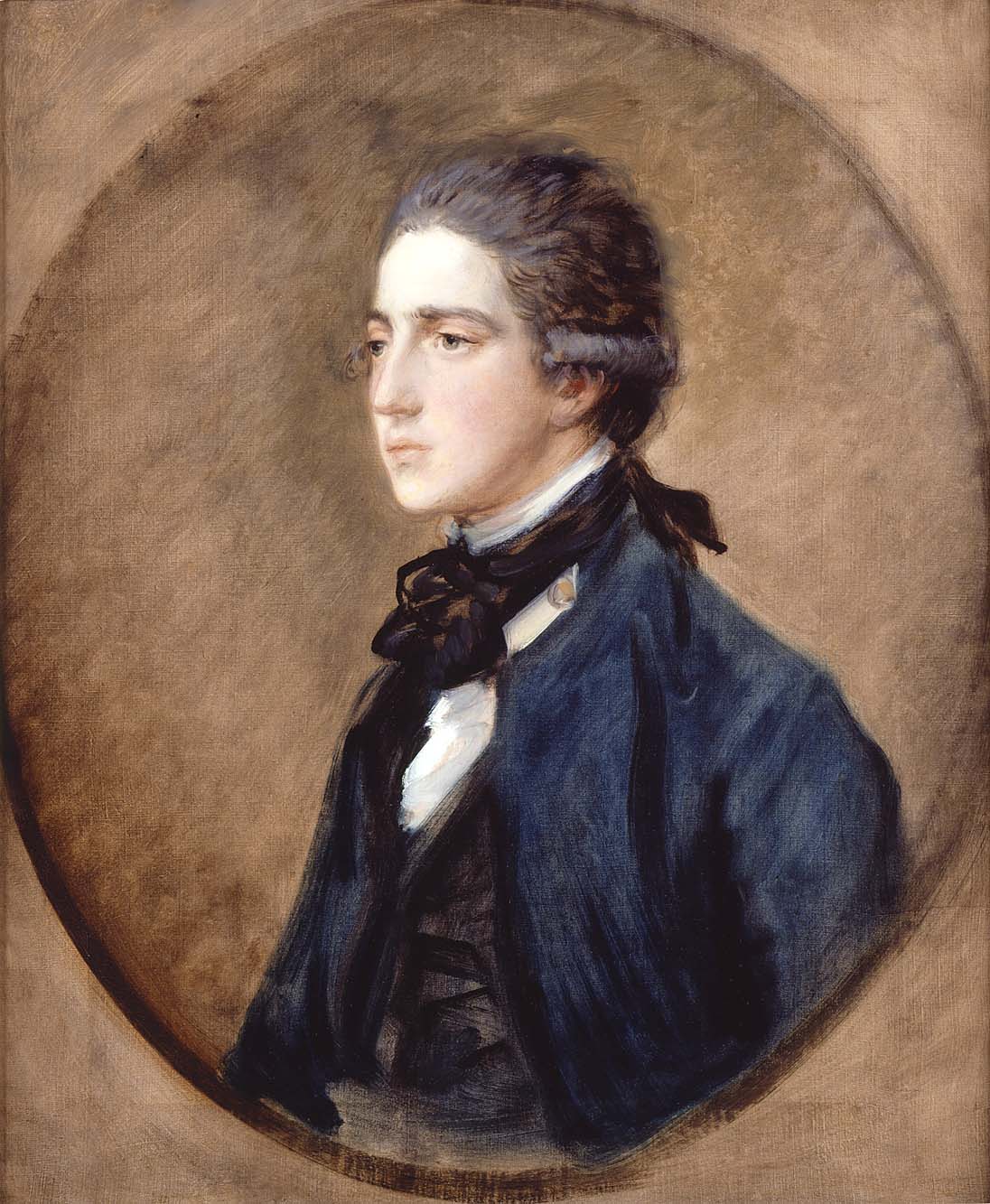
“Samuel Linley,” circa 1778, oil on canvas, 29-13/16 by 25 inches. Dulwich Picture Gallery, London, © Dulwich Picture Gallery / Bridgeman Images.
By Jessica Skwire Routhier
NEW YORK CITY — When the Frick Collection reopened to the public in April 2025 after a massive renovation campaign, it promised an enhanced commitment to the “intimate encounters with iconic works of art” that have long been “a cornerstone of the Frick experience.” Curator Aimee Ng’s painstakingly edited group of just 25 masterworks by Eighteenth Century British portraitist Thomas Gainsborough is a manifestation of that goal through the idiom of fashion, that most intimate of art forms. “Gainsborough: The Fashion of Portraiture,” the institution’s first monographic exhibition for the artist, is on view through May 11.
Portraits, too, are an intimate art form by nature, involving an extended one-on-one rendezvous between painter and sitter and culminating, in today’s museums, with what is essentially a nose-to-nose encounter between the viewer and the sitter’s painted image (please do not actually put your nose to the paintings at the Frick). But Ng’s scholarship, in the exhibition and its accompanying catalog, makes the case that the intimate encounter actually began well before Gainsborough ever touched brush to canvas. There was, for one, the negotiation about what the sitter would wear — would it be up-to-the-minute fashion or historical dress? Such decisions also involved negotiations about class and gender. Who exactly was entitled to wear what — or at least to present themselves as if wearing it — and what did it mean if they decided, with Gainsborough, to subvert those expectations?
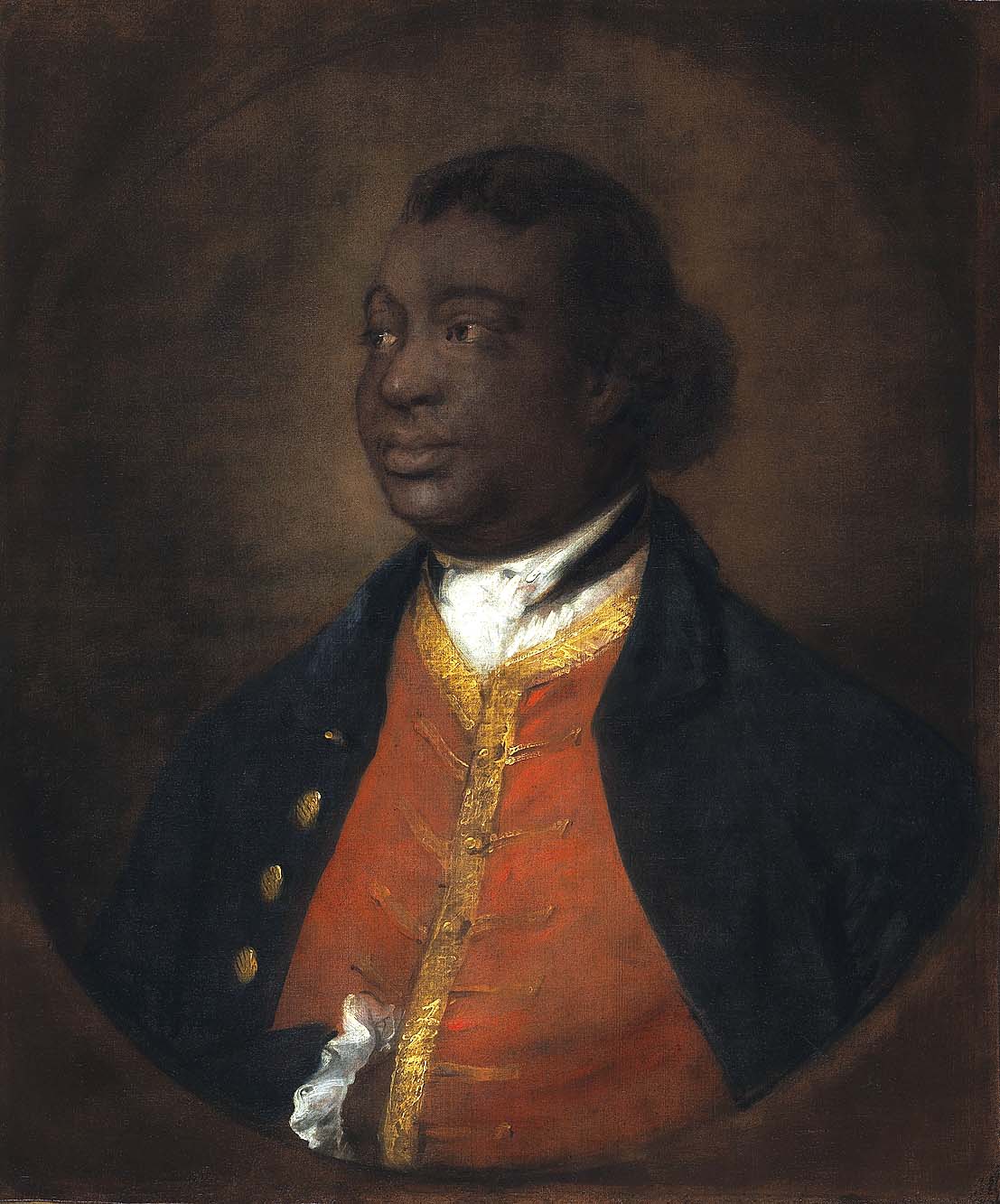
“Ignatius Sancho,” 1768, oil on canvas, 29 by 24½ inches. National Gallery of Canada, Ottawa.
Take, for example, the 1768 portrait of Ignatius Sancho, a Black servant to the Duke and Duchess of Montagu. Gainsborough met Sancho in the fashionable resort town of Bath, where the latter had traveled as Montagu’s valet, but the portrait gives no indication of that subordinate role. Gainsborough pictures Sancho as “a gentleman in gentleman’s clothing,” Ng says — a person of fashion, if you will — “not in the livery he would have worn working for the Duke of Montagu, but as a gentleman in his own right.” It is right in every way to assume that the choice of costume was Sancho’s as much as Gainsborough’s, and it was no false posture: at the time it was painted, Sancho was already emerging as respected composer, musician, writer and abolitionist. Ng speculates that Gainsborough may have made this portrait in exchange for some of Sancho’s musical compositions, or for music lessons — something the artist was known to do. The portrait is a powerful reminder, Ng says, that “identities are multiple,” even in the highly class-conscious society of Eighteenth Century Britain.
Fashion — or what today we call fashion, meaning essentially clothing but also personal style more broadly — played a huge role in that social hierarchy. How a person was perceived was both dictated and determined by what they wore. In real life, both men and women chased the trends of the time: the quasi-shepherdess look favored by members of the peerage (Mary, Countess Howe), the towering hairstyles popularized by Marie Antoinette (The Hon Frances Duncombe; Grace Dalrymple Elliot [the 1778 version]), even pink or “puce” hair, as seen in Mrs Fitzherbert, a bizarre but verifiable moment in the history of hairdressing. Ng writes in the catalog that “women, especially, cast off fashions ‘continually,’” abandoning them as soon as anyone perceived to be a rank lower than themselves adopted them. Men’s styles were more stable but no less obligatory: the vast majority of Gainsborough’s adult male sitters appear with a frock coat, knotted white cravat at the neck and a white “campaign wig” with carronade curls, meant to look like miniature cannon. “Peter Darnell Muilman, Charles Crokatt and William Keable,” from about 1750, is an early example; the fact that John Joseph Merlin was made 30 years later is more evident in Gainsborough’s evolving facture than in any very obvious change in male fashion.
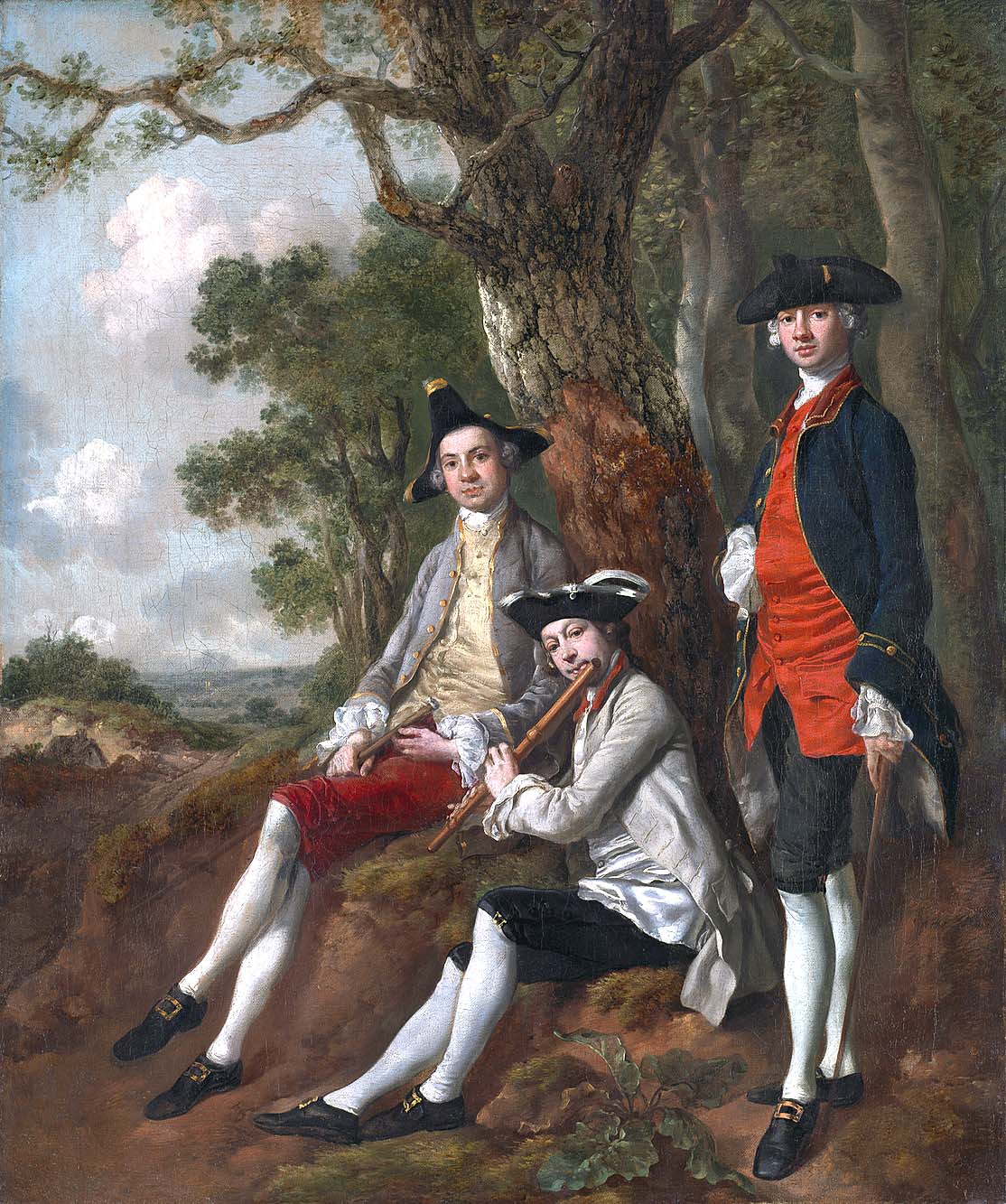
“Peter Darnell Muilman, Charles Crokatt, and William Keable,” circa 1750, oil on canvas, 30⅛ by 25¼ inches. Gainsborough’s House, Sudbury, Suffolk, and Tate, London.
But portraiture offered up opportunities for more fanciful forms of dress, even if Gainsborough was not necessarily a fan of these alternatives. Certainly, he never indulged in the classicizing drapery that his contemporary Joshua Reynolds insisted was the only appropriate choice for portraiture. Gainsborough wrote to a patron in 1771 that a true likeness was best achieved when the sitter wore “modern dresses” and considered it a “misfortunate that cannot be helped” that those garments were “soon out of fashion and look awkward.” To address this disadvantage, he was known to update portraits with more au-courant fashions at his patrons’ request.
Nevertheless, whether to avoid this extra labor or to acquiesce to patrons’ demands, Gainsborough did occasionally dapple in what is known as “Van Dyck dress,” mimicking the Seventeenth Century styles of the Anglo-Flemish court painter Anthony Van Dyck from a century before. Ng suggests that Gainsborough may have made this exception, in part, because “Van Dyck clothing could be this sort of timeless thing that specifically connects to a lofty English past around the court of Charles I,” but she clarifies that Gainsborough was also an admirer of Van Dyck as a painter. Gainsborough had in fact copied the earlier artist’s works in order to learn and experiment with variations in his techniques, particularly his skill in rendering the sheen and texture of fabrics. In “Lords John and Bernard Stuart,” after Anthony Van Dyck, for example, Ng writes, “Gainsborough improvised the design of the collar in each version, while remaining convincing and conveying a sense of spontaneity.” The lessons learned extended all the way to the Van Dyck-style “Bernard Howell, Later 12th Duke of Norfolk,” possibly the last painting completed before Gainsborough’s death.
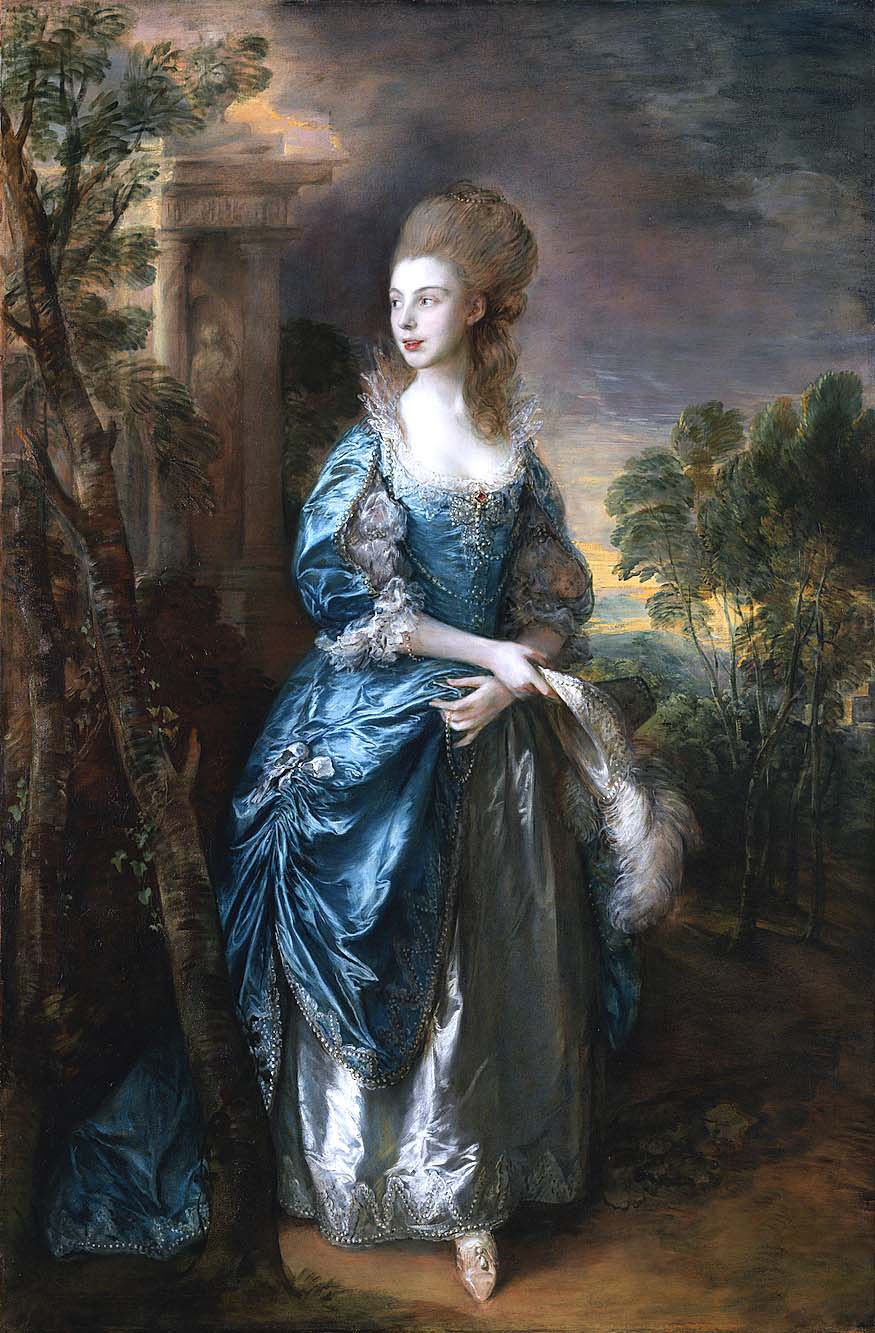
“The Hon Frances Duncombe,” circa 1776, oil on canvas, 92¼ by 61⅛ inches. The Frick Collection, New York City. Photo by Joseph Coscia, Jr.
Even such “fancy dress” options, however, were still dictated by social structures — and criticized when they did not adhere. The 1778 portrait of Grace Dalrymple Elliott, for example, showing a rather eclectic combination of a gray Marie Antoinette pouf of hair and a glowing yellow Van Dyck gown, was well received even though it pictured a woman of questionable reputation — widely perceived to be participating in an extramarital affair at least in part for financial benefit. But when Gainsborough painted her again just four years later, shortly after she had given birth to a child of debated parentage (“Grace Dalrymple Elliott,” 1782), he did away with the veneer of historicism, and critics were less kind. Although the names of sitters were rarely revealed when on public display, whether at the Royal Academy’s annual shows or in an artist’s studio, their identities were poorly kept secrets, and it was particularly shocking that such a portrait should share space with those of purportedly respectable men and women. Fancy dress — as in Gainsborough’s acclaimed portrait of the Italian dancer Giovanna Baccelli in costume — seemed to provide some sort of distancing context for those who might otherwise be seen to challenge the social order.
Ng connects this kind of public display of portraiture — essentially an innovation of the major European painting academies, not founded until the mid Seventeenth Century — to an attendant rise of celebrity culture. “Because they are celebrities, it behooves an artist to produce a portrait of them, even if they’re not paying for it,” she explains. Conversely, individuals could become celebrities because of their celebrated portraits. In this way, Ng observes, portraits “can do more than simply portray an identity,” putting forward “notions of wealth and status even for people who might not have claims to it.”
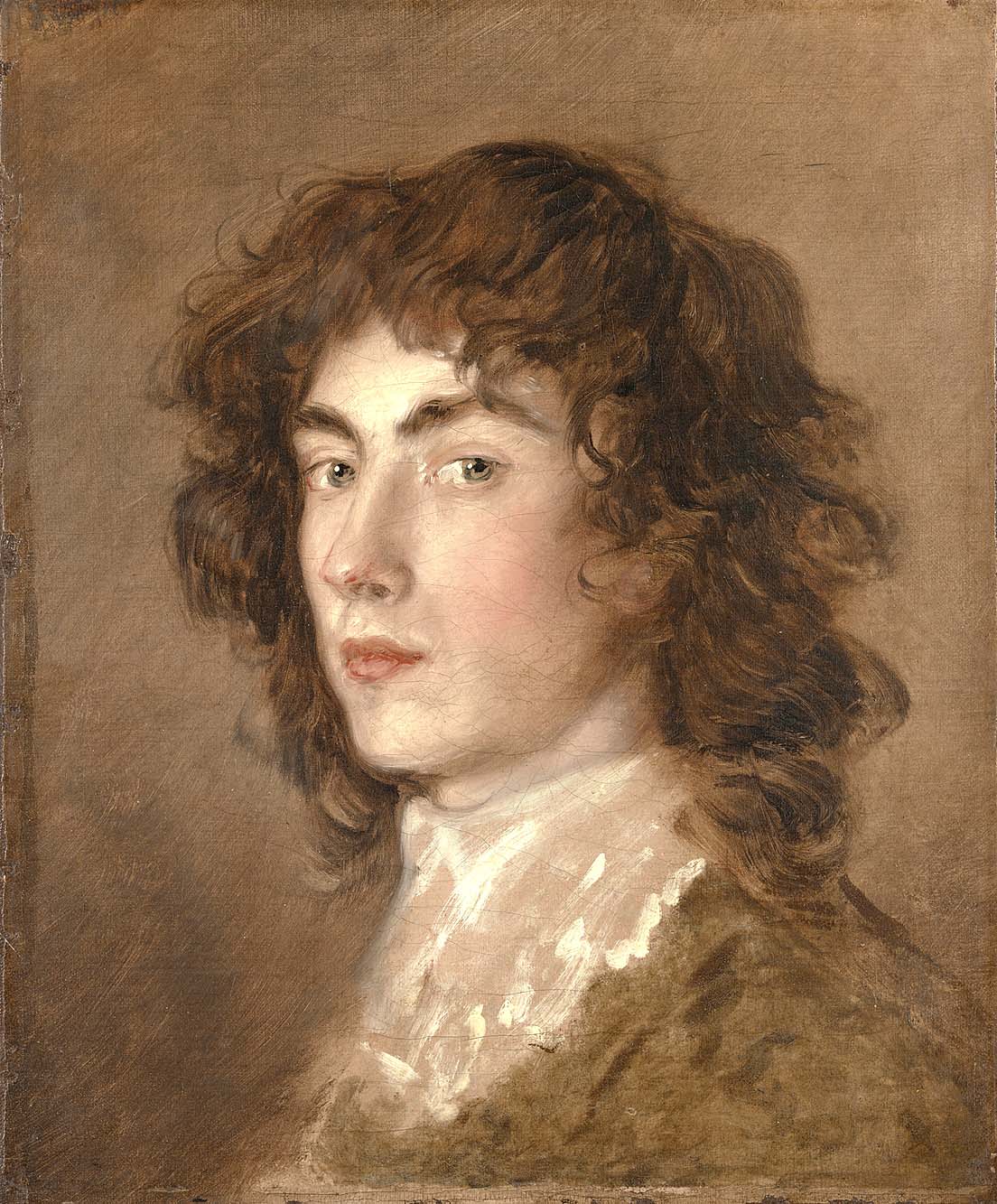
“Gainsborough Dupont,” circa 1770-72, oil on canvas, 17-15/16 by 14¾ inches. Tate, London.
Beyond these ideas about self-fashioning as a collaboration between portrait painter and sitter, this exhibition and catalog draw many others into that relationship. Kari Rayner, a conservator at the J. Paul Getty Museum in Los Angeles, has provided an essay that draws out the material connection between painting and fashion, particularly in the context of Eighteenth Century painting and particularly in Gainsborough’s work. We may be unaccustomed to thinking about it in quite such terms, but paintings and clothing are made of the same stuff — fabric, pigments and dyes. In the Twenty-First Century, those materials have become quite distinct for each industry, but in the Eighteenth Century there was no difference between the linen used for painter’s canvases and the linen used to provide understructure for the extreme fashions of the day: corsets and panniers, etc. Rayner also explains that while there is a distinction between water-soluble dyes and pigments, which essentially float within a medium like oil, Gainsborough used both in his paintings and was thus ultimately using the same color suppliers as fabric manufacturers.
None of this is unique to Gainsborough, of course, but Ng notes that he and his work provide a particularly good illustration because, unlike so many of his contemporaries, “he did not employ a large stable of assistants.” With only the possible exception of his nephew Gainsborough Dupont (whose portrait he painted in 1770-72), she writes in the catalog, he “attended to every swath of satin and knot of lace himself, eschewing the convention of employing specialist drapery painters.” This means that the choices he made about what pigments would best describe what kind of fabric, what treatment of brush on canvas would most accurately articulate a translucent gauze as opposed to a heavy satin, were largely Gainsborough’s own — putting him only one degree of separation from the countless thousands of European workers in the color and fabric trades at the time.
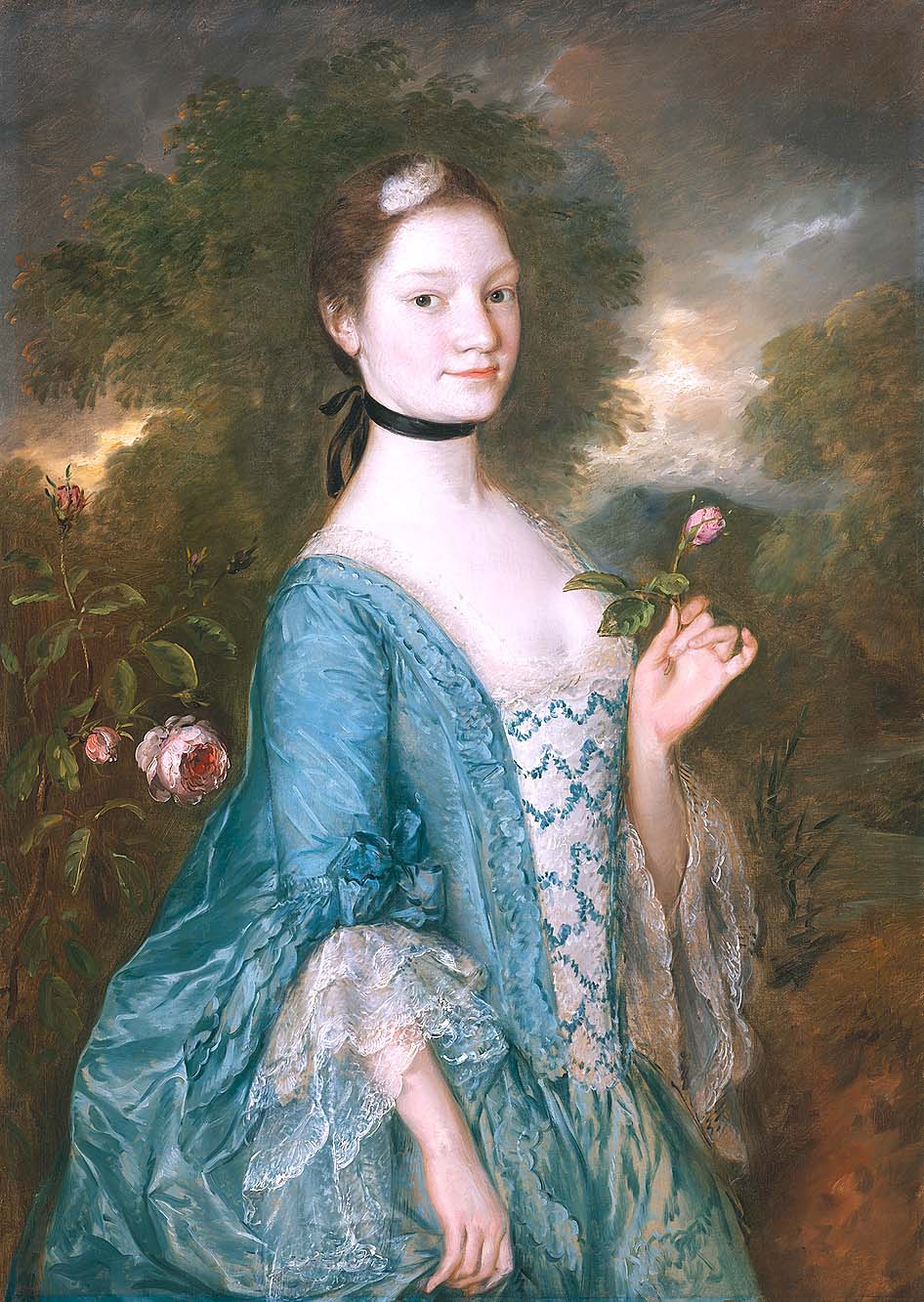
“Sarah Hodges, Later Lady Innes,” circa 1759, oil on canvas, 40 by 28⅝ inches. The Frick Collection, New York. Photo by Michael Bodycomb.
Fashion can often seem like a frivolous thing. Although fashion scholars rightly point out that clothing choices and manufacturing have had deep historical and sociopolitical impact over time, even such legitimate cultural inquiries may seem less than urgent in troubled times. But it is interesting to consider, as Ng points out both in a recent interview and in the catalog, that the word “fashion” has evolved over time and even today retains multiple meanings — just as Gainsborough’s portraits did in their day. Even in its most popular current meaning, fashion is not just a stylish vibe but a massive global industry, one that nearly every person participates in, whether or not they consider themselves “fashionable.” Beyond that, “fashion” is a verb meaning to make something with intention — anything, even a painting, an exhibition, or a book — or a noun meaning the way in which that thing is made. Eighteenth Century definitions of fashion, according to Samuel Johnson’s 1755, vary even more widely in definition — from a disease of horses (admittedly not much relevance there) to a specific social rank (“just above the vulgar”; i.e., a gentleman) to “general approbation.” To be a “person of fashion” was not to be a so-called fashion victim but instead a person of consequence and respectability.
The title “Gainsborough and Fashion,” therefore, is about more than just painted frockcoats, Van Dyckian robes and silken dresses; it is about how those coats and robes and dresses were made, perceived, worn, used, altered and ultimately imagined by Gainsborough. Not least, it is also about the people who fashioned those garments or the raw materials of their manufacture — presenting them all as people of consequence for today’s museumgoers.
The Frick Collection is at 1 East 70th Street, New York. For information, www.frick.org or 212-288-0700.