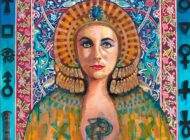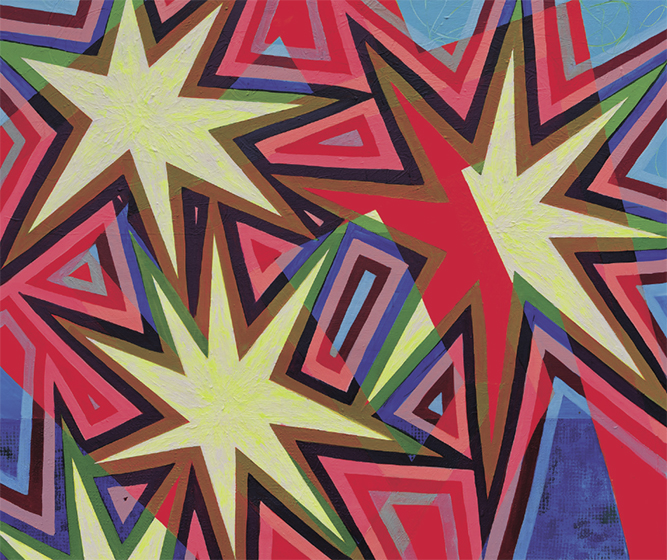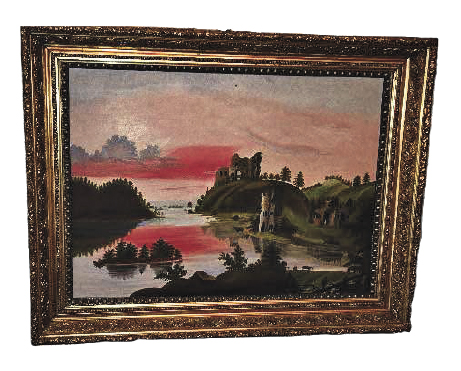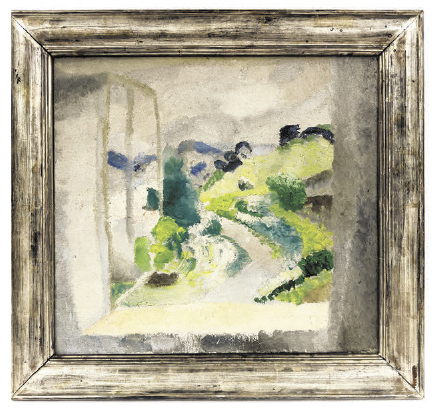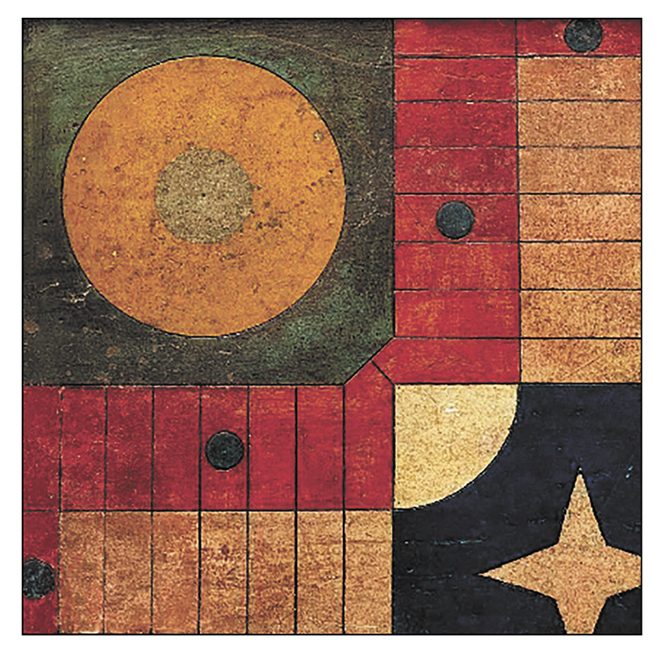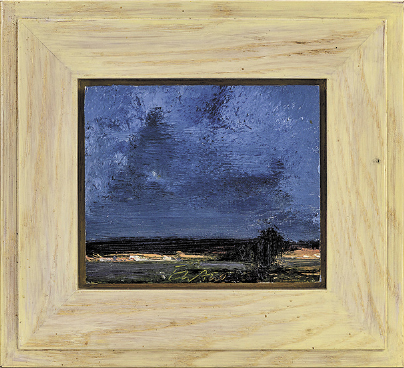
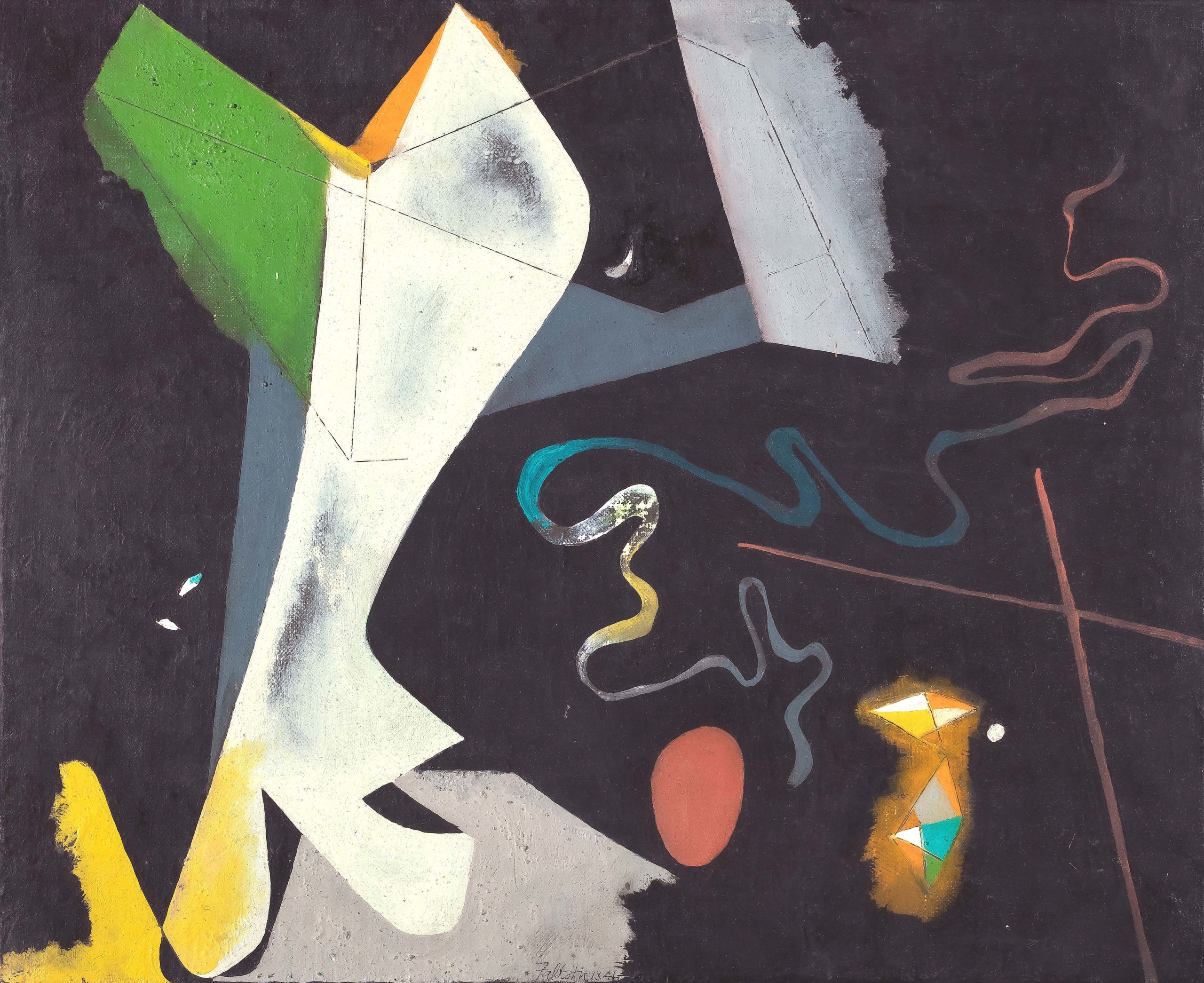
Untitled by Claire Falkenstein, 1946;, oil on canvas wrapped panel in artist’s wood sculptural frame, 14¼ by 17¼ inches. © The Falkenstein Foundation. Courtesy of Michael Rosenfeld Gallery LLC, New York City; the Levett collection; and FAMM. Photo: Fraser Marr.
By Andrea Valluzzo
WILLIAMSBURG, VA. — Debuting at the Wichita Art Museum last fall, where boxes of tissues were strategically placed around the galleries as some in the audience found the works and the stories of their artists be quite moving, “Abstract Expressionists: The Women” now has viewers flocking to the East Coast to see it at the Muscarelle Museum of Art through April 26.
In the canon of art, women artists have historically been overshadowed by the male narrative and this was particularly true in Abstract Expressionism. New York City’s Museum of Modern Art (MoMA) devoted a major exhibition to this distinctive American art style in 1957 but only included one woman artist. The contributions of these female artists were often dismissed and they were thought of as merely muses for male artists or acolytes who were interpreting male achievement. Much research has been done in the years since to correct such fallacies. Exhibitions like Denver Art Museum’s “Women of Abstract Expressionism” a decade ago and the publication of Mary Gabriel’s Ninth Street Women (2018) have opened up many eyes to the impact women artists had and how their bold and original works molded this movement. Helen Frankenthaler, who was famously described as a “bridge between [Jackson] Pollock and what was possible,” was among these innovative women with her soak stain pictures she began doing in the 1950s in a move that merged Color Field and gestural action painting.
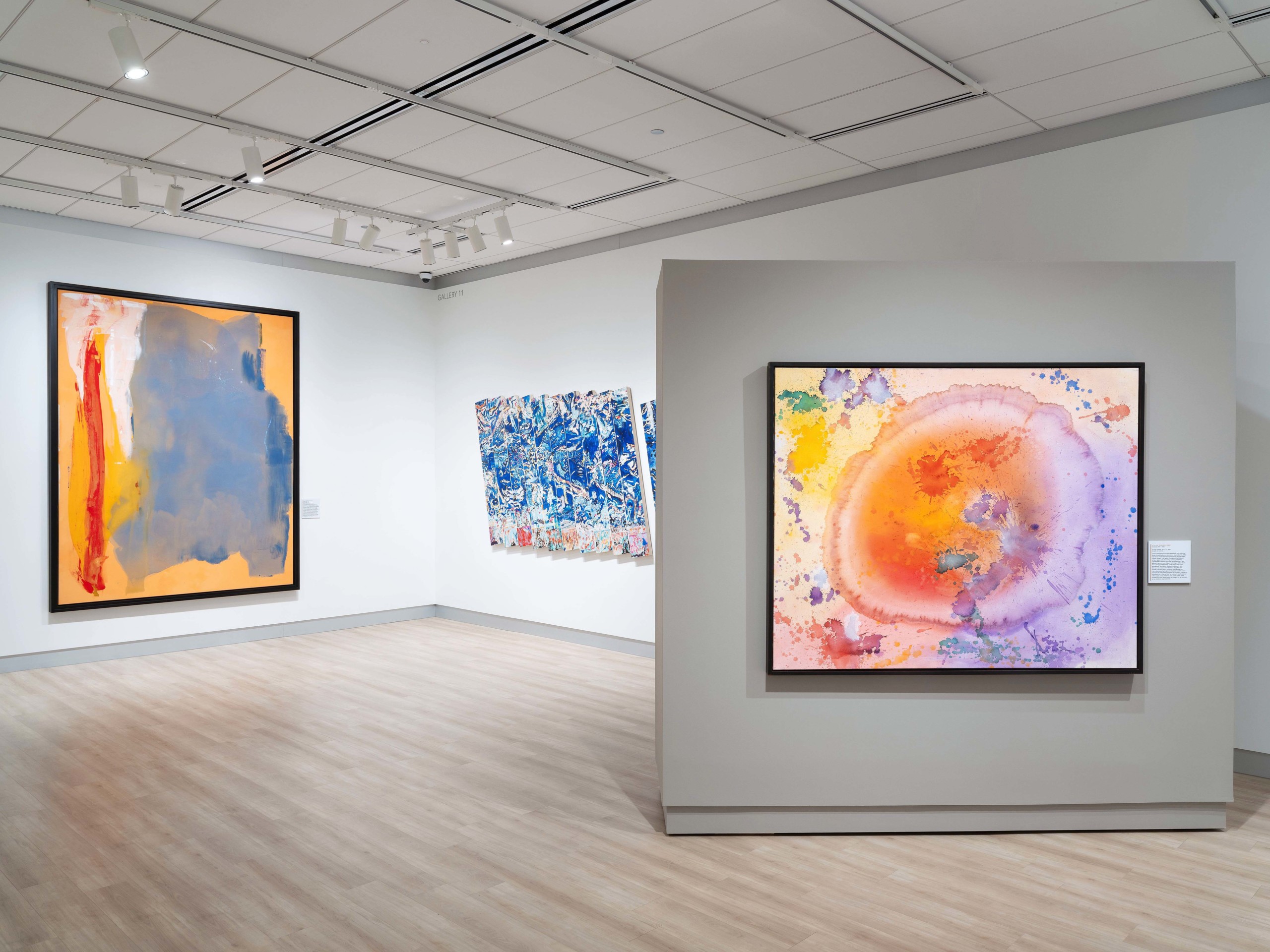
Installation image, courtesy Muscarelle Museum of Art.
Denver’s exhibit was groundbreaking, but it only showed the work of 12 women. Seeking to further reframe the contributions of these women, this new exhibition features nearly 50 paintings by 32 artists.
The paintings were drawn from the Christian Levett collection and Female Artists of the Mougins Museum (FAMM) in France with the exhibition organized by the American Federation of Arts (AFA). It was developed by guest curator Ellen G. Landau, who began working with Levett circa 2020 to research his artworks and produce a book on the collection, which serves as the exhibition catalog for “Abstract Expressionists: The Women.”
“It’s an important moment of recognition that we get to be part of at the Muscarelle,” said David Brashear, the museum’s director. “For many years, the story of Abstract Expressionism has overlooked its women pioneers. ‘Abstract Expressionists: The Women’ offers a more complete understanding of the artistic movement, highlighting the contributions of the ambitious and visionary women artists who were creating work alongside their more celebrated male peers. We hope our visitors find inspiration in both the powerful artworks and the stories behind them.”
Organized into four thematic sections — “The New York School,” “San Francisco Early Years,” “A Tale of Two Cities: New York and Paris” and “Vocal Girls and Beyond” — the exhibition moves from the early years of the movement in the 1930s through its heyday postwar and its evolution in the 1970s. New York and Paris were often seen as hubs in the art world during this time but by looking at what West Coast women artists were doing at this time and comparing stylistic crosscurrents among them and their counterparts in New York and Paris, a more fully realized picture of Abstract Expressionism emerges.
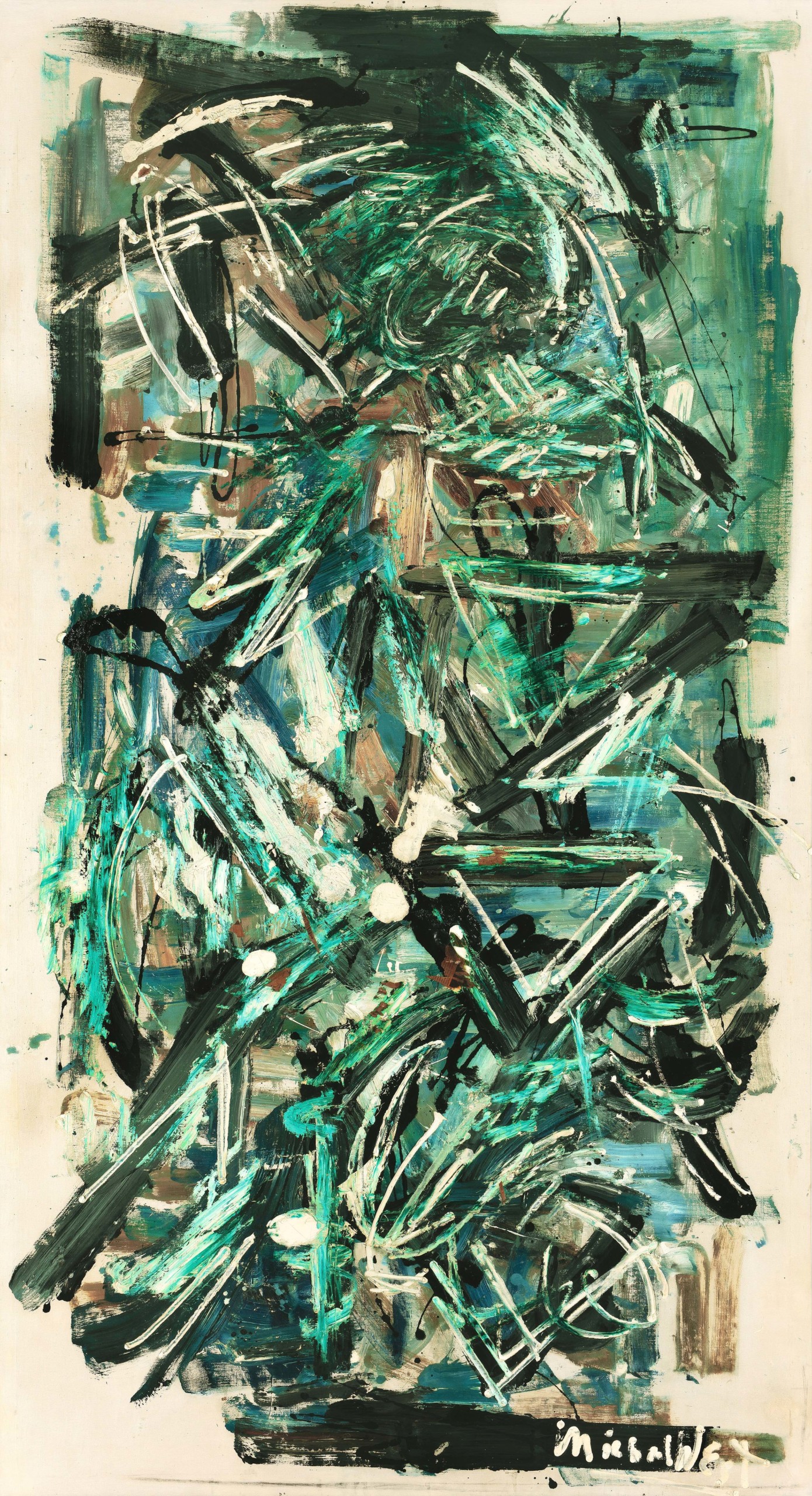
“Dancing Figure” by Michael (Corinne) West, 1962, oil and collage on canvas, 91 by 50 inches. Courtesy of the artist’s estate; Hollis Taggart, New York City; the Levett collection and FAMM. Photo: Fraser Marr.
Occupying four galleries in the recently-expanded and renovated museum, the exhibition opens with paintings from the New York School done in the 1940s that clearly show the influence of the Cubists, Surrealists and other European transplants who moved to New York to escape Nazi tyranny. Evincing pure abstraction at first, these artworks boast strong organization and geometry that early on pointed to European influences, explained Melissa Parris, the museum’s deputy director of collections, exhibitions and operations. “These women created dynamic canvases that could stand alongside their male contemporaries. They were just as innovative and experimental with process and materials.”
A striking painting by Howardena Pindell on view is a perfect example. At casual glance, it appears to be all back and a mimicry of work by Reinhardt, Landau said, but on closer inspection viewers will see it’s not. Not only is it not all black as the canvas is made up different colored circles but “Pindell was actually using these interconnected areas to make a comment on the impact on her career or racial politics in the art world that Ad Reinhardt was certainly not doing. She was making a comment on her own history as an artist ignored because she was Black.”
In the accompanying book, Levett noted that when he originally began collecting Abstract Expressionism in 2013, he didn’t differentiate by gender but soon began focusing his eye on female abstract artists. “I was captivated by the spectacular colors, fantastic composition, exciting and gestural brushwork and genial and emotive execution of the works,” he wrote in his catalog essay.
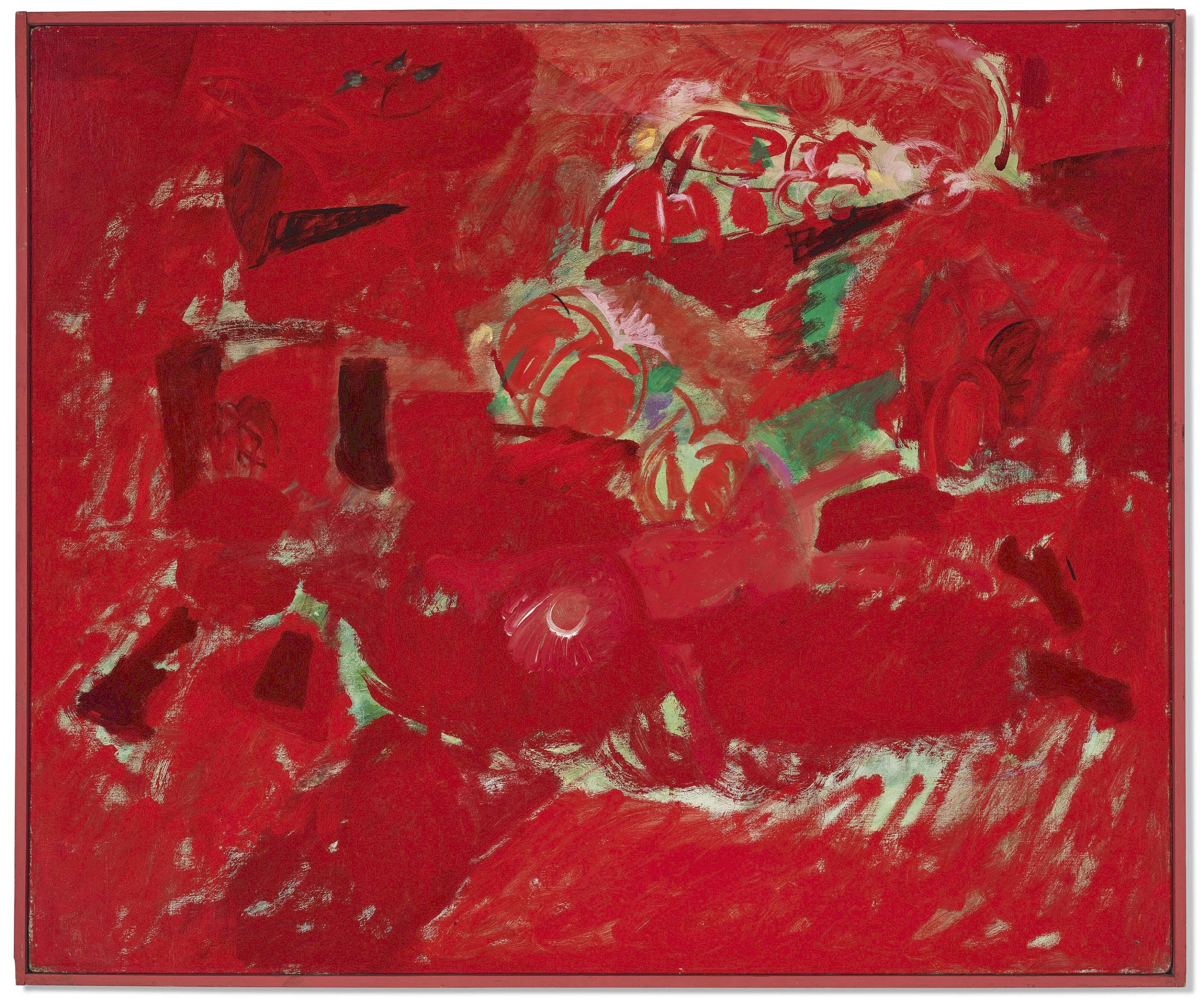
“Woman: Red Sea, Dead Sea” by Ethel Schwabacher, 1951, oil on canvas, 30 by 37 inches. © Estate of Ethel Schwabacher. Courtesy of Berry Campbell Gallery, the Levett collection and FAMM. Photo: Fraser Marr.
A highly energetic example in the exhibition that certainly fits this bill is Ethel Schwabacher’s expressive 1951 painting, “Woman: Red Sea, Dead Sea,” which, despite his biblical title, likely is not meant to be taken literally but instead to evoke an emotional or unconscious state through its layered textures, vibrant reds and enthusiastic brushwork.
A few gallery and museum exhibitions have surveyed the work of the California and Bay Area Abstract Expressionist artists but this exhibit offers a rare opportunity to see their work alongside their New York counterparts. A scholar of Abstract Expressionism, Landau said she didn’t previously know a lot about Bernice “Bingo” Bing or Emiko Nakano, who were both active in Northern California. Interestingly, Bing, a Chinese-American artist whose work was at the time mostly relegated to showings in LGBTQ+ circles, was mentored by Japanese-American artist Saburo Hasegawa. Hans Hofmann has been credited for his role in mentoring some of these women artists in New York but more research needs to be done on the role of the Asian impact in San Francisco, Landau added.
The artworks of these women speak volumes, but Landau wisely also lets the artists speak for themselves. In the style of The New York Times’ “Tiny Love Stories,” she created exhibition wall labels in the form of 140-word narratives about all but one of the artists. The one exception was Nakano as Landau couldn’t find any direct quotes by her.
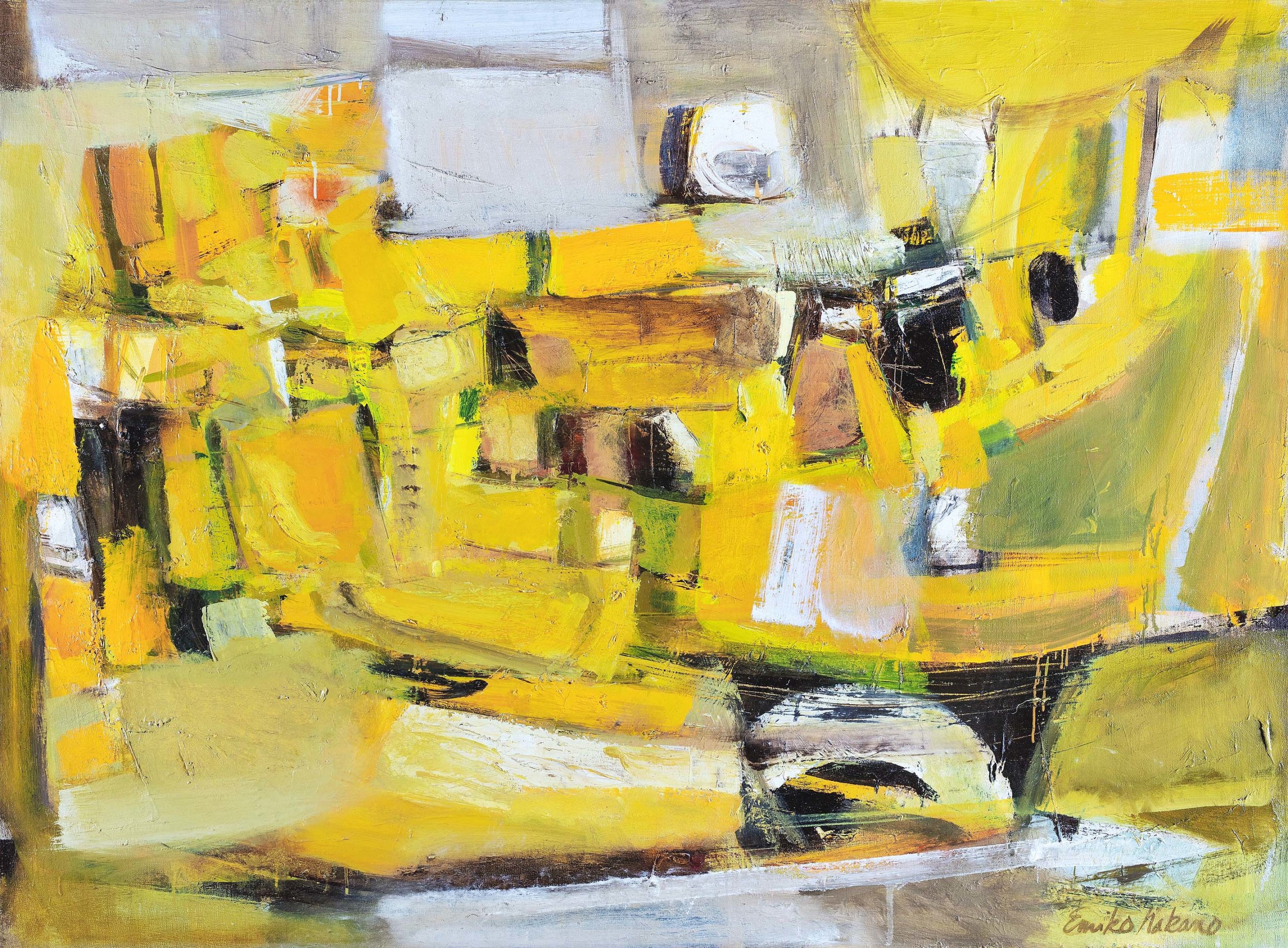
“Composition in Yellow” by Emiko Nakano, 1957, oil on canvas, 34 by 46 inches. Courtesy of the Levett collection and FAMM. Photo: Fraser Marr.
Sometimes the artists talk about the work in particular. For instance, the well-known “Prophesy” by Lee Krasner, which was on her easel when she went to Europe in a sort of trial separation from Pollock: “I was able to quote virtually her entire position because she talked about it many times afterwards. Other artists who wrote quite intelligently about their own work, including Mercedes Matter and Elaine de Kooning, but almost all of the women collected by Christian Levett made very important and articulate comments that I’ve used to help the viewer better understand their interests, sources and contributions,” Landau explained.
Later works in the exhibition from the 1970s, like large paintings by Helen Frankenthaler and Joan Mitchell, also prove that Abstract Expressionism didn’t die once Pop Art came on the scene. And how decades after the movement’s formative years, it continued to influence compositions by artists like Pindell and Alma Thomas, as seen in the show’s final section, “Vocal Girls and Beyond,” which takes its name from a 1960 article in Time magazine.
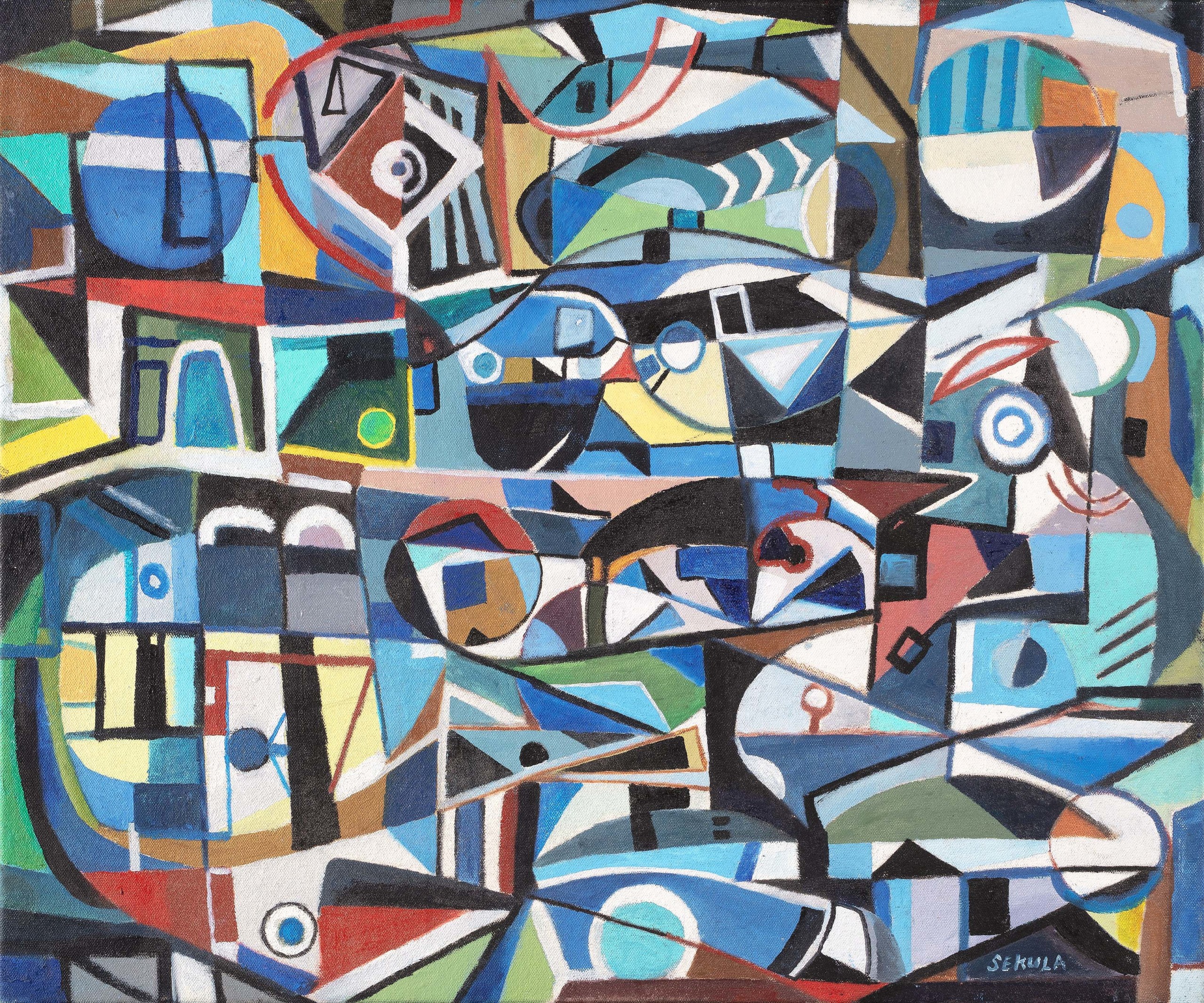
Untitled by Sonja Sekula, circa 1943-44, oil on canvas, 25⅓ by 29⅛ inches. © Sonja Sekula. Courtesy of the Levett collection and FAMM. Photo: Fraser Marr.
“One of the things that many museums are grappling with today is the imbalance in their collections, and since I became director here in 2019, one of our collecting focuses has been on expanding the representation of artists in our permanent collection,” Brashear said, explaining they have made efforts to add women artists and artists of color. “In many respects this [exhibition] is just a continuation of our mission here to make sure we are presenting a better representation of the art making community as it exists and as it has existed.”
Following its close at the Muscarelle, “Abstract Expressionists: The Women” will travel to Speed Art Museum in Louisville, Ky. (May 16-August 30); the Grinnell College Museum of Art in Grinnell, Iowa (September 17-January 3); the Mobile Museum of Art in Mobile, Ala. (January 30-April 25, 2027); and The Frick Pittsburgh Museum & Gardens (June 12-September 25, 2027).
The Muscarelle is at 611 Jamestown Road. For information, muscarelle.wm.edu or 757-221-2700.