Star-Studded Array Lures Shoppers Back To New York’s Park Avenue Armory For 72nd Edition
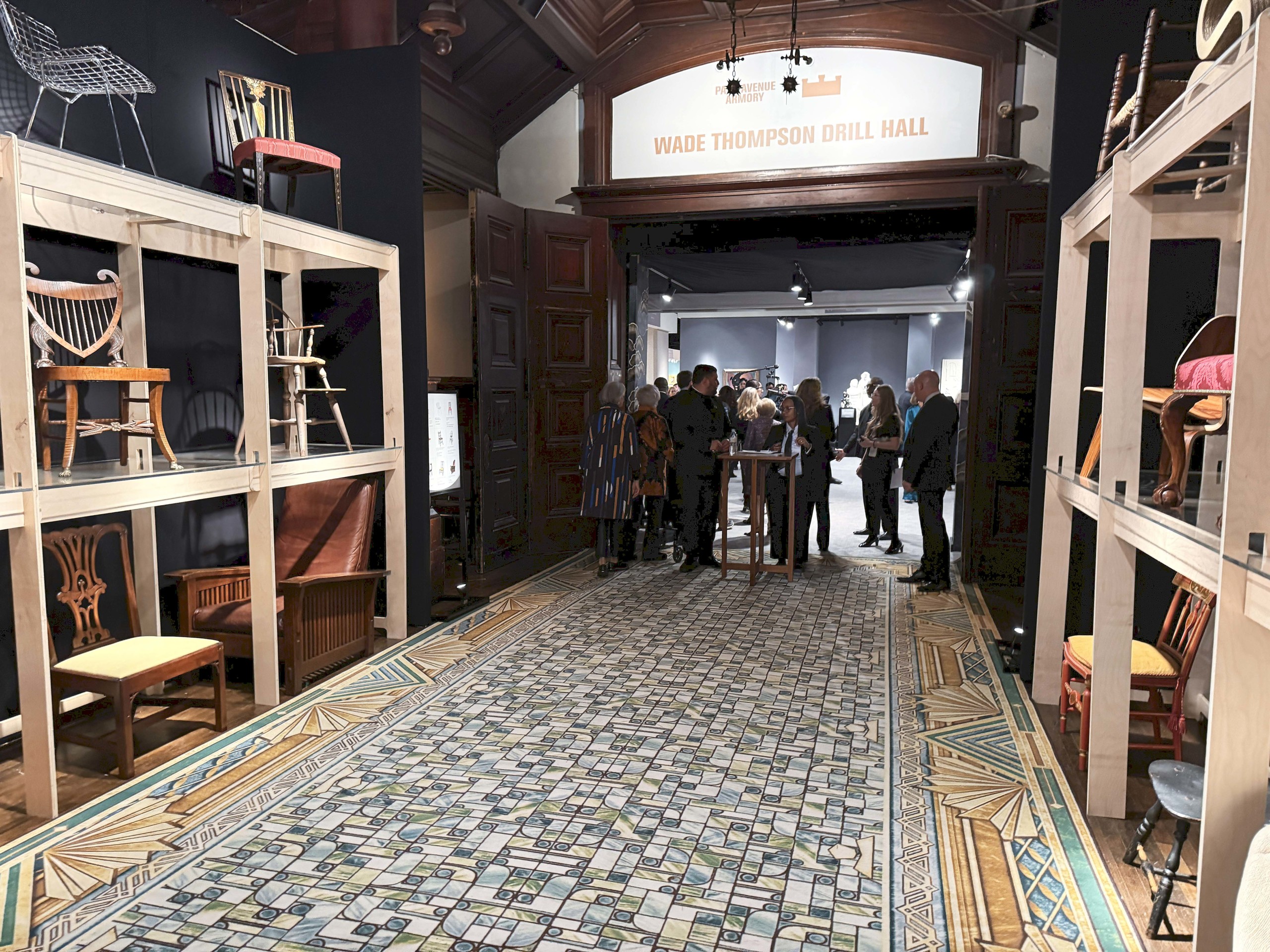
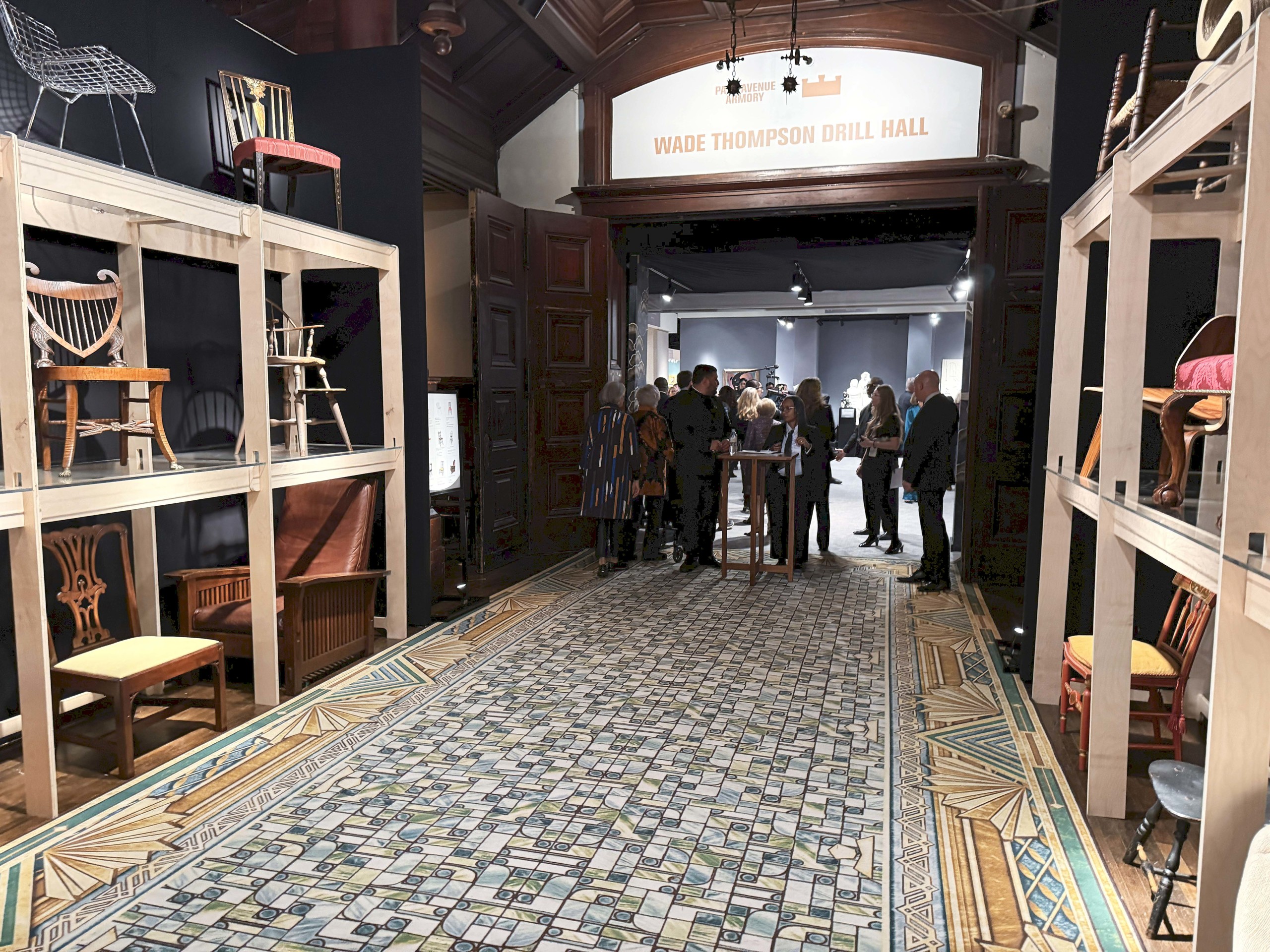
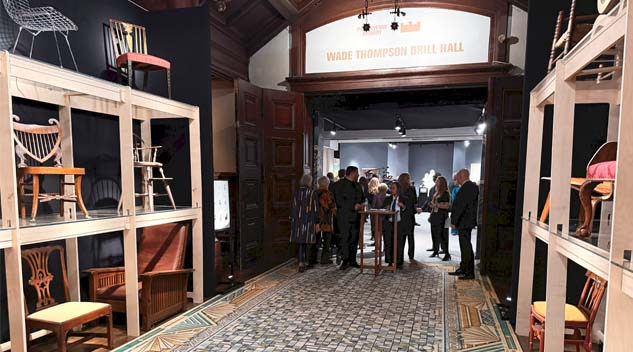
Philadelphia Museum of Art curator Alexandra Kirtley collaborated on the loan show, “The American Chair: 250 Years of Form,” a visual history of style and craftsmanship.
Review & Onsite Photos by Laura Beach
NEW YORK CITY — With an appeal to heart and head, The Winter Show returned to the Park Avenue Armory for its 72nd edition from January 23-February 1, offering visitors — young to old, casually curious to ardent — much to savor.
A benefit for East Side House Settlement, the event orchestrated by executive director Helen Allen with co-chairs Lucinda C. Ballard and Michael R. Lynch, grows more symphonic each year. A diverse presentation by 75 specialists from the United States, Europe and South America, The Winter Show is supported by a glossy, informative catalog providing inside access to the worlds of art and design, a website that increasingly functions as a virtual showroom, networking opportunities and nonstop programming showcasing new scholarship. As is tradition, the fair kicked off on the third Thursday evening of the month, January 22, with a festive preview party hosted by presenting sponsor Chubb.
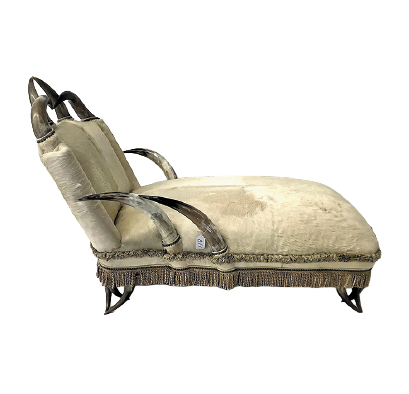
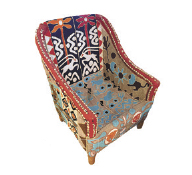
From the Armory’s front to back, this year’s presentation was an exercise in refined storytelling. Visitors entered the Wade Thompson Drill Hall through “The American Chair: 250 Years of Form,” an exhibition organized in collaboration with Alexandra Kirtley, the Montgomery-Garvan curator of American decorative arts at the Philadelphia Museum of Art. Sourced from nine lenders, “The American Chair” presented seating — stacked Hollywood Squares-style in a grid — as sculpture, proceeding from a Pilgrim Century banister-back armchair, courtesy of Preservation Long Island, to a circa 1904 Stickley armchair lent by Geoffrey Diner Gallery and a 1972 corrugated cardboard “Wiggle” chair supplied by manufacturer MillerKnoll.
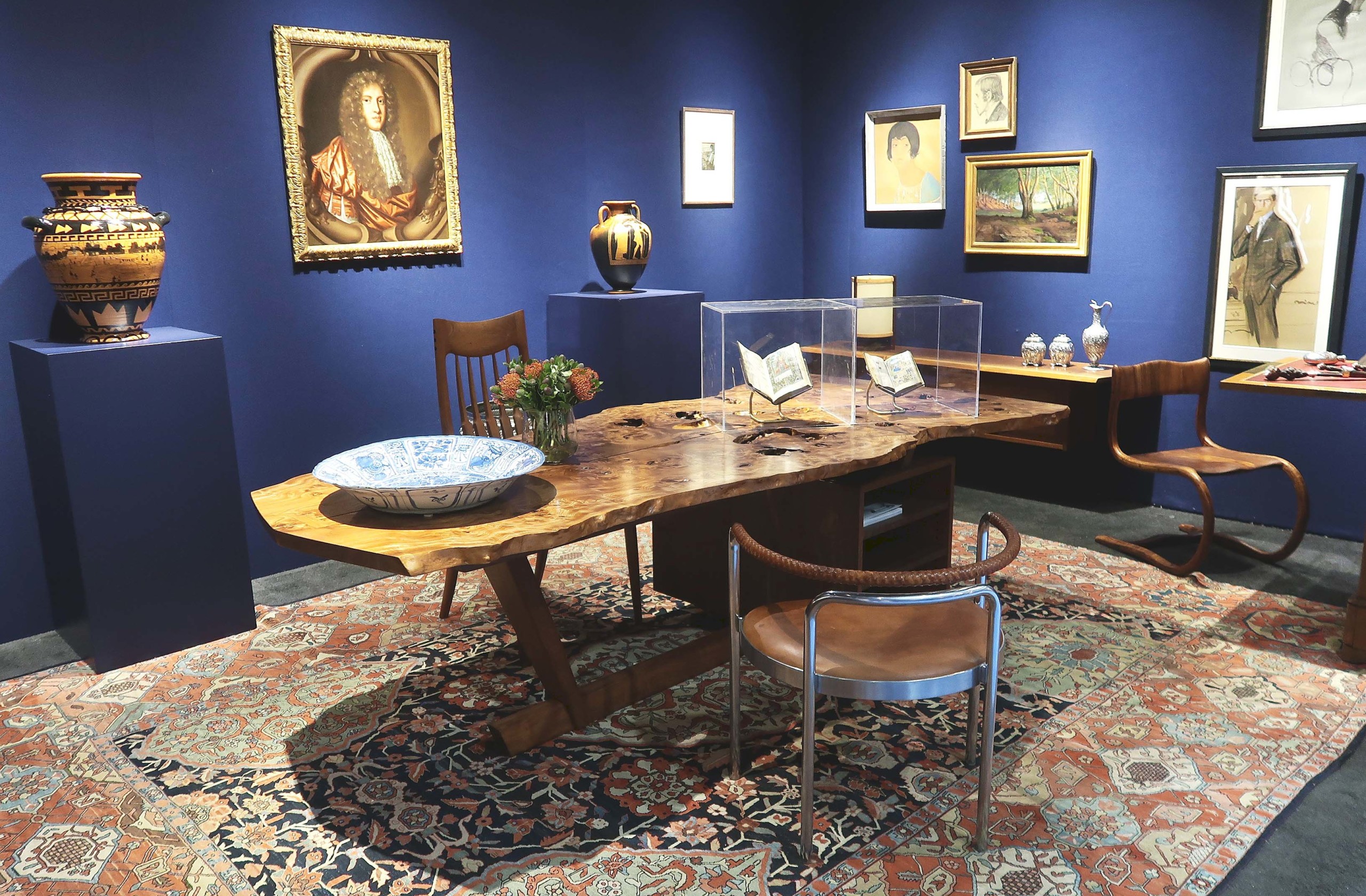
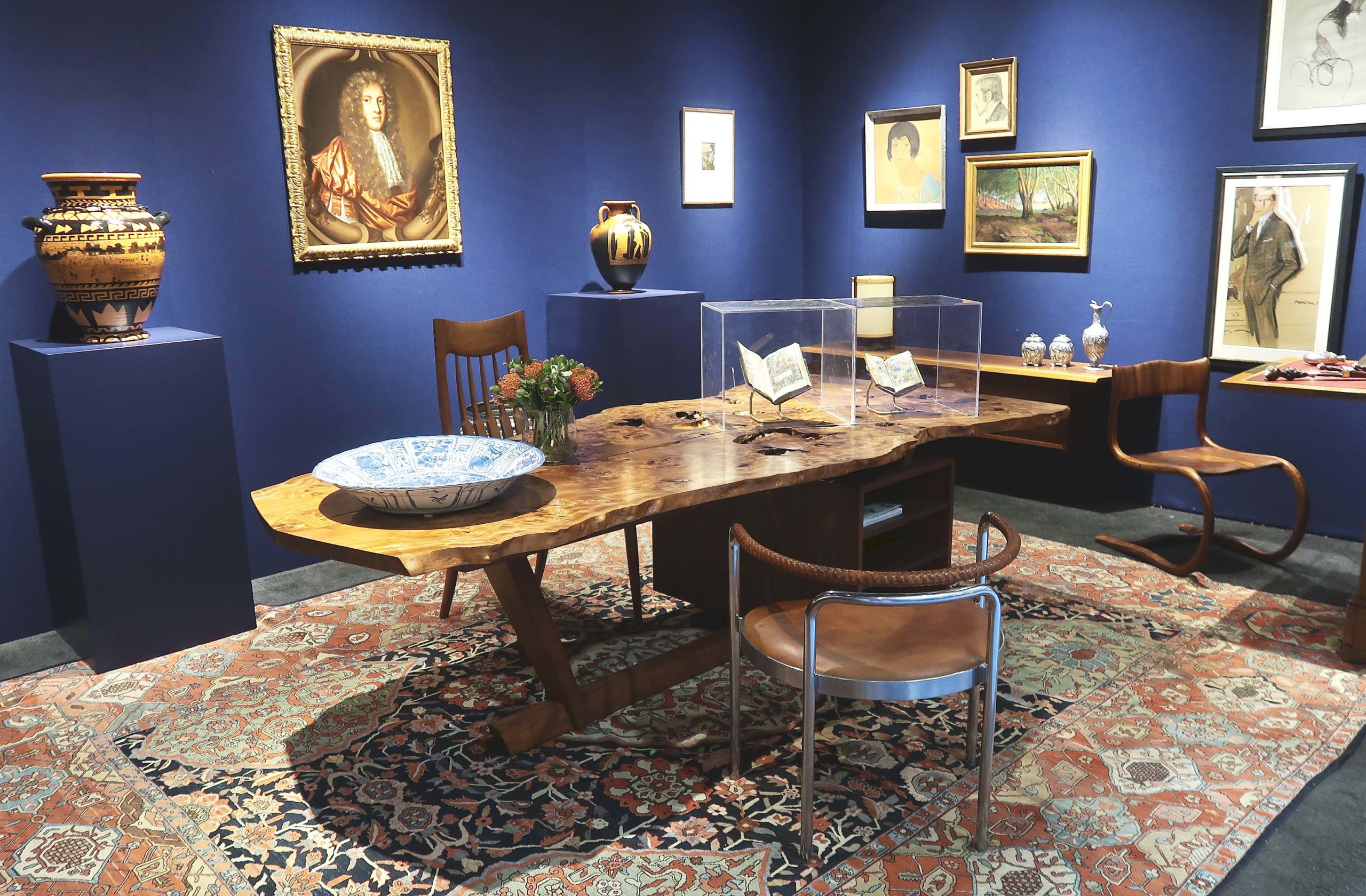
Twelve exhibitors participated in the group display “Study of a Young Collector,” curated by Patrick Monahan and Helen Allen. From Moderne Gallery, center, a Mira Nakashima desk of 1998. Above it, flanking Philip Mould & Company’s “Portrait of a Gentleman” by Mary Beale is, left, from R & Company, Roberto Lugo’s 2023 glazed stoneware vase “Central Park,” from the artist’s “Orange and Black” series, and, right, from Colnaghi, an Attic red-figure amphora decorated by the Tyskiewicz Painter.
Writer and art advisor Patrick Monahan teamed up with Allen to curate “Study of a Young Collector.” Eclectic, worldly, sophisticated and boundary breaking, the aspirational display mounted by 12 firms, not all novices, imagined not only how a young aesthete might live but, as the title implied, who he or she might be. Offered by R & Company, the glazed stoneware “Central Park” urn by sensational young Philadelphia artist Roberto Lugo (b 1981), spoke to the cultural moment.
As Monahan explained, “Last summer, Helen and I started talking about young collectors and dealers, while in London during the art weeks. Helen had been looking for ways to represent both groups at The Winter Show, so we decided to bring them together in a way that had never been done before.”
“I’ve thought about starting a business based on storytelling for some time,” said Curious Objects podcast host Benjamin Miller, a “Study” booth exhibitor who recently left S.J. Shrubsole to open his own antiques business. As Miller notes on his website, “The collection isn’t strictly limited by time, geography or medium. It’s a small, focused group of pieces with two things in common: world-class craftsmanship and riveting stories.” Among Miller’s offerings was a garnet-studded silver and silver-gilt Merovingian coat clasp which, as promised, unspooled a tale of social ambition in Europe’s Dark Ages.
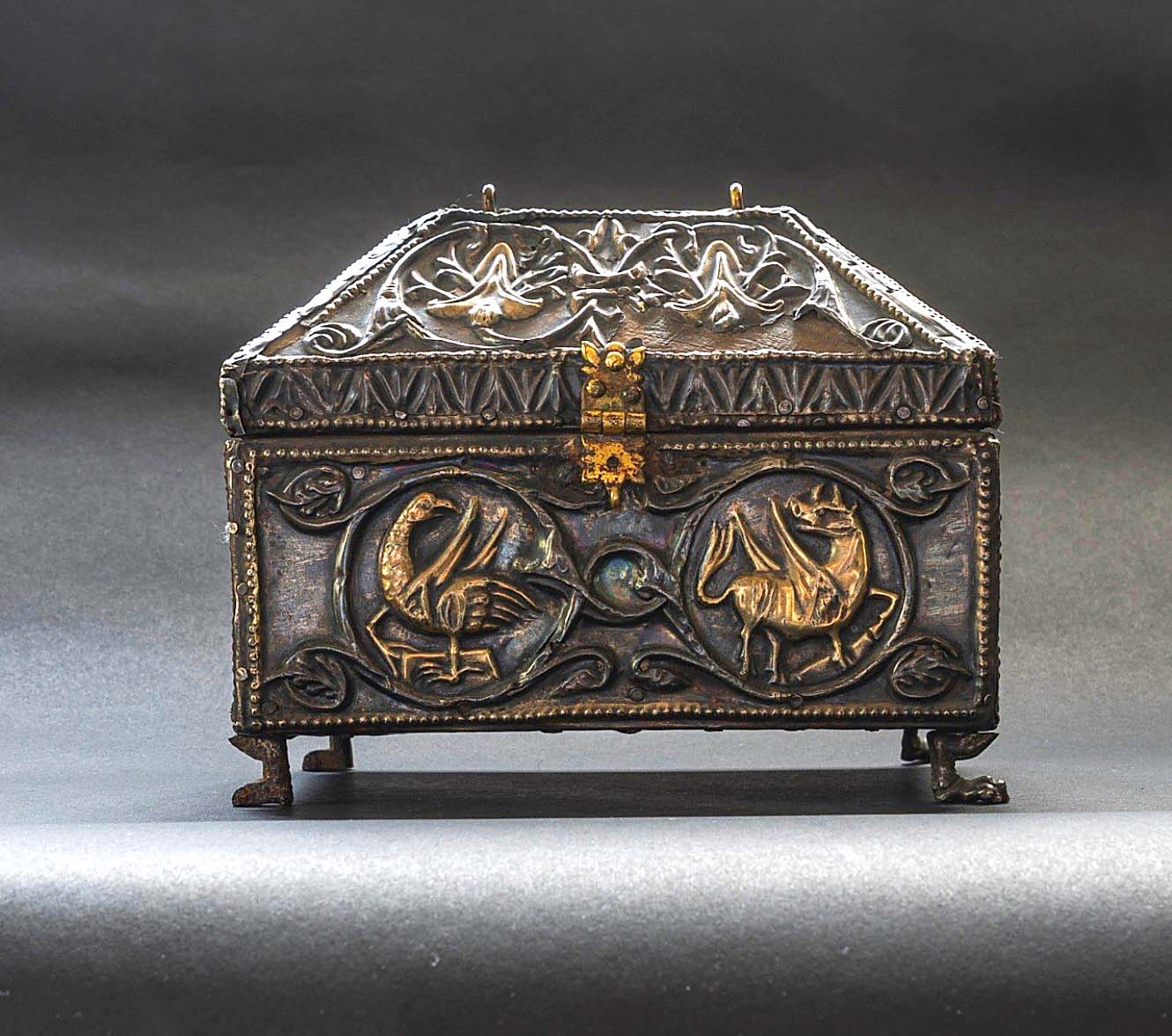
Curious Objects podcast host and Fine Objects Society president Benjamin Miller recently left S.J. Shrubsole to start his own antiques business, also called Curious Objects. He participated in the group booth “Study of a Young Collector,” where he presented such objets de vertu as the exquisite Eleventh Century silver-gilt Béhague Casket. New York City.
Narrative was at play at the exuberantly whimsical Robert Young Antiques, where the London dealer piqued interest with a pair of oversized shoes of circa 1890. Playing on a mobile device nearby was archival footage of the English clown Little Tich performing in said shoes.
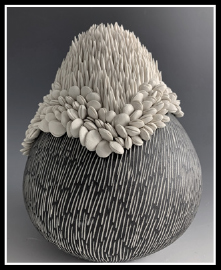
Curation is storytelling performed with objects. With customary taste and erudition, Joan B. Mirviss, Ltd, mounted the special exhibition “Reflections in Black and White: Japanese Art in Clay and Ink.” The New York dealer’s many sales included sculptural objects by more than ten contemporary ceramicists of note.
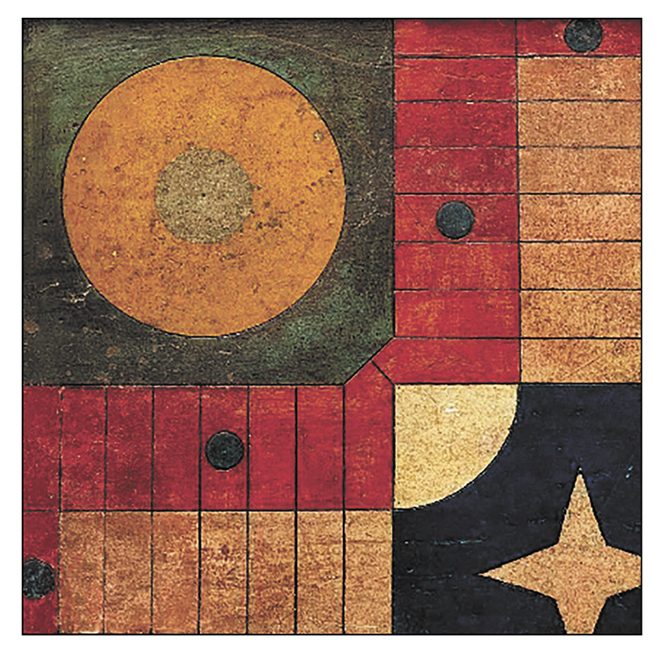
“We’re art dealers,” said Frank Maresca of Ricco/Maresca, making his Winter Show debut. The boundary-breaking New York dealer in self-taught and Outsider art recalled his first visit decades ago to The Winter Show. Then 17, he was deeply impressed by exhibitor Gerald Kornblau, whose minimalist installations emphasized the graphic force of American folk art. In much the same spirit, Ricco/Maresca arrayed classic American game boards, 1890-1940, selling 15 of 22 boards in the show’s opening hours.
Lillian Nassau LLC’s presentation dazzled. Against a brilliant turquoise background, the New York firm installed shimmering Favrile glass mosaics set in plaster, all created by Tiffany Studios around 1914-15 for Detroit’s Farwell Building. As Tiffany authority Arlie Sulka, who first appraised the salvaged treasure on Antiques Roadshow about a year and a half ago, explained, “Tiffany was very much influenced by Byzantine and Italian mosaics from Ravenna.”
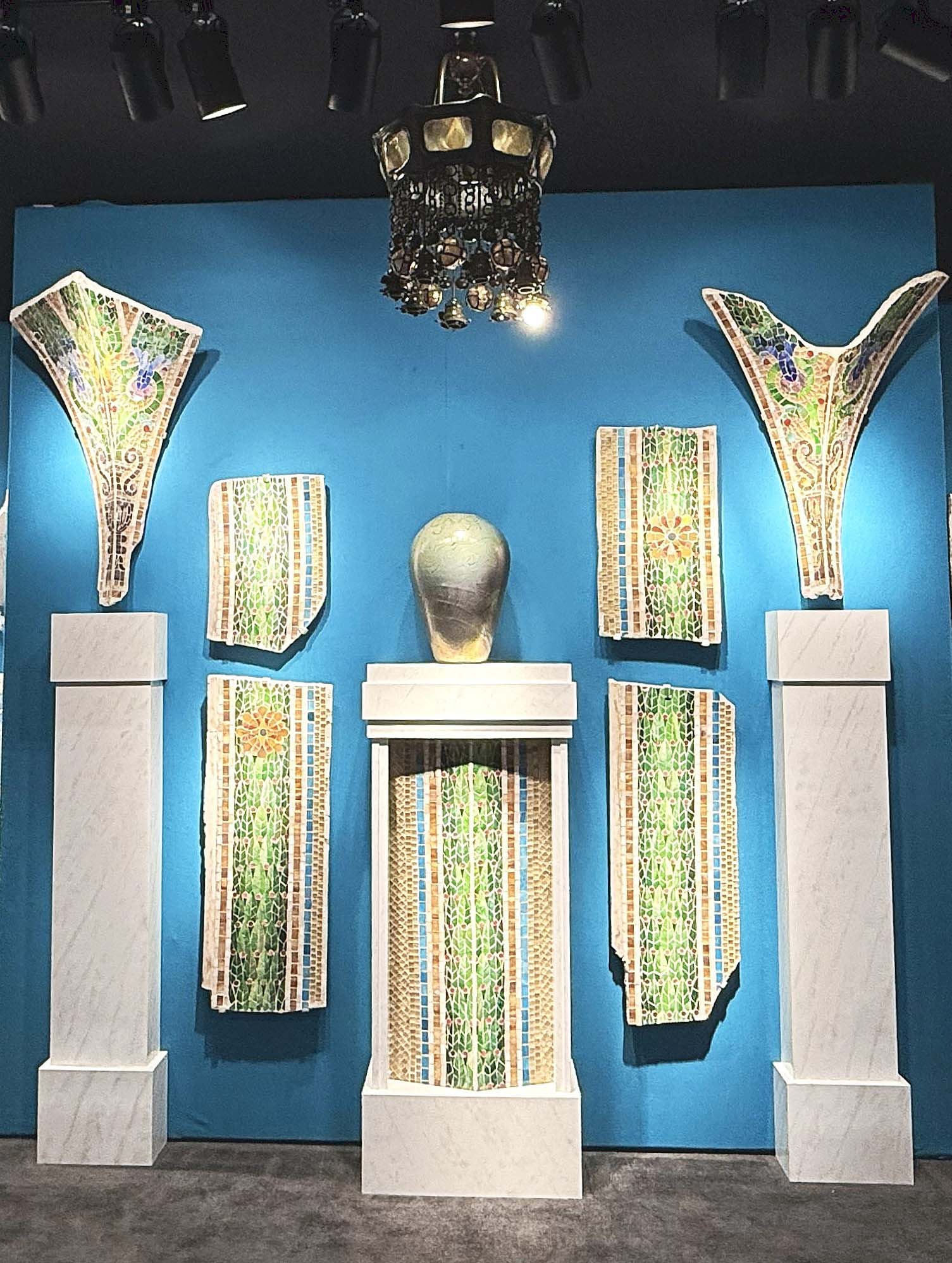
Lillian Nassau’s dazzling display featured Favrile glass mosaic ceiling and arch panels created by Tiffany Studios around 1914-15 for Detroit’s Farwell Building. New York City.
“Jan van der Marck and his wife, Sheila, were friends of my parents for over 50 years. We were recently asked to sell works from their collection,” Jonathan Boos said, recalling the Dutch-born American museum curator, director and dealer who was an early supporter of Christo and Jeanne-Claude, collaborating closely with the couple on landmark projects including the wrapping of the Museum of Contemporary Art Chicago in 1969 and Surrounded Islands in Biscayne Bay in 1983. The New York dealer offered Christo’s small-scale “Wrapped Toy Horse” of 1963 and the accompanying mixed-media “Wrapped Horse, Project for Neo Dada” of 1989.
Americana made a strong showing. Enthusiasts in town for the week of shows, sales and receptions gathered in the booths of Levy Galleries, Hirschl & Adler Galleries and Jeffrey Tillou Antiques.
“We are a version of ourselves this year,” said Hirschl & Adler’s managing director, Elizabeth Feld, acknowledging subtle changes to the firm’s booth design – light, bright and with greater emphasis on decorative arts of the American Federal and Classical periods. Hirschl & Adlers’ “America at 250” display featured pieces, French-made for the American market, such as Washington clocks and “Old Paris” porcelain vases with portraits of American worthies and War of 1812 subjects, along with Charles Willson Peale’s portrait of General David Forman. Crowning all was Gilbert Stuart’s full-length, life-size portrait of the British naval hero Captain Sir John Jervis, later First Earl of St Vincent.
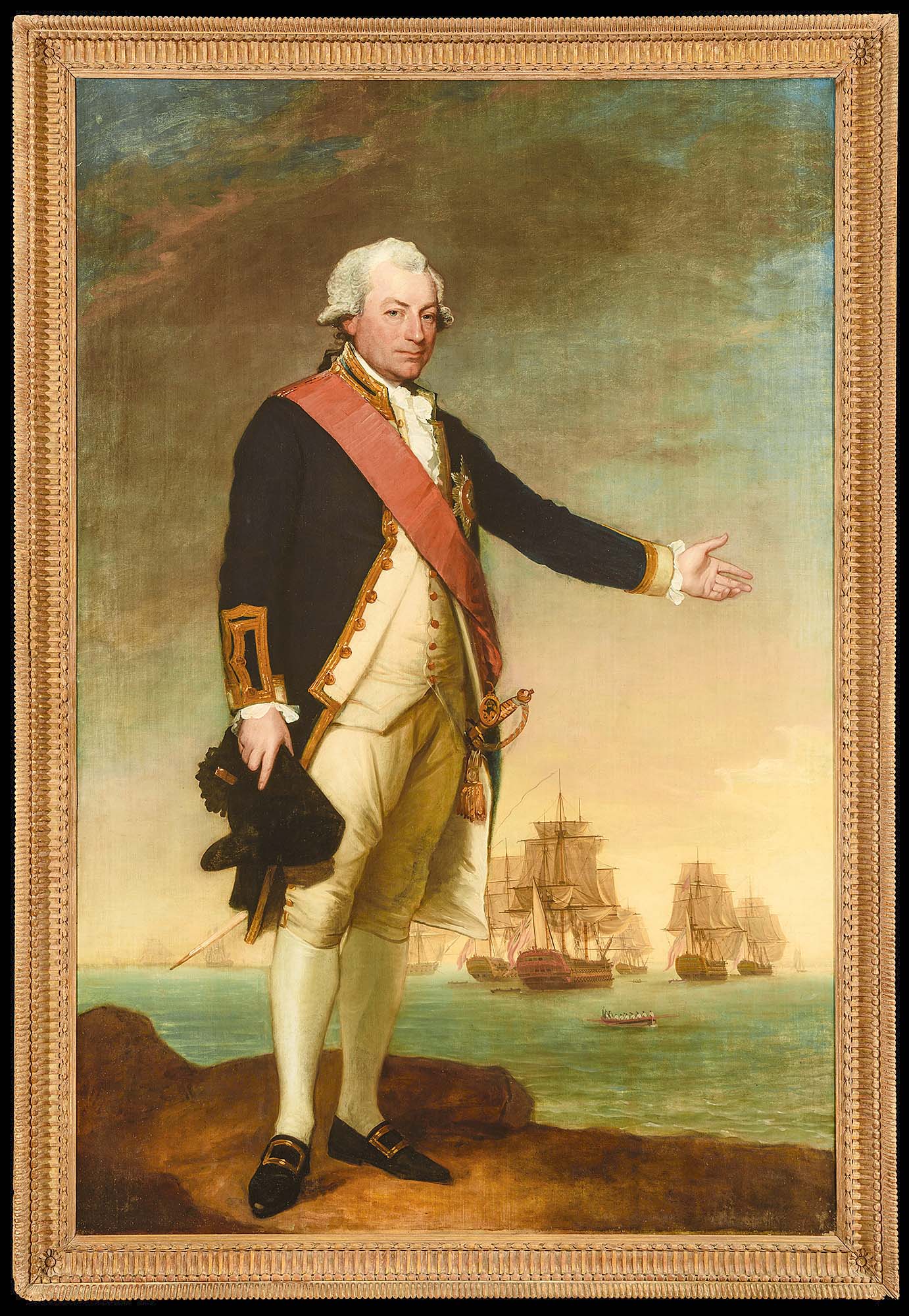
A star of the show, this circa 1785 oil on canvas portrait of a British naval hero — Captain Sir John Jervis, later First Earl of St Vincent — is one of only seven life-size, full-length portraits of men, other than George Washington, by American artist Gilbert Stuart. Hirschl & Adler Galleries, New York City.
George Washington figured prominently at Levy Galleries, as well. Showstoppers here included a curvaceous Chippendale armchair, circa 1770, associated with Washington’s presidential living quarters in Philadelphia, in private hands until recently. The chair’s mate is at Winterthur Museum; five side chairs survive at Winterthur, in the Kaufman collection, and in other private collections. Near the chair hung a miniature enamel portrait on copper by William Russell Birch of the first president.
“The show’s been great,” said Frank Levy, off to a banner start. In addition to the Washington chair, his opening weekend sales included New York and Connecticut secretary desks of 1750-55 and circa 1790, respectively; a circa 1755 Boston tea table with carving attributed to John Welch; and a Rhode Island three-shell carved chest of drawers attributed to Job Townsend, Jr, 1760-70.
“Our Revolutionary War catalog should be out in February,” said Robert Newman of The Old Print Shop. On a selling spree, the New York dealer wrote up late Eighteenth Century mezzotint and copperplate engravings of Washington, Franklin, Lafayette and the Native American leader Joseph Tayadaneega, known also as Joseph Brant, among other works.
Sales elsewhere on the floor included a Marasali Shirvan prayer rug and Northwest Persian long rug at Peter Pap Rugs; a 1930s French iron and marble console table by Édouard Schenck, plus contemporary appointments by Ayala Serfaty and Kiko Lopez at Maison Girard; and a first-edition cast of “The Thinker” by Auguste Rodin at Bernard Goldberg Fine Arts.
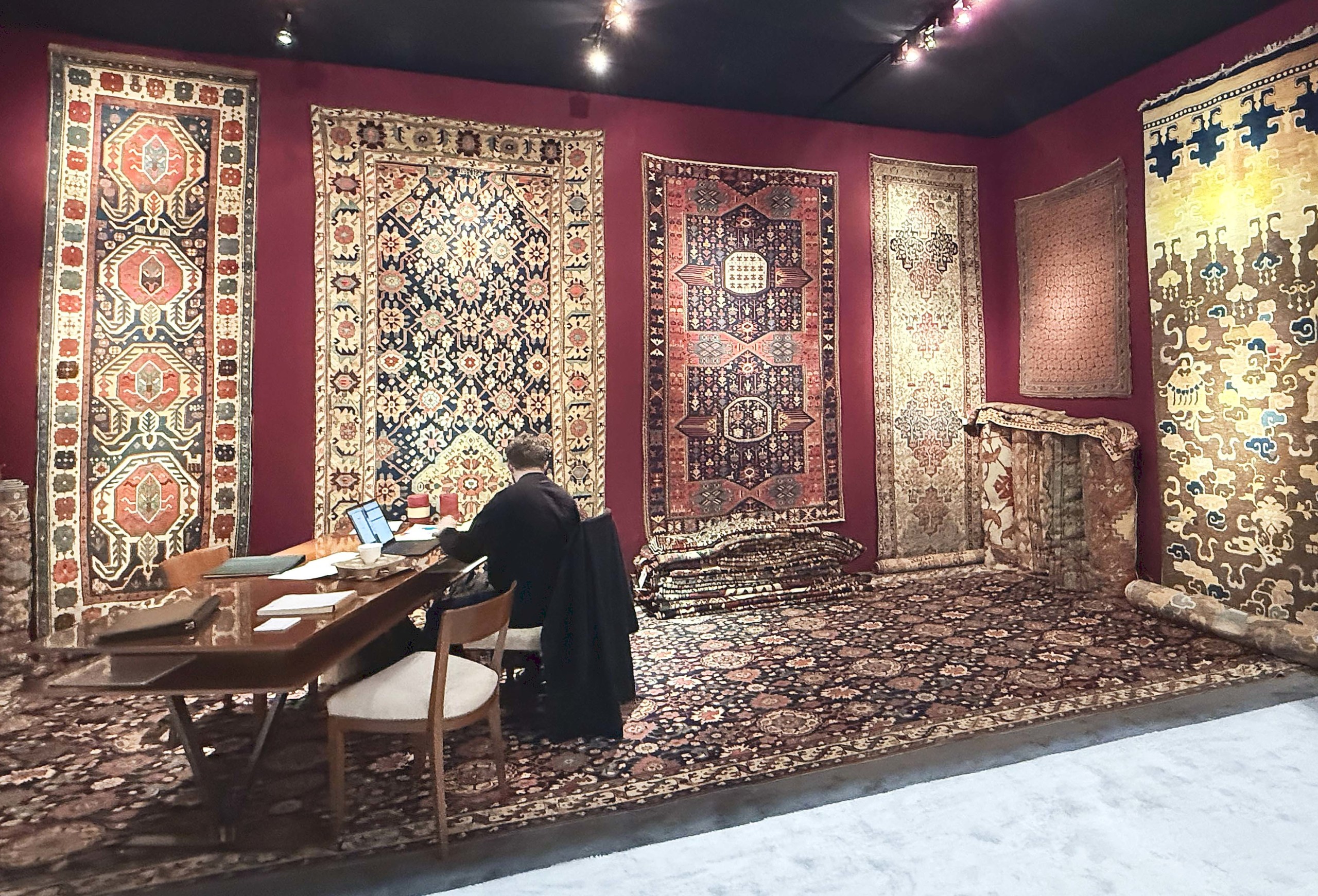
Peter Pap Rugs returned to the show with antique rugs, carpets and tribal weavings. On the floor, a Northwest Persian blossom carpet, early Nineteenth Century. Far right, a Ningxia palace runner, circa 1800. San Francisco and Dublin, N.H.
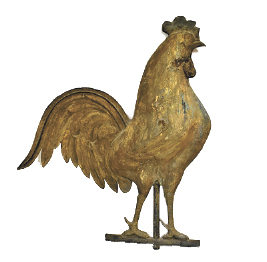
Jeffrey Tillou parted with Howard and Jewell weathervanes, a paint-decorated Vermont tall-case clock and James Bard’s portrait of “The Steamboat Ferry Princeton.” Robert Young Antiques wrote up a circa 1880 vernacular butcher’s shop diorama with a fitted interior and a large trade sign of a bull; and Michael Pashby stickered an early Nineteenth Century Sinhalese ebony and specimen wood center table.
Barbara Israel Garden Antiques ticked off sales of a 1916-18 bronze figural sundial by Willard Dryden Paddock and a whimsical group of three composition stone pigs, each playing a musical instrument, among other garden ornaments.
The 2026 Winter Show welcomed new exhibitors, including Oscar Graf Gallery of Switzerland, which shared a space with fellow Modernists Robert Kaplan and James Zemaitis of New Jersey; Galerie Cahn of Basel, Switzerland; Gallery 19C of Dallas; Greg Pepin Silver of Copenhagen; and, from London, Symbolic & Chase and Rose Uniacke. A dealer in English and European Modernist design, the latter sold a Gio Ponti desk produced by Frateli Radice of Milan circa 1946-47. Rejoining the roster were Bowman Sculpture and Geoffrey Diner Gallery.
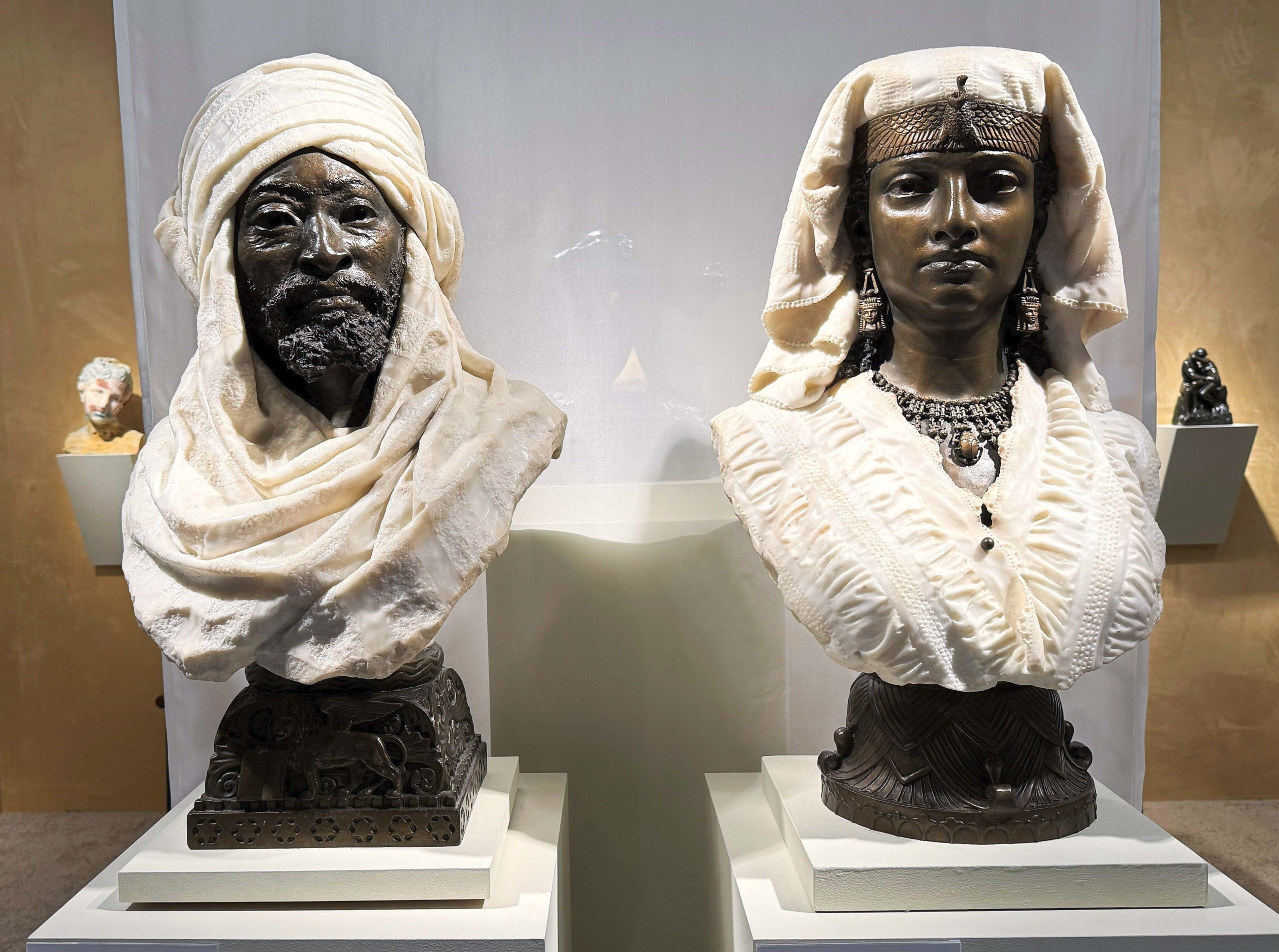
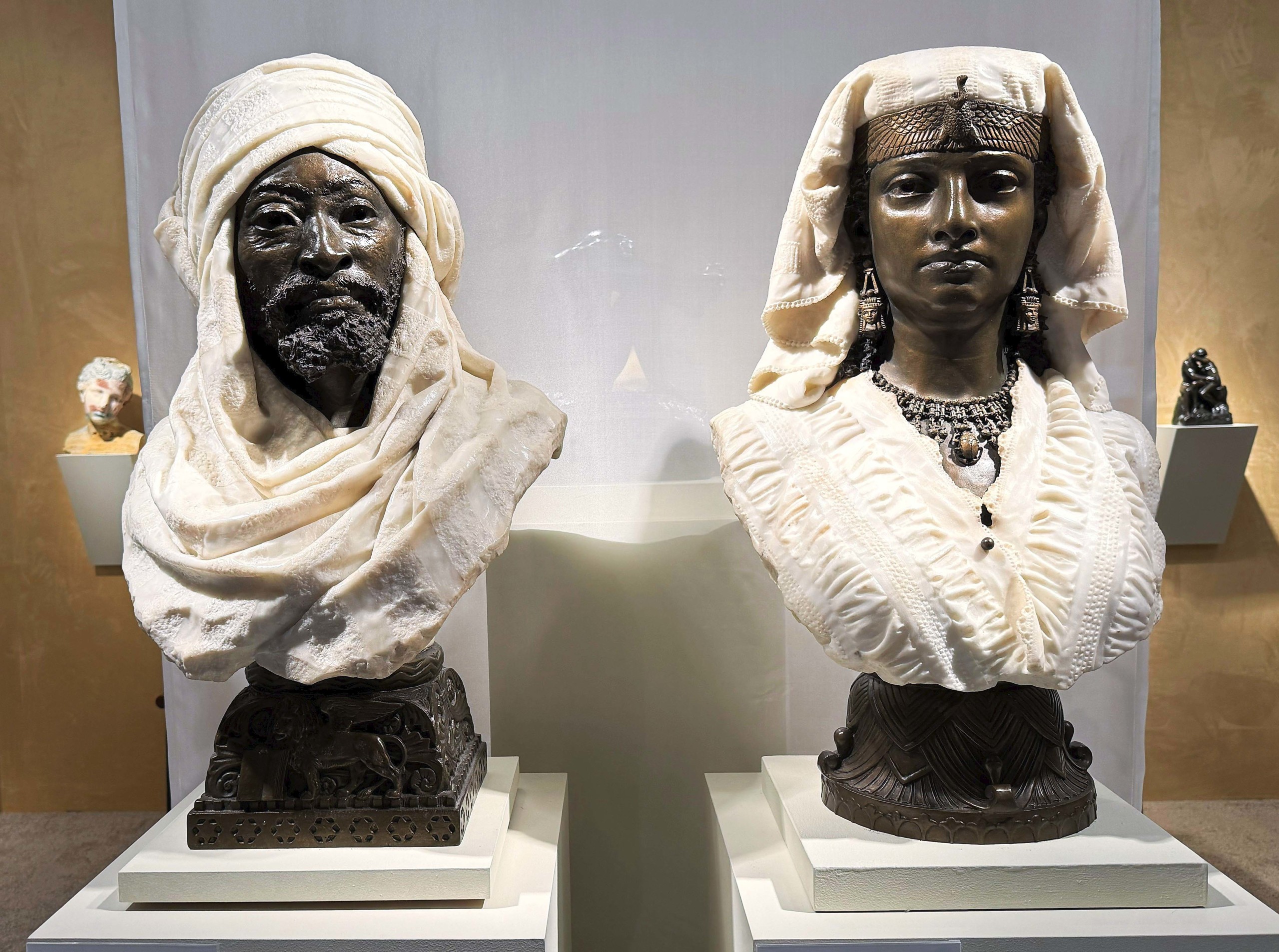
“Othello” and “Aida” by Pietro Calvi, bronze and marble busts, circa 1881 and circa 1883. Bowman Sculpture, London.
Allen likewise acknowledged the fair’s durable heritage, saying, “We are proud to honor a remarkable group of dealers marking milestone anniversaries this year: A La Vieille Russie (55 years), Michele Beiny (30 years), Thomas Colville Fine Art (35 years), Thomas Heneage Art Books (10 years), Hirschl & Adler Galleries (50 years), Joan B Mirviss, Ltd (45 years), The Old Print Shop (65 years), James Robinson, Inc (45 years), S.J. Shrubsole (40 years), Robert Simon Fine Art (10 years) and Carolle Thibaut-Pomerantz (25 years).”
She added, “Their longevity is a testament to the exceptional quality and trust that define The Winter Show.”
Next year’s fair will run January 21-31. For information, www.thewintershow.org.