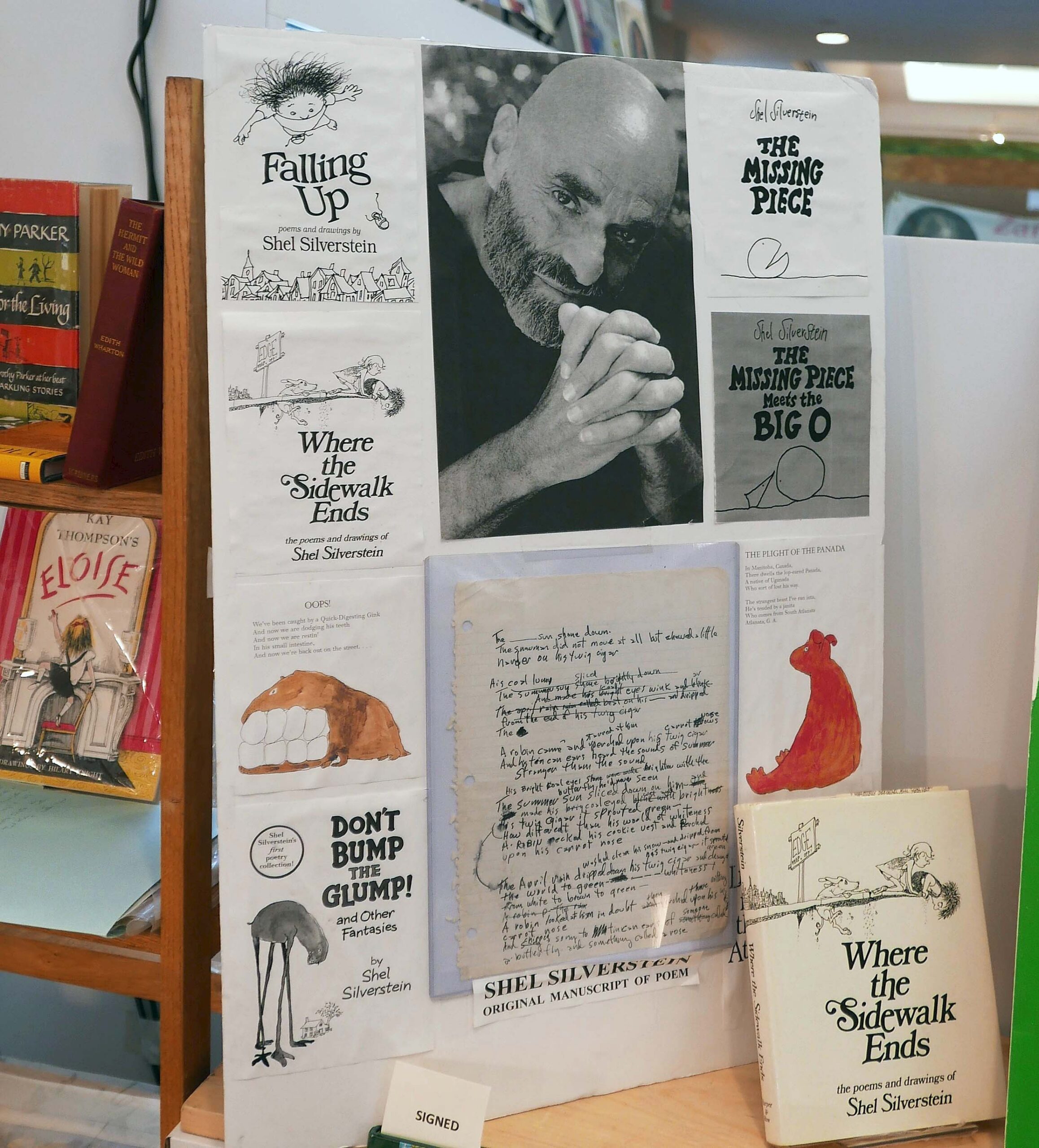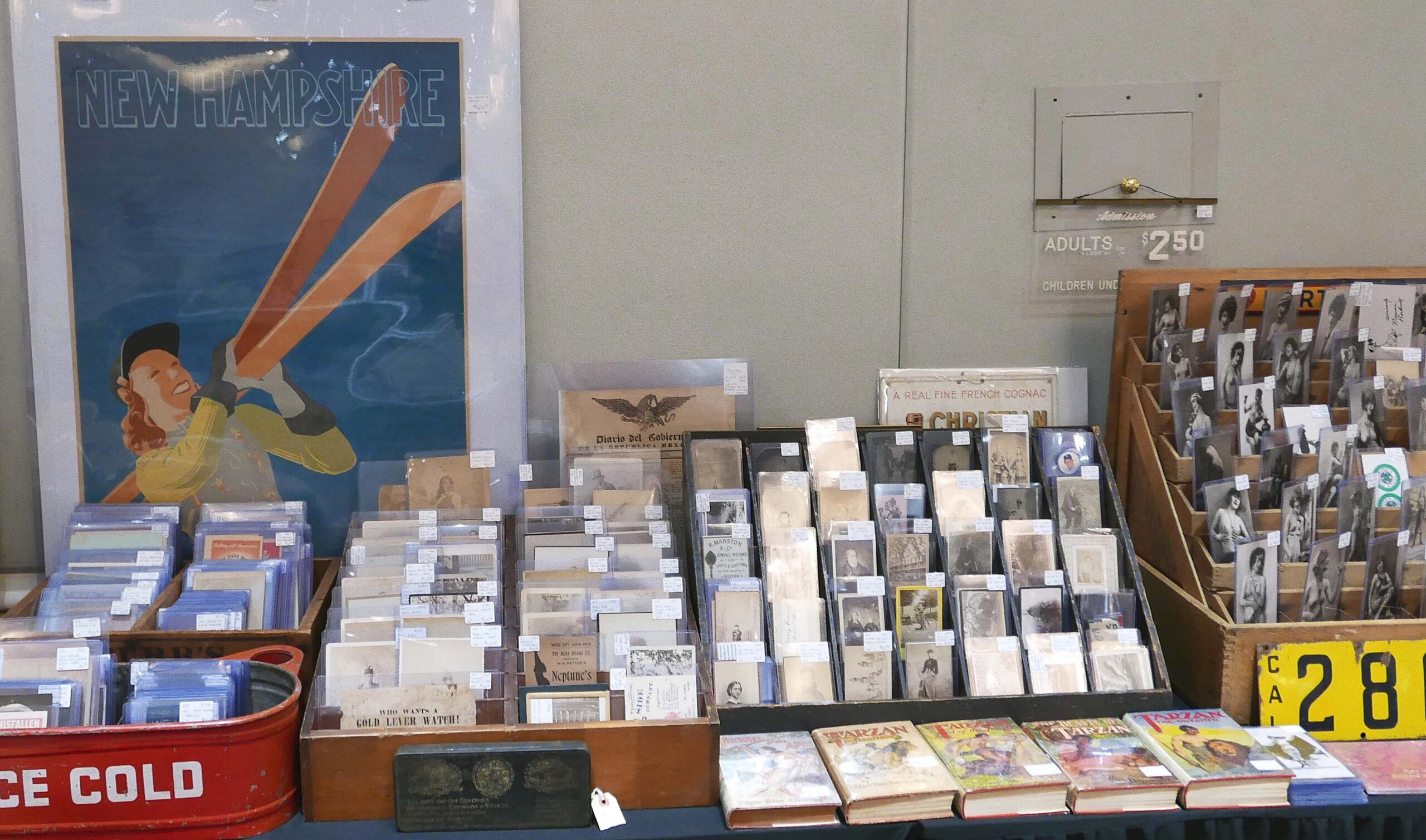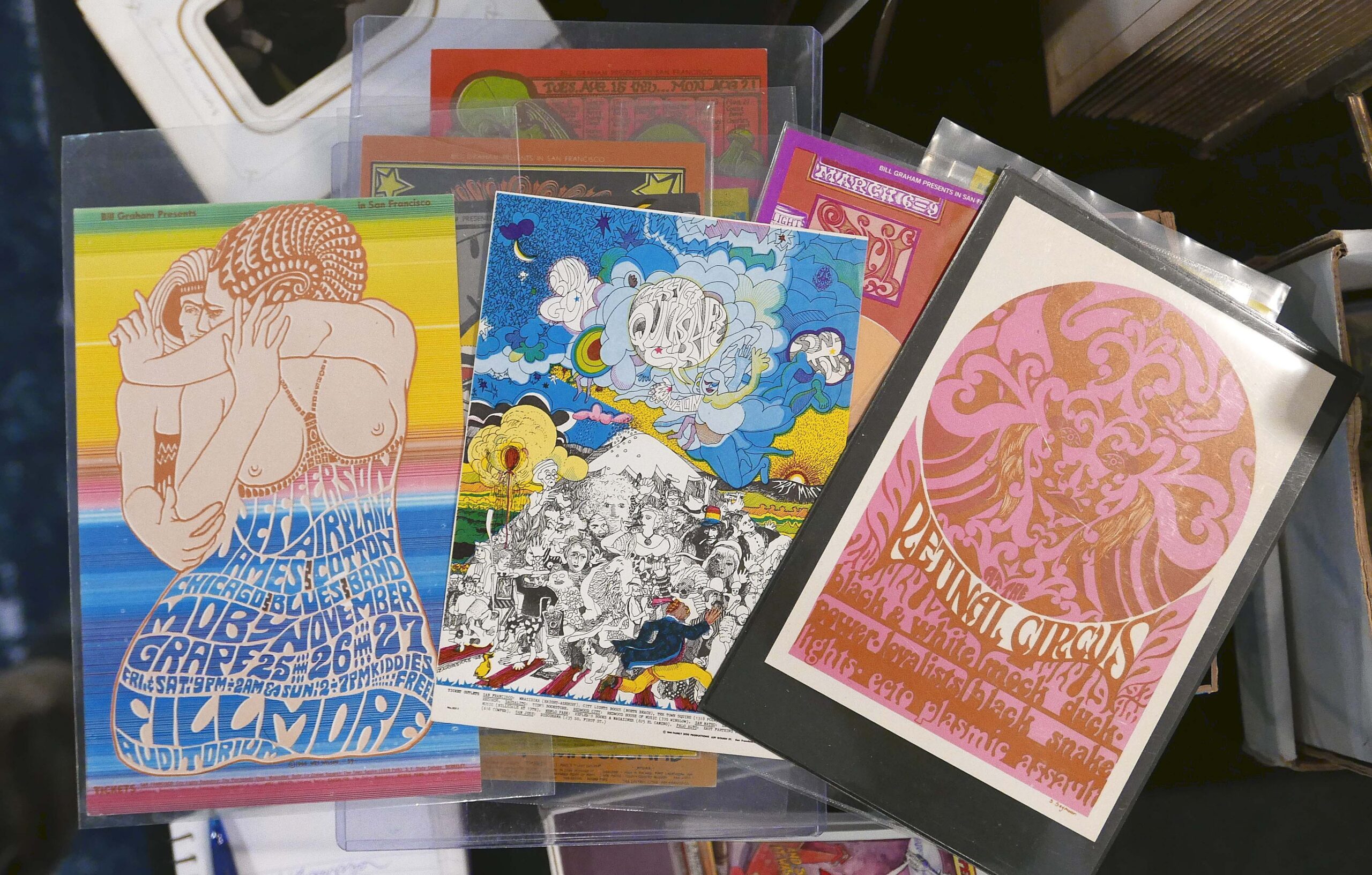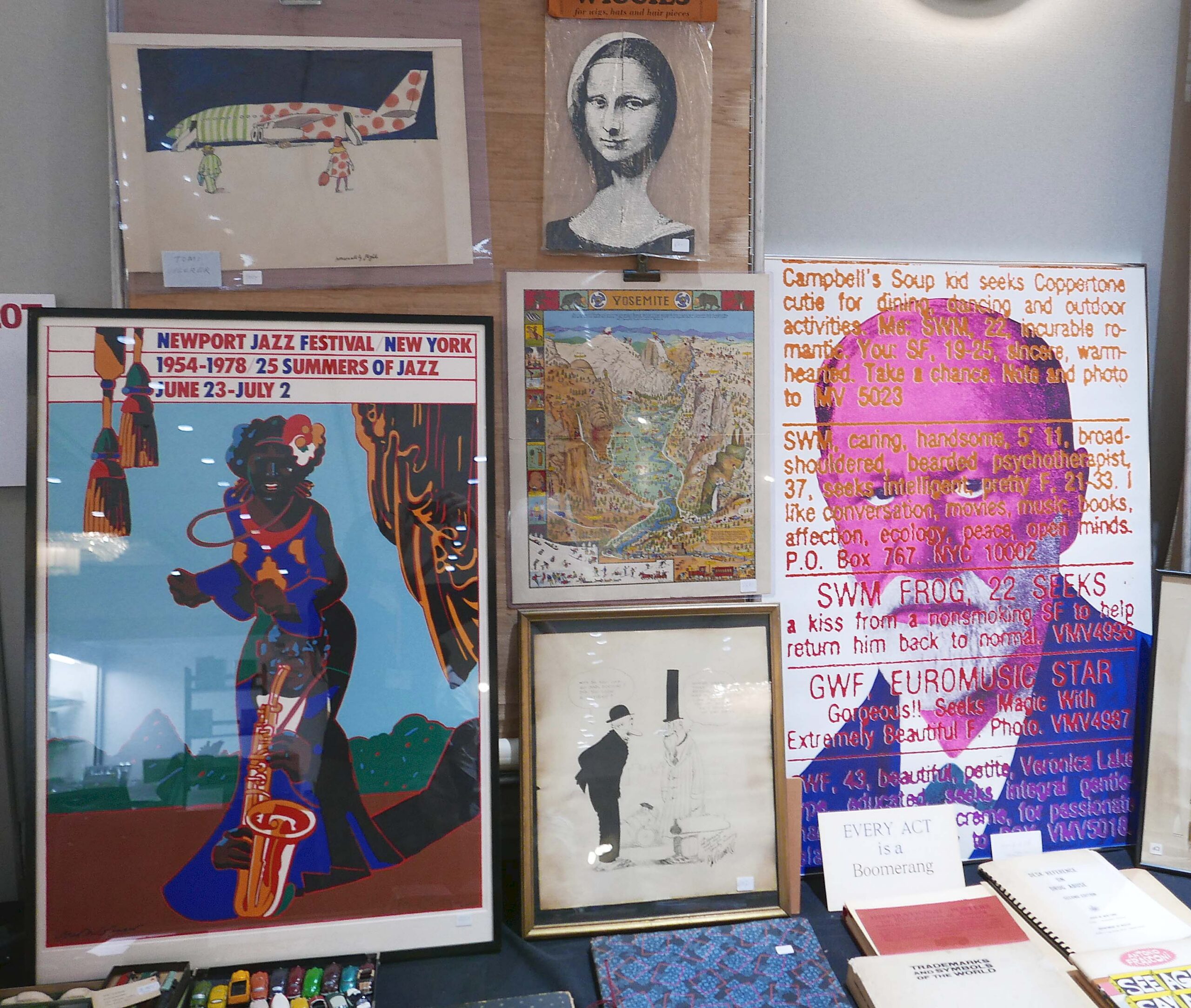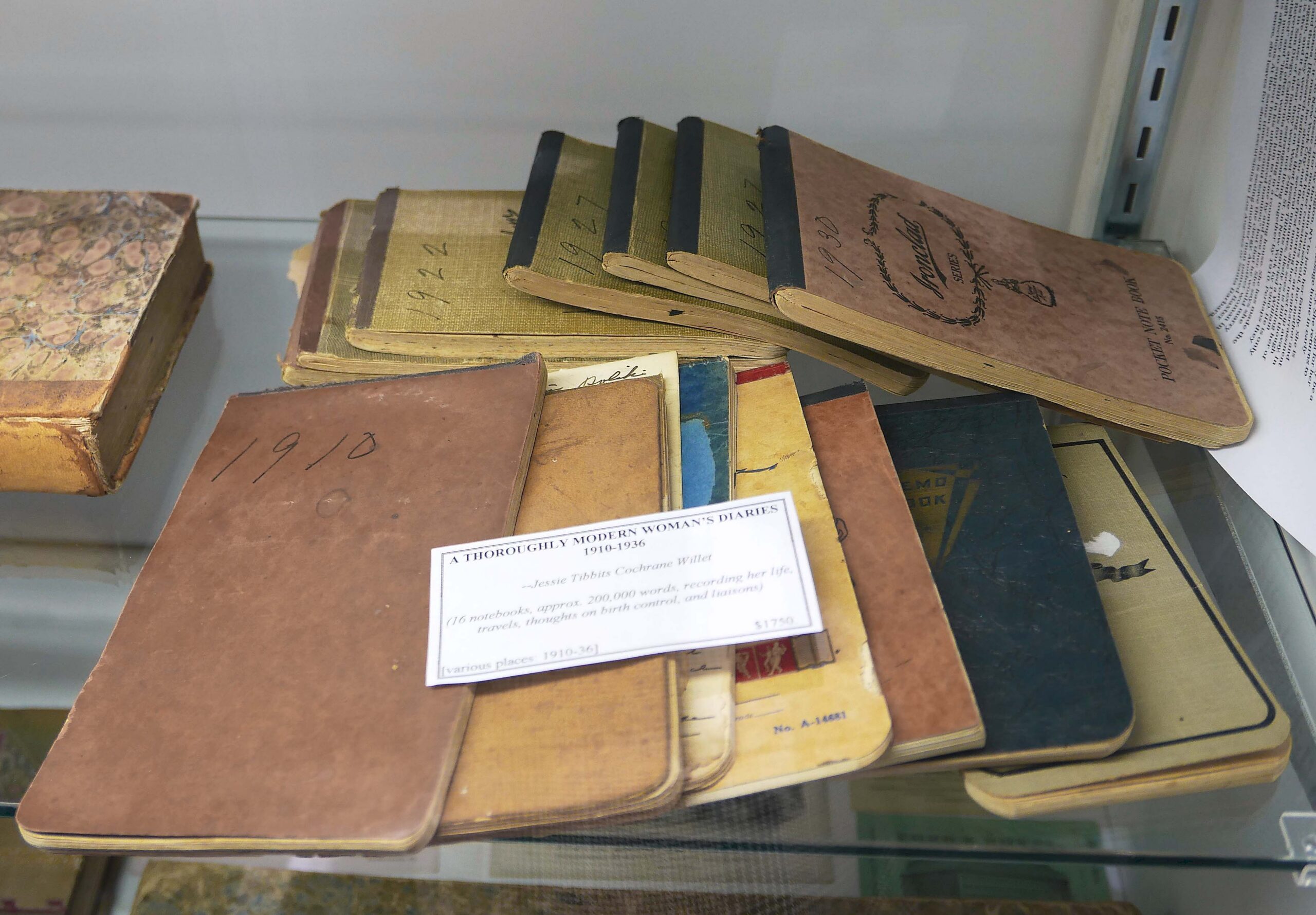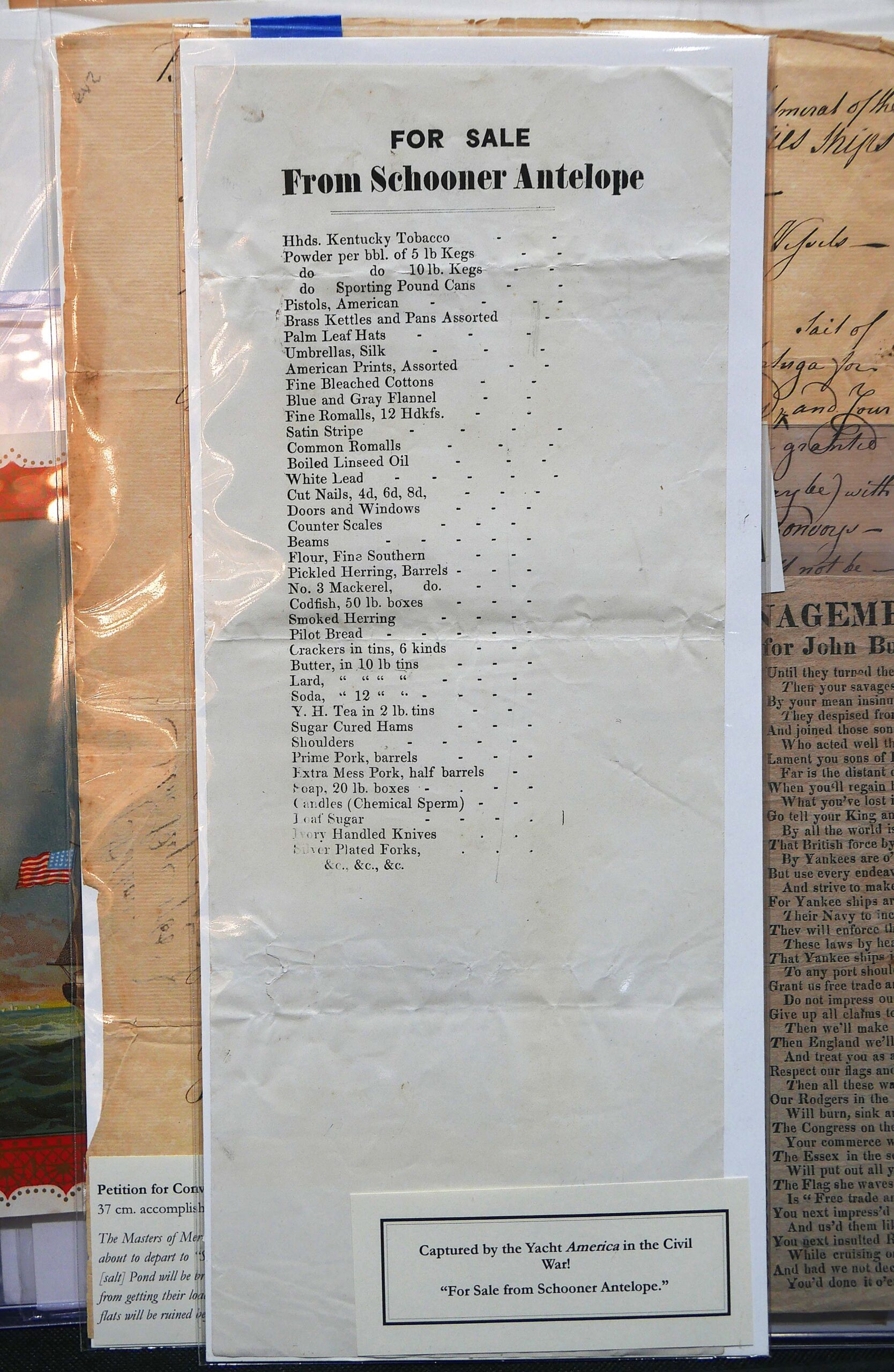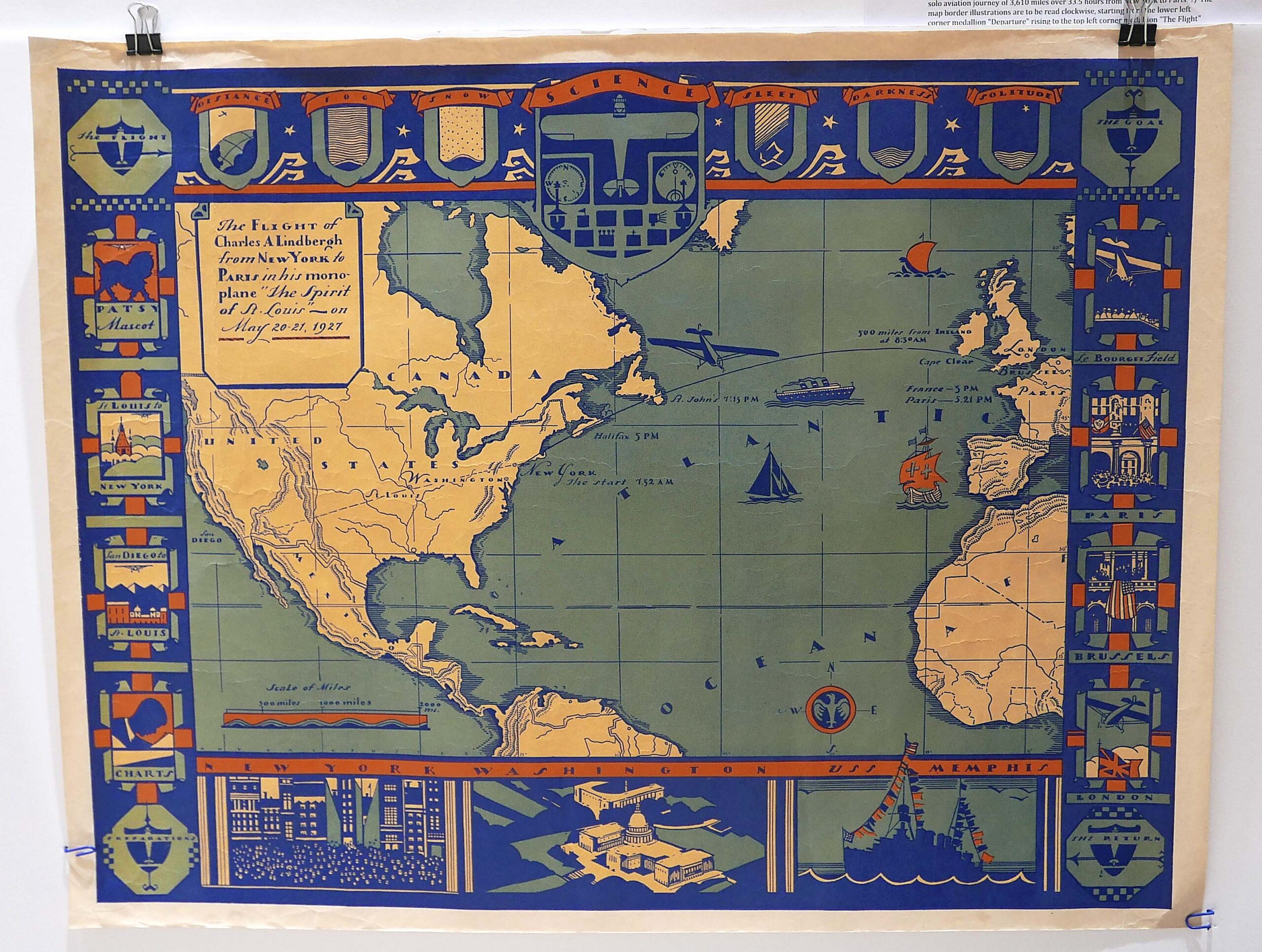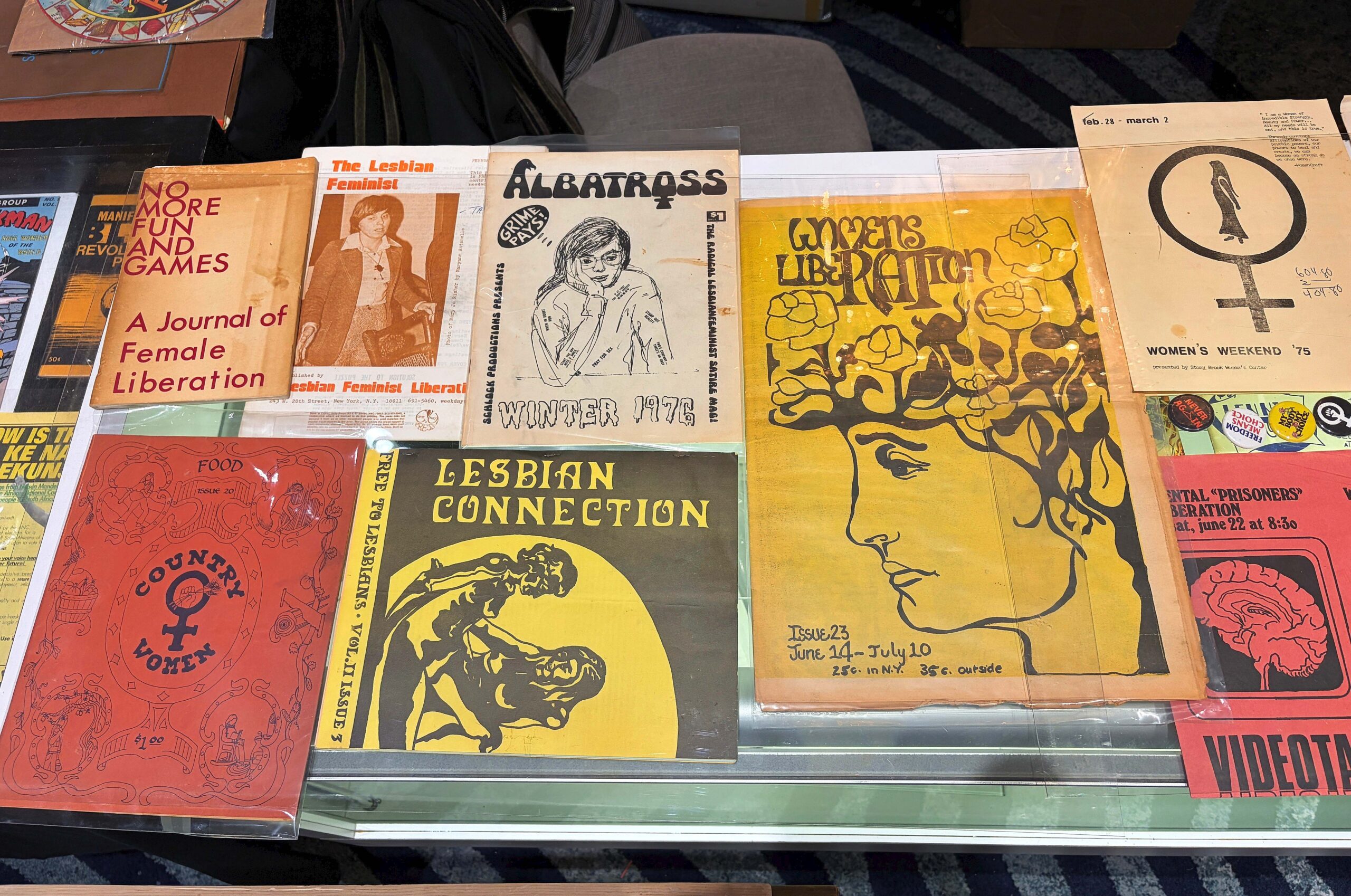
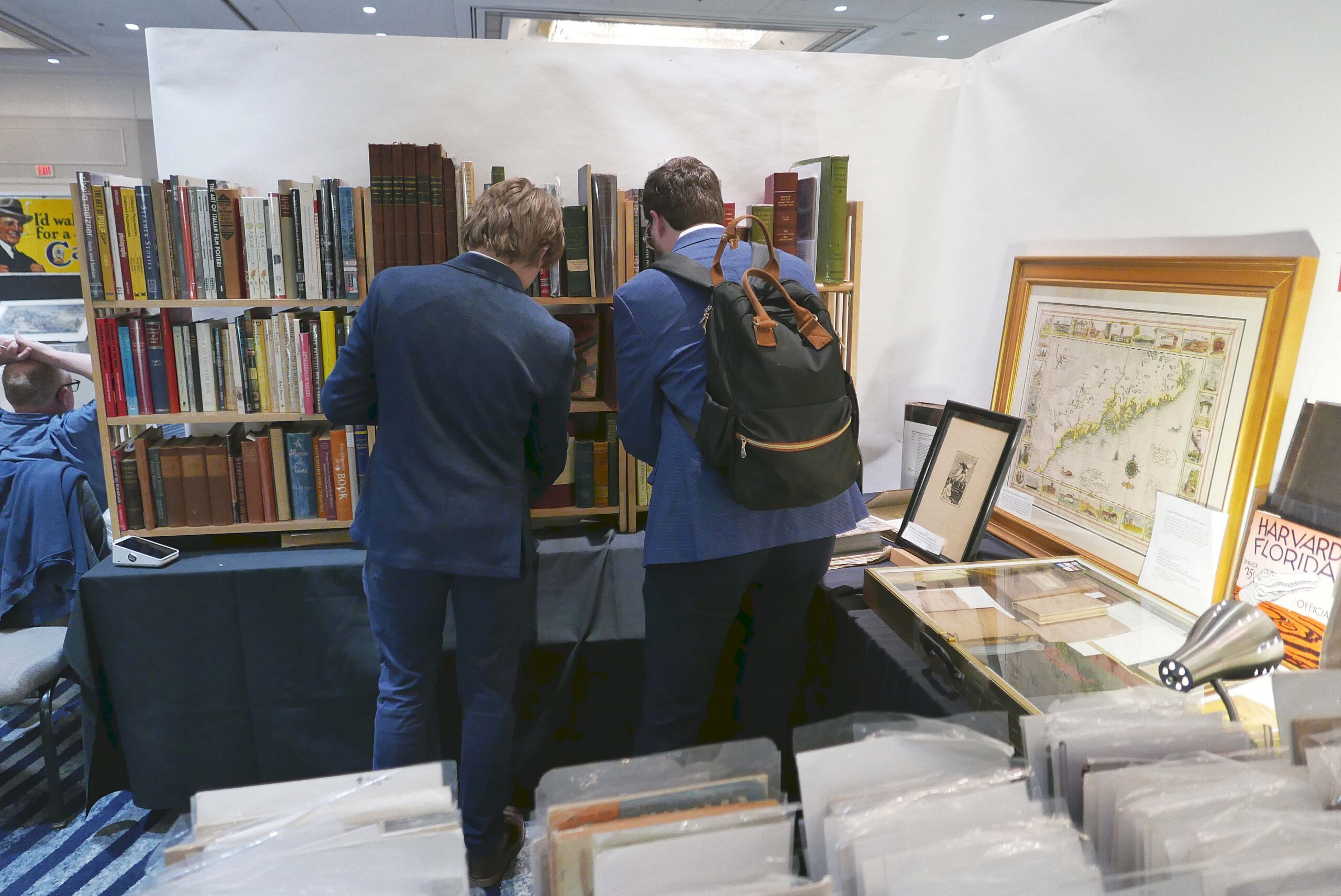
Though Commonwealth Books’ best piece — a very large Gold Rush map — sold right at opening, these lads were still able to find books to their liking. Boston.
Review & Onsite Photos by Carly Timpson
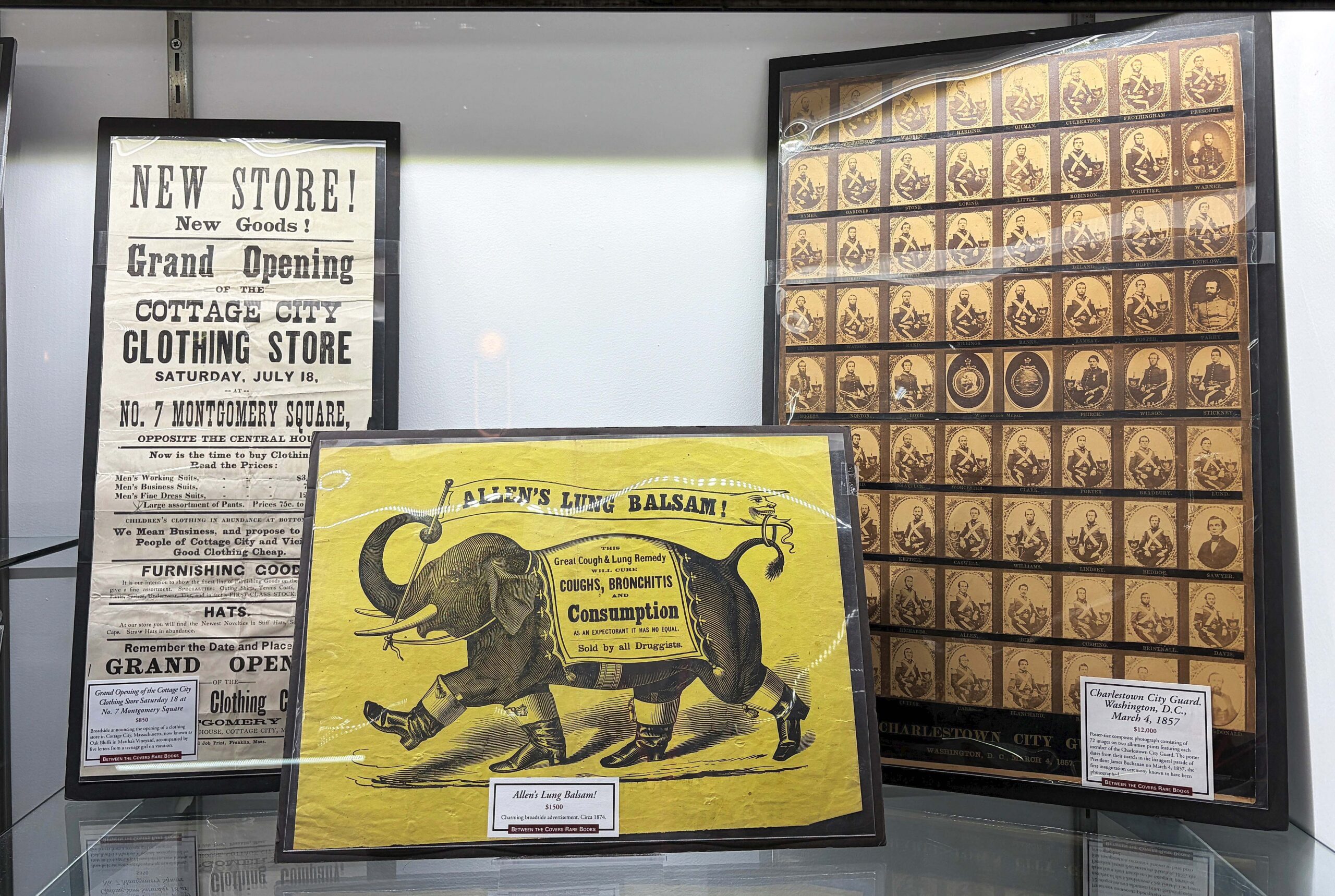
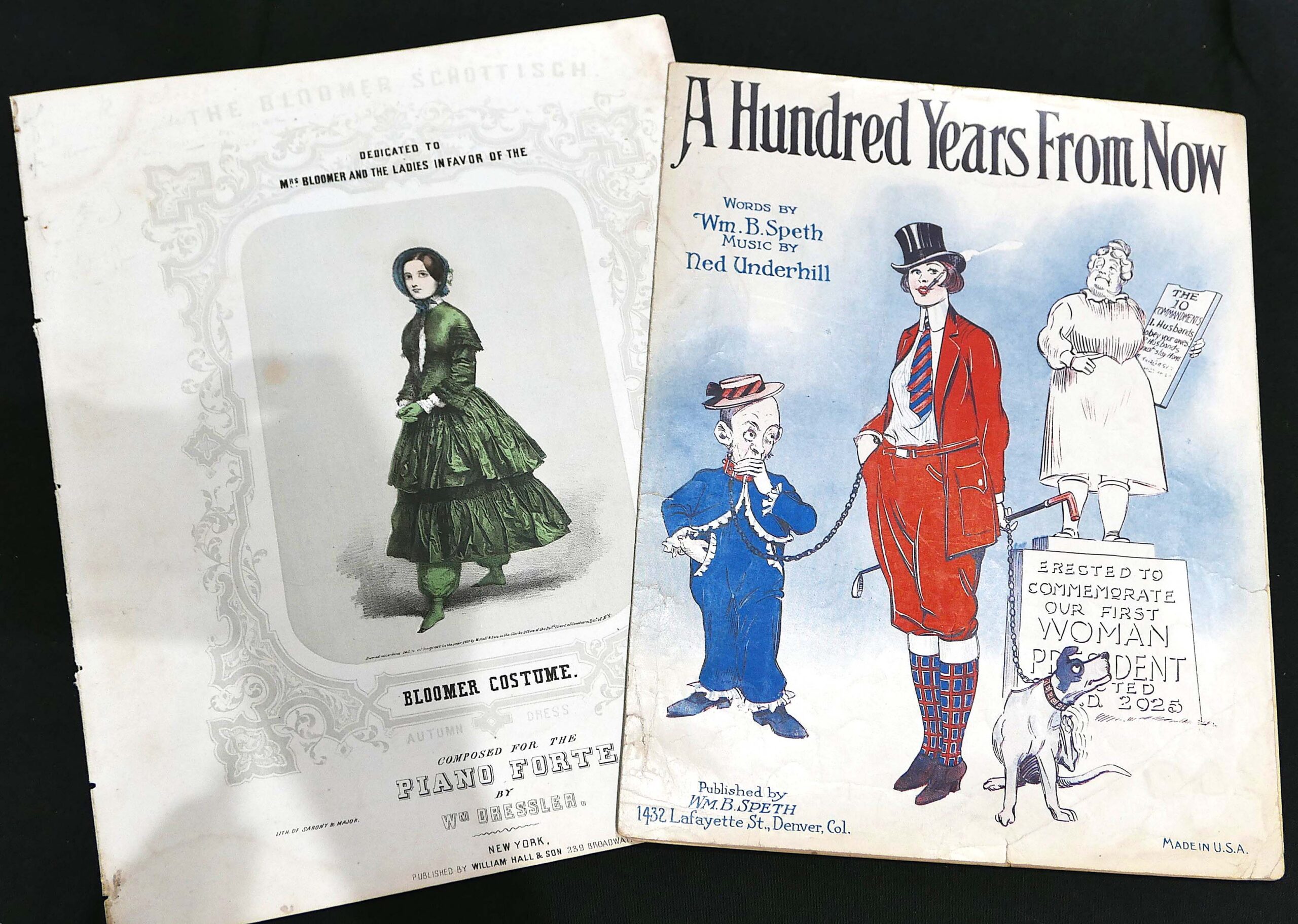
OLD GREENWICH, CONN. — The Ephemera Society of America’s (ESA) 46th Ephemera Fair was conducted March 20-22, in conjunction with the Society’s annual conference. As show promoter Sanford L. Smith & Associates puts it, “Ephemera, referring to paper items that were never intended to be preserved, yet have miraculously endured, provides a unique glimpse into the past.” With more than 60 dealers on site, the show was a treasure trove for collectors of vintage posters, postcards, letters, photographs, tickets, brochures, advertisements and other printed and handwritten materials.
This year, honoring the nation’s semiquincentennial, the ESA conference was themed “250 Years: Ephemera Shapes America.” The weekend was guided by the notion that ephemera helped build the country, with the conference’s introductory materials stating: “John Dunlap, a 29-year-old Irish immigrant, spent much of the night of July 4, 1776, hastily setting type and printing final copies of the single-sheet broadside of the Declaration. One was attached with a seal and folded into the Continental Congress manuscript journal after the words: ‘The Declaration being again read was agreed to as follows.’ The others were distributed throughout the new United States to be read aloud in each of the 13 colonies and to the continental troops. Newspapers quickly published the contents.” Various copies of the Declaration and its distributed forms are sought after — and several dealers at the show had them on offer — but finding an original Dunlap broadside is considered a holy grail for many American history collectors.
The ESA further noted, “This historic anniversary is an apt moment for examining how ephemera played a key role not only in our founding, but also during the significant political events and social movements that make up our nation’s history.” These events and movements each have their own market, with some collectors favoring items relating to wars — or anti-war movements — abolition and Black history, women’s suffrage, prohibition and a host of other moments that brought us to where we are today.
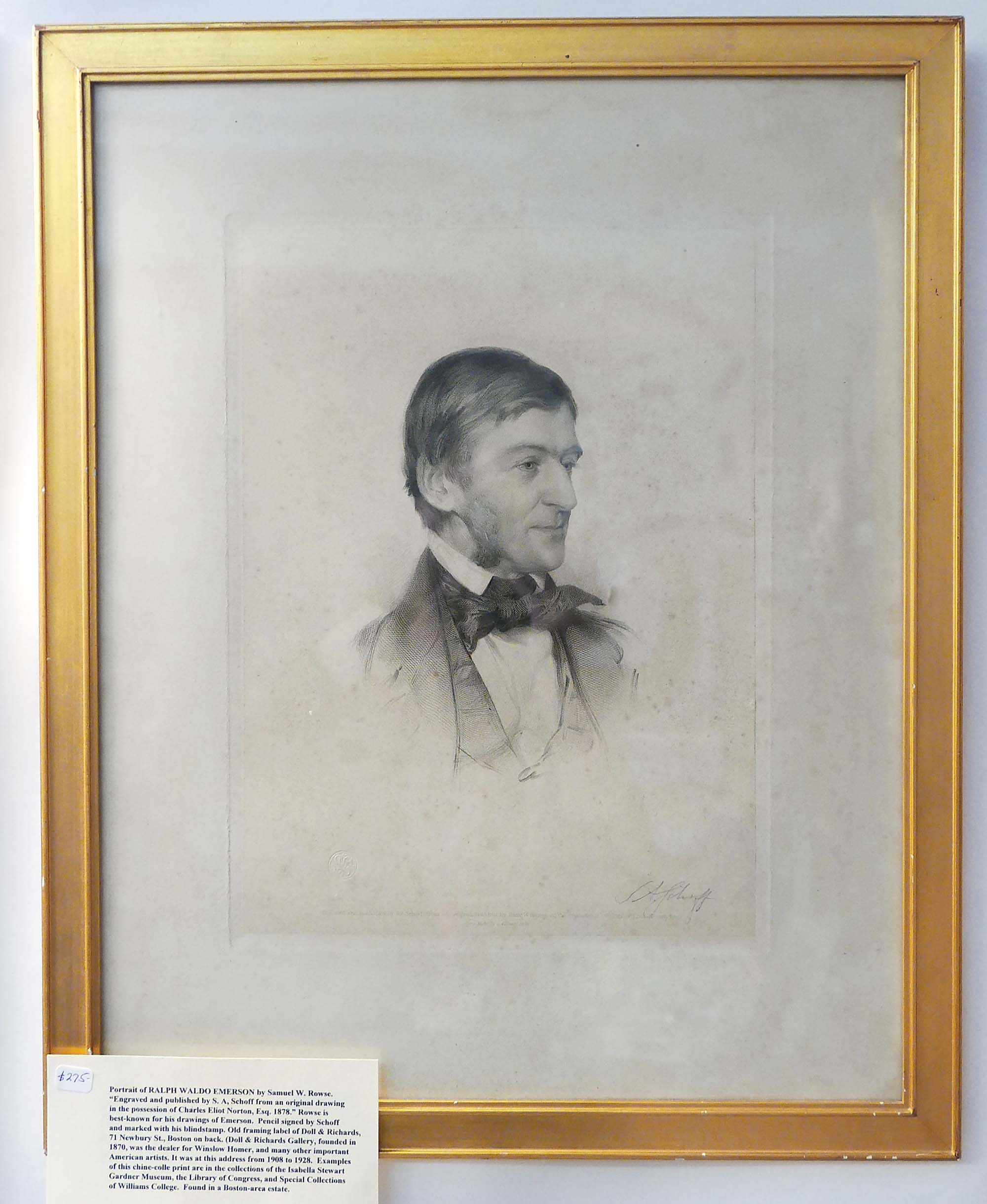
When asked about their favorite item in their booth, David and Jane Thompson pointed out this chine collé portrait of Ralph Waldo Emerson (1803-1882) by Samuel W. Rowse (1822-1901), engraved and published by S. A. Schoff (1818-1904). It had a circa 1908-28 Doll & Richards (Boston) framing label on its reverse and was found in a Boston-area estate. David Thompson Antiques & Art, South Dennis, Mass.
Regardless of what initially got them into collecting ephemera, upon being asked, many dealers respond with a variation of “Now, I just collect what I like.” So, someone who began collecting material relating to a specific president may have branched out to related political items, then to general American history, then to “things that look cool.” Of course, this phenomenon is not unique to ephemera, as many Antiques and The Arts Weekly readers can attest.
Some specialists remain steadfast in their craft, including Don Lindgren of Rabelais Inc (Alfred, Maine). Rabelais’ niche is food and drink, stocking their shelves with menus, manuscripts, cookbooks, trade catalogs and other ephemera relating to haute cuisine and home-cooked comforts. In their booth we found several titles on soda fountains and carbonated beverages; a first edition of Dorothy Short’s Camel Land Cookery (1964) featuring Afghan recipes; The African Cook Book, a cookbook of regional African recipes by Bea Sandler, with menus from the Tree Houses Restaurant of the Pavilion of Africa, New York World’s Fair, 1964-65; and a community cookbook compiled by the spouses of airmen living at Patrick Air Base. Contemporary letterpress printer Amos Paul Kennedy, Jr,’s “I am as Southern as…” series from Citizen Printer, including “Sweet Tea” and “Cornbread,” provided a vibrant visual pop among many of the vintage titles.
Like Rabelais, Lizzyoung Bookseller focuses on food and drink history, but also incorporates “women’s history, cultural history and anything else that makes us smile.” Lizzy Young, based locally in Stamford, Conn., had menus, cookbooks, a culinary manuscript likely compiled for a home economics course, a “Charts For The Kitchen” supplement to an 1881 edition of The Home Magazine and promotional materials, including a Coca-Cola branded handbag and soda can-shaped pencil sharpener. Young shared that she hadn’t done this show since before the Covid pandemic and was a little disappointed with the turnout but added, “I was happy with a couple of institutional buyers that I had not met previously. One of the joys of ephemera is the way it can capture the attention of people who do not normally ‘collect.’ I have always said that it is the gateway to collecting rare books.”
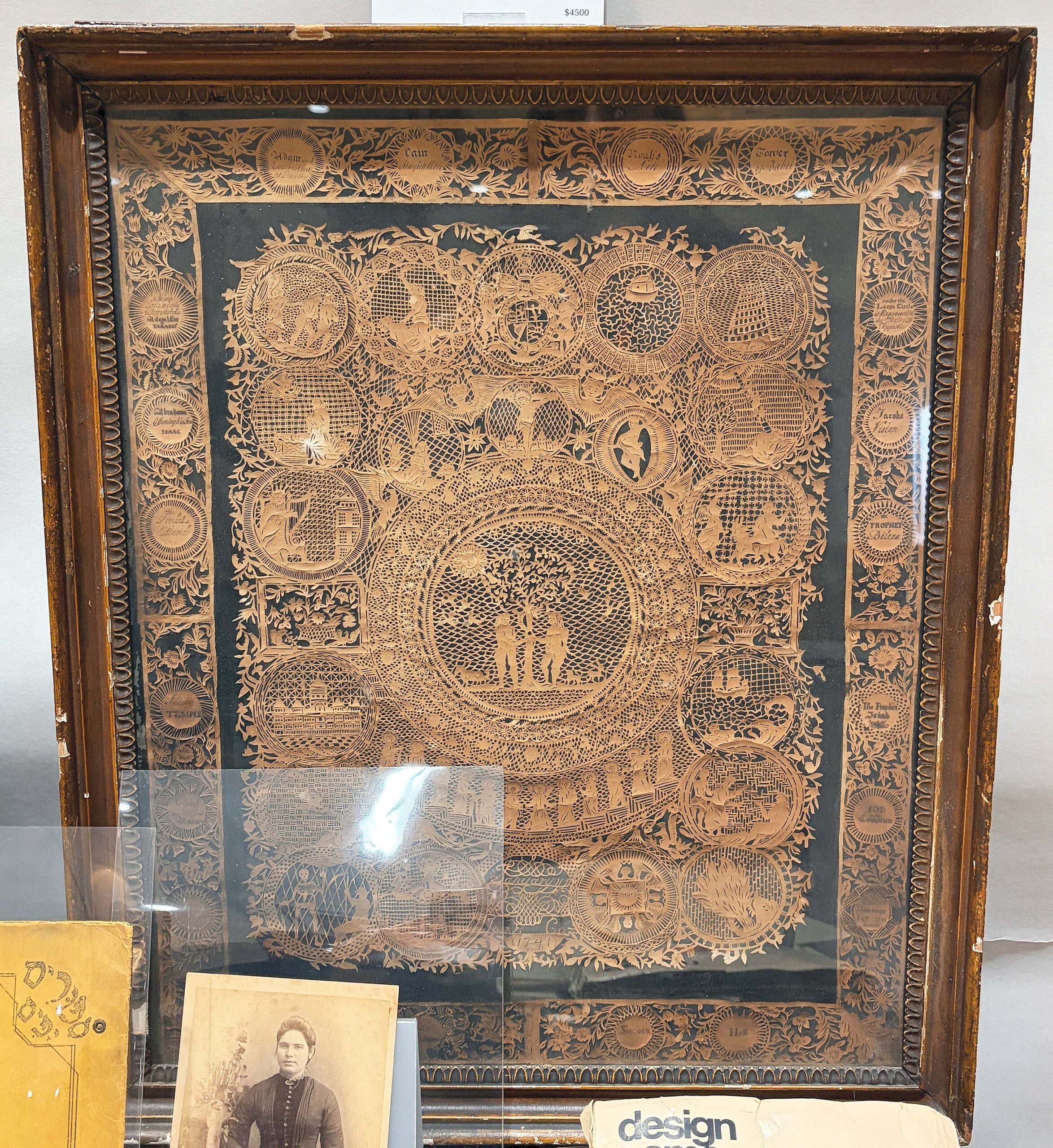
Aaron Beckworth of Capitol Hill Books highlighted this 1741 scherenschnitte, a form of folk art involving intricate paper cutting, from Midhurst, England, that had depictions from the Old Testament. Washington, DC.
Another specialized dealer is House of Mirth, run by Stacy Waldman. The Easthampton, Mass., dealer filled her booth with vernacular photography and, in some instances, related ephemera. One such example was a collection relating to child labor. Newly surfaced and previously undocumented, this 1931-53 archive comprised just short of 1,000 individual items of National Child Labor Committee (NCLC) material, including photographic prints, negatives, caption cards and printed legends. Paired with a photo of a thin young boy, barefoot and in overalls, was a harrowing caption: “#5818 – G.68 – 1937 – Tiff Mines – Missouri / Billy Nelson; 9 yrs; in 3rd grade. The Nelson children (G.66, G.67, G.68) work more or less regularly in the tiff, mostly scrapping. I had the feeling they were too lazy to work and that the aim of the family was not to work more than necessary to earn enough for bare existence…” Waldman also presented a circa 1940-50s photograph album chronicling the Craigs, an African American family, and their educational, social and religious life in Washington, DC. The content includes Miner Teachers College, Howard University, New York University and Greek life organizations.
While he is primarily a bookseller, first-time dealer Dale Steffey (Bloomington, Ind.) supplements his collection with posters, prints and photographs. Of most intrigue was a substantial archive of early country music fan club material. The collection came from Opal May Hardyman, superfan and president of the Carl Butler and Pearl Fan Club. Steffey told us that the Loretta Lynn Fan Club, organized in 1963, is recognized as the first country music fan club, but the Carl Butler and Pearl Fan Club was organized in 1962. Hardyman’s collection also included items relating to Loretta Lynn as well as Bill Anderson, Hank Williams, Jr, James O’Gwynn, Johnny Cash and others. This archive — complete with photographs, newsletters, scrapbooks, photo albums, broadsides, tickets, programs, newspaper clippings and more — contains significant music history and, as Steffey noted, it may well belong somewhere like the Grand Ole Opry or the Country Music Hall of Fame and Museum.
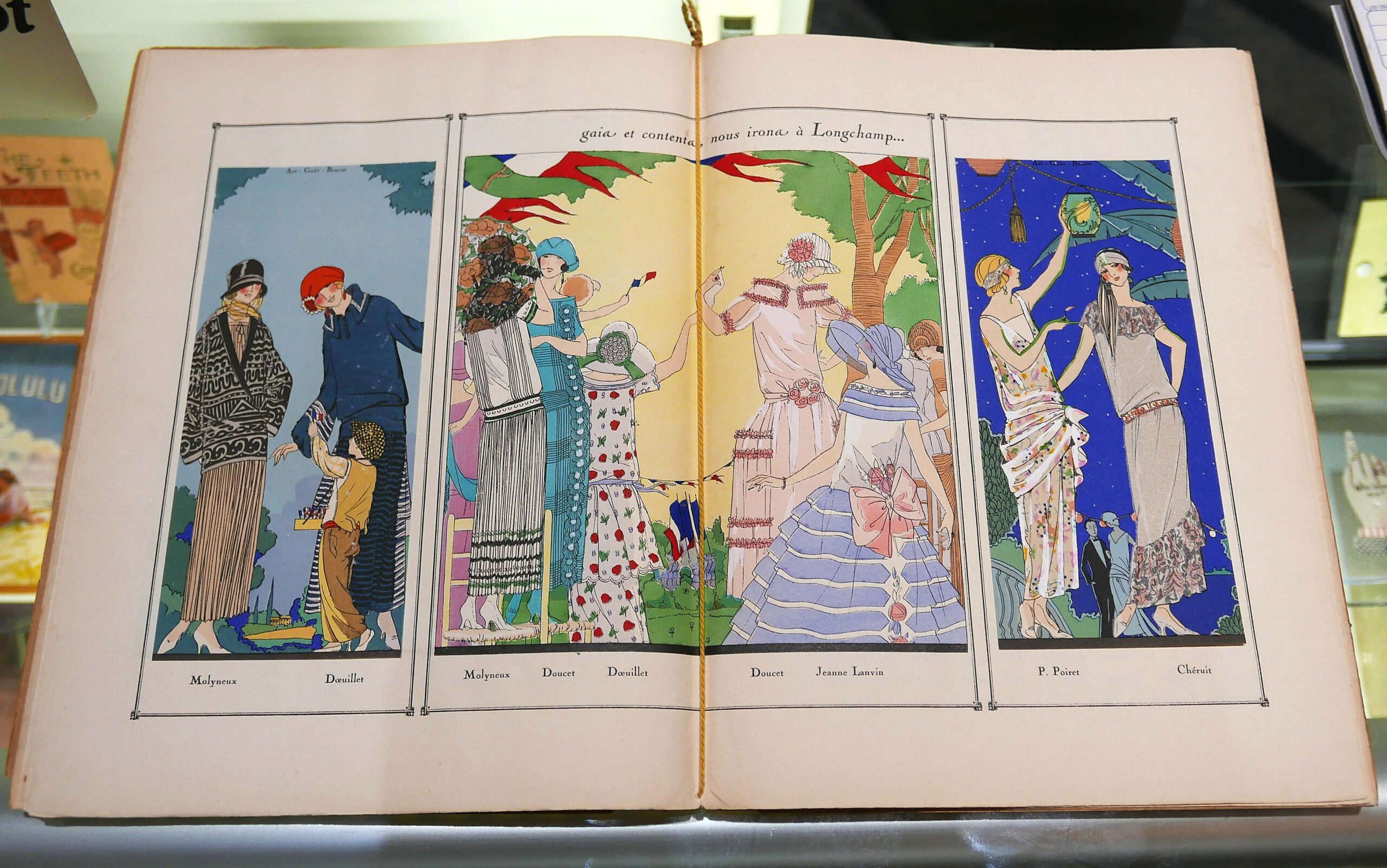
Vibrant fashion illustrations for designers Molyneux, Doeuillet, Doucet, Jeanne Lanvin, P. Poiret and Chéruit in a July 1923 issue of the Parisian magazine Art-Goût-Beauté. Cultural Images, Portland, Ore.
Ten-year veteran of the Ephemera Fair, Glenn Mason was back with a few exceptional treasures. He and his wife, Judith, are Cultural Images, based in Portland, Ore. They told us that they used to ship all of their items out east for the fair, but now they just take as many smaller pieces as they can travel with in their luggage. Among those smaller pieces were a few notable ones: a remembrance book with hair wreaths for a mother, Permelia, and her children, Mary C., Elmira, Catharine and George, each bound with a small bow. Another treasure was a 1923 issue of Art-Goût-Beauté, a Parisian Art Deco fashion magazine.
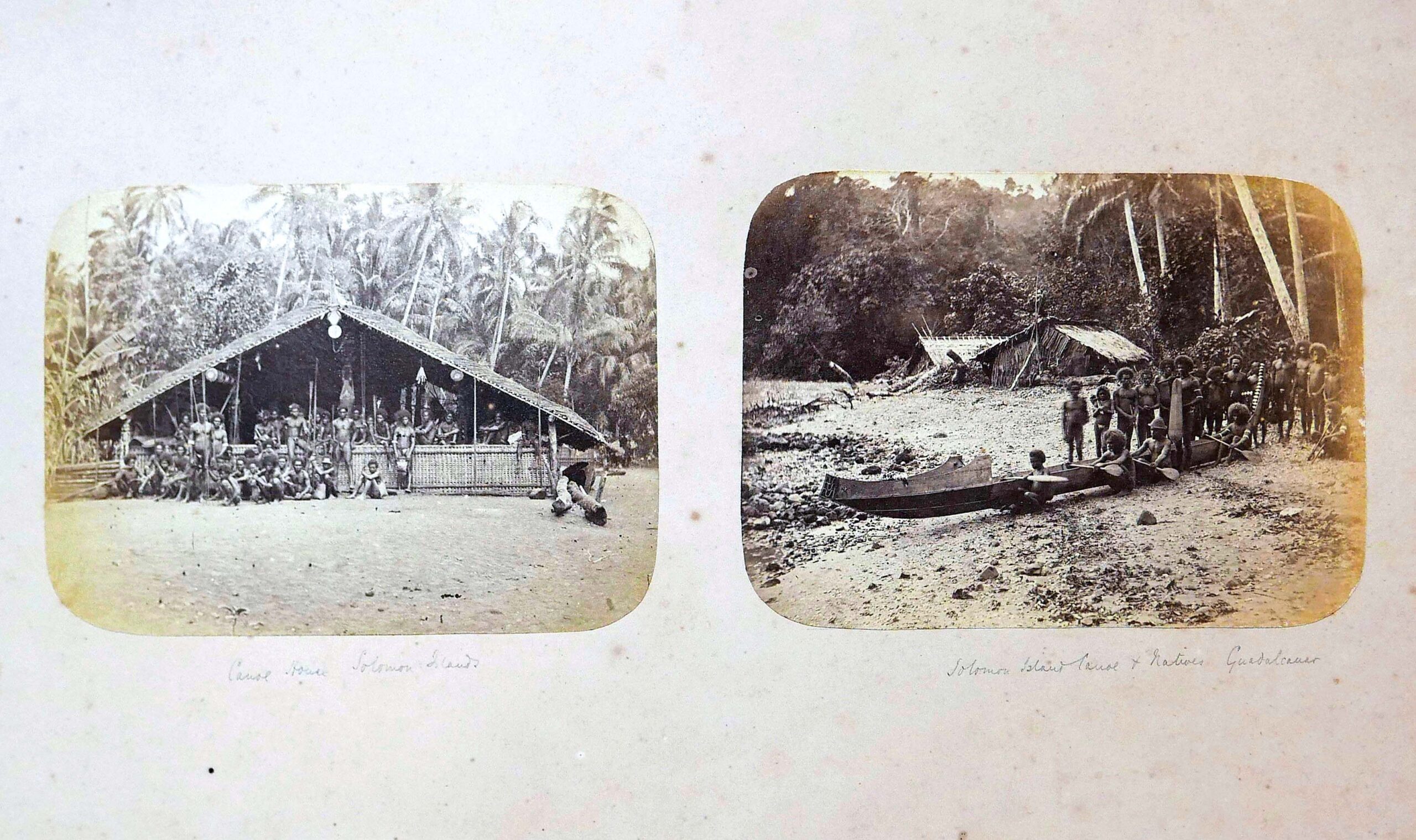
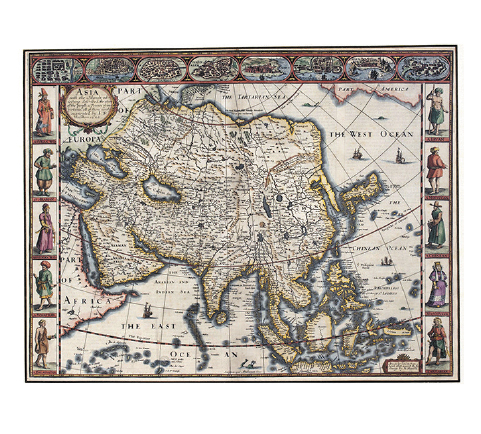
“It’s been really good — there are some pretty aggressive map collectors around here,” reported David Meikle of Archway Books (Dover, N.H.). Before the opening preview was over, he said, “I already sold the two most exciting maps I had.” That is not to say that the excitement was gone, of course. He presented us with a set of historic images taken by a photographer aboard HMS Curaçoa in 1865. In this set were the some of the earliest known photographs taken in Fiji, Samoa, Tonga and Vanuatu and the first images taken in the Solomon Islands.
Another dealer who reported quick sales was Joe Fay (Woodbridge, Conn.). “I don’t think it was two minutes after the doors opened that I made a sale. The first was a photo of a nurse in a freedmen’s hospital right after the Civil War.” On his tables he had original paintings for a couple of early 1960s paperback books, paired with their resulting editions, one of which sold during the show. However, folded up because it was simply too big to display was a pictorial map of the United States showing immigrant routes, drawn by Emma Bourne in 1940. Issued by the Council Against Intolerance in the lead up to World War II, this map, titled “America — A Nation of One People From Many Countries,” had a progressive statement in the southeastern waters: “With the exception of the Indian all Americans or their forefathers came here from other countries. This map shows where they live, what they do, and what their religion is.” Additionally, the names of nearly 50 prominent immigrants in categories such as literature, science, industry and the arts were listed in an inset to the lower left.
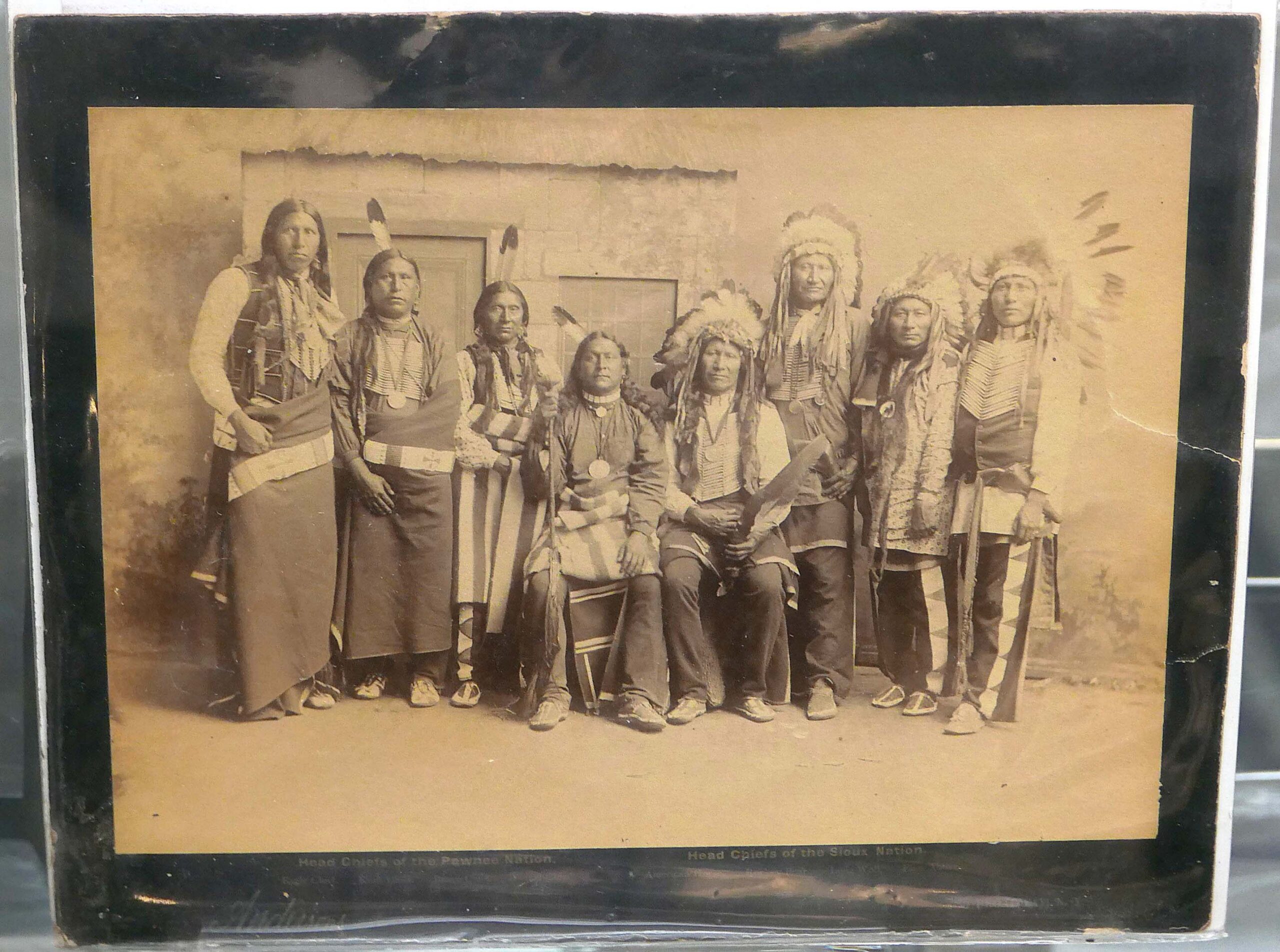
This 1886 photograph of Pawnee Nation and Sioux Nation chiefs taken by Anderson of Broadway (New York City), at Buffalo Bill’s Wild West Show in Erastina (Staten Island), N.Y., was with gallerybfa, Prospect, Penn.
Richard Erdmann of Mare Booksellers (Dover, N.H.) said that the show was successful and he made several sales to new customers. “I had a lot of younger people buying items, which is always nice to see, since it bodes well for the future of book and ephemera selling,” Mare commented. “My business relies a fair amount on sales to institutions and I did make sales to several new-to-me institutions. Hopefully this will then generate future sales.” Among the sales at the fair were a small archive from a drag/transgender performer in the 1970s and two photo albums from a Black soldier that included his tour in Vietnam during the war. “As a vendor I like this fair. It is easy to do, and I seem to always make new connections,” he closed.
For information, www.ephemerasociety.org or www.sanfordsmith.com.