By Laura Beach
MEDIA, PENN. — Pictorial histories are uniquely arresting. Broad stroke to fine line, they communicate a galaxy of ideas at a glance. When the Decorative Arts Trust, a bustling hub of resources, events and funding initiatives promoting the appreciation of visual culture, considered ways of honoring the 250th anniversary of the signing of the Declaration of Independence, it lit happily upon the idea of working with its institutional partners to gather the most compelling examples of American decorative arts across the land. The objects are accessible virtually at the interactive website Collecting250.com.
Collecting250 showcases 250 artifacts, colonial to contemporary, from more than 140 public institutions from 50 states and Washington, DC. As the Trust’s executive director, Matthew A. Thurlow, explains, “We sought objects that are attached to a specific place, time and people. Our aim was to draw attention to the broad swath of institutions that steward decorative arts of historical significance.”
Produced by Trust staffer Sara Long, Collecting250 paints a nuanced picture of American identity. With objects loosely organized by medium, this museum without walls says much about the nature and history of what and why we collect, illustrating how taste and perspectives evolve. We may think of collecting as the mere gathering of objects. In fact, collecting represents the larger enterprise of preserving and sharing knowledge, a guiding principle of the Decorative Arts Trust.
Much like the nation itself, Collecting250 is a patchwork of cultural references. It speaks to migration and settlement trends, underscoring diversity and regionalism as core national strengths. Wise to the trove’s use as a teaching tool, the Trust collaborated with educators to develop four complimentary teaching guides, complete with lesson plans, worksheets and projects. Details are available on the website.
Noting points of connection between an embroidered basket made by an Aleut woman in Alaska in 1905 and “Never Again,” a sweetgrass and palmetto abstraction created by South Carolina basket maker Mary Jackson in 2007, Thurlow marvels, “Disparate cultures will arrive at similar endpoints, even if in a broadly formal concept. Objects can serve as commonalities that unite very different people across place and time.”
Look upon these national treasures — famous or little known, foundational or newly accessioned — and imagine your own “All Star” collection. Here is ours:
Sons Of Liberty Bowl
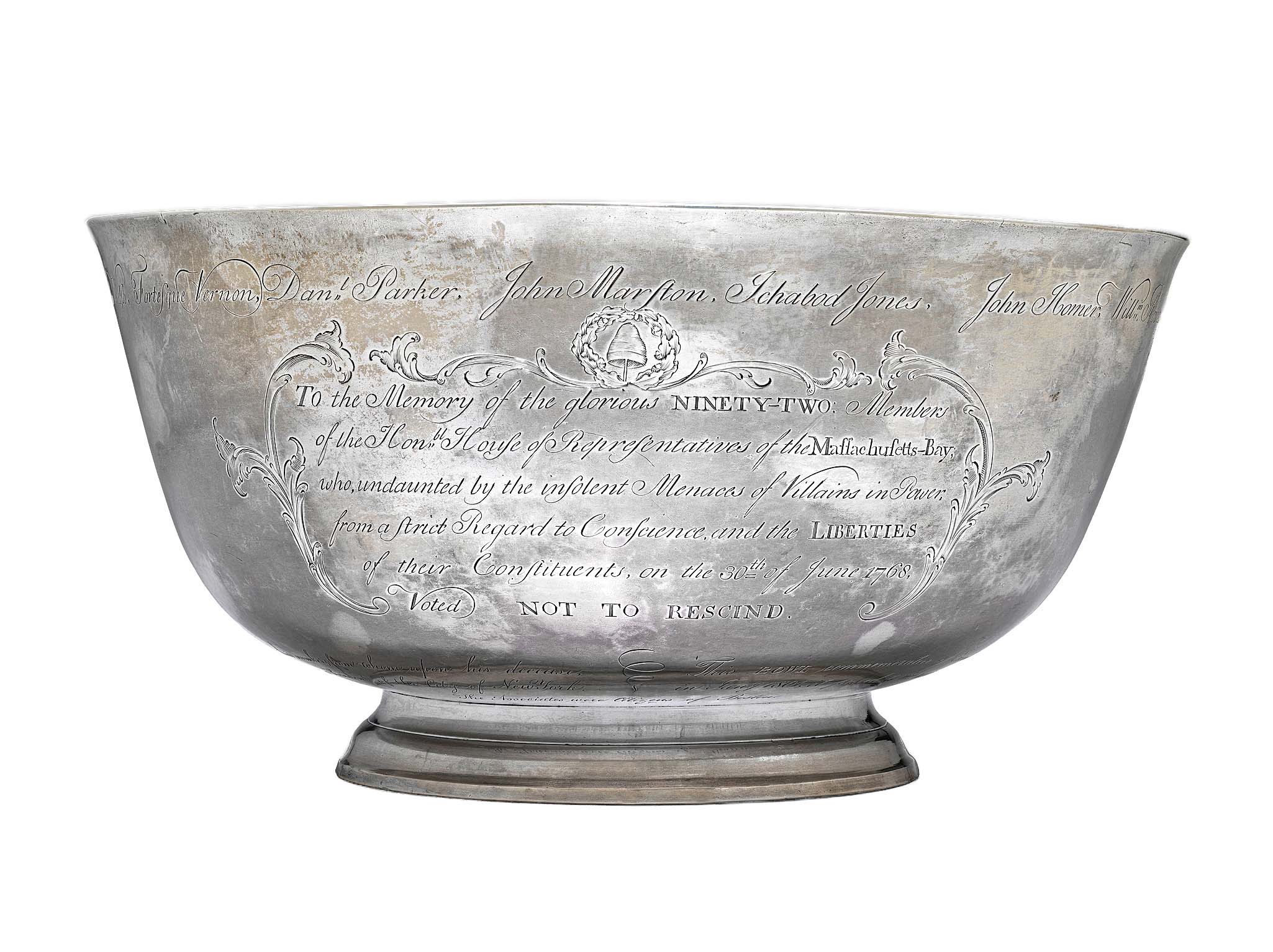
Sons of Liberty bowl by Paul Revere, Jr (1734-1818), Boston, 1768, silver. Museum of Fine Arts, Boston; museum purchase with funds donated by contribution and the Francis Bartlett Donation of 1912. Photograph © Museum of Fine Arts, Boston.
Ethan Lasser, the new chief of curatorial affairs and conservation at Boston’s Museum of Fine Arts (MFA), reminds us that Revere’s silver “icon” has led many lives, including as a trophy among early Twentieth Century collectors of American antiques. As Lasser relates, the bowl descended through the family of one of the Sons of Liberty it celebrates. Famed dealer Israel Sack and MFA curator Edwin J. Hipkiss, with funds raised in part by Boston school children, joined forces to bring the bowl to the MFA, where the engraved silver vessel has resided since 1949.
Paul Revere Lantern
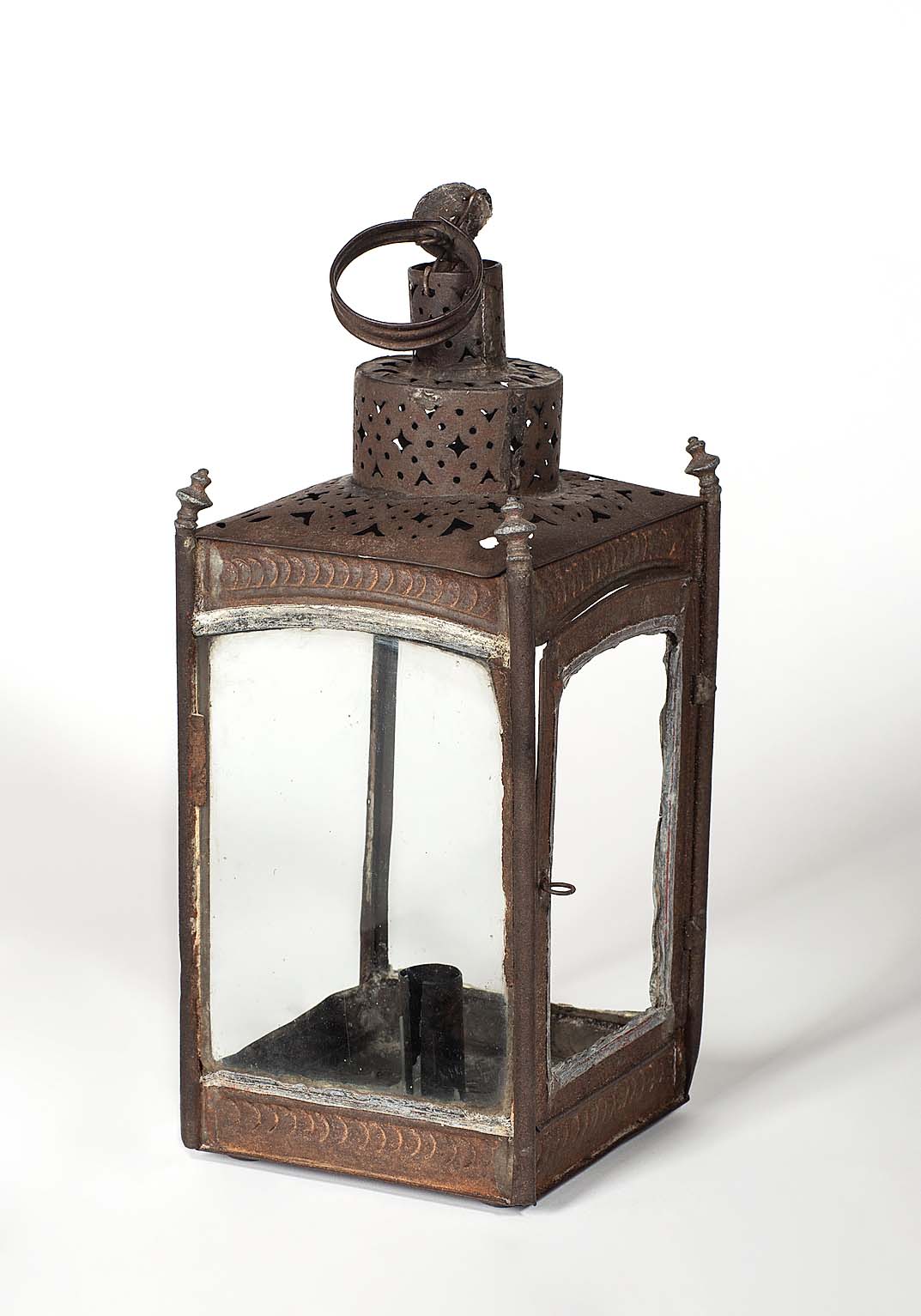
Lantern, maker once known, Boston, circa 1775, iron, glass. Concord Museum Collection, gift of Cummings E. Davis, M400a.1. Photo courtesy Concord Museum.
As a teaching object, few objects work harder than a Boston lantern, one of two said to have hung in the belfry of Boston’s Christ Church (Old North Church) the night of April 18, 1775, as a signal arranged by Paul Revere in prelude to the Battles of Lexington and Concord. Henry Wadsworth Longfellow (1807-1882) in his poem “Paul Revere’s Ride” mythologized the lantern, which in 1853 was acquired by a forefather of American antiquarianism, Cummings E. Davis (1816-1896), whose collection underpins what is now the Concord Museum.
Tiffany Window

“Anthony Van Corlaer, The Trumpeter of New Amsterdam,” designed by Howard Pyle (1853-1911) for Tiffany Glass & Decorating Company, New York, 1893-94, leaded glass. Delaware Art Museum, F. V. du Pont Acquisition Fund, 1984-28. Photo courtesy Delaware Art Museum.
Designed by Howard Pyle for the Tiffany Glass & Decorating Company, this 1893-94 leaded glass window, one of only two conceived by the American illustrator, is a relic of the Colonial Revival-era and a tribute to the exuberant Anthony Van Corlaer, Peter Stuyvesant’s fictional trumpeter from Washington Irving’s 1809 A History of New York. Made for Manhattan’s Colonial Club (1892-1903) and now ensconced at the Delaware Art Museum, it is a delightful nod to Pyle’s antiquarian interests.
Claggett Clock
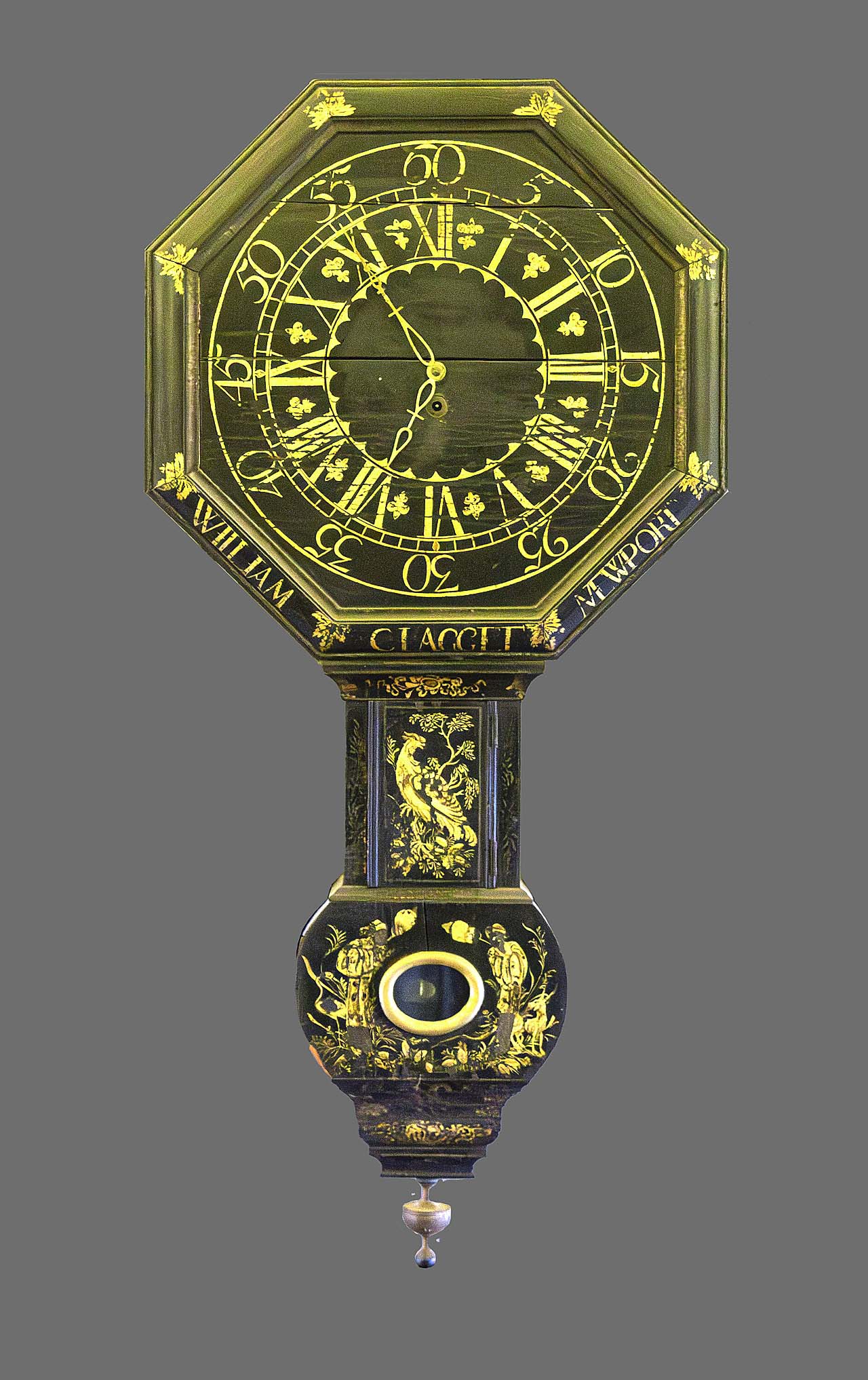
Wall clock by William Claggett (1696-1749), circa 1732, Newport, R.I., pine, brass. Newport Historical Society, 1884.4. Photo: Adrian Flatgaard.
The Newport Historical Society (Rhode Island) emerged as a collecting force soon after its charter in 1854. In 1884, it acquired the port city’s Seventh Day Baptist Meeting House (also known as the Sabbatarian Meeting House) and with it this 1732 wall clock with works by William Claggett. The craftsman was born in England or Wales, immigrated to Boston and in 1716 settled in Newport.
Centennial Vase
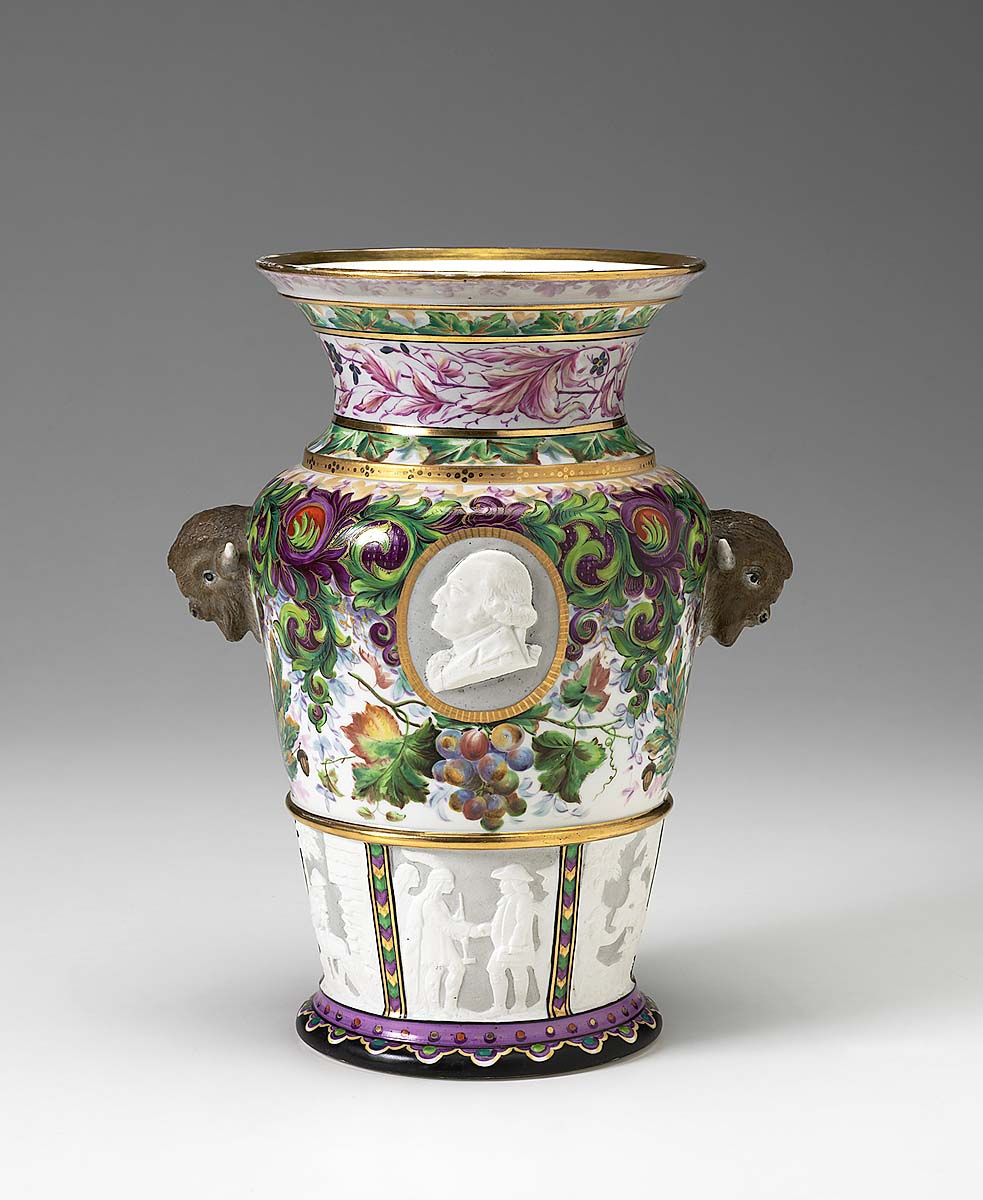
Centennial Vase designed by Karl L. H. Müller (1820-1887), manufactured by Union Porcelain Works (active 1863-circa 1922), Greenpoint (now Brooklyn), N.Y., circa 1876-77, porcelain with bisque and glazed surfaces, partially painted and gilded. Virginia Museum of Fine Arts, Richmond; J. Harwood and Louise B. Cochrane Fund for American Art and partial gift of Robert Hunter and Marshall Goodman, 2012.7. Photo by Travis Fullerton © Virginia Museum of Fine Arts.
The exuberant Centennial Vase, this example from the Virginia Museum of Fine Arts (Richmond), heralds the dramatic growth of the United States in its first 100 years. The design created by Karl L. H. Müller for Union Porcelain Works was first unveiled in monumental scale at the 1876 Centennial International Exhibition. Echoes of the Centennial Vase can be glimpsed in Philadelphia artist Roberto Lugo’s (b 1981) “Digable Underground” of 2021. Also included in Collecting250, the latter boasts portraits of Harriet Taubman and hip-hop artist Erykah Badu.
Eagle Insignia
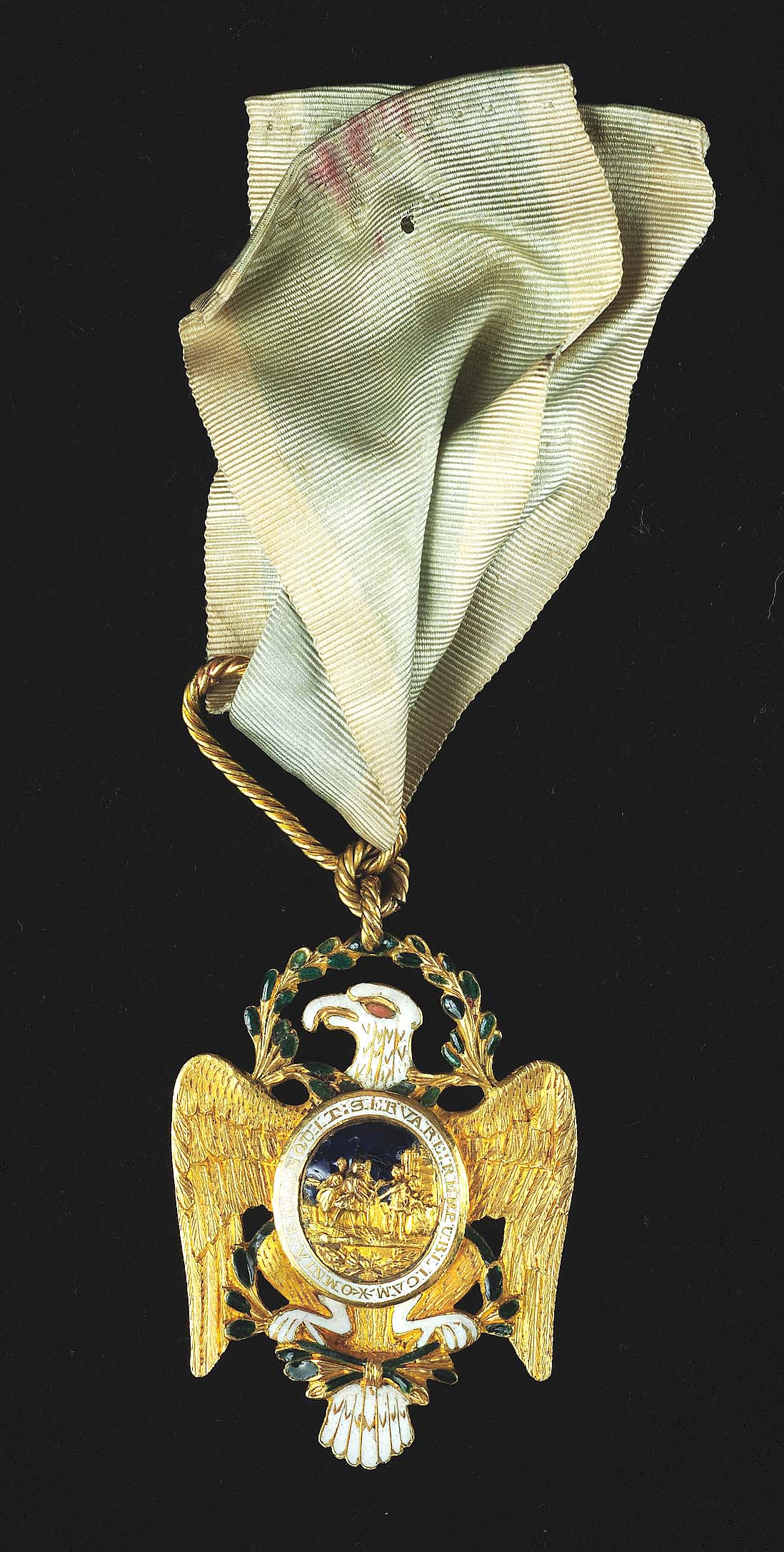
Society of the Cincinnati eagle insignia, designed in 1783 by Pierre-Charles L’Enfant (1754-1825), made by Jeremiah Andrews (d 1817), Philadelphia, 1784-91, gold, enamel, and silk. The Society of the Cincinnati, museum purchase, 2018,M.2018.011.1. Photo: Gregory R. Staley.
Nothing says Americana like the eagle-embellished insignia of enameled gold proclaiming membership in the Society of the Cincinnati, the elite corps of officers who fought alongside George Washington in the American Revolution. From the museum of the Society of the Cincinnati, this medal belonged to Captain Allan McLane (1746-1829), a Delaware officer who purchased it from Jeremiah Andrews, an English-born silversmith practicing in Philadelphia who was the first craftsman in the United States to make the Society’s insignia.
Federal Hall Balustrade
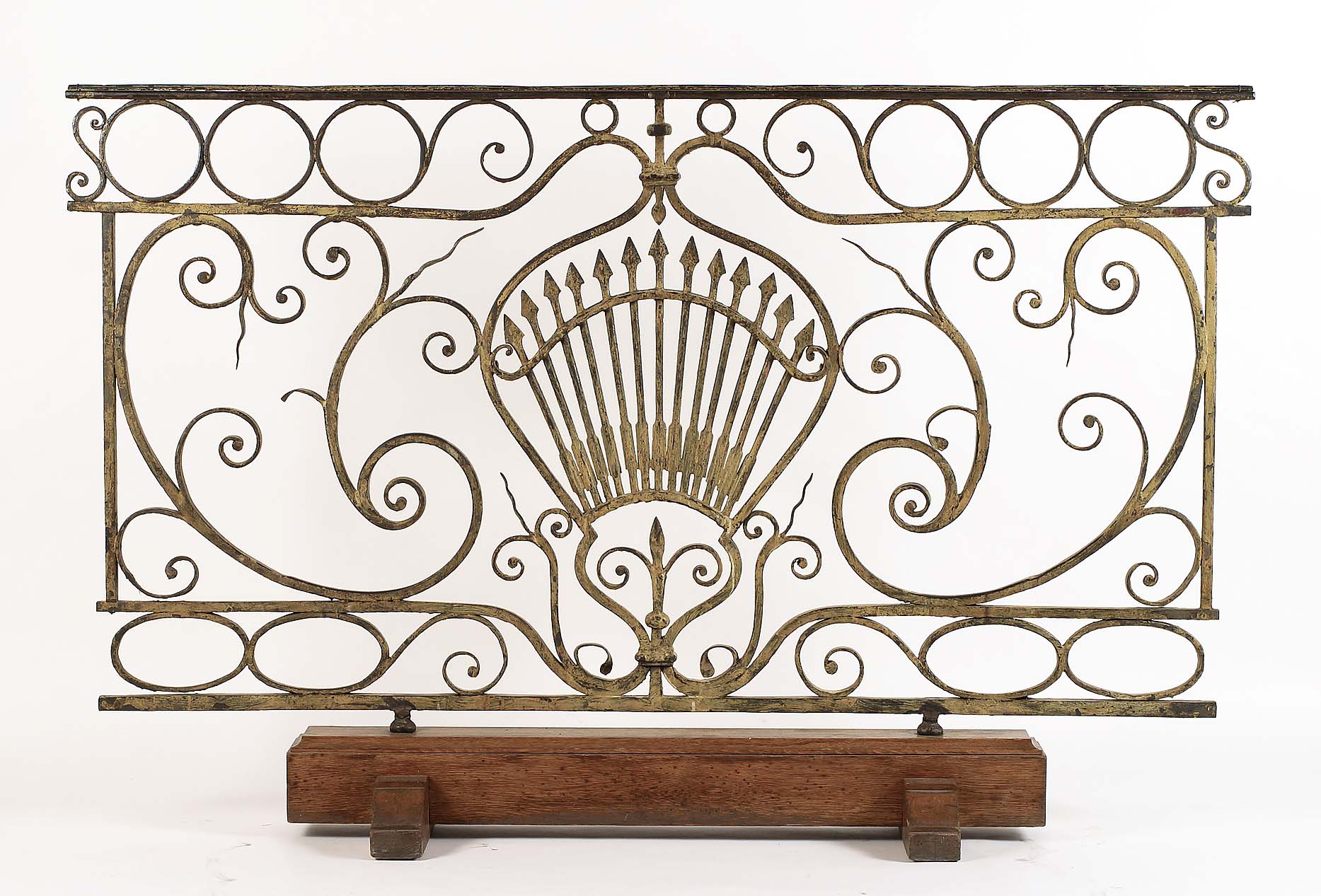
Balustrade section from Federal Hall, New York City, 1788-89, iron, paint. The New York Historical, gift of the Chamber of Commerce of the State of New York, 1884.3. Photo courtesy The New York Historical.
Like the design of the Society of the Cincinnati insignia, this balustrade is associated with Pierre-Charles L’Enfant, the French-born architect hired by New York to refashion what became Federal Hall at Wall and Broad Streets in lower Manhattan. In the collection of The New York Historical since 1884, the architectural salvage was once part of the balcony railing of Federal Hall, where Washington was inaugurated as first President of the United States on April 30, 1789.
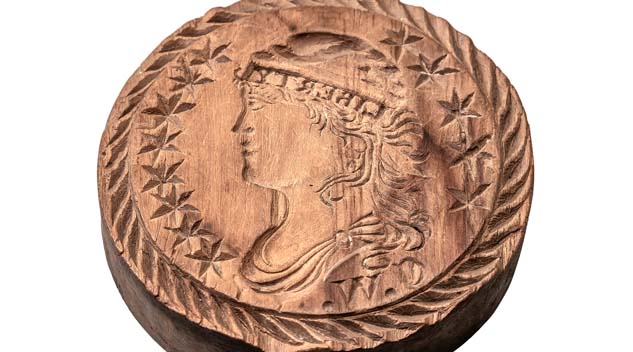
Vogler Cookie Mold
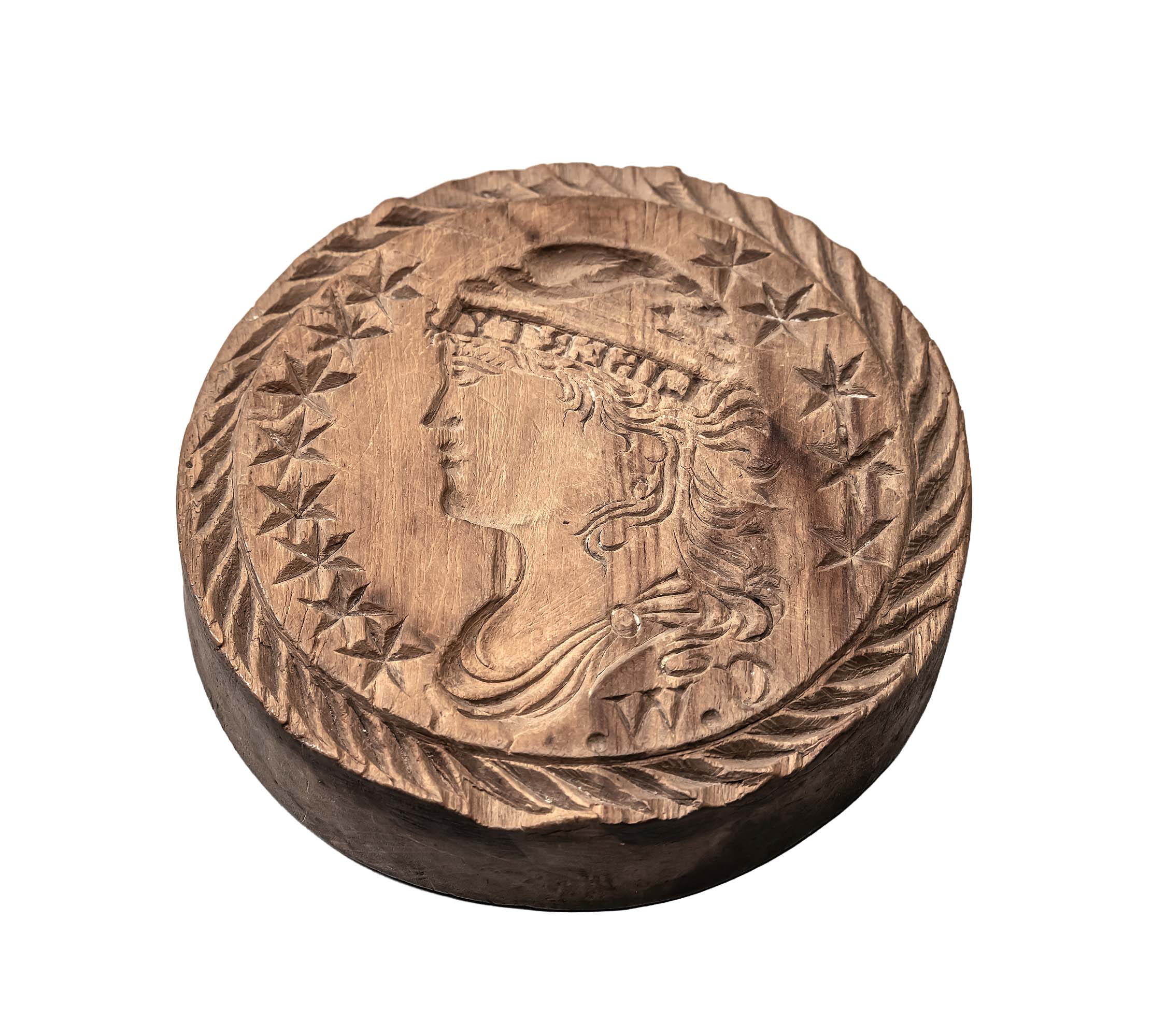
Cookie mold by John Vogler (1783-1881), Salem, N.C., circa 1820, maple. Old Salem Museums & Gardens/ MESDA, gift of Anna Rights, 936.1. Photo courtesy Old Salem Museums & Gardens.
Echoing the design on large-cent coins minted in the United States between 1793-1857, this cookie mold features the Classical bust of Lady Liberty. Made around 1820 in the Moravian community of Salem, N.C., by silversmith John Vogler, the mold bears the carved initials of baker Christian Winkler (1766-1839). Salem’s pacifist Moravians are credited with the first Fourth of July celebration.
Tennessee Desk
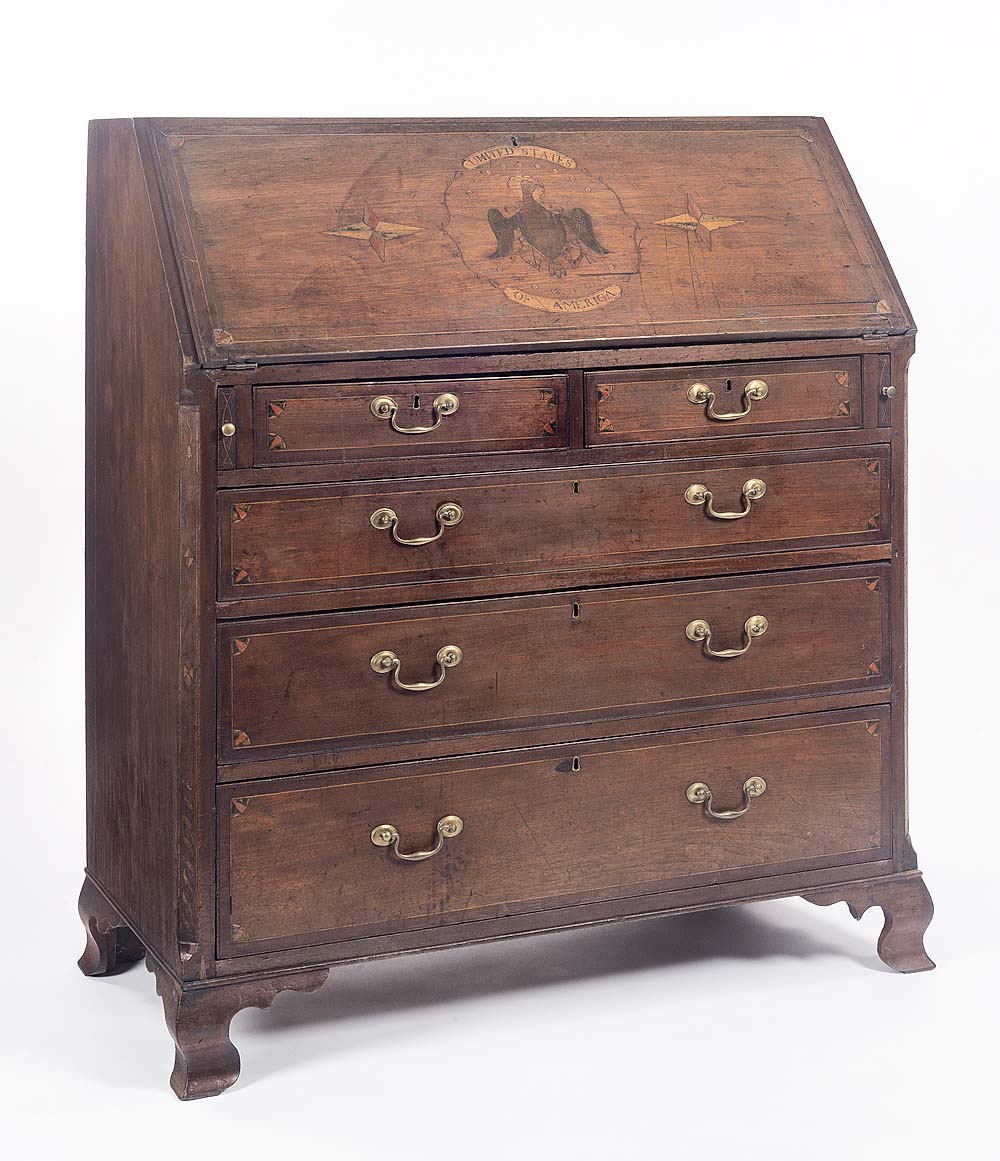
Fall-front desk, attributed to Hugh McAdams (1772-1814), Washington, Tenn., 1808, walnut, tulip poplar, brass. Winterthur Museum, Garden & Library, bequest of Henry Francis du Pont, 1957.1099. Photo courtesy Winterthur Museum, Garden & Library.
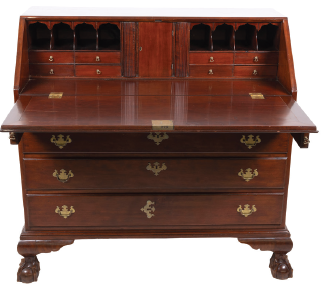
From the collection of Winterthur Museum, a fall-front desk whose lid is inlaid with a spread eagle framed by 17 stars celebrates the 17 states, Tennessee among them, admitted to the Union by 1808. The case piece is attributed to Washington County, Tenn., cabinetmaker Hugh McAdams (1772-1814), who may have been born in Pennsylvania or western North Carolina and by 1800 established a shop on the banks of Big Limestone Creek near Jonesborough, Tenn.
Freedom Quilt
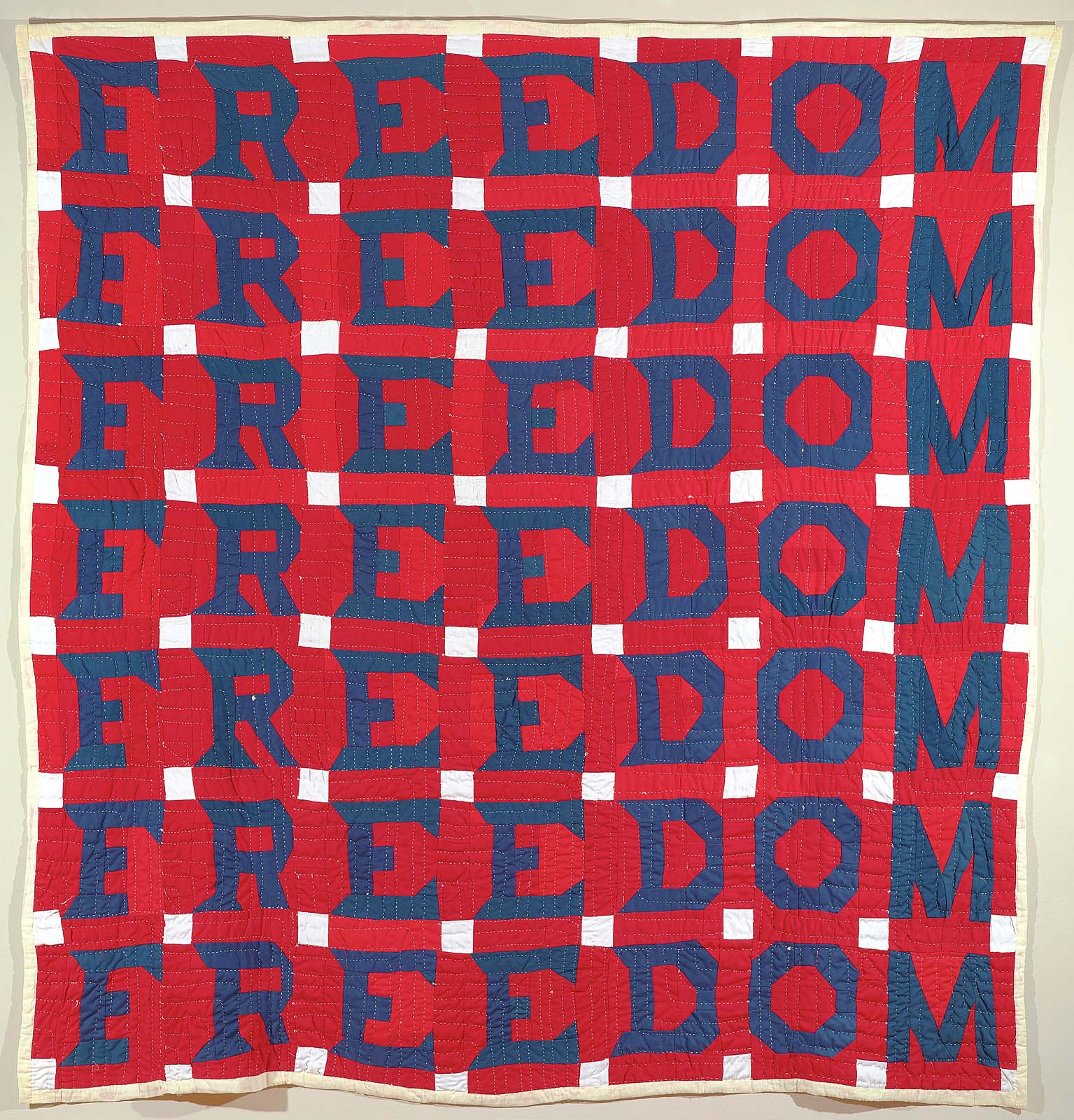
“Freedom” quilt by Jessie Telfair (1913-1986), Parrott, Ga., circa 1975, cotton. High Museum of Art. Gift of Judith Alexander in honor of her mother, Marian Alexander, 1982.298. Photo: High Museum of Art.
Freedom became a rallying cry of the Civil Rights Movement of the 1960s. Georgia artist Jessie Telfair, who sought to register African Americans to vote, made three nearly identical “Freedom” quilts. She completed this one, now at the High Museum of Art (Atlanta), around 1975. For her activism, she was fired from her job as a school-cafeteria worker in Parrott, Ga. The quilt’s repeated letters reverberate like a rallying cry on a field of red, the color of passion and courage.
Heebner Fraktur
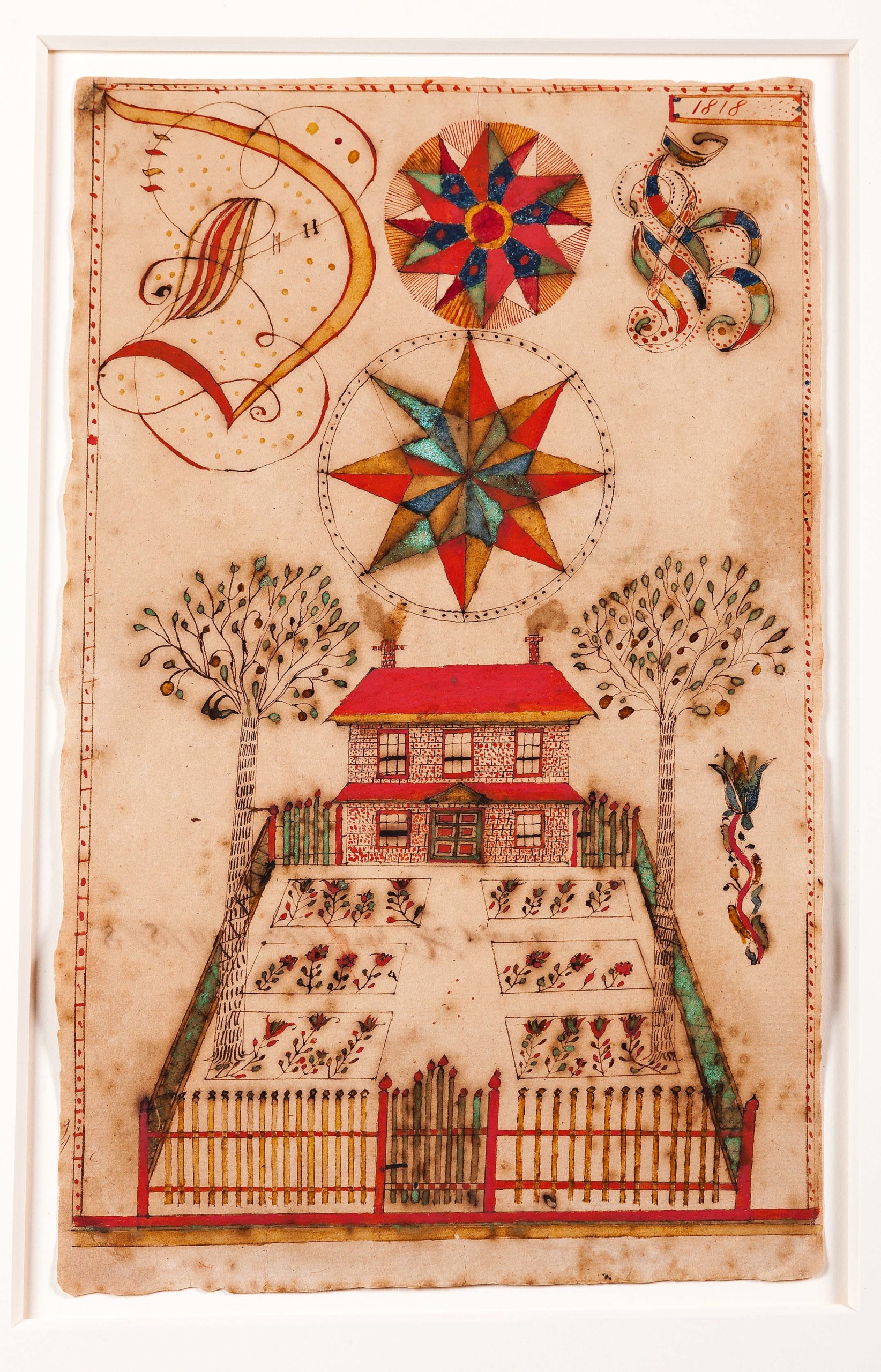
“House with Six-Bed Garden” by Susanna Heebner (1750-1818), Worcester Township, Montgomery County, Penn., 1818, watercolor and ink on laid paper. Schwenkfelder Library & Heritage Center, gift of the estate of Henry H. Heebner, 1920.25.158. Photo: Steve Pestrock.
There could be no more vivid expression of our shared love of home than “House with Six-Bed Garden,” an 1818 watercolor and ink drawing by Susanna Heebner, a rare female maker of fraktur who here depicts a house and garden in styles favored by Eighteenth Century Americans of German descent in southeastern Pennsylvania. From Pennsylvania’s Schwenkfelder Library & Heritage Center (Pennsburg), it joins work by two generations of the Heebner family and schoolmasters who taught the family’s children
Pickle Stand
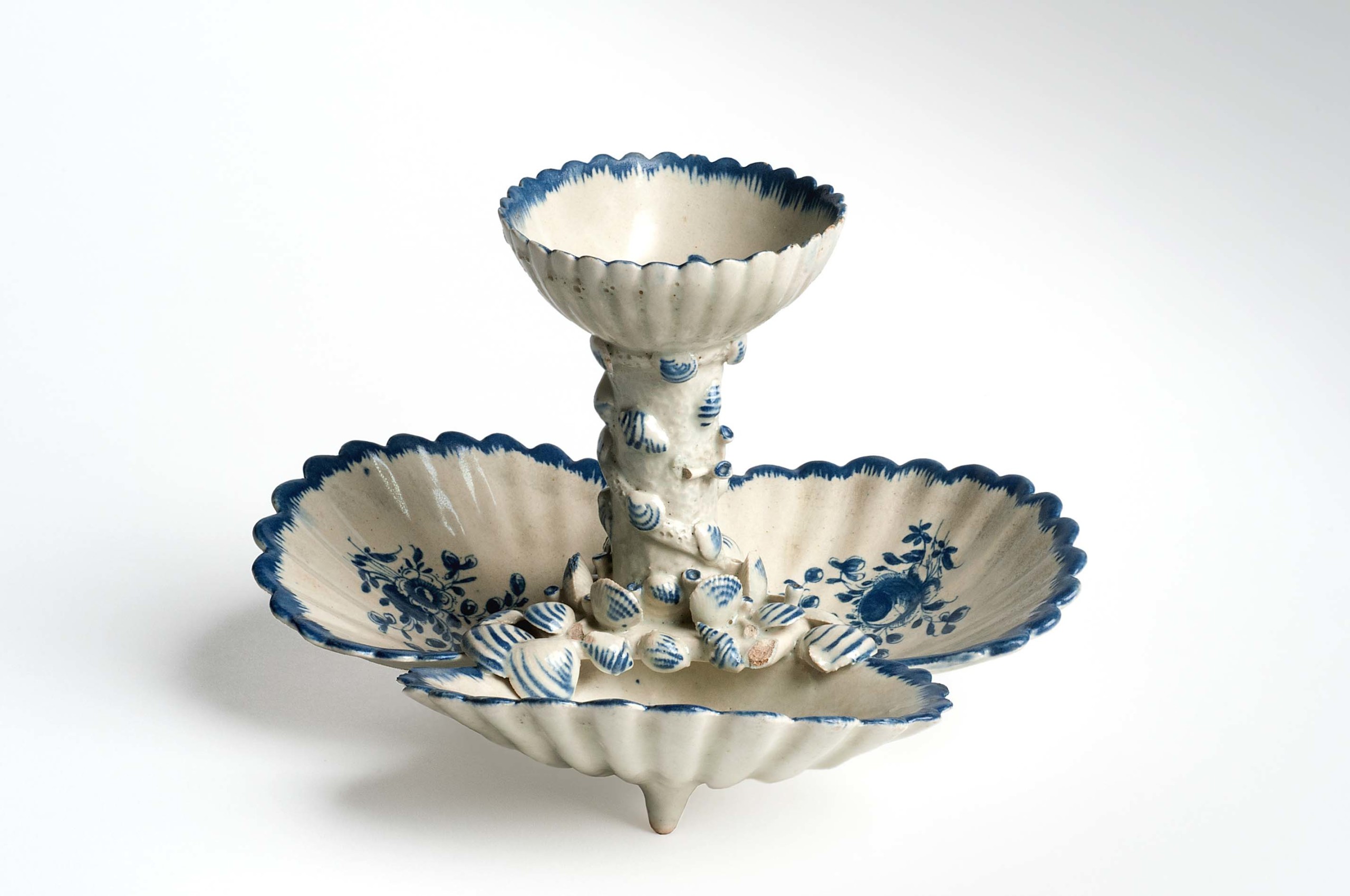
Pickle stand made by the American China Manufactory, proprietors Gousse Bonnin and George Anthony Morris, Philadelphia, 1771, soft paste porcelain, underglaze blue decoration, lead glaze. Philadelphia Museum of Art, gift of a seventh-generation Philadelphian, 2014-166-1. Photo: Philadelphia Museum of Art.
A pickle stand fashioned as a wedding gift in 1771 at Gousse Bonnin and George Anthony Morris’s American China Manufactory is among the first examples of American-made porcelain. In a curatorial tour-de-force, Alexandra Alevizatos Kirtley assembled all known examples of Bonnin and Morris porcelain for her landmark 2008 exhibition on the subject at the Philadelphia Museum of Art. Her accompanying catalogue raisonné appeared in a themed volume of Ceramics in America 2007, timed to coincide with the show.
New Bremen Tumbler
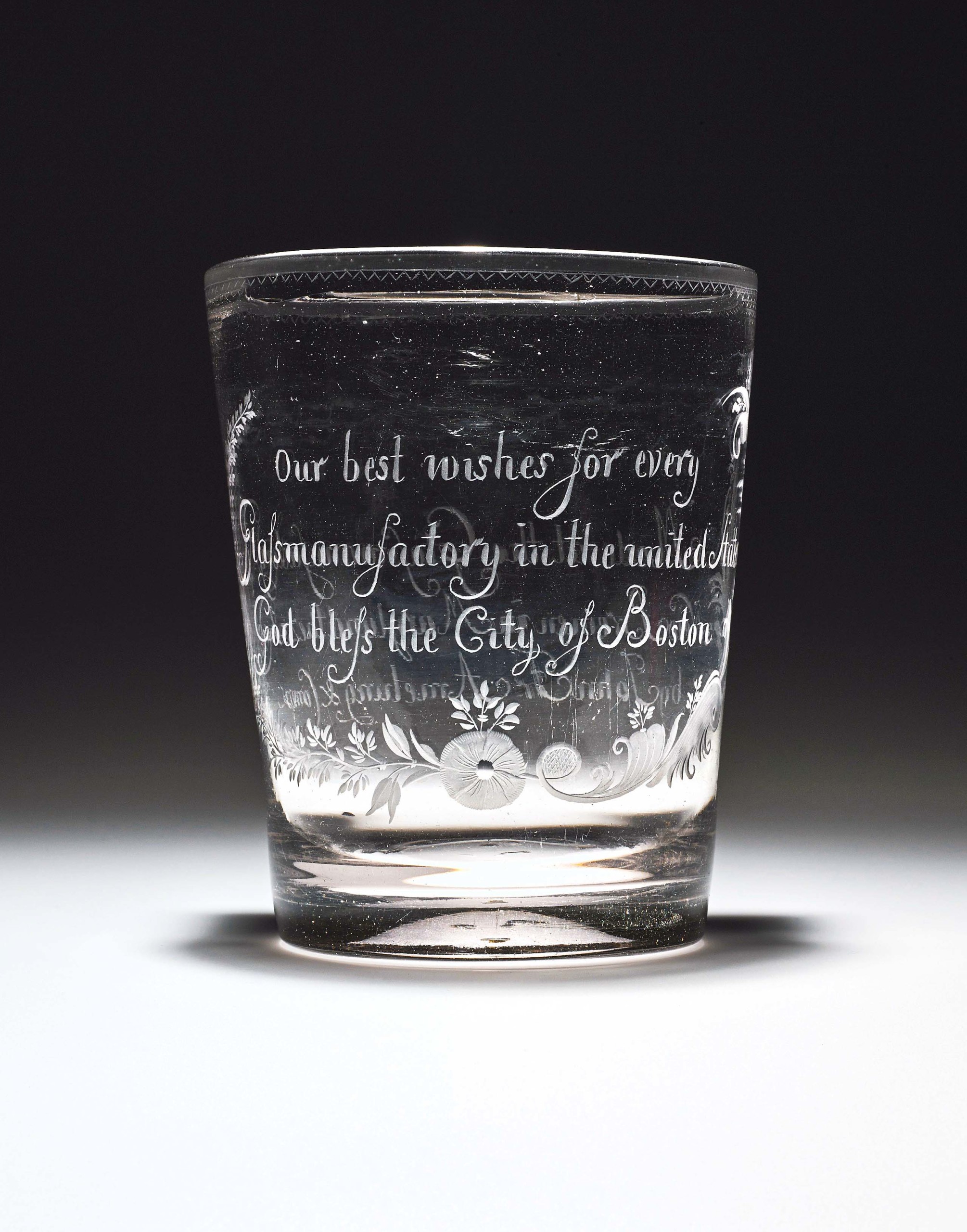
Tumbler, New Bremen Glass Manufactory (1784-1795), Frederick County, Md., 1789, blown and engraved potash-lime glass. Yale University Art Gallery, Mabel Brady Garvan Collection, 1935.258. Photo: Yale University Art Gallery.
In his comprehensive 2018 publication American Glass: The Collections at Yale and in a related exhibition in 2019, curator John Stuart Gordon dusted off a prized relic of the Yale University Art Gallery (New Haven, Conn.) collection: a glass tumbler made in Frederick, Md., in 1789 at the New Bremen Glass Manufactory. Founder John Frederick Amelung (1741-1798) presented the vessel, inscribed with his company’s blessings, to the Boston Crown Glass Company. Gordon writes, “The intertwined histories of these two firms evince the optimism and trials of American glass manufacturers.”
Tipi Bag
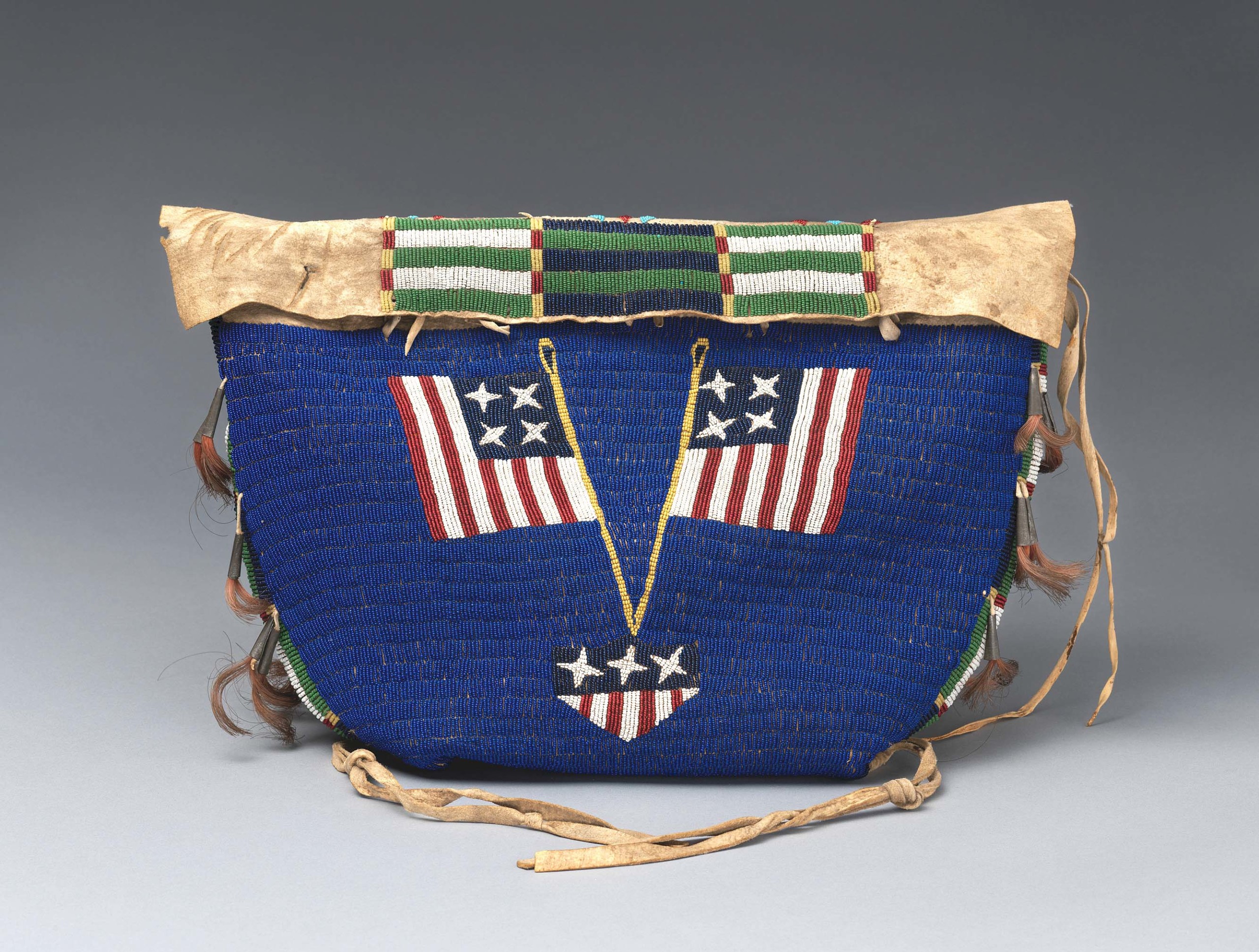
Tipi bag, unknown Lakota/Teton Sioux maker, possibly made in North Dakota or South Dakota, circa 1890, tanned leather, glass beads, metal cones, horsehair and dye. The Metropolitan Museum of Art, Charles and Valerie Diker Collection of Native American Art, gift of Charles and Valerie Diker, 2019.456.8. Photo courtesy the Metropolitan Museum of Art.
Institutions over the past two decades have sought to address gaps in their collections and interpretative approaches. In 2018, the Metropolitan Museum of Art (New York City) debuted “Art of Native America: The Charles and Valerie Diker Collection,” its first dedicated presentation of Indigenous American art within its American Wing. Decorated with stars and stripes, a beaded bag presented to the Met by the Dikers dates to around 1890, after the United States government outlawed the Lakota’s annual Sundance, imposing July Fourth celebrations in its place.
David Drake Jar

Storage jar by David Drake (circa 1801-1870s), Edgefield District, S.C., 1859, akaline-glazed stoneware. National Gallery of Art, anonymous gift of funds, 2023.2.1. Photo courtesy National Gallery of Art, Washington, DC.
Collecting250 includes three vessels made by David Drake, the star of the landmark 2022-24 traveling exhibition “Hear Me Now: The Black Potters of Old Edgefield, South Carolina.” From the National Gallery of Art in Washington, DC, comes a large, alkaline-glazed stoneware storage jar signed, dated and inscribed by Drake, who worked at a time when many state laws criminalized teaching enslaved people to read and write. The market reached spectacular new heights in 2021 when Crocker Farm auctioned a Drake jar for $1.56 million, a testament to the artist’s singular accomplishment and a milestone in collecting history.
Explore the complete interactive collection and learn more at www.collecting250.com.