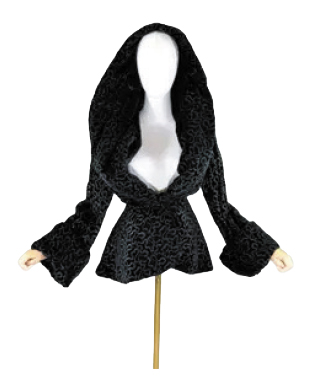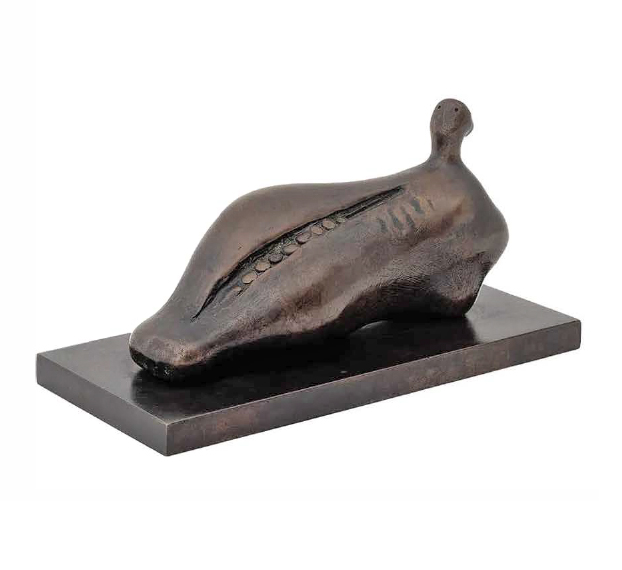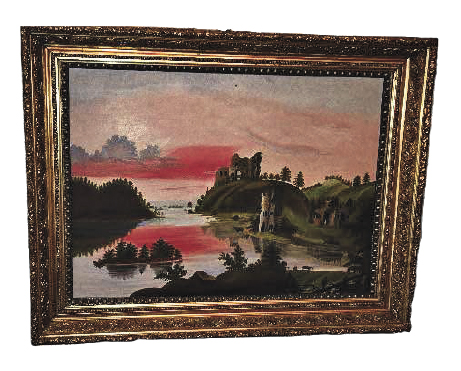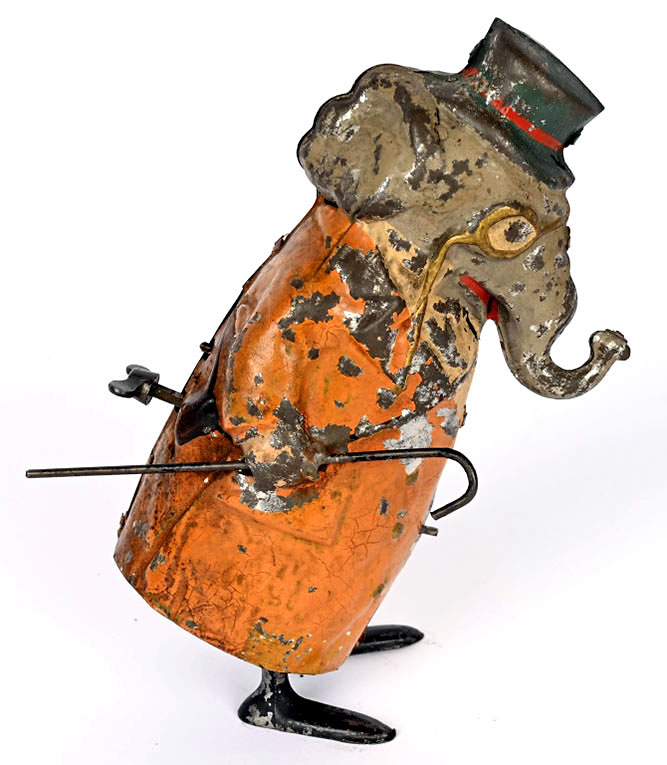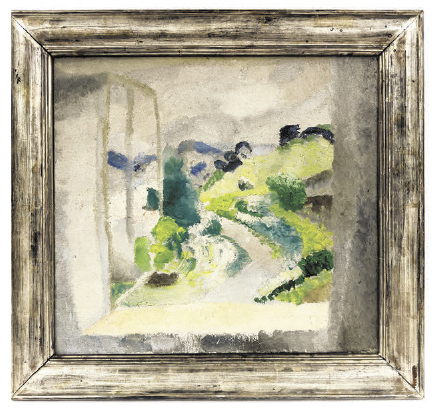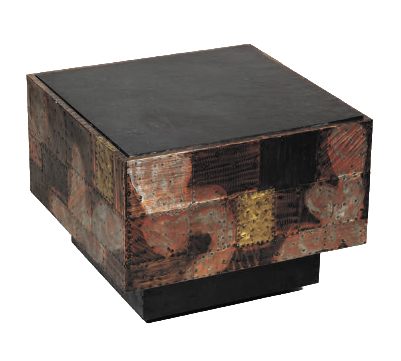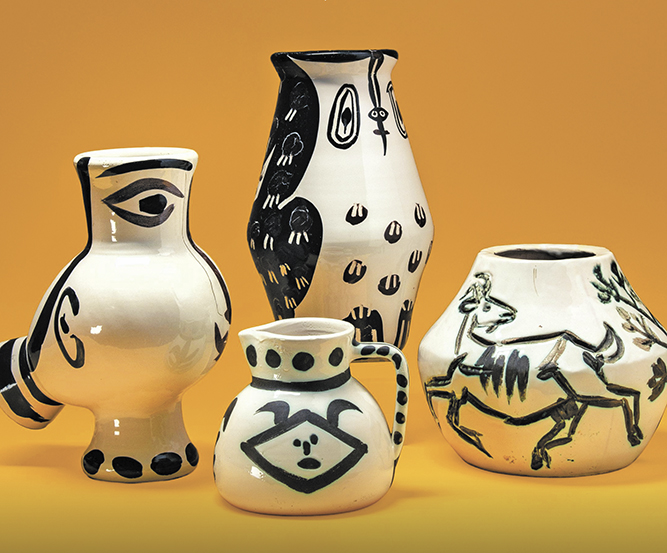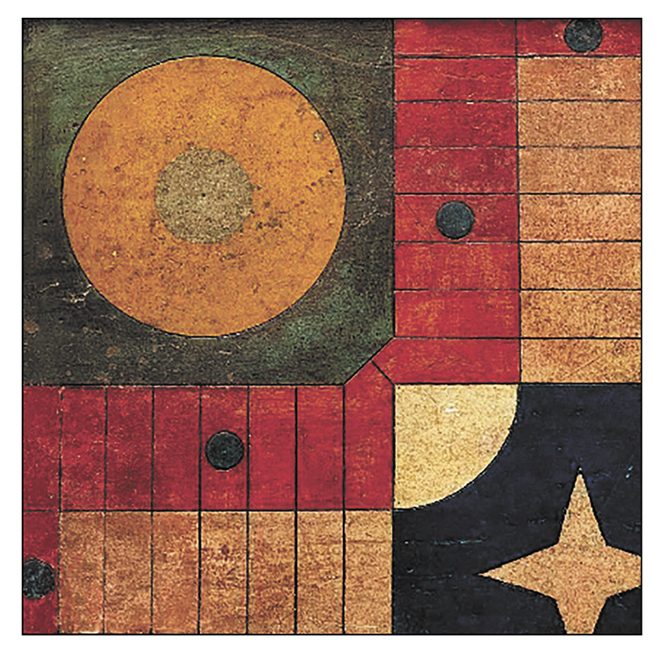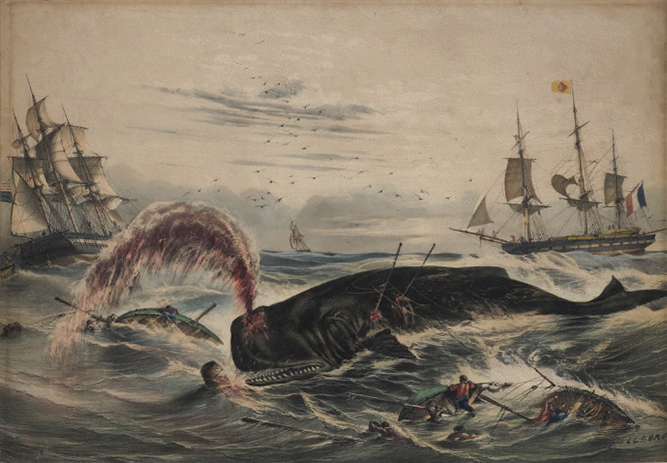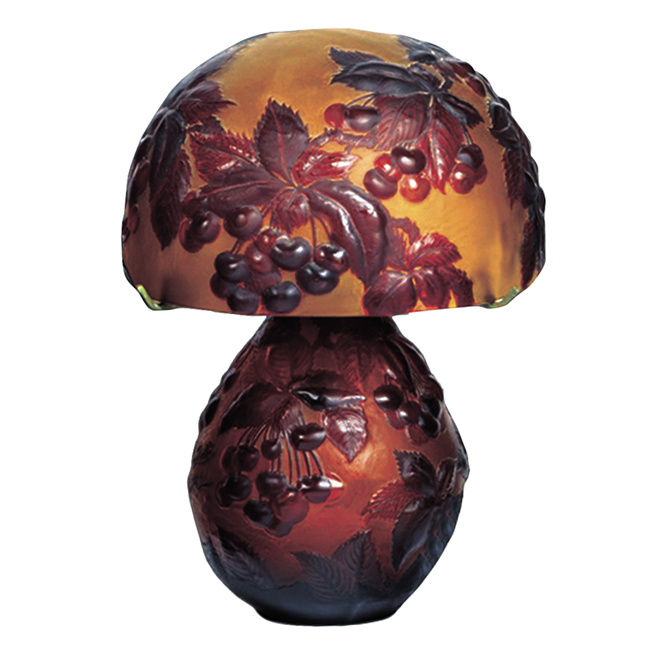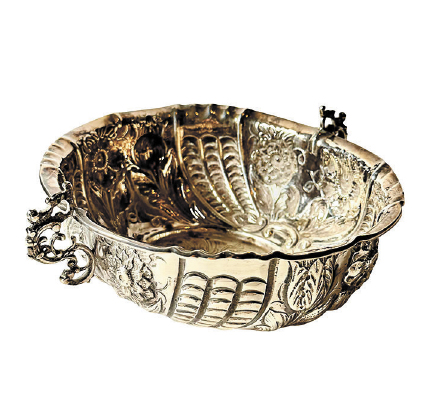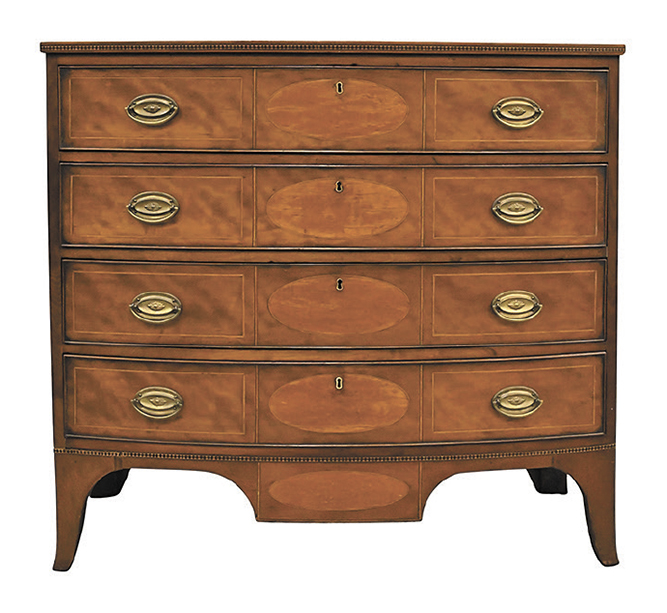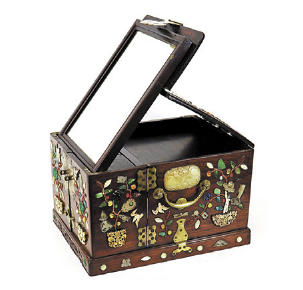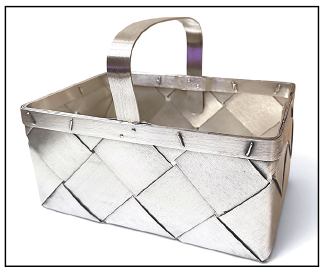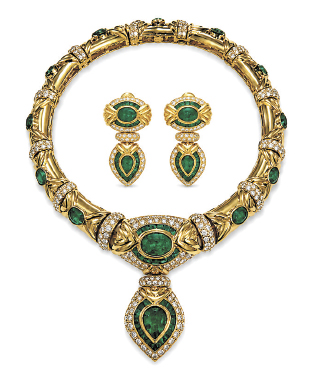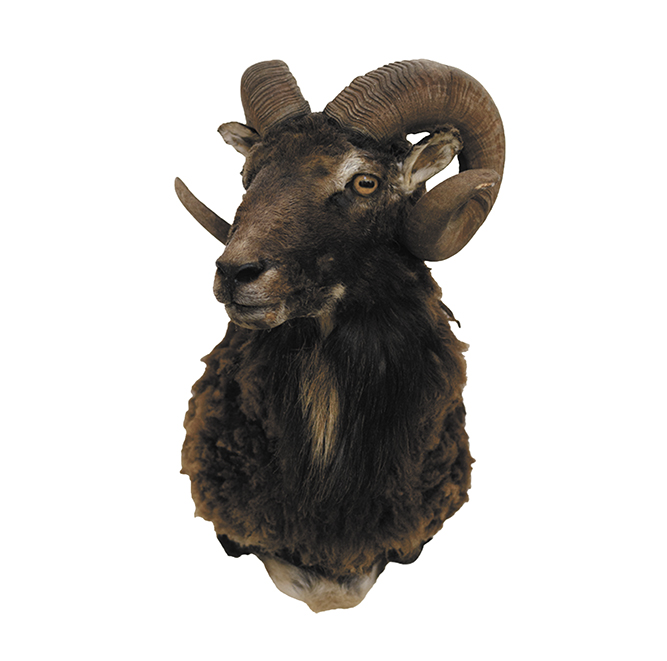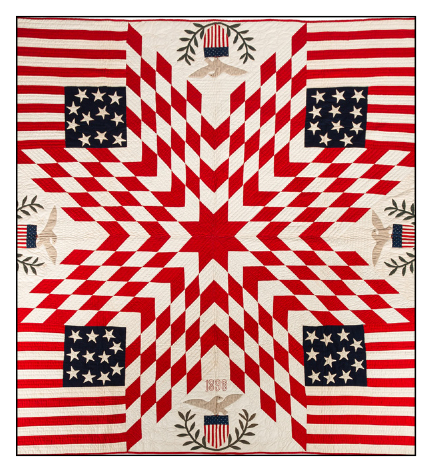
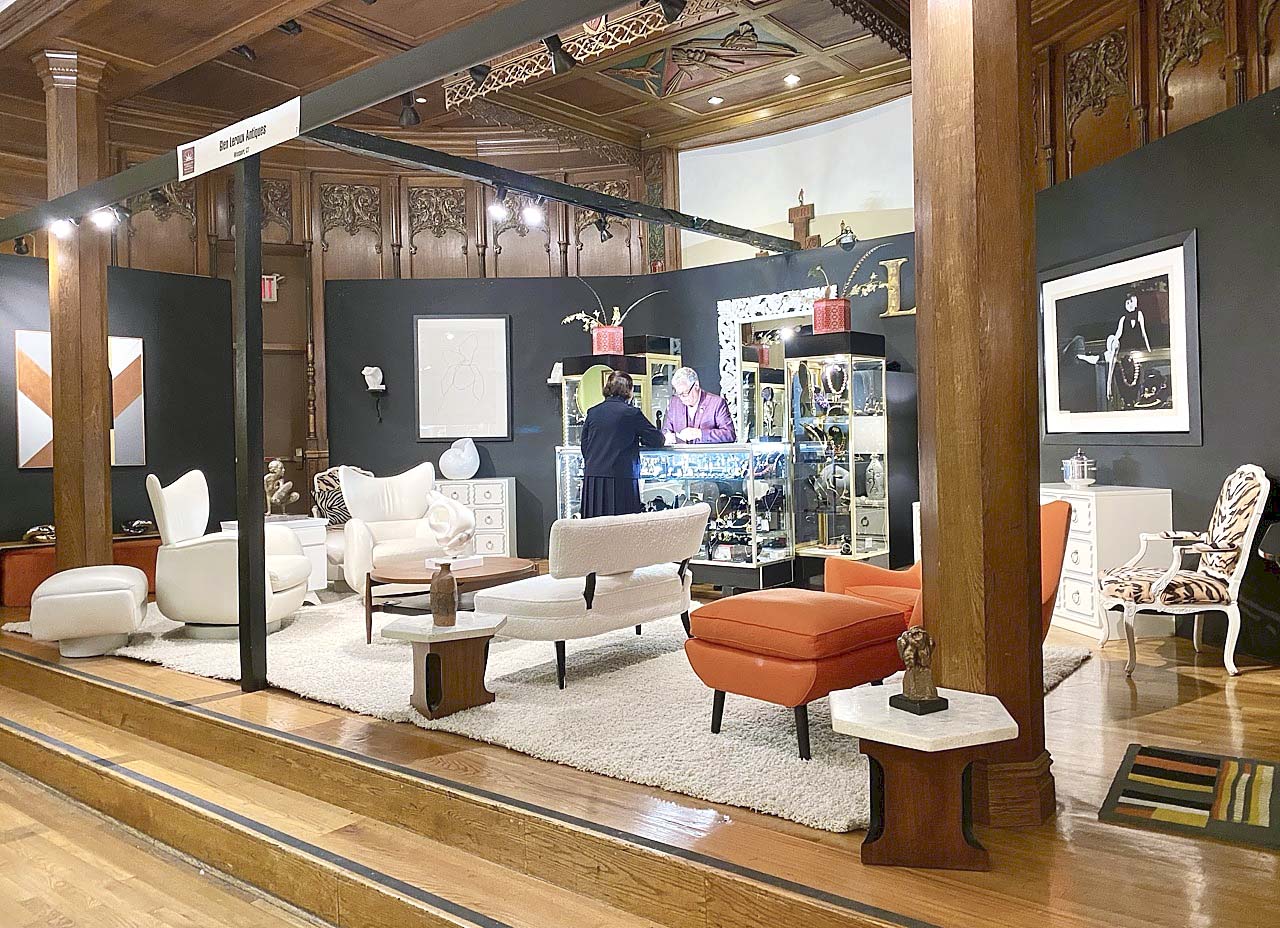
Captured before the show’s opening, Glen Leroux Antiques created an expansive Modernist display in stylish contrast with Wallace Hall’s Neogothic interior. Greenwich, Conn.
Review & Onsite Photos by Z.G. Burnett
NEW YORK CITY — Weathering the threat of an oncoming snowstorm, Antiques, Art & Design at Wallace Hall ran from January 23 to 25. More than 25 dealers brought their best for the New York Antiques Week show. The Antiques Council brought in top dealers from a broad number of categories whose merchandise was of exceptional quality. Though the event was cut short due to a winter storm warning on the last day, many dedicated customers arrived to shop — some even on cross-country skis.
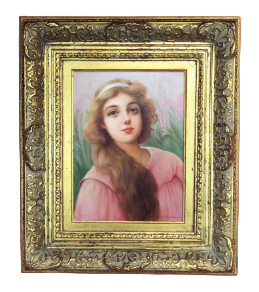
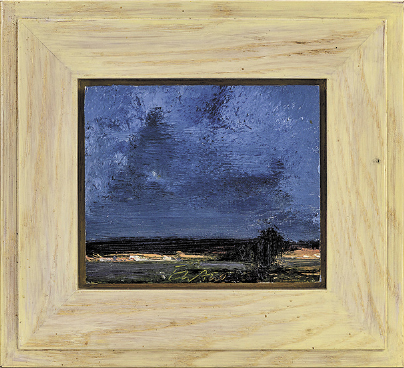
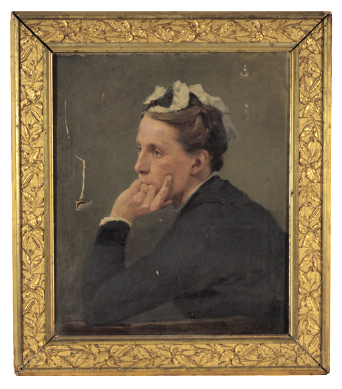
Entering the show, visitors were welcomed by a small gilt frame containing an even smaller portrait of an elegant woman in the booth of Antique Fine French Arts (Marseille, France, and New York City). Upon closer inspection, her face was the only precise rendering in a swirl of deliberately visible brush strokes. It was painted by Louise Abbéma (1853-1927). The daughter of a viscount and great-great-granddaughter of Louis XV, Abbéma’s social position afforded her the means to train with many of the era’s leading artists. Her exhibitions at the Salon des Artistes Français from 1874 to 1926 earned numerous awards as well as private and public commissions. At age 18, Abbéma painted a portrait of actress Sarah Bernhardt that began a creative and romantic relationship that lasted between the two women until Bernhardt’s death in 1923.
Although overshadowed by her male peers in Twentieth Century scholarship, Abbéma’s subjects were representative of women’s changing roles in French society. Her oeuvre has been reevaluated in recent years for “academic style, infused with Impressionist sensibility” and “light and rapid brushstrokes, [that created] delicate yet vibrant works,” as detailed by the National Museum of Women in the Arts.

“Unspoken Agreement” is one in a series of paintings by Amanda Greive that address the changing relationship between children and their parents as both parties age. Rehs Contemporary Galleries, New York City.
A few exhibition spaces away, Rehs Contemporary Galleries featured a spiritual successor of women artists like Abbéma. “Unspoken Agreement” by Amanda Greive (b 1978) examined the ever-changing relationship between children and their parents as time passes. “Oftentimes, there exists this unspoken agreement between parents and their children that, when the time comes, the children will, in some capacity, aid their parents as they age,” Greive wrote. “In the painting, my daughter is posing with a bunch of crows, most of which either show interest in what she’s doing or are vying for her attention. One crow begins to pick up a ribbon that is connected to the girl, trying to forge a connection between the two. Another presents a shiny pink sphere that also serves to show the viewer an image of me, the painter, as if to say that the experience is being both painted and lived in unison. She’s only caring for one, though her attention could be diverted to any of the other crows around her.” Though social norms have changed since Abbéma’s lifetime, with this painting Greive illustrates a universal experience.
Decorative art represented the majority of dealers’ wares, such as the bright collection of figural porcelain and ceramics from Earle D. Vandekar of Knightsbridge (Downingtown, Penn.). Customers were welcomed by an “exceptionally rare” Staffordshire pearlware figure of Venus that stood as though “rising from the sea” at 24¼ inches tall. Created circa 1810, there is only one other documented example in a private collection, showing less decoration and literally pales in comparison to this Venus’ manganese purple gown with bright green trim in high Regency style. Accompanying the goddess was a pair of trompe l’oeil duck form tureens of North German or Baltic origin. Their colorful plumage matched their neighbor’s dress, and the ducks were in good condition with no repairs or damage.
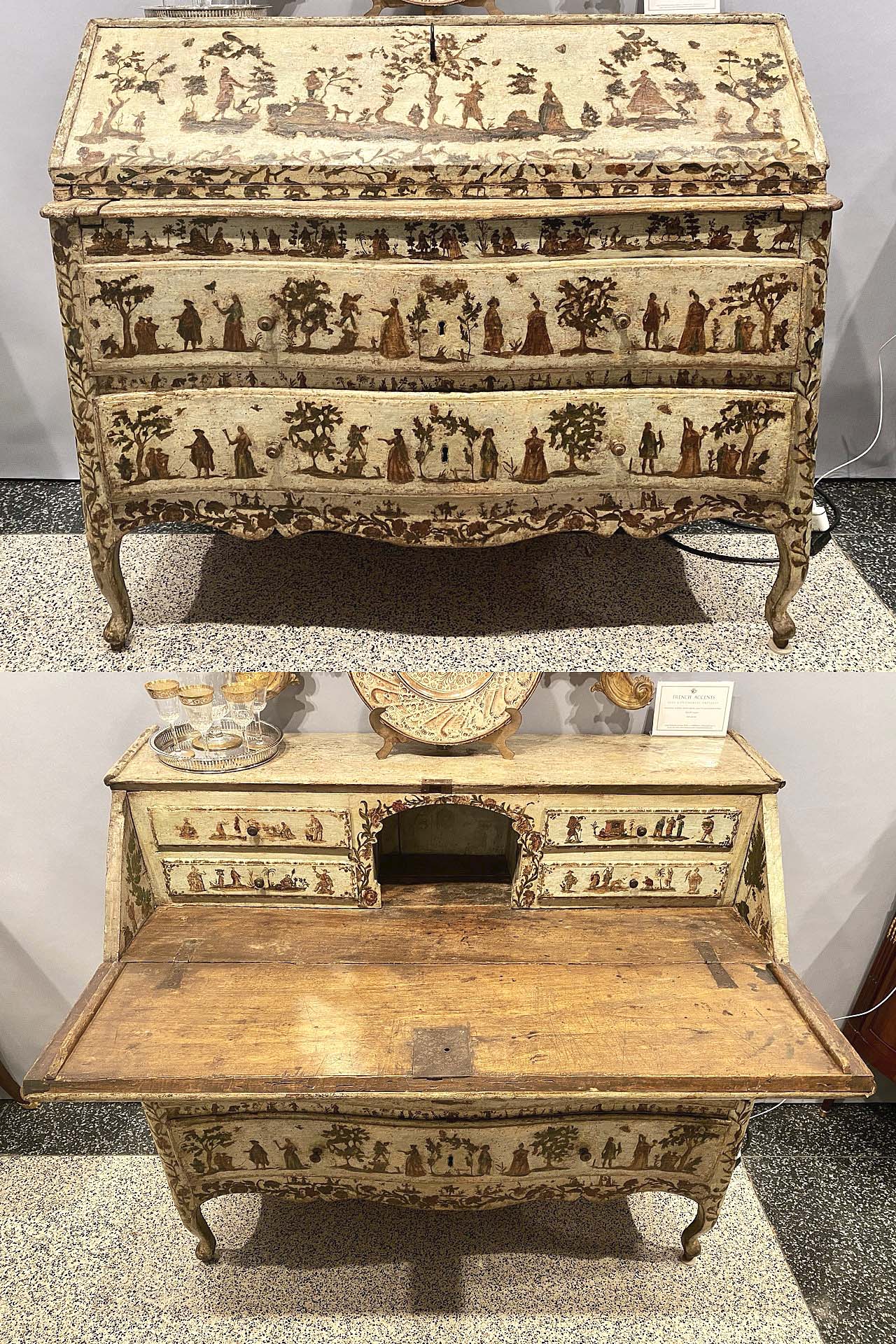
From French Accents Fine Continental Antiques, this mid Eighteenth Century Venetian commode scriban was decorated with the Rococo lacca povera technique and was in excellent condition. Baltimore.
Another showstopper was the centerpiece of French Accents Fine Continental Antiques, a large writing desk covered inside and out with lacca povera or lacca contrafatta decoration. With more than two centuries of wear, the exterior paper cut-outs and lacquer seal were in an extraordinary state of preservation. The desk itself was most likely made in Venice but came from a New York collection. “You just can’t touch these in Venice,” said co-owner Daniel Garfink, who indicated how its interior was less worn but still consistent with age. Made in the height of Rococo excess, the desk measured 50 by 43 inches and 22¾ inches deep, demanding its rightful spot as the jewel of its next home.
Two pictorial Persian rugs from the Nineteenth Century were prominently displayed by the Nemati Collection, one representing a time-honored motif and another still being researched. The first was a Kerman rug showing Nader Shah Afshar (r 1736-47), who deposed the Safavid royal line and founded the Afsharid dynasty. Described by some historians as “the second Alexander the Great,” Nader Shah’s vast empire encompassed “all or part of modern-day Afghanistan, Armenia, Azerbaijan, Bahrain, Georgia, India, Iran, Iraq, Turkey, Turkmenistan, Oman, Pakistan, Uzbekistan, the North Caucuses and the Persian gulf.” In this rug, Nader Shah was depicted wearing the Afshari crown while sitting on India’s Peacock Throne that was taken during his conquest of the Ottoman Turks, surrounded by courtiers. His battles were commemorated in the rug’s border, framed by floriate designs. The second, an Isphahan rug, was more of a mystery with its many portraits and possibly pre-Islamic symbolism. Nemati noted that extensive research on the carpet is currently being conducted and will be published when complete.
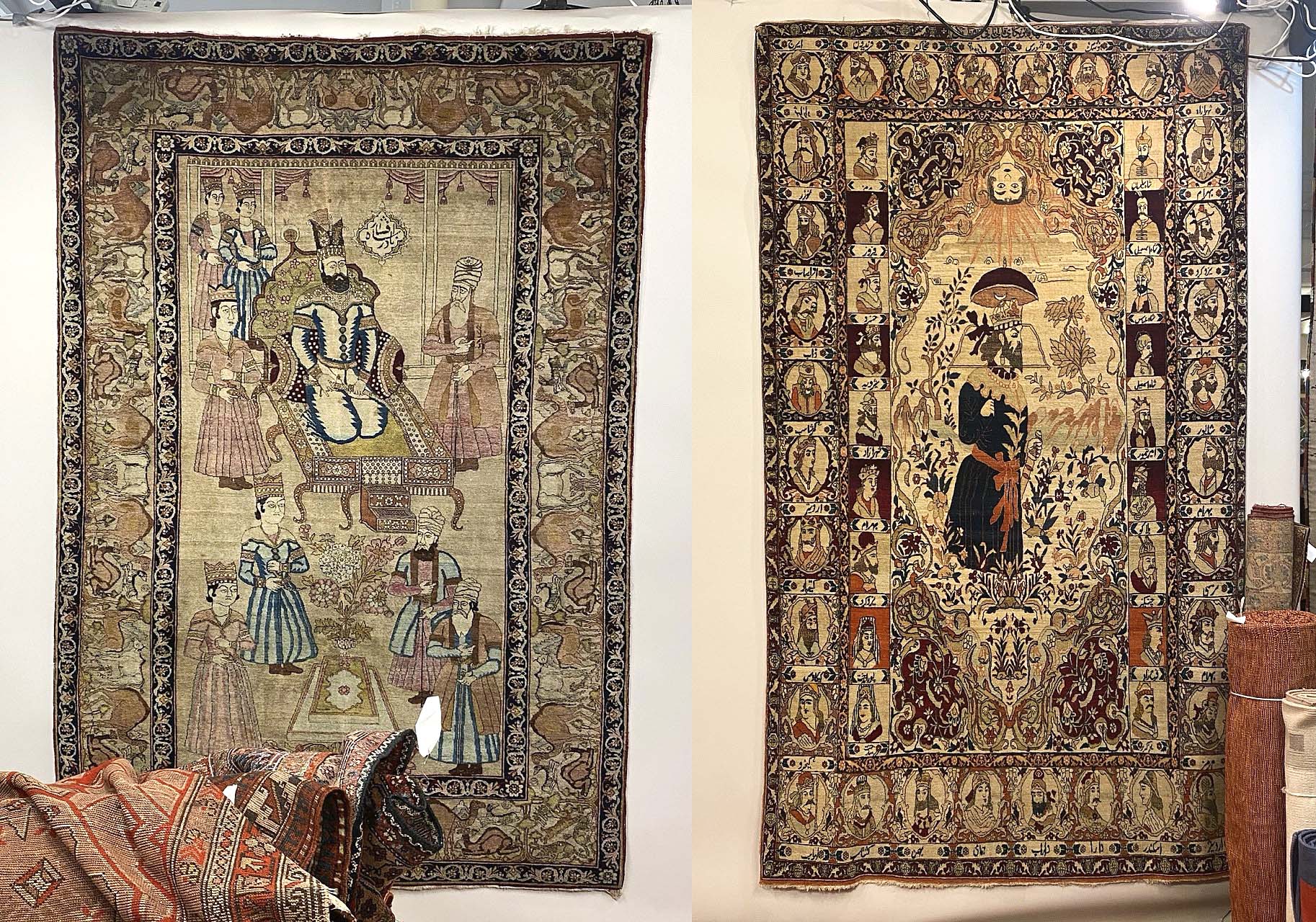
Two Persian Nineteenth Century pictorial rugs, two vibrant stories, one mystery. Nemati Collection, New York City.
Another unexpected piece of textile art hung in the booth of Lotus Gallery: a “universal coat” by American tapestry artist and historic textile dealer Jon Eric Riis (b 1945). One of Riis’ main forms, the universal coat is inspired by his studies of garments from pre-Columbian Peru, Imperial China and Russian ecclesiastical vestments. All three are apparent in the 2008 example that was woven from gold and pink metallic thread, and its fragility belied echoes of Indian armor made from pangolin scales. The luminous “feathers” were not applied or stitched on but part of the main body within its warp and weft. Riis often adds sociopolitical symbolism to his tapestries and coat linings, yet this work of art seems to have been created solely for glowing admiration.
Antiques, Art & Design at Wallace Hall will return next January, date to be announced. Formore information, www.newyorkantiquesartdesign.com, www.antiquescouncil.com or 330-606-8226.