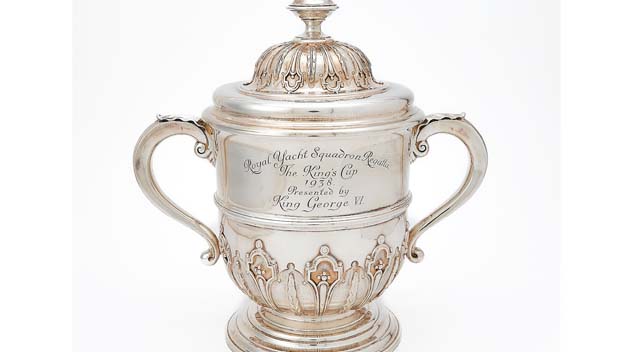
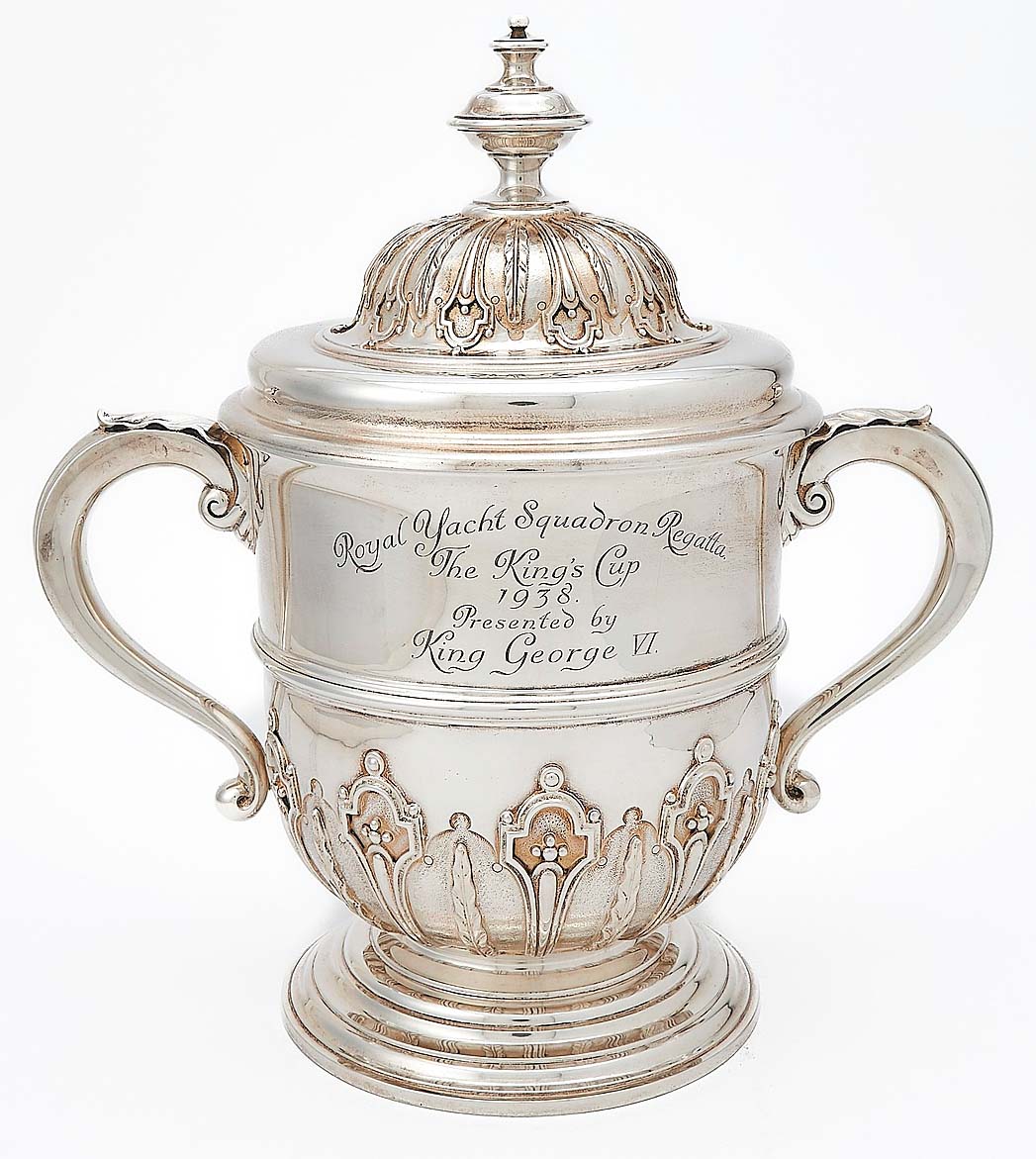
Selling during the silver session and earning the highest price overall was this sterling silver yachting trophy made by Heming & Company, London, in 1937, and presented to Trivia by King George VI as The King’s Cup at the Royal Yacht Squadron Regatta of 1938; it sailed well beyond estimates, achieving $44,800 ($5/7,000).
Review by Carly Timpson
NEW YORK CITY — Doyle Auctions conducted a two-day series featuring Old Master & Nineteenth Century Paintings, Drawings & Prints; English & Continental Silver; and English & Continental Furniture & Decorative Arts between January 28-29. In total, all three sessions offered 550 lots and saw a sell-through rate of 90 percent. There was a strong international following, with more than 800 registered bidders participating, including those from the UK, Denmark, France, Paraguay, China and India, among other locations. According to Doyle’s marketing coordinator Theo Thomine Desmazures, most of the top lots were won by bidders in the US, UK and France. He shared, “Our Continental auctions are always a great collection to see and are very appreciated by our clients and collectors. Especially the January one as the Winter Show happens at the same time and brings new collectors to our doors.”
Old Master & 19th Century Paintings, Drawings & Prints
The first session on January 28 was Old Master & Nineteenth Century Paintings, Drawings & Prints. The auction presented works spanning the Sixteenth Century through the Nineteenth Century and included portraits, still lifes and landscapes, along with religious, historical and mythological subjects.
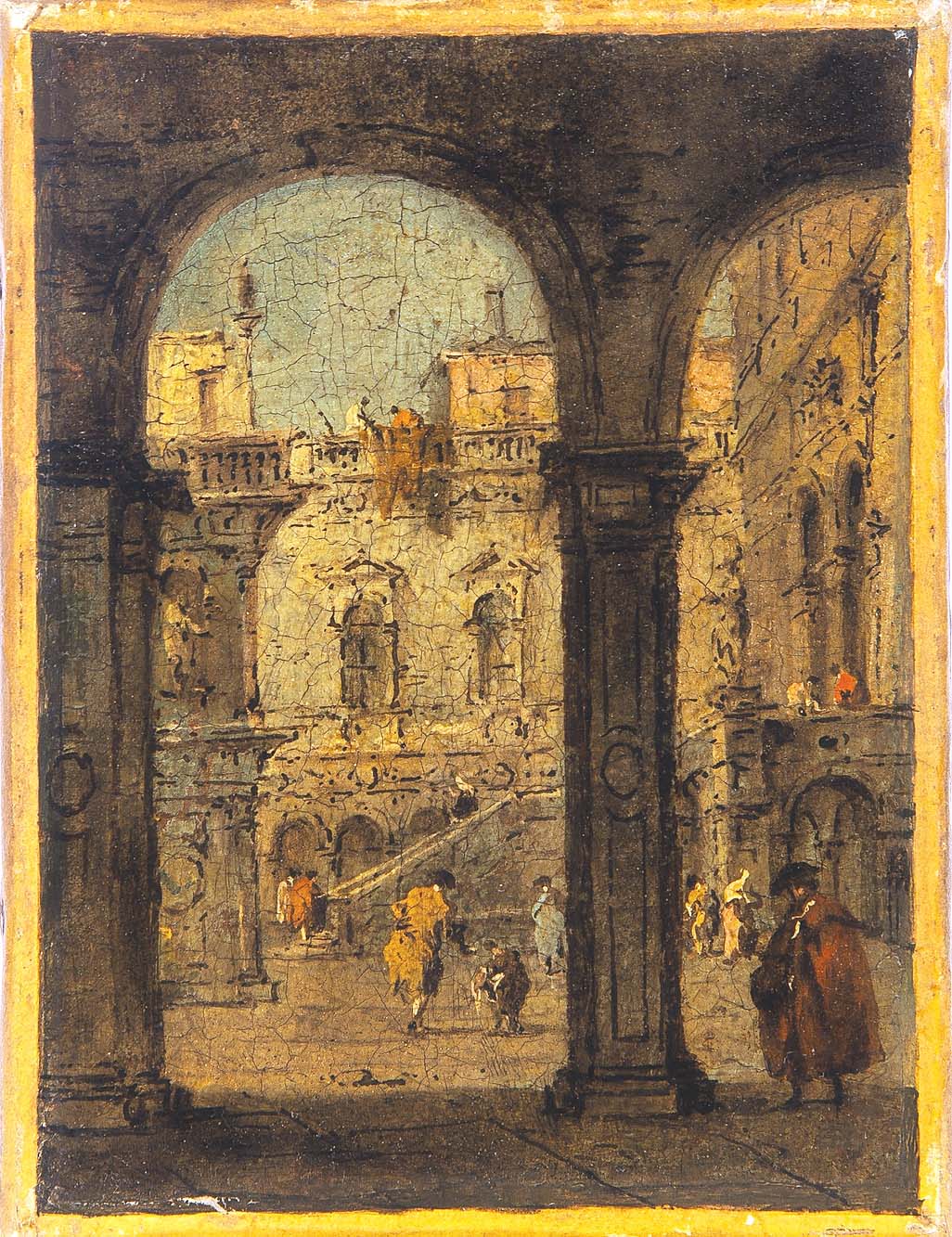
The first session was led by this miniature architectural view by Giacomo Guardi (Italian, 1764-1835), “Courtyard Interior, Venice,” an oil on canvas measuring 5⅛ by 3-15-16 inches; it achieved $14,080 ($700-$1,000).
According to Elaine Banks Stainton, senior specialist, paintings & drawings, “The selection of Old Master and Nineteenth Century paintings and drawings was highlighted by a charming miniature Venetian city view by Giacomo Guardi, a smaller version of a painting by the artist’s famous father, Francesco Guardi. Estimated at $700-$1,000, it was hotly competed for, finally selling for $14,080, a surprisingly strong price for a miniature work.”
Stainton described the session’s second-highest result as “Another unusual offering.” This was, as she identified, an “imaginary ‘portrait’ of Julius Caesar on horseback” attributed to Antonio Tempesta. Closely related to Tempesta’s 1594 etching of the same subject, this painting begged the questions “Was it Tempesta’s model for the etching? Or was this large and imposing painting based on the print?” Of monumental size — 94¼ by 74¼ inches framed — the painting had provenance to a private collection in South Africa and realized $11,520 ($10/15,000).
In the Old Master prints category, a set of four engravings by Basilius Besler made its mark. Bidding took the set to $10,240, well past its $2,500 high estimate and enough to lead the category. Each of the four hand-colored images depicted botanical species from the 1613 Hortus Eystettensis (The Garden of Eichstätt), “a landmark botanical masterpiece, featuring hundreds of finely detailed engravings that document the extensive gardens of Prince-Bishop Johann Konrad von Gemmingen in Bavaria,” according to Doyle’s post-sale release.
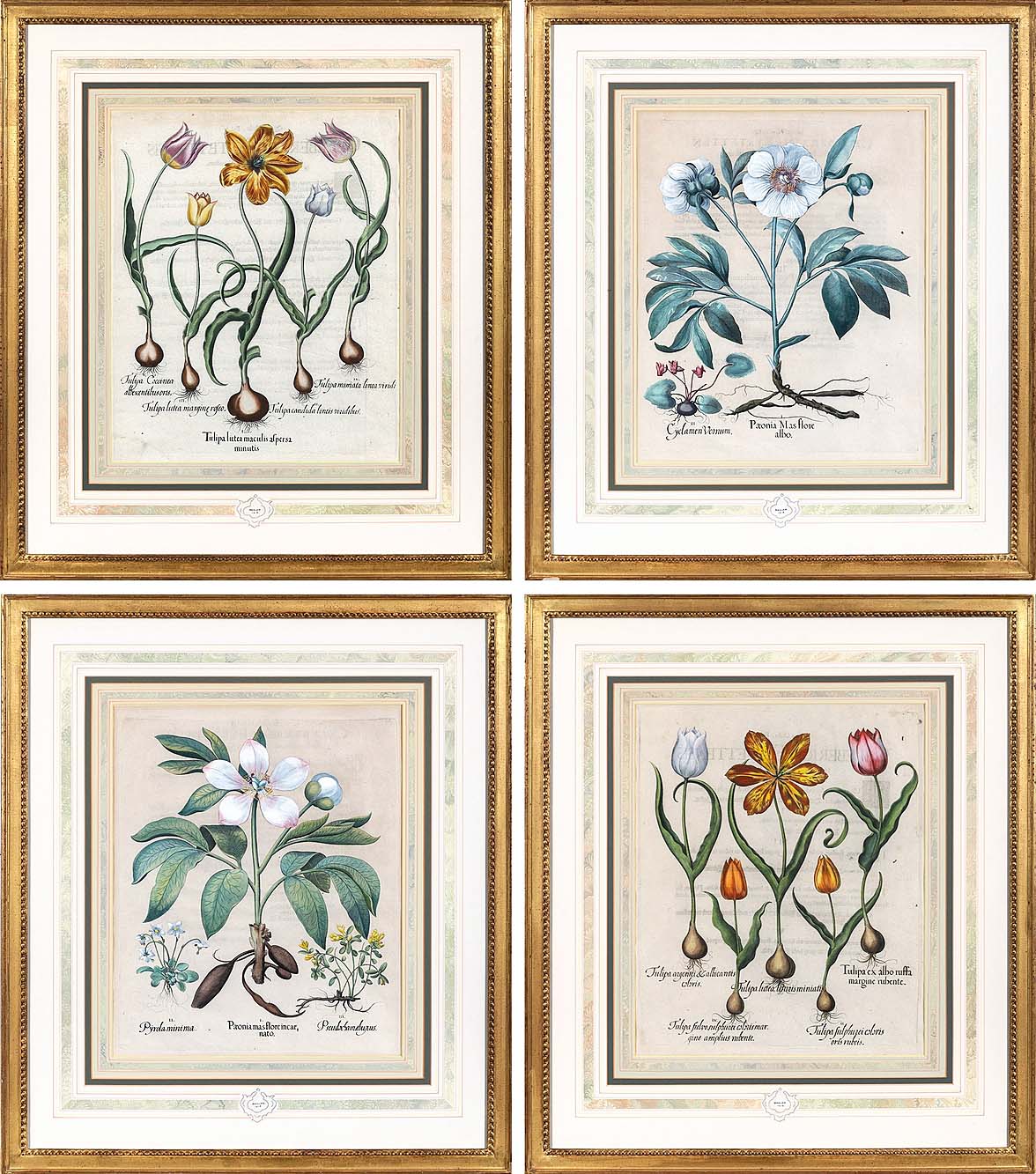
Old Master prints were topped by this series of hand-colored engravings by Basilius Besler (German, 1561-1629), 32⅜ by 28½ inches framed each, which made $10,240 ($1,5/2,500).
Other highlights included an anthropomorphic landscape attributed to Matthäus Merian, which came from the collection of Alfred H. Barr, Jr (1902-1981), an art historian who was the founding director of the Museum of Modern Art (New York City), most recently belonging to his daughter, artist Victoria Barr. According to Doyle’s notes, “When this painting was first discovered by Alfred Barr in 1930 it was thought to be by the Italian Mannerist artist Giuseppe Arcimboldo (1527-1593). However, when the work was cleaned and restored in 1954, an inscription attributing it to the Swiss engraver Matthäus Merian (1593-1650) came to light. It was soon shown that its composition is closely related to an engraving of a similar anthropomorphic landscape created by Merian in 1624, which suggests that it may have been the artist’s preliminary sketch for that work.” This oil-on-panel work had extensive publication and exhibition history and was inscribed “Meriani” to the lower left. It was taken to $8,960.
A French “Study of a Man Standing” done in red chalk, highlighted by white, on tan paper had provenance to another notable New York City figure: Mrs Charles Allen, Jr. Drawn by Nicolas Lancret, the illustration was bid well beyond its $900 high estimate to achieve $4,160.
English & Continental Silver
Doyle put on white gloves for the second session on January 28, English & Continental Silver, which doubled expectations and had a 100 percent sell-through rate. The selection included silver from prominent makers spanning the Eighteenth through Twentieth Centuries. According to Doyle silver specialist Todd Sell, on average, the lots were selling “just over twice the low estimates before adding in the buyer’s premium.”
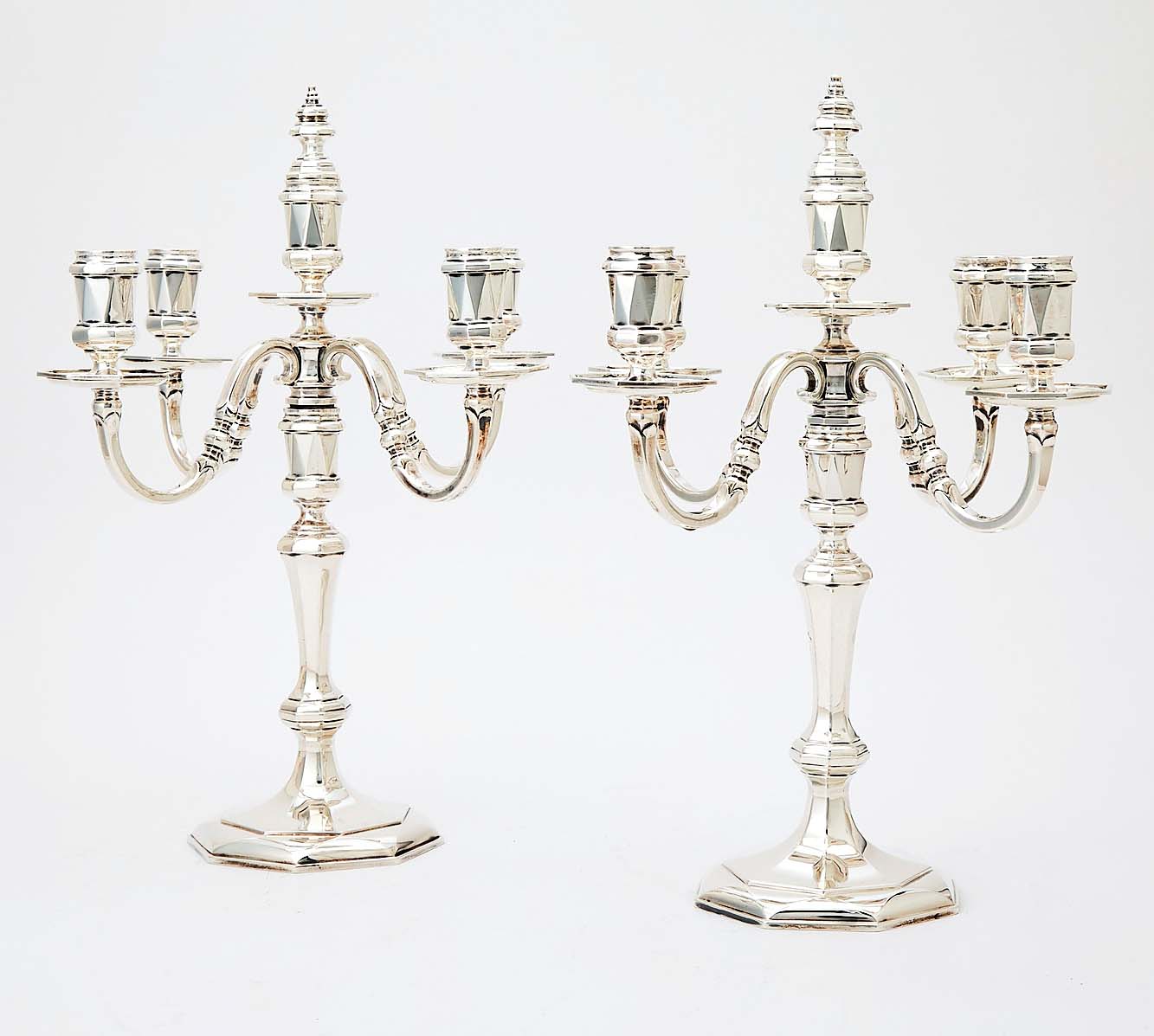
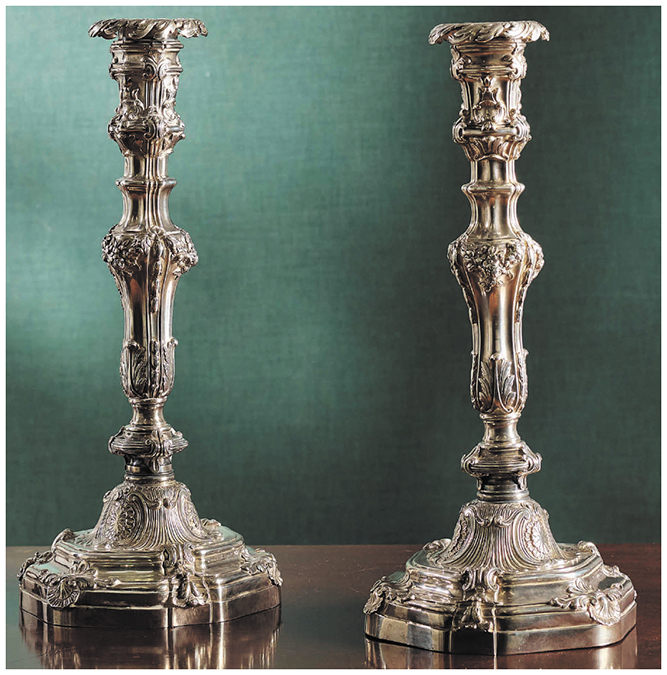
Standing 9½ inches tall, this pair of Louis XV-style Tiffany & Company candelabra, Twentieth Century, brought $12,160 ($4/6,000).
“We saw new buyers and I think there was more ‘non collector’ interest — people buying based on silver being in the news along with gold so much lately,” Sell continued. “We’re looking ahead to our Vanderbilt & Whitney sale next week [February 11] that has some nice silver as well. With the recent volatile nature of the silver market, that will be interesting to see if the market has spooked some of the speculative buying!”
Earning top-lot status across all three sessions at $44,800 was a sterling silver trophy presented by King George VI as The King’s Cup at the Royal Yacht Squadron Regatta of 1938. The cup, made by Heming & Company, prominent London silversmiths established in 1745, commemorated the winner of the Royal Yacht Squadron Regatta (now known as Cowes Week), one of the most prestigious fixtures in British yachting before the Second World War. This 1938 King’s Cup was won by Trivia, owned and steered by Vernon W. MacAndrew.
Another London-made trophy, this one for a horse race and important, early piece of Indian sporting history, galloped to $19,200. The George III sterling silver gilt covered two-handled cup was made by William Bennett and engraved to commemorate an 1814 race at the Bombay Turf Club in Bombay (now Mumbai), India. The cup was presented — by Sir Charles Forbes (1774-1849), founder of the Turf Club and head of Forbes & Company Ltd — to Colonel Thomas Corsellis, a British military officer who, at the time, was serving in the Bombay Native Infantry in India.
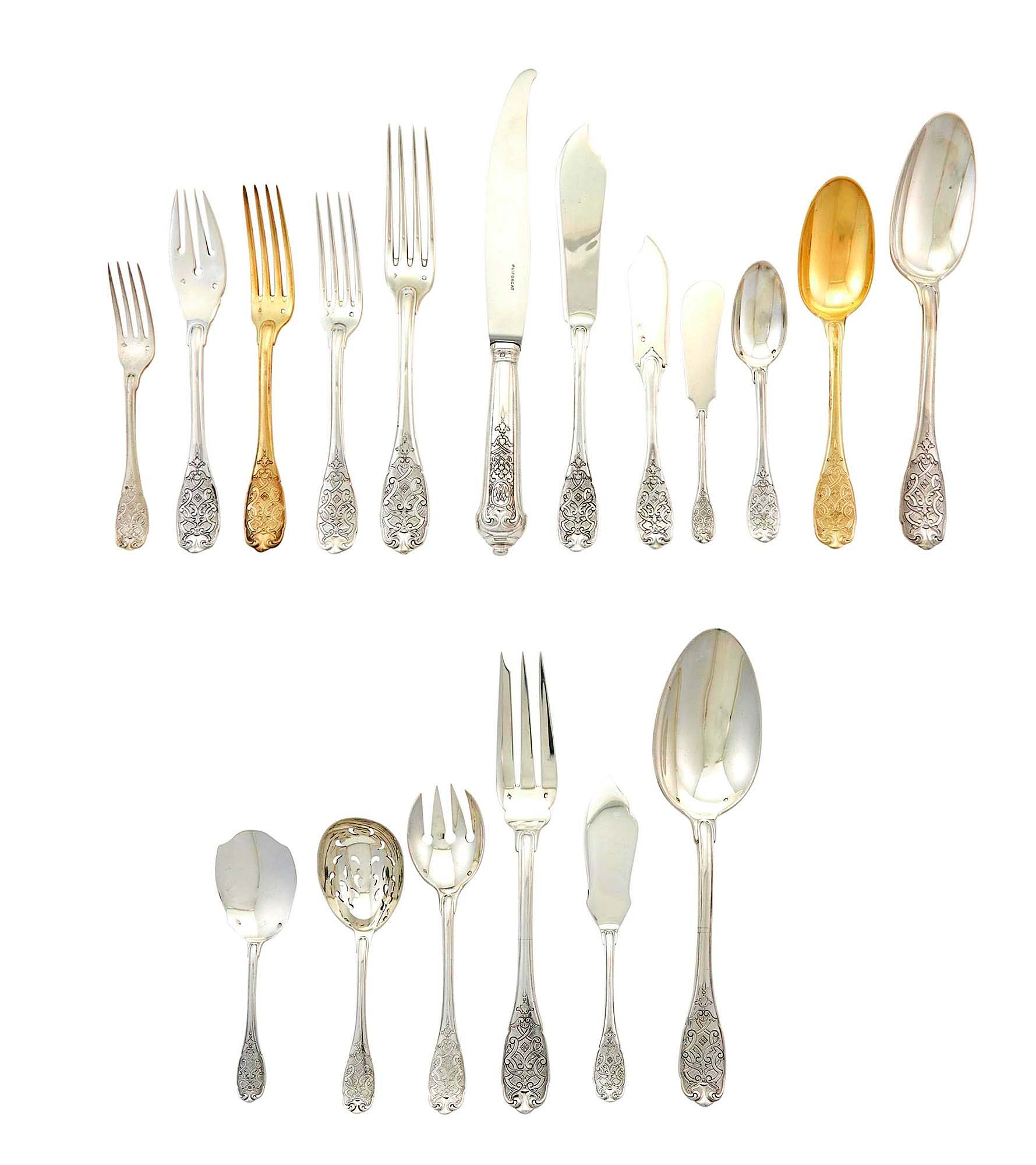
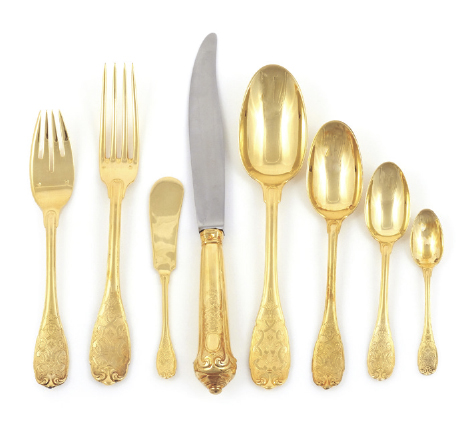
This Puiforcat sterling silver Elysee flatware service, totaling 288 ounces weighable, was taken to $25,600 ($10/15,000).
The leading flatware service, a Twentieth Century Puiforcat sterling silver set in the Elysee pattern, brought in $25,600. In good overall condition with wear from casual use, the 144-piece service totaled approximately 288 ounces, weighable.
Two silver trays each achieved $14,080: a George III sterling example and a French silver gilt model. The first was made by London silversmith John Crouch in 1809 and came from the collection of a West Side, New York City, lady. The other, made in the first half of the Twentieth Century, was from the estate of a Sutton Place, New York City, gentleman.
English & Continental Furniture & Decorative Arts
Doyle’s January 29 auction of English & Continental Furniture & Decorative Arts brought together several distinguished private collections, offering an opportunity to acquire works of the highest quality across the fields of French and European furniture, clocks and works of art.
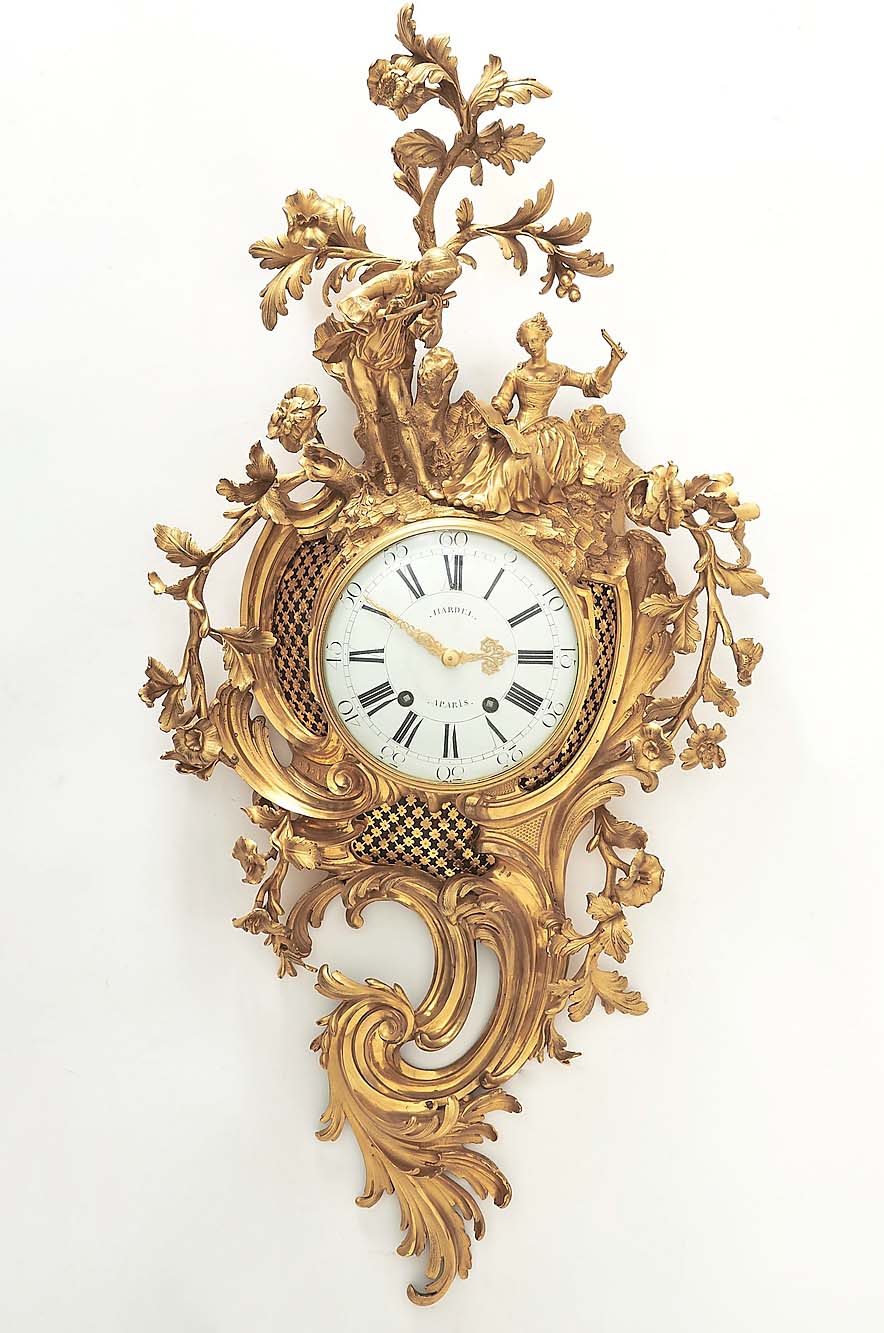
Leading the final session at $23,040 was this 48½-inch-tall Louis XV ormolu cartel clock by Hardel a Paris, circa 1755, which measured 23½ inches wide at its center ($8/12,000).
“We handled each collection with a very careful and respectful process and discretion, from cataloging and research through the presentation and sale-day execution. Each collection was treated individually, with its own narrative, specialist focus and targeted outreach to the right buyers worldwide,” said Jan Willem van Haaren, furniture and decorative art generalist with Doyle. “The response was extremely positive; we saw strong attendance, competitive bidding and excellent sell-through across multiple categories.”
“Most importantly nowadays, the results confirmed that the market recognized the quality and freshness of the material and further on showed that collectors responded also to the way the collections were curated and presented,” Van Haaren continued.
A significant grouping of French clocks led the sale, highlighted by a circa 1755 Louis XV ormolu cartel clock by Louis-Michel Hardel that nearly doubled its high estimate, selling for $23,040. The clock, with roman numerals and smaller Arabic quarter-hour markers on its circular enamel dial, was of asymmetrical design, modelled with acanthus leaf, foliate and figural motifs, and it had provenance to Maurice Segoura of Paris. According to Doyle’s post-sale writeup, “Parisian clockmaker Hardel supplied high-end clock movements to the influential bronzeworking ateliers that defined the Rococo style, such as Jacques Caffieri, Philippe Caffieri and Jean-Joseph de Saint-Germain.”
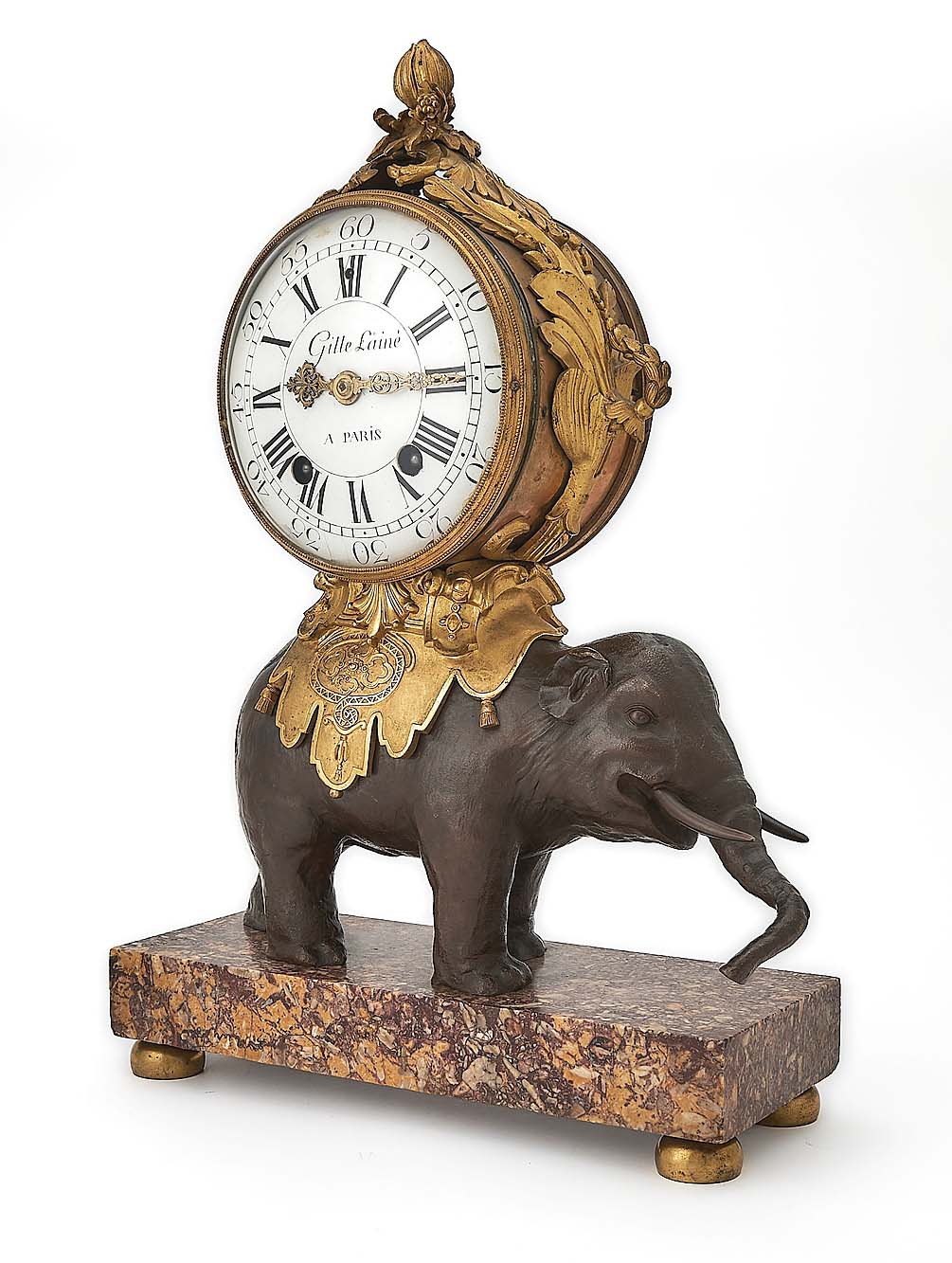
Signed “Gille L’aine / a Paris,” this circa 1775-80 Louis XVI bronze elephant clock on a marble plinth with toupie feet, 22 inches high by 14¾ inches wide by 5¾ inches deep, found a buyer at $15,360 ($6/9,000).
Another top clock in the sale was a rare Louis XVI bronze elephant clock, featuring a white dial within a gilt bronze case mounted to the back of a patinated bronze elephant. The circa 1775-80 clock was standing atop a red-and-yellow-mottled marble plinth with toupie feet. From the collection of “a distinguished lady from Athens, Greece,” the elephant stomped out its $9,000 high estimate to achieve $15,360.
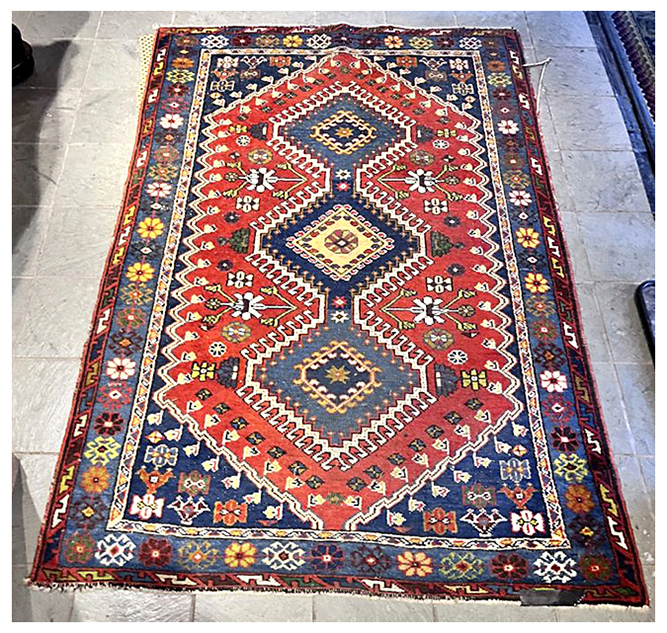
Other notable selections included rugs, led at $21,760 by a late Nineteenth Century West Anatolian Oushak carpet from the Evelyn D. Farland collection. The carpet featured a lime green field with stylized floral elements within a coral palmette border. Finishing at $17,920 was a late Twentieth Century silk Isfahan hunting rug. Made in central Iran and signed, this pictorial rug was exceptionally detailed, with 506 knots per square inch coming together to show horsemen chasing prey among various floral motifs.
The decorative arts category was topped at $17,920, earned by a “Lilies-of-the-Valley” sculpture in 18K gold, featuring pearl flowers and emeraled leaves. This mid Twentieth Century sculpture was crafted by Vourakis after August Wilhelm Holmstrom’s 1896 example made for the House of Carl Fabergé, which is on view at The Metropolitan Museum, New York City.
Prices quoted include the buyer’s premium as reported by the auction house. For information, www.doyle.com or 212-427-2730.