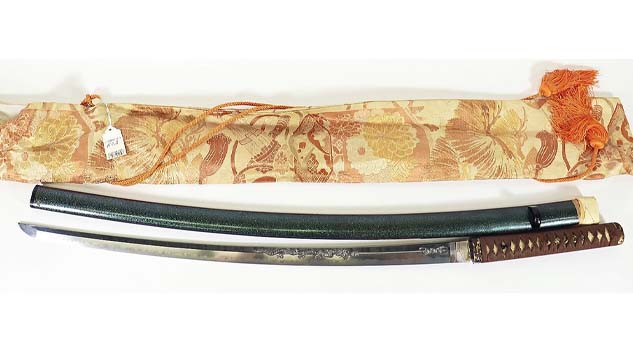
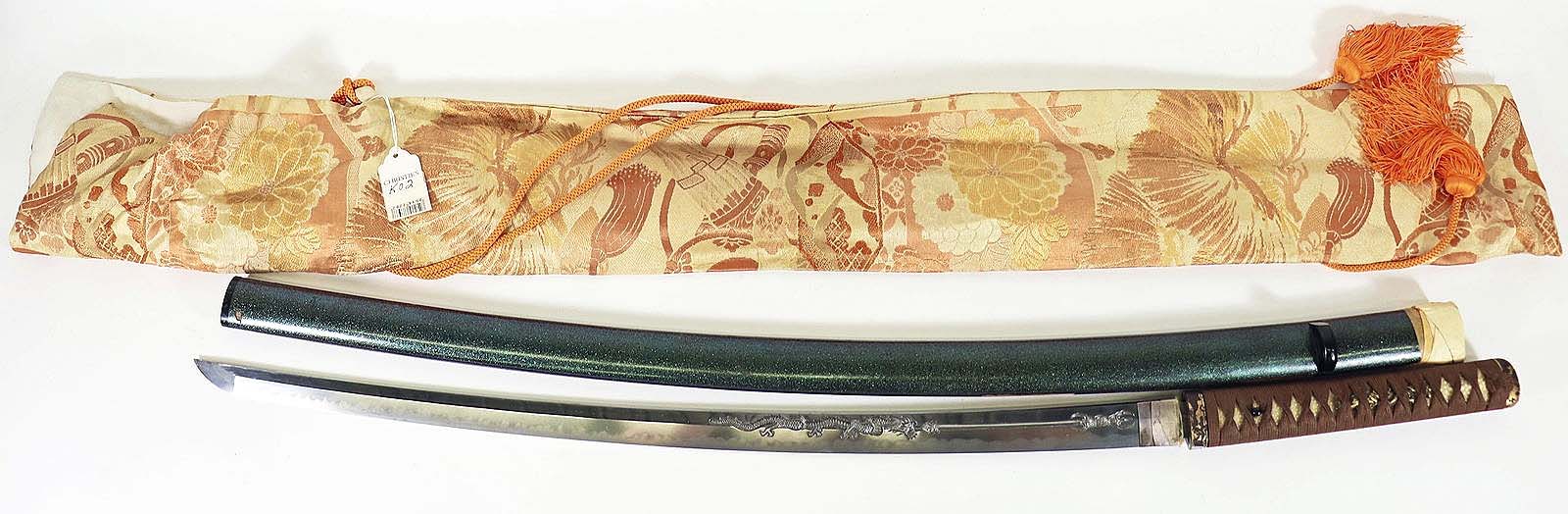
The top lot of the sale, this Japanese katana with a black and brown woven handle featuring two menuki, 44 inches long, was consigned from the R.W. Lighter collection and was sheathed for $30,000.
Review by Kiersten Busch
VERO BEACH, FLA. — A curated sale featuring the collection of long-time collector R.W. “Bob” Lighter was conducted by Vero Beach Auction on February 21. The Japanese & Asian Art Auction featured 164 lots of Edo and Meiji period items, including katanas and daggers, artwork, porcelain, tsubas, samurai items, signed pieces and more. The sale garnered a 95 percent sell-through rate and totaled $291,000.
Owner and auctioneer David Kratzer shared, “We were very satisfied with the results. There was a lot of interest in the sale in the weeks leading up. This is one of the rare auctions where we had multiple people fly into Vero Beach just to preview in person. We had a ton of pictures being sent back and forth and even set up FaceTime calls for people to inspect some of the swords.”
Of the bidding and buying pool, Kratzer also added, “We had a variety of buyers from several different states and countries. We actually had multiple bidders local to Florida. Outside of Florida, we had unique buyers from 20 different states and five different countries. Most of the buyers were in the US for the top lots. It was a combination of dealers and collectors but based on the results and comments, we think collectors were the primary winners.”
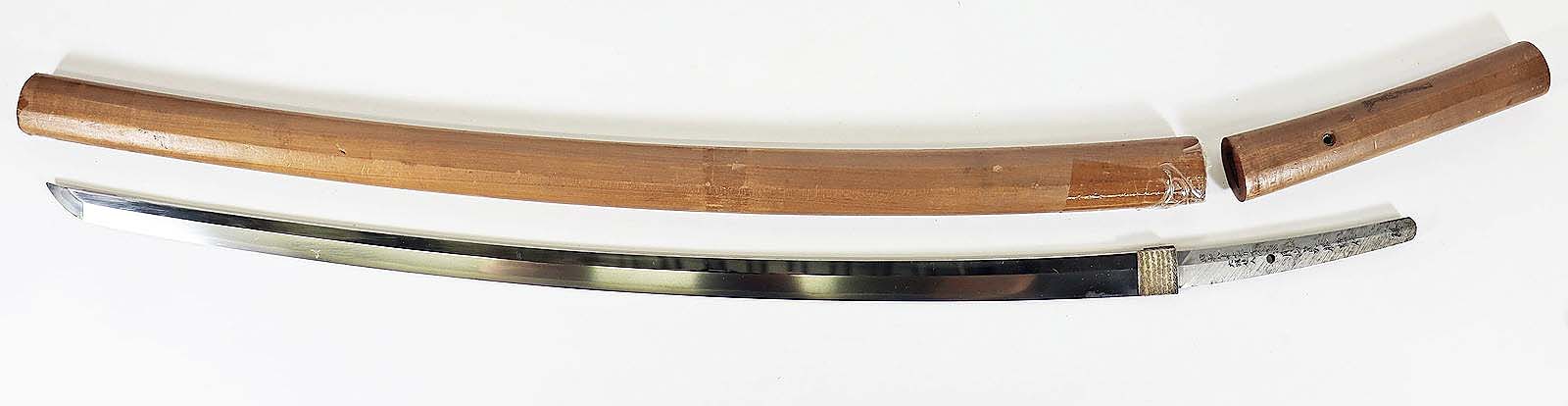
Attributed to swordsmith Gassan Sadakutsu, this katana with a wooden handle and scabbard, 26¾ inches long (blade), was sliced down for $19,200.
Most of the top-selling lots in the sale were katanas, including the top four lots. Reaching top-lot status was a 27½-inch-long (blade) katana with a black and brown woven handle and two menuki, or decorative metal ornaments, which sliced down its $5,000 high estimate to make $30,000. The katana’s blade contained a detailed scene of a serpent dragon and had a green scabbard and orange and silk bag.
That katana was followed at $19,200 by a rare example attributed to “renowned swordsmith” Gassan Sadakutsu who “served the Imperial households and crafted blades for emperors,” according to catalog notes. The 26¾-inch-long blade had a wood handle with Japanese writing on it and was accompanied by a wooden scabbard as well.
Also earning top prices were a katana with a 26-inch-long blade and Japanese writing on its wooden scabbard ($12,600) and a 38½-inch-long example with a black woven handle and two menuki which could possibly be attributed to swordsmith Ko Yoshii ($10,800).
Tsubas, or sword guards, were also in abundance, with slightly less than 45 lots crossing the block. The selection was led by a mixed metal example attributed to Katsumi which was decorated on both sides with an open work design featuring a mountain, trees, birds and vegetation. Surpassing its $1,000 high estimate by more than ten times, the tsuba realized $10,800.
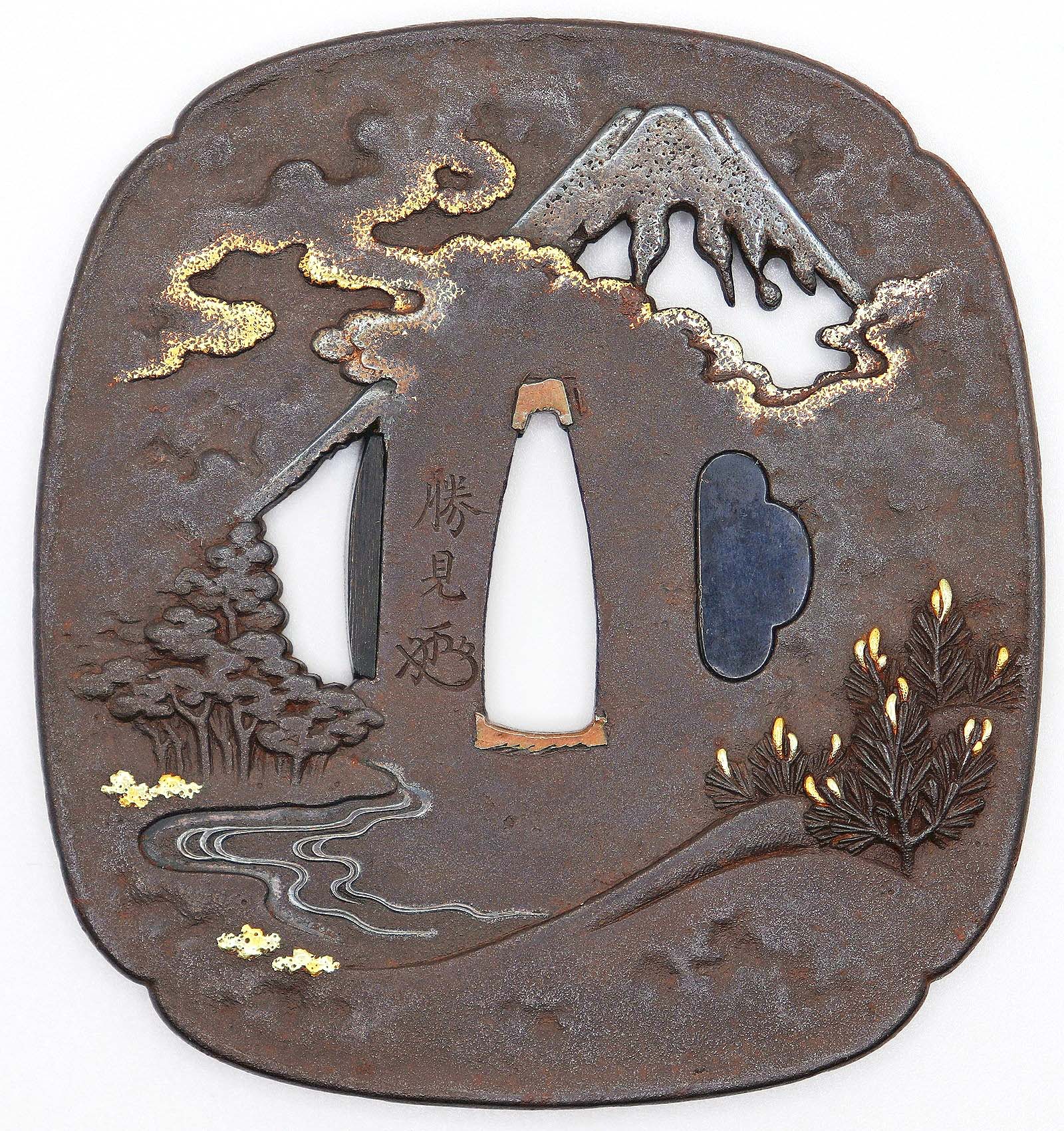
This mixed metal tsuba, or sword guard, 2⅞ by 2⅝ inches, was decorated with an open work design of a landscape with a mountain and birds and was bid to $10,800 ($100-$1,000).
Japanese woodblock art was led by “Cherry Blossoms at Washington Monument” by Kawase Hasui, an unframed work measuring 15¼ by 10¼ inches, which bloomed to $8,400. It was followed at $3,600 by “Silk Merchants India” by Charles Bartlett, which was signed to its lower left in red.
“Another item that surprised us was the hammer price of $2,520 on a Chinese wood temple carving. We’ve sold several of these, and have seen a lot at auction, but the price reflected a strong interest,” added Kratzer, when asked about a lot outside of the top sellers that particularly caught his eye during the sale.
To conclude, Katzer commented, “Between the swords, tsubas and woodblocks, the items that sold really well reflect what we like to tell our buyers and consignors — people want the rare and unusual! The tsuba that sold for $10,800 is what several buyers that previewed and talked with us prior to the sale considered a museum quality piece. We also had a great deal of interest on the Kawase Hasui woodblock, an unusual United States scene as opposed to the mainly Japanese scenes. One of the individuals that flew down to inspect the items in person told us that it was one of the best Japanese sword collections they’d seen at auction in over ten years.”
Vero Beach’s next auction will take place on March 21 and will feature Florida art, antiques, jewelry, collectibles, fine art and more.
Prices quoted include the buyer’s premium as reported by the auction house.For information, 772-978-5955 or www.verobeachauction.com.