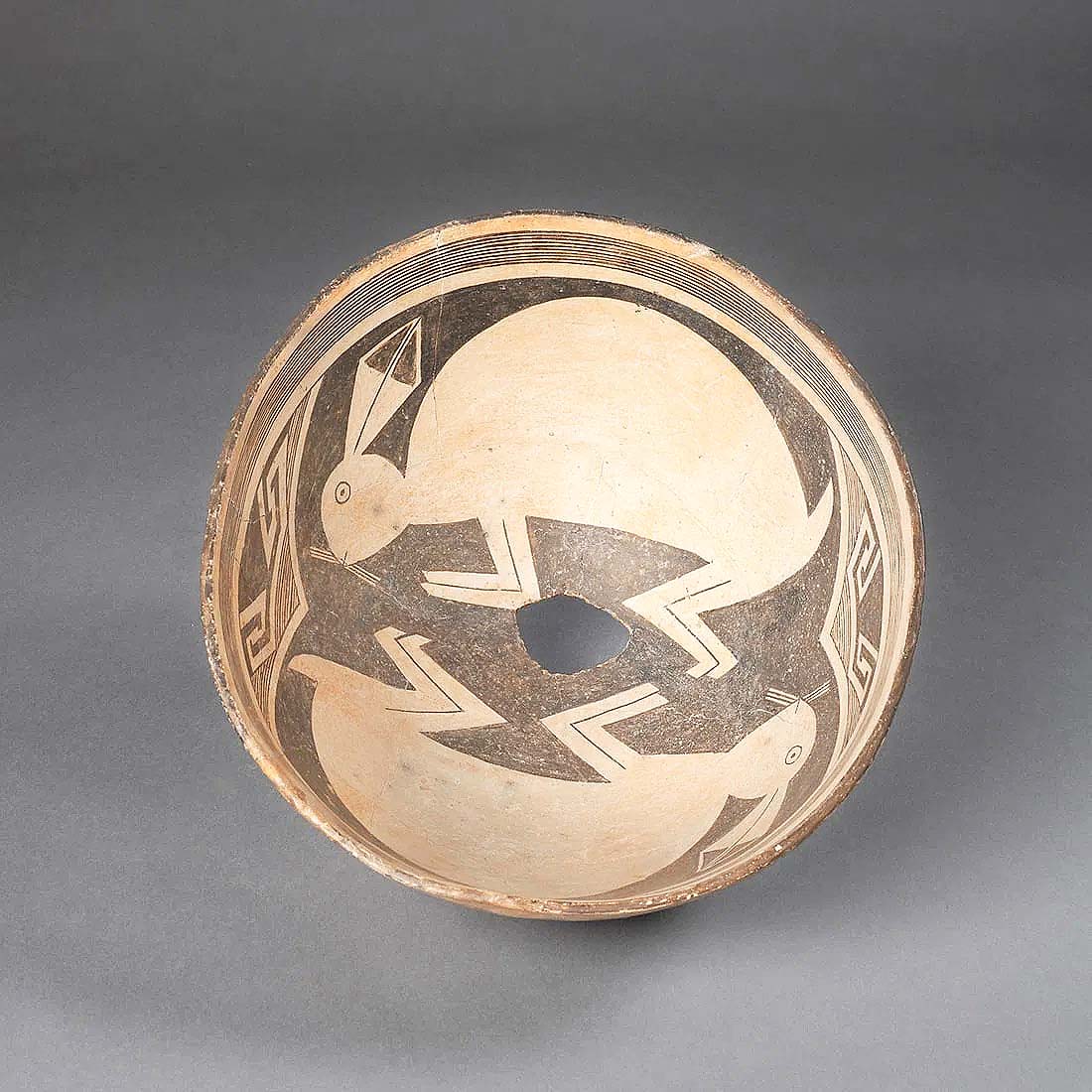
The top lot of the auction was this circa 1000-1130 CE Mimbres black-on-white bowl with painted decoration of two rabbits circling a central kill hole ($4/6,000).
Review by Andrea Valluzzo
SANTA FE, N.M. – Taos Auction Company’s April 2 sale of Native American, Pre-Columbian, tribal and fine art performed well with standout lots in a wide range of collecting categories. Co-owner Michael Evans called the sale a success with an 84 percent sell-through rate.
“Overall, the sale was good; we were happy with the results,” he said, adding that the auction hammer total was $360,000 and the sale attracted a record number of registrants: more than 1,700. The auction’s areas of strength included Southwest Navajo jewelry; Plains Indian weapons, like tomahawks; and a selection of Nineteenth Century Native American photography showing indigenous peoples in traditional dress, as well as Western- and Native American-themed paintings. Polynesian material also performed well, he said, with Fijian and Hawaiian objects in particular giving pleasing results.
However, having a starring role was the prehistoric pottery on offer, Evans reported. The sale’s top lot proved his point: a Mimbres black-on-white bowl with two facing rabbits around a central kill hole, a well-known motif, according to Evans. The circa 1000-1130 CE hand-coiled bowl made $30,000.
Another Pre-Columbian offering was a Moche stirrup vessel, circa 500-800 CE, that sold for $7,500. The large vessel depicted a healing scene with molded figures on top and had a painted frieze of figures around the body.
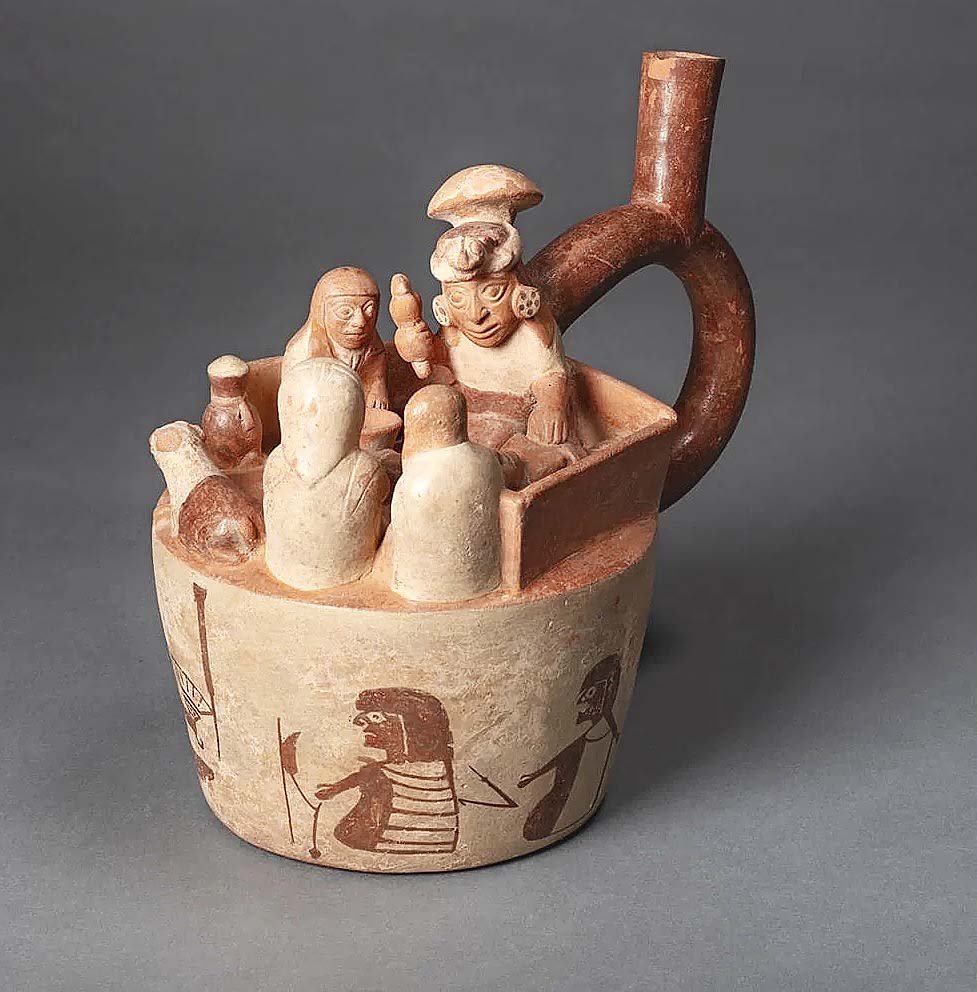
The parade of historic pottery across the block saw this large Pre-Columbian stirrup vessel realize $7,500 ($8/12,000).
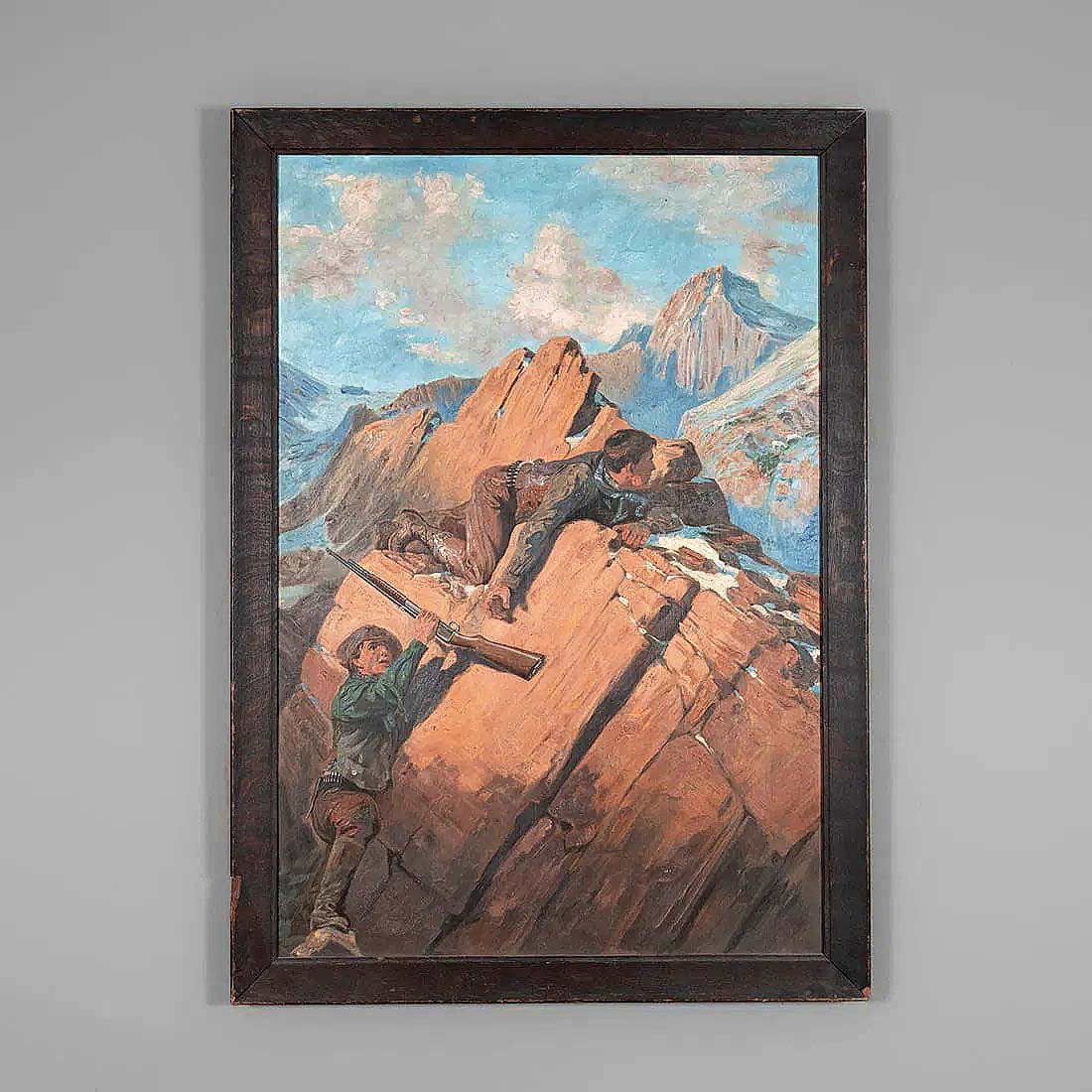
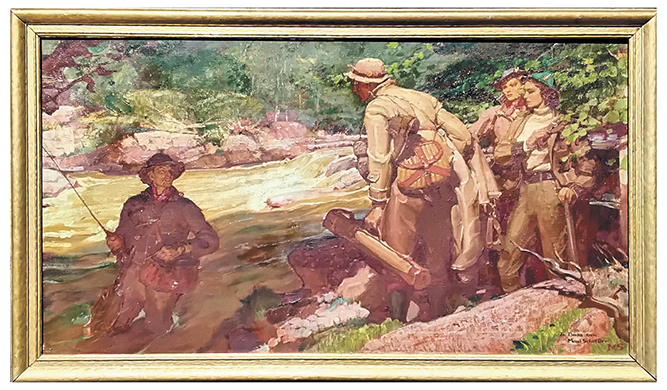
A standout among Western paintings was a cowboy painting that sold far over its conservative $500/700 estimate to achieve $20,000. The oil on canvas board depicted two cowboys on a rocky ledge, with one handing a rifle to the other, who appeared to have something in his sights. The painting, which was unsigned and probably dated to the early Twentieth Century, was thought to possibly be the original artwork for a firearms company advertisement, Evans shared after the auction.
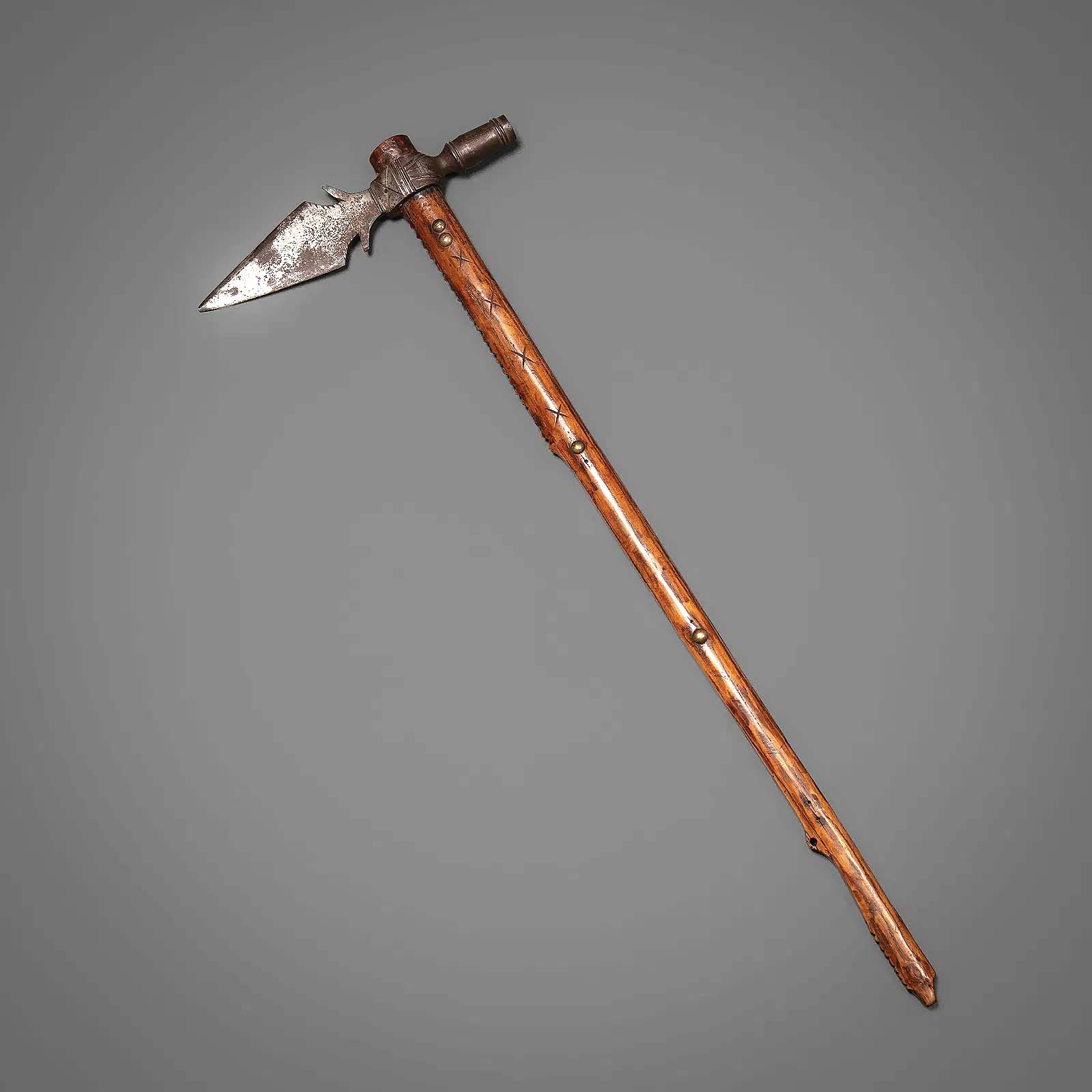
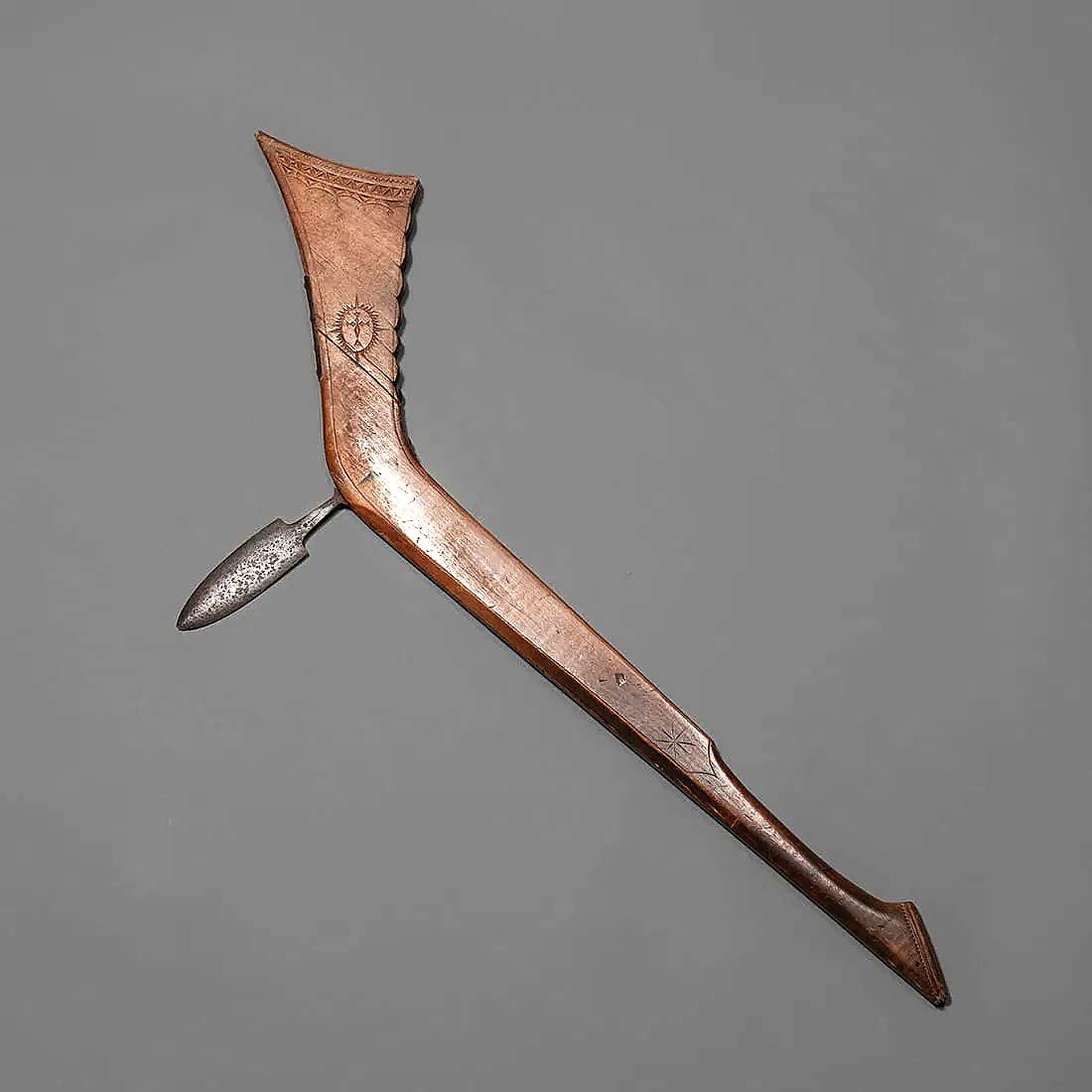
Leading Native American weapons was a Northern Plains pipe spontoon tomahawk from the third quarter of the Nineteenth Century. With a decorated haft, the piece made $11,875. Also crossing the block was a Western Great Lakes/Eastern Minnesota Sioux gunstock club that realized the same price. Selling within estimate, the mid Nineteenth Century club featured incised carving and a sunburst with cross design reminiscent of early trade silver. Another notable lot in the category was a circa 1850 Hopi sinew-backed bow with three arrows, which took $3,437.
Plains material was well represented in the auction, including an elongated Northern Plains pony beaded gun case of tanned hide that took $6,875 and was embellished with classic Northern Plains design elements.
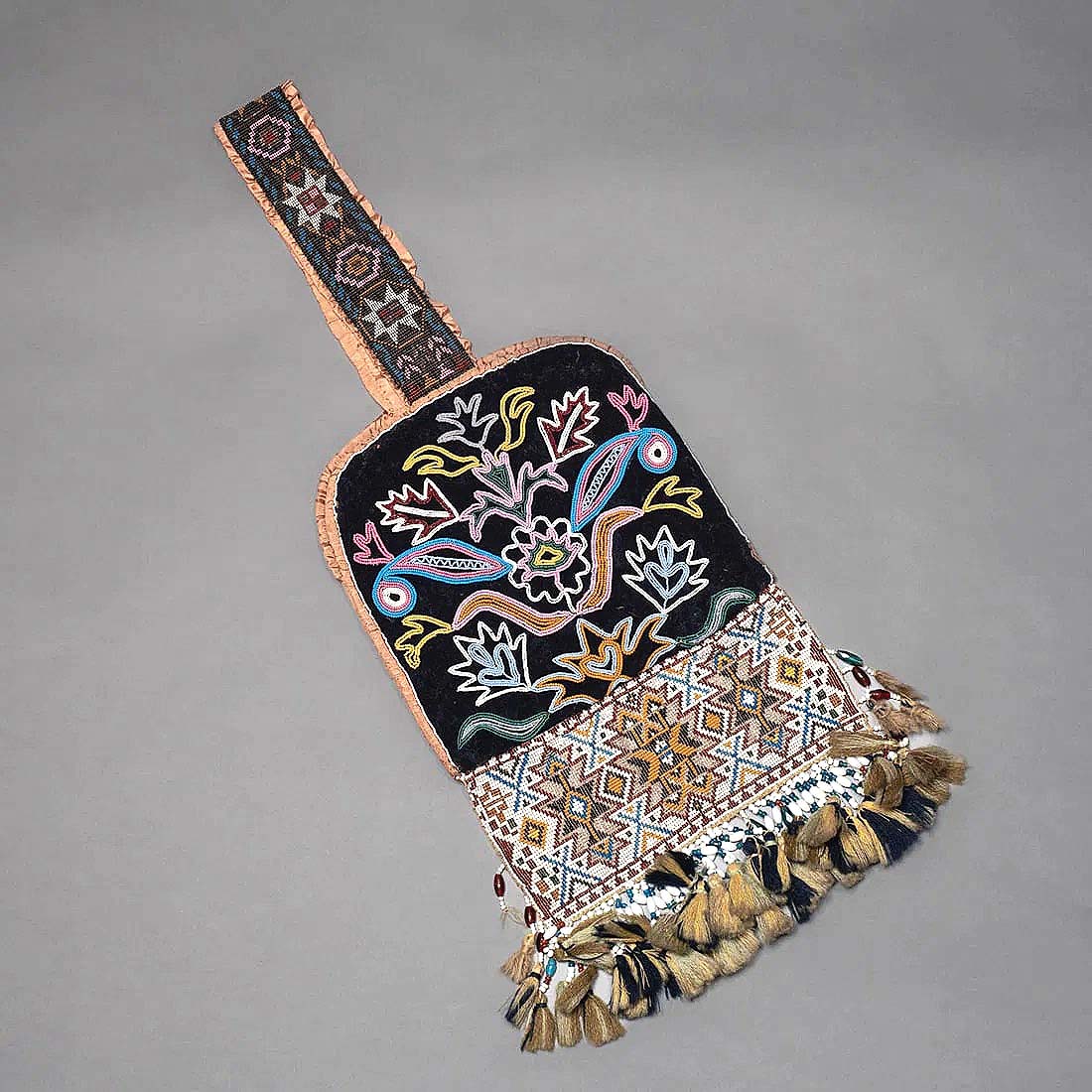
A Cree beaded panel bag with multicolored floral designs on both sides, third quarter Nineteenth Century, went for $5,937 ($4/6,000).
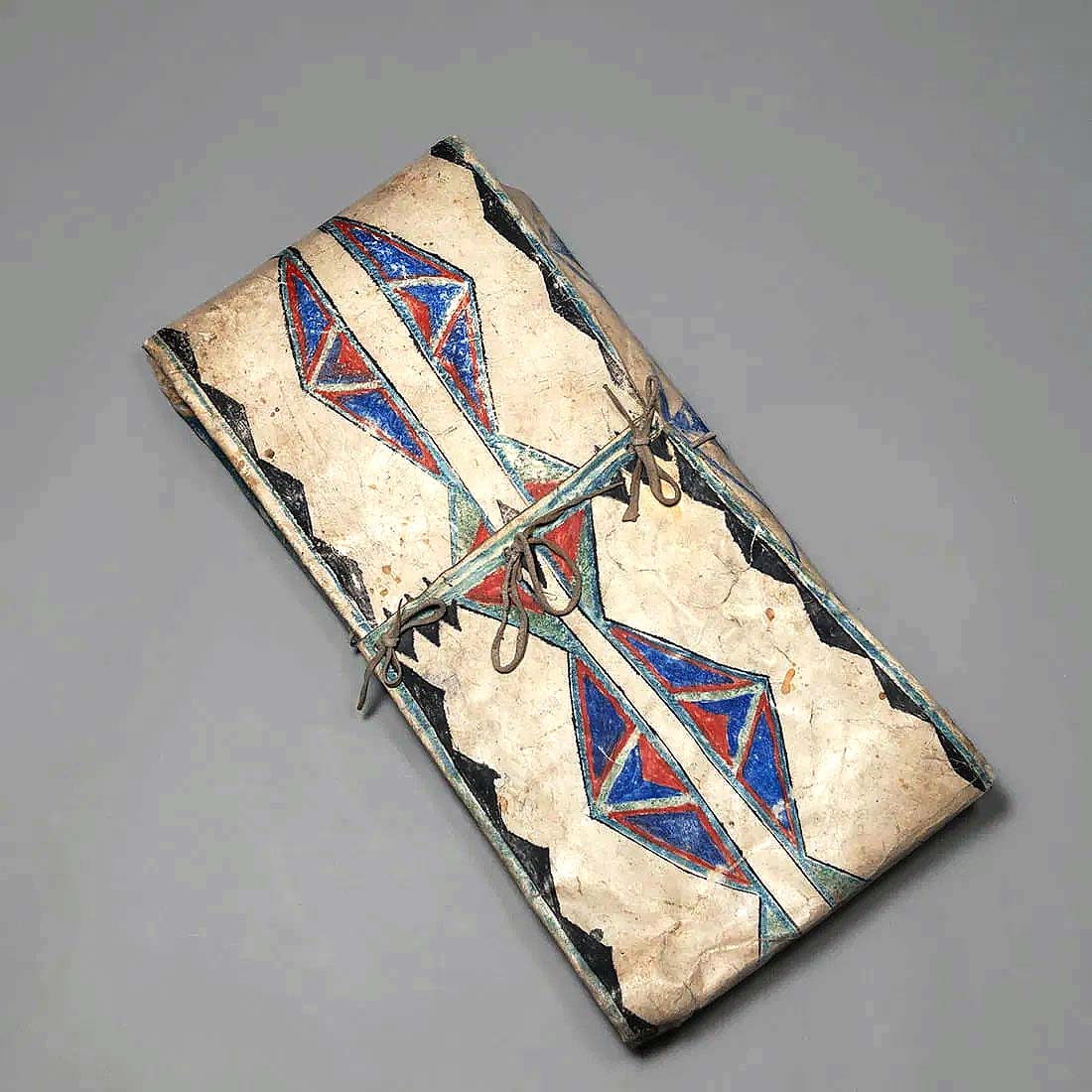
The auction had a wide selection of Native American groups represented, with items ranging from a late Nineteenth Century Blackfoot parfleche envelope in buffalo hide selling above estimate for $6,250 to a third quarter Nineteenth Century Cree beaded panel bag with floral designs that earned $5,937.
The auction house typically has a strong contingent of buyers from the Southwest, but jewelry tends to draw buyers from all over the world. Highlights in this auction included a limited edition Denise Wallace silver and gold pin/pendant titled “Fetish with Bracelets,” which earned $5,625. Additionally, a Na Na Ping sterling silver and lapis cuff bracelet realized $3,437.
Prices quoted include the buyer’s premium as reported by the auction house.
For information, www.taosauction.com or 505-365-2067.