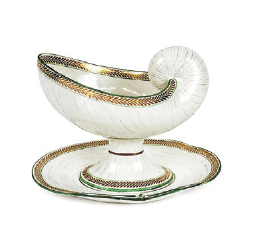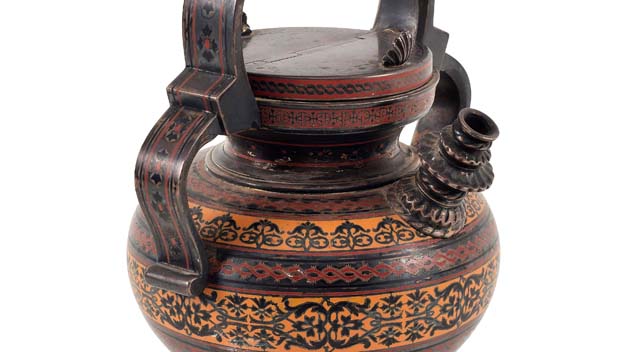
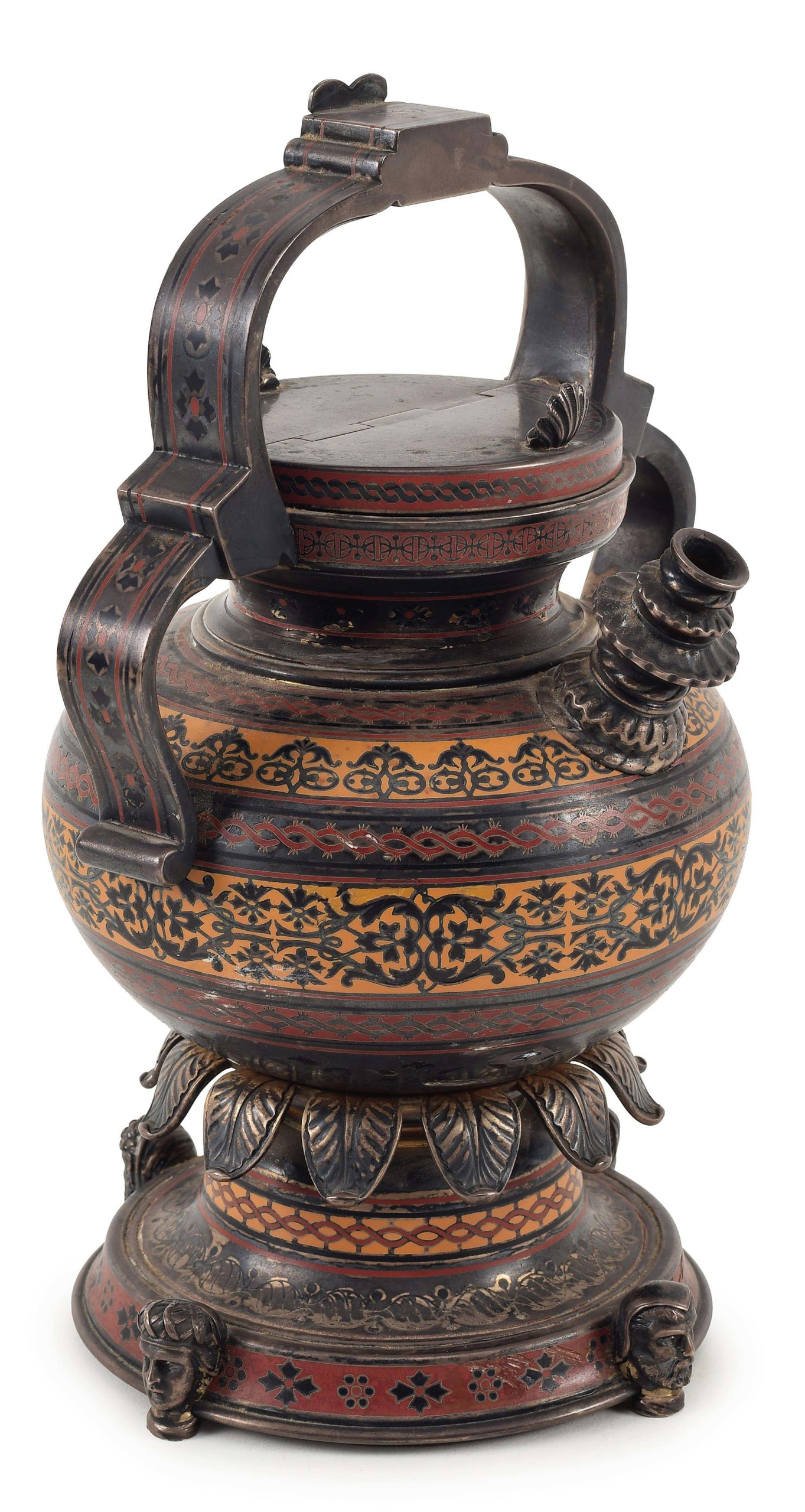
Rising past its $10/15,00 estimate to earn the sale’s leading price of $33,320 was this 8½-inch-tall champlevé-enameled Etruscan Revival silver ewer on stand made by Gustave Baugrand for the 1867 Paris Exposition.
Review by Carly Timpson
SUDBURY, MASS. — The 545 lots to cross the block in Tremont Auctions’ March 1 sale spanned diverse categories, including jewelry, silver and vertu, ceramics, antiquities, glass, fine art, militaria, maps, furniture and lighting. Realizing $702,065, the auction had a 92 percent sell-through rate with many exceptional or unexpected results. In fact, all five of the highest priced lots exceeded their high estimates and saw a flurry of bidding.
An 1867 Paris Exposition champlevé-enameled Etruscan Revival silver ewer on stand, made by Gustave Baugrand became the top lot when it surpassed its $10/15,000 estimate to sell for $33,320 to an overseas bidder. The ewer bore the inscription “Baugrand A. Paris Exposition Universelle 1867” to the rim of its base and was shown in a photograph of an 1867 Gustave Baugrand exhibition case, which was included with the lot. Done in the Etruscan Revival manner with allover champlevé-style decoration in red, gold and black, the ewer also had blue enamel medallions on the handle and a gilt interior.
One of the most exciting results, according to manager Cameron Ayotte, was the $24,130 realized for a flag fragment recovered from Fort McHenry after the British bombardment during the War of 1812. While this artifact may appeal to history collectors for a variety of reasons, many laypeople best remember the attack as the event that inspired Francis Scott Key to write the words that would later become the country’s national anthem. The small fragment was paired in a frame with a letter of provenance, sent from Baltimore to a “Mrs. T. R. Brouy [?]” in 1861 that read: “Part of this flag from fort McHenry, at the time of the bombardment by the British in 1812. Herman [last name illegible] of Company G, Mass. V M [Volunteer Militia].” Later research showed a “Herman Utpadel” listed in the records of Company G, Eighth Massachusetts Regiment Minute Men of ‘61.
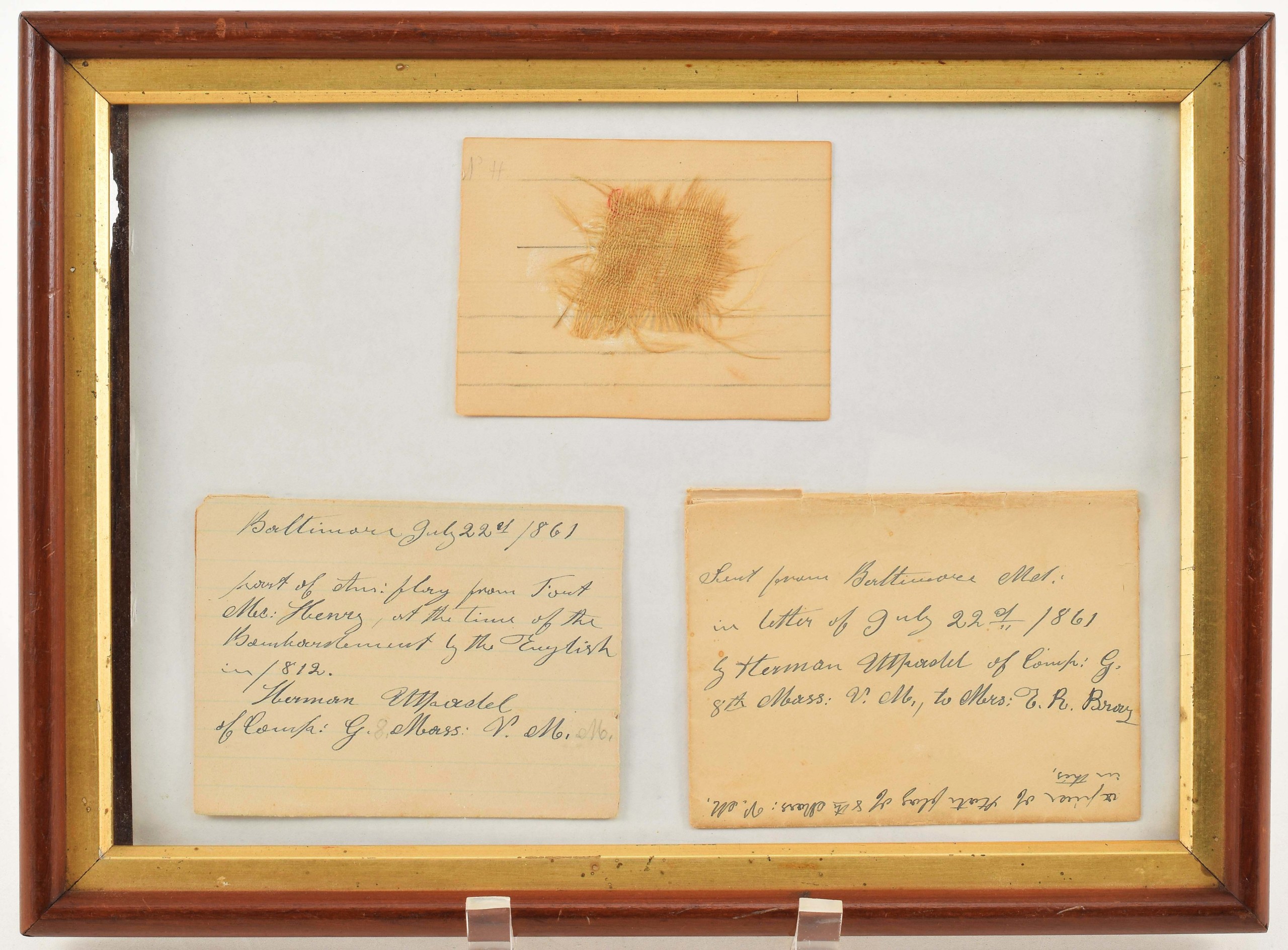
Framed together with an 1861 letter of provenance, this flag fragment from the 1814 bombardment of Fort McHenry flew high: it reached $24,130, soaring past its $600/800 estimate.
Also bringing about an exceptional result was a late Nineteenth Century brooch with an Essex Crystal depicting a motif from “The Spider and the Fly,” an 1828 poem by Mary Howitt. Set with a braided 18K gold frame, the spider was beneath the carved crystal web while the diamond-mounted fly was on top of it. The brooch sold with 1989 paperwork from Asprey Jewelers, London, noting that the English crystal was from circa 1880 though the gold mount was modern. Its final price was pinned at $10,115, more than 12 times its high estimate.
Another notable piece of jewelry was an Art Deco emerald necklace, which was bid to $12,700. The 18K gold necklace was set with eight rectangular and octagonal step-cut natural Colombian emeralds in varying sizes. The largest, an octagonal stone dropped from the center, was tested by GIA and was reported as being F1 for minor clarity enhancement, but bidders still pushed the necklace well past its $6,000 high estimate.
Estimated $700/900 and finishing for $9,525 was a wooden doll from the Nineteenth Century. The articulated, jointed doll had paint-decorated details on her face, hands and legs and wore an old dress, shawl and bonnet. Cataloged as possibly Georgian, the doll appeared to be in original condition with a lacquer or varnish finish over paint.
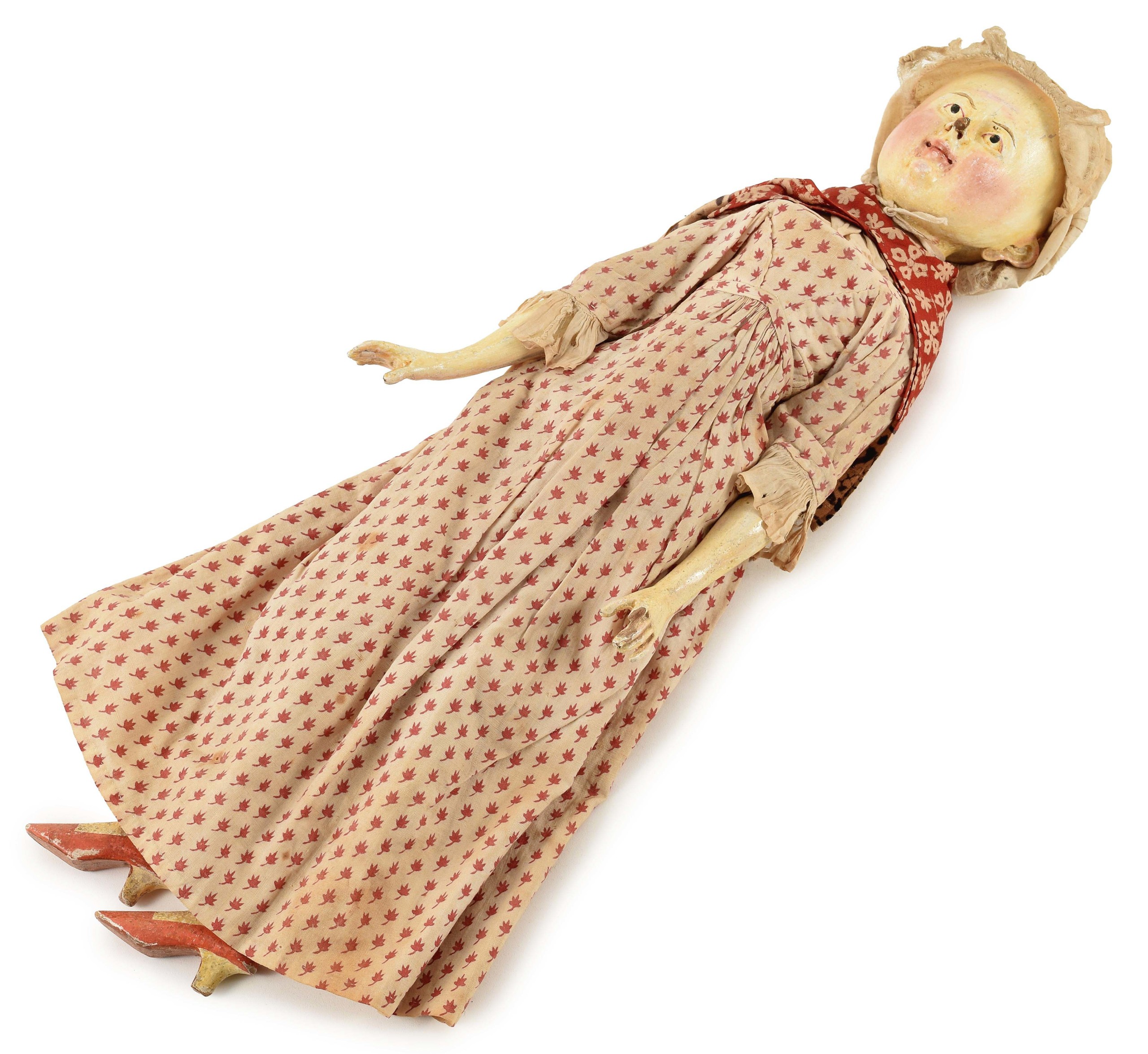
Dressing up for $9,525 was this early Nineteenth Century, possibly Georgian, wood doll, 18½ inches long ($700/900).
Striking $17,780 was a tall-case clock. The dial, with a painted moon phase feature and roman numerals, was signed “Allen Killey,” and brass mechanics were fitted within a circa 1813 Mahogany case made in Nantucket, attributed to the workshop of Heman Ellis. The interior of the base panel had drawings of floral inlay concepts and text that read “V. Coffin / A Taber / Made for A. Kelley / Made in the County of Nantucket.” The chosen inlay designs on the case included leaves and a potted flower, a distinct regional feature. In rich, old color and having its original fretwork and brackets, the clock appealed to collectors, who pushed it past its $6,000 high estimate.
Leading the sale’s silver offerings was a large sterling flatware service by R. Wallace & Sons. The 232-piece set had a total estimated silver weight of 272.75 troy ounces, including its 43 knives. It finished at $17,850.
A Chinese famille rose porcelain elephant figure saw competitive bidding and closed for $13,640. Rather than a howdah, this elephant had a vase seated atop its blanketed back. In two pieces, the vase could detach from its faux marble stand. Previously mounted as a lamp, the elephant came from a Massachusetts collection and had a drilled hole to its underside.
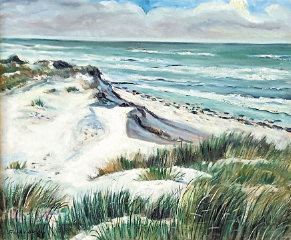
The selection of fine art was led by a “Southern Maine Coast” scene painted by Constantin Westchiloff. The bright Impressionist landscape was signed to the lower right and appealed to bidders, who pushed it to $8,255.
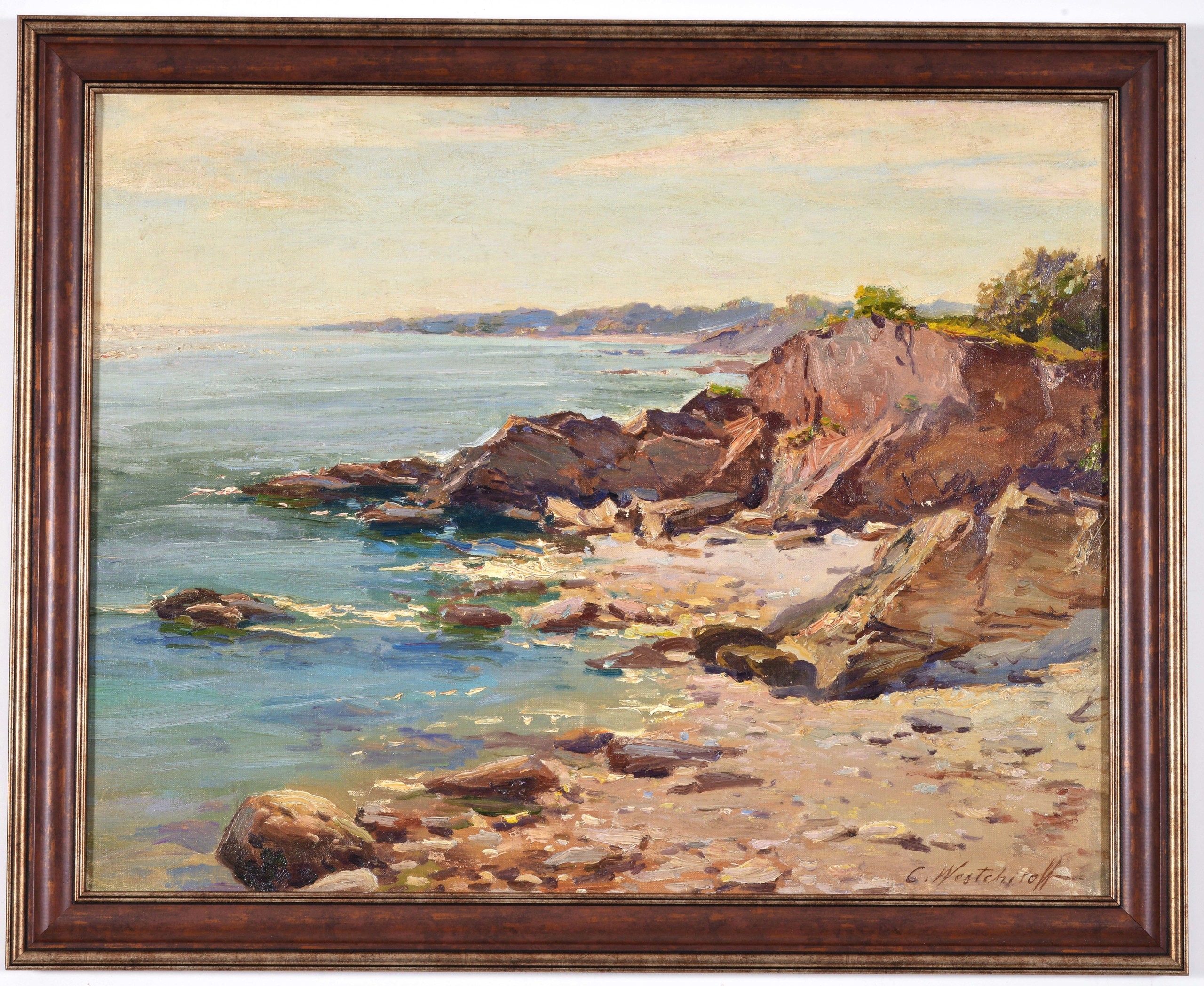
“Southern Maine Coast,” an Impressionist scene by Constantin Westchiloff (1878-1945), 22 by 28 inches, brought $8,255 ($2/3,000).
Rounding out the top lots, the only one not to exceed its high estimate, was still a solid performance. A set of six Federal mahogany shield-back chairs from Connecticut circa 1800 realized $8,330. These chairs had inlaid and carved backs with classical foliate splats over upholstered seats. The chairs’ tapered front legs had icicle and banded inlays while the flared rear legs were solid mahogany.
Tremont will conduct its Early Spring Estates and Antiques auction on April 12.
Prices quoted include the buyer’s premium as reported by the auction house. For information, www.tremontauctions.com or 617-795-1678.