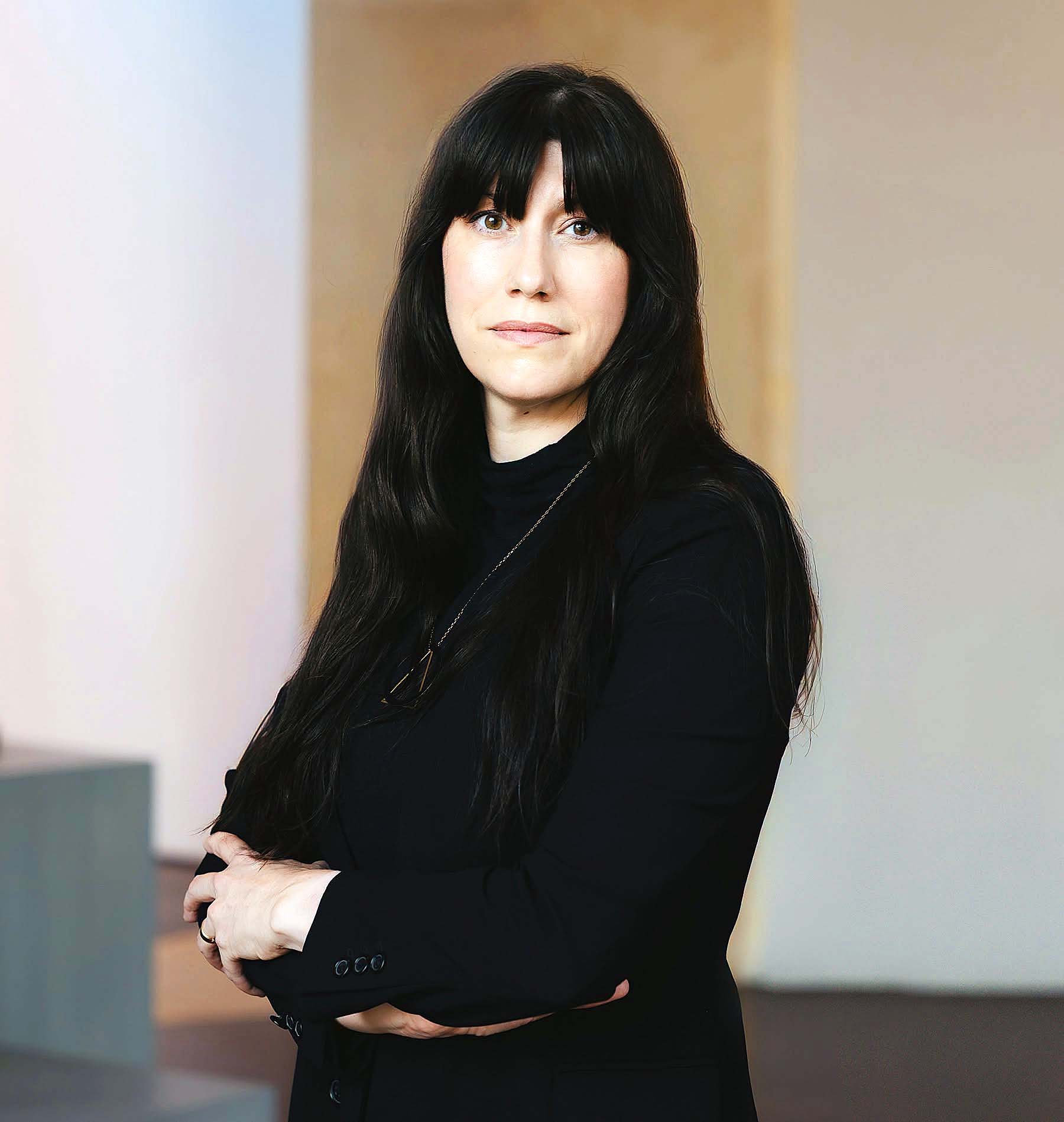
Hannah Klemm was recently named as the Milton Fine curator of art at The Andy Warhol Museum in Pittsburgh. Before joining The Warhol in August, Klemm was the curator of modern and contemporary art at the Blanton Museum of Art and was previously an associate curator at the Saint Louis Art Museum. At The Warhol, she works to provide a framework for understanding and connecting to Andy Warhol through exhibitions and public art, as well as contributing to programming and events. We caught up to hear how her first months have been!
Congratulations on joining The Andy Warhol Museum! Can you share a little about what led you to The Warhol?
I’ve been interested in modern and contemporary art for a very long time. When I was young, my mother went back to school to get an MFA in metalsmithing, so I was exposed to art, both people making it and looking at it from a young age. That interest led me to study both art history and printmaking in college, where I became especially drawn to the relationship between art, culture, and the historical conditions that make particular forms of artistic expression possible.
I did my undergraduate work at Sarah Lawrence College, then went to the Courtauld Institute of Art in London for my MA in Nineteenth Century German art and finally the University of Chicago, where I completed my PhD on underground and experimental art in East Germany from the 1950s through the 1970s. My doctoral research deepened my interest in the ways artists respond to restrictive political and cultural environments, often developing inventive strategies to question authority, challenge conventions and create new forms of expression.
Over the course of my career, I’ve been fortunate to work with extraordinary collections and artists, first at the Saint Louis Art Museum and more recently at the Blanton Museum of Art in Austin. I have always loved working closely with artists to develop exhibitions and projects that help bring their ideas to fruition. Whether organizing an exhibition, commissioning new work, or bringing forward research on historical movements, I’m interested in creating contexts that allow people to engage with art in meaningful ways.
I find Andy Warhol to be such a fascinating figure because we see his work constantly evolving, and because of how prescient he was, it remains so relevant to exploring aspects of contemporary culture, from media and technology to celebrity, identity, and the circulation of images, while also being deeply rooted in the social and cultural circumstances of his own time. His practice was also extraordinarily varied, it was so much more than Campbell’s Soup and Marilyn Monroe, yet these works and his style remain iconic and immediately recognizable.
It really was the opportunity to work with The Warhol’s remarkable collections and archives, while also developing ambitious exhibitions and projects with contemporary artists that was incredibly compelling to me. Being here offers a rare chance to explore new dimensions of Warhol’s work and legacy while expanding the conversations his innovative practice makes possible for artists and audiences today.
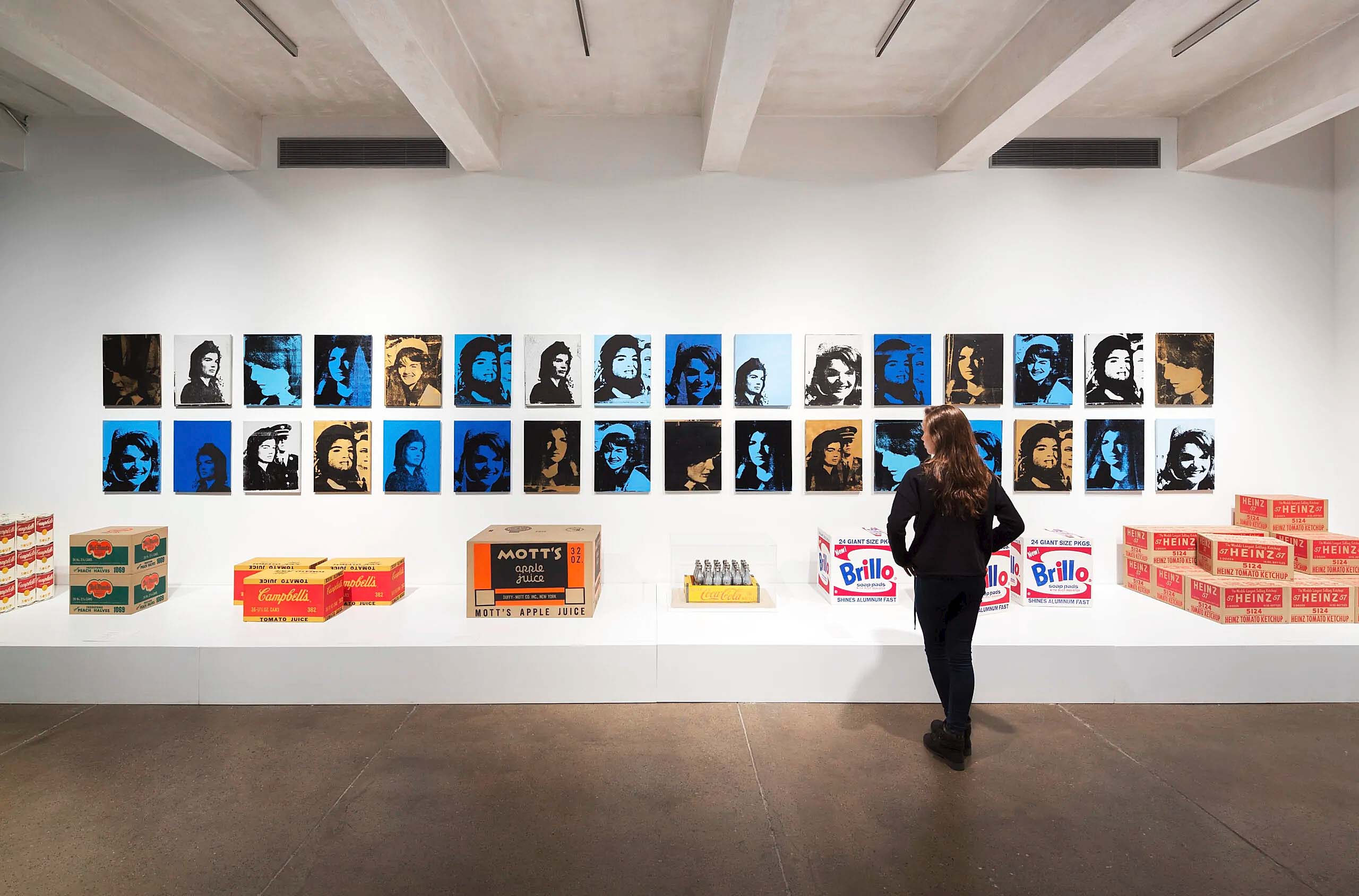
Gallery view, The Andy Warhol Museum, Pittsburgh. Photo by Dean Kaufman.
Compared to previous roles as curator, what will be different at The Warhol since it’s a single-artist concept?
One of the things that most excites me about working at a single-artist museum is the opportunity to immerse myself in an artist’s work in extraordinary depth, while getting to explore his legacy as a framing mechanism for exhibition planning. At collecting institutions the cover spans of history, you’re constantly moving between different artists, geographies, and time periods. At The Warhol, we can devote sustained attention to Warhol’s life and practice while also exploring his influence on generations of artists and his place within broader histories of modern and contemporary art. He can become the framing mechanism and inspiration for what we do, and he is a pretty great source for that!
I also find it particularly compelling to be able to reconsider post-war art histories from the perspective of an artist who played such a central role in shaping them, my graduate work focused on the 1950s-80s which is the same span of time Warhol was working, so I am also interested in thinking globally and from different viewpoints about Warhol’s impact or where we see overlap with other practices. Therefore, the museum can be a place not only for deepening scholarship on Warhol, but also for questioning established narratives about Pop art, exploring under-recognized dimensions and considering the artists and histories that have often been left out of those accounts. I think that creates tremendous possibilities for both historical research and contemporary exhibitions.
Is there anything here that may present a challenge that you’re excited to work through?
Warhol’s extraordinary cultural visibility is both one of the museum’s greatest strengths and one of its most interesting curatorial opportunities. Many visitors arrive with a particular understanding of who he was and what his art looks like. His famous name and most iconic works are often what bring people to the museum in the first place, and they are an important part of the experience we want to offer. Yet, his celebrity and the familiarity of those images can sometimes obscure the full breadth and complexity of his artistic practice.
I have been so impressed by the history of the museum. For more than 30 years, The Warhol has been finding ways to expand visitors’ understanding of his work, and I’m excited to build on that history while continuing to ask new questions and consider different approaches to presenting his art. How can we use familiar touchpoints to introduce lesser-known aspects of his practice, reveal unexpected connections and encourage visitors to see even his most recognizable works differently? I think there’s something particularly exciting about continuing to rethink Warhol at the museum dedicated to his life and work, especially as we approach the centennial of his birth in 2028.
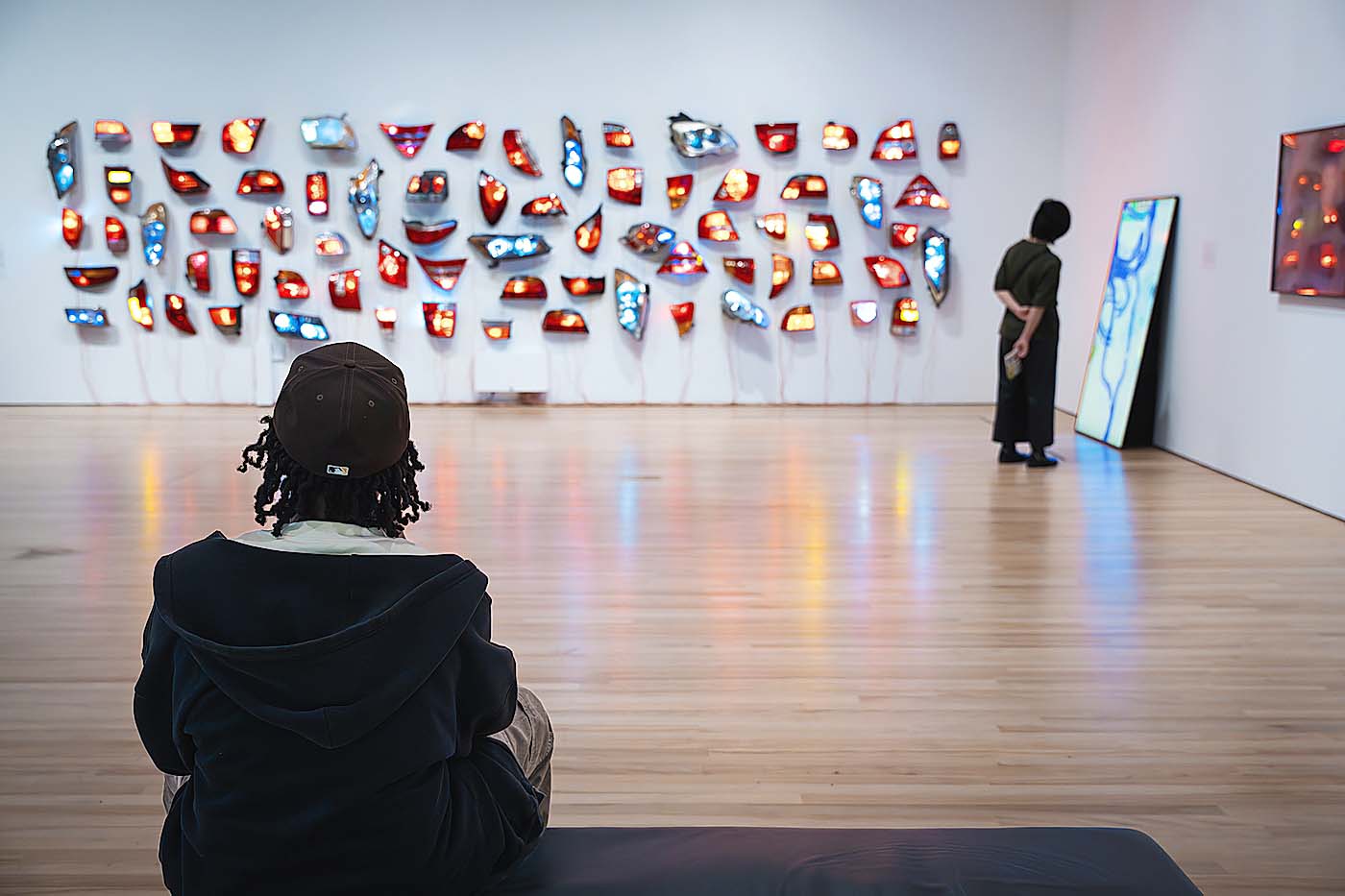
Visitors in “Run the Code: Data-Driven Art Decoded by Thoma Foundation X Blanton Museum of Art,” one of the most recent exhibitions Klemm curated at the Blanton. Courtesy of Blanton Museum of Art, photo by Manny Alcala.
Is this a particularly special or interesting time for the transition to occur?
As I mentioned, Warhol’s centennial is coming up in 2028, making this an especially exciting moment to join the museum. It’s a remarkable opportunity to celebrate his transformative impact on both culture at large and art history while also considering the many ways his work continues to resonate with artists and audiences today.
There are also some exciting projects in development that aim to build on the more experiential and performative dimensions of Warhol’s practice, opening up new possibilities for how visitors engage with his work and legacy. I’m thrilled to be joining at a moment when we can both reflect on the museum’s history and think ambitiously about its future.
Are there any areas within The Warhol’s holdings that you’re drawn to more than others?
The more time I spend with the collection, the more I’m struck by the impossibility to reduce Warhol’s career to a single narrative. Every period reveals a different set of artistic questions, a different set of historical and personal contingencies and a new set of material innovations. The relationships between these overlapping elements are often surprising and wonderful.
As I’ve been going through the collection, I keep coming across work I didn’t know well and each time it’s wonderful for me. First I was more fully introduced to his early drawings, which I absolutely love and are so beautiful and poignant. Recently, I have been particularly fascinated by the scale and ambition of some of his later works, his late forays into abstraction from the “Shadows” to the “Rorschach” paintings. I am always struck by the extraordinary range of subjects and imagery he explored throughout his career yet also intrigued by its consistency in terms of how it reflects the everchanging landscape of Cold War American culture. I’m also drawn to the ways his early work expands our understanding of his later practice, and how the later work can be seen to connect back to the early work. What’s exciting about having access to the collection in such depth is the opportunity to make these connections across periods that might not be immediately apparent, and to think about how those discoveries can shape new approaches to presenting his work.
Warhol’s art was so timely and responsive to community and culture. Do you have any plans to further engage with or integrate into the locale?
One of the things that makes The Warhol so special is its deep connection to Pittsburgh, the city where Andy Warhol was born and raised. I think there’s something incredibly meaningful about having a museum dedicated to his life and work here, and about the possibilities that creates for connecting his legacy to the city today. We all want to continue to find ways to bring in the community and the local arts scene into the museum. We are hosting the MFA exhibition in 2027 for Carnegie Mellon University, which is where Warhol went to art school when it was known as Carnegie Tech, as well. It has been wonderful to have the opportunity to meet with and hear from the incredible students there. I am so looking forward to sharing their work in the museum with our visitors.
In my two months here, I have really enjoyed beginning to get to know Pittsburgh and its arts community, and I’m looking forward to building relationships with artists, organizations, and audiences across the city. I believe strongly in the importance of museums as places for connection and exchange, and I’m excited to contribute to the ways The Warhol engages with the communities around it.
Do you have any specific goals relating to this role that you can share?
My immediate priority is the exhibitions we have coming up soon, but I am also trying to immerse myself as much as I can in the museum’s collections and archives, which is so much fun.
Such incredible experts who know Warhol’s work and story work at the institution, and I hope to continue learning from their knowledge and experience.
At the same time, I’m looking forward to helping develop curatorial ideas, strategies, and frameworks that will guide our work in the years ahead. For me, these first months are about listening, learning, building relationships, and laying the groundwork for the work we’ll do together.
I’m eager to help develop ambitious exhibitions and commissions that support artists in pursuing new ideas, experimenting, and taking risks, while making full use of the museum’s collections and archives.
I also think a museum dedicated to an artist as influential as Warhol has a particular responsibility to continue questioning and expanding the narratives surrounding his work. I’d like to contribute to growing scholarship that brings greater attention to overlooked artists, histories, and perspectives within the history of Warhol and Pop Art, while ensuring that contemporary artists can engage with that legacy on their own terms. (The Pittsburgh connection is explored in another question!)
Do you remember your first exposure to Andy Warhol and his art?
I spent a lot of time in museums growing up: whatever city we visited, we had to go to the art museum, regardless of the size. So, I’m sure I encountered Warhol’s work quite early, although I can’t remember exactly when. I certainly knew his work by high school when I was taking printmaking and was particularly interested in silk screening. What I do remember vividly is that my thesis advisor in college had a poster of one of Warhol’s Oxidation paintings on her office door. When I learned A: it was Andy Warhol, and B: how it was made, I was really fascinated by it, and it shifted my understanding of his practice beyond the Pop work I was familiar with. I was writing about Claes Oldenberg’s 1961 work “The Store” and its relationship to Abstract Expressionism and trends of gestural abstraction in New York at that time, and learning about Warhol’s later interrogation of abstraction in the late 1970s really opened my eyes to the truly experimental side of Warhol that I hadn’t previously known about and the longer histories of the call and response of various artistic movements over time.
Later, as I became increasingly interested in the relationship between art and technology, I found myself drawn to Warhol’s willingness to experiment with new tools and processes. I am fascinated by his collaboration with the Bell Labs engineer Billy Klüver and his participation in the groundbreaking Art and Technology program at LACMA. His openness to emerging technologies no matter what they were, from Polaroid cameras and experimental film to Amiga Computers, and the possibilities these new technologies offered for making art, has continued to resonate with my own interests as an art historian and curator.
—Carly Timpson