
Dr Julia Siemon has been appointed to the position of deputy director of the Bard Graduate Center (BGC) in New York City. Previously serving as director of exhibitions and chief curator, this new position will build upon her work with the BCG Gallery while bridging the institution’s gallery and academic programs. Upon hearing the announcement, we caught up with Siemon to learn more about what this role will entail.
For the past two years, you have been director of exhibitions and chief curator at BCG. How will this new appointment to deputy director change your day-to-day activities?
While I will continue to oversee BGC Gallery and its programming, in the deputy director role I will also help provide leadership to other departments and help shape strategy across the institution. In terms of changes to my day-to-day activities, this will mean even more collaboration — that is, more time set aside for conversations with my talented colleagues. Although this puts pressure on my schedule, it’s quickly becoming one of the most enjoyable parts of my job.
What have some of your favorite aspects of working at BCG been?
My favorite thing about working at BGC is the people. The students are smart, earnest, optimistic and full of new ideas. My colleagues are the some of the most creative and dedicated I’ve ever encountered. I suspect that this community is exceptional because its founding ethos is exceptional. In creating Bard Graduate Center, Susan Weber established a place that nurtures a simple mission: collaborative study of the things people make, use and love.
How does BCG differ from other institutions?
To my mind, what makes BGC special is its combination of rigor and generosity. There is no hierarchy of the arts here, so you can make a case for studying virtually any object, from furniture to fashion to firearms and so much more. Of course, the corollary to this is another defining aspect of BGC: its uncompromising approach to scholarship. Whether in the gallery or in the classroom, our scholarship is expected to be the highest quality. Moreover, at BGC, we believe that visitors to our exhibitions and website, readers of our books and attendees at our lectures and programs are just as hungry for knowledge as we are. It’s our duty to tell engaging stories that merit and reward their attention.
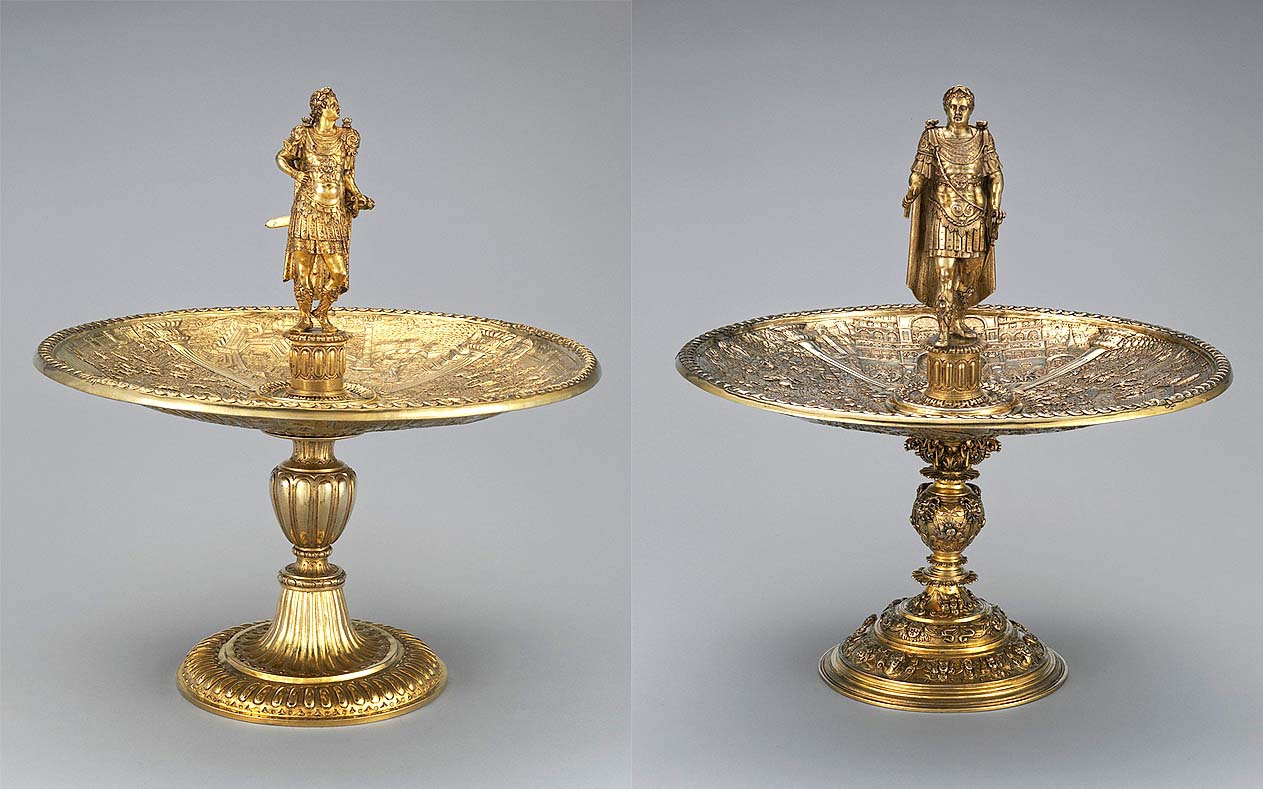
Two of the Aldobrandini Tazze on view in “The Silver Caesars: A Renaissance Mystery,” December 12, 2017-March 11, 2018, which was organized by Siemon. Left: Claudius tazza, Flemish, possibly Antwerp, late Sixteenth Century, circa 1587-99, gilded silver, 15⅞ inches tall. The Metropolitan Museum of Art, New York City, Wrightsman Fund, 2024 (2024.436). Right: Vitellius tazza, Flemish, possibly Antwerp, circa 1587-99, foot added after mid Nineteenth Century, gilded silver, 16⅛ inches tall. The Metropolitan Museum of Art, New York City, Fletcher Fund, 1945 (45.60.58a-h).
What is your educational and professional background like?
I am an art historian and curator who cares deeply about education. After earning a BA in art history and Spanish at Washington University in St Louis, I completed a PhD in art history and archaeology at Columbia University, initially intending to pursue a career in academia. My focus in graduate school was Italian Renaissance art, with a minor in early Netherlandish painting; I wrote a dissertation on Florentine portraits painted during a period of political unrest.
Despite the specificity of this training, I tend to think of myself as a generalist — at least within the broad field of early modern European art — because my projects have never been limited by place, period or medium. My first curatorial position was in the department of European sculpture and decorative art at the Metropolitan Museum of Art, where I organized an exhibition dedicated to one of the greatest suites of silver surviving from the Renaissance: the so-called “Aldobrandini Tazze.” This project (which I also brought to Waddesdon Manor in the UK) opened my eyes to the joys of research-driven curatorial work. I was hooked on the cycle of intense study followed by the chance to share the results of that work with the public. After several years at the Met, I moved to Cooper Hewitt, Smithsonian Design Museum, where I continued my engagement with decorative arts and design. In exhibitions and publications, I investigated subjects such as historic Japanese textile patterns, antiquarian ornament in Britain, early architectural education in Rome and the sketchbook drawings of the Sixteenth Century print designer Johannes Stradanus; this resulted in a digital catalogue raisonné published by Cooper Hewitt in 2025. Before coming to BGC in 2024, I was most recently a member of the paintings department at the J. Paul Getty Museum in Los Angeles. For the Getty, I organized an exhibition entitled “A Light in the Dark: Joseph Wright of Derby” that will open in November 2026.
Throughout my museum career, I never abandoned teaching. After graduating from Columbia I taught several semesters of their art humanities course for undergraduates, and at Cooper Hewitt I was actively engaged with students enrolled in the MA program in the history of design and curatorial practice, jointly offered with Parsons. I am delighted to find myself back in an academic environment at BGC, where last semester I taught a class entitled “Curatorial Thinking: From Object to Exhibition.”
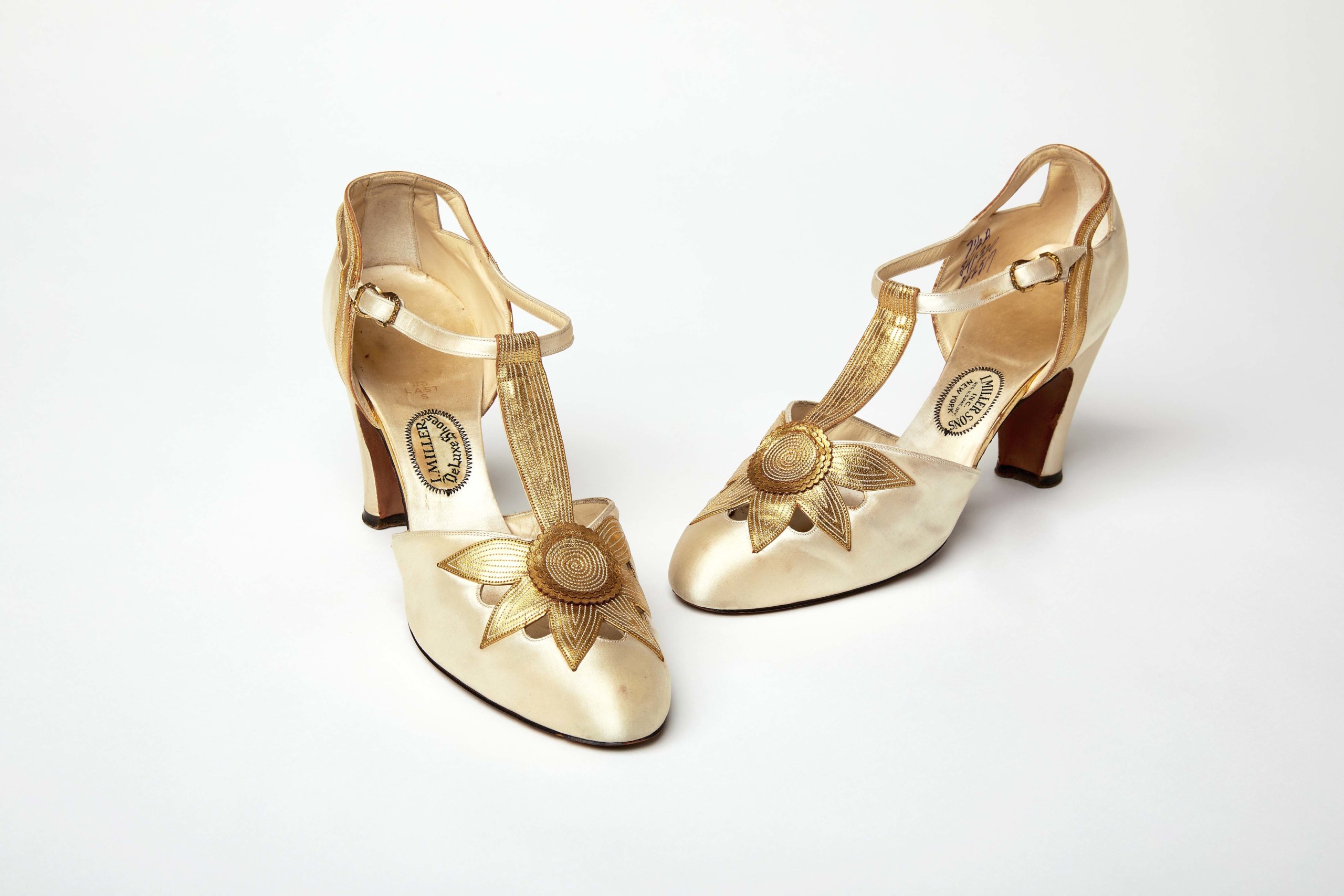
Shoes by I. Miller, mid 1920s, silk, satin and leather. Jimmy Raye Collection. Photograph by Joel Benjamin. Courtesy Bard Graduate Center. They will be on view in “Goddesses in the Machine: Fashion in American Silent Film” at the Bard Graduate Center from September 18 to January 3, 2027.
How does that experience inform your practice at BCG?
I have described my career as a series of love affairs with individual objects; at BGC, this same joyful intellectual curiosity defines my practice. In my leadership role I have the privilege to support a variety of projects across disciplines. Because of my exposure to multiple fields in art history, rather than being intimidated by working outside my area of expertise, I find this opportunity to dive into new material incredibly stimulating.
My experience makes me a strong advocate for BGC’s mission, as I’ve seen first-hand the gaps and shortcomings the institution was created to address. For example, I know how unhelpful imagined divisions between so-called fine and decorative arts can be; at BCG, I’ve been challenged to think even more expansively about material culture in the broadest sense. In the same way, in my career I’ve chafed against imagined divisions between “academic” and “curatorial” scholarship in our field; at BGC, I’m positioned to help bridge that divide, bringing objects into the classroom and students into the gallery — with rigorous research underlying every endeavor.
My background has moreover made me acutely aware of the lack of opportunities for advanced training in subject areas that fall outside traditional boundaries of fine art. At the same time, I have also experienced the impact of dwindling funding in the arts and the increasing need for curators to steward diverse collections regardless of their training. When, as a young curator, I found myself in this situation, I was lucky enough to be surrounded by dedicated mentors. As senior curators retire and are not replaced, such mentorship will be harder to find — making classroom education even more important. But the crisis in the academic world is no less dire, with shrinking support for the humanities now the norm. My sensitivity to these pressures informs my leadership at an institution that seeks to train the curators, teachers and arts professionals of the future.
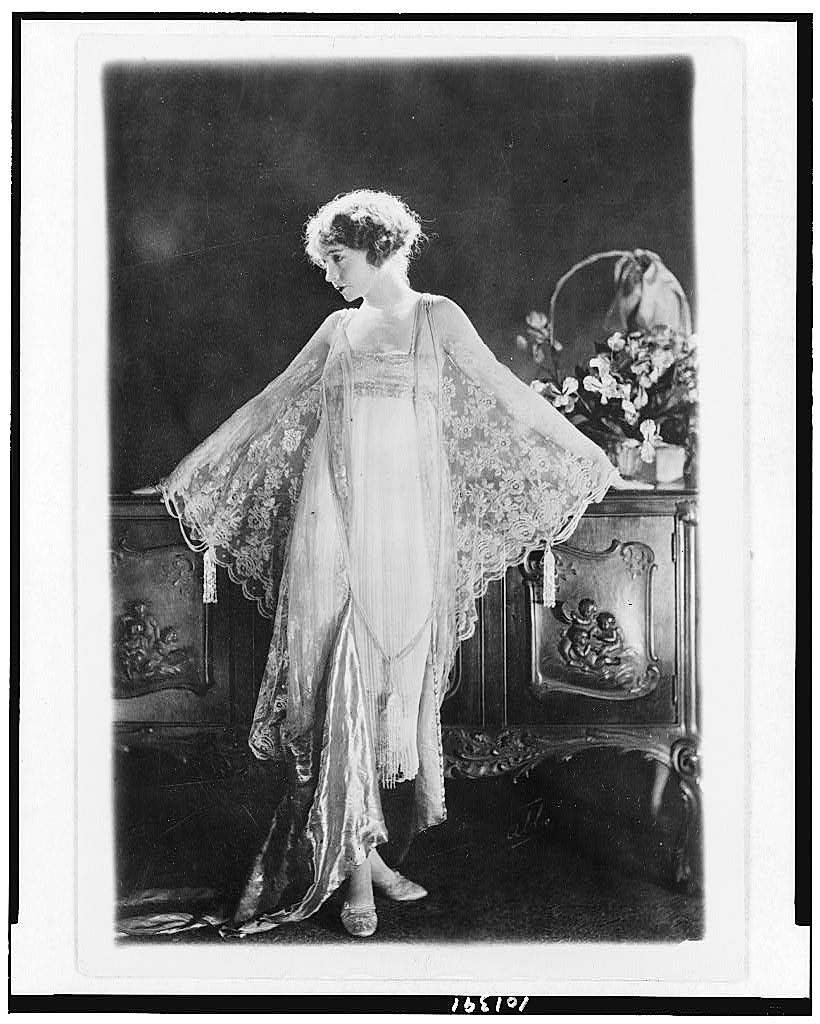
Film still of Lillian Gish (1893-1993) in a nightgown designed by Henri Bendel (1868-1936) in Way Down East (1920), Bain News Service, New York,1922, photographic print. Library of Congress, 90710959. It will be on view in “Goddesses in the Machine: Fashion in American Silent Film” at the Bard Graduate Center from September 18 to January 3, 2027.
Are there any projects coming up that you are especially excited about?
In September 2026, an exhibition entitled “Goddesses in the Machine: Fashion in American Silent Film” will open at Bard Graduate Center Gallery. This project, which grows out of a dissertation by BGC alumna Michelle Finamore, is co-curated by Dr Finamore together with Emma Cormack, an associate curator at the gallery. In the exhibition, visitors will have the chance to dive into the early history of fashion on film, tracing the professionalization of the film costuming industry through a selection of extraordinary objects. Many of these items will be on public view for the first time. The exhibition and its catalog, co-edited by Finamore and Cormack with essays from established and emerging scholars in several related disciplines, promise to be a delight to encounter as well as a turning point in the field.
As deputy director, do you have any plans or ideas for the institution’s development that you can share with us?
Bard Graduate Center is in the process of expanding its study collection and shoring up the infrastructure that supports the stewardship and use of these objects, which now number in the several thousands. I am excited to bring my experience in some of the country’s largest collecting institutions to this rapidly evolving effort, which is intended to serve BGC students by giving them hands-on access to the materials they study. It’s easy to envision countless ways in which the academic and gallery experiences will be enlivened by the study collection — we already see this taking place through classroom engagement, public and private programs and planned future exhibitions. Stay tuned!
—Carly Timpson