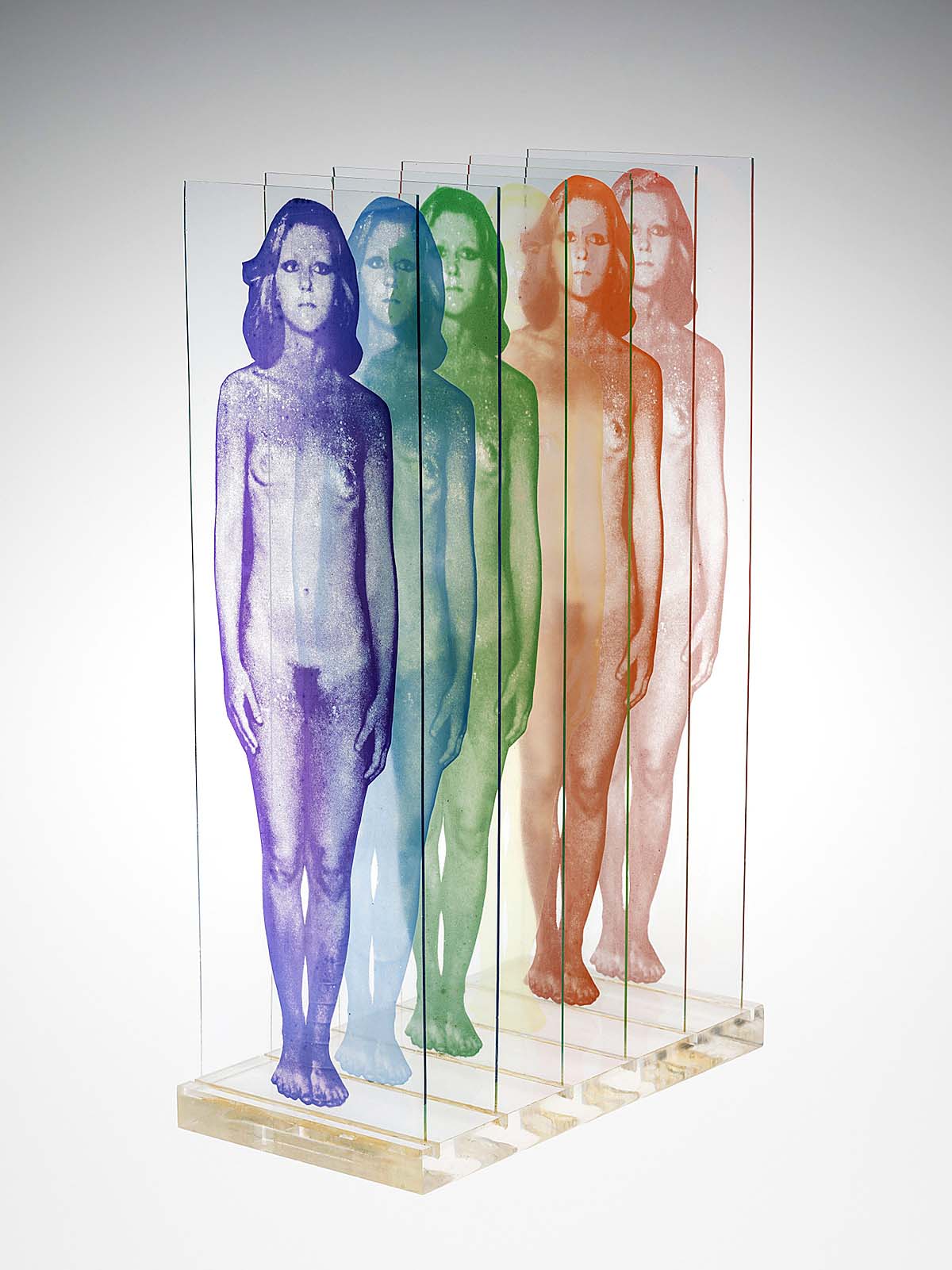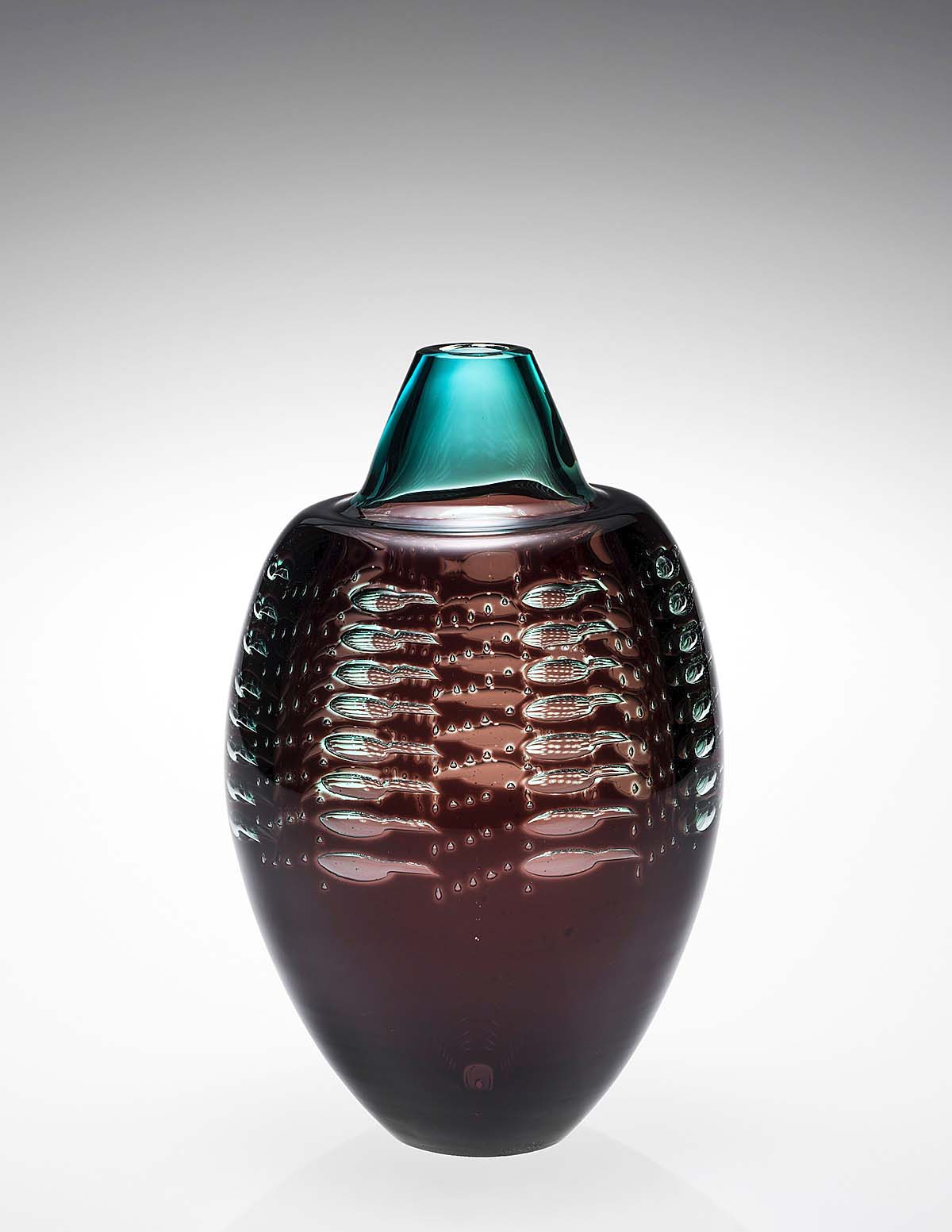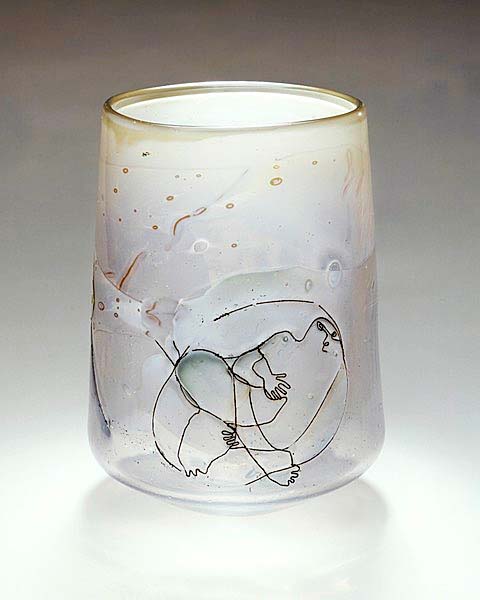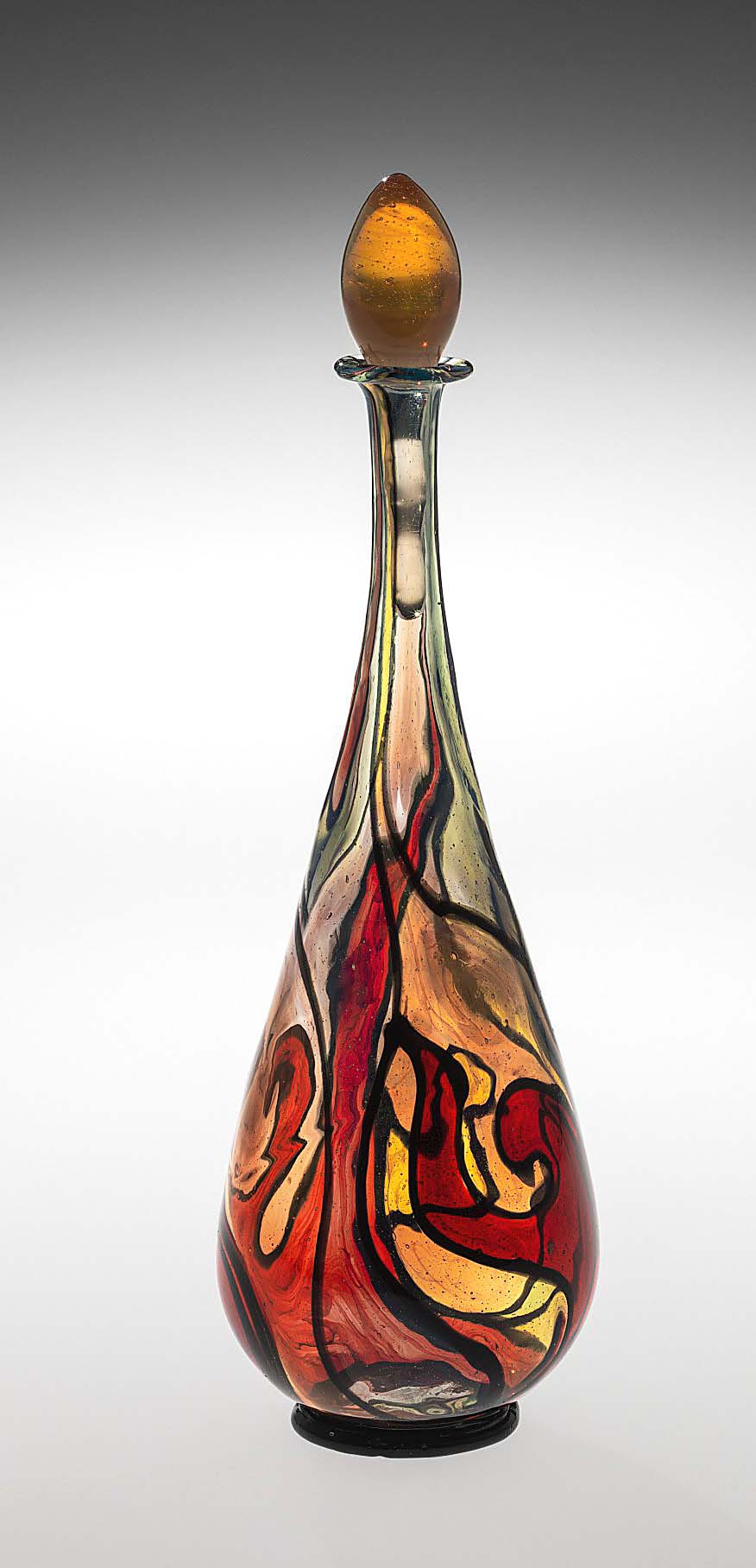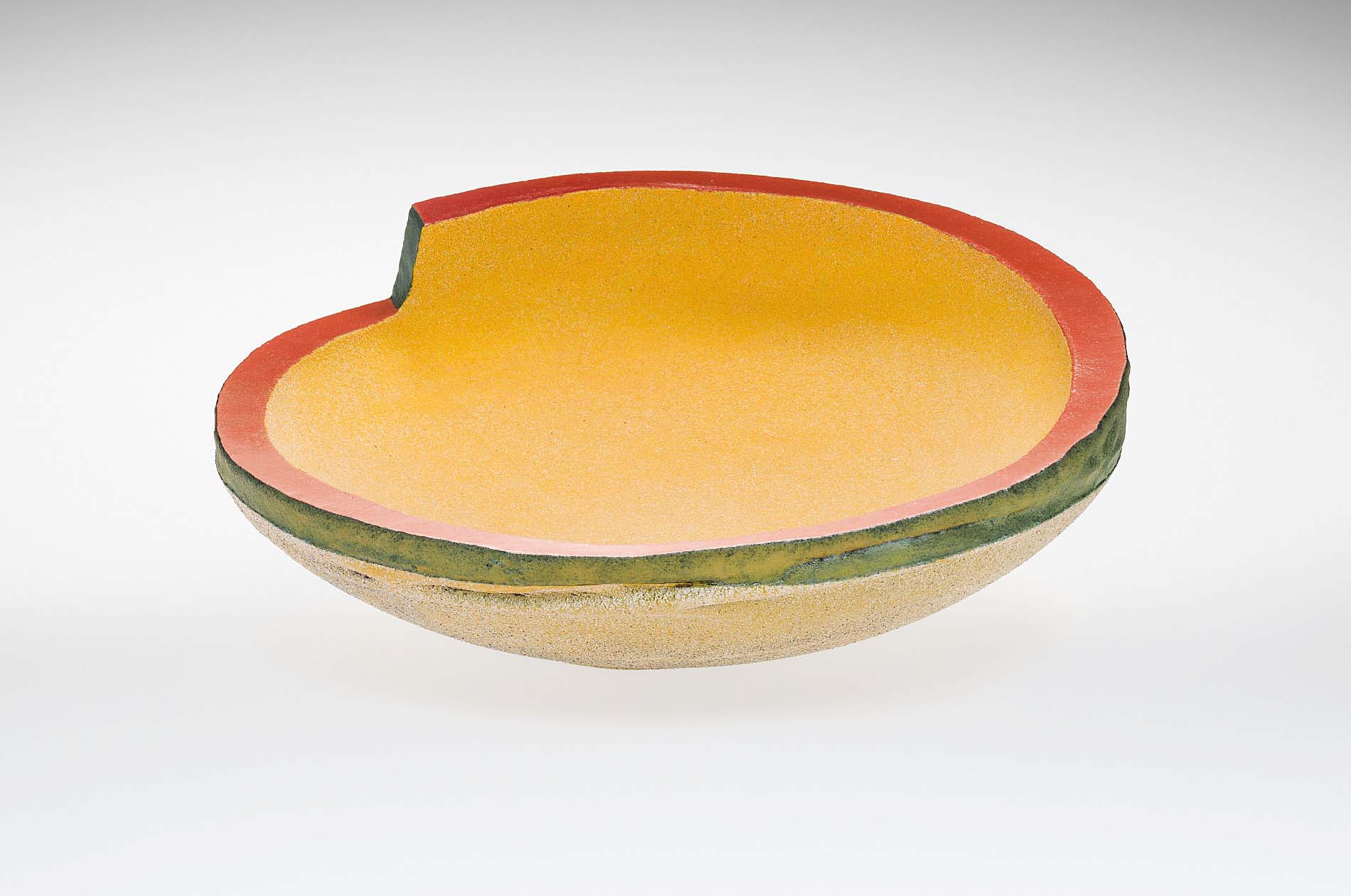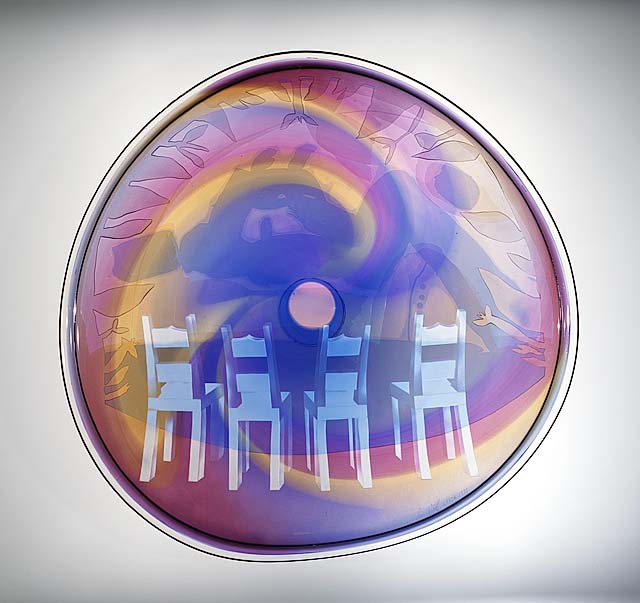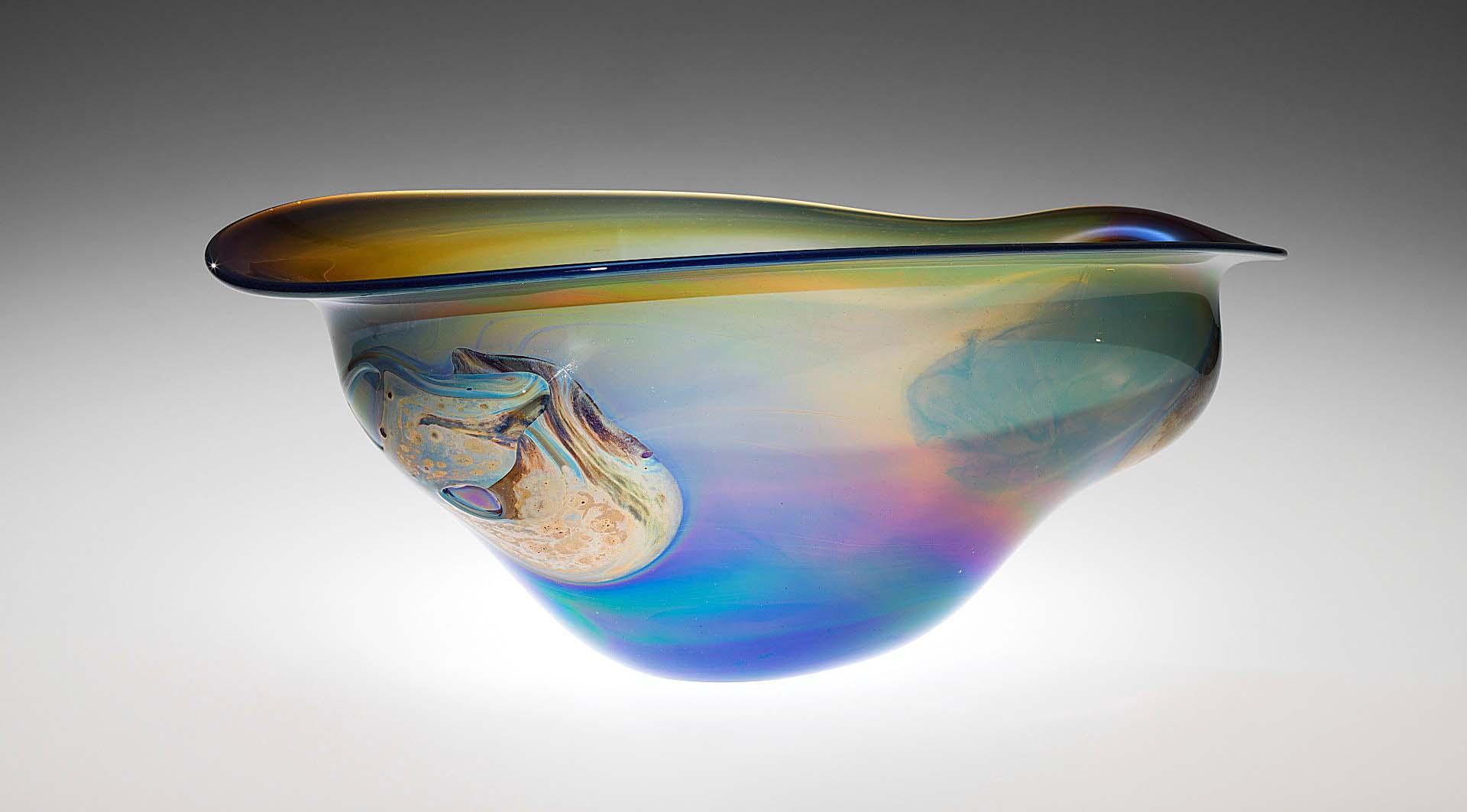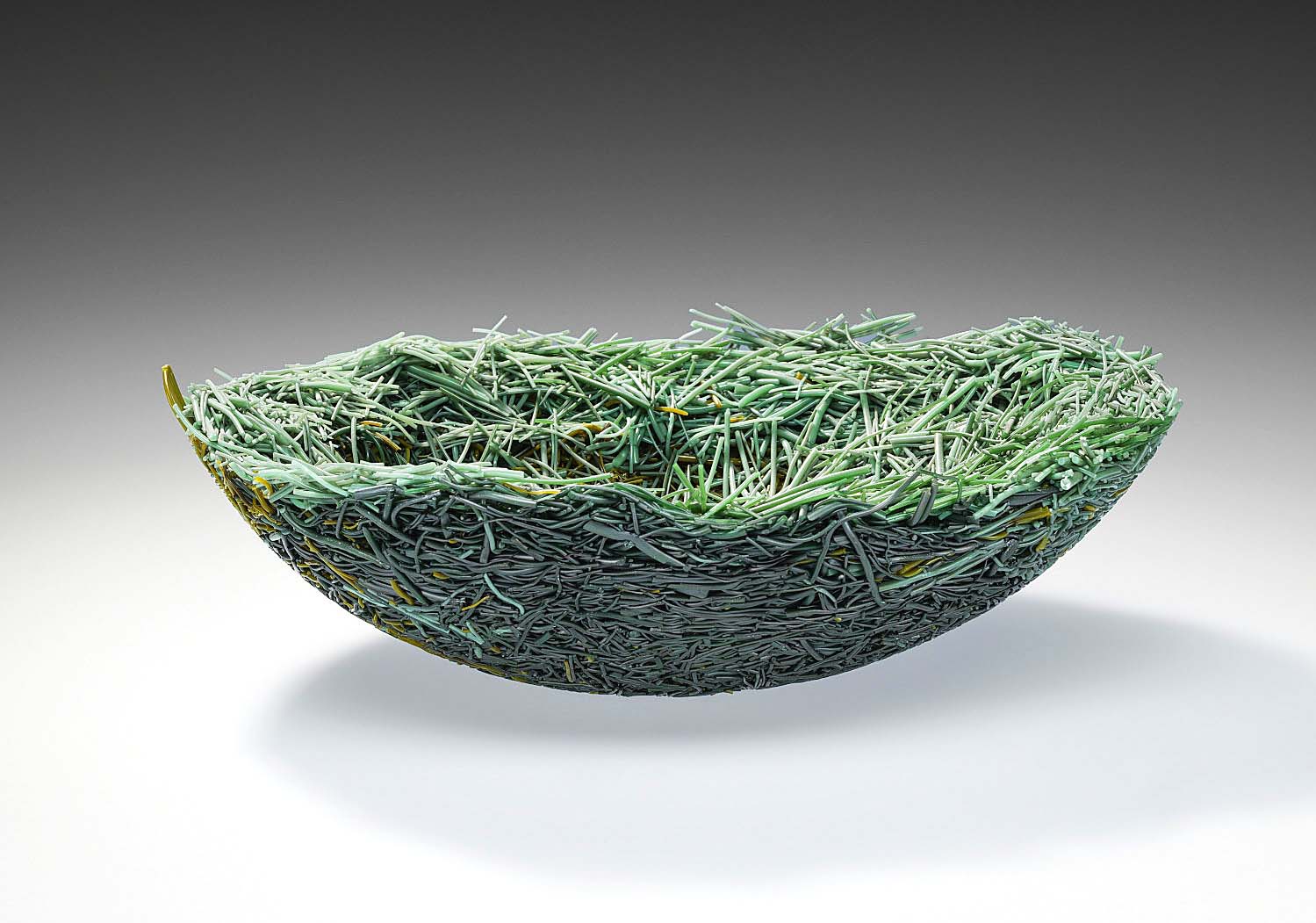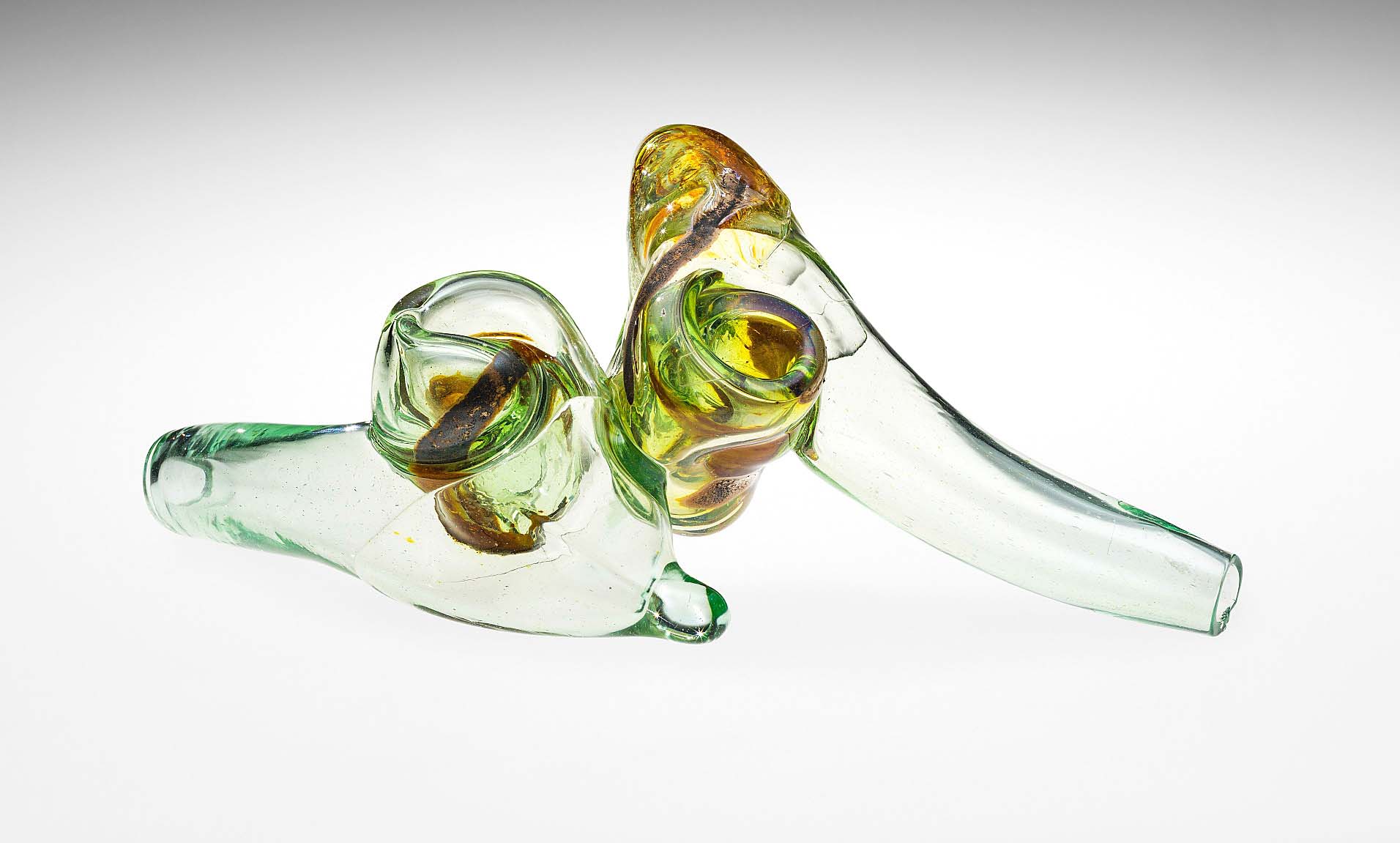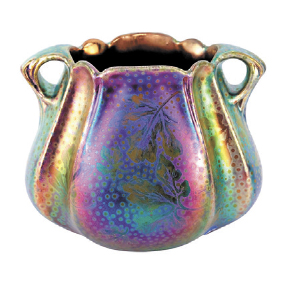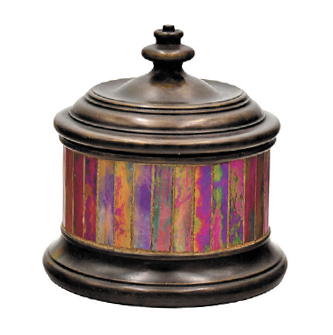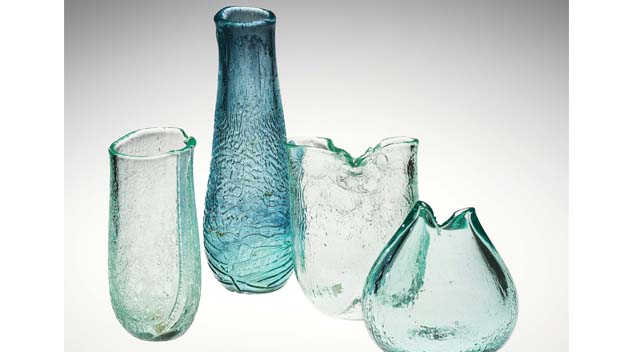
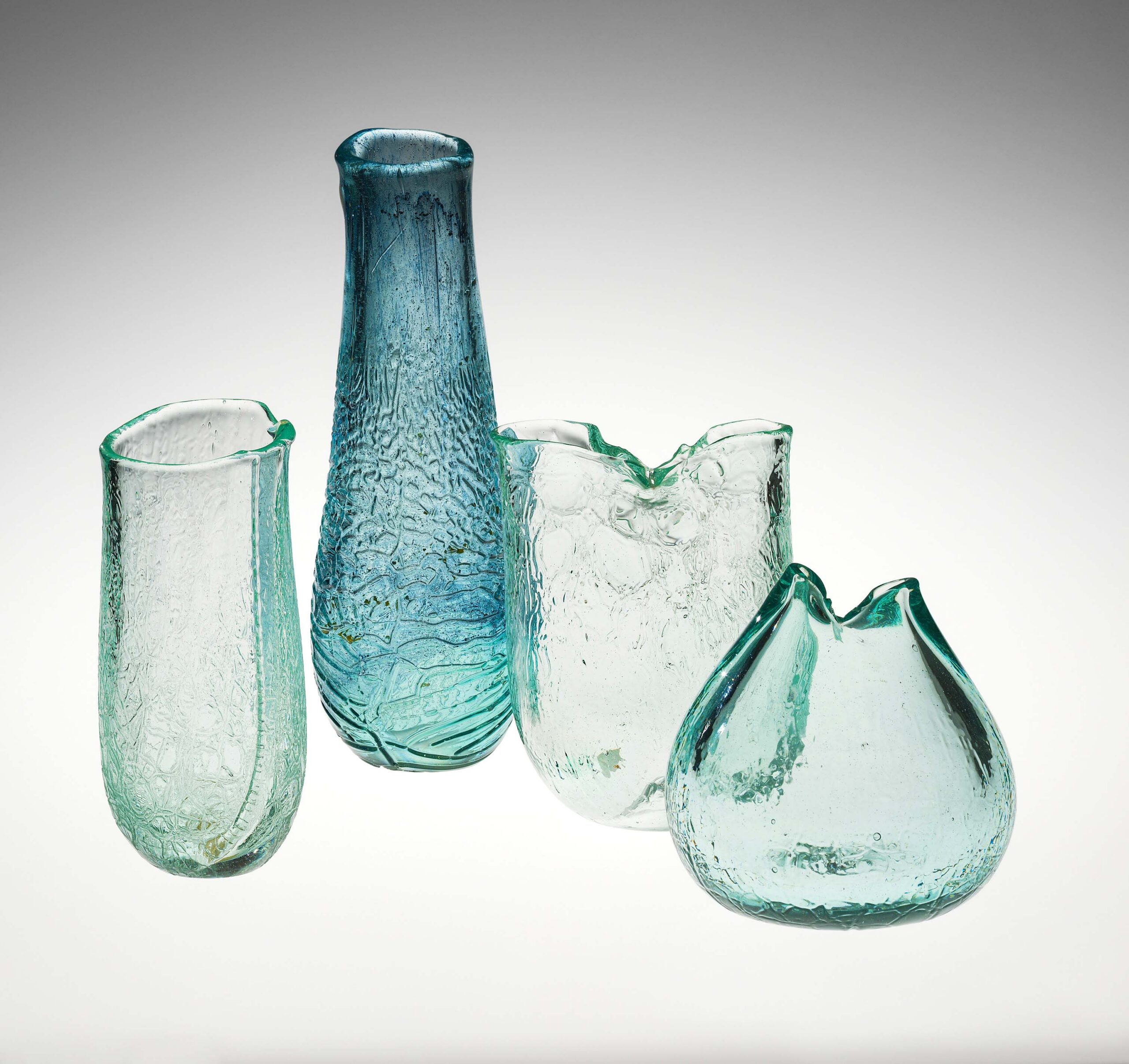
“Surface Texture Studies, #1-4” by Monona Rossol, 1963-64, University of Wisconsin-Madison. Collection of Monona Rossol.
By Z.G. Burnett
CORNING, N.Y. — The Corning Museum of Glass (CMOG) presents “Tough Stuff: Women in the American Glass Studio,” the first survey exhibition featuring women artists working in glass in the United States during the breakthrough decades of the American Studio Glass Movement (circa 1960-79).
Drawn from CMOG’s permanent collection along with loans from many of the artists, the objects on display through January 10 exemplify how early experimentation was instrumental in defining artists’ approaches and shaped the creation of works for many subsequent decades. Many of these examples have never been exhibited. The exhibition was organized by Tami Landis, curator of postwar and contemporary glass at CMOG.
American art in the 1960s was fueled by a climate of material and conceptual experimentation. During this decade, glass became a focal point for many artists, particularly ceramicists, who wanted to learn the limits and possibilities of glass within their own studios and transcend the limitations of glass design and fabrication in a factory setting. This shift in conception and practice fundamentally changed the American perception of glass as an artistic medium, giving rise to what we now recognize as the Studio Glass Movement. “Tough Stuff” also explores how studio glass by female artists illuminates the broader social, cultural, artistic and gender politics of the time and up to the present day.
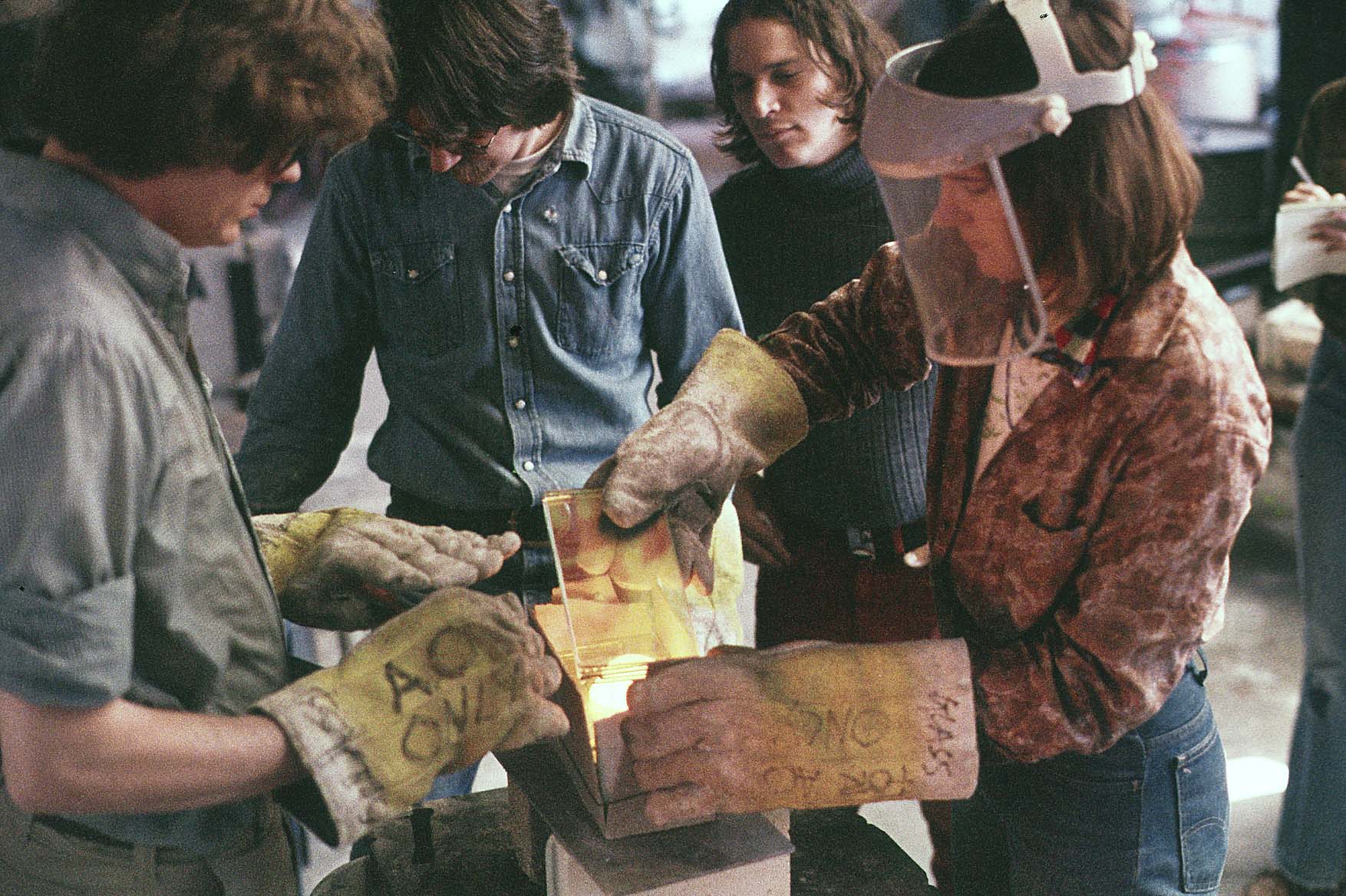
Mary Shaffer demonstrating slumping at the California College of Arts and Crafts, San Francisco, 1978. Photo from the Marvin Lipofsky Papers, Rakow Research Library, MS-0185, Corning Museum of Glass.
Current scholarship has defined the Studio Glass Movement within a largely singular framework, privileging blown-glass techniques developed by only a few makers. In reality, glass has been employed by many artists from a range of approaches across America and the world. The exhibition looks beyond the development of blown glass to a breadth of techniques — including fusing, slumping, flameworking, pâte de verre, mixed media and assembled glass. In particular, the persistence, innovation and technical prowess of female glass artists have been minimized all too often. By bringing their bodies of work together for the first time, “Tough Stuff” shares a more complete story of the distinct legacy these artists carry in the material history of glass.
“Despite [their] remarkable achievements, the scholarship, collection building and exhibition development devoted to this period have been inexcusably narrow in scope and have often only recognized a few male artists,” said Landis. “By demonstrating the contributions and presence of women artists within the material history of glass and by acknowledging the social, personal and political complexities they experienced during this foundational era, ‘Tough Stuff’ illustrates a more complete story of studio glass in the United States.”
The exhibition title is derived from Ruth Yone Tamura’s master of arts thesis from California College of Arts and Crafts in 1996. Tamura is an artist, educator and co-founder of the Pilchuck Glass School, who described 1960s glasswork as a “relatively new media” and “rather tough stuff.” The phrase touches upon both glass’ often-conceived fragility and that its making and forming require significant time, skill and physical strength. Anchoring the exhibition’s concept, “Tough Stuff” also echoes the ambition, persistence and technical skillset that female artists demonstrated in the field. Tamura was among the first in the medium to teach in an American university. Also featured are familiar names such as Audrey Handler, Ginny Ruffner, Kathleen Mulcahy, Claire Falkenstein, Toots Zynsky, Margie Jervis, Susie Krasnican and others.
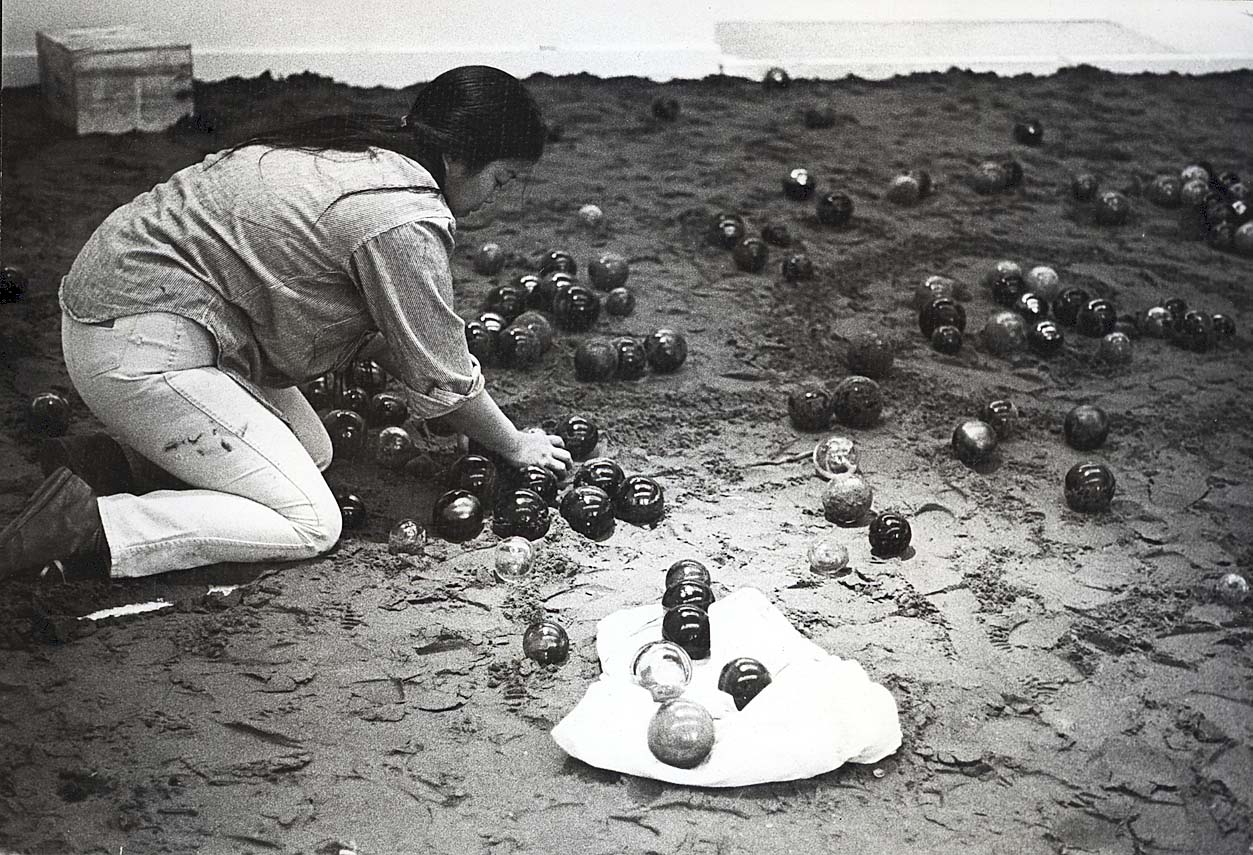
Ruth Tamura installing “The Great Marble Tournament on Bay Fill” at the gallery of the California College of Arts and Crafts, Oakland, 1969. Photo courtesy of the artist and the Libraries of the California College of Arts and Crafts.
As women’s histories continue to reshape previously male-dominant accounts of American art, “Tough Stuff” looks deeper into the very concept that studio glass is a “male-dominated field” by sharing personal narratives from the trailblazing women who were part of the movement. “The glass field was often referred to as the ‘old boys’ club,’” Landis continued. “Though this is a simple phrase, it carries layers of context to consider and had a major impact on the range of makers trying to work within this system.”
Even though recent exhibitions on women in glass have begun displaying female artists, they often focus on singular works from the 1980s or 1990s, overlooking their early presence in studio glass and referring to a few generalized accounts. “Tough Stuff” expands this approach by including six decades of studio glass (1960 to present), from showcasing early, experimental forms to later, technically- and conceptually-refined pieces.
“[The exhibition] stands out as a distinct effort in that we are telling the story from the beginning of the movement, elevating the presence of women during that time and expanding on the broader gender-based challenges they endured — this in particular has never been addressed,” Landis explained. “I must add that each artist sees and has experienced such conditions differently. Each one has shared with me their unique perspective on what this meant for them — some easier and some particularly hostile that forced them to walk away from the field entirely.”
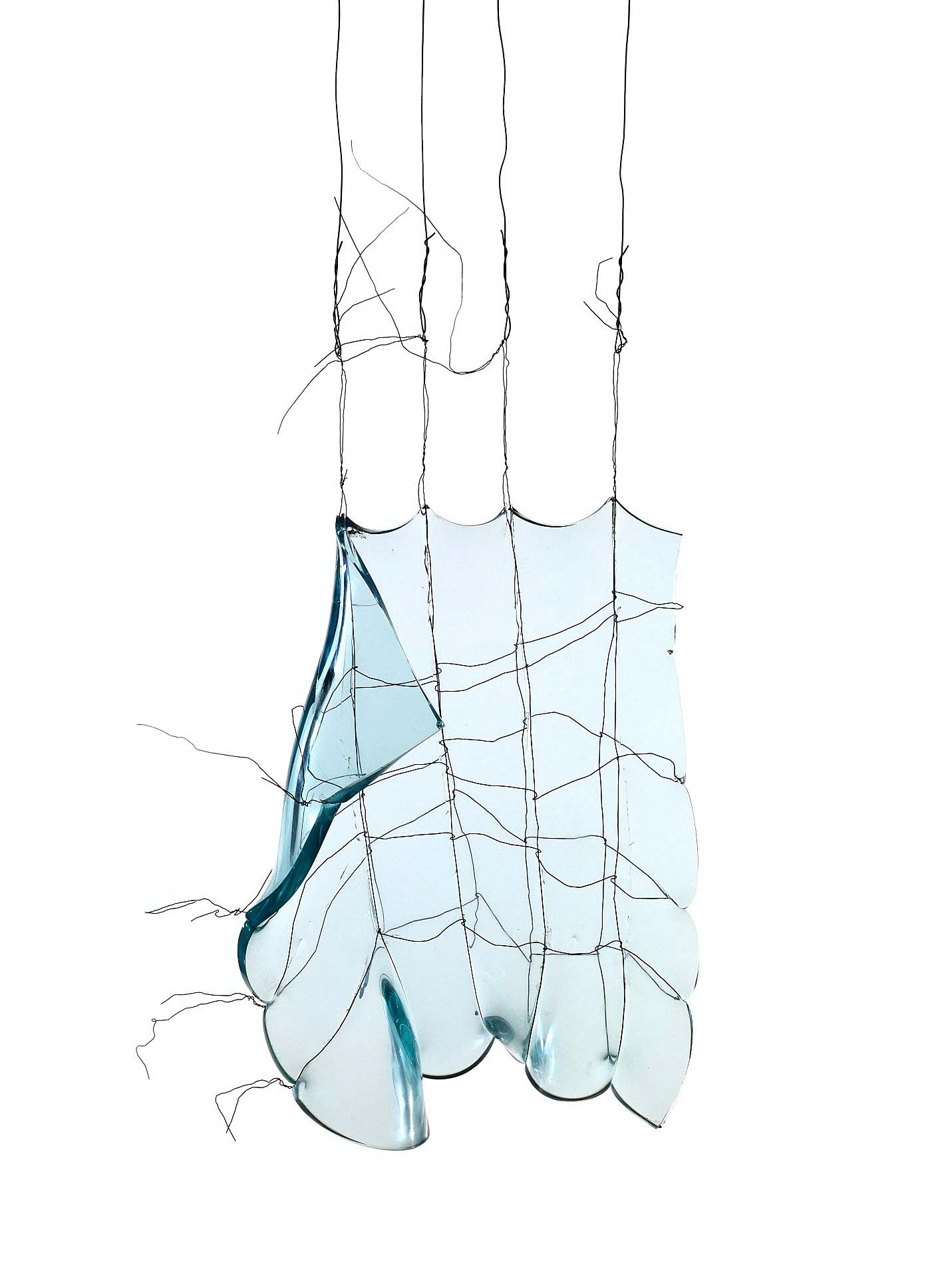
“Hanging Series #15” by Mary Shaffer, 1977, Providence, R.I. The Corning Museum of Glass.
One example of this bias was shared by artist Monona Rossol, whose crackled, blown vessels titled “Surface Texture Studies” (1964) are featured in the exhibition. Never shown in public, these objects were made at the University of Wisconsin-Madison, during Rossol’s time in the inaugural cohort of the nation’s first official university-based art glass program (1963-64), where they have been stored since the 1960s. Rossol faced significant barriers before and after graduation. “After I got my degree, I filled out my Placement Bureau application to be notified of available college teaching jobs that I could apply for,” she shared with Landis in September 2025. “It needed [program founder and professor] Harvey K. Littleton’s signature, but he refused to sign it, saying, ‘women don’t get those jobs.’” Despite this dismissal, Rossol later rejoined the field as a teacher and research chemist at the University of Wisconsin-Madison. Now an industrial hygienist, she is also founder of ACTS (Arts, Crafts and Theater Safety), a non-profit that provides health and safety services to the arts.
Landis hopes that “Tough Stuff” invites and demonstrates how institutions “recall, present and interpret these histories” with a wider lens, noting the plural histories over single history. “It also serves as a reminder to listen to the stories of all artists, not just the few who are often centered most frequently,” she added.
“Tough Stuff: Women in the American Glass Studio” is accompanied by an illustrated catalog featuring selected works and new scholarship on the origins of studio glass and the often overlooked women artists of the American Studio Glass Movement. Essay contributors include Landis; Jennifer Scanlan, executive director of the James Renwick Alliance for Craft; Helen Lee, associate professor of glass at University of Wisconsin-Madison; and Jennifer Hand, artist, curator and writer. The catalog also includes profiles of more than 30 artists from the exhibition, incorporating their first-person perspective into the wider narrative. “Tough Stuff” and its related programming is supported by a generous gift from Rochester, N.Y.-based philanthropist Mary Spurrier.
The Corning Museum of Glass is at 1 Museum Way. For information, 607-937-5371 or www.cmog.org.