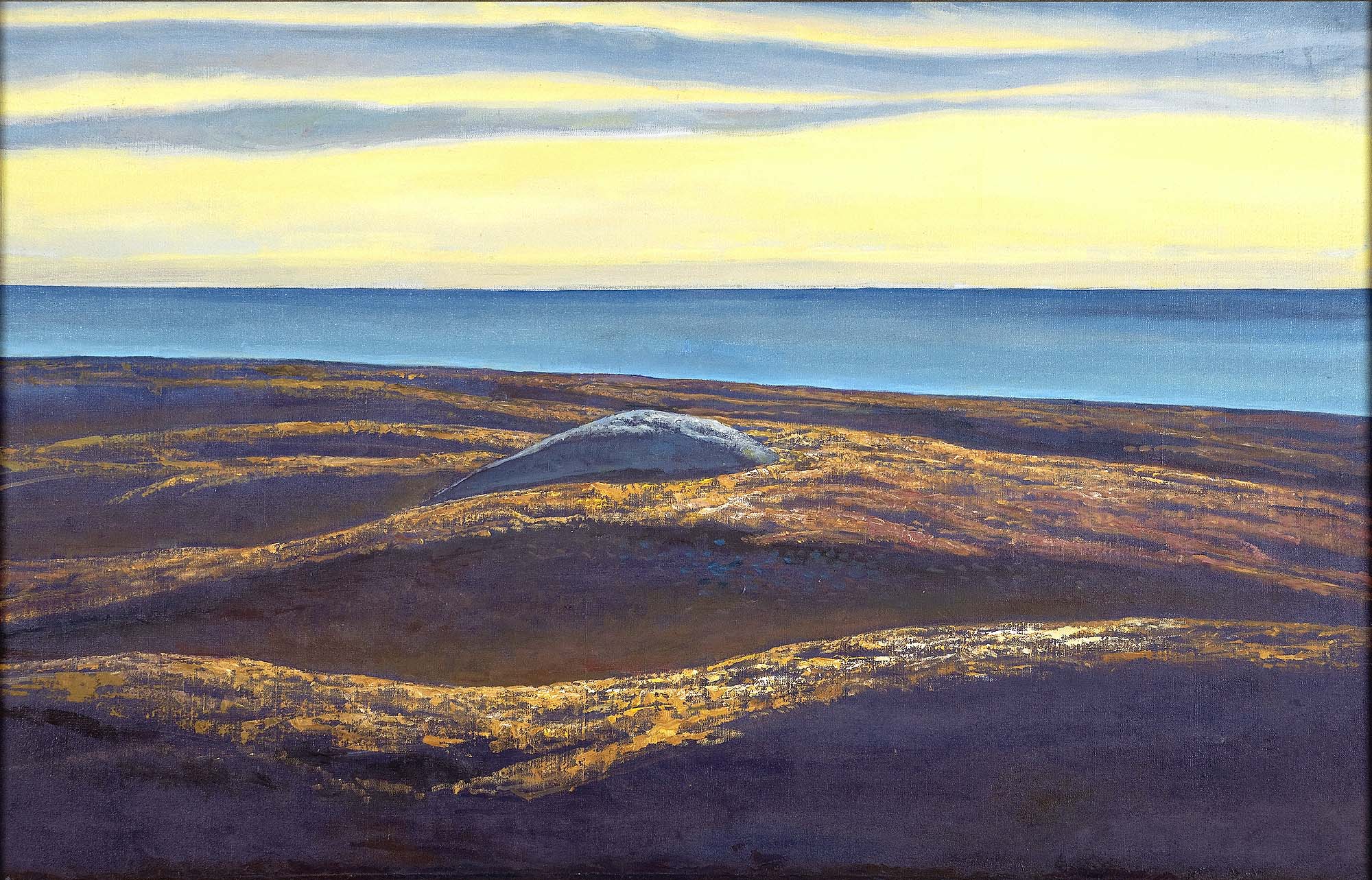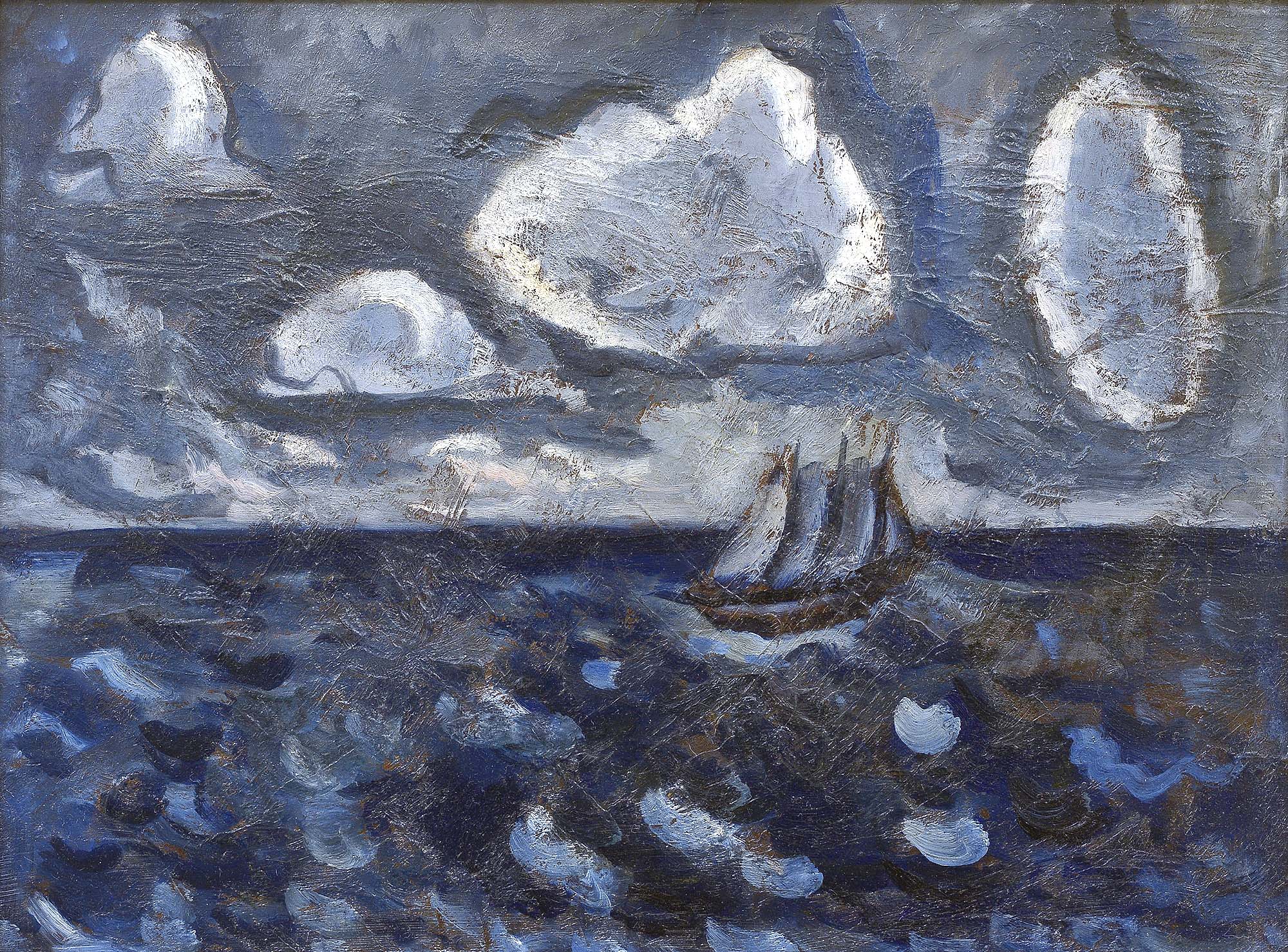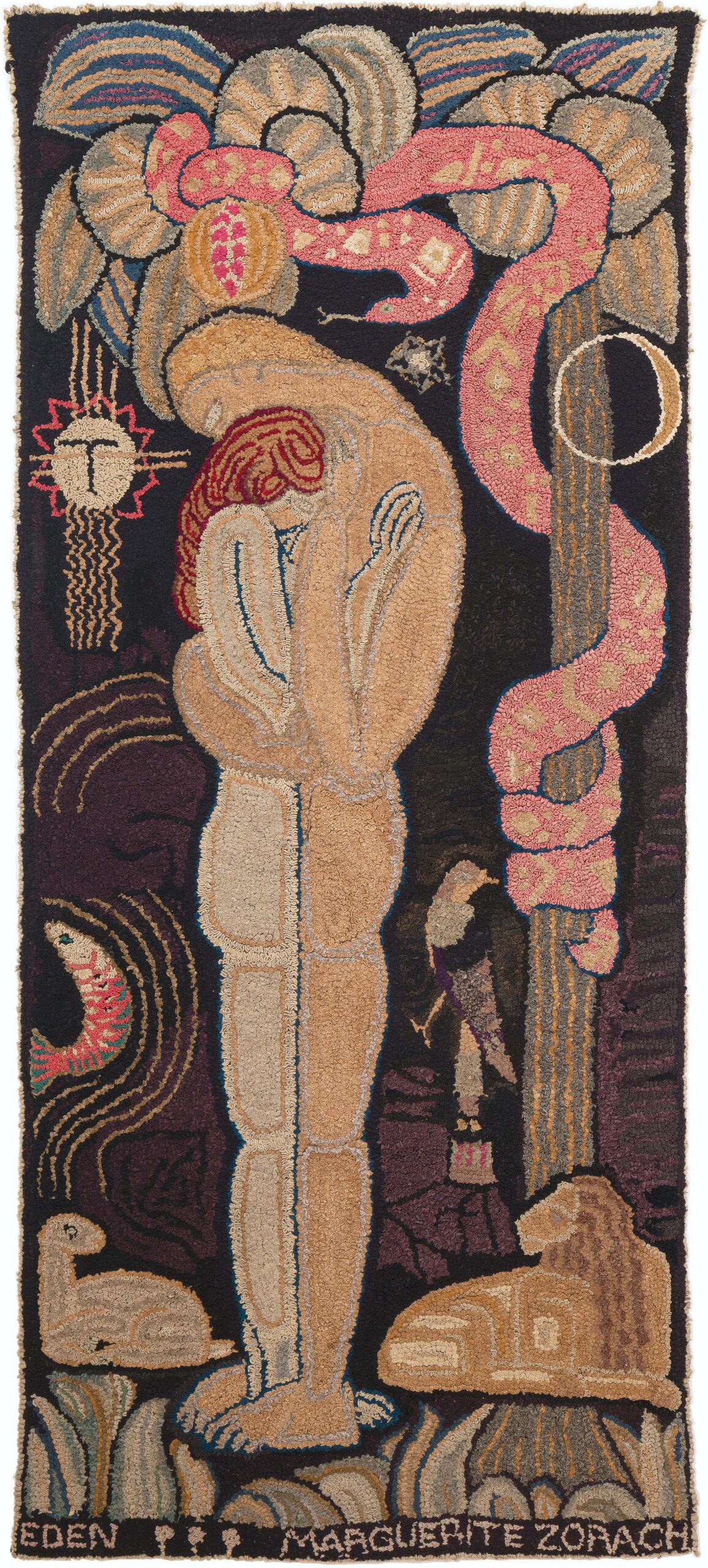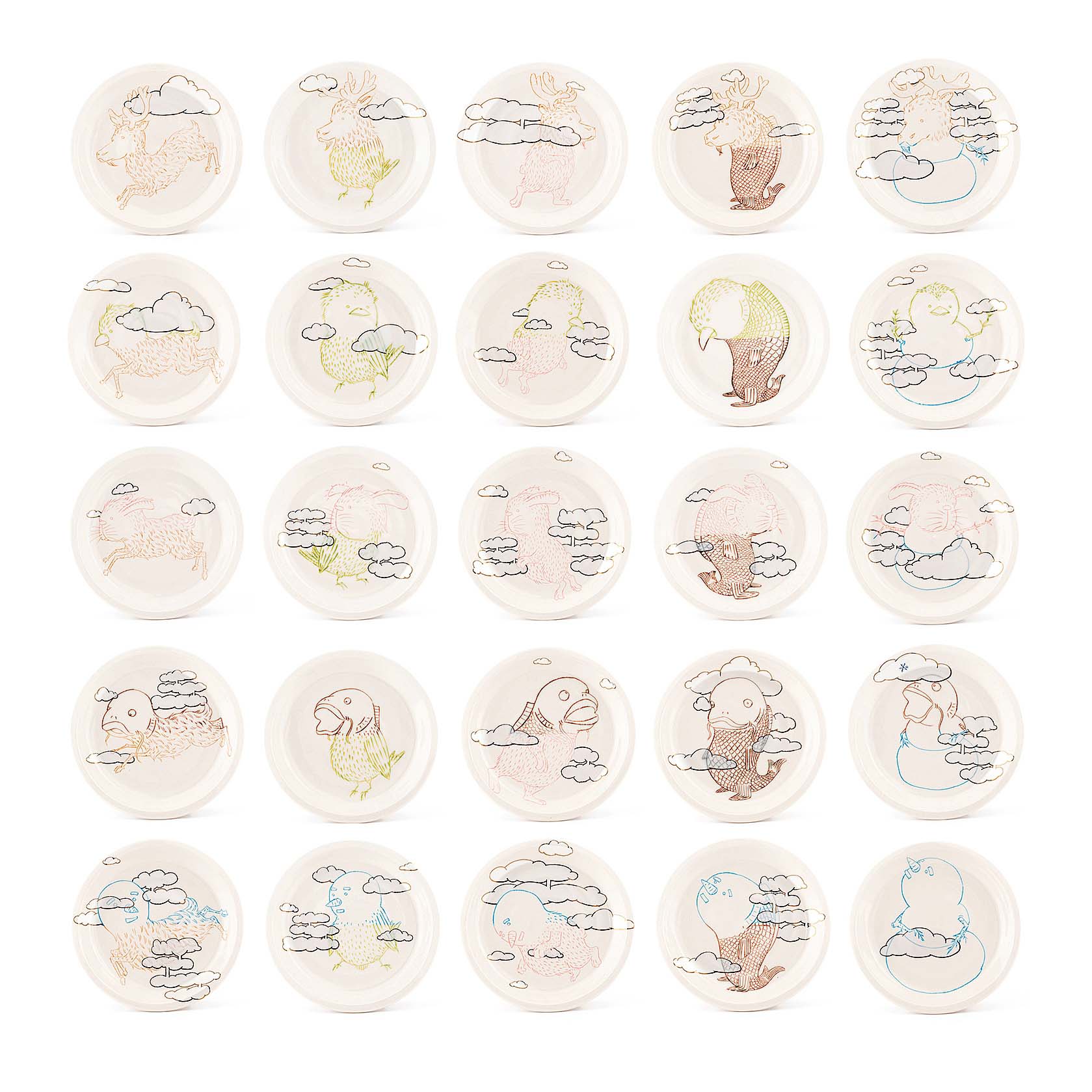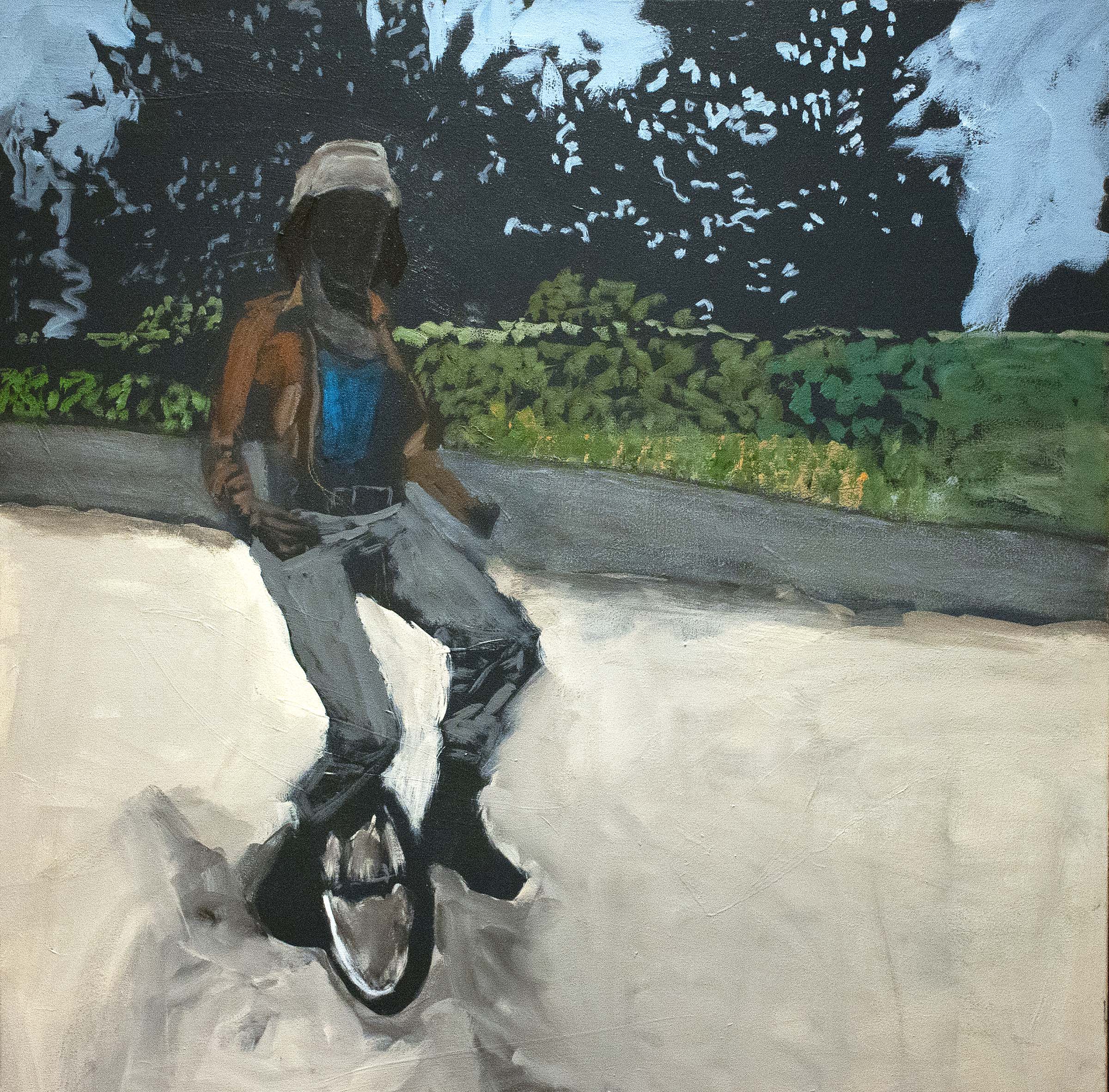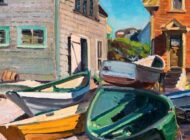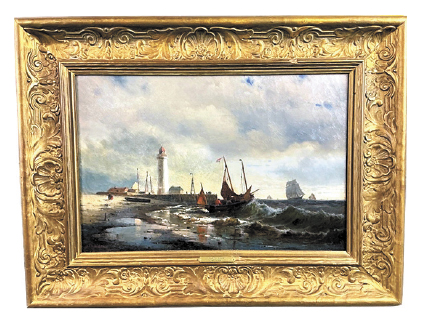
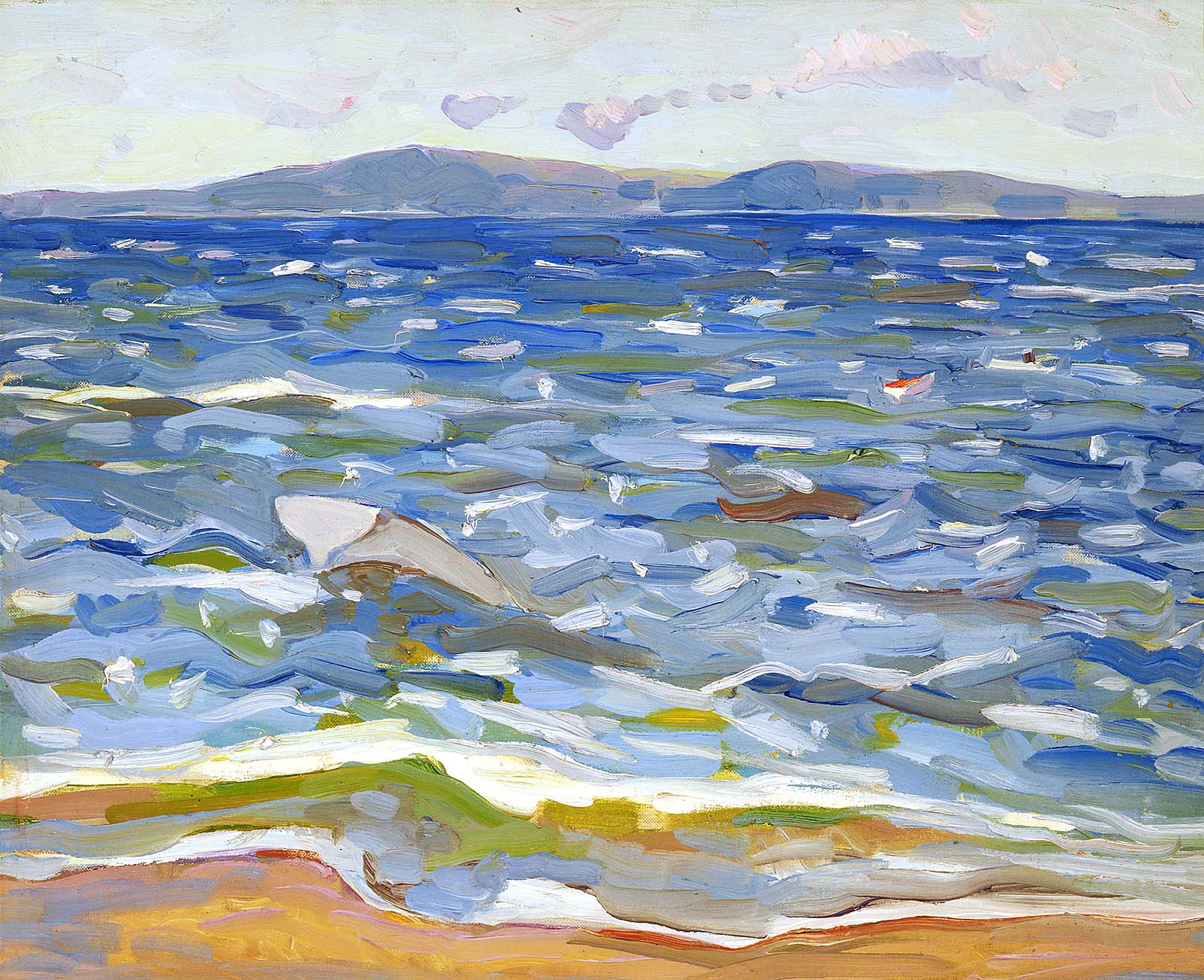
“Whitecaps” by Beatrice Whitney Van Ness (1888-1981), circa 1926, oil on canvas, 18⅛ by 22⅛ inches. Farnsworth Art Museum, museum purchase, 1989.3. © 2026 Childs Gallery Ltd, Boston / Photography by Alan LaVallee.
By Kristin Nord
ROCKLAND, MAINE — At the turn of the Nineteenth Century, American cities were cauldrons of heat, polluted air and pestilence. No wonder those who could afford a summer sojourn looked forward to packing their bags and heading north.
By 1880, Old Orchard Beach, Maine, had become accessible by steamship and the Boston and Maine Railroad, and it had become a summer resort of choice, with its hotels and their huge verandas overlooking the sea. As with Maine tourism in general, the town capitalized on its pure salt air, bracing ocean waters — and the relief from urban sanitation problems.
Over the Twentieth Century, a steady stream of vacationers arrived — and among them were artists. Many came to draw and paint en plein air, and over time, the state’s summer schools were established to cater to them. Still, other artists came on their own and, intoxicated by the natural beauty and freedom to experiment and innovate, drew friends and colleagues into the fold. Between the 1880s and WWII hundreds of artists from around the country flocked to such communities as Ogunquit, Boothbay Harbor, Monhegan Island and Eastport.
Now, in honor of America’s 250th anniversary, a new exhibition titled “Maine: A Force Within American Art (1890-2026)” has opened at the Farnsworth Art Museum. On view through January 3, the year-long exhibition shines a light on Maine’s rich artistic legacy, presenting 150 choice works across media.
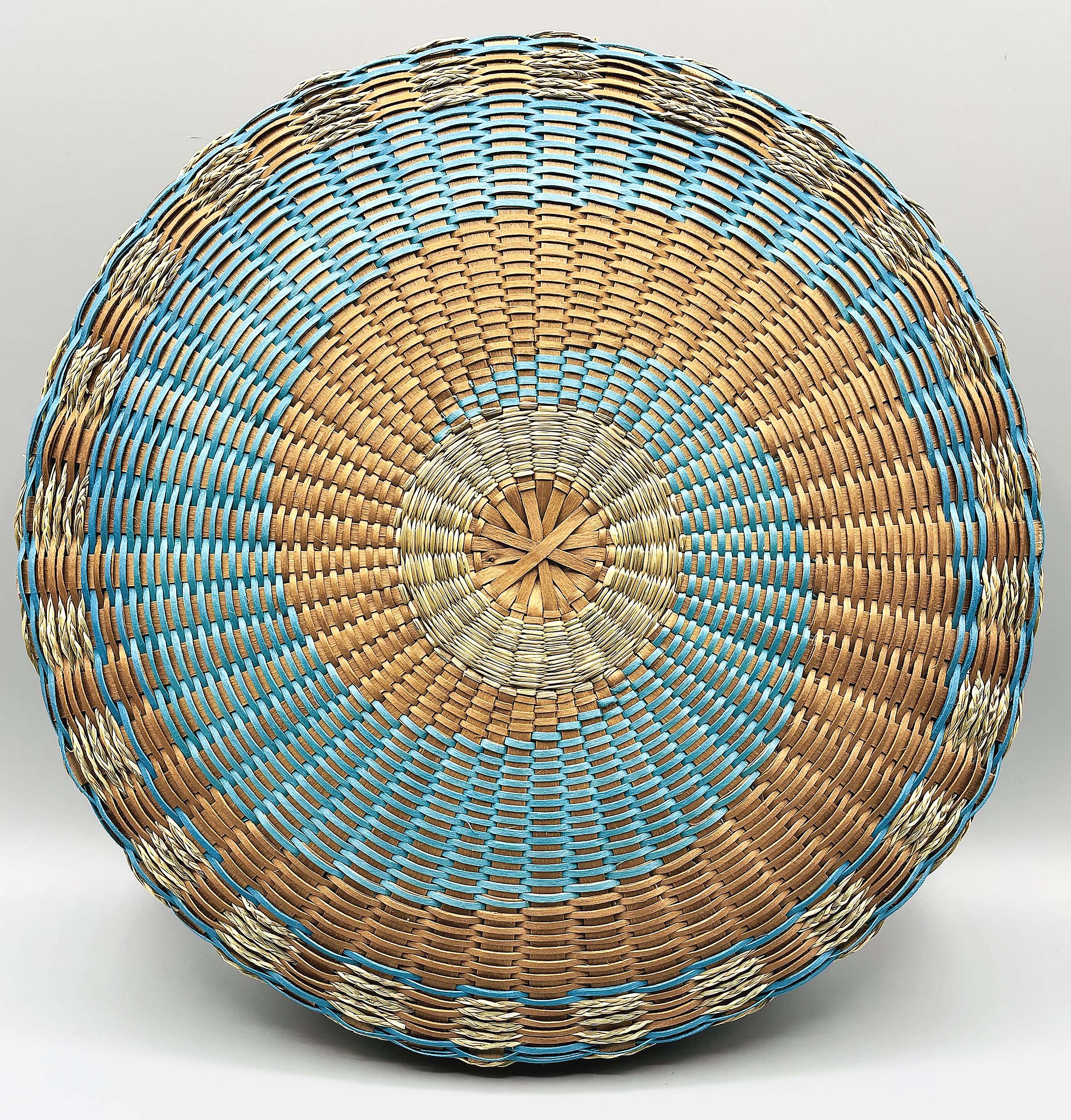
“Periwinkle Snail 2” by Theresa Secord (b 1958), 2022, blue and orange dyed ash and braided sweetgrass, 2 by 10 inches. Farnsworth Art Museum, museum purchase, Lynne Drexler Acquisition Fund, 2022.40. © 2026 Theresa Secord.
Many of the country’s leading modernists take a bow in this show, which is a masterful collaboration overseen by Farnsworth chief curator of American art, Jaime DeSimone, and associate curator Francesca Soriano, in partnership with the Ellis-Beauregard Foundation, Haystack Mountain School of Craft, Hudson Museum, Indigo Arts Alliance, Skowhegan School of Painting and Sculpture, Maine Media and Theresa Secord & Faye Hirsch. Visitors able to see this exhibition in person will come away hard-pressed to find another state that rivals Maine in its pull on our nation’s collective imagination.
From the early Twentieth Century onward, Maine has been deeply interwoven with the most influential movements in American art. Artists who participated in the groundbreaking 1913 Armory Show in New York City — which introduced European modernism to this country — including Marsden Hartley (1877-1943), John Marin (1870-1953) and Charles Demuth (1883-1935), found enduring inspiration in Maine’s landscapes and communities. Alfred Stieglitz’s circle, which included Marin and Georgia O’Keeffe (1887-1986), often drew upon time spent in Maine as they developed new approaches to abstraction and modernism.
Whether it was the inspiration to be found in the once-secluded fishing village named by the Abenaki tribe Ogunquit, “beautiful place by the sea,” or the conjured narratives of log drivers, lumberjacks and lobstermen, or the astonishing photographs that have captured light, fog and harsh natural beauty in magisterial ways, powerful art has been created in Maine, and often by a steady stream of creative come-from-aways.
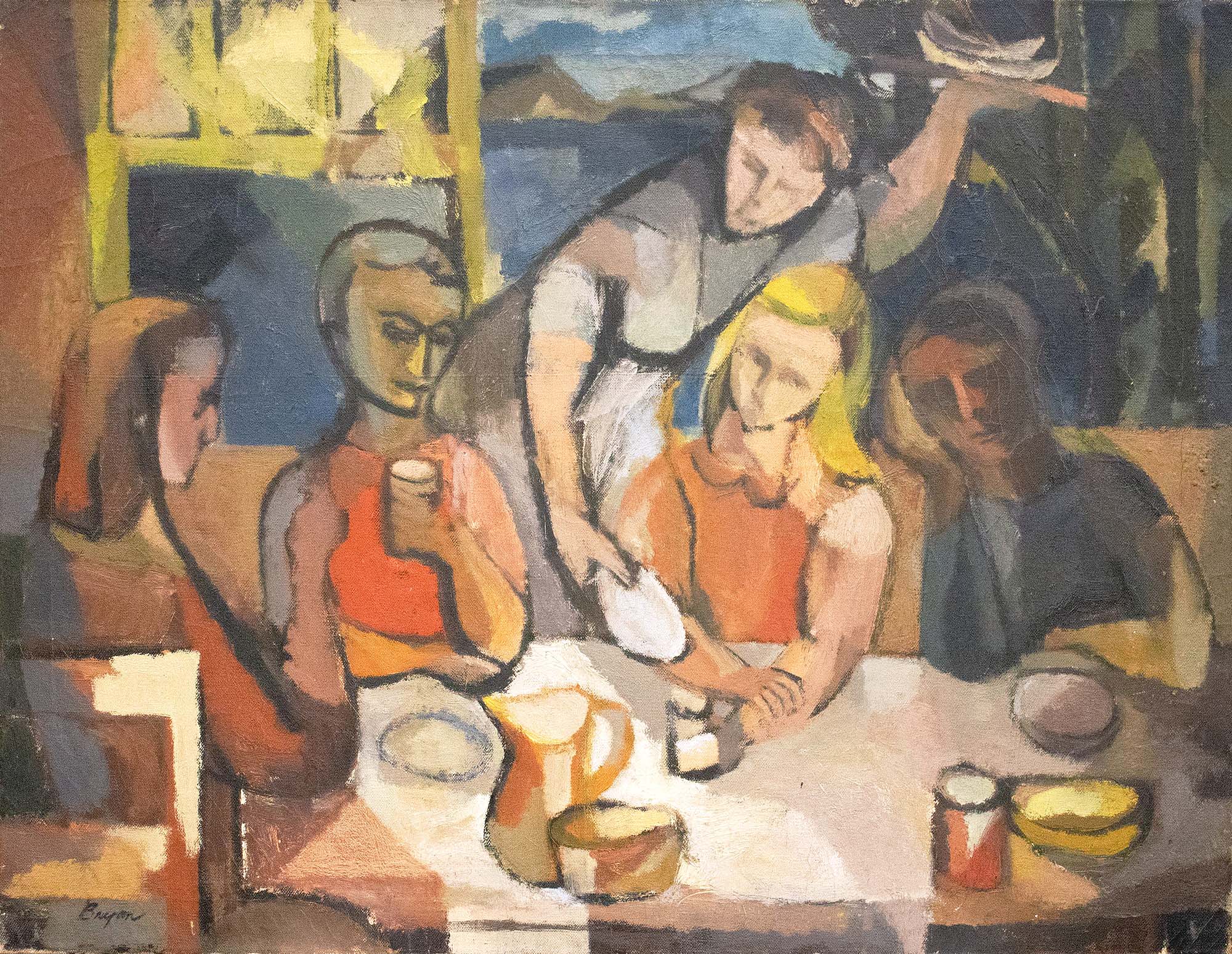
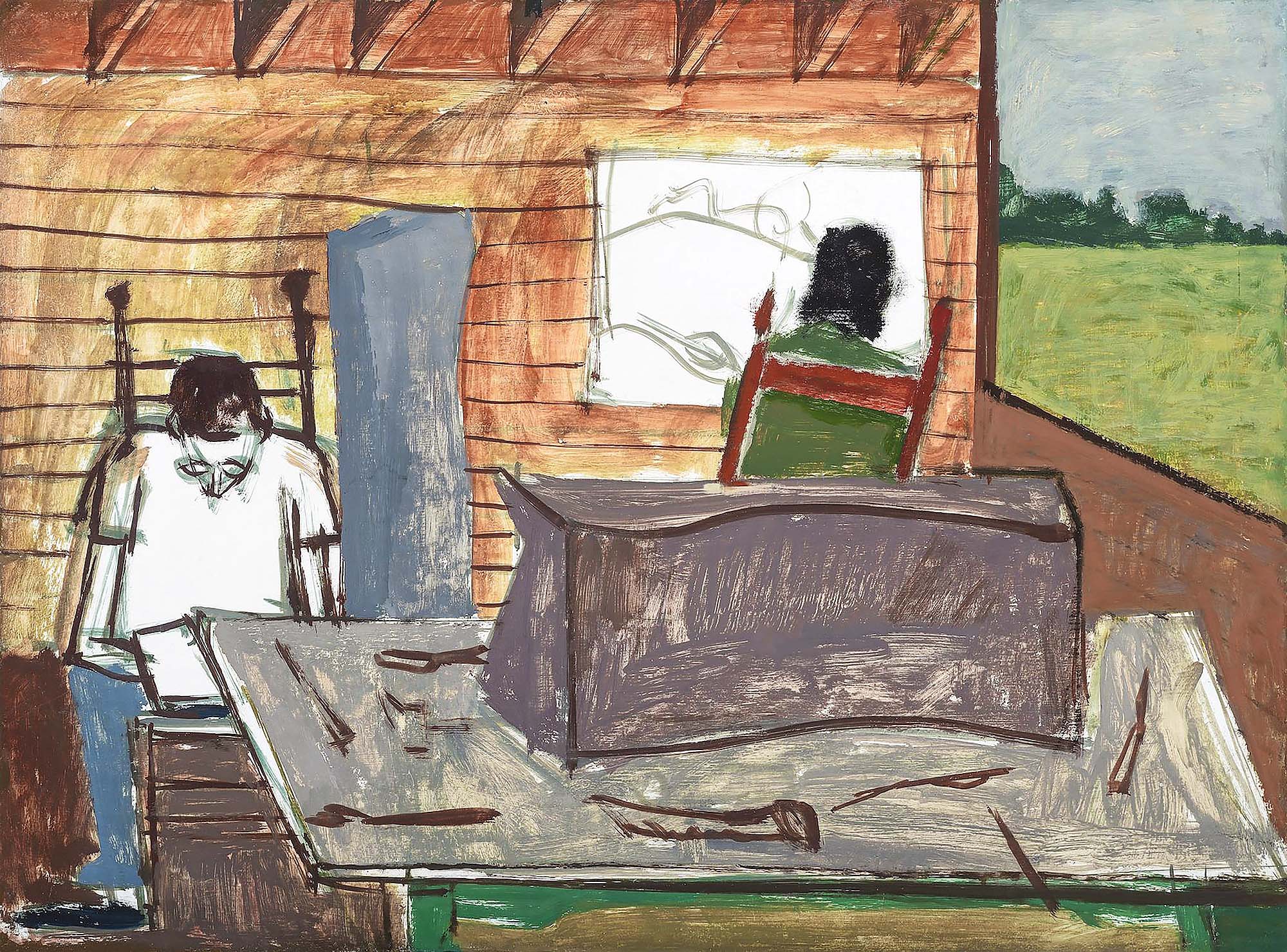
“Dining Room” by Ashley Bryan (1923-2022), 1946, oil on canvas, 28 by 36 inches. Skowhegan School of Painting & Sculpture. © 2026 Courtesy of The Ashley Bryan Center.
As the year of the exhibition progresses, a variety of scholars will offer monthly talks that look at how Maine’s art history dovetails with the influential movements in this country’s art history.
The show begins in Ogunquit, where two arts schools flourished for a time. One, led by Charles Woodbury (1864-1940), a Boston transplant, attracted between 75 and 100 students each summer, with traditional art courses that drew the likes of Russell Cheney (1881-1945). A second summer art school was introduced to Ogunquit in 1911 by New York artist, teacher and connoisseur Hamilton Easter Field (1873-1922), an art critic who called his school the Summer School of Graphic Arts. From 1911 until his death in 1922, he taught painting and life drawing while his mentee and fellow artist Robert Laurent (1890-1953) offered classes in sculpture and wood carving. While Ogunquit’s well-established Woodbury continued to provide instruction in painting post-Impressionist seascapes and landscapes, Field advocated for the more experimental approach of European modernism. Ogunquit, according to Soriano, “emerged as a hub for modernist experimentation welcoming artists like Field and Yasuo Kuniyoshi (1889-1953), whose practices bridged regional creativity of national innovation. These intersections reveal how Maine served not as a distant outpost but as a vital crossroads in the evolution of the canon of American art.”
Winslow Homer (1836-1910) had settled earlier in Prout’s Neck, the peninsula just south of Portland. According to Helen A. Cooper, the Holcombe T. Green curator emeritus of American painting at the Yale Art Gallery (New Haven, Conn.), it offered him the solitude he needed and direct contact with that aspect of nature which he cared for the most — “the wild, the elemental and the least touched by man.” Homer asserted, “The life that I have chosen gives me full hours of enjoyment for the balance of my life. The sun will not rise, or set, without my notice, and thanks.”
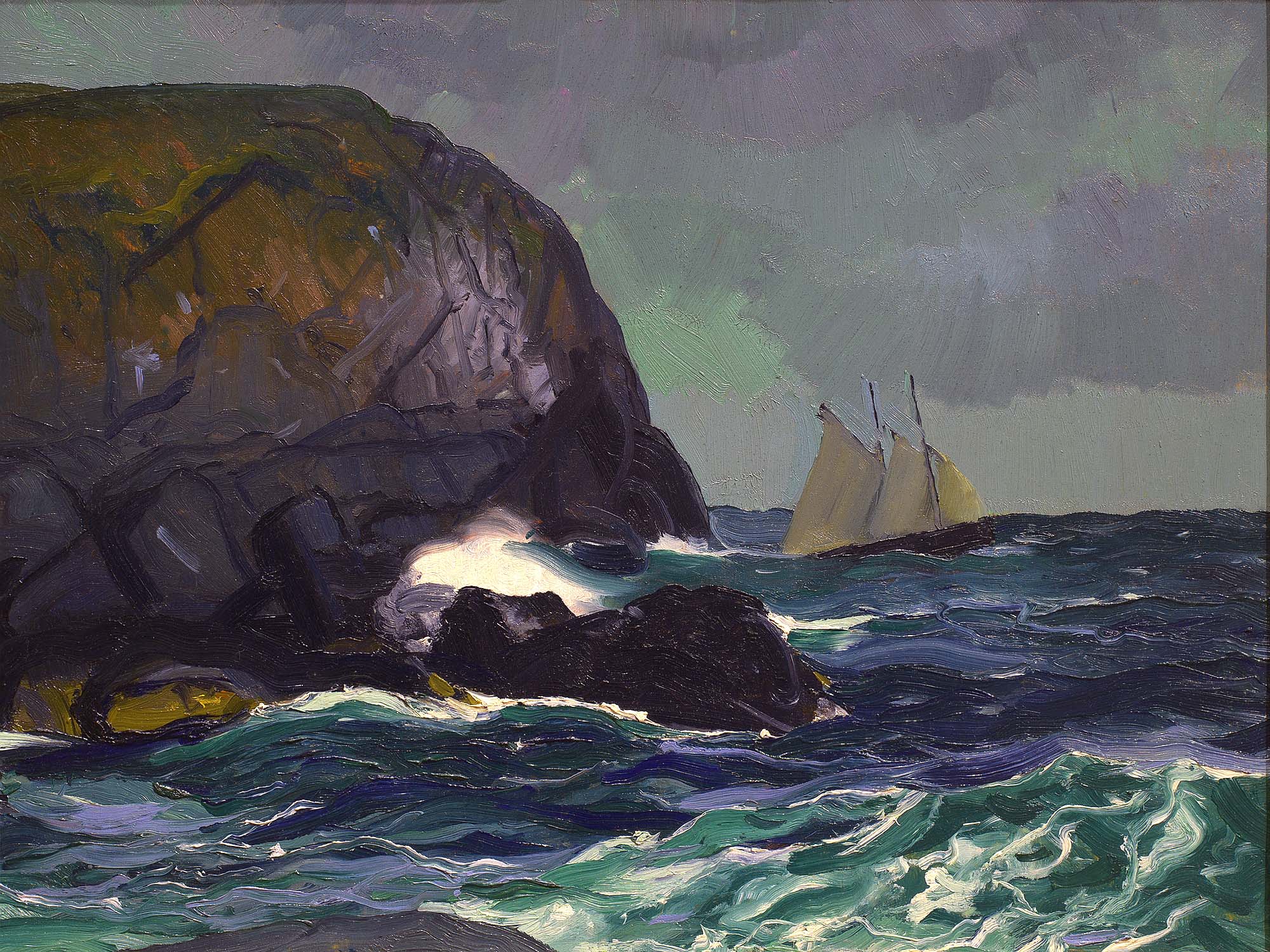
“Beating Out to Sea” by George Bellows (1882-1925), 1913, oil on plywood panel, 14⅝ by 18⅞ inches. Farnsworth Art Museum, museum purchase, 1945.567. Photography by Alan LaVallee.
Rockwell Kent (1882-1971), George Bellows (1882-1925) and Randall Davey (1887-1964) joined their teacher Robert Henri (1865-1929) for summer classes on Monhegan Island and their art helped put Monhegan on the map as a major art making destination. In what has become a seasonal pattern for multiple generations, the Wyeths of Chadds Ford, Penn., have captured scenes of coastal life across media from their collective perches — on Monhegan, and in and around Port Clyde, Cushing and Southern, as well as Allen and Benner Islands.
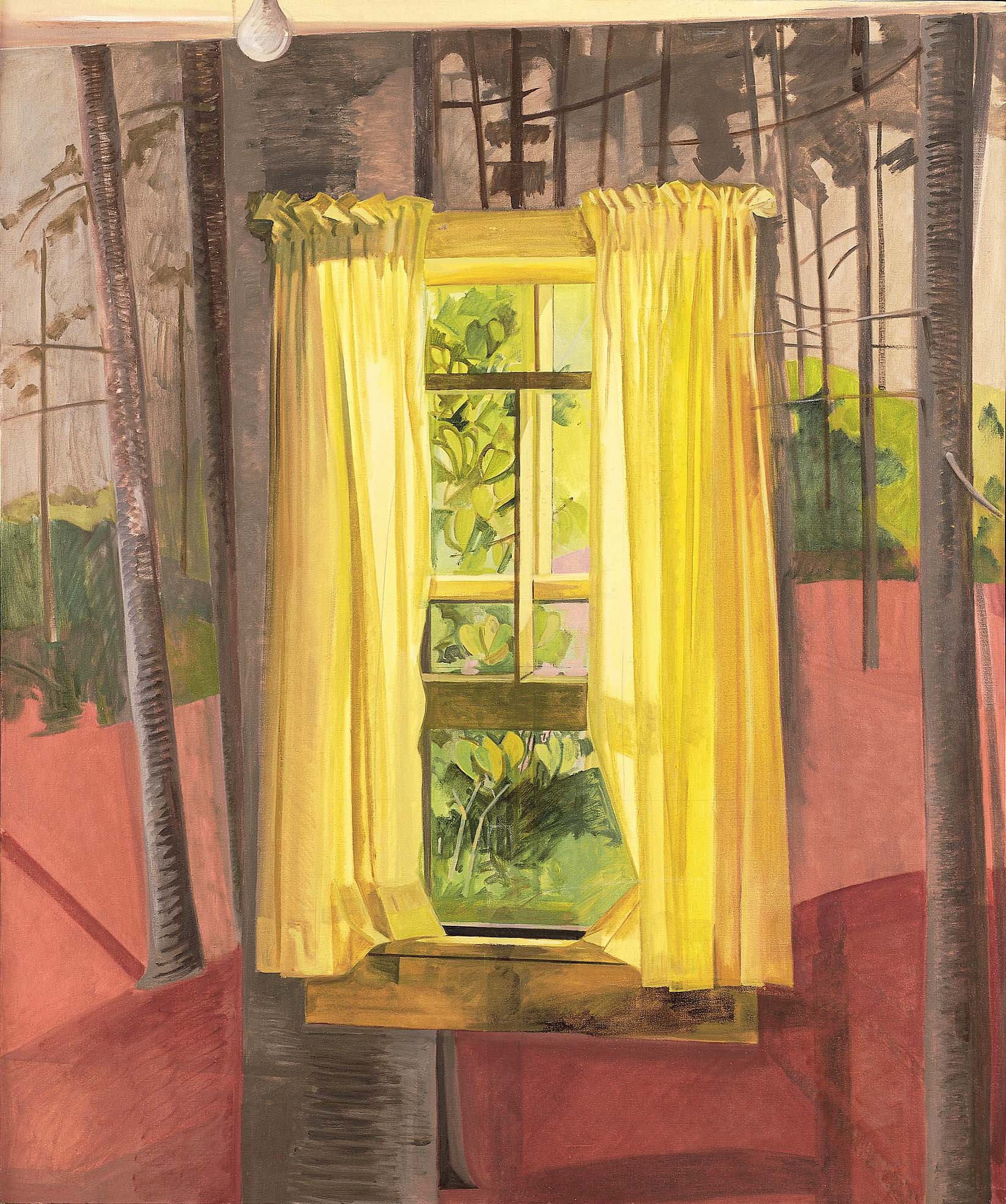
O’Keeffe frequented York Beach in the 1920s, and captured its dark waves and white seashells, Hartley’s color-drenched abstractions — whether of the wonder of Mount Katahdin or of lobstermen as leading actors in an unfolding play — continue to pack a wallop. The two Porter sons of Winnetka, Ill., returned like swallows to Great Spruce Head Island, and the home their father built in 1913; they would each become renowned artists. Lois Dodd (b 1927) would say “Being in Maine is what got us all working outdoors,” though in her case, it was also her paintings of her domestic interiors in Cushing that inspired many of her finest paintings. Back in New York City, Dodd would establish and run the first artist-run cooperative, The Tanager Gallery.
Stieglitz, famous for overseeing Little Galleries of the Photo Succession at 591 Fifth Avenue, New York City, became an early promoter of not only Marin and O’Keefe but also Hartley and Arthur Dove (1880-1946).
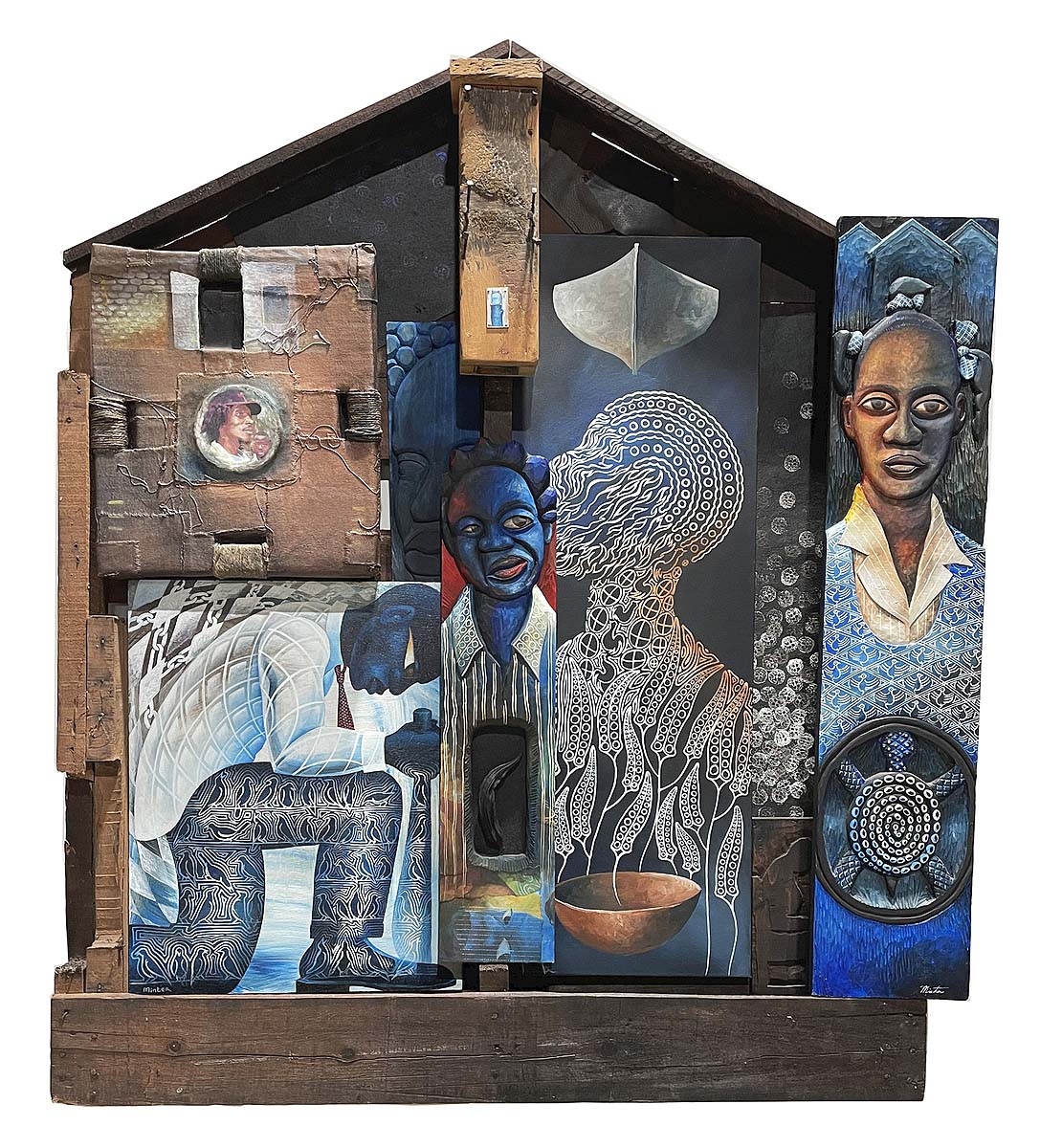
“A Distant Holla: Deep Inside Us” by Daniel Minter (b 1961), 2021, mixed media wood construction, 49 by 42¼ by 7 inches. Farnsworth Art Museum, Museum purchase, supported by Ann and Dick Costello, 2022.3. © 2026 Daniel Minter.
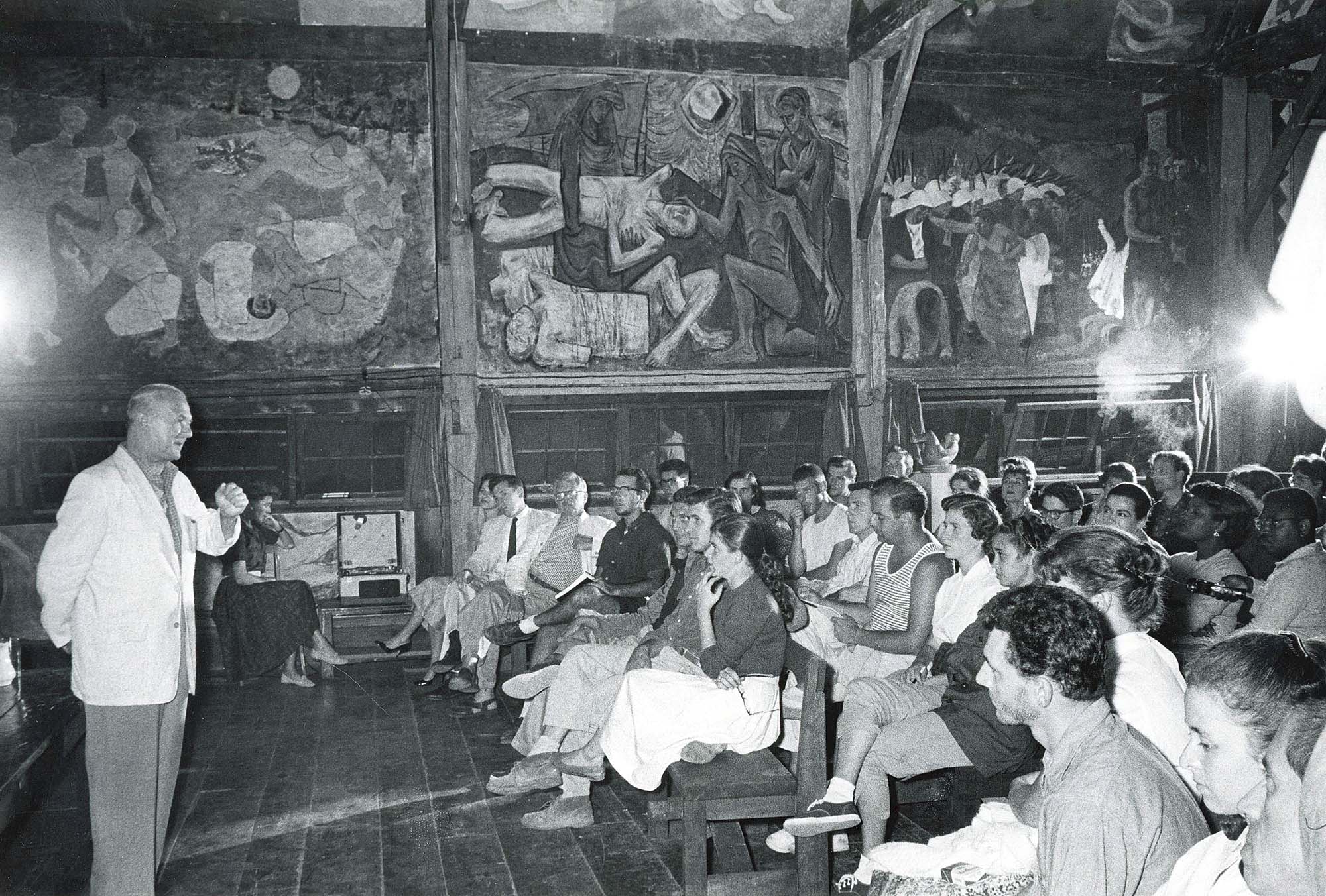
After the Second World War, Maine became known for its support for emerging artists of color. Through a collaboration with Howard University, Romare Bearden (1911-1988), Elizabeth Catlett (1915-2012), Jacob Lawrence (1917-2000), David Driskell (1931-2022) and Ashley Bryan (1923-2022) all studied at Skowhegan School of Painting and Sculpture. Driskell and Bryan would continue to find sustenance there, in Lincolnville and on Cranberry Island.
Alex Katz (b 1927), another Skowhegan student, found as he worked en plein air, “my subject matter and a reason to devote my life to painting.” He settled in Lincolnville, where its nearby beach, ferry terminal and lobster pound were ongoing sources of subjects.
The Haystack School of Crafts to this day has no permanent faculty or full-time students, and awards no certificates or degrees, but its intensive studio workshops are seen as a place in which to explore craft in broader contexts. Over the years, some of its legendary faculty have included Anni Albers (1889-1994), Dale Chihuly (b 1941) and Toshiko Takaezu (1922-2011), as well as contemporary artists Roberto Lugo (b 1981) and Corey Pemberton (b 1990).
The Farnsworth Art Museum is known for its rich collection of paintings, drawings, and watercolors by three generations of Wyeth artists: N.C. Wyeth (1882-1945), Henriette Wyeth (1907-1997), Carolyn Wyeth (1909-1994), Andrew Wyeth (1917-2009) and James Wyeth (b 1946). It also oversees the second largest collection of Louise Nevelson’s (1899-1988) work. Nevelson, a Ukrainian immigrant, grew up in Rockland, and the Farnsworth collection spans six decades of her illustrious career.
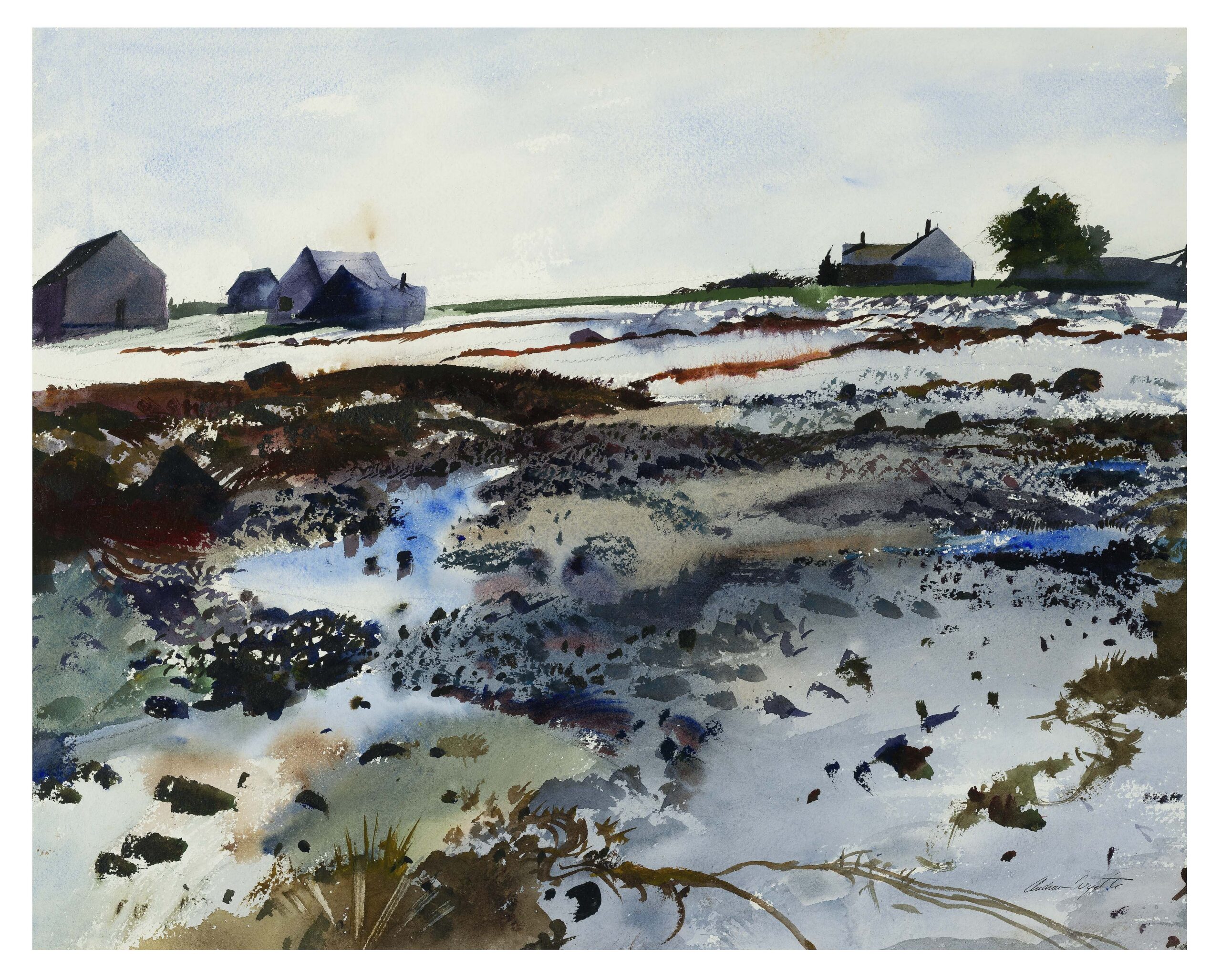
“Clam Flats” by Andrew Wyeth (1917-2009), 1942, watercolor on paper, 18 by 21⅞ inches. Farnsworth Art Museum, museum purchase, 1944.154. © 2026 Wyeth Foundation for American Art/Artists Rights Society (ARS), New York.
Lastly, and certainly not to be forgotten, is the renaissance in the indigenous craft of basketry. The Maine Indian Basketmakers Alliance is to be credited with training and supporting young artists in this form. Deeply concerned that the art of ash and sweet grass basketry was endangered, 55 indigenous craftsmen from the Maliseet, Micmac (Mi’kmaq), Passamaquoddy and Penobscot tribes came together in 1993 to form this communal effort. Since then, the alliance’s training and support has lowered the average age of basketmakers from 63 to 40. Extraordinary artists, notably Jeremy Frey (b 1978), are taking the art form to imaginative heights. Frey’s work is being showcased in Maine and in museums throughout the country. A basket on view by Secord underscores the artistry and complexity involved.
Today, according to the Americans for Action Fund, the profit and non-profit cultural sectors represent 2.7 percent of the state’s GDP. An estimated 18,073 artists live and work in Maine, and the arts and culture sector contributes $1.6 million annually to Maine’s economy.
Vibrant contemporary institutions include the Indigo Arts Alliance, established to foster the art of Black and brown artists; the Media Center, known for its rich archival and contemporary photography; and significant arts museums in Waterville, Brunswick, Portland and Rockland that attest to the industry’s vigor. In recent years, Maine artists have not shied away from other untold stories — such as Daniel Mintner’s (b 1961) mixed media collage “A Distant Holla from the Mouth of New River,” which addresses the forced removal of the residents of a racially diverse fishing village near Phippsburg.
Rockland today is now referred to as Maine’s art capital, boasting two world-class museums — The Farnsworth Art Museum and the Center for Maine Contemporary Art — and some 20 galleries. This year would be a terrific time to visit.
The Farnsworth Art Museum is at 16 Museum Street. For information, www.farnsworthmuseum.org or 866-856-2812.