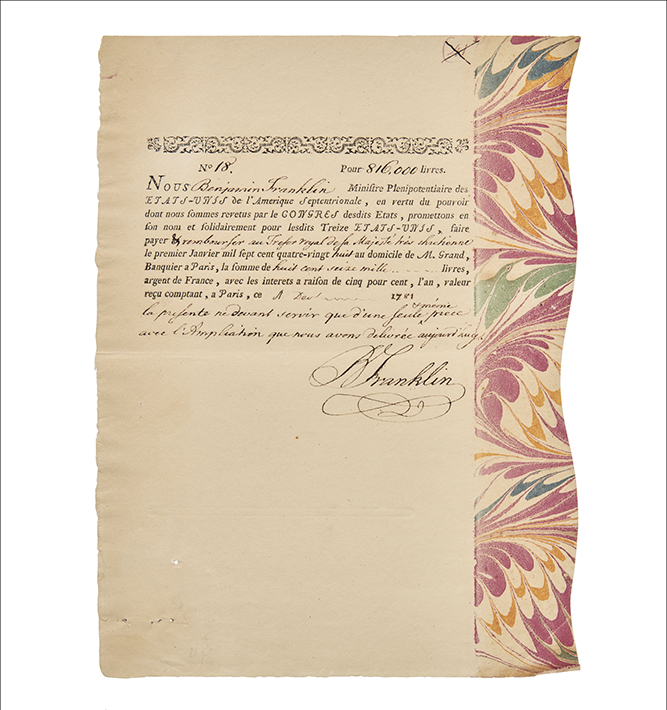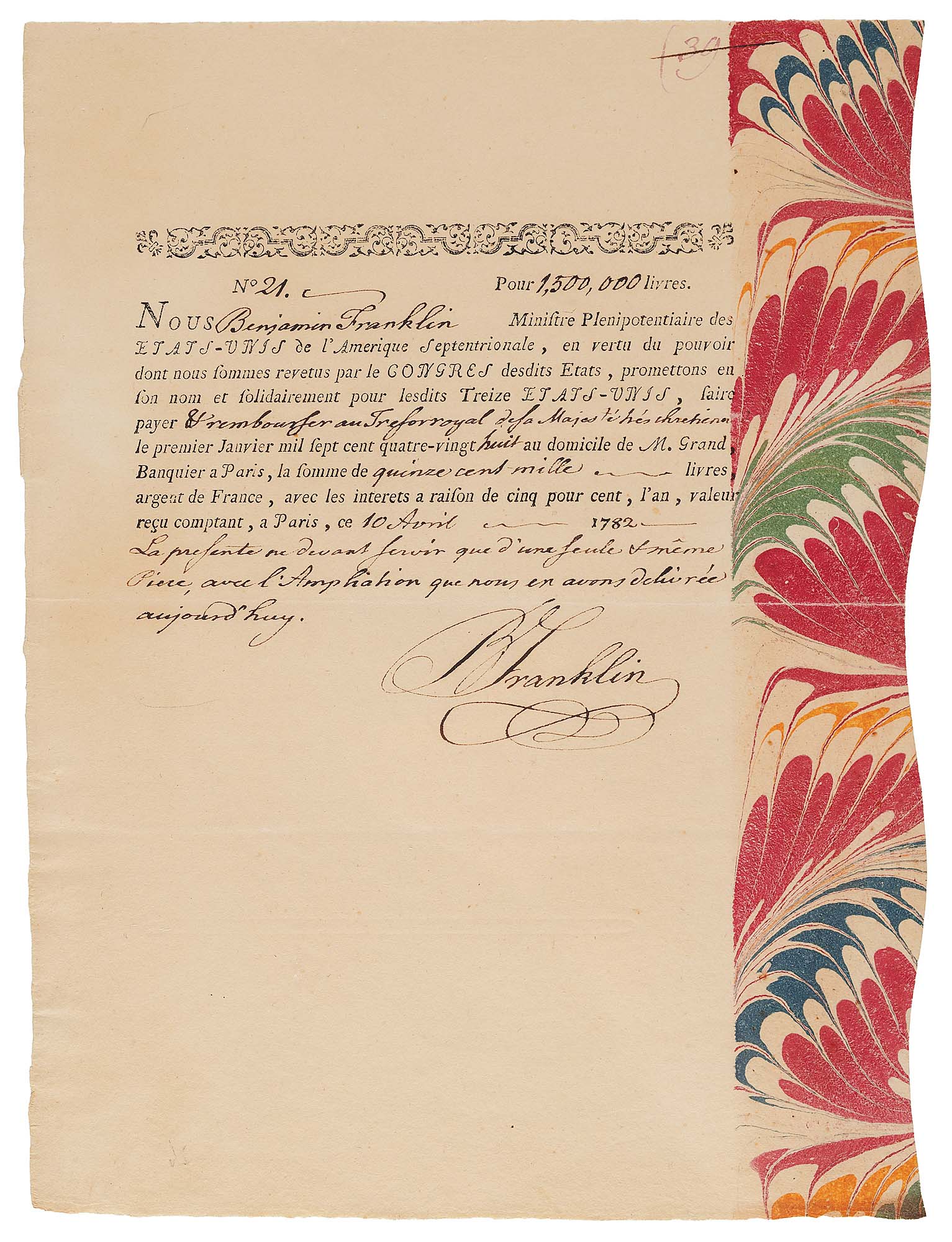
This twice-signed 1782 promissory note, binding the US to repay France 1,500,000 livres in Revolutionary War funding, completed entirely in Benjamin Franklin’s hand and printed on paper from the press Franklin operated in Passy, France, sold for the sale-high price of $484,151.
Review by Carly Timpson
AMHERST, N.H. — Celebrating the Semiquincentennial a few days late on July 8, RR Auctions conducted its exclusive Spirit of ‘76: America’s 250th Anniversary Auction, featuring 76 lots honoring the country’s founding through “the manuscripts that lit the fuse” … “in the words of the people who lived it.” At the close of the auction, the firm realized $1.79 million.
Realizing the sale’s highest price and far exceeding its open estimate of $250,000+ was a promissory note, twice-signed by Benjamin Franklin, binding the US to repay France for funding the Revolutionary War. Printed in French at Franklin’s own press in Passy, France, the 1782 note promised repayment of 1,500,000 silver livres, with annual interest at five percent, to the Royal Treasury of King Louis XVI. With an elaborate marbled strip along its scalloped right-hand margin and an ornamental fleur-de-lis border at the top of the note, the document read, in translation, “I, Benjamin Franklin [signed], Minister Plenipotentiary of the United States of North America, in virtue of power vested in me by the Congress of the said States…” and was signed “B Franklin” beneath a three-line rider in his hand. “This is the last loan France ever made to the United States during the Revolution,” said Bobby Livingston, executive vice president at RR Auction. “We were broke, we couldn’t feed our own army and Benjamin Franklin kept the money coming. It’s an extremely important financial document from the founding of this country.” After spirited bidding, the note went out for $484,151.
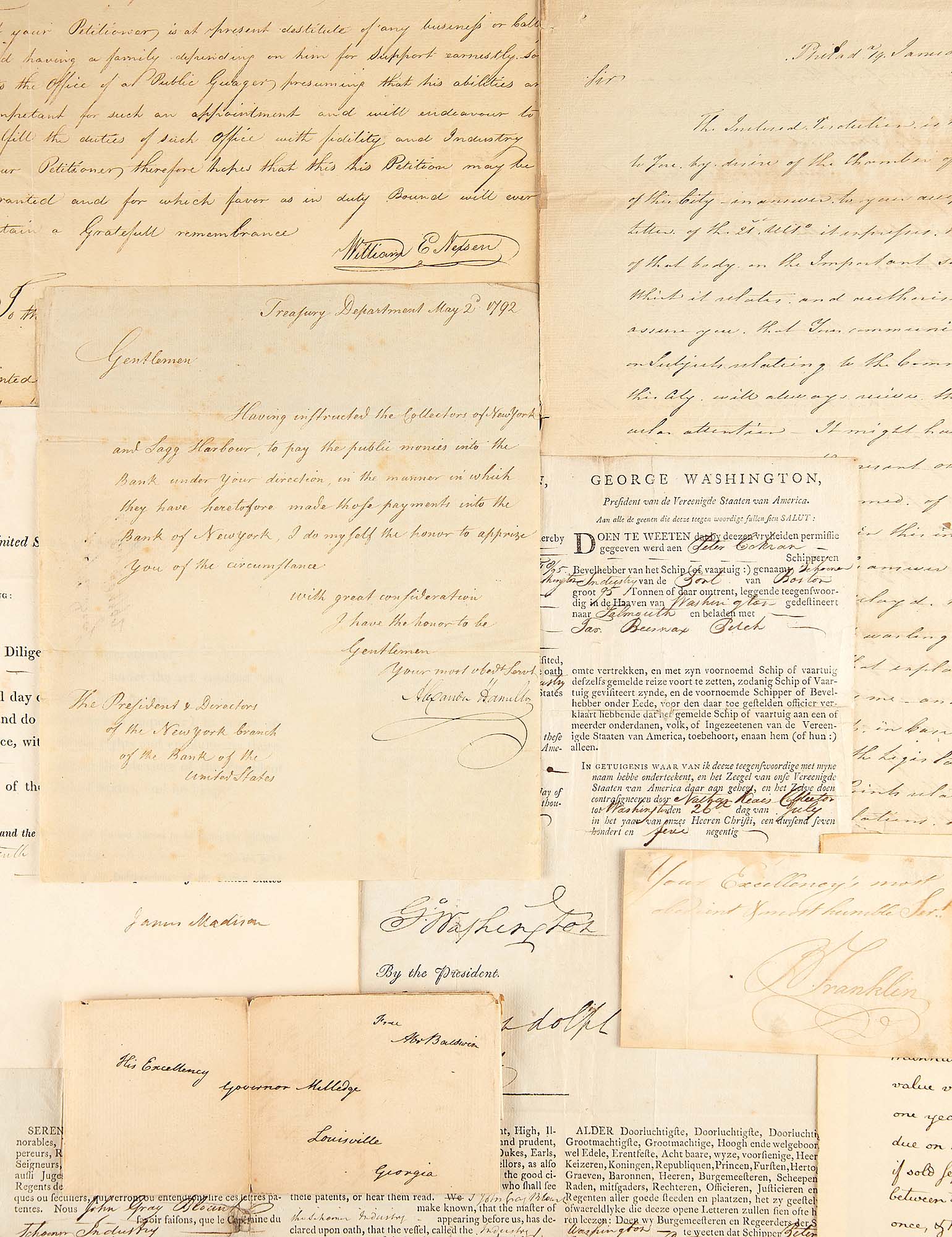
A complete set of 40 Constitution signers’ autographs, including George Washington, Benjamin Franklin, Alexander Hamilton and James Madison, signed off at $190,249.
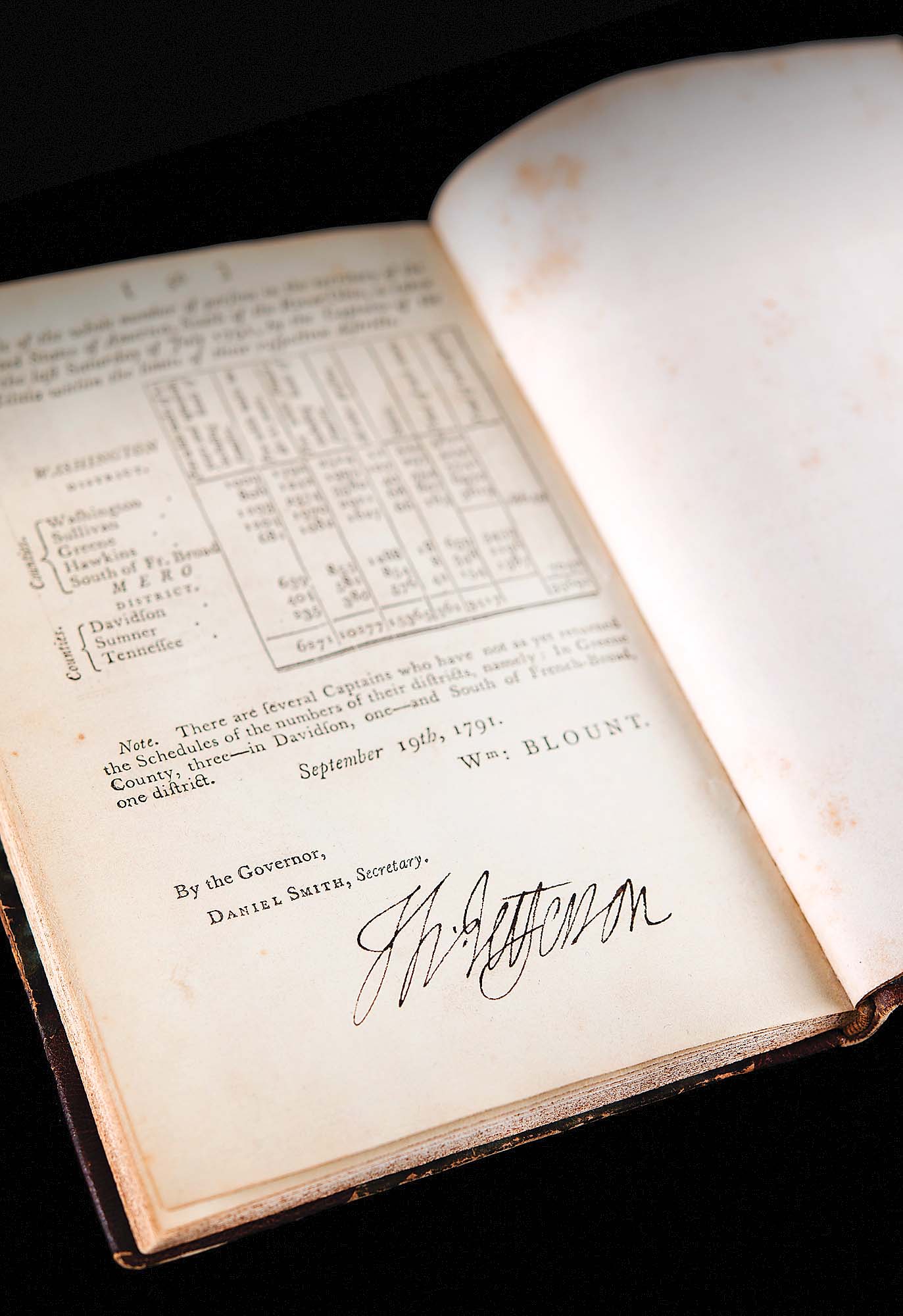
Franklin’s autograph remained desirable more than 20 lots later, especially as another example was paired with that of 39 other US Constitution signers. In addition to featuring a clipped document signed by “Your Excellency’s most obedient & humble sert., B. Franklin,” this collection included the signatures of George Washington, Alexander Hamilton, James Madison, Gouverneur Morris and William Blount, among others. Some of the signers were represented by more than one autographed document, and “the collection was complete with manuscript material from all 40 men who penned their names to the historic document, which includes all 39 state delegates and the one witness to the final draft,” Secretary to the Constitutional Convention, William Jackson. Altogether, the archive more than doubled its estimate to achieve $190,249.
In a letter written a decade before the Revolution, John Hancock and Samuel Adams jointly warned that “his Majesty’s well-disposed subjects in America” were being driven to disaffection by “notorious Violations of their Property.” This dual-signed letter, dated November 15, 1766, was written on behalf of Boston merchant Thomas Boylston and addressed to Dennis Diberdi, a London agent. Boylston’s ship Recovery was “violently taken from the Port of Monti Christi, where a Cargo was provided for her by an English Factor … In this instance the Subject is deprived of his property without the least pretence to Law. No breach of the Act of Trade is urged to justify the proceeding, & if such grievances are not redress’d, the American Trade so beneficial to Great Britain will be greatly discouraged.” Hancock and Adams requested that Diberdi bring Boylston’s case before the Ministry and Parliament, noting that it would be “of great importance to the Nation itself” that the government were made aware of how its “too frequent discouragement of [the colonist’s] Trade of this kind” was consequently hurting itself. There was no disaffection with bidders, however, and the letter was pushed to $180,315.
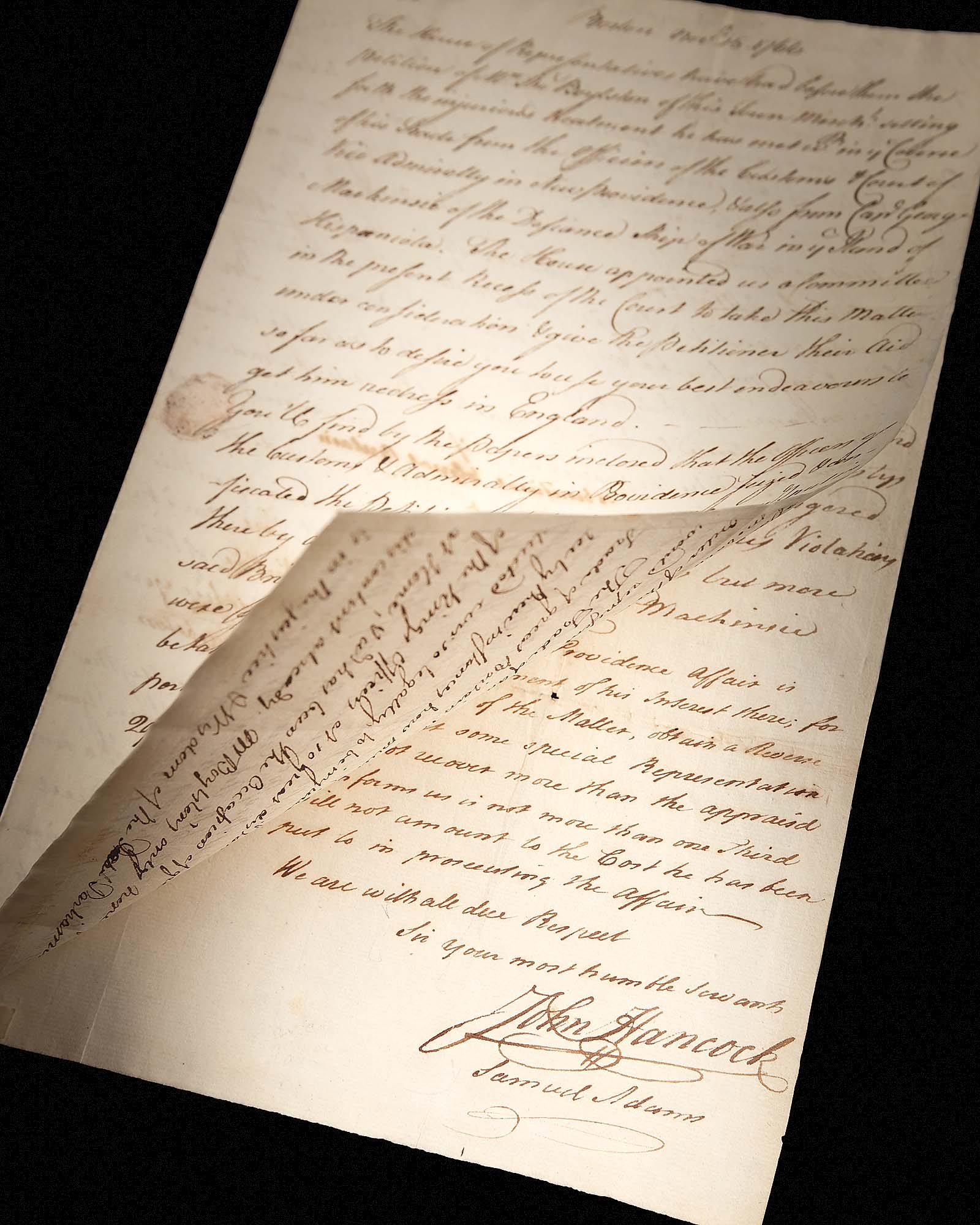
This 1766 letter signed by John Hancock and Samuel Adams criticizing British colonial policies and “notorious Violations of their Property,” realized $180,315.
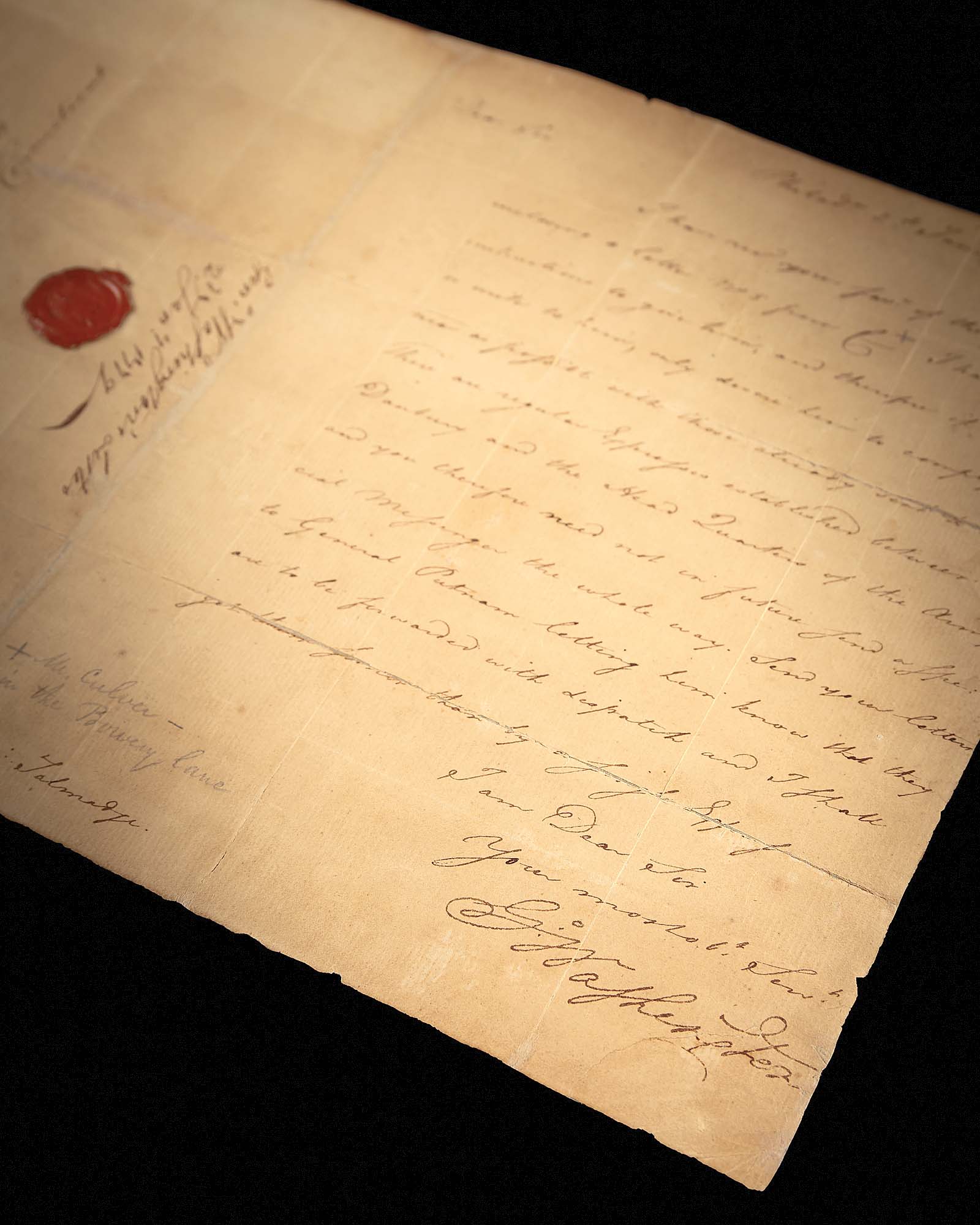
Written in wartime Philadelphia, a 1779 letter signed by General George Washington, addressed to his chief of intelligence, Major Benjamin Tallmadge, was sealed for $99,850. Penned in the hand of aide-de-camp Tench Tilghman, this letter discussed exchanging messages with “C—,” an abbreviated reference to Samuel Culper (alias of Abraham Woodhull), who was the founding spy of what would become the Culper Ring, a spy network operating in British-occupied New York. In this letter Washington was not only establishing a courier route, he was “hardening the infrastructure of his most important spy network.” In addition to its historical significance, the letter survived with its original red wax seal and Washington’s franking signature preserved on the same sheet.
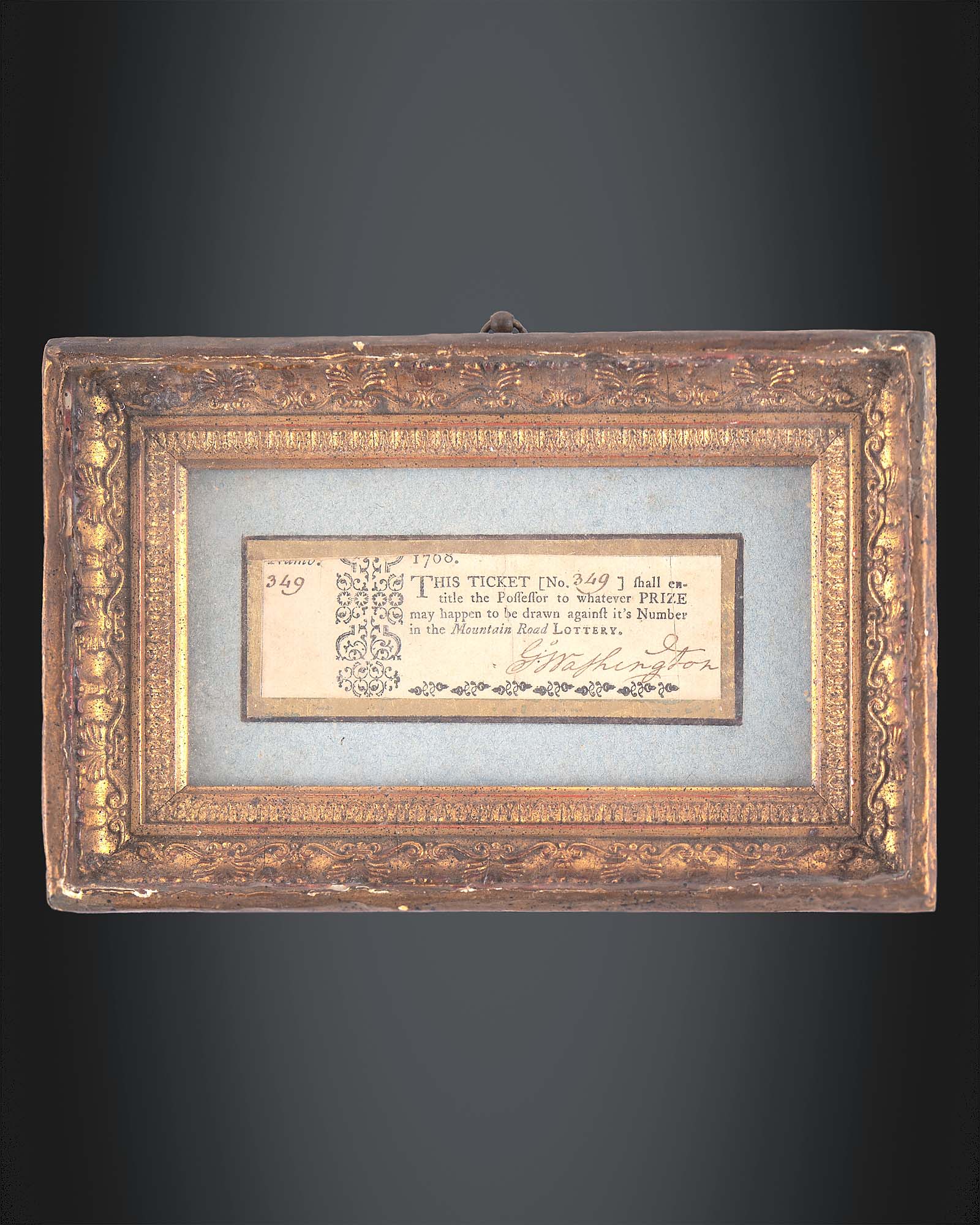
Though it bore less obvious historical impact than the letter, a lottery ticket with Washington’s signature was also awarded a high price: $52,805. These 1768 tickets were issued for the Mountain Road Lottery, part of a funding project Washington conceived to build a road through the Allegheny Mountains in Virginia, though the campaign did not perform as favorably as Washington and Captain Thomas Bullitt planned. About 6,000 tickets were created, though only 25 are known to survive today.
If signatures aren’t your thing, perhaps a lock of Washington’s hair may interest you. Contained within a gilt-metal memorial pendant painted with a portrait of Washington, the two locks of hair were attributed to George and Martha Washington and “descended through the family of Major General Benjamin Lincoln (1733-1810), one of George Washington’s most trusted Revolutionary War commanders, who famously accepted the British surrender at Yorktown on Washington’s behalf in October 1781,” as the catalog noted. “The pendant was reportedly discovered among materials preserved at the Lincoln family’s ancestral home in Hingham, Mass.” The pendant with its preserved locks, which reflected period traditions of memorial hairwork objects, was bid to $33,284.
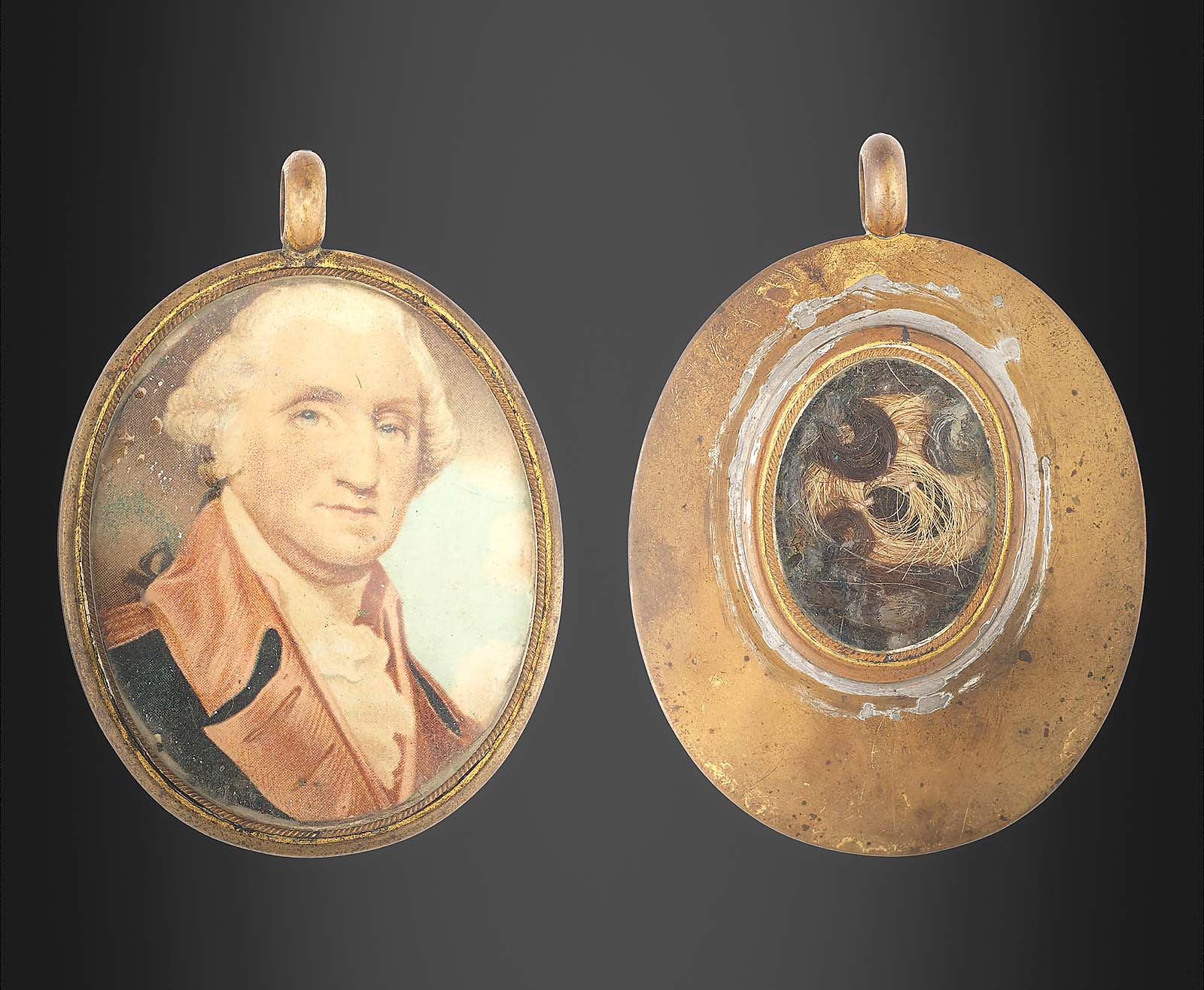
Containing locks of hair attributed to George and Martha Washington, this George Washington portrait pendant, 2¼ inches long, closed at $33,284.
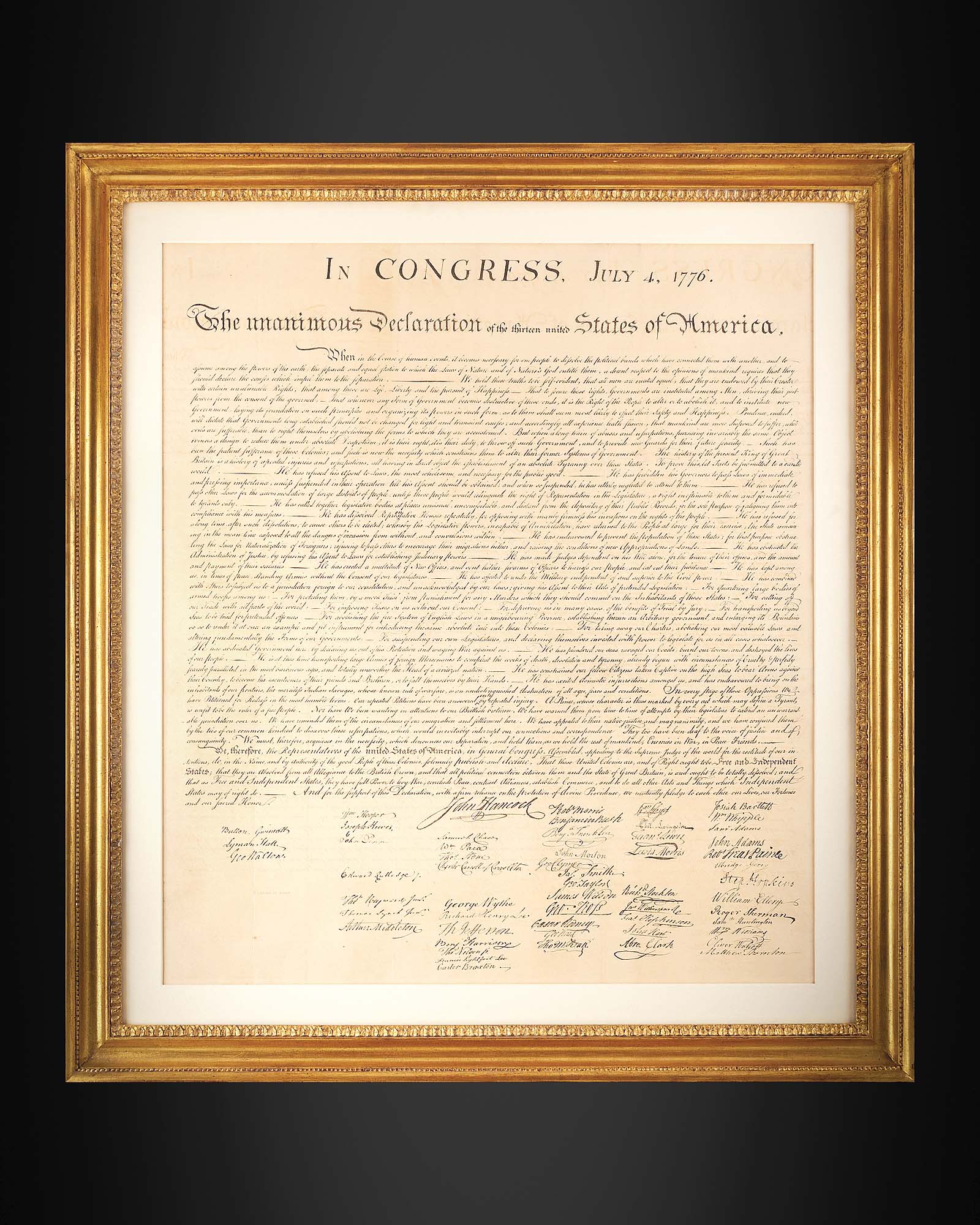
Other notable items in the auction included a circa 1833 copy of William J. Stone’s printing of the Declaration of Independence, originally found in Peter Force’s American Archives. The copperplate engraving was commissioned by John Quincy Adams, and Stone lifted ink directly from the original to create his copy; this plate was used to create 201 prints. Later, Force was commissioned to create his American Archives series and used the Stone plate to produce copies on rice paper, distinguished from the original by an additional attribution to Stone in the lower left. These copies were folded and issued within the first volume of the fifth series of books. This example, cloth-matted and framed, achieved $85,560.
Prices quoted include the buyer’s premium as reported by the auction house. For information, www.rrauction.com or 800-937-3880.