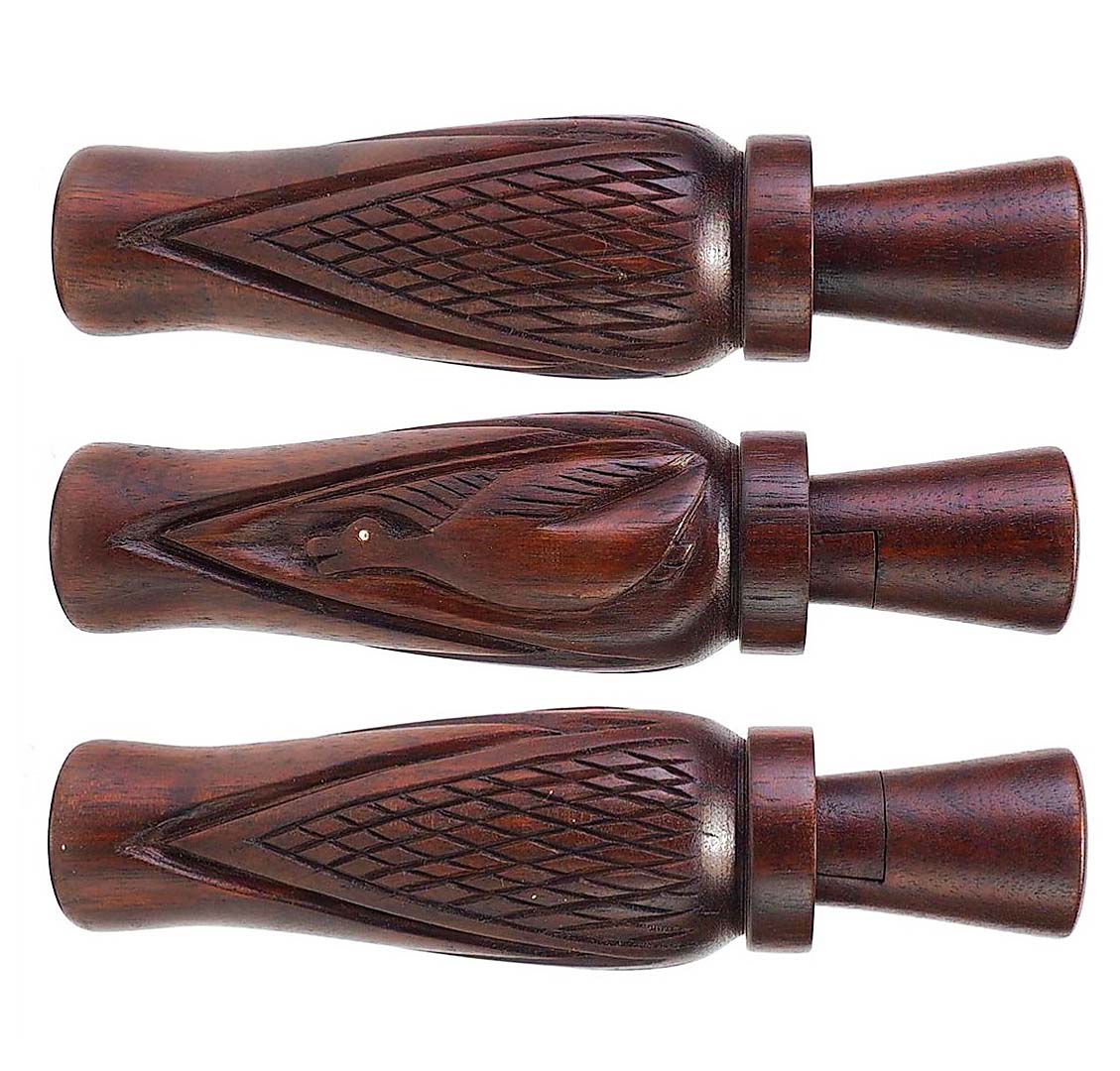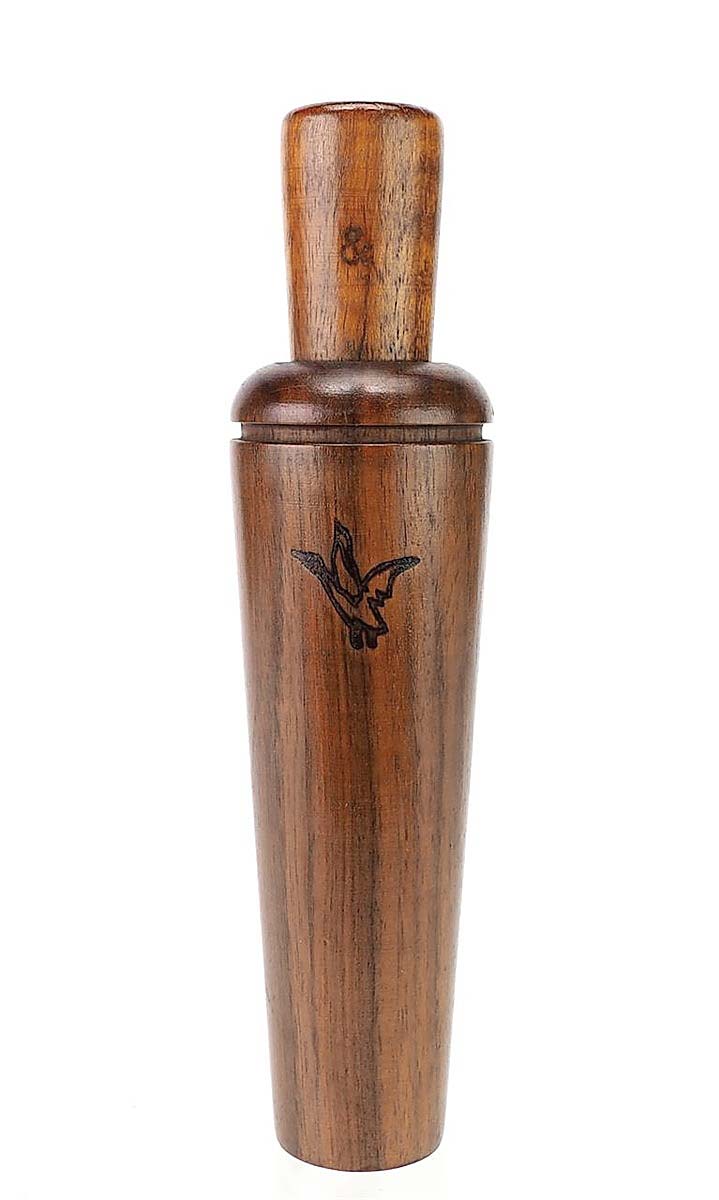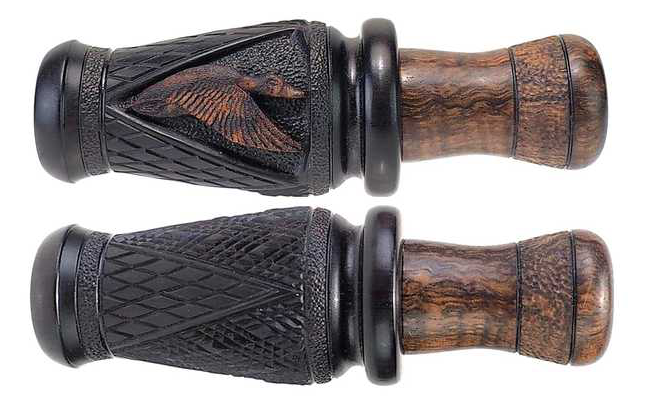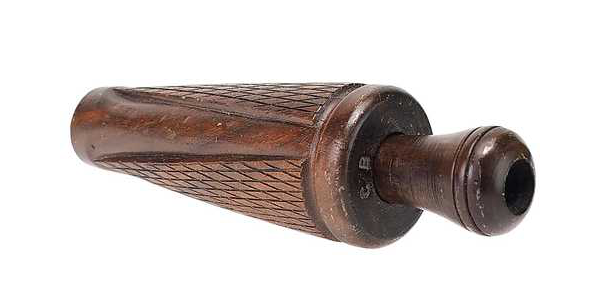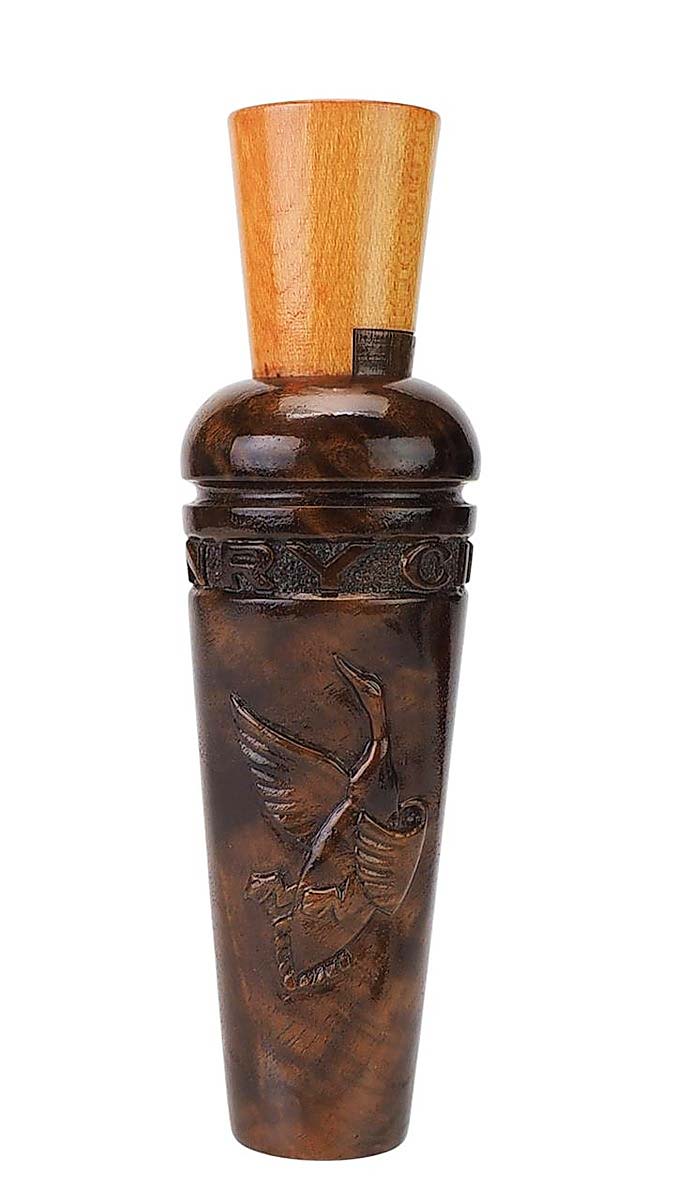
This burled walnut, single reed suck call by E.S. Stofer (Kansas City, Mo., 1886-1958), carved by William (Wilhelm) Rensing (b Germany, active Kansas City, Mo., 1906-1984), 5¾ inches long, caught the most attention, selling for the auction’s top price of $6,300 ($2/3,000).
Review by Carly Timpson
SYRACUSE, N.Y. — American Sporting Auctions conducted a 180-lot sale entirely dedicated to wildfowl calls that included choice examples from makers spanning states and generations. Firm owner Mike Martin reported the auction being “a great success,” stating that they set at least seven new auction records for call makers, and the sale achieved $48,600 in total, just shy of its high estimate.
“Featuring over 125 makers from 19 different states, the goal was to create a diverse line up that all call collectors could find something of interest to them, and in turn invite everyone to take part in this first-of-its-kind event,” he wrote after the auction. Asked to sum up the event, he stated, “I think the quote of it all is, ‘Calls have for too long been the stuff in the back of a catalog, if they made it there at all.’ This is really the ‘why’ behind why I built this auction.”
“The most important takeaway is that this was the first-ever auction dedicated strictly to game calls,” he continued. “The hobby has historically been a piggyback in larger decoy or sporting auctions, never really receiving its own spotlight — aside from smaller, 30- or 40-lot auctions held at duck-call-making events, which are mostly supplied by call makers who make calls and donate them.”
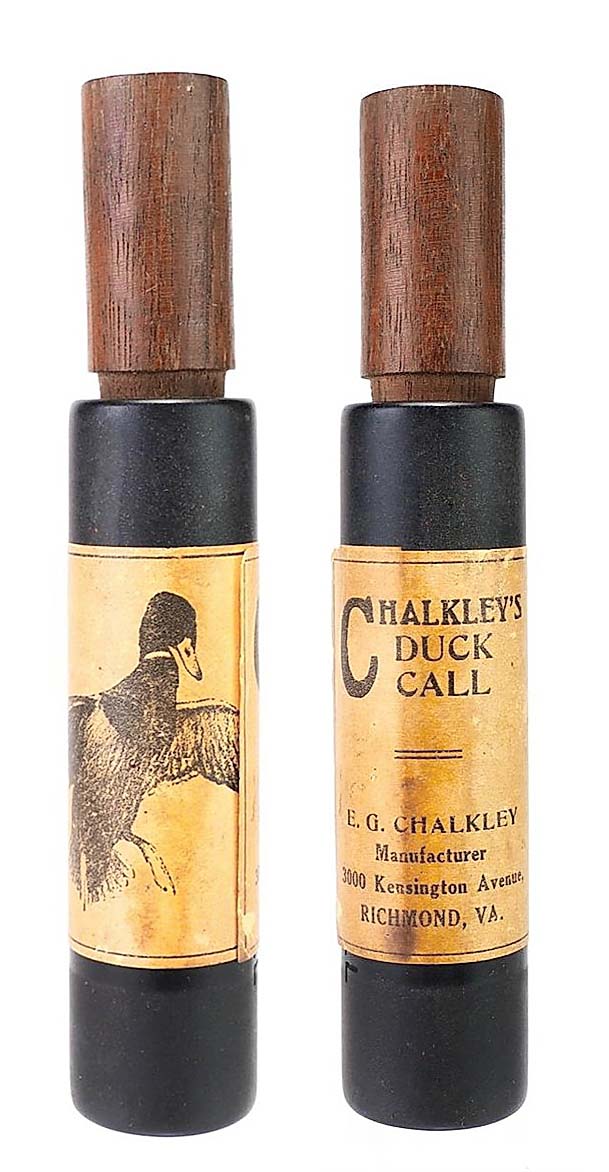
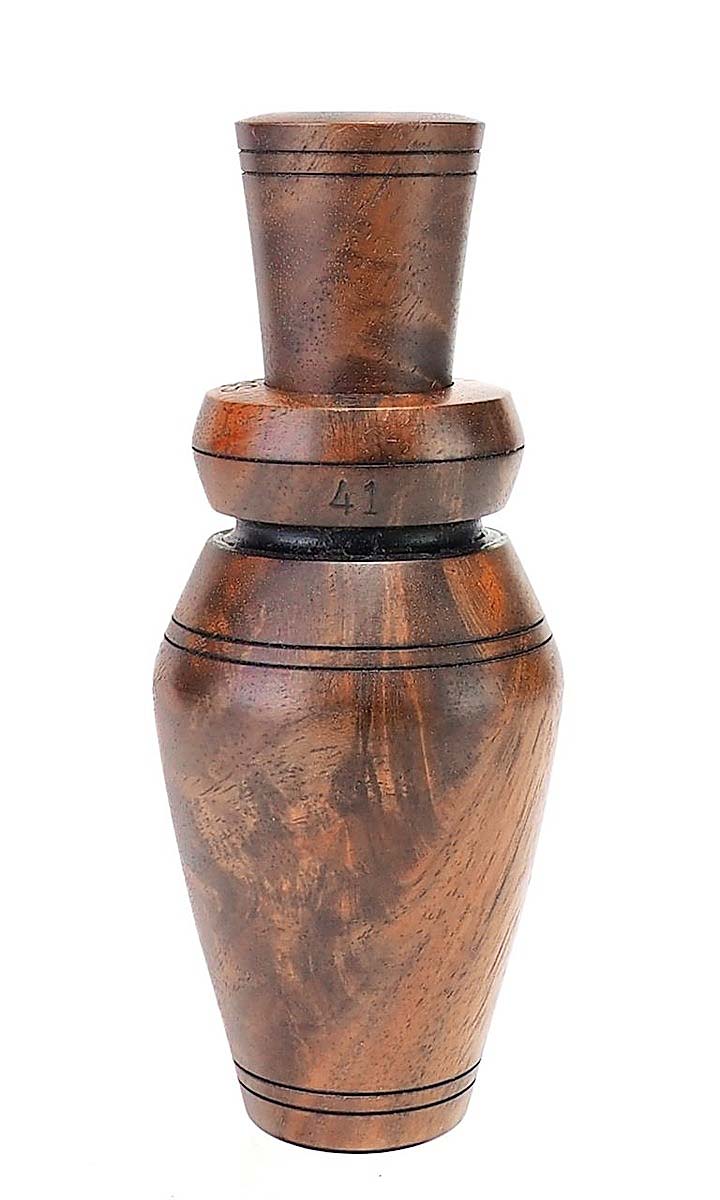
When this “Chalkey’s Duck Call” by E.G. Chalkley (Richmond, Va., 1871-1939), 5¼ inches long, sold for $1,620, it set a new record for the maker ($200/400).
“I wanted to change that with this auction. I designed the sale so that everyone across the call-collecting spectrum could participate,” Martin said. “For a first-of-its-kind event, I felt that was critical. Too often, the only calls that receive significant attention are those that are out of reach for most collectors. We’ve grown American Sporting Auctions by genuinely caring about all collections, so what better way to continue that philosophy than to make the first dedicated game-call auction something everyone could participate in?”
With a selection of 180 lots representing 125 different makers, 19 states and 115 years of call making in North America, estimates in this auction ranged from $25 on the low end to $3,000 on the high, and the sale’s top lot more than doubled that mark.
Leading the sale was a call that exhibited the history, craftsmanship, artistry and tradition of duck call making. At some point in the first half of the Twentieth Century, Kansas City, Mo., sportsman Henry Ciro purchased a 5¾-inch-long single-reed call from local maker E.S. Stofer and then commissioned his friend, German immigrant carver William (Wilhelm) Rensing, to add details to the burled walnut barrel. These carvings included a duck at the center of the body and the hunter’s name in a ring of block letters around the top. As the catalog noted, “Few of Rensing’s customized calls exist, and the ones that do are highly coveted for their craftsmanship.” As such, this example, which had never before been offered for public sale, was taken to $6,300, more than doubling its high estimate and setting a new record for Stofer. This call had prestigious provenance, being traced back to Ciro’s initial purchase from Stofer, then passed along to the Sam Armato collection as a gift upon Ciro’s death before joining, in the same fashion, the collection of Alex Picone, which was featured in this auction.
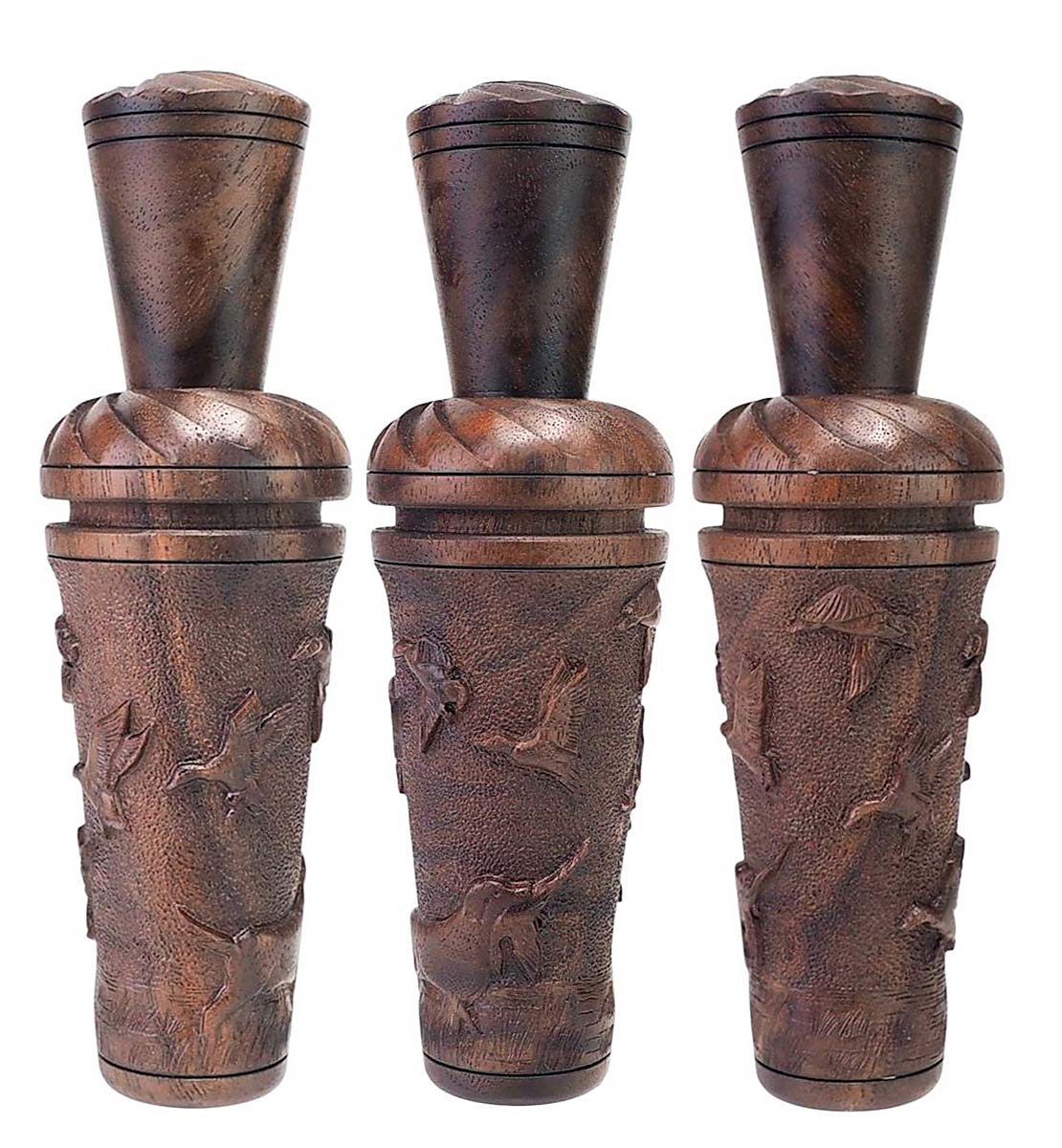
Kent Freeman (Kennett, Mo., b 1950) carved this 5¾-inch call with a marsh scene showing a successful hunting dog beneath several flying ducks. It sold for $1,440 ($700-$1,000).
Other items from the Picone collection to do well included an example by eight-time national champion carver Kent Freeman featuring a duck hunting marsh scene showing a dog holding a bird in its mouth ($1,440). Several others from the collection resulted in new records, including a three-panel checkered and carved duck call by Daniel “Dan” Crooks ($1,080), a single-reed “SS Sweettalker” by Stiles & Saathoff ($1,080) and a checkered call with custom bag by Albert Bignar ($840).
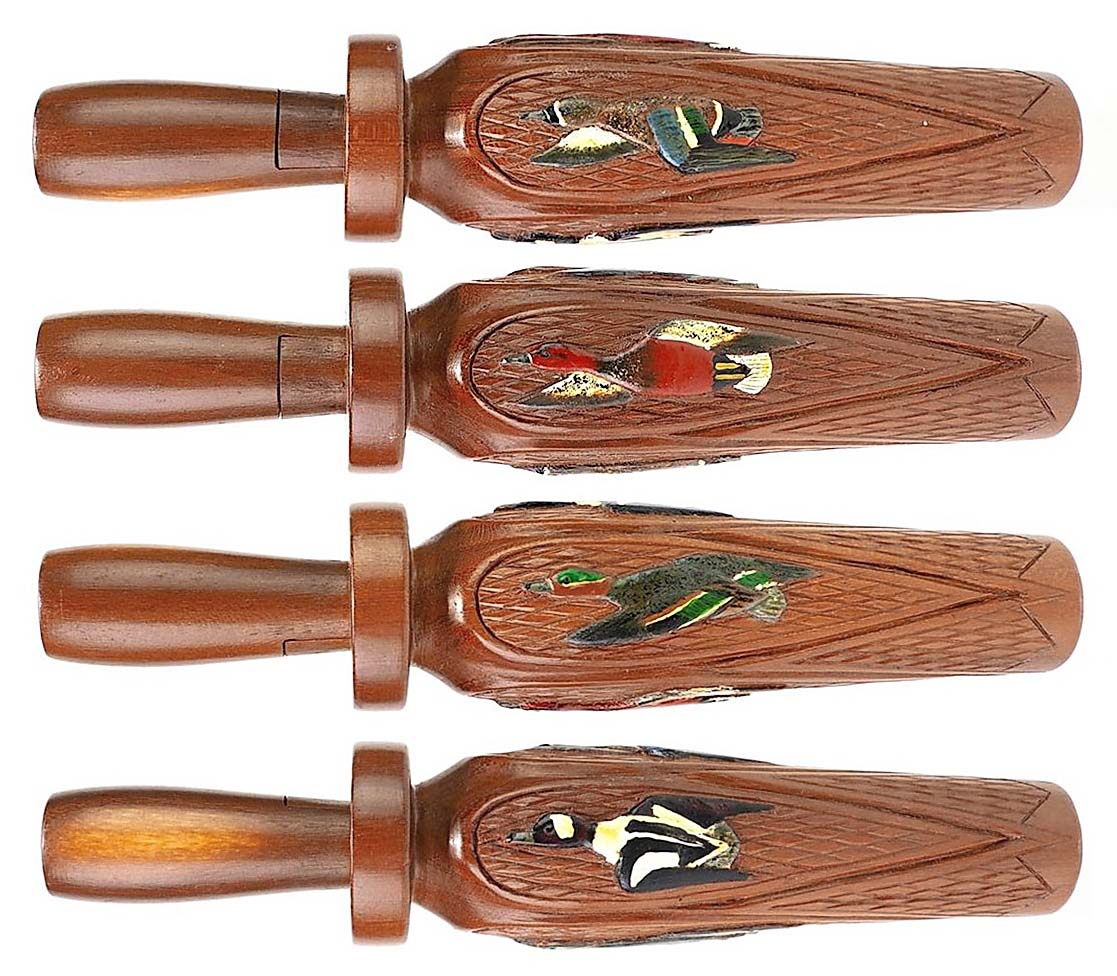
However, the auction’s second-highest price was awarded to a four-duck checkered cherrywood call that made a record for Fred Jolly at $4,560, more than double its high estimate. Each of the primary checkered panels was carved and painted with a different duck: the three main North American teal species — bluewing, greenwing and cinnamon — and a bufflehead drake.
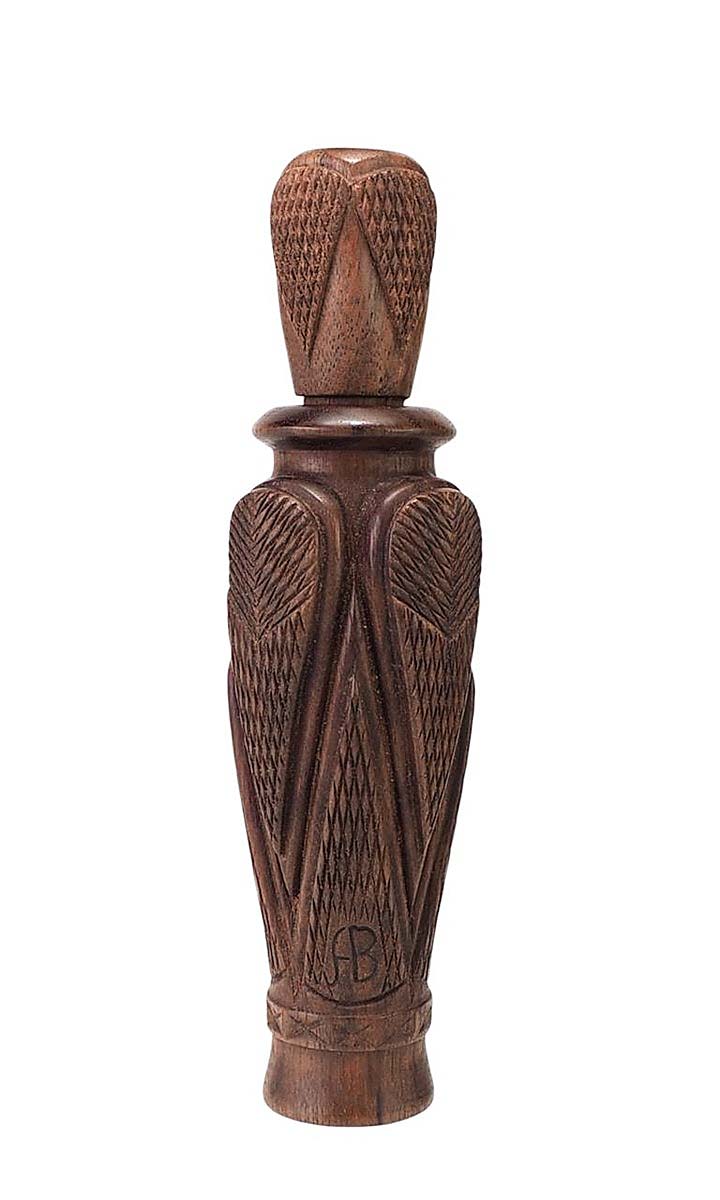
A signed and dated “R. Kelso / 1-5-1976” single-reed call by George Robert Kelso, Sr, sold for $4,200. Including its original hunter’s lanyard, this example was revered for its rarity, as Kelso never crafted calls professionally, only giving them as gifts to friends and family.
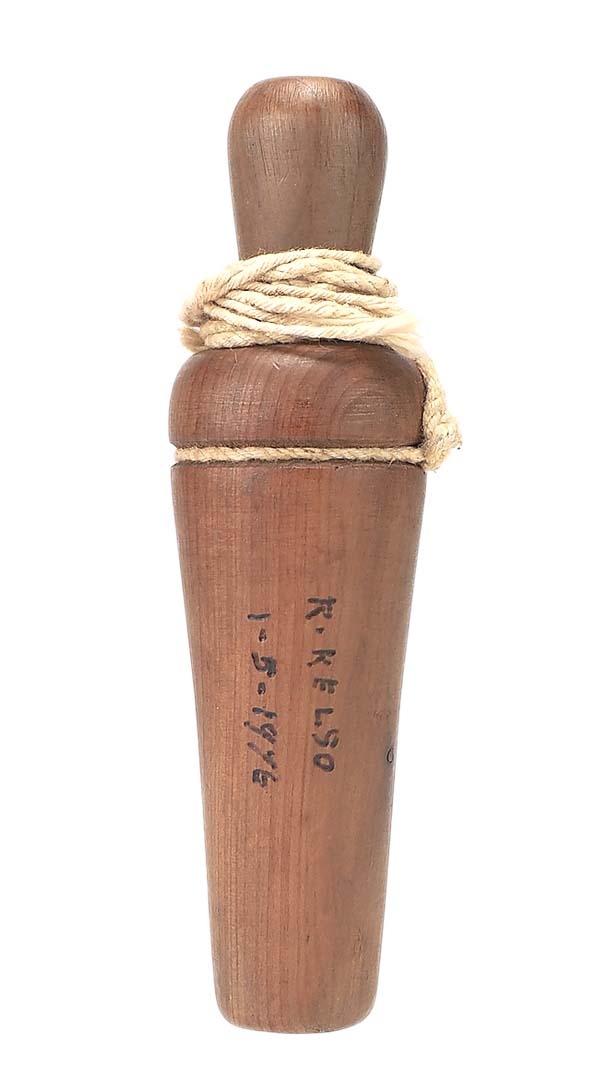
Dated 1976, this George Robert Kelso, Sr (Alexandria, La., 1894-1987) duck call with original hunters lanyard still attached, 5½ inches, brought $4,200 ($1/1,500).
The record was set for E.G. Chalkley when a 5¼-inch duck call — the only known duck call he made among his better-known turkey and crow examples — flew beyond its $200/400 estimate to make $1,620. Complete with its original paper label in excellent condition for being nearly 100 years old, the Richmond, Va.-made call was of single-reed design. It is worth noting that Chalkley’s calls represent some of the earliest made on the East Coast, as the craft began in earnest in Illinois, according to Martin.
“Ultimately, I think the strength of this sale was really the breadth of participation and the fact that we were able to bring something that has traditionally lived in the background into the spotlight,” Martin noted. “We wanted collectors with a $50 call and collectors with a $3,000 call to feel like they were equally welcome, and I think the bidding activity demonstrated that there is a real appetite for this type of specialty event — we plan to continue it.”
In closing, Martin added, “Stay tuned — we have more exceptional calls coming up in our Fall and Winter Feature Auctions. We can’t wait to host more specialty events like this, and we’d encourage anyone contemplating selling a collection or individual calls to reach out and discuss the potential options with us.”
Prices quoted include the buyer’s premium as reported by the auction house.
American Sporting Auctions’ next sale will be its Fall Feature Decoy & Sporting Art Auction on Saturday, September 28. For information, www.americansportingauctions.com or 315-576-6058.