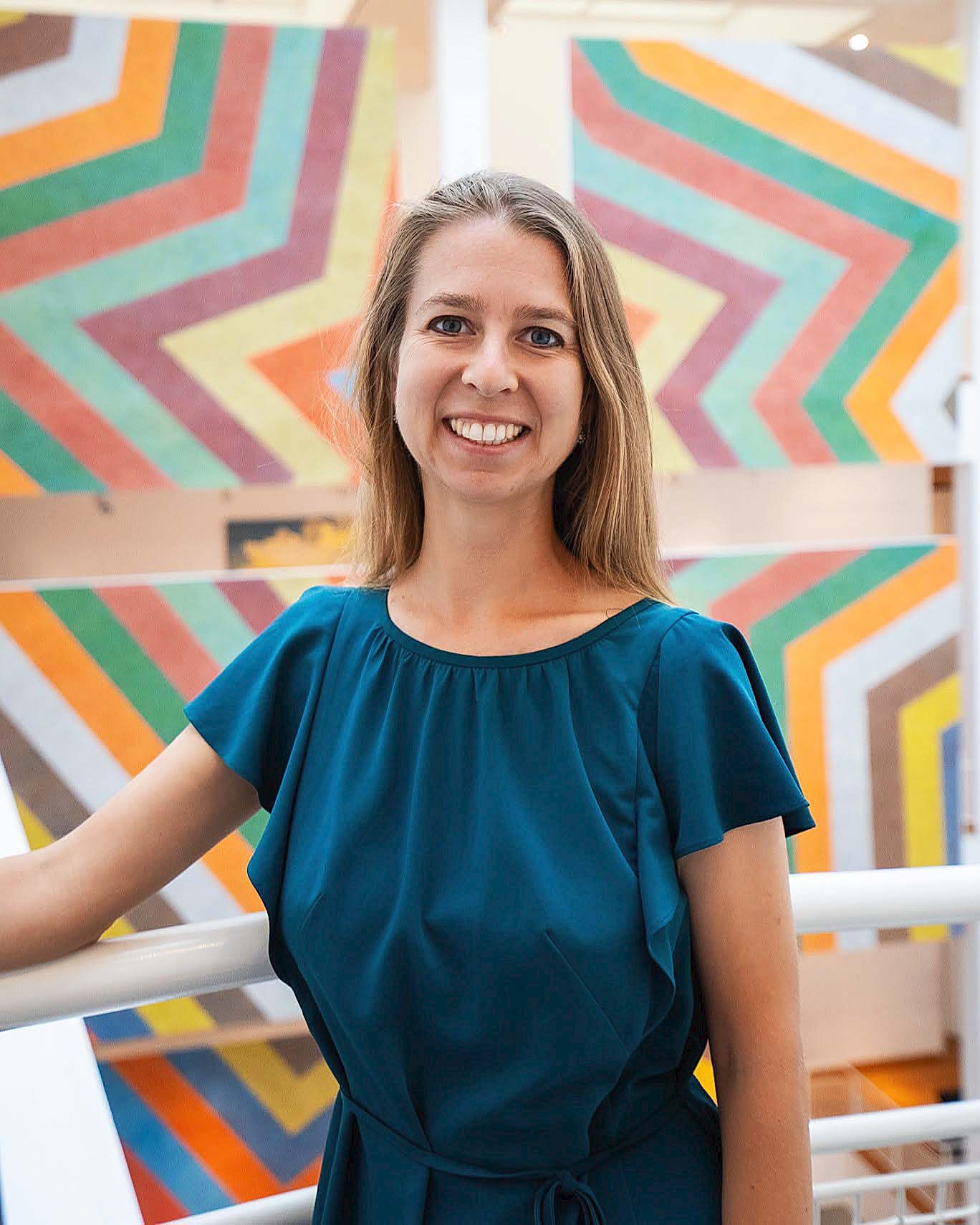
Elissa Watters was recently named the High Museum of Art’s Frances B. Bunzl Family associate curator of European art. The High’s collection of European art spans six centuries and includes more than 1,100 paintings, sculptures and works on paper. Previously Watters was a guest curator and research assistant at notable institutions, and she was the Florence B. Selden Senior Fellow at Yale University Art Gallery. Upon the announcement of her new role with the High, we reached out to learn more.
Congratulations on joining the High Museum! What does it mean to you that you were selected for this role?
Thank you! I’m honored to have been selected for this role and to have joined such a smart, ambitious and creative team. The High’s initiatives and programs, particularly its efforts to become a place for all of Atlanta to come together, really dovetail with my interest in museums as spaces of community-building and exchange, as well as education and intellectual engagement. I’m thrilled to be here and to be able to contribute to the work the museum is doing.
As associate curator of European art, what are some of your responsibilities?
At the broadest level, my responsibilities involve caring for the current holdings of European art (over 1,100 objects), developing a strategy for growing this part of the collection and mounting exhibitions. On the day-to-day, I conduct a wide range of tasks. For example, I am currently organizing a rotation of works on paper in the collection galleries, exploring potential exhibition opportunities, conducting research and editing texts for one of our upcoming publications and meeting with local collectors who have generously offered to donate European art objects in their personal collections to the museum.
How do you anticipate collaborating with other departments at the High?
Collaboration is baked into the work we do as curators. From day one, I have been working closely with colleagues in our collections department as I update object records, oversee photography of collections and objects, and arrange to see objects stored offsite. Conversations with curatorial colleagues have also been crucial as I think through upcoming rotations as well as potential exhibition ideas. I have also been working with our internal editor to finalize several entries for an upcoming publication, and I am working with colleagues on our learning and civic engagement team to revisit the interpretive texts and overarching narrative in our European art galleries.
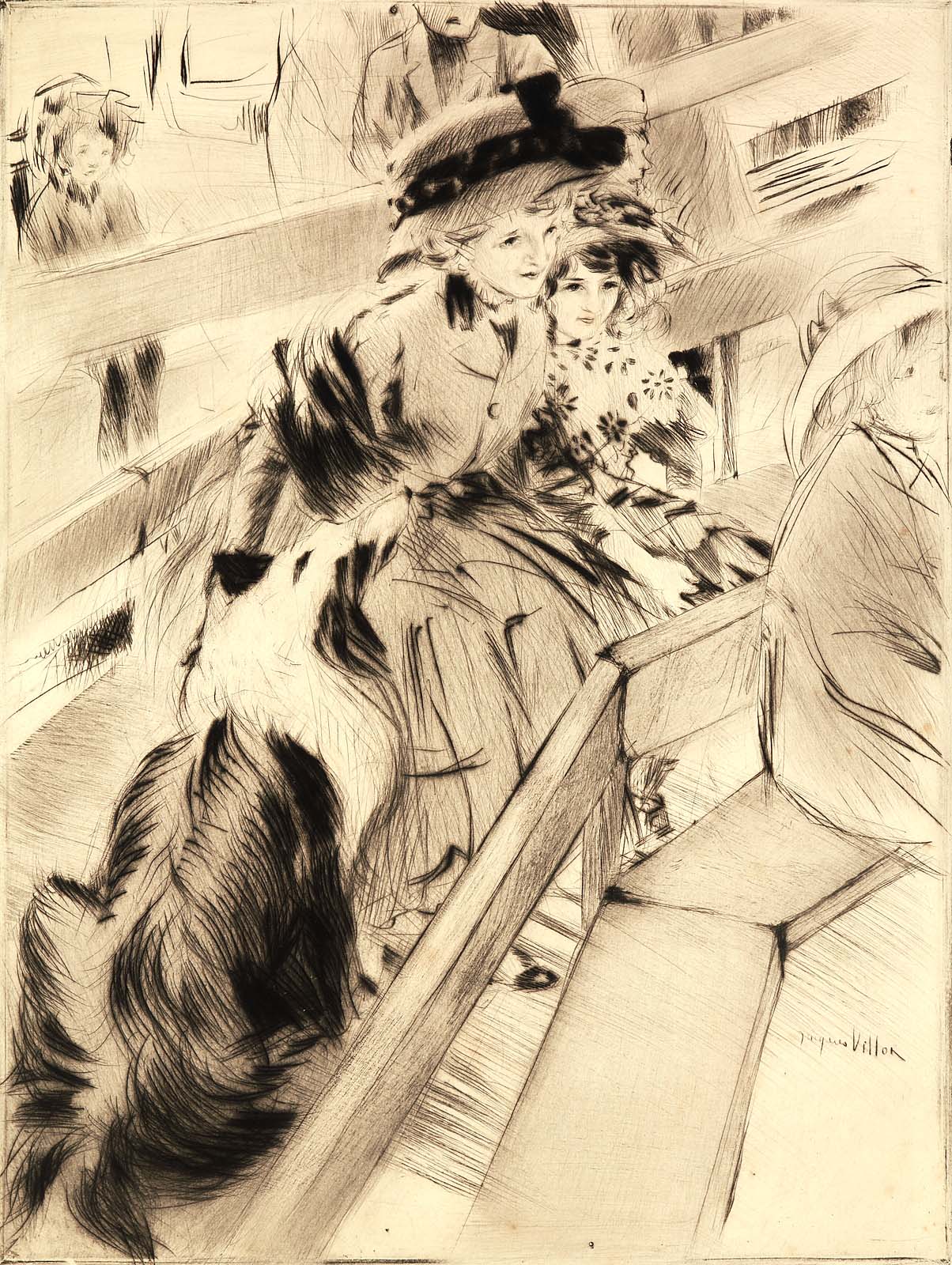
“In Front of a Punch and Judy Show” by Jacques Villon (French, 1875-1963), 1909, drypoint on paper. High Museum of Art, Atlanta, gift of Herbert Loring and Sarah Hoshall Loring, 2003.16.
How does this position tie into your PhD research?
I am trained in art made in Europe in the late Nineteenth and early Twentieth Centuries, which is a strength of the collection and what I was hired to do at the High aligns with that focus. My interests in works on paper and the relationship between art and design also align with the nature of the museum’s European art collection, which is best known perhaps for its paintings and sculptures but also has many drawings and prints, including posters and other works we might think of today as graphic design.
How have previous roles you’ve held prepared you for this job?
Previous curatorial roles have prepared me for everything from caring for collections to organizing exhibitions to working collaboratively with both internal colleagues and external constituents (ie, dealers, collectors, conservators and colleagues at other institutions). My three-year tenure in the prints and drawings department at the Yale University Art Gallery gave me a background not only in the technical aspects of works on paper but also in creatively developing narratives out of a collection — a skill that is proving useful as I plan rotations, for example. My work in education — in both museum spaces and university classrooms—has prepared me to think about a range of perspectives as I consider what about a particular object or group of objects may grab a visitor’s attention.
What about this role are you especially excited about?
I am particularly excited to work with colleagues to identify what narratives about European art inspire interest and spark conversation among our visitors, and how we can bring out those narratives in the collection galleries.
Are there any areas in the collection that you are looking forward to strengthening?
I am still determining what these areas might be, but I am interested in strengthening our holdings of work by women artists.
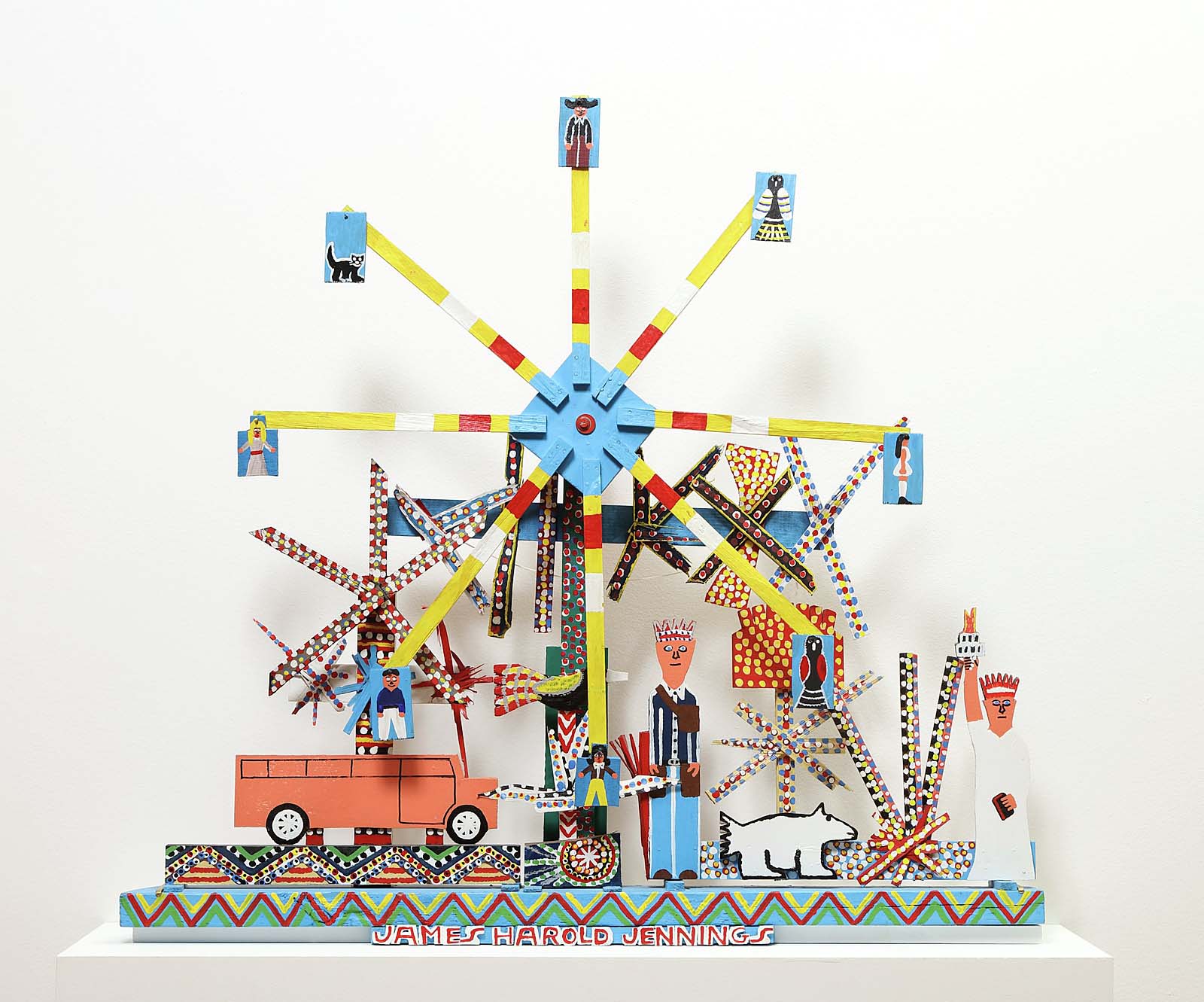
“Ferris Wheel” by James Harold Jennings (American, 1931-1999), 1980s, paint on wood. High Museum of Art, Atlanta, gift of Phil and Lisa Gilbert, 2016.542.
Are there any future exhibitions or projects that you already have in mind?
Yes, there are, but they are still in the exploratory phase, so stay posted!
Can you pick out a piece in the High’s collection to call a favorite?
There are so many incredible works — I can’t pick a single favorite. I love the kinetic painted and carved wood sculpture titled “Ferris Wheel” (1980s) by American artist James Harold Jennings (1931-1999), which is currently on view. Also, I was in storage the other day and was blown away by a print titled “In Front of a Punch and Judy Show” (1909) by French artist Jacques Villon (1875-1963). The fuzziness of the drypoint lines in the darkest parts of the image, such as the dog’s coat and the woman’s hat, convey this heightened tactility — just by looking at the image, I could practically feel the softness of the fur and the ribbon.
—Carly Timpson