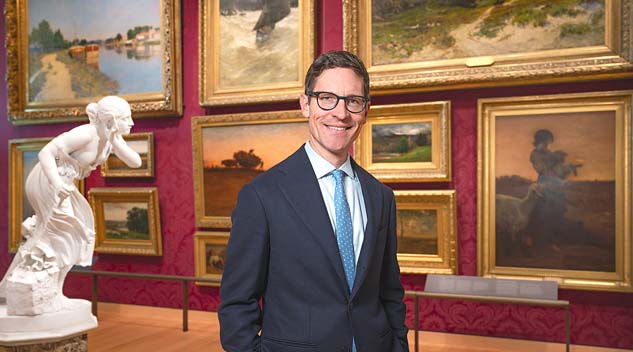
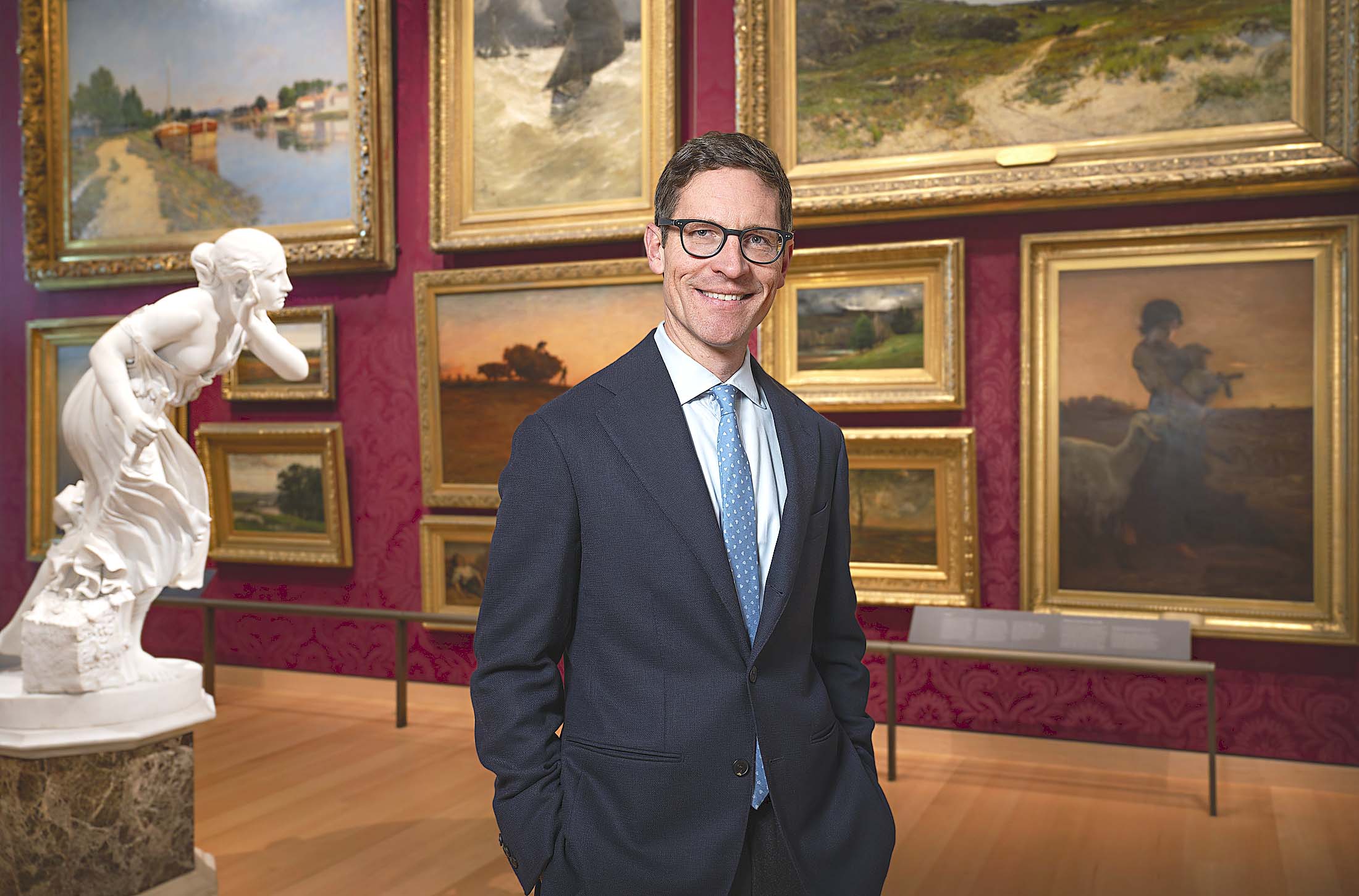
Ethan Lasser, chief of curatorial affairs and conservation at the Museum of Fine Arts, Boston. December 8, 2025. Penny and Jeff Vinik Gallery. Photograph © Museum of Fine Arts, Boston.
In December of last year, The Museum of Fine Arts, Boston (MFA) announced that Ethan Lasser was appointed as chief of curatorial affairs. Previously serving as both the John Moors Cabot chair, art of the Americas and head of exhibitions strategy at the MFA, Lasser just recently began the transition into this new role on January 5. Hearing this, Antiques and The Arts Weekly jumped at the chance to speak with Lasser about his first month on the job.
Congratulations on your appointment to chief of curatorial affairs and conservation! Can you describe for our readers a little bit about what this position entails? How has everything been going so far?
You’re speaking with me in month one! I’m now the lead for the nine curatorial departments at the MFA, as well as other kinds of art functions that are vital to what we do — conservation, registration, our exhibition program and exhibitions office, publications and, what we have very specially here, a department of provenance. And, I have to say, I have great colleagues in every one of those categories. That’s one of the reasons why I took this job and that’s what’s been the best part of the last few weeks.
You have been with the MFA for six years as the John Moors Cabot chair, art of the Americas and the head of exhibitions strategy. What have been some of the most memorable exhibitions you have contributed to thus far?
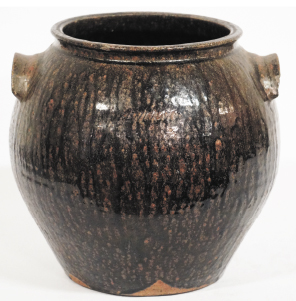
I’ll give you two answers. “Hear Me Now: The Black Potters of Old Edgefield, South Carolina” (March 4-July 9, 2023) was a project I came to the museum with and was really excited to see through. It made a big mark in Boston; it made a big mark with our community.
As I’m sure you’ve heard, we’ve continued the work of that show. As many news outlets have reported, we recently reached a historic settlement with the descendants of [enslaved and literate potter] David Drake. So, the work of that exhibition has been ongoing.
More recently, this past fall, I had a once-in-a-lifetime chance to present almost all of our Winslow Homer watercolors in “Of Light and Air: Winslow Homer in Watercolor” (November 2, 2025-January 19, 2026), an exhibition I co-curated with Christina Michelon. This was a really special show because we hadn’t brought all his works in the MFA collection together since 1978. It really only happens on occasion because we’re very careful stewards of the watercolors, as light sensitive objects. I think the result of that care is that the watercolors are in superb condition — they are just truly ravishing works of art. It was a real pleasure to present these this fall, and it’s really sad to see them go back into their boxes! However, it was very fun to have them out and see the public’s response to them.
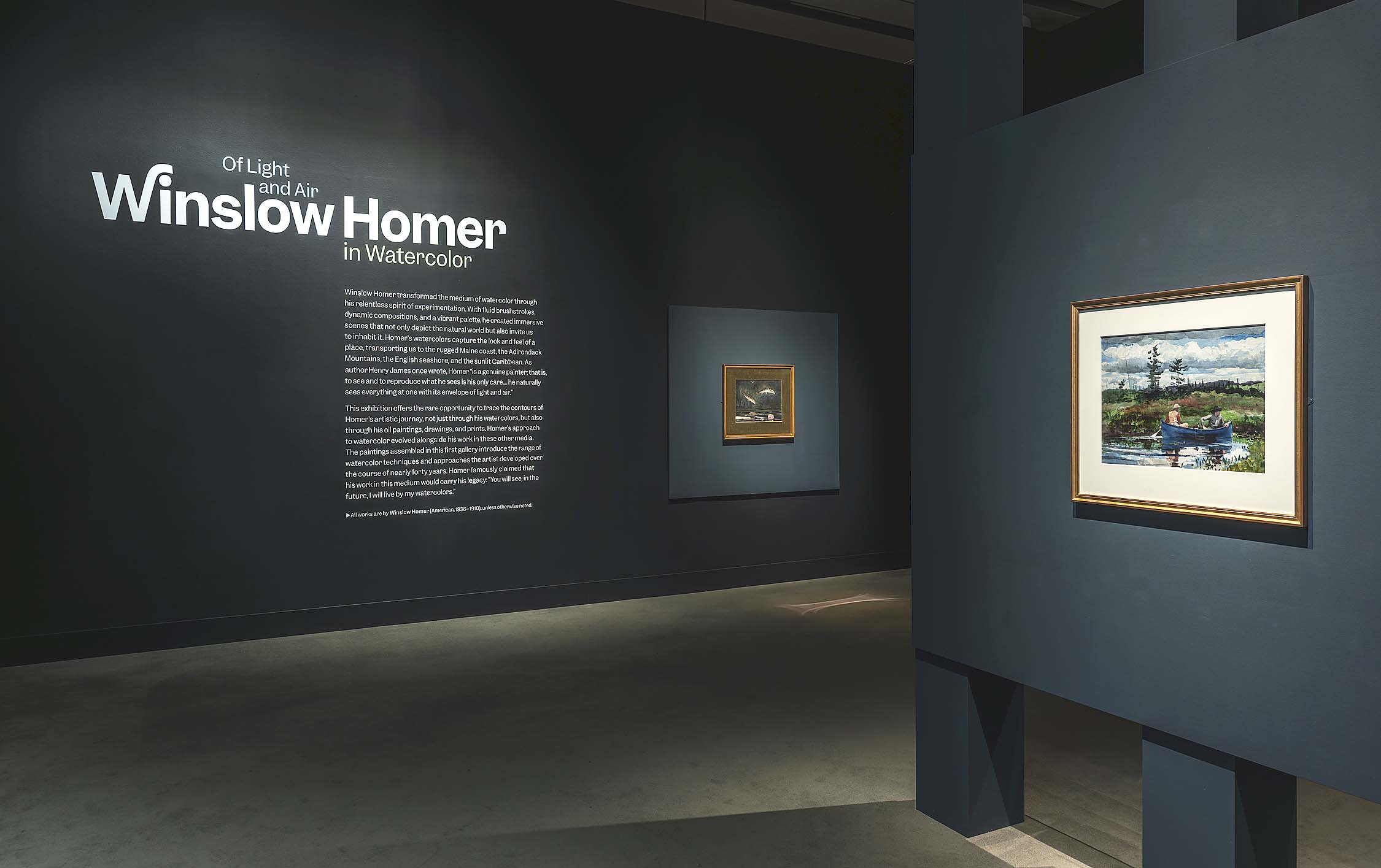
“Of Light and Air: Winslow Homer in Watercolor” exhibition at the Museum of Fine Arts, Boston. November 2, 2025, to January 19, 2026. Ann and Graham Gund Gallery. Photograph © Museum of Fine Arts, Boston.
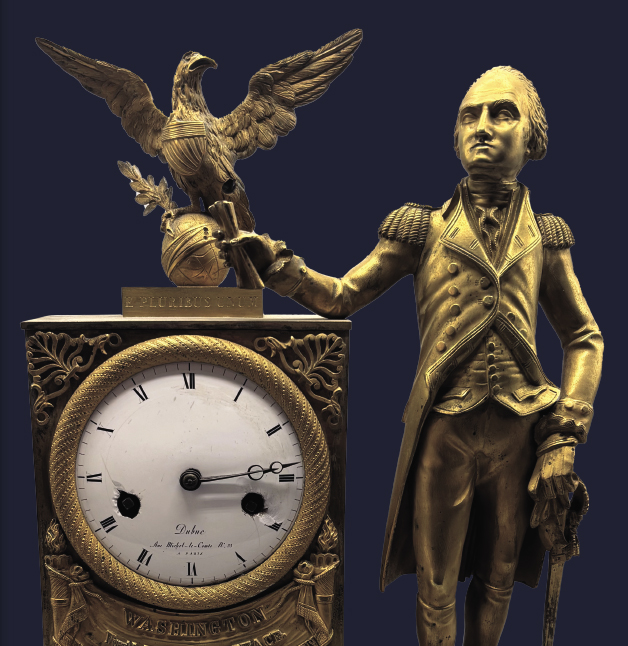
You are also playing a major role in the reinstallation of the Eighteenth Century art of the Americas galleries, which are set to reopen in June. What has this process been like, and has it taught you anything new?
We are in the midst of deinstalling the old galleries, which opened here in 2010. So, we are in the process of taking all of the art out in preparation for putting it all back in for our opening. We just arrived at the stage, which is always fun, where you pick the paint colors of the new gallery.
What I think I’ve learned through this process is the wealth of broader stories that we can tell about this period, as we expand our lens to think about not just North America, but Central America, South America and the Caribbean, and we’ll be animating those new galleries with works of art from all these places, all of which had their own transformative cultural moments in the Eighteenth Century. So, I’ve been learning a lot about these other regions; I’m pretty familiar with British North America, but I’m still learning about all of the other parts of the Americas during this period.
In the press release announcing your appointment, you expressed gratitude for your mentors, both past and present. Can you name a few that have been particularly impactful on your career trajectory?
Let’s see, I think I’d start with my teacher at Yale in graduate school, Ned [Edward] Cooke, who really just opened a new way of seeing for me about the wonder of how things are made and the way that makers and artists today can help you understand objects from the past, which has been vital to what I do. So, he’s certainly someone who modeled curiosity for all things from the art and material world for me.
Next, my first curatorial job was at the Chipstone Foundation. There I was mentored and pushed in the best ways by Jon Prown, who is still a director of Chipstone. He really taught me to question the way that museums present American art and to find my own voice. Jon showed me how energizing museum work can be.
The third, I suppose, is not a person, but just a kind of category encapsulating of all the artists that I’ve worked with over the years in all kinds of media — ceramicists, furniture makers, painters, printmakers. I’ve had my best conversations and experiences looking at historic art with contemporary artists and have just learned so much from those conversations. It’s one of the things that makes me keep coming back to museum work, the chance to look at things you think you know with people who have their day-to-day life in these techniques and materials and to learn from them.
What are you looking forward to the most as you dive deeper into this role, especially in the year of America’s 250th?
Well, I’m really excited to open these new galleries. We started this process in the summer of 2023, so it’s been a long time. The ideas, the plan we had for the gallery then, when we started, is now completely different, which is a good sign. We’ve really thought hard, revised our themes and object selection, and along the way, brought a number of new acquisitions into the collection that I think the team and I are just very excited to share with our city. Things that we can say, “We’re the only one in America who has this” or “this is the only one of these works in a major museum.” So, I’m just really excited to see how people respond to these objects and these new spaces.
—Kiersten Busch