Jace Ferraez’s path to owning an auction house has perhaps been a bit circuitious. With a background in law, he most recently worked as an attorney for the United States Bankruptcy Court in Aberdeen, Miss., but he has long been passionate about historical objects and is an ardent antiques collector. He was a longtime customer of Stevens Auction Company and even worked with founder and auctioneer Dwight Stevens for several years in different roles, learning the business. Last fall, Ferraez bought the company after Stevens was elected mayor in 2024. Eager to hear about Ferraez’s background and his vision for the company, we set up time to talk.
What is your background in the antiques trade?
My background in the antiques trade really began the same way it does for many people, as a collector. I started buying antiques while in college and have continued ever since. Over time my interests have evolved, but I’ve always been drawn to objects with craftsmanship, history and a sense of place.
Personally, I’ve always gravitated toward American Classical furniture, but being involved in the auction world broadens your appreciation for many different styles and periods. In this business you quickly learn that you don’t always sell what you personally collect. That’s part of what makes it interesting. You’re constantly learning about new categories and working with buyers who have very different tastes.
I also own Twelve Gables in Columbus, Miss., which is a historic home. Restoring and furnishing that house deepened my appreciation for antiques in a very practical way. When you live with antiques every day, you begin to understand not just their beauty but how they were used and the stories they carry with them.

Jace Ferraez has carefully restored his home Twelve Gables and furnished it with antiques and pieces to accentuate its historic status.
What inspired you to buy the auction house?
Collecting naturally led me to auctions. I was actually a longtime Stevens Auction Company customer before I ever imagined owning the business. Like many buyers today, I first participated online, but over the years I also attended estate auctions and sales held at the auction house itself. Those experiences gave me a real appreciation for the role auctions play in bringing important objects to market and connecting them with the right buyers.
I had attended Stevens auctions for years and developed a great deal of respect for the company and for what Dwight Stevens built over time. Stevens Auction Company has long been known for handling important Southern estates and distinctive collections, and it developed a reputation that extends well beyond Mississippi and the South.
When the opportunity arose to acquire the business, it felt like a very natural step for me. I’ve been involved in other business ventures over the years, but this was the first opportunity I had to build something around a field I’ve genuinely been passionate about for a long time.
Coming into it as a buyer also gave me a helpful perspective. I understood what it felt like to participate in the auctions and what draws people to them. At the same time, I could see opportunities to build on the strong foundation Dwight created and expand the audience for the auctions going forward.
My goal has never been to change the identity of Stevens Auction Company, but rather to preserve what has made it successful while positioning it to continue growing in the future.
Do you still plan to practice law, or is this your full time focus now?
My legal background is still very much a part of who I am, and I do plan to remain involved in both. That said, Stevens Auction Company has become my primary focus.
The law is often described as a jealous mistress, but I’ve come to find that an auction house requires even more constant attention. I’m very much involved in the day-to-day operations and there is always something happening: evaluating collections, planning sales, working with consignors and buyers. I spend most of my time at the auction house unless I happen to be in court.
In many ways, my legal experience has actually been very helpful in the auction business, particularly when dealing with estates, transactions and the kinds of issues that can arise when handling significant collections.
One thing I’ve always admired about Dwight Stevens is that he built the company with a real family atmosphere. Family members have always been involved in supporting the business and that’s something I’m continuing as well. My own family is already helping in various ways, which makes the work even more meaningful.
At the end of the day, the antiques trade is a very relationship-driven business and I’m excited to devote my energy to growing Stevens Auction Company while continuing the legacy Dwight established.
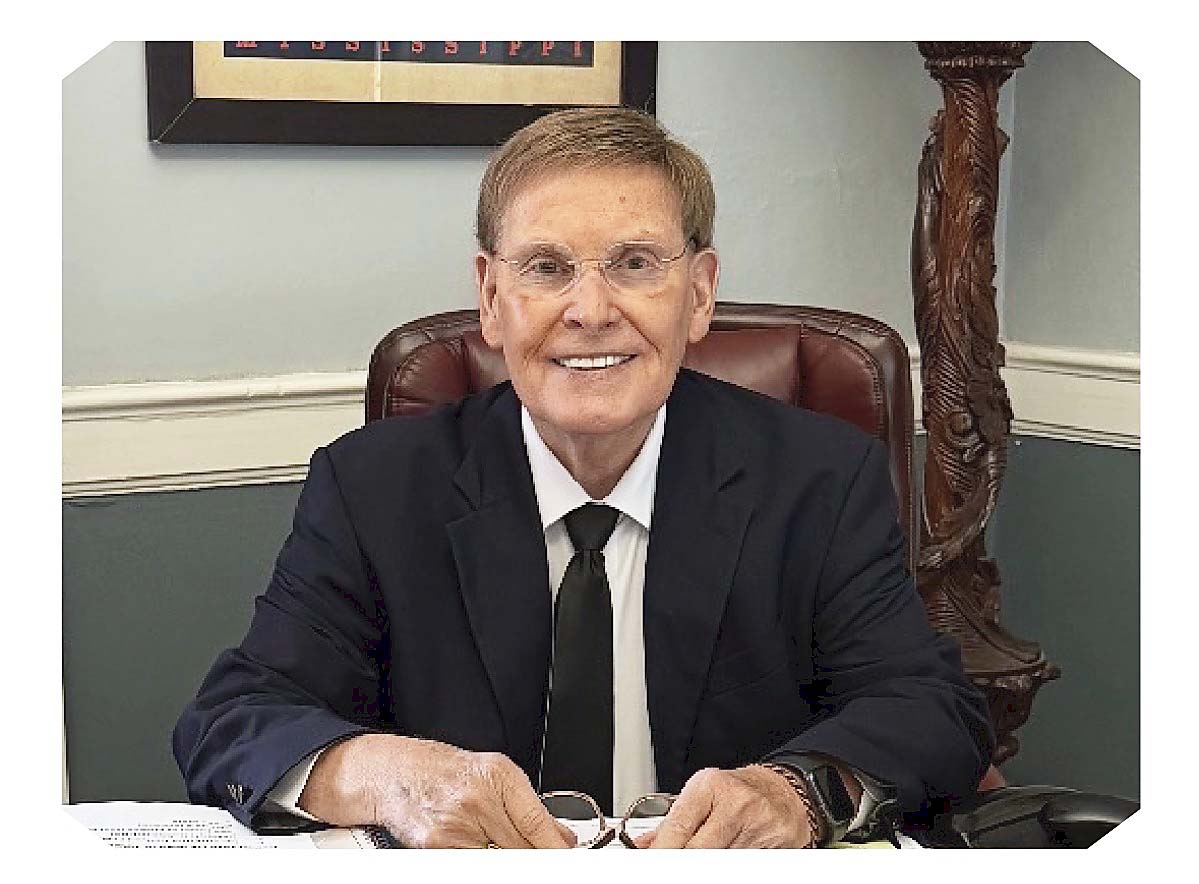
Founding auctioneer Dwight Stevens worked hand in hand with Jace during the business transition and is still very much involved in the business.
How has the transition been? Is Dwight still involved in the business?
The transition has been very smooth largely because Dwight has been incredibly supportive throughout the process. He built Stevens Auction Company over many decades and his experience and institutional knowledge are invaluable.
Dwight is still very much involved. He continues to serve as the company’s auctioneer and general manager and I certainly hope he remains part of the business for as long as he’s willing. I consider him both a mentor and a friend, and I’m learning a tremendous amount from working alongside him.
It’s also remarkable to watch how much energy he brings to everything he does. In addition to working at the auction house, Dwight also serves as the mayor of Aberdeen, yet he can still outwork just about anyone. His dedication to the business and the community is something I have a great deal of respect for.
At the same time, we’re also introducing some new ideas as we move forward. The auction world continues to evolve, particularly with technology, and the way buyers participate in sales. Some of that involves experimenting with new tools that help us operate more efficiently and reach a broader audience while still maintaining the personal approach and traditions that have always defined Stevens Auction Company.
Like most things in this business, some of those changes are a bit of trial and error, but adapting to how people buy and participate in auctions today — and how they will in the future — is an important part of continuing to grow. Overall, my goal has always been continuity: building on what Dwight created while preparing the business for the future.
Are you planning to get your auctioneer’s license and run auctions?
Yes, I do plan to pursue my auctioneer’s license. I have a great deal of respect for the skill that goes into auctioneering, and I believe it’s important for the owner of an auction house to understand auctions from every vantage point.
That means not only learning to call an auction but also understanding the process of sourcing property, buying for sales when appropriate, working with consignors and managing all the moving parts that go into producing a successful auction. The more perspectives you understand, the better decisions you can make for the business.
Dwight’s cadence as an auctioneer is really something special and watching him work has been a great learning experience for me. He likes to joke that I may be a little more formal in my approach but there’s certainly room for different styles. Developing that rhythm and confidence is part of the craft and it’s something I’m looking forward to continuing to learn.
What’s your five-year business plan here, or what areas do you hope to grow in?
Over the next five years, my focus is really on expanding the reach of Stevens Auction Company while continuing to build on the reputation the business already has for handling quality estates and collections. Traditionally, Stevens has been well known for Southern estates, for example, Empire and Victorian American furniture, and that will always remain an important part of what we do. Simultaneously, I want to broaden our offerings by including more decorative arts categories and European, Asian, primitive furniture and others, to appeal to a wider range of buyers.
Another major goal is introducing a new generation to antiques and the auction process. Many younger buyers are discovering that antiques offer something you simply can’t replicate today: craftsmanship, history and individuality. Auctions are also one of the most accessible ways to enter the market because there are objects available at many different price levels. If we can help spark that interest and show people how exciting auctions can be, I think the market will continue to grow.
Technology has also made it possible for auctions to reach buyers far beyond the local region. Stevens already attracts bidders from across the country and internationally, and continuing to expand that reach will be an important part of the future. If the right opportunities arise, I would certainly consider expanding the Stevens presence through additional auction locations or partnerships in other regions. But with the way online bidding has evolved, an auction house today can already reach a truly large-scale audience from a single location.
You bring a fresh eye to the business — what do you see as a challenge or an opportunity in curating/marketing/producing auctions today, and what direction do you see things moving towards?
One of the biggest changes in the auction industry today is the way buyers participate in sales. Online bidding platforms have dramatically expanded visibility for auctions and made it possible for people to participate from anywhere in the world, which has been a tremendous opportunity for the trade.
At the same time, auction houses are also thinking carefully about how to maintain strong relationships directly with their buyers. Technology is a great tool for expanding the audience, but the personal connection between the auction house and the buyer is still very important. Providing clear information, good communication and reliable service is what ultimately builds long-term trust.
Another practical challenge the industry is working through is shipping and logistics. As more buyers participate remotely, the process of safely and efficiently getting items to their new owners has become a larger part of the business. We’re spending a lot of time thinking about how to streamline that process and provide better shipping solutions, including cost effective options, so buyers can participate with confidence, whether they’re across the country or across the world.
In the end, while technology continues to evolve, the fundamentals of the auction business remain the same. Success still comes down to presenting quality objects, describing them accurately and creating an environment where buyers feel comfortable and confident participating in the sale.
—Andrea Valluzzo