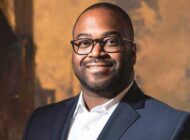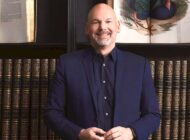
Dr Joshua O’Driscoll was appointed as the Morgan Library & Museum’s Melvin R. Seiden curator and department head of medieval and Renaissance manuscripts, beginning his term on March 2 after holding various curatorial positions in the department since 2015. Interested in his decade plus at the Morgan and the steps he’d taken to get there, Antiques and The Arts Weekly sat down with O’Driscoll to get the scoop on his career trajectory and current projects.
Congratulations on your appointment as the Melvin R. Seiden curator and department head of medieval and Renaissance manuscripts at the Morgan! Can you describe for our readers what your new position entails?
The position entails managing the department of medieval and Renaissance manuscripts, which is the most significant collection of illuminated medieval and Renaissance manuscripts in the country. We maintain the collection, we exhibit the collection, research the collection and acquire new pieces. My role as department head is to steer the departmental activities, develop exhibition and acquisition opportunities and foster support and engagement with the department.
You have previously worked at the Bode Museum (Berlin), the British Library (London) and the Houghton Library at Harvard University. How has working around the globe changed how you have approached working with the collection at the Morgan?
Throughout my studies, I’ve always tried to work in museum settings, without realizing at the time that I even wanted to be a curator. To be honest, it didn’t even cross my mind that it was a career possibility. There were just so few positions available. My goal really was to study, to be close with objects, to work with the people who care for them every day. I learned an immense amount doing that, about all the behind-the-scenes activities and things that don’t get discussed in graduate programs. For example, the importance of provenance research, which I think in the intervening 20 years has become much more important, and the importance of looking at all aspects of an object and its history — and the broader importance of histories of collections, how collections develop, how they’re maintained and different strategies of displaying them and aligning them with institutional profiles.
I learned an incredible amount in these various internship opportunities. The British Library position in particular was hugely important for me as a way of working on a manuscript exhibition, seeing firsthand how a manuscript exhibition is put together. That was really influential for me.
In the press release announcing your appointment, you mentioned that, in the 11 years you have worked at the Morgan, you have formed a deep connection with the collection. What are some of your favorite manuscripts in the collection?
That’s a really tough question because I have so many for different purposes, depending on the context. One of the real standouts for me is the so-called Morgan Beatus, a Tenth Century illuminated commentary on the Apocalypse from Spain, which is just an incredible object and something I’m always fascinated by.
We have another manuscript, an unfinished Book of Hours (MS M.358), which is one of my favorite manuscripts to show for teaching purposes. I start most classes looking at this manuscript because it allows you to see how a manuscript was produced and the different stages that take place in the production of an illuminated manuscript. It’s a really great tool for teaching.
I’m also very fond of our Black Hours, which is another famous manuscript in our collection. There’s only seven such manuscripts in the world. It’s a rare survival and it’s very well preserved. And it’s always an incredible treat to be able to see that manuscript.
And then, of course, one of my all-time favorites is the Lindau Gospels, which is “M.1” in our collection, as we call it. It’s the cornerstone of the collection. The Lindau Gospels really marks the first major acquisition that Pierpont Morgan made in terms of medieval manuscripts. It started him down that path and it remains the most important medieval manuscript in our collection. It’s something that I always enjoy having the opportunity to talk about.
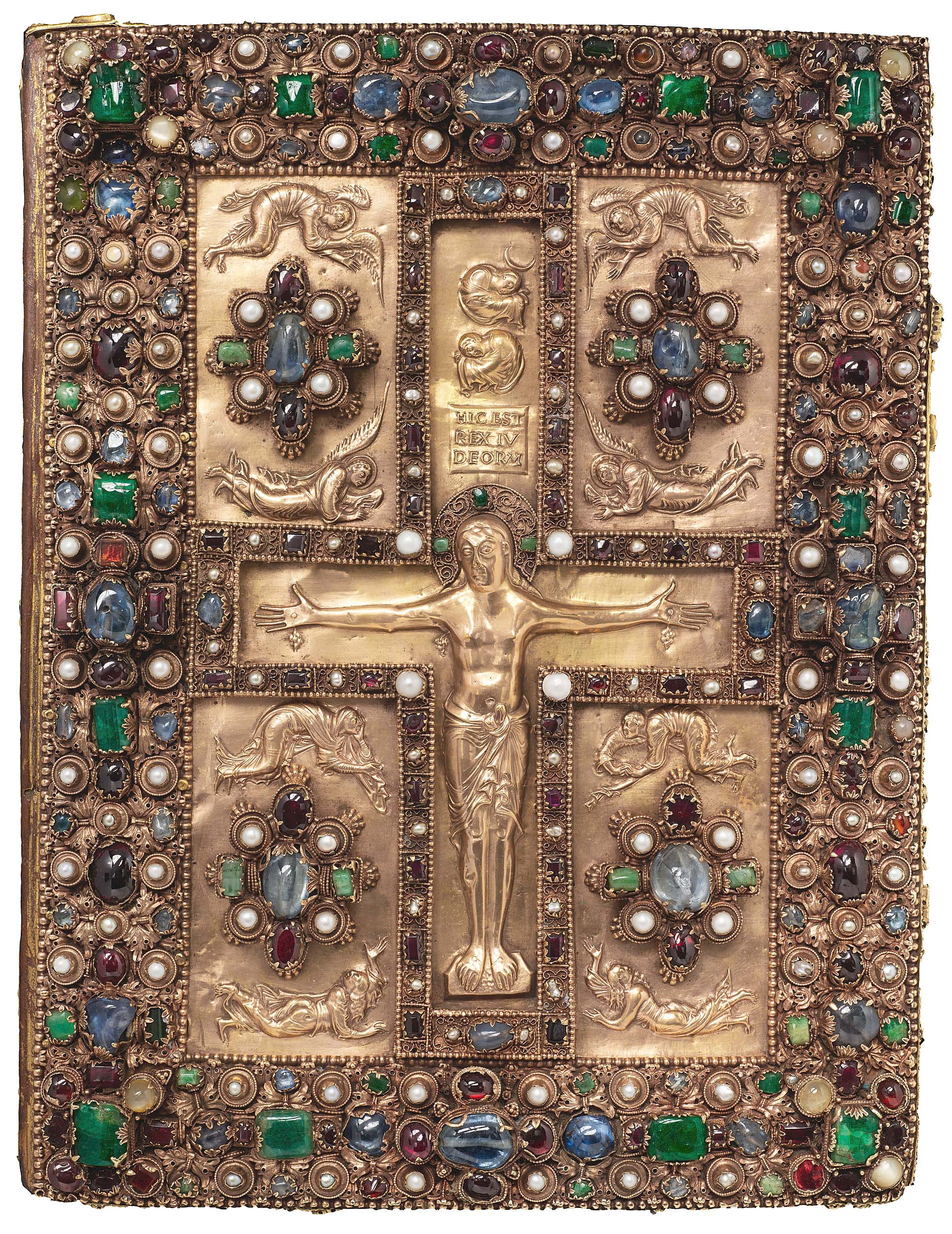
Jeweled front cover of the Lindau Gospels, possibly written (Latin) and illuminated by Folchart, St Gall, Switzerland, circa 880-890 CE, approximately 12½ by 10 inches. Purchased by J. Pierpont Morgan (1837-1913) in 1901. MS M. 1. Photo courtesy Graham S. Haber, The Morgan Library & Museum.
You are currently co-curating “Tarot! Renaissance Symbols, Modern Visions,” which will be on view starting June 26. Can you give us some insight into the exhibition and how it came to be?
Yes! The Morgan has one of the earliest tarot decks in the world, the Visconti-Sforza tarot deck, which is split across our collection, the Accademia Carrara Museum in Bergamo (Italy), and also a private collection in Bergamo. Together, these cards make up the most complete of the hand-painted Renaissance decks, as 74 out of the 78 cards survive. My colleague Frank Trujillo, the Drue Heinz book conservator at the Morgan, has been working for years as part of an international team of conservators and scientists to better understand how the cards are made. They’ve generated a huge amount of new information about the technical aspects of the Renaissance tarot cards, and that formed the impetus for our exhibition, which won’t be specifically on this technical analysis of the cards; it’s going to be much broader in scope. It’s really going to be a chance for people to dive into the history of Renaissance tarot, but also, in the second gallery it will be an opportunity to see how modern and contemporary artists have engaged with the topic of tarot and used it as a source of inspiration for their practice. The cards themselves are gorgeous, and it’s going to be the first time in North America that selections from the three Visconti decks will be shown side by side.
What are some of your goals for the department going forward?
One of my main goals will be to broaden and deepen digital access to the collection. That’s something we’re working on actively in the department right now. Another goal of mine is to develop collaborations, with partner institutions both domestically and abroad.
—Kiersten Busch