In honor of the American Folk Art Museum’s (AFAM) 65th anniversary, celebrated with a gala in its hometown of New York City on May 6, we reached out to Dr Emelie Gevalt, the museum’s Deborah Davenport and Stewart Stender deputy director and chief curatorial and program officer, a position she has held since January 2025. Previously she served as the museum’s curatorial chair for collections and curator of folk art. Along with the anniversary, AFAM has additional news to celebrate this year, which we were excited to learn about.
Much of the conversation this year has focused on America’s 250th birthday, but the American Folk Art Museum’s 65th is certainly an exciting celebration as well! Did these two anniversaries coinciding help in the planning process for the year’s events and exhibitions?
These double anniversaries certainly provide a perfect opportunity to reflect on the past, looking especially at the intersections between American history and the history of collecting and displaying American folk art. As part of this year’s programming, we are presenting two concurrent exhibitions that highlight the core strengths of our collection: “Folk Nation: Crafting Patriotism in the United States,” which I co-curated with Caroline Culp, and “Self-Made: A Century of Inventing Artists,” curated by my colleagues Valérie Rousseau and Suzie Oppenheimer.
While “Folk Nation” examines the historical construction of national identity, “Self-Made” explores the power of the individual creator. Together, these shows address the semiquincentennial by offering a broad-ranging look at both American folk art and self-taught art traditions, reflecting 65 years of the Museum’s commitment to telling a more expansive story of American creativity. We will continue with this theme during our fall exhibition, “Locating Girlhood: Place and Identity in Early American ‘Schoolgirl’ Art.”
In what ways do the exhibitions on view this year connect back to the museum’s roots and honor the 65 years of AFAM?
These exhibitions honor our 65-year history by underscoring the core mission of the Museum: to champion the kaleidoscopic range of creativity produced outside the academic art world. By pairing “Folk Nation” and “Self-Made” this season, we are showcasing the two pillars that have defined AFAM since its founding: the study and celebration of historical folk art alongside the work of Twentieth and Twenty-First Century self artists.
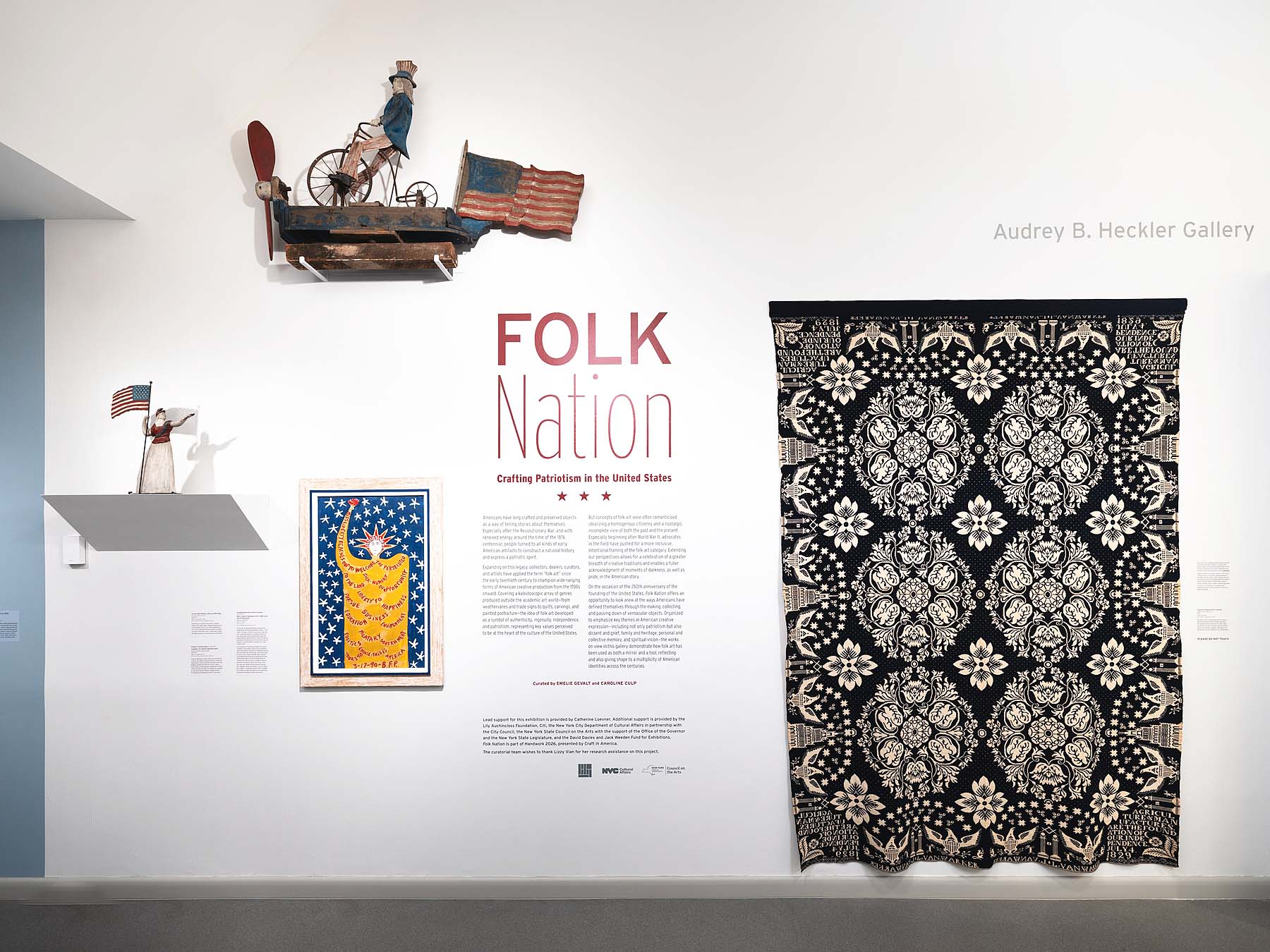
“Folk Nation: Crafting Patriotism in the United States” installation view. Credit: Jason Mandella.
As part of America250, several works from AFAM are on loan to Crystal Bridges in Bentonville, Ark. Which works were selected for this exhibition and why?
We’re thrilled to be able to share access to even more of our collection in partnership with Crystal Bridges, whose exhibition, “America250: Common Threads,” showcases over 30 artworks from the American Folk Art Museum collection. Loans range from AFAM’s iconic “Flag Gate,” made around 1876, to Ralph Fasanella’s “American Heritage,” painted just a few years before the Bicentennial. Visitors to Crystal Bridges will also be able to see a number of quilts and other textiles borrowed from AFAM’s largest subcollection of historical folk art, alongside paintings by key artists from William Matthew Prior to Joseph Whiting Stock. Crystal Bridges had their pick of a range of works and made fantastic selections.
Are there plans for any other works to travel to be viewed by a larger audience throughout the year?
Absolutely. We take great pride in the fact that our exhibitions often travel, allowing the Museum’s mission to reach far beyond our walls in New York City. This October, “Wall Power! Spectacular Quilts from the American Folk Art Museum” will open at the Dayton [Ohio] Art Institute. Additionally, our most recent exhibition, “An Ecology of Quilts: The Natural History of American Textiles,” is scheduled to begin a tour of the Northeast in early 2027. In addition to these full-scale exhibitions, at any given time, you can expect a number of works from our collection — which totals more than 7,500 — to be on loan to institutions across the country.
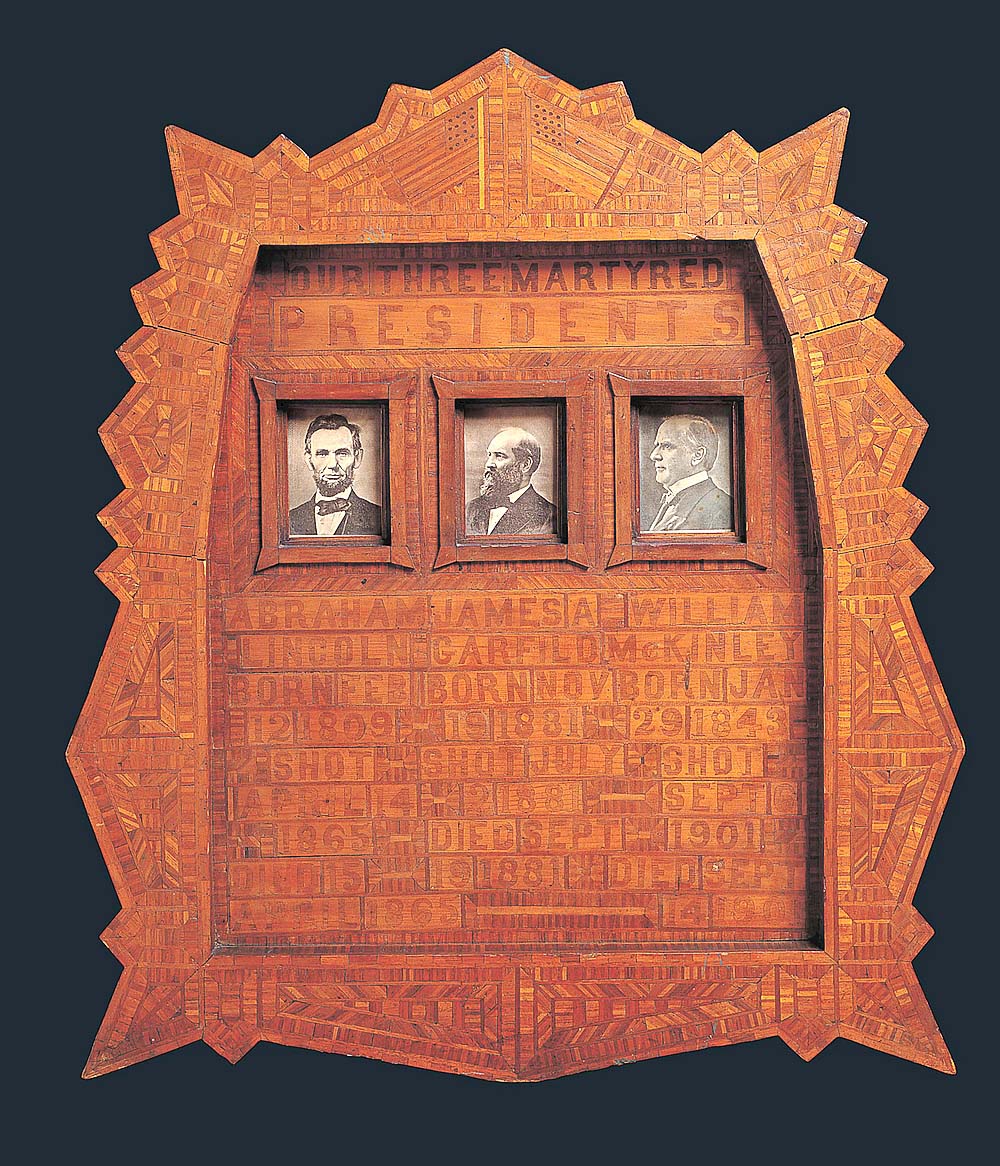
Cenotaph to three martyred presidents (Lincoln, “Garfild” [sic] & McKinley), United States, 1925-40, wood with photographic images on paper, 38 by 31¾ by 1¾ inches. American Folk Art Museum, New York City, gift of the Hirschhorn Foundation. On view in “Folk Nation: Crafting Patriotism in the United States.”
In March, AFAM was recognized by the New York State Assembly for its service as a champion for folk and self-taught art. Why was this recognition special, and how do you think it will help shape the museum’s future?
This was such a special day. Receiving the recognition really validated AFAM’s 65-year commitment to the cultural landscape of both the city and the state. While our team sees the daily impact of preserving and promoting this collection, having that work formally acknowledged by the State underscores the Museum’s role as a vital public resource. We hope that it will encourage even more New York residents to visit AFAM and see what we’ve been working on.
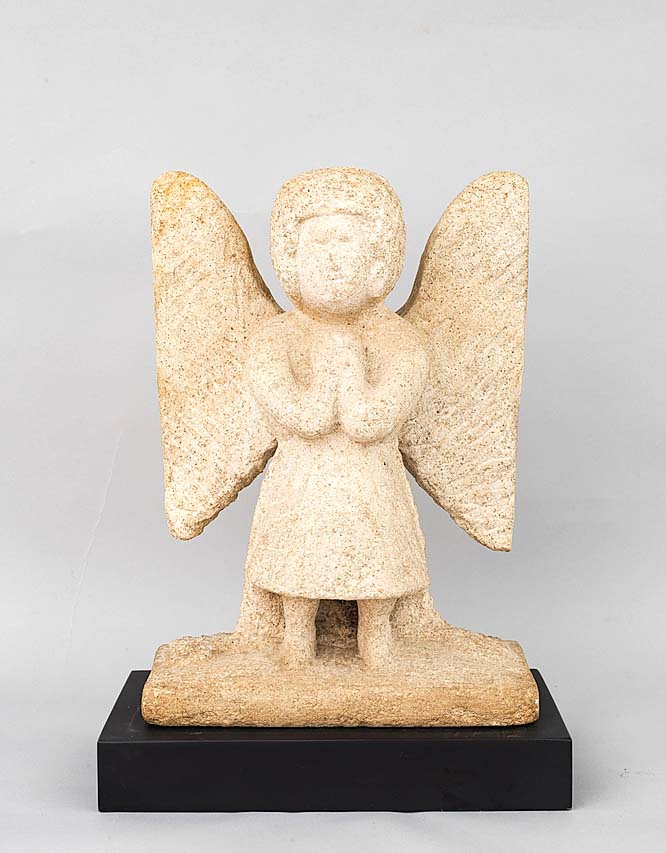
“Angel” by William Edmondson (Nashville, 1874-1951), 1937, limestone, 18⅜ by 13 by 6½ inches. American Folk Art Museum, New York, gift of Audrey B. Heckler. On view in “Folk Nation: Crafting Patriotism in the United States.”
I know the museum is currently undergoing major renovations to elevate the visitor experience and better support the day-to-day activities of staff. How have these changes already added to the museum experience? What else is still to come?
The recent renovations are designed to ensure that the Museum is welcoming and sustainable. We’ve already made several improvements, including snazzy new flooring designed for the comfort of both our visitors and staff, new restrooms and a “face lift” for our beloved Museum Shop. Less visibly, we have a new sound system that has greatly enhanced our public programs and lectures, and significant upgrades have been made to our HVAC systems.
This fall, we’ll unveil a revamped main entrance. This project is particularly important as it will provide even greater access, ensuring that our exhibitions are open and welcoming to every member of the public.
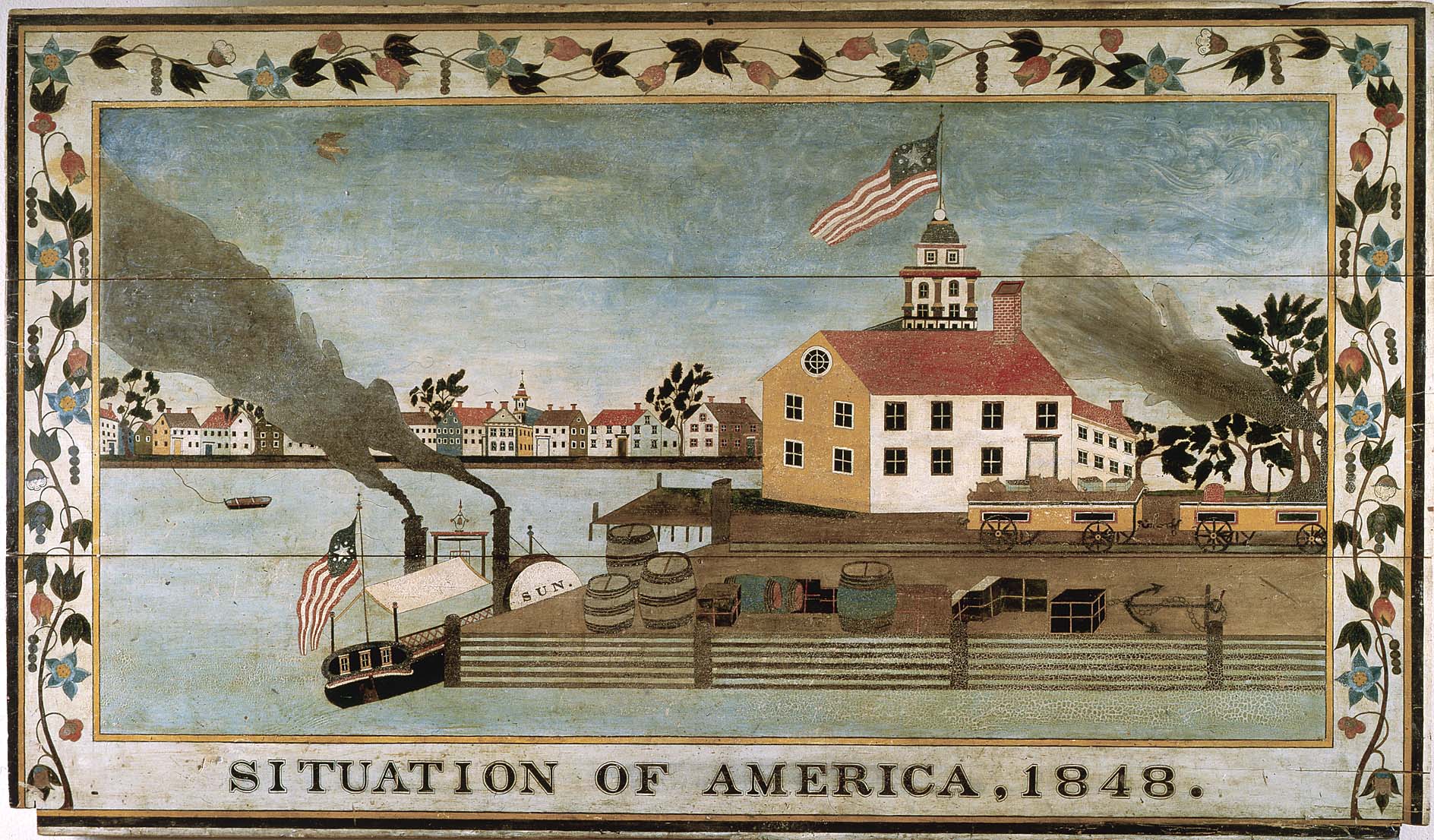
“Situation of America, 1848.” New York City, 1848, oil on wood panel, 34 by 58½ inches. American Folk Art Museum, New York City, gift of Ralph Esmerian. On view in “Folk Nation: Crafting Patriotism in the United States.”
In your time at AFAM since 2019, have you seen a change in the way individuals interact with and respond to folk and self-taught art?
I think that our visitors are consistently surprised and delighted by the discovery of these works and the powerful stories they tell. We are always working to expand our audiences, so that they too can appreciate folk and self-taught art.
There’s been so much going on for AFAM in the past few years, but I must ask…What’s next for the Museum? Any grand endeavors in the works that you can share?
There is always a great deal in development behind the scenes, but I am particularly excited about our upcoming fall exhibition, “Locating Girlhood: Place and Identity in Early American ‘Schoolgirl’ Art,” which I am again co-curating with Caroline Culp. This is a major loan exhibition — an undertaking several years in the making — bringing together spectacular examples of needlework and other ornamental arts created by young women in the Eighteenth and Nineteenth Centuries.
The project sheds new light on a rich but understudied genre, offering what will be one of the most significant presentations on the subject in recent memory. We are also looking forward to the release of an accompanying book, which will provide a complement to the scholarship and artistry on view in the show.
—Carly Timpson