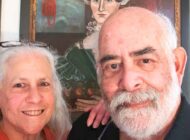
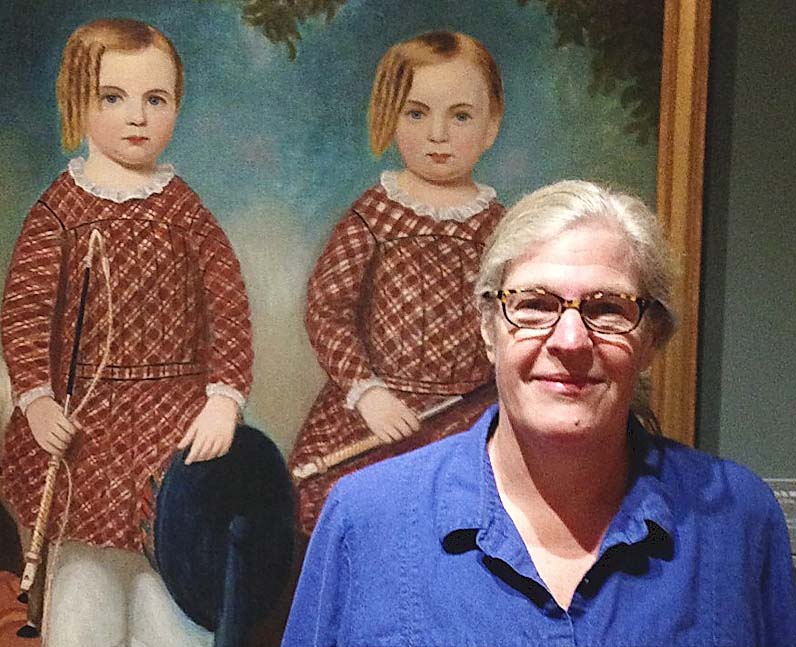
Martha Oaks has spent the last 25 years working at the Cape Ann Museum in Gloucester, Mass., most recently as the the Henrietta Gates & Heaton Robertson chief curator. In December 2025, she announced her plans to retire at the end of 2026. When we saw the announcement, we requested an interview to help celebrate her storied career!
First, congratulations on such an impactful career with the Museum! Can you talk a little about the ways in which the museum has changed since your tenure began?
Back in 1979 when I first interned at the Cape Ann Museum, it was a totally different organization than it is today. We were still very much a historical society, guardians of the social, economic and cultural history of what, in hindsight, was a remarkably small sliver of the Cape Ann community. We were largely volunteer driven, with just two or three paid employees and an occasional intern. Records were all hand kept, photocopies were made at a nearby office supply shop as needed and guests were shown through the entire museum by guided tour. The organization, however, had an unparalleled collection of works by Nineteenth Century American artist Fitz Henry Lane (1804-1865). It was also poised to become the keyholder to the remarkable story of American art on Cape Ann. These two assets assured that the Museum wouldn’t remain a traditional historical society for much longer.
During the early 1980s, under the guidance of many leaders and stakeholders, the Cape Ann Museum began to open up, exploring new and varied stories through expanded educational programs and special exhibitions, and beginning to collect artwork by a wide range of artists, including contemporary ones. As this happened, the professional staff expanded, conservation issues were seen to, facilities were expanded and improved and visitation grew. I was very fortunate to be part of this transformation and am happy to report that it is ongoing as the Museum passes the 150th anniversary of its founding and continues to reach out to and engage new audiences.
What’s remarkable about this story is that during all this growth, the Museum has stayed true to its mission, and that has been the basis of our success.
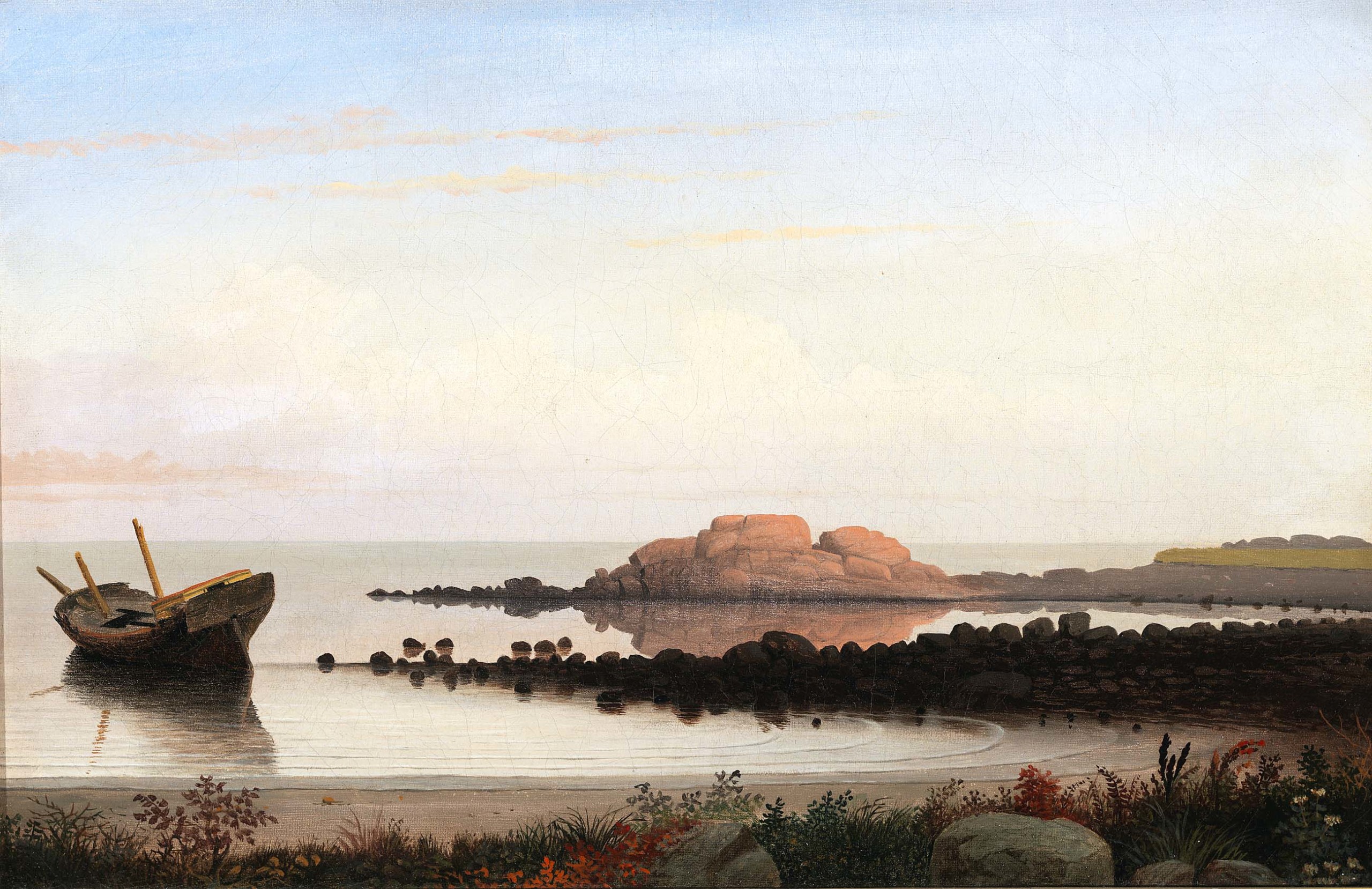
“Brace’s Rock, Eastern Point” by Fitz Henry Lane (1804-1865), 1864, oil on canvas. Collection of the Cape Ann Museum, gift of Harold and Betty Bell, 2007.
I read that the chief curator position was created in 2020 to honor your commitment to the Museum and its community. Later, the position was endowed following a gift from Henrietta Gates and Heaton Robertson, showing even greater support in what you do. What do these titles mean to you when you reflect back on your career?
Changing my title from curator to chief curator made complete sense. While our staff has expanded across all departments, we remain a relatively small organization with just five employees in the collections staff at this time, and that number includes those who oversee our research library. With our ambitious exhibit schedule (between four and six shows per year) and a permanent collection that continues to grow, we often look to guest curators and outside consultants to complete our work. Oversight of those individuals and the projects they are working on fall under the purview of the chief curator. The job involves a lot of juggling and people skills but, when done correctly, leaves me more time to see to my own research and curatorial work.
In 2024, through the incredible generosity of Henrietta Gates and Heaton Robertson, the position of chief curator at the Cape Ann Musuem was endowed. That said to me that our management style was working well, increasing our capacity and furthering our vision to be one of the finest regional museums in the United States, while, at the same time, remaining an anchor in our community.
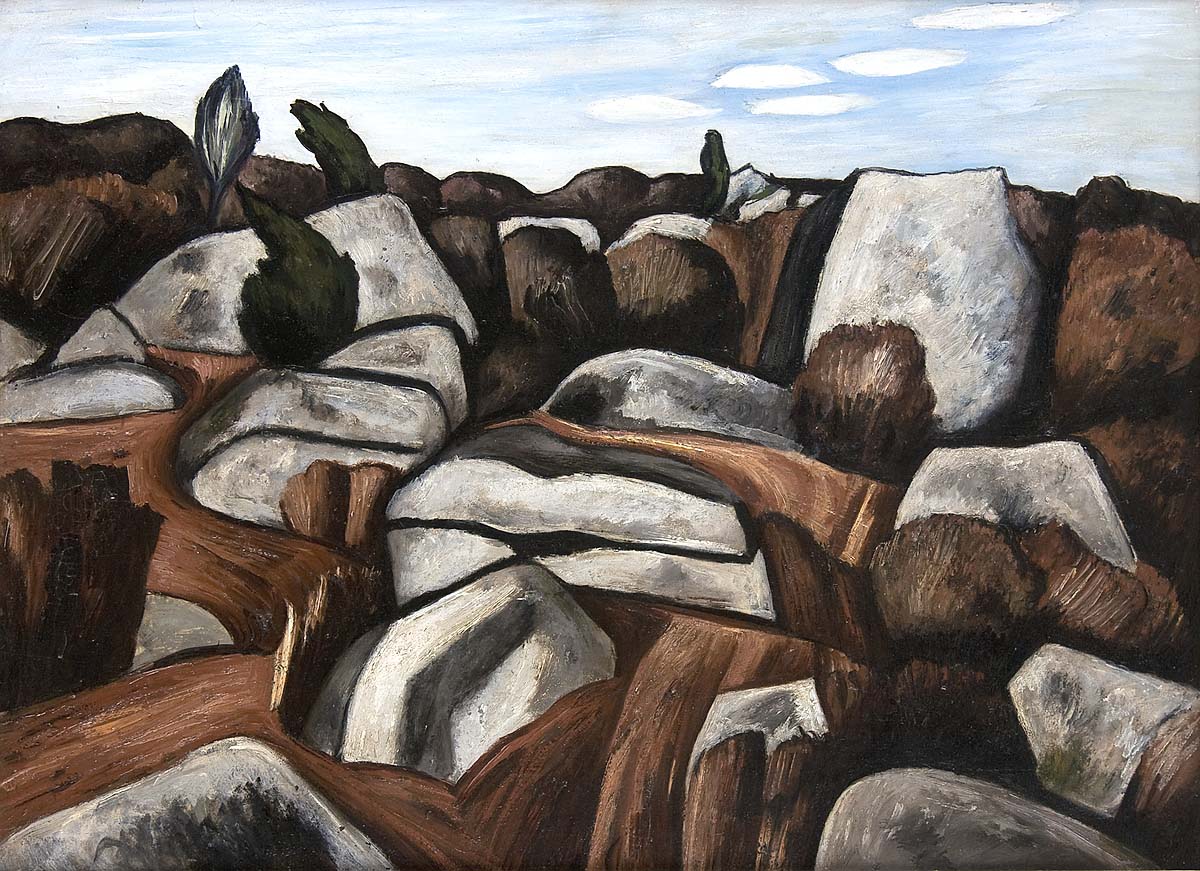
“Rock Doxology” by Marsden Hartley (1877-1943), 1931, oil on board. Collection of the Cape Ann Museum, gift of the estate of Robert L. French, 2009.
Your educational background is in American and New England Studies, which seems especially pertinent at a regional museum such as CAM. What aspects of working with local history have been the most compelling to you?
In addition to being one of America’s longest lived and best-known art colonies, Cape Ann is a historically, culturally and ethnically rich area that has depended on the offshore fishing industry, granite quarrying and tourism to sustain its population for generations. My strong interest in local and regional history has enhanced the Museum’s ability to tell the story of art on Cape Ann through a historically accurate and engaging lens. Lots of museums across the country can talk about artists like John Sloan, Cecilia Beaux and Paul Manship. The Cape Ann Museum, however, is uniquely poised to talk about them within the context of a singular place — Cape Ann — which profoundly affected each artist’s artistic output as well as that of countless others.
What are some of the stand-out exhibitions and projects that you’ve worked on while with the Cape Ann Museum?
It’s difficult to choose!
In 1985 and again in 2012, the Cape Ann Museum took a close look at the work American artist Marsden Hartley (1877-1943) did here on Cape Ann during the summers of 1920, 31 and 34. Unlike most summer artists, Hartley shied away from the working waterfront and found his way to Dogtown, a Colonial-era settlement in the center of the Cape that had been abandoned a century before. The place not only inspired a remarkable group of paintings but also led Hartley to write poetry about Dogtown, lines of which appear on the backs of some of his paintings. Combining art and poetry and sharing it through the lens of history was particularly effective and satisfying. The Museum held talks on Hartley as a painter and a poet, led narrated walking tours through the wilds of Dogtown and explored the role the area played in Cape Ann’s long history. Visitors from all walks of life enjoyed the exhibit immensely — even those who weren’t particularly enamored with Hartley’s paintings.
A couple of years later in 2015, the Museum had the opportunity to work with the Massachusetts Department of Transportation — an unlikely partner — to display two bronze doors made in 1949-50 by sculptor John F. Paramino (1889-1956) for the A. Piatt Andrew Bridge, which spans the Annisquam River here in Gloucester. The doors commemorate the achievements of A. Piatt Andrew (1873-1936), a Gloucester resident, founder of the American Field Service, a United States Congressman and a past director of the US Mint. Route 128, one of the region’s busiest highways, crosses over the bridge, and thousands of drivers pass by the doors daily, never really having the opportunity to look closely at them. As part of repairs being done to the bridge in 2015, the doors were removed and put on display at the Museum. The community outpouring was amazing. People who hadn’t visited the Museum in years, or ever, flooded in. It was wonderful to see people enjoying something that, in fact, belongs to all of us.
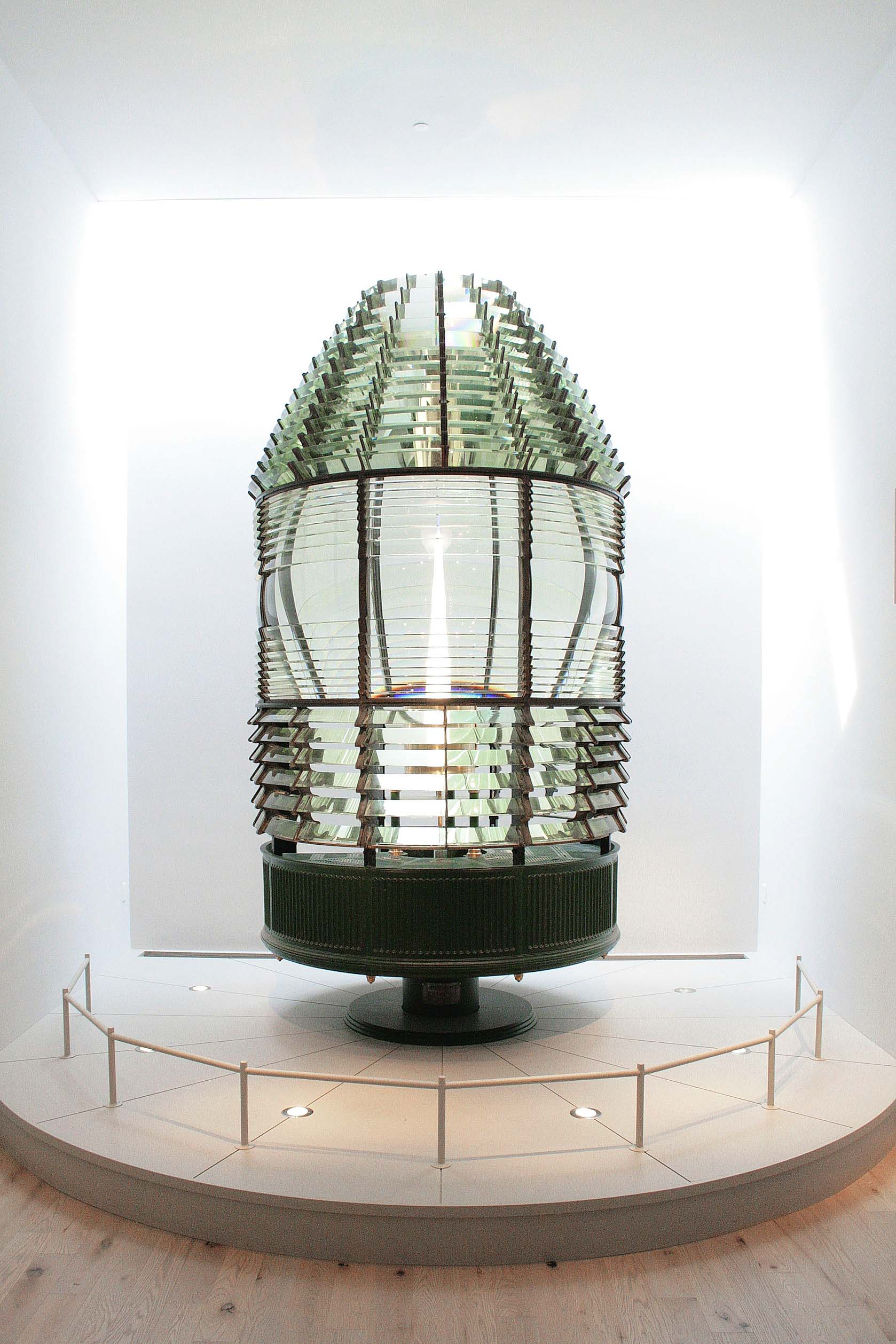
First Order Fresnel Lens, Paris, circa 1860. Originally installed on Thacher Island, Rockport, Mass. On long-term deposit at the Cape Ann Museum from the US Coast Guard.
Do you have any big plans for your last year in this position?
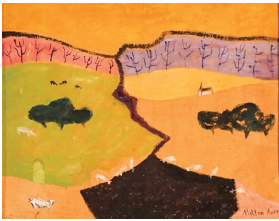
Early in 2026, we will be reopening our museum facility after a closure of over a year for renovations. That will keep all of us busy. In the summer, we are holding a special exhibit exploring the early work of American artists Milton Avery (1885-1965), Adolph Gottlieb (1903-1974) and Mark Rothko (1903-1970), all of whom worked on Cape Ann early in their careers. It will be a major exhibition, curated by Eliza Rathbone, chief curator emerita of The Phillips Collection, and will travel from Gloucester to The Phillips Collection in Washington, DC, in the fall.
Following in the wake of “Avery, Gottlieb and Rothko: By the Sea” will be a tall order, however, we have an excellent exhibition of images taken by Guggenheim-winning documentary photographer Anne Rearick scheduled for the fall of 2026 that should fill the bill. The show focuses on Stage Fort Park here in Gloucester, one of Cape Ann’s premier public open spaces. Working in the tradition of other well-known American documentary photographers, Rearick works on long-term themes, building up relationships with her subjects as she photographs. Her images of Stage Fort Park provide us with a stunning representative of the ethnic and cultural melting pot that defines the site.
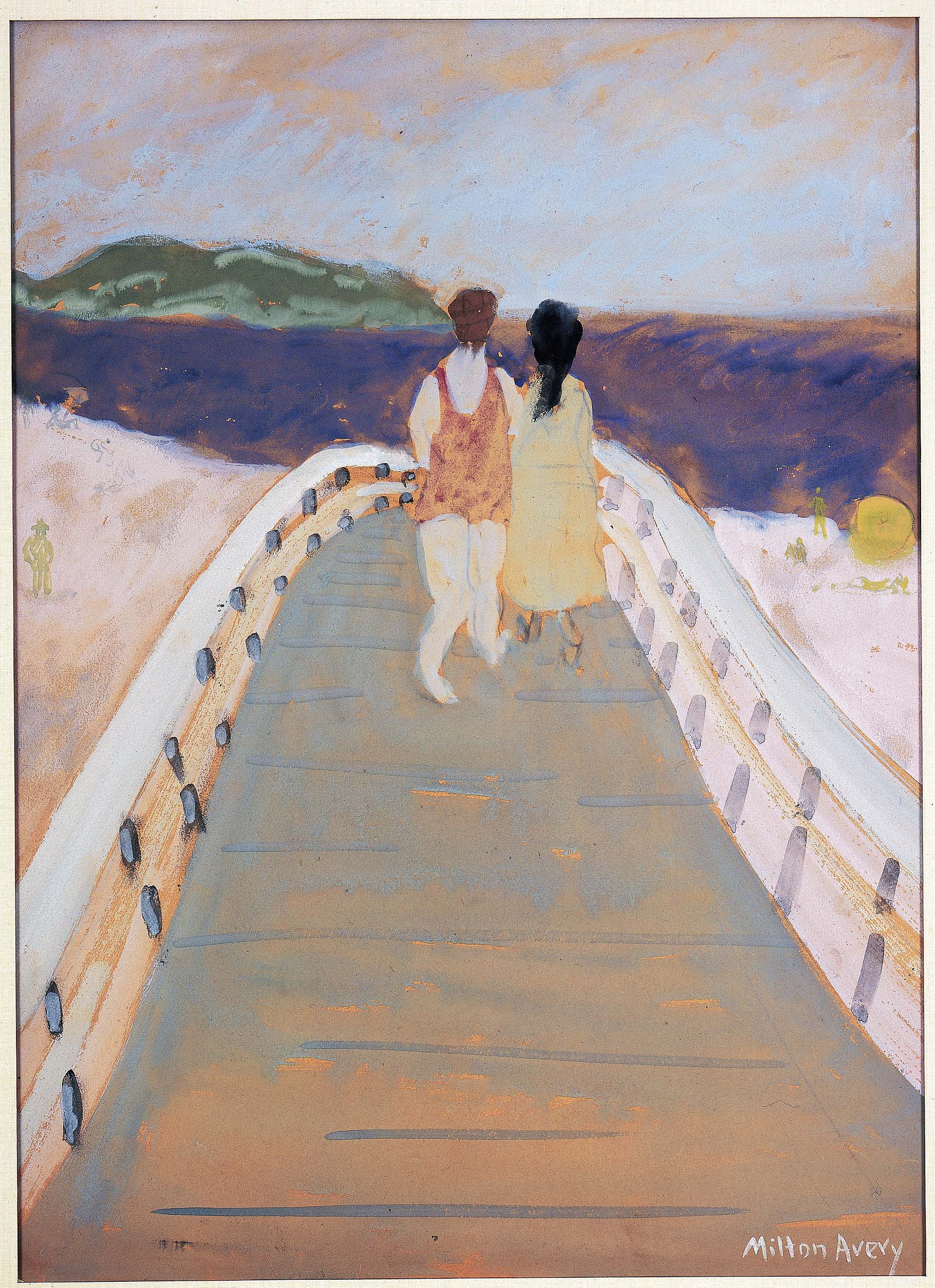
“Bridge to the Sea” by Milton Avery (1885-1965), 1937, gouache on paper. Collection of the Cape Ann Museum, gift of Robert L. and Elizabeth French, 1989.
How about after retirement…any future plans already brewing?
Not sure!
—Carly Timpson