This summer, the Metropolitan Transportation Authority’s Arts & Design program is celebrating its 40th year. The organization is responsible for promoting and exhibiting arts within the New York City transit system, so passengers can experience art as they travel between stations. In honor of 40 years, we spoke with Tina Vaz, the program’s director, to learn more about the history of MTA Arts & Design as well as its current initiatives.
How did MTA Arts & Design get its start, and what are some of its goals?
The program grew out of a pivotal moment in the 1980s, when the MTA was addressing infrastructure needs and reassessing what the transit environment could be. The idea that art could enrich the rider experience wasn’t new — when the subway opened in 1904, its founders envisioned it as a great public work. You can see the early stations were shaped by beautiful design and ornamentation, much of which exists today.
In 1985, that same spirit was reignited as stations were rebuilt. At that time, the MTA committed to incorporating original artworks directly into capital projects, and that gave birth to the Arts & Design program.
Our work is to brighten the journey for riders. We think every journey matters. If we can give you a moment of joy or reflection or just one of those quiet interior moments that are hard to get in our busy world, I feel like we’ve done our job.
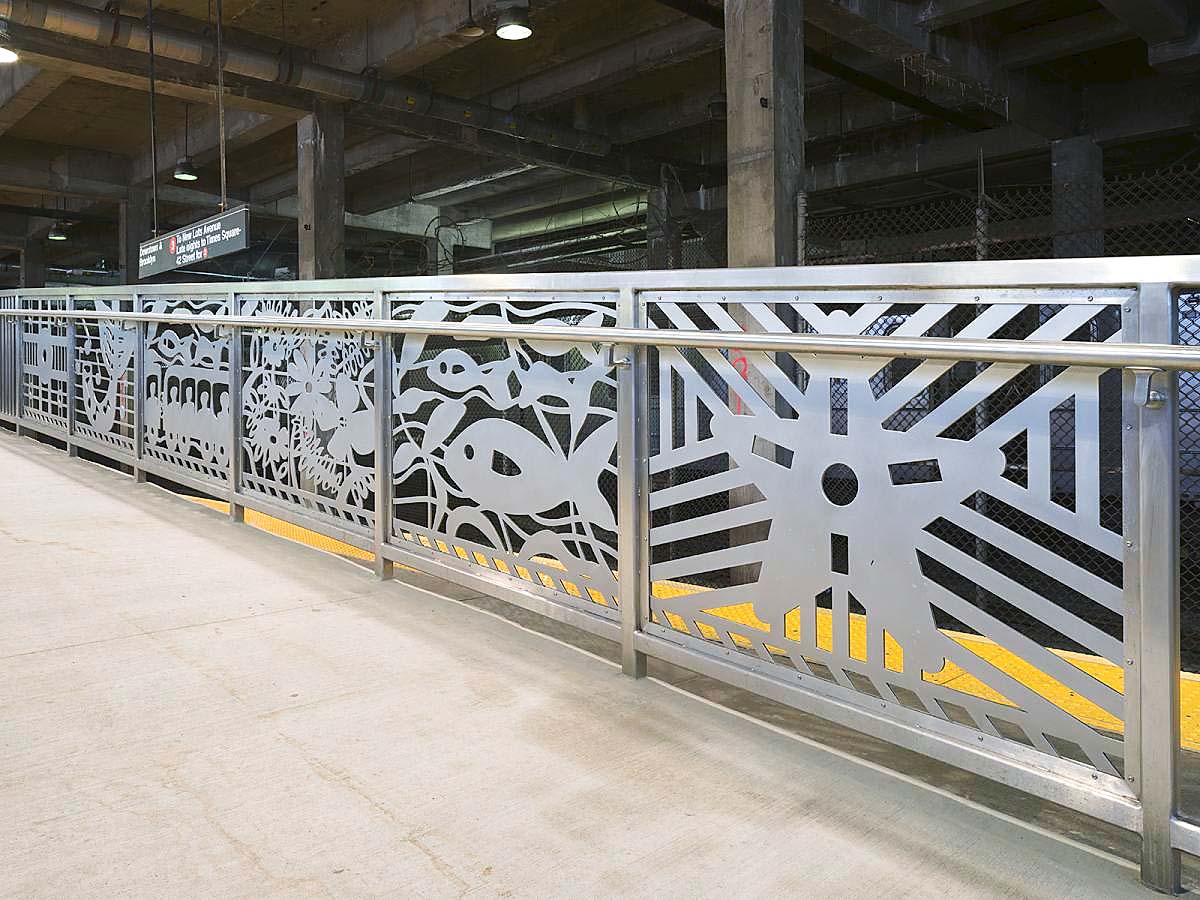
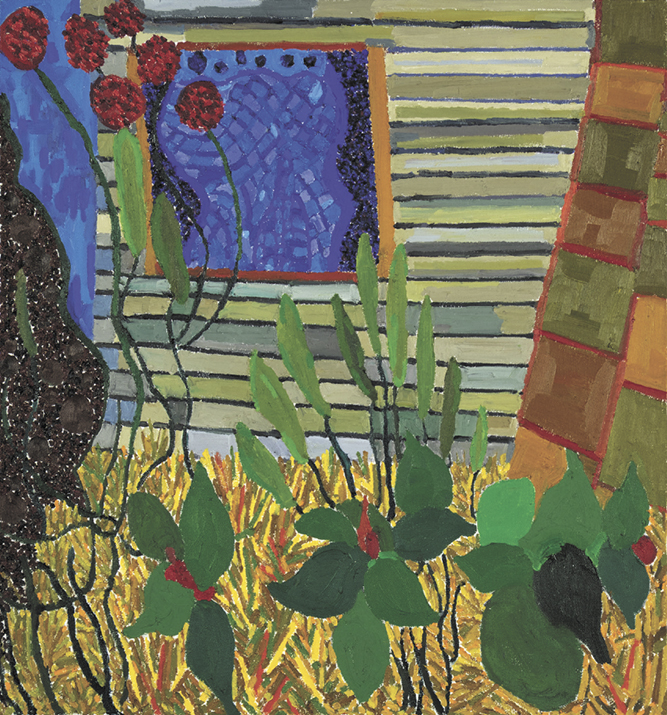
“Harlem Reflections,” 2026 © Michael A. Cummings, NYCT Harlem-148 St. Commissioned by MTA Arts & Design. Photo: Christopher Burke Studios.
Marking the 40th anniversary, Arts & Design has prepared special exhibitions and programming through September. Can you share a little about these celebrations?
Celebrating our anniversary over a full year has given us an opportunity to highlight the full scope of Arts & Design’s work, which may not always be evident to someone passing by.
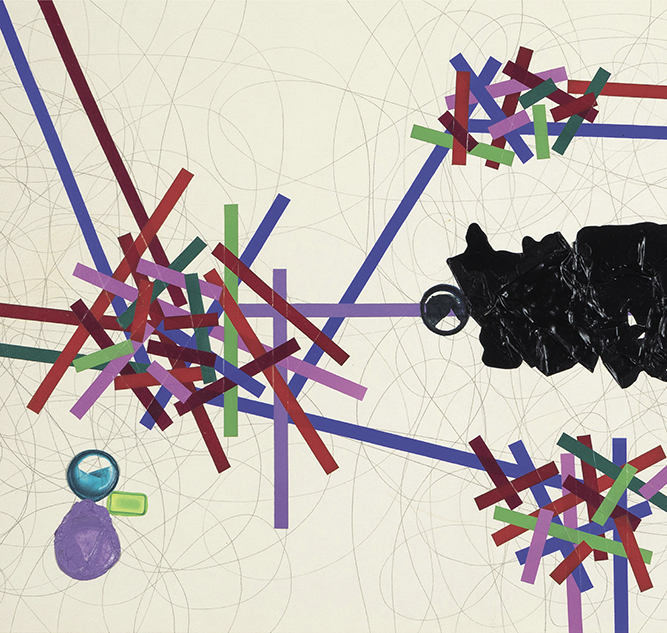
In addition to unveiling a number of new permanent installations, we introduced new digital artworks across the system, one of which was Giorgia Lupi’s MTA-themed “A Data Love Letter to the Subway.” It’s an artwork based on information compiled by the MTA’s Open Data Program. Giorgia and her team created a beautiful visualization of the data that shares the stories of different subway lines, focusing on connections and missed connections — lines that travel alongside each other, ones that intersect and some that never do. Not unlike our riders.
We also relaunched our music program under a new name, MTA Music. In addition to daily live performances in stations, we added a monthly Stations Series across all five boroughs. Those performances are timed to cultural moments; in July, for example, we focused on the “Great American Songbook” in celebration of America 250.
Looking ahead to the culmination of our anniversary celebration, we’re launching a project in September that we’re very excited about. It’s our first-ever takeover of all Arts & Design photography light boxes across the system — that’s five stations and 52 light boxes — with the work of a single artist. We’ve commissioned the industrial photographer Christopher Payne, who is photographing the machinery, manufacturing, systems and labor that keep the MTA moving. It’s going to be spectacular.
The theme for the anniversary year is “Art Everywhere for Everyone,” which is not just our theme for the 40th, but also the way we try to show up every day.
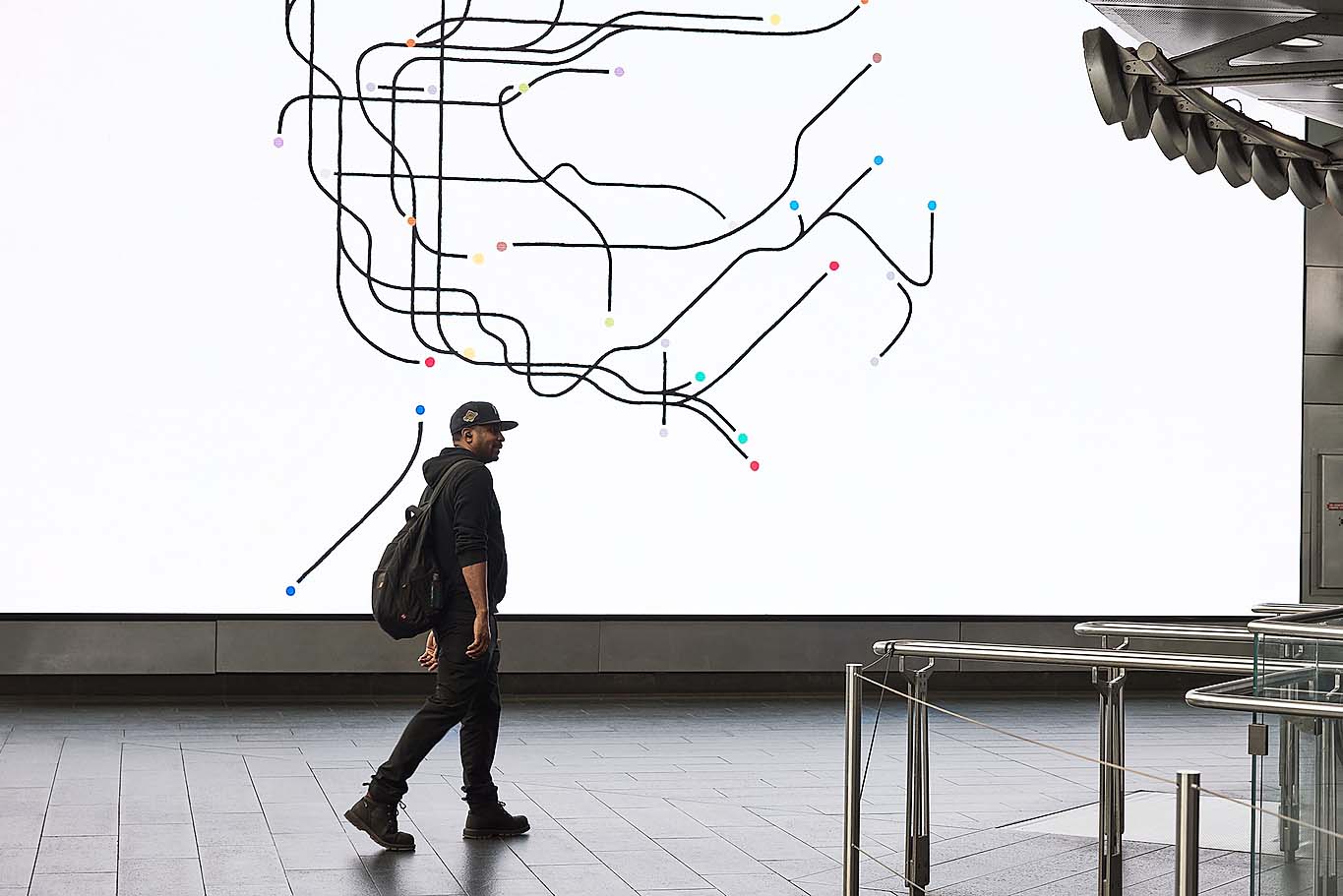
“A Data Love Letter to the Subway,” 2025 © Giorgia Lupi, NYCT Fulton Center. Commissioned by MTA Arts & Design. Photo: Samuel Morgan Photography Courtesy of Pentagram Design.
Where can riders expect to see projects from/promoted by Arts & Design?
Our permanent collection includes more than 400 artworks in stations across New York City Transit, Long Island Rail Road, MetroNorth Railroad and Bridges & Tunnels.
The Christopher Payne photography project will be on view at five stations: Atlantic Av-Barclays Ctr in Brooklyn and Bowling Green, Bryant Park, Grand Central Dining Concourse and Grand Central Madison in Manhattan.
Our digital art program is presented at Fulton Center and Grand Central Madison. Poetry in Motion and our graphic posters can be seen inside subway cars and on subway platforms throughout the system. MTA Music performances take place in 30-plus stations across the system.
Our work really is everywhere across the MTA. If you’re riding transit, you’re in the museum.
How does MTA Arts & Design find artists or works for these displays? Are they all by local “professional artists,” or are other communities/creators represented?
Works for the permanent art program are commissioned through a procurement process that includes open calls and competitive panel reviews. We post opportunities for new projects on our website and share them broadly with arts organizations. Artists are invited to submit examples of their past work for consideration. We don’t require artists to have prior experience in a particular medium. For example, if a work is going to be realized in mosaic, the artist isn’t required to have worked in mosaic before. We work with the artist and a fabricator to bring the work to life in the chosen material. That distinction opens opportunities up to a wider range of artists.
We organize selection panels of arts professionals and community representatives who review the open call submissions. We also curate artists into that pool based on our knowledge of artists’ past work. From there, we develop a shortlist of artists who are invited to submit a site-specific proposal — all of our permanent artworks are site-specific. The panel comes back together, the artists present their work and we select the commissioned artist.
It’s quite a range of artists: emerging, mid-career and established artists whose work people will have seen in museums. Having that diversity of voices is important to us. We serve a broad public and want riders to see and feel themselves reflected in the work we commission and present.
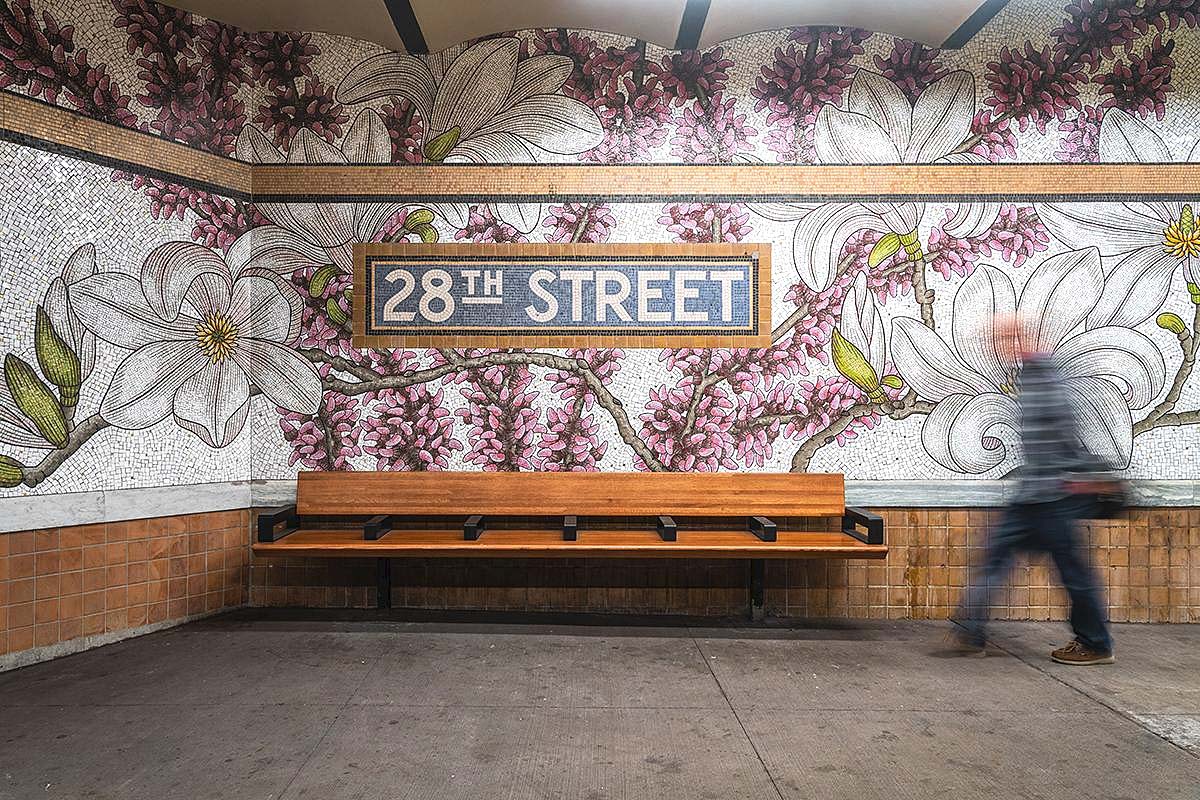
“Roaming Underfoot” by Nancy Blum, 2019, glass mosaic, at NYCT 28th St station. Photo: James Lane, HDR.
As many of these works are public displays, how do you ensure their protection from the wear and tear of city life?
That’s a very astute question. It is definitely a high-intensity environment!
Longevity and durability are critical, so we use materials that are suited to heavy use: mosaic, glass, metal. Several decades of experience have shown that these materials hold up well.
In addition to building works to be durable, we work closely with architects and engineers to site them in places that are well integrated with the station design and that will have a strong visual impact. We conduct ongoing maintenance and restoration as needed to keep the work resilient as the system continues to change and evolve.
I’m happy to say that works from the early days of the program are still going strong. They’re part of the cultural history of the system.
Are permanent public installations and murals preserved in any way? Say, if a mural were painted over, is there a photographic archive of the works?
All of our works are documented through photographs and project records. We perform regular surveys and repairs, and we re-site works when a construction project has an impact on an existing artwork. With more than 400 works in the collection, it’s an ongoing process.
In addition to our records and archives, we share artworks from our permanent collection and our non-permanent programs on Arts & Design’s website (www.mta.info/agency/arts-design), Instagram (@mtaartsdesign) and the Bloomberg Connects app. We’ve also published books on the collection and our Poetry in Motion series.
Aside from displaying art throughout the city, what are some of Arts & Design’s other initiatives?
We’re a resource for many internal teams, from Construction & Design to Government & Community Relations. We work on a range of initiatives that focus on community engagement and customer experience. We also host and participate in public programming such as events and tours — for example, partnering with the New York Transit Museum, Open House New York, the Brooklyn Book Festival and other moments on the cultural calendar.
How can interested parties outside of New York City engage with (or support) what you’re doing?
People can sign up on our website for our monthly newsletter, which is a great way to follow what’s happening. They can follow us on social media and submit to open calls and go deeper into all of our programming on Bloomberg Connects. You don’t have to live in New York or even be in New York to be part of our transit art community. We really are Art Everywhere for Everyone.
—Carly Timpson