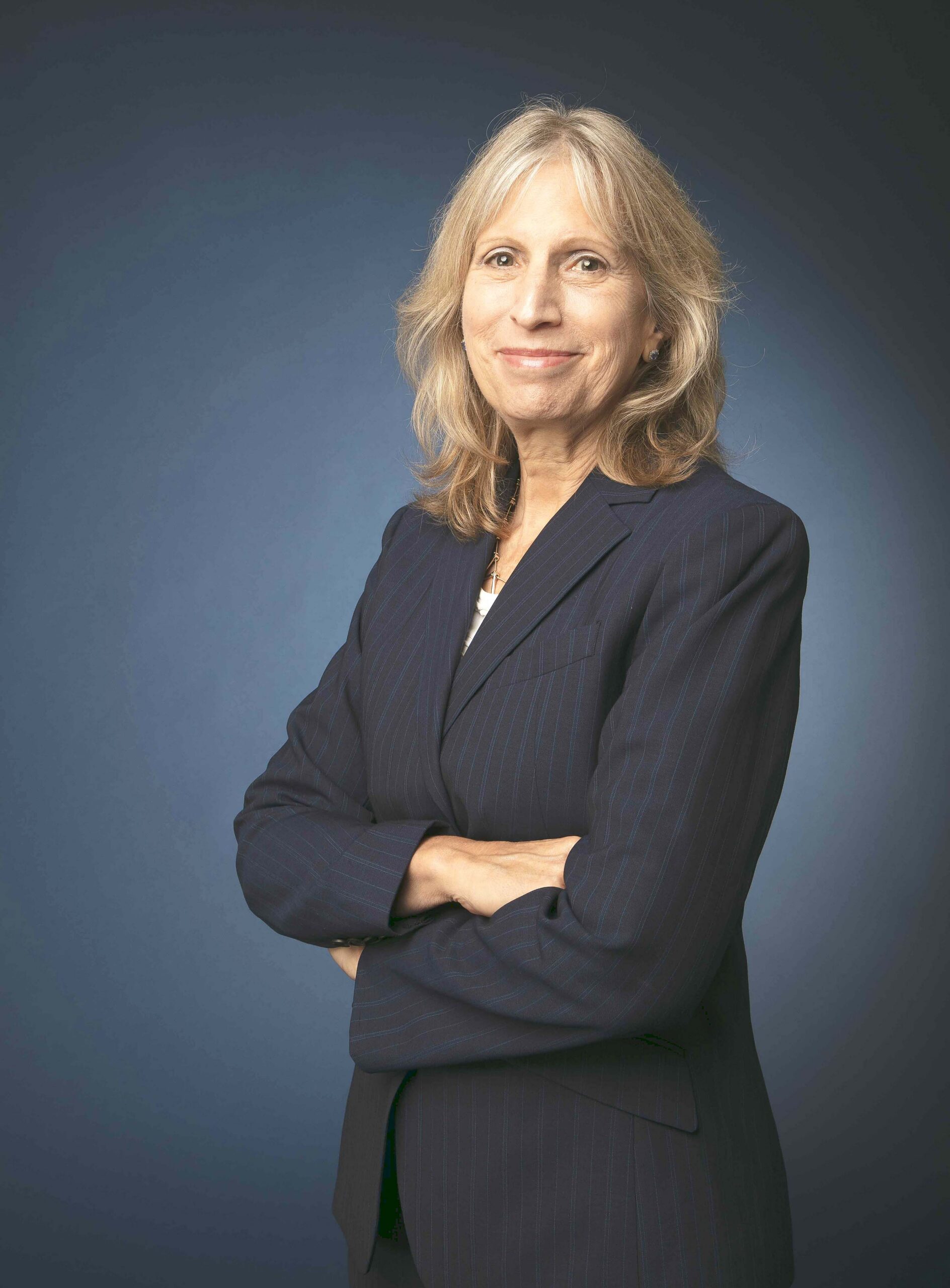
Louise Mirrer is president and CEO of The New York Historical, a role she has held since 2004. Under her leadership the institution has expanded in all senses, from mounting groundbreaking exhibitions to increasing visitorship and successfully completing ambitious capital campaign projects. The New York Historical’s latest landmark development is the opening of the Tang Wing for American Democracy, a 71,000-square-foot addition. To help celebrate the wing’s opening, we reached out to Mirrer to learn more.
Congratulations on the upcoming opening of the Tang Wing for American Democracy! How did the museum decide on dedicating its expansion to American democracy?
Thank you! We knew that we were working towards a celebratory opening on the 250th anniversary of the nation’s birth in 2026, so that really set the stage for us to lean into democracy because the story of the nation is really the story of a struggle for full citizenship for all Americans in a democracy. That’s what the American Revolution was about, that’s what happened, that’s what the Declaration of Independence set forth, and we all know that everything didn’t happen all at once at the same time. But that’s really the story we tell, and we thought that we would make a point of it by calling it the Tang Wing for American Democracy.
Given the timing of the opening, do you have anything planned specifically to celebrate the 250th?
Yes! We’ve had a whole suite of exhibitions, which we actually began in November with an exhibition called “Declaring the Revolution,” which consisted of printed documents — beginning with the Stamp Act and going through the Treaty of Paris — that were from the collection of David Rubenstein.
Then we’ve continued with a whole host of exhibitions that speak to the nation’s history, including one that speaks in a very different way. It’s an exhibition called “House Made of Dawn,” and it’s drawn from the works that are part of a promised gift from our board chair, Agnes Hsu-Tang, and her husband, Oscar Tang, that focus on contemporary Indigenous artists. It widens the narrative of American history, and it also really changes the conversation around who we are as a nation: It’s a story that most people don’t find in textbooks, not even today, and we think that it is really a story that’s important to tell as part of the 250th commemorations and celebrations.
Regarding these promised gifts, can you share how some of the notable pieces will strengthen the collection housed in this wing?
The art in the collection…there are a lot of younger artists, some of whom are already well known and some of whom will probably become better known over time. The artists range from those whose names are known like Fritz Scholder, Cara Romero, Diego Romero and Kent Monkman — I mean, there’s a fleet of artists whose names are well known, but there are others that are not.
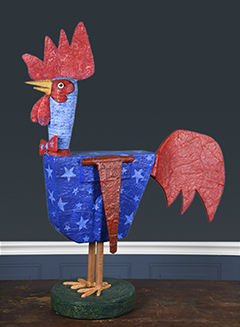
Most of the art in the “House Made of Dawn” exhibition references the history of the United States, sometimes with flags that have become a kind of pretext for telling a Native American story. And there’s a work from the bicentennial in 1976 by Fritz Scholder that really speaks to that moment in American history in the context of the American landscape. In one way or another, I would say all of the works in the promised gift use, as a platform, some aspect of the history of the United States, and they do it myriad ways.
In terms of physical spaces, what does the Tang Wing for American Democracy add to The New York Historical?
Well, some of them are very obvious, like we have a brand new, completely state-of-the-art conservation studio. It’s about 3,000 square feet, and it brings together — for the very first time in our 222-year-old history — our painting and our paper conservators. We have absolutely first-rate conservation people working on our collection, for good reason, because it’s a very old collection in many respects, driven by works that are 200 to 400 years old.
We’ve been renting space in Union Square Artistic Court for the work of our painting conservators, and we’ve kind of shoehorned various spaces into the 1904 building in order to accommodate our paper conservation staff. They now have this totally brand-new space, which is open and airy. It includes clerestory windows with north light, and we can bring together the talents of the whole team, which is best practices. It’s just a marvel of a space.
And then another driver for our expansion was that we have hundreds of thousands of students who learn history with us each year and we never have enough classroom space. So, the new wing includes two state-of-the-art classrooms with everything anyone could dream of, including a classroom for which we commissioned an artist to create an Agora-like setting. This is our Chang Chavkin Academy for American Democracy; it’s a residential program — students come for a week, and they learn about the evolution of democracy, its origins in the ancient world and ancient Athens, its kind of resuscitation by the American founding generation at the time of the American Revolution and they carry this story up to today. So, these students are now treated to spectacular, high-ceilinged, beautiful classrooms. These are students who, in the main, come from the New York City Public Schools, so treating them so well is extremely important.
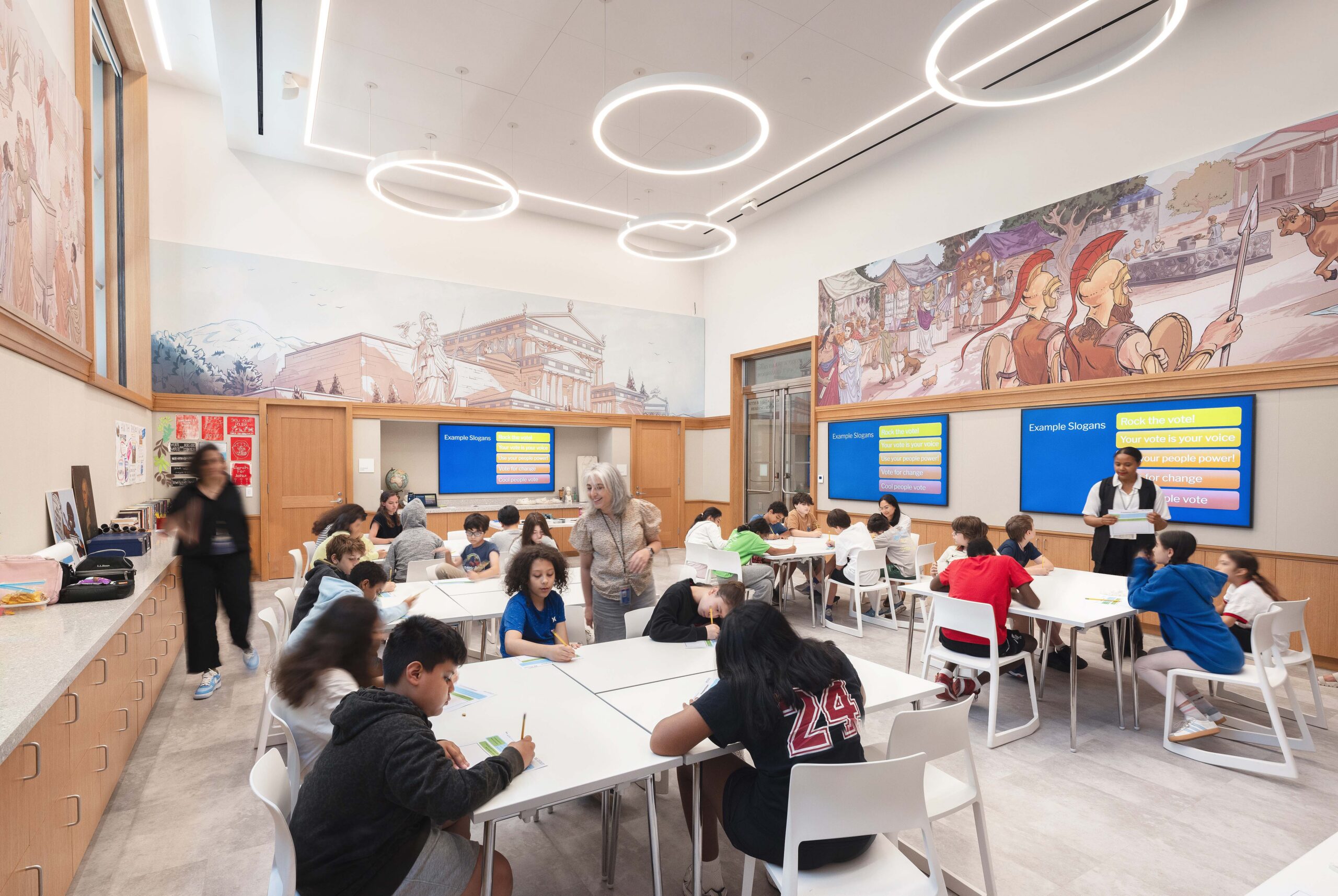
The Geoffrey and Sarah Gund Democracy Classroom, located on the second floor of the Tang Wing for American Democracy at The New York Historical. Photo credit: © Bridgit Beyer.
Of course there’s also exhibition spaces, including spaces for permanent collections and the upcoming American LGBTQ+ Museum, right?
Yes, we entered into this project with an agreement with the American LGBTQ+ Museum, which is a museum without a physical home. We entered into an agreement to dedicate space to their museum, which isn’t yet ready to open, but will be in the future. So that is important, but adjacent to that space, we have actually created a gallery space that’s sort of interstitial between the original building and the new wing, and our fourth-floor elements and what will become the new American LGBTQ+ Museum. Those galleries are already installed with materials, in this case, photographs relating to LGBTQ+ history. So, we’re already promoting the themes that will speak more loudly when the American LGBTQ+ Museum opens.
And we do have quite a lot of additional gallery space. We have a very large gallery space on the first floor in the new wing; we have a space that is dedicated to a marvelous collection of historical, antique historical shoes collected by Stuart Weitzman, which he’s gifted to us — there are 100 on view now, but there are 600 in the collection, so we can kind of indefinitely tell stories using those objects. And the Klingenstein Family Gallery is a very large space, which will do rotating shows.
And of course, there are outdoor spaces, which we haven’t had before. We had a sort of weedfield garden, but never a real beautiful space to accommodate visitors in various ways. And now we have a sculpture court on the ground floor, which has the advantage of having the clerestory windows that look into the conservation lab at sort of ankle height, so you can actually stand before those windows and watch a conservation happening, which is extremely important to us because we want to engage people in the work that we do. On the roof, there will be a gorgeous, planted garden of native plantings that will launch a year from now, since planting season doesn’t start until September.
What is the significance of the permanent collections housed here? How do they fit into the themes of American democracy?
The collections that we have on view right now, the inaugural display draws substantially from treasures in our collection. They all, each and every one of them speaks to democracy in some ways.
So, I’ll start with a flag, a huge flag that was flown during the American Civil War that was very recently donated to us by a family that had it since the Civil War. That flag has 34 stars on it. It’s extremely meaningful because President Lincoln, during the Civil War, after the Southern states had seceded, insisted that all 34 stars be kept, be retained on the flag. He insisted that no stars be taken out because he believed in the strength of the Union and that it could not be broken. And it is hugely emblematic today of the strength of our democracy that even — you know, I think a lot of people feel challenged today, but imagine during the Civil War when states actually seceded from the Union — even in our darkest hour, there was a deep belief in the strength of our democracy and its ability to overcome the severing of some part of the union. So that really occupies a very dominant place because of its size.
And then there are some very recent art and artifacts on display. For example, there’s a recent purchase of a Kent Monkman painting, which is part of his Indian boarding school series. It’s a painting that shows the strength of two girls, who, in spite of the challenge to the ability for Native Americans — Native Americans themselves, but Native American culture and history — to live on in the context of the government physically taking children away from their parents and attempting to erase indigenous culture and practice, it shows them continuing to, in the most horrific of circumstances, embrace, uphold and persevere in their traditions. So again, it’s a story of a challenge to the democratic ideals that we treasure, which is freedom and equality. And obviously placing children in boarding schools to erase their identity, or attempt to erase their identity, is a great challenge to those ideals, but again, those children show the enormous spirit and ability to withstand those kinds of challenges.
And then there are a lot of celebratory items on view, like the Bible that George Washington swore the oath of office on in 1776, when he became the nation’s first president, and there is a Torah scroll that was burned in 1776 by the British. Again, a range of materials that celebrate resistance, the ability for people to protest and resist in a democracy, which of course is a freedom that we enjoy that is not part of other kinds of governments.
It’s a huge display; I could go through virtually every single object there. We have the “Pulling Down of the Statue of King George III,” which reminds us of the treasonous behavior of the American founders and really on and on and on…
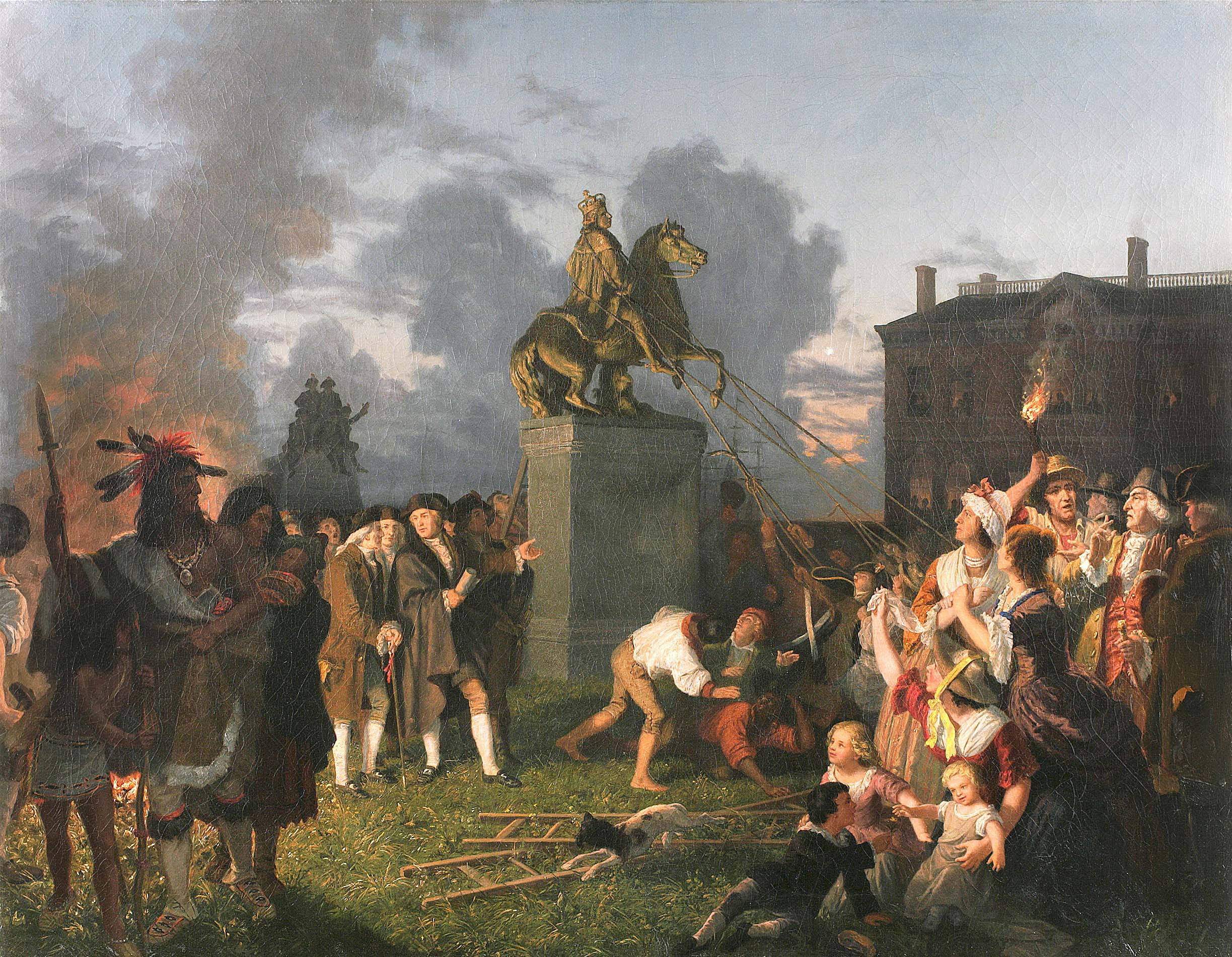
“Pulling Down the Statue of King George III” by Johannes Adam Simon Oertel (1823-1909), New York City, 1852-53, oil on canvas. The New York Historical, gift of Samuel V. Hoffman, 1925.6.
What kinds of special programming can visitors look forward to taking place in the new wing and celebrating its opening?
The opening celebrations are really kind of endless music, performance, activities for children and families — we have a great website that has all of them listed.
Throughout the year we have our regular public program series. Friday night is always pay-as-you-wish admission, so people are invited in and will be able to appreciate all of the spaces. We’ll have a coffee cart on the rooftop garden when it opens next spring.
What else is coming up for the museum? Are there any other big projects already in your sights?
Yes! Our next project will be working on an expansion, doubling the size, in fact, of our Children’s History Museum. We have a superb collection of antique toys and trains, which we acquired at least a decade ago, and that collection has been on sort of semi-permanent display in our rotunda with an annual Holiday Express installation, but we have engaged David Rockwell to do a wonderful design for the trains to be permanently installed in a highly interactive gallery.
And we plan a redo of our DiMenna Children’s History Museum, again, around the theme of democracy and really recreate a children’s-themed ensemble around the three branches of government and civic responsibility. But it’s another big, heavy fundraising lift, so we’re, right now, looking for funders. But when we have the financial wherewithal to do it, we’re ready to go.
Is there anything else you’d like to share?
I’d like to say, very poignantly and wistfully, this has been a project that I had personally been discussing with Robert A.M. Stern since 2014, and we both, at that point, promised each other we’d still be here at the opening, so it’s very sad that he is not, but on the other hand, we worked with two of his partners, Graham Wyatt and Preston Gumberich, and they delivered just extraordinary, really visionary work for us. We’re very lucky, we knew at the time that we had chosen the right architect for this project, and the visible evidence of it is now.
—Carly Timpson