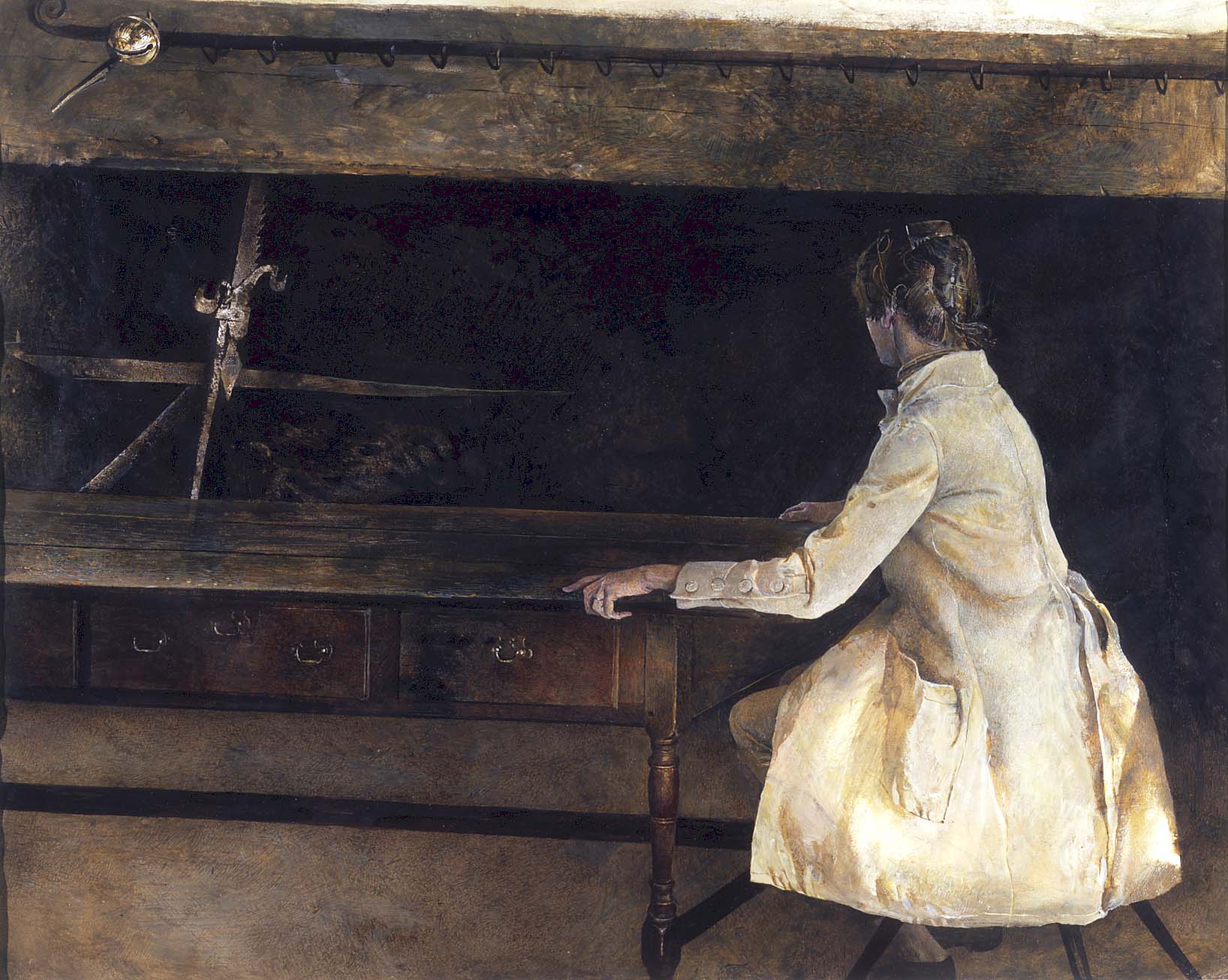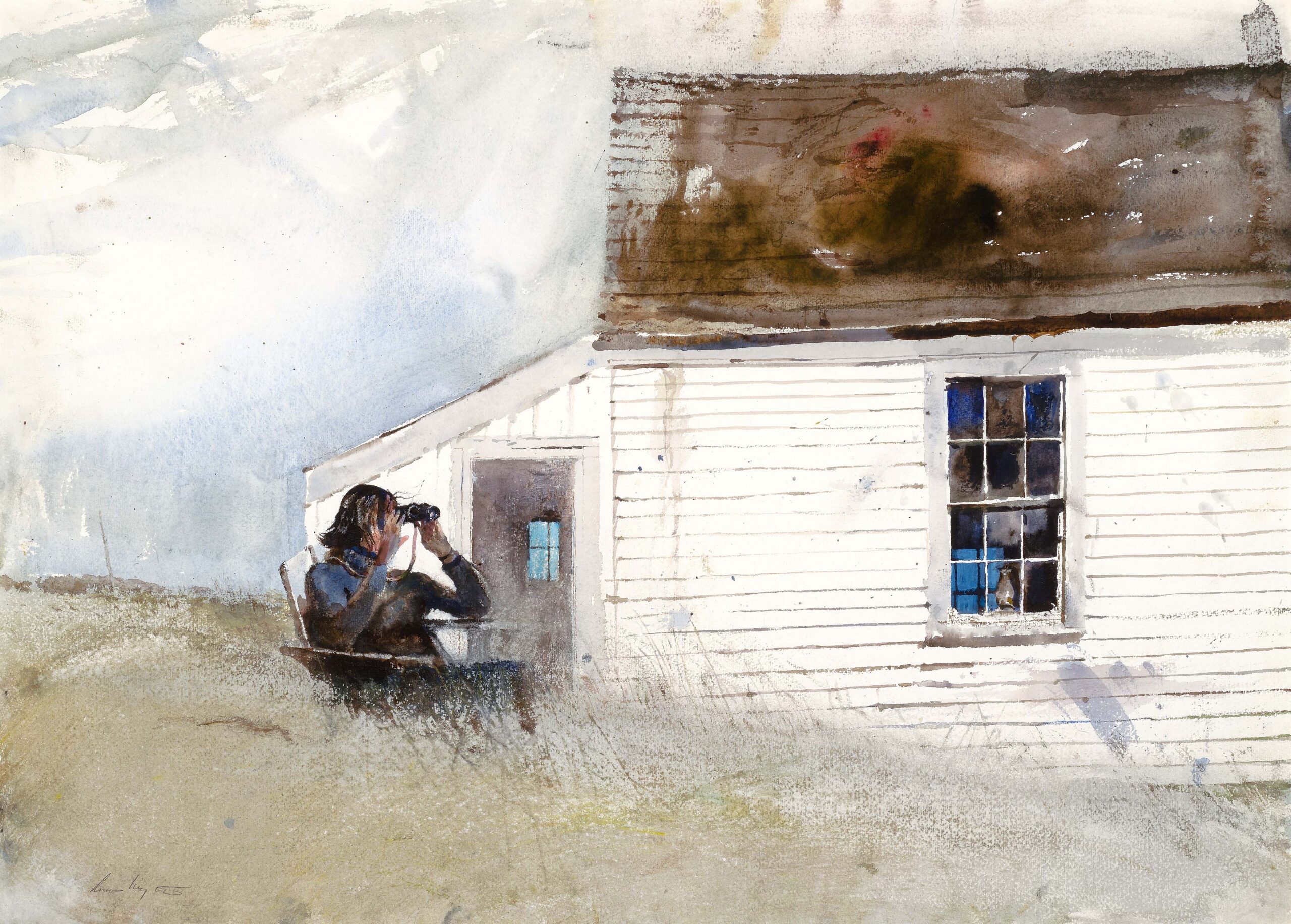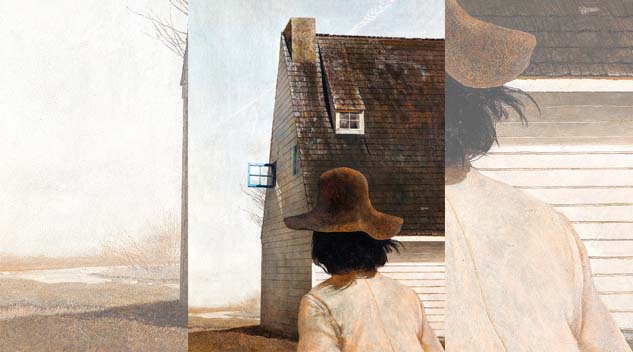
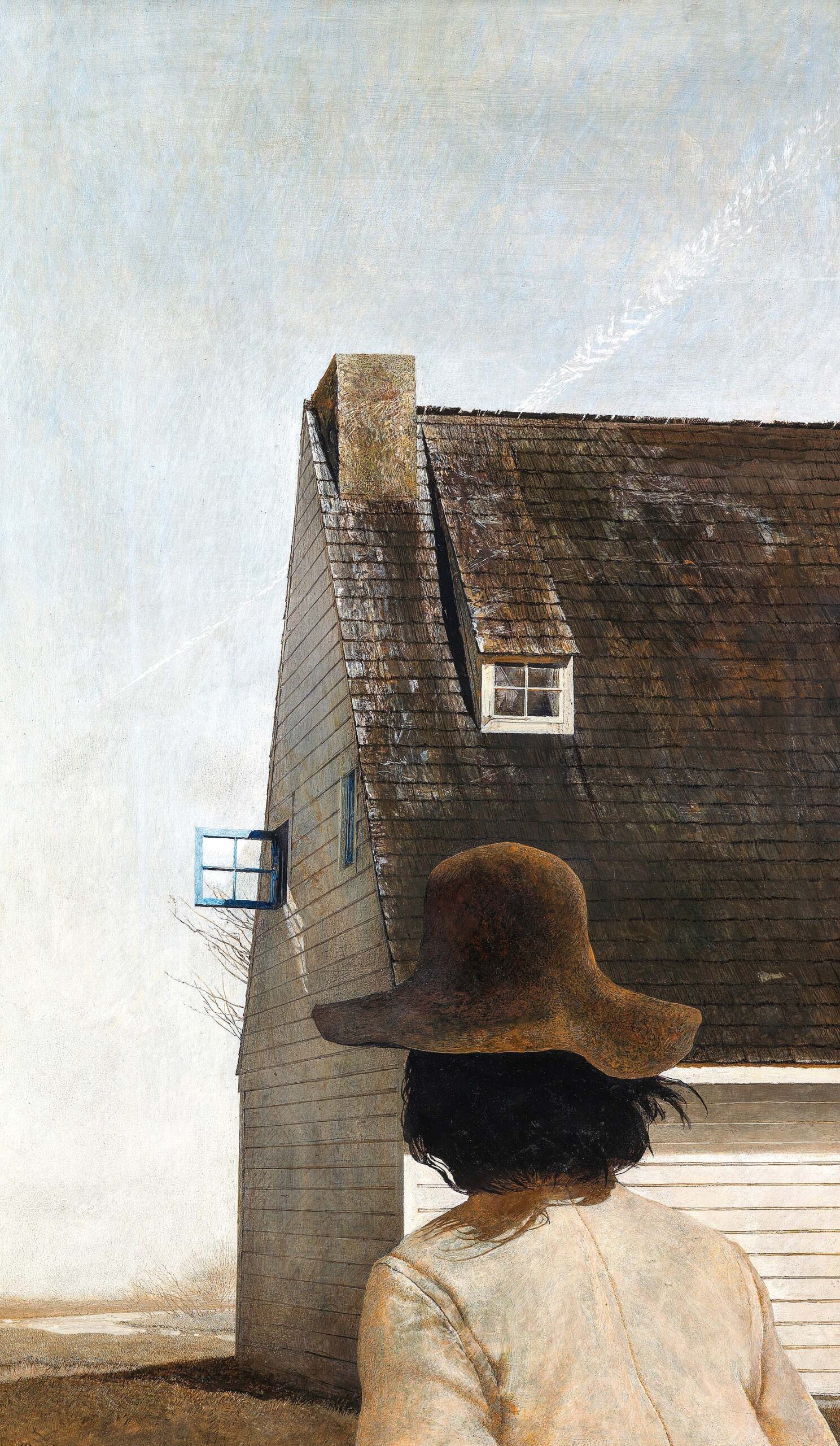
“747” by Andrew Wyeth (1917-2009), 1980, egg tempera on panel, 28 ½ by 17 inches. Wyeth Foundation for American Art Collection, P5021.
By Kristin Nord
ROCKLAND, MAINE — Finally, it’s Betsy’s time. Long in the shadows as Andrew Wyeth’s spouse, muse, archivist and rock-solid artistic partner, Betsy James Wyeth’s determination to remain out of the spotlight was a reflection of her personality and the values of her generation. Throughout her life, despite all that she was undertaking and creating, she preferred to take a back seat to defer to the artistic royalty of the Wyeth family. Yet in “By Design: The Worlds of Betsy James Wyeth,” we see her for the multidimensional artist that she was.
This exhibition is co-organized by Brandywine Museum of Art (Chadds Ford, Penn.), Colby College Museum of Art (Waterville, Maine) and Farnsworth Museum of Art (Rockland, Maine). It is on view now simultaneously at the three museums with distinct pieces of this rich story and is accompanied by a hardcover catalog published by Rizzoli Electa. The exhibition runs through November 2 at Colby, December 31 at the Farnsworth and January 10 at Brandywine.
David Michaelis is among the essayists included in the catalog, which presents a serious reappraisal. “Betsy had no art training — no degree in art history. Her visual imagination — her eye — had been sharpened by the pictorial section her father directed as a Buffalo, N.Y., newspaperman,” he said. Her father, Merle Davis James, himself a talented amateur painter, brought his bright young daughter to work with him at the photogravure section on weekends when she was a teenager. During these visits he took obvious pleasure in helping her to understand that the editor’s fundamental task was to sift “between what one accepts and what goes into the wastebasket.”
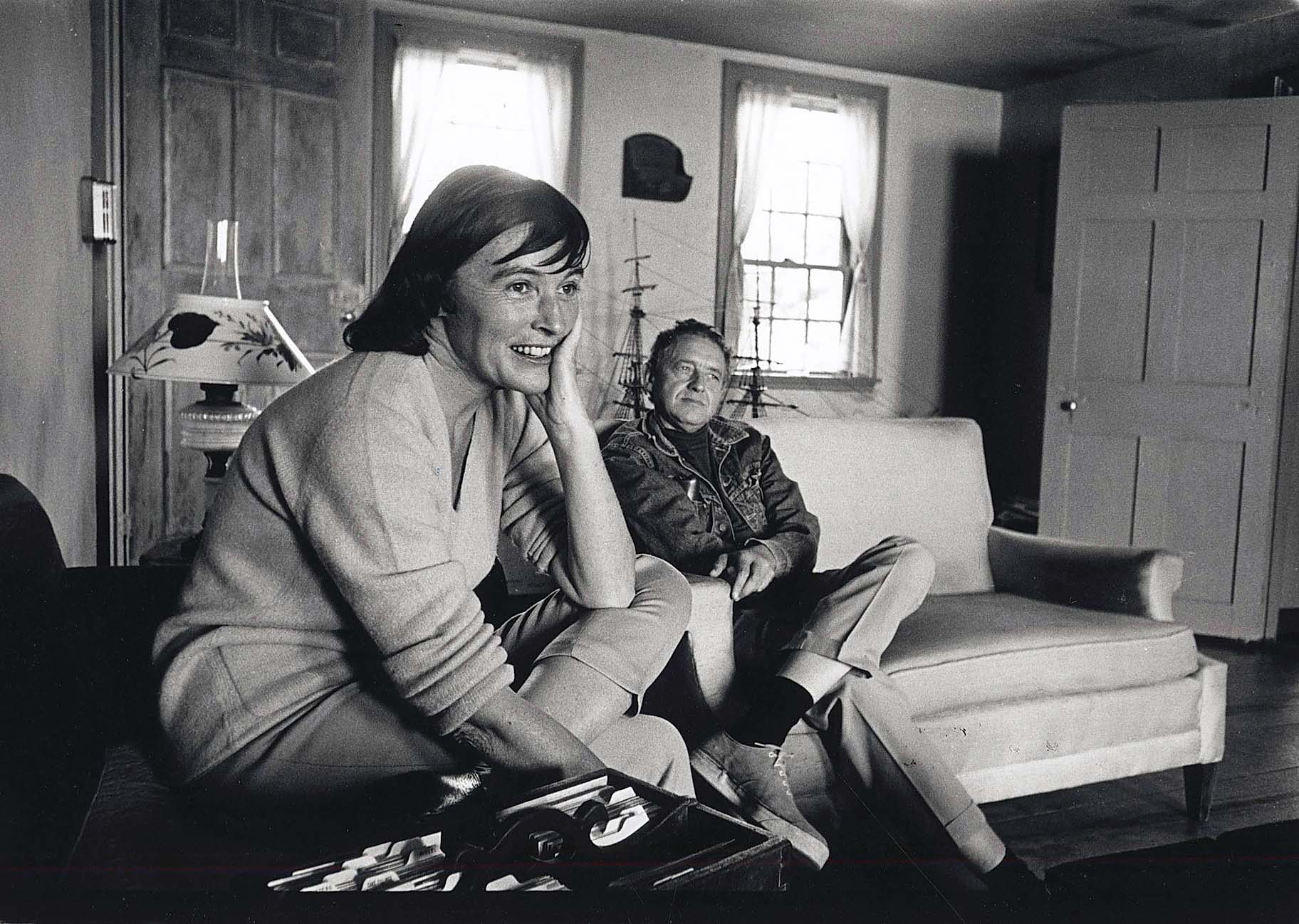
Andrew and Betsy Wyeth, Cushing, Maine, 1967, photographed by Kirk C. Wilkinson. © Estate of Kirk C. Wilkinson.
“Rotogravure,” Betsy would later recall from a distance of more than 80 years, Michaelis writes, “always had brown photographs” and its muted palette would appeal to her much as she would later respond to the velvety surfaces of Andrew Wyeth’s egg tempera paintings. And her father, involved with the Roycroft Arts and Crafts movement in East Aurora, had fostered an aesthetic sophistication in Betsy that belied her age.
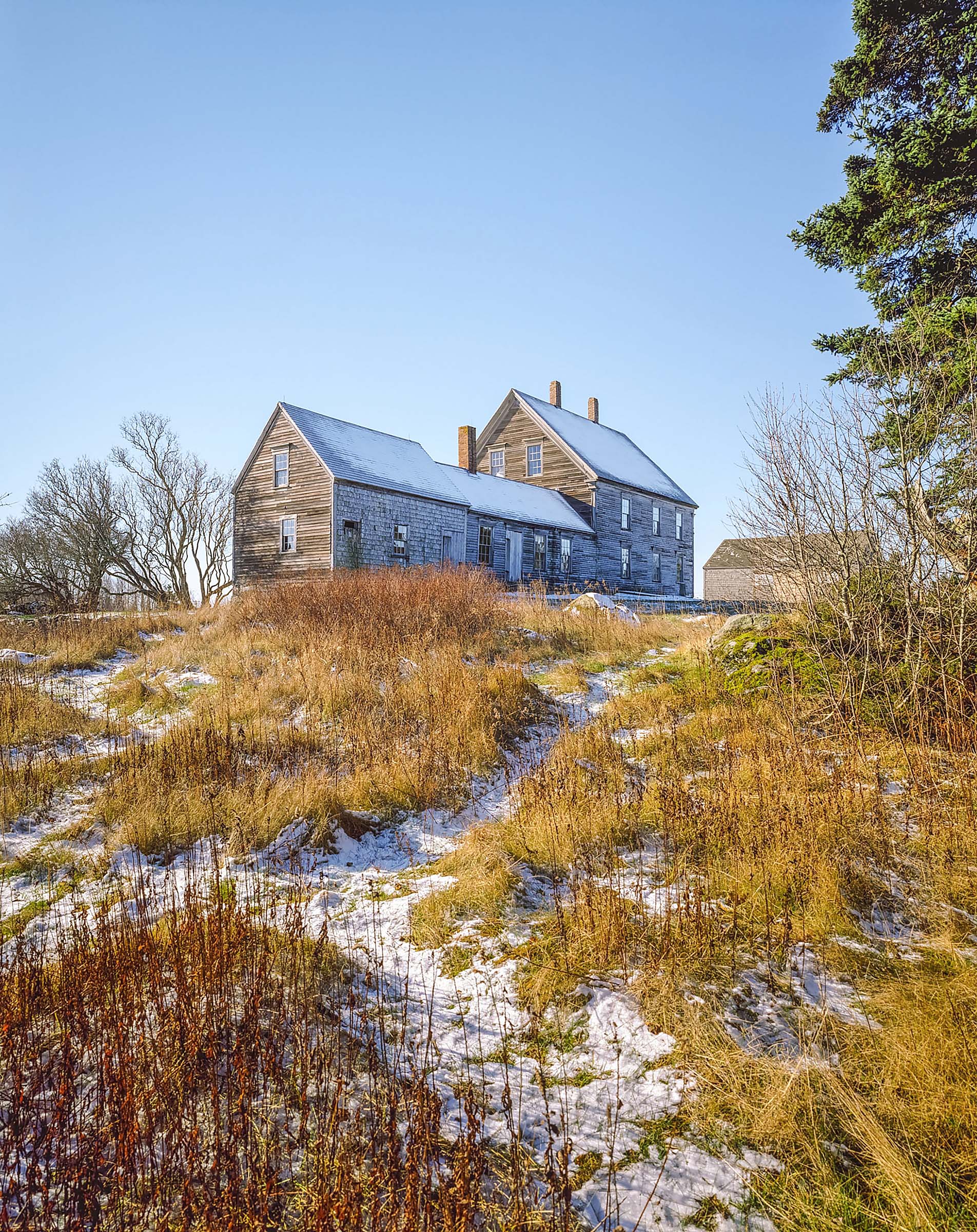
The James family summered in Maine, and it was there that she and Andrew came into each other’s orbits. “Betsy’s very first, and most important, life test was for Andrew,” Christopher Crossman, the former director of the Farnsworth Museum, writes. “She was 17 when she answered the door of her parents’ home in Broad Cove to a young artist who was actually looking for her father. That very day, Betsy introduced Andrew to Christina Olson and her deteriorating farmhouse where she and her brother, Alvaro, endured the lingering effects of the Great Depression. She watched him carefully to see how he would respond to these people.” Christina, of course, would become one of Wyeth’s legendary subjects. This meeting marked the beginning of a 30-year friendship between Andrew and the Olsons, and inspired Andrew to create some 300 paintings.
Much as Betsy had been drawn to the Olsons and their “shipwreck” of a home, it was as if she knew intuitively that it was in the layers of life in both midcoast Maine and Chadds Ford that Andrew would find his greatest inspiration. The couple split their year between these two distinct regions, and Betsy made it her business to absorb each region’s history, landscape, materials and culture.
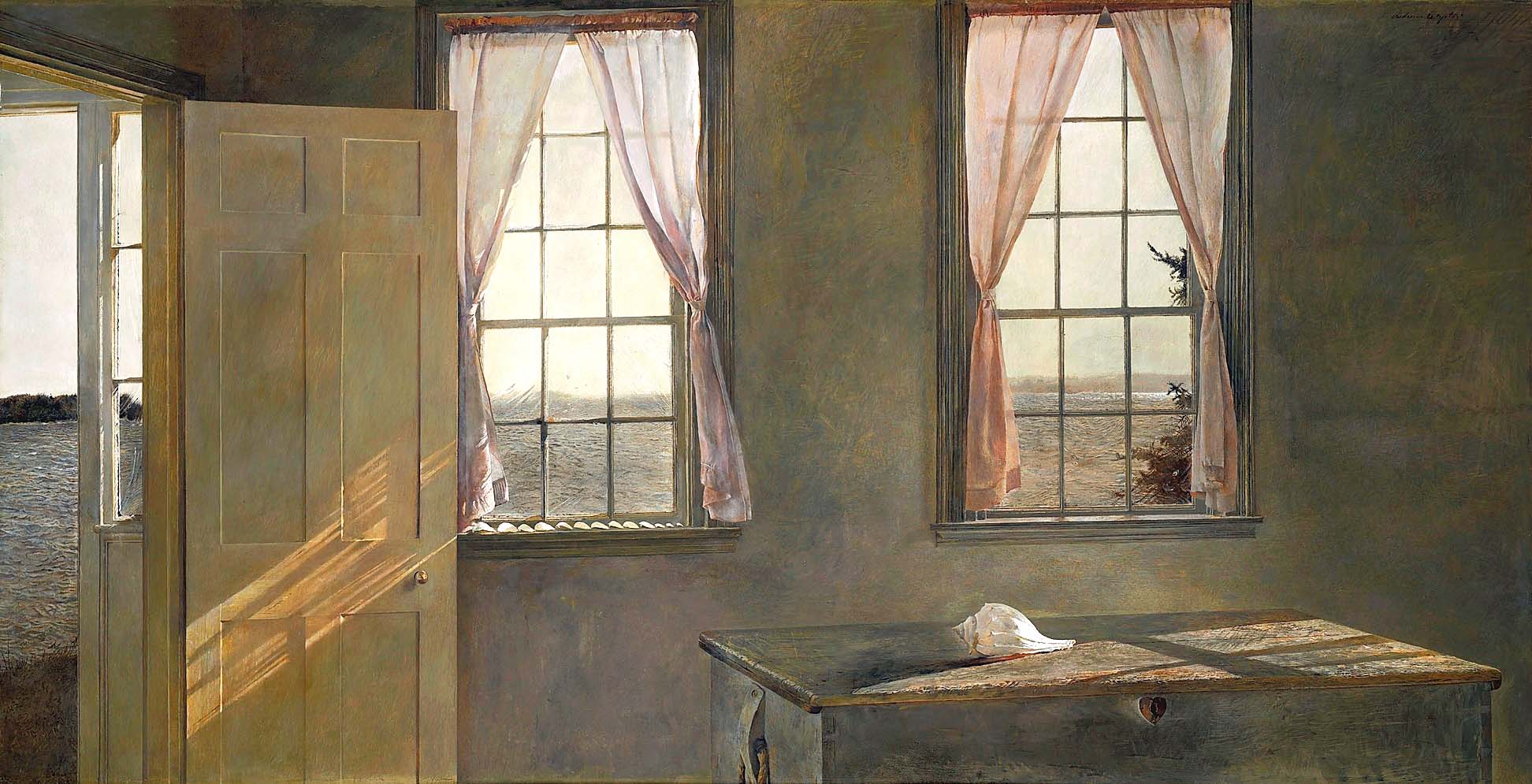
“Her Room” by Andrew Wyeth (1917-2009), 1963, egg tempera on panel, 24¾ by 48 inches. Museum purchase, 1964.1313. © 2026 Wyeth Foundation for American Art / Artists Rights Society (ARS), New York.
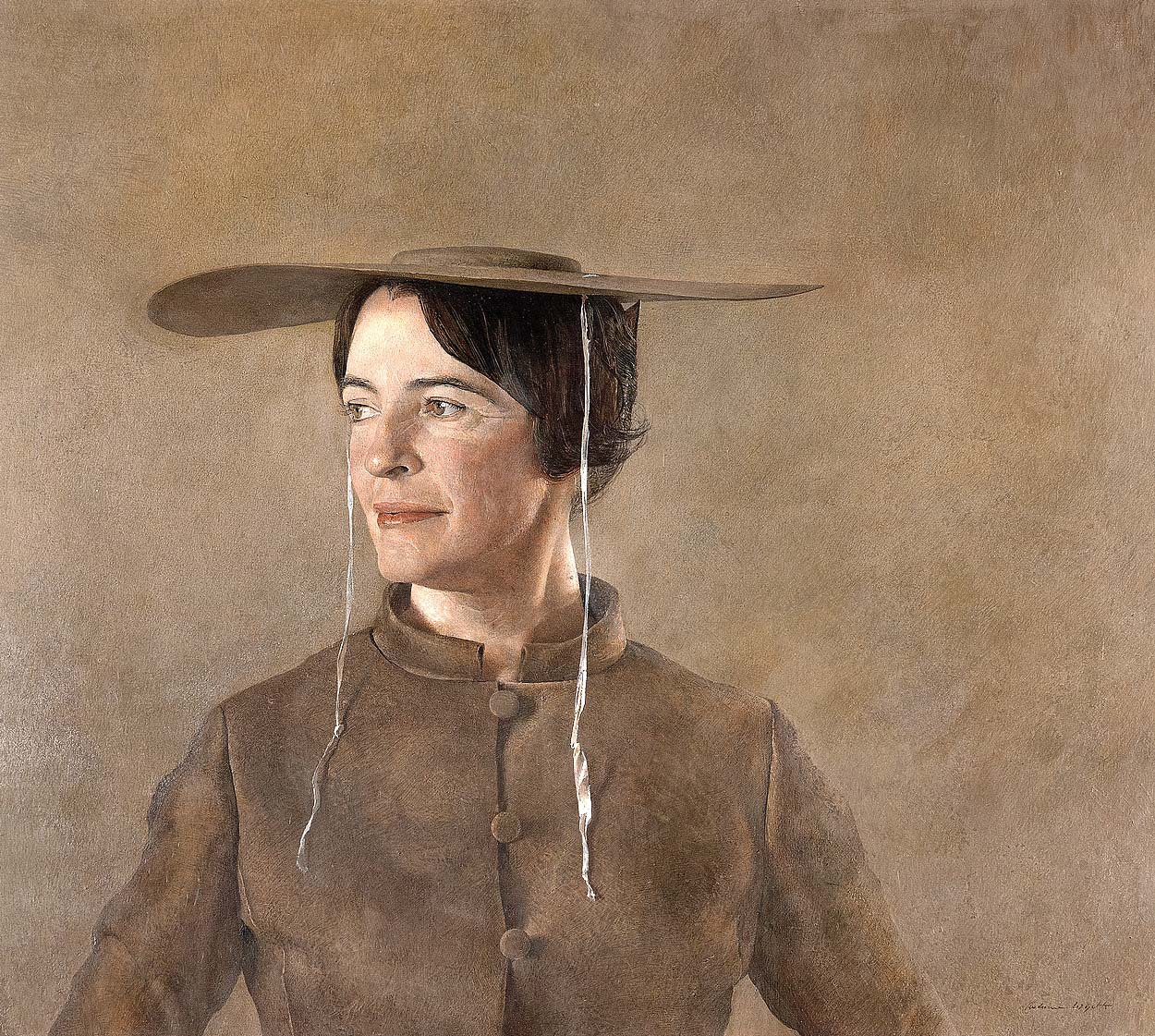
Wanda M. Corn, the Robert and Ruth Halperin professor emerita of art history at Stanford University, asserts, “Betsy the designer was of a piece with Wyeth the painter. She applied a regional aesthetic to everything: to furnishing her homes, assembling still lifes around the properties, cooking classic foods and fashioning their wardrobes. She drew heavily on Americana for her and Andrew’s closets: the turtleneck, the vest, the cable sweater, the tunics, the denim shirt, the frock coat and the Amish hats and jackets, the leather boots and top siders.”
“And she made these classics stylish and modern. Her palette was matched to the light and seasons of the region in which she was residing — In Chadds Ford, it was earthy browns and tans, occasionally blacks, while in Maine, it was whites, grays and blues.”
Throughout her adult life she would “save” dozens of old houses, Francesca Soriano, the Farnsworth Museum of Art curator, notes, though this descriptor “is perhaps an understatement for someone who used architectural salvage in the houses she built, renovated dozens of historic structures and had a habit of collecting and moving buildings.”
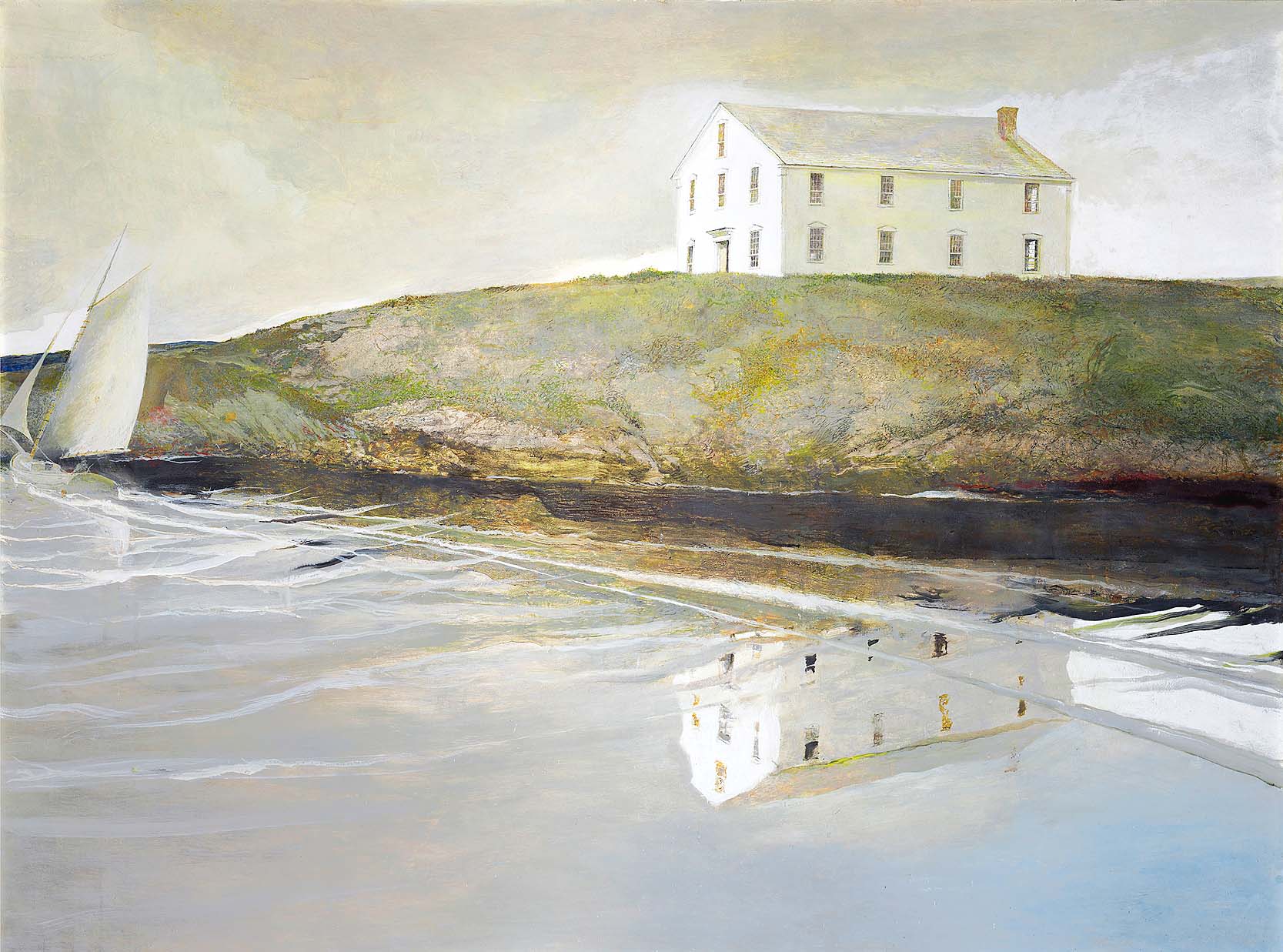
“Goodbye” by Andrew Wyeth (1917-2009), 2007, egg tempera on panel, 35⅝ by 47¾ inches. Wyeth Foundation for American Art Collection, M5053.
“Traditional words used to describe a maker of space — architect, interior designer, even artist — fail to fully capture her creative process. Nor was she a preservationist per se; her goal was more adaptive reuse as it applied to repurposing structures for Andrew’s paintings.”
The exhibitions this summer draw upon remarkable and largely unexhibited holdings of the Wyeth Foundation, with important loans from public and private collections. Rare archival materials, still and interactive imagery of the sites Betsy Wyeth shaped offer visitors a layered experience and illuminate her practice in remote and often inaccessible designed environments as never before.
Her revisioning of Brinton’s Mill in Chadds Ford had been her first significant design project — and the end result was a compound that evoked an early American past and yet was a modern day fusion of old and new materials. William L. Coleman, PhD, the Wyeth Foundation curator, comments that Betsy in effect “conceived and executed a compound that evoked an ideal of refined industry in harmony with the natural world that may never have existed.”
This early project would inform others, as she went on to construct a succession of buildings and spaces and landscapes in Pennsylvania and Maine. While these were ostensibly conceived and undertaken with the aim of supporting Andrew in his creative work, the Maine architect Ann Beha notes, “in design, execution and content, the works are undeniably hers.”
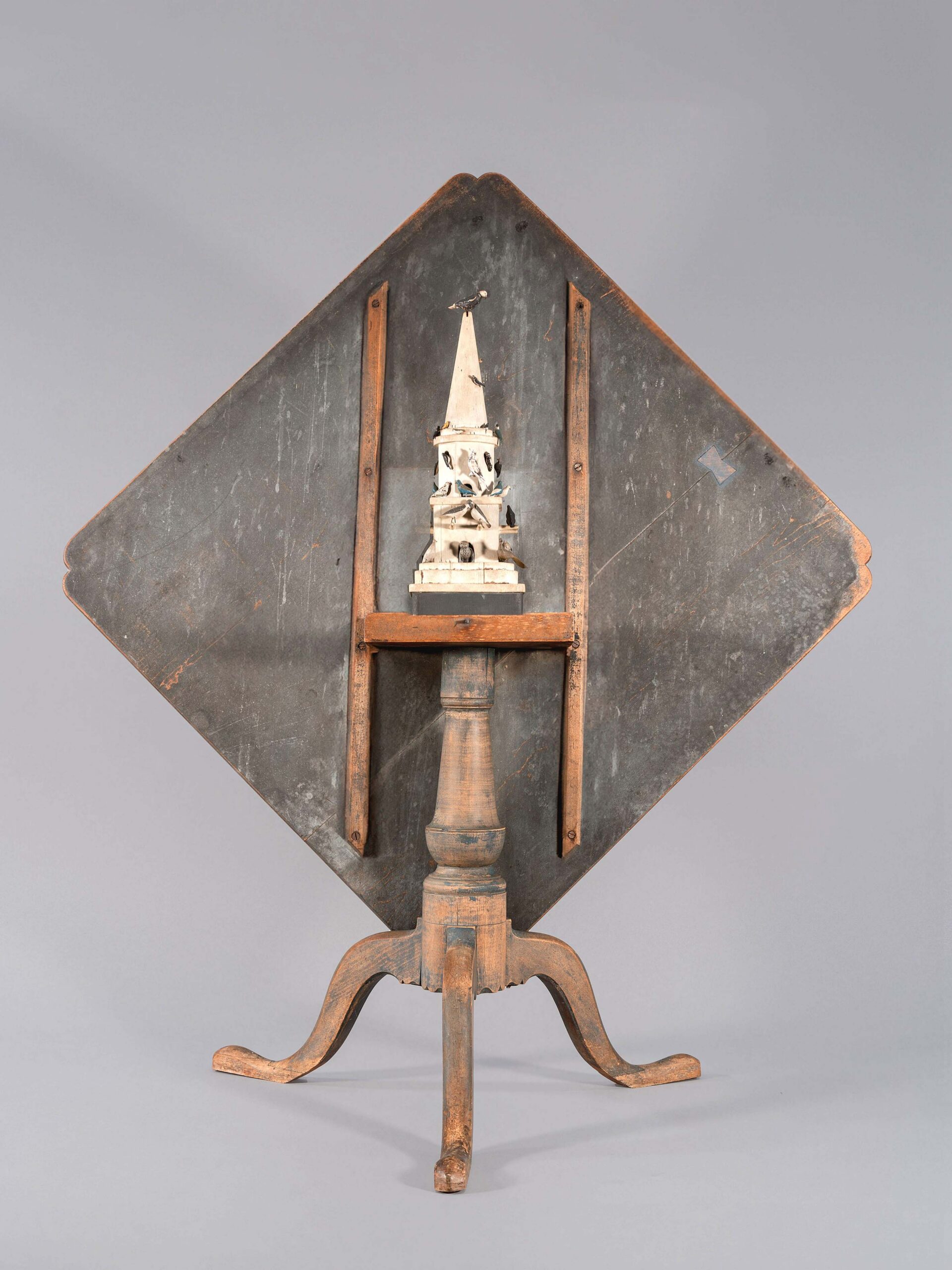
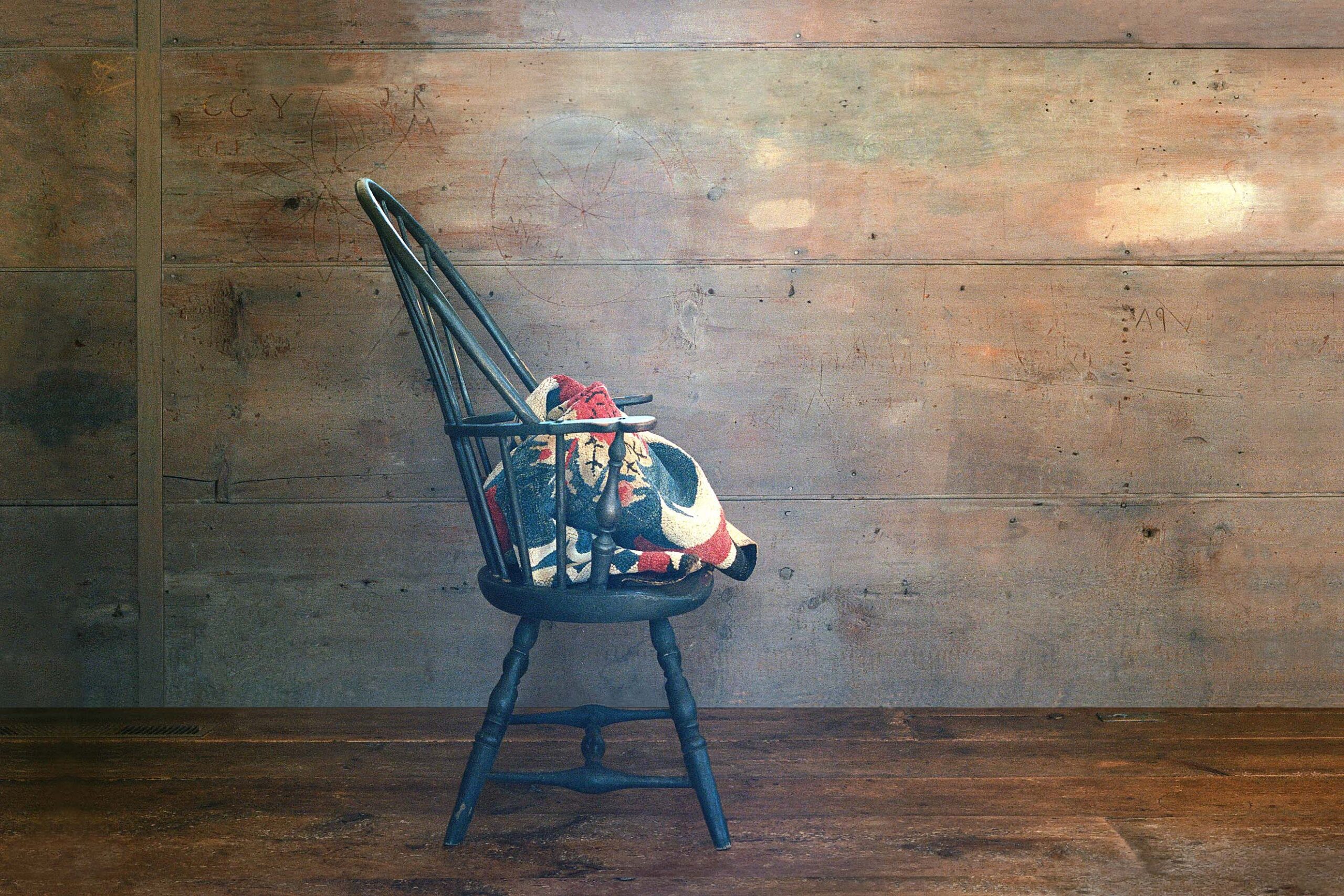
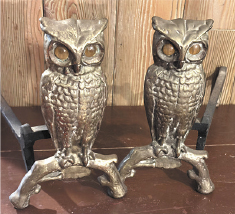
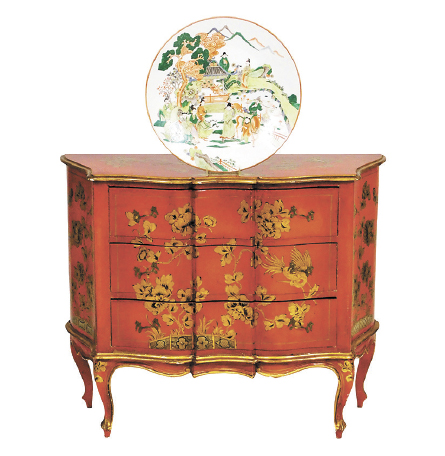
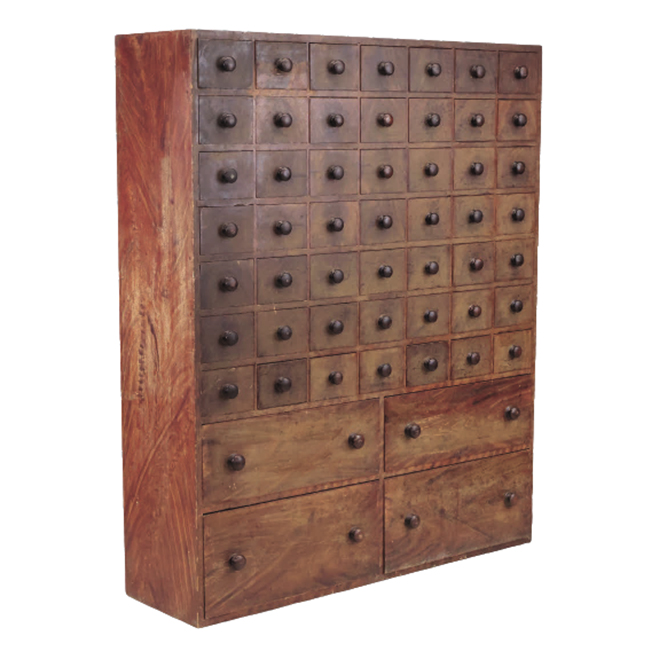
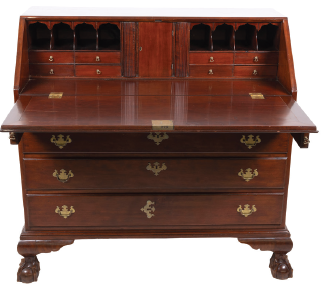
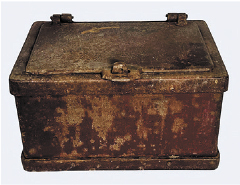
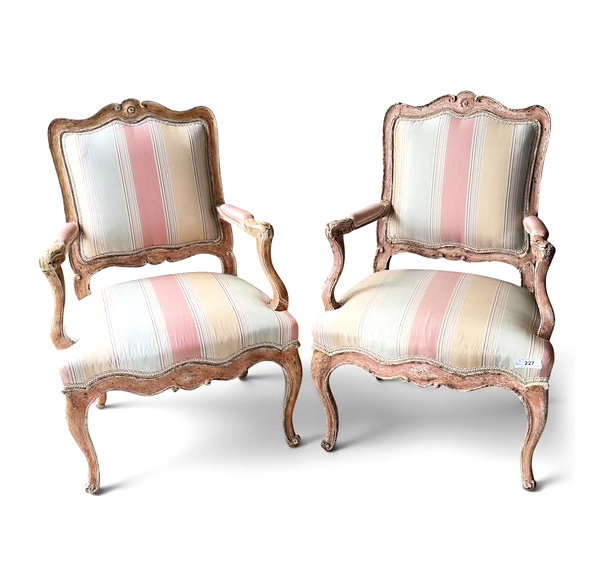
A Chippendale, blue-painted square-top and serpentine-foot tea table, circa 1790, 52 by 45 by 23 inches; and a small folk art hand-carved church steeple with carved birds alighting on it, circa 1880, 18 by 6 by 6 inches, possibly a model of the church steeple at Corinna, Maine. Wyeth Foundation for American Art Historic Collections. Dave Clough Photography, 2026.
The spare Yankee aesthetic associated with many of Andrew’s most poignant interior scenes and mood-evocative landscapes and seascapes had been conceived, in actuality, by his wife. Jaime Wyeth, their son — a celebrated artist as well — has long noted that his mother had an uncanny ability to delineate drama and distill the narratives her husband might draw upon for his work. And the couple collaborated so closely as the artist moved from drafts to finished work that Betsy rightfully could have signed her name alongside Andrew’s.
“Betsy gets to the core of the thing.” Wyeth himself told his biographer, Richard Merriman. “A hint of it is all an artist needs — a little glimmer of truth,” he said. “It’s funny how it smooths the whole thing out.”
Betsy bought the 450-acre Allen Island in 1979 and the 50-acre Benner Island 11 years later, both in Maine, with the aim of shaping an environment that would support and inspire her husband. But these acquisitions also marked her emergence as a bonafide land artist. Over 40 years, and in concert with local craftsmen, foresters and ecologists, she reshaped these places, determined that Allen, with its maritime history, would become a working island once again. Betsy’s villages, as Andrew referred to them, did indeed inspire remarkable paintings, including the deeply poetic “Pentecost” (1989), “Airborne” (1996) and “Jupiter” (1998).
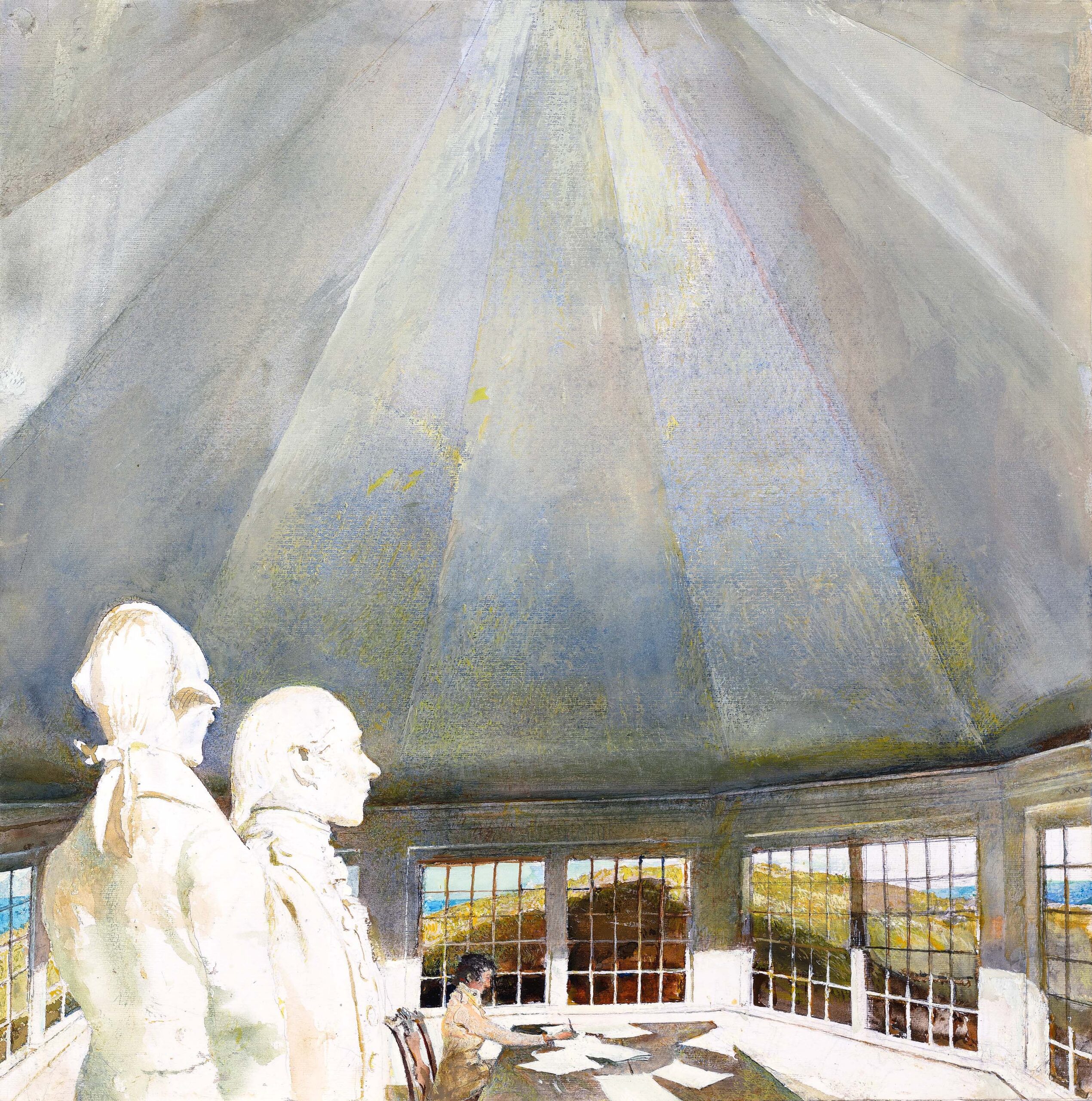
“Ghosts” by Andrew Wyeth (1917-2009), 2003, drybrush watercolor on paper. Collection of the Wyeth Foundation for American Art, M5045. © 2026 Wyeth Foundation for American Art/Artists Rights Society (ARS), New York.
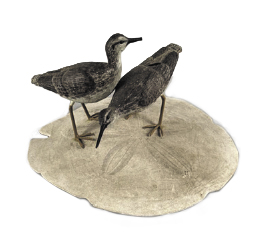
The interiors that she created, with their spare but strategically placed objects — seashells and feathers, for instance, appear as characters, stirring memories and mysteries simultaneously.
In 2022, Colby College became the steward of Allen and Benner Islands, thereby ensuring that Betsy’s dream of building a vibrant community — and in this case, under Colby’s stewardship, a diverse and engaged one.
The Colby campus “has become a living laboratory for local schools and the greater Colby community,” D. Whitney King, senior advisor to Colby College president David Greene, asserts with pride. From intertidal studies to its collaborative partnership with the National Audubon Society, “Betsy’s vision to create islands with working waterfronts and the infrastructure for island research laid the foundation for this growing community of scholars,” he adds.
The magic inherent from a two-week sojourn on Allen Island has been conjured by four artists-in-residence in an exhibition that is underway in Colby College’s downtown arts district.
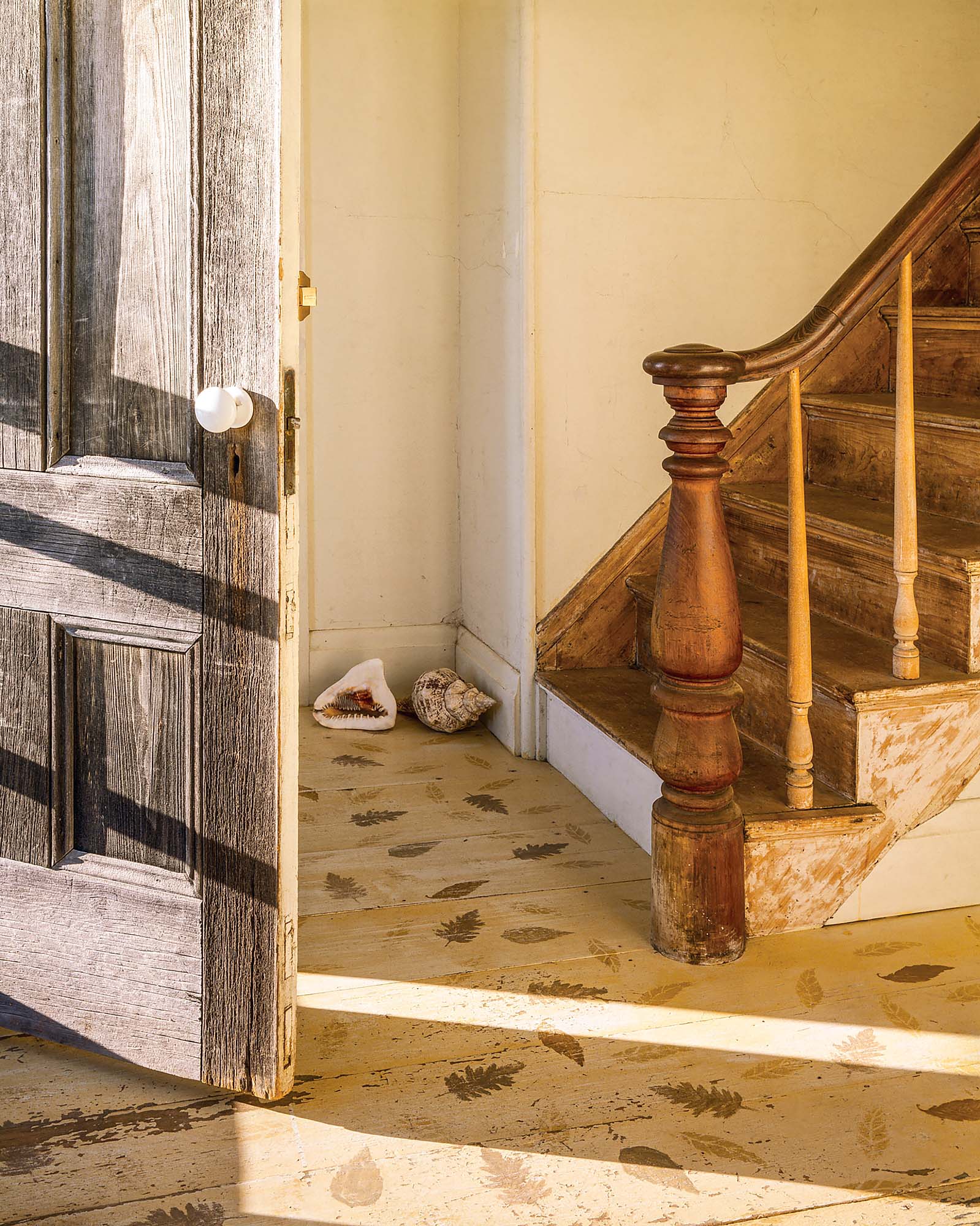
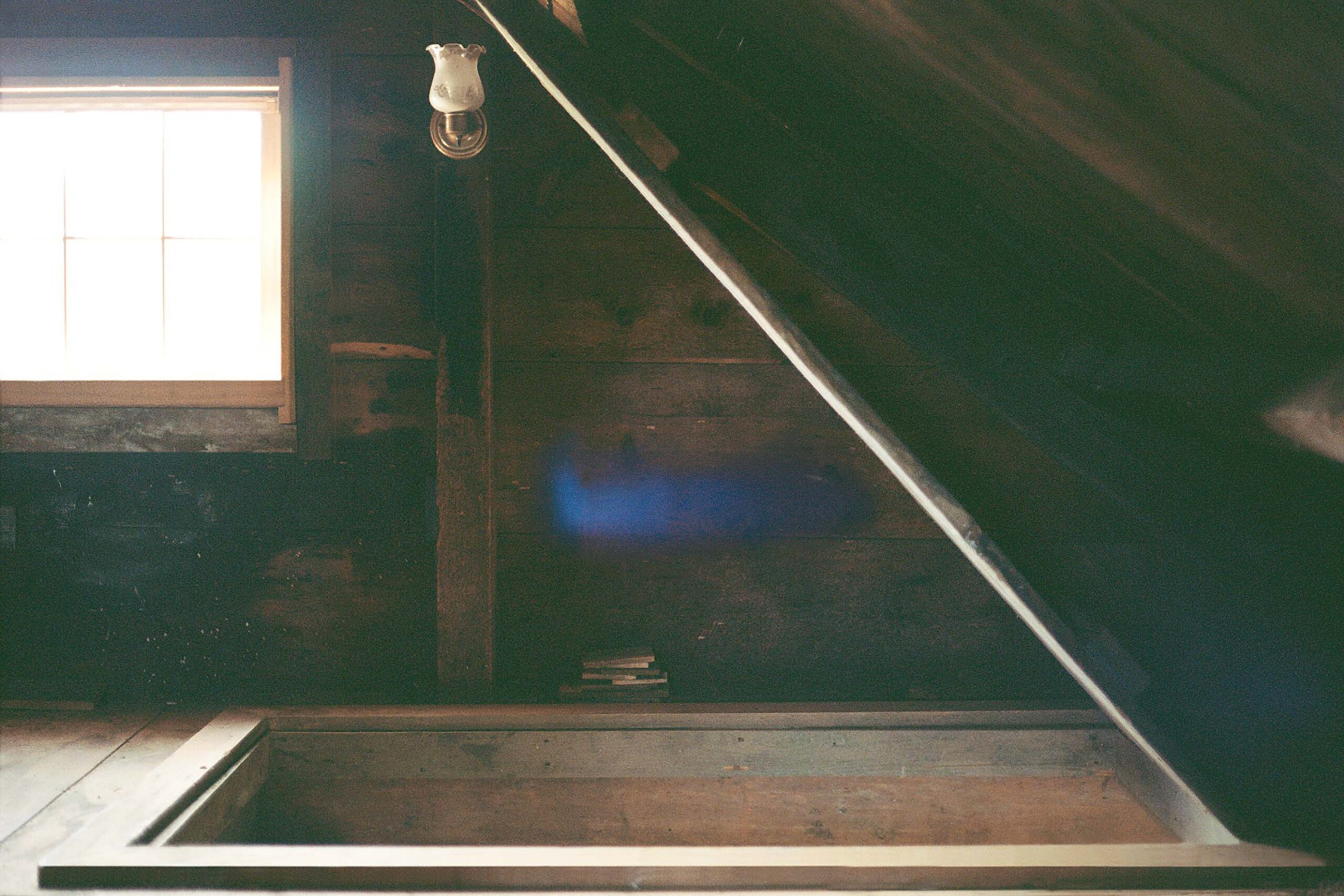
Untitled (Olson House Entry Hall) by Brian Vanden Brink (b 1951), 1996, archival inkjet print, 20 by 16 inches. Gift of Brian Vanden Brink, 2017.12.3. © 2026 Brian Vanden Brink / Image courtesy of the artist.
Kendell DeBoer, curator of the Colby College of Art’s exhibition, who accompanied four artists-in-residence for this stay on Allen Island, said, “Attracted to the islands’ existing histories, structures and ecology, Betsy ‘broke away’ on her own path in choosing to purchase transform, and live on them.” Walking in Betsy’s shoes in this way prompted this field report from artist Claire Pentecost:
“We arrived on Allen Island with a fog rolling in,” the artist Elaine Ng reports, “just before sunset. A misty twilight softened the newness of the landscape and set the scene for a Wyeth painting. The next morning when the hazy curtain lifted, I found myself in Betsy’s carefully composed world — beautiful, surreal, and disorienting. The island surface felt like an elaborate stage set on a soundstage superimposed over a landform and ecology with a different history. I wondered how the layers came together and what stories I would find embedded in the landscape.”
Betsy Wyeth believed it was crucial that the paintings and the archives work in tandem to create a fuller, more contextual story of the Wyeths, not only as a remarkable group of artists but as a family.
And she turned to Jo Hopper, the wife of Edward Hopper, for archival training. The Andrew & Betsy Wyeth Study Center today manages one of her accomplishments — the nearly 7,000-object collection of Andrew Wyeth’s work (paintings, watercolors, drawings, etc.) that is owned by the Wyeth Foundation for American Art. Its research centers are staffed in at the Brandywine and the Farnsworth and are available by appointment. The months ahead present an ideal time to dip into both Betsy and Andrew’s partnership and to reappraise the talents that Betsy brought to the equation. Now — with “By Design: The Worlds of Betsy James Wyeth” — this formidable creator has come out of the shadows.
For information, www.brandywine.org/museum, museum.colby.edu and www.farnsworthmuseum.org.