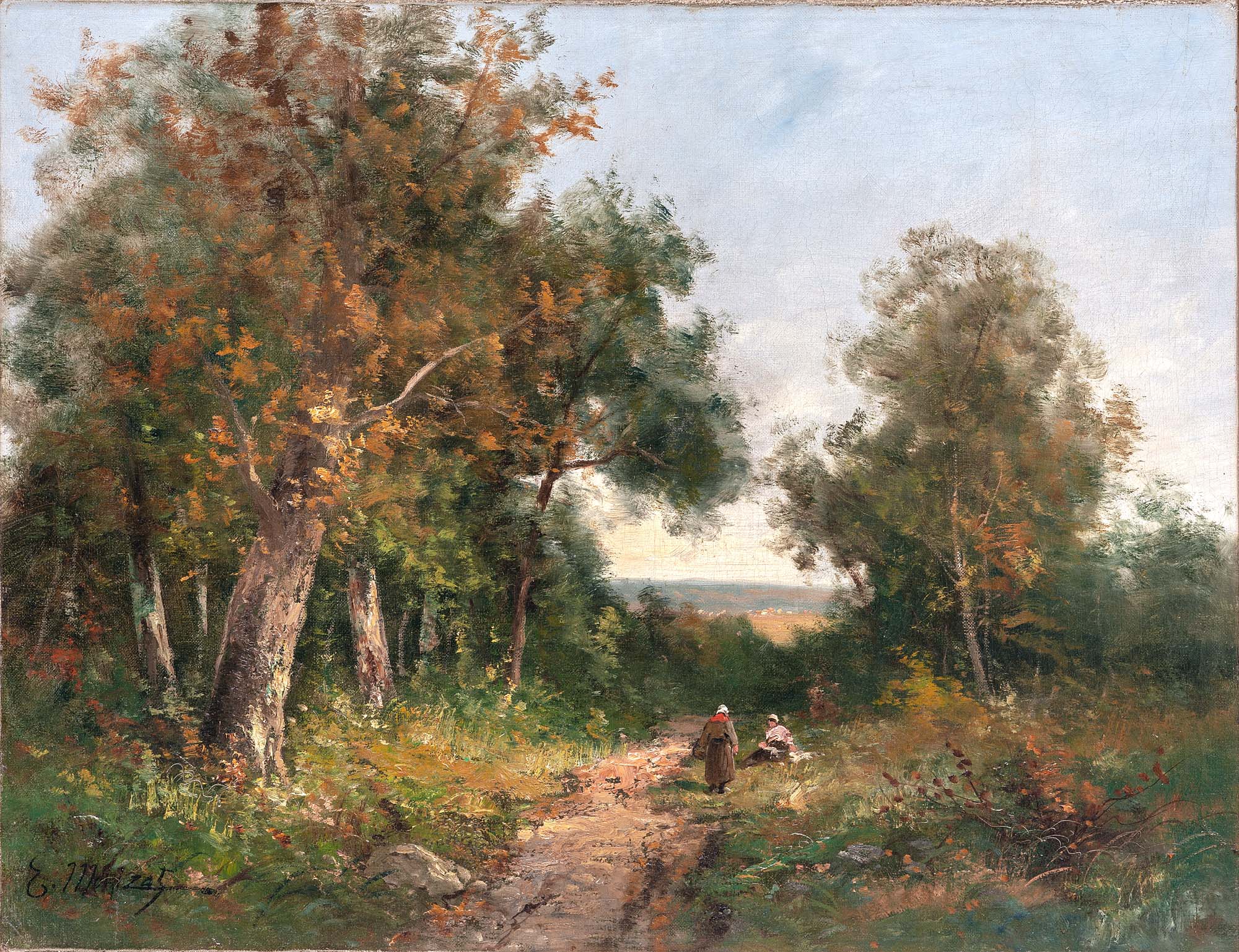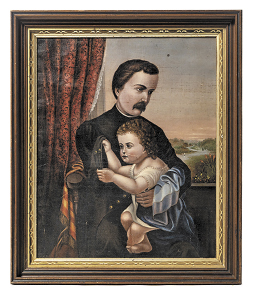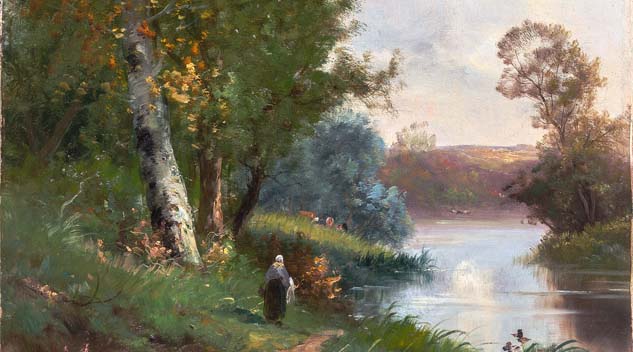
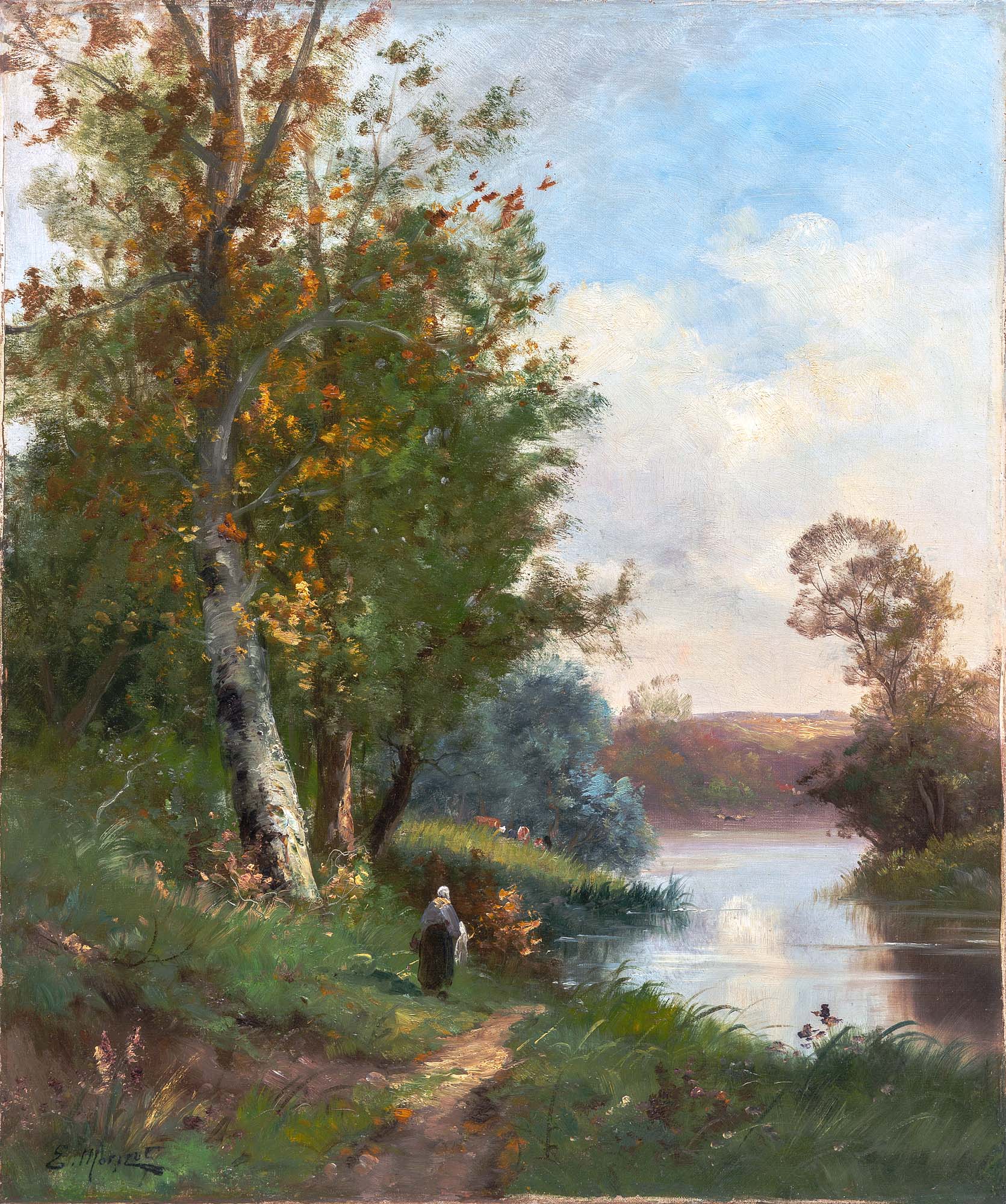
“Ville d’Avray” by Edma Morisot-Pontillon, circa 1863, oil on canvas, 25¾ by 21¼ inches. Collection of Bill Scott 2026.155.
By Jessica Skwire Routhier
ST LOUIS — What do you think of when you think of French Impressionism? The Impressionists were known as the “painters of modern life,” and their canonical works run the gamut from portraits to cityscapes to theater scenes. Yet the public perception of Impressionism remains deeply tied to landscape, a genre in which most of its practitioners at least dabbled, even if it was not their primary subject.
The women of the Impressionist movement — Berthe Morisot and Mary Cassatt among them — might seem to be an exception, as they are best remembered today for their domestic interiors. But “Women Impressionists and the Land,” on view at the Saint Louis Art Museum (SLAM) through January 10, makes a persuasive case that they engaged deeply with landscape as well.
The exhibition, curated by Simon Kelly, SLAM’s curator of modern and contemporary art, focuses primarily on Morisot, Cassatt and Marie Bracquemond, all of whom showed at the Impressionist exhibitions between 1874 and 1886. Others are also represented, broadening the premise of the show beyond those exceptional few: Edma Morisot-Pontillon, Blanche Hoschedé-Monet, Louise Abbéma, Élodie La Villette and, as a kind of prelude to the Impressionists, the acclaimed horse painter Rosa Bonheur.
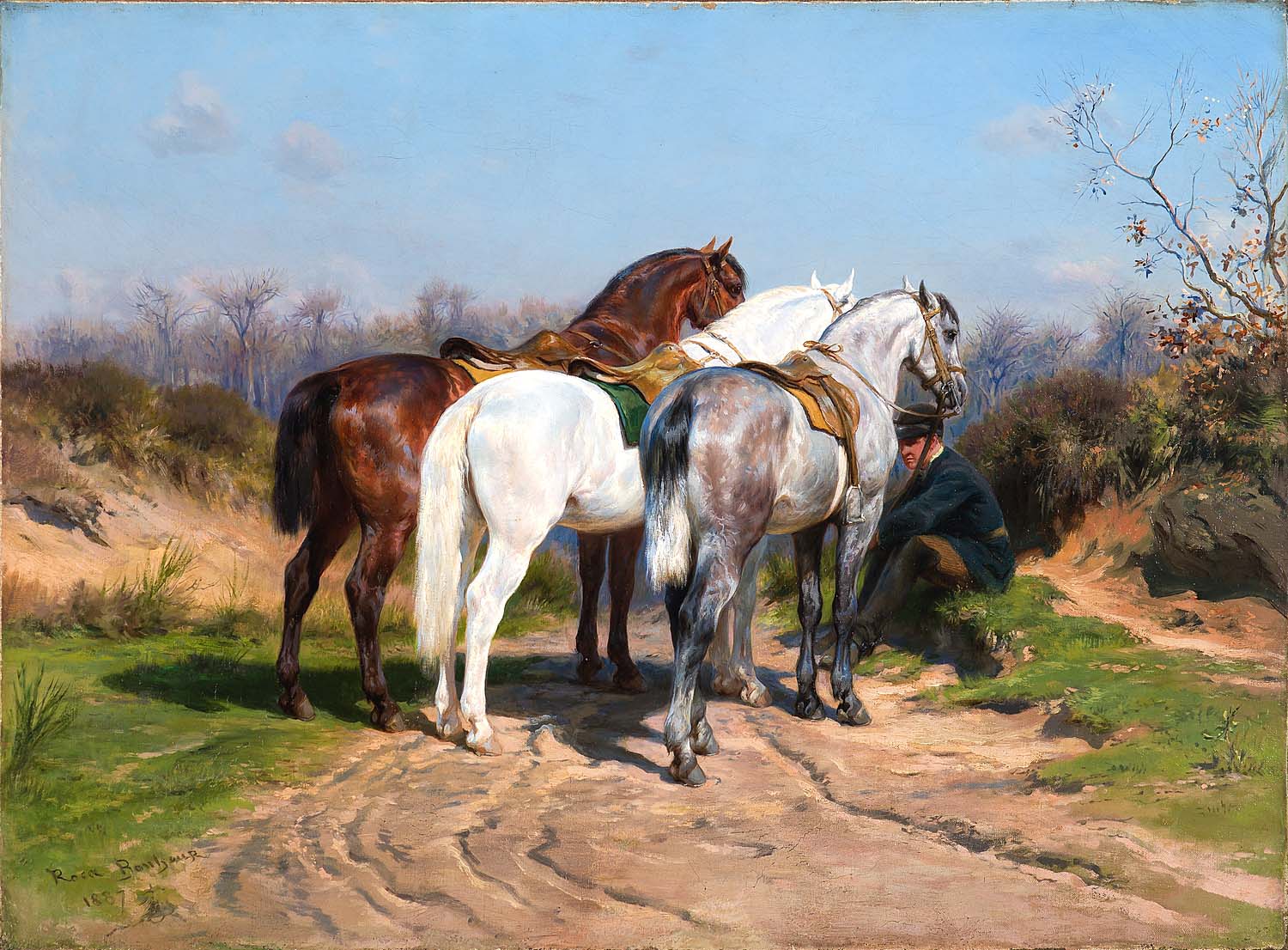
“Relay Hunting” by Rosa Bonheur, 1887, oil on canvas, 18 by 26 inches. Saint Louis Art Museum, gift of Justina G. Catlin in memory of her husband, Daniel Catlin 7:1917.
The show effectively begins with Bonheur, in a section that examines work produced for the Salon in the 1860s, before the advent of Impressionism and its attendant break from the official exhibitions of the French Academy. Bonheur’s “Relay Hunting” is a poignant reminder that her interests extended beyond the horse fairs and other events she witnessed in Paris. Admittedly unusual for the time, she traveled independently to Scotland, the Pyrenees and other locales and produced paintings in which the landscapes settings are no less important than the animals that are ostensibly her subjects. (Equally unusual was her habit of wearing men’s clothes, of cutting her hair short and of living more or less openly as a lesbian, though she did not embrace the label.)
Among the other highlights from this early period is an array of works by sisters Berthe Morisot and Edma Morisot-Pontillon, including several that have only reemerged from family collections. A 2019 Berthe Morisot exhibition (which I wrote about for this publication’s February 22, 2019, issue) explained the artist’s somewhat muted legacy within Impressionism — compared to, say, renowned landscapist Claude Monet — in part, by observing that many of her works remained within her family instead of being sold and thus circulating within art markets and art museums. It is a coup, then, for SLAM to have identified and negotiated the loan so many works from private collections. Among those on view here for the first time are Edma’s “Women in Woods” (1860-69), “Ville d’Avray” (1863) and “Memory of the Countryside” (1864), as well as Berthe’s “Washerwoman” (1863), all of which show the strong influence of their teacher, the Barbizon landscapist Jean-Baptiste-Camille Corot.
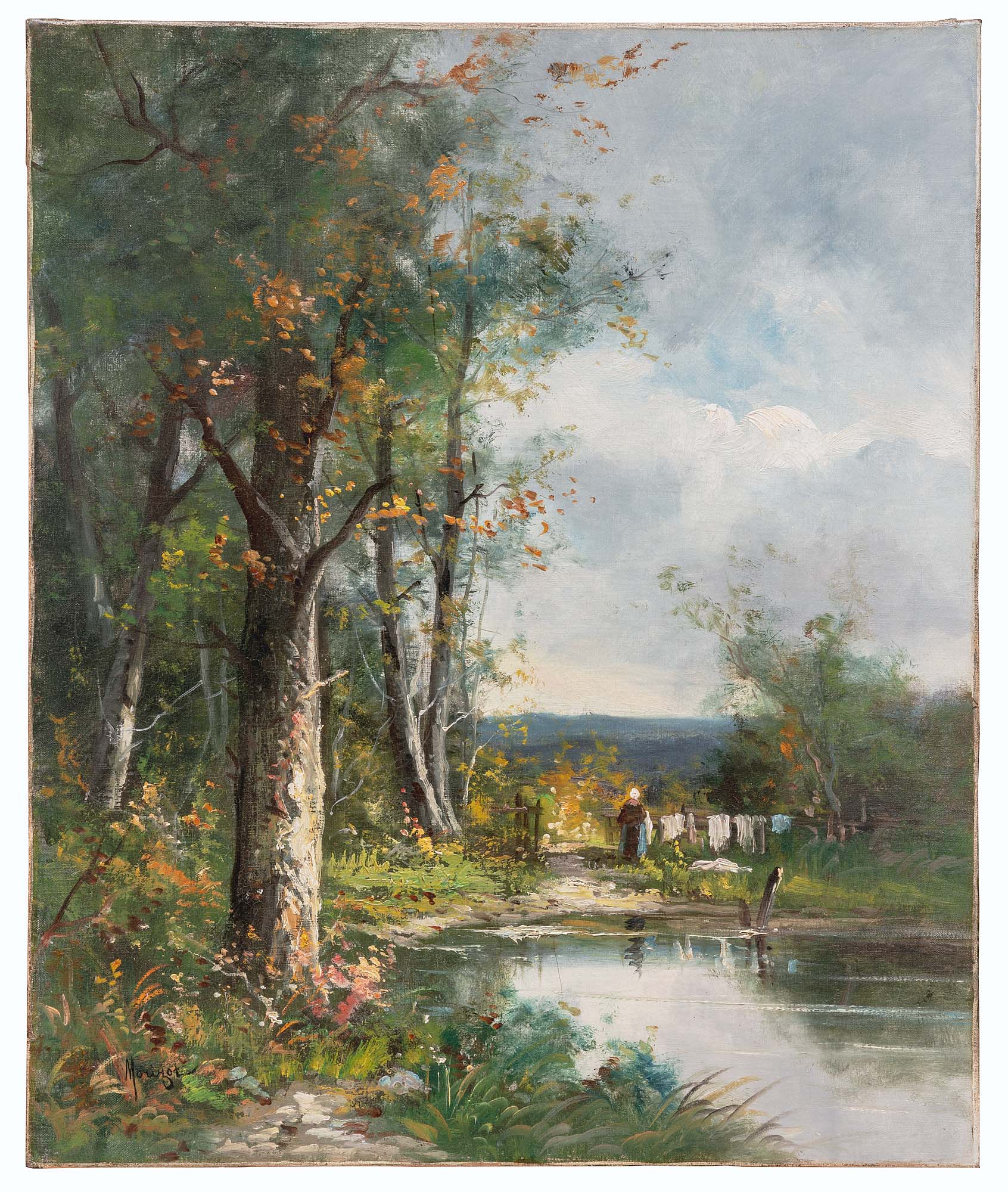
“Washerwoman” by Berthe Morisot, circa 1863, oil on canvas, 25½ by 21¼ by ¾ inches. Collection of Bill Scott 2026.195.
“Ville d’Avray” and “Washerwoman,” Kelly said, “look like they could have been painted next to each other,” noting that the sisters traveled together not only to the Forest of Fontainebleau to study with Corot but also, following in Bonheur’s footsteps, to the Pyrenees in 1862. “They were going out into the landscape and literally putting their easels next to each other.”
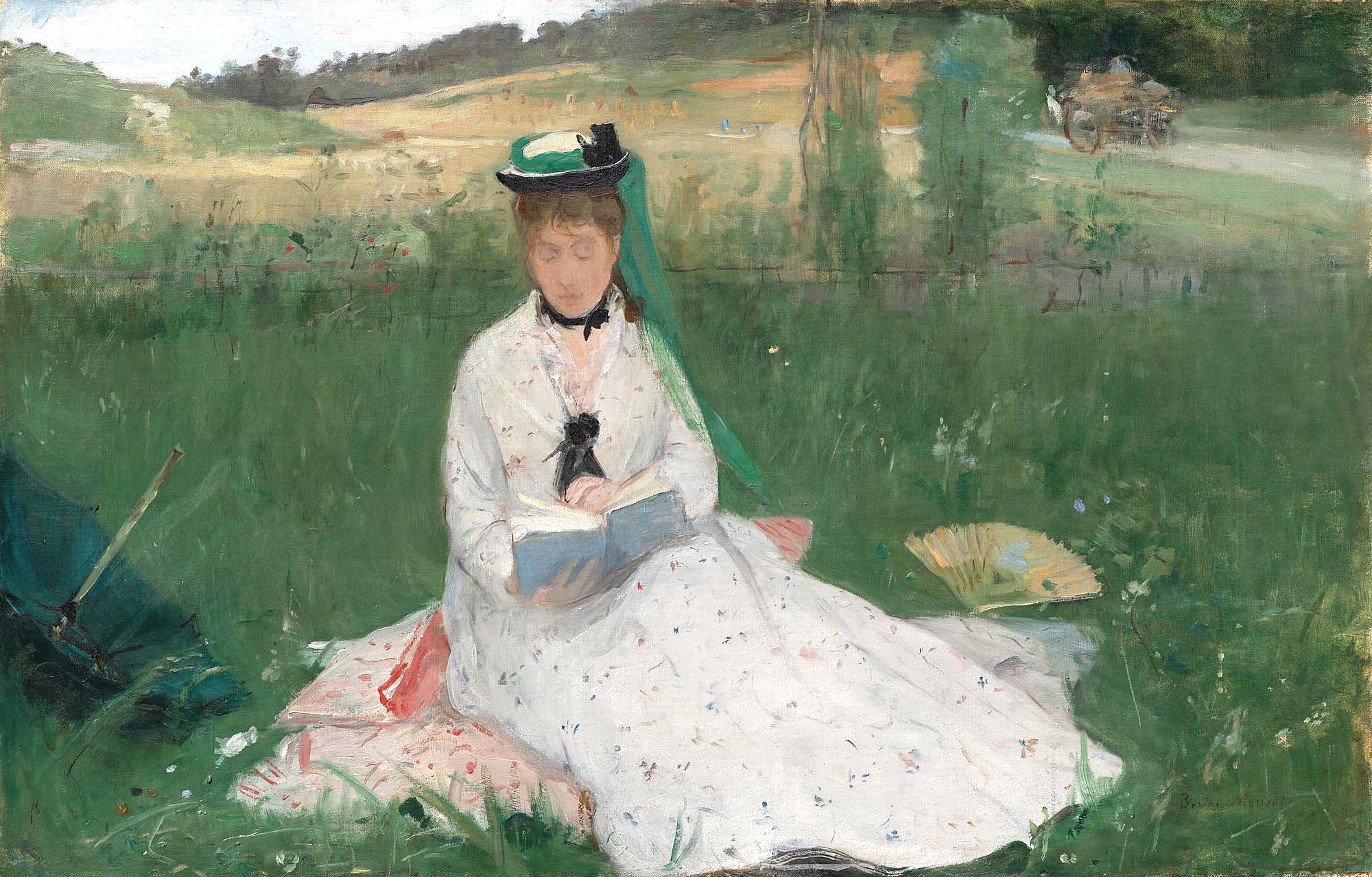
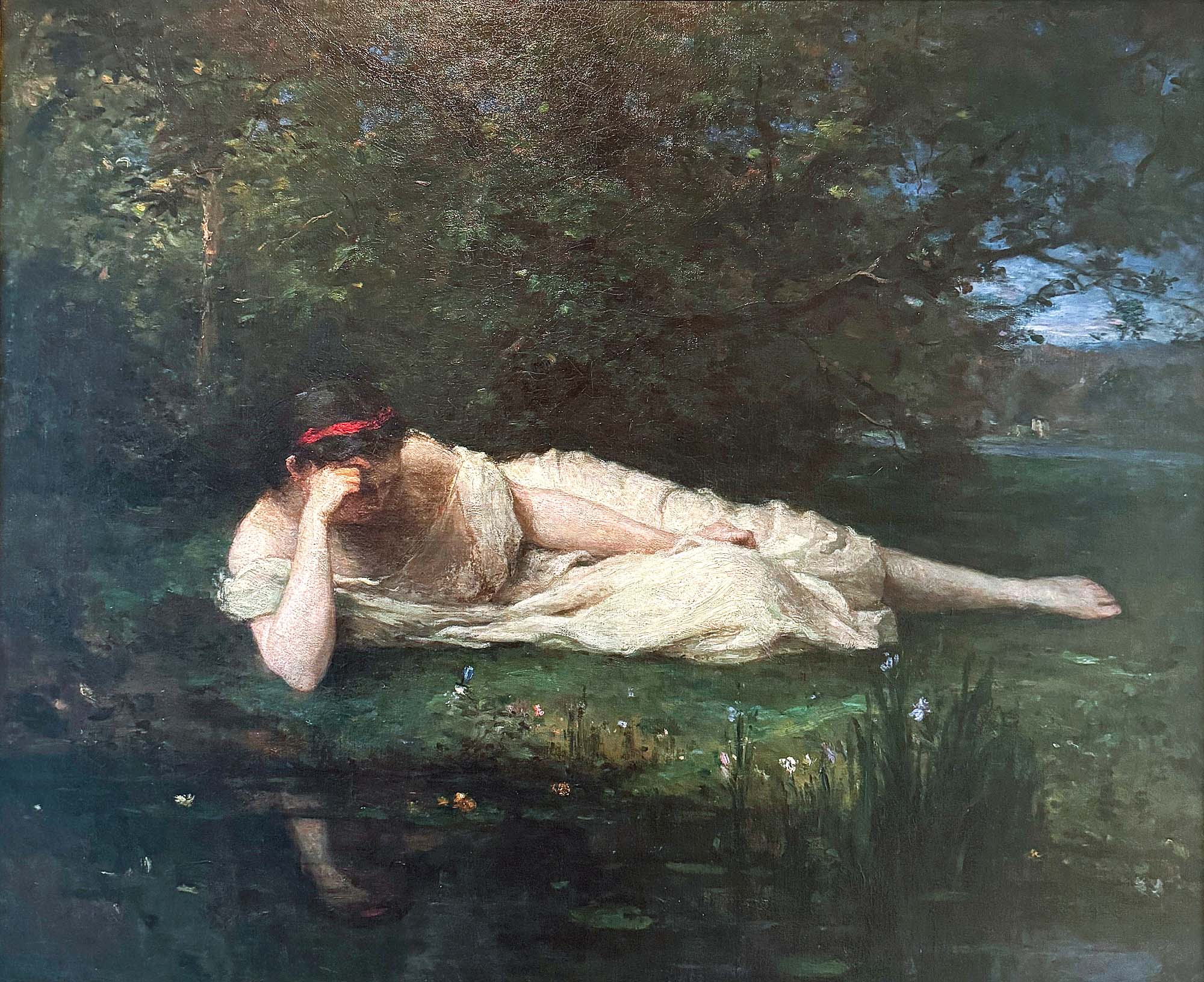
Another early painting, Morisot’s “Study at the Water’s Edge” (1864), marries landscape themes with the semi-recumbent female figure that would become a focus of her mature work, transitioning into the section that moves from the Salon to the Impressionist exhibitions of the 1870s and 1880s. Defining examples here are Morisot’s “Reading” (1873) and her “Hanging the Laundry out to Dry” (1875), which Kelly said shows the artist’s “radical” brushwork and blending of figure and ground. “I don’t think she would have ever thought of her work as abstract,” he said, “but you can trace from painting like that right up to an artist like [Helen] Frankenthaler or even Joan Mitchell.”
A section on Marie Bracquemond does justice to the research performed by scholar Elizabeth Childs for the exhibition catalog, arising in part out of a new cache of Bracquemond works recently donated to Paris’ Musee d’Orsay (two are on view in the exhibition). Like Morisot’s, much of Bracquemond’s work remained quietly in private collections as Twentieth Century art historians were developing the canon of Impressionist art. Also like Morisot, Bracquemond had an affinity for female figures in the landscape; to some extent, this was a logical effect of social strictures on women in Nineteenth Century France, and on interactions between women and men who were not their husbands.
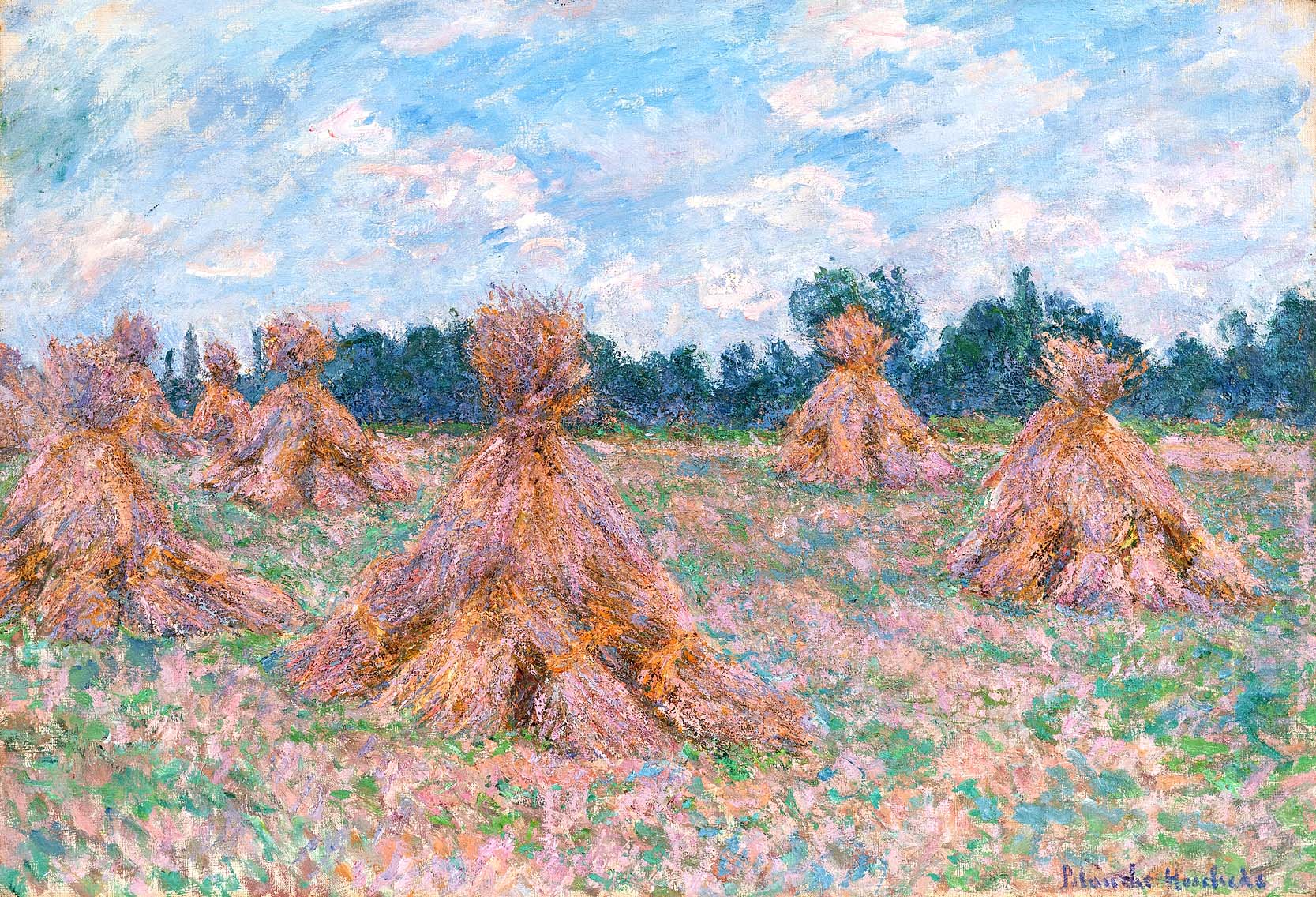
“The Small Grainstacks” by Blanche Hoschedé-Monet, circa 1894, oil on canvas, 18⅛ by 22-1/16 inches. Alice and Rick Johnson 2026.05, courtesy of Eskenazi Museum of Art, photo by Shanti Knight.
Bracquemond was a multimedia artist, working in watercolor and ceramic as well as oils and also experimenting with a variety of genres. Her striking “Still Life with Oranges” (1880) was acquired by SLAM in advance of the show. Kelly explained that it was painted on the terrace of the home she shared with her husband, the ceramic artist Félix Bracquemond, in Sèvres, so it is an outdoor work that connects deeply with the land as she experienced it there.
The famous parks of Paris provided another way for women to access and paint the outdoors even when their travel was limited. The Bois de Boulogne, the subject of another section in the exhibition, was established as a public park in 1852, and it offered 2,000 acres of woods, paths, lakes, streams and carriage roads just a stone’s throw from Berthe Morisot’s Paris home. The park was a source of inspiration throughout her career, even if the critics did not always give the work that she produced there the respect it deserves. “They’re talked about as kind of delicate or charming … rather than reinforcing the idea that these are really bold, radical paintings,” said Kelly.
This was, in general, a perception that women artists of the time had to navigate, and that the exhibition attempts to navigate as well. Kelly points to a long-standing “idea of this essentializing connection between nature and the feminine,” set against the idea of a “macho male … who is kind of almost dominating the landscape.”
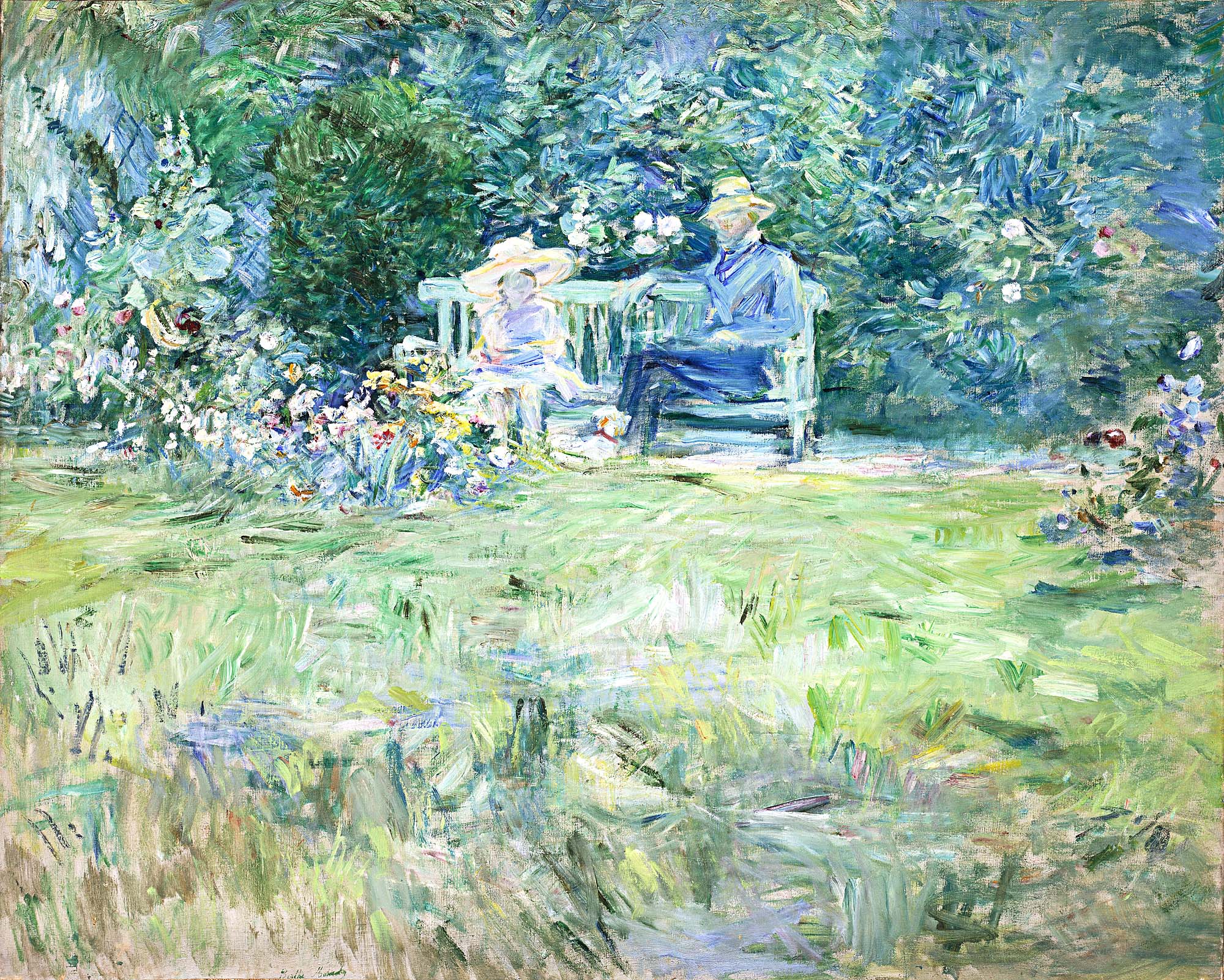
“The Lesson in the Garden” by Berthe Morisot, 1886, oil on
canvas, 23-5/16 by 28⅞ inches. Frederic C. Hamilton Collection
at the Denver Art Museum, 2025.317 2026.162, Photograph
courtesy of the Denver Art Museum.
Morisot’s radical paint handling, perversely, could seem to support that conflation of nature and the feminine; in “Young Girl Hanging a Bird Cage in a Tree” (1890), for example, her blended marks make it difficult to distinguish between hand and leaf, dress and tree trunk. Her young girl is almost like the mythical Daphne, subsumed into the landscape. But such an analysis is “a bit reductive,” says Kelly, arguing that it is perhaps more fruitful to think about developing ideas about the ecology and the interconnectedness of life forms. As it is, we know that Morisot was reading Charles Darwin in the 1870s.
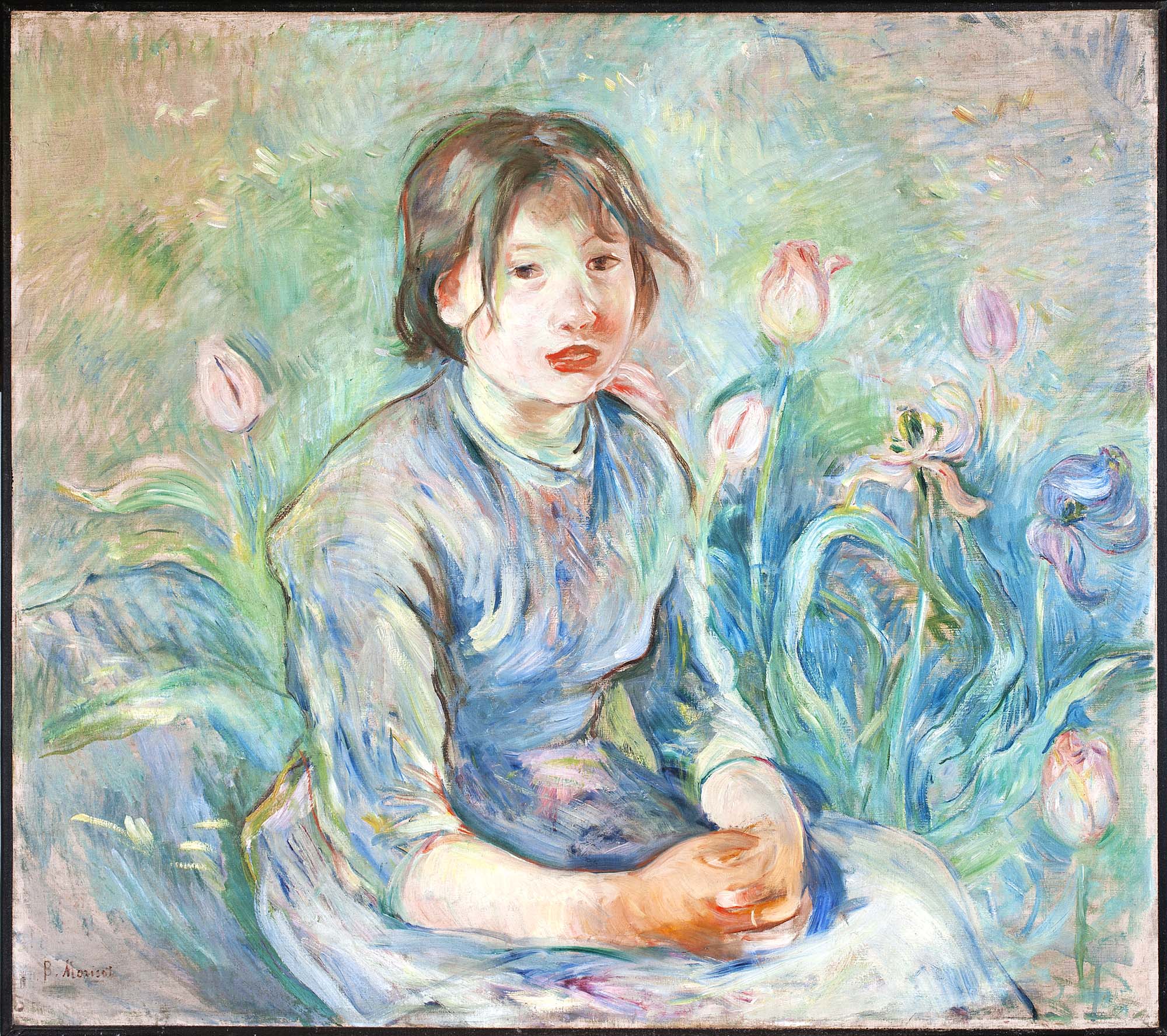
Certainly such concerns were on her mind during her sojourn in Mézy, an agricultural town northwest in Paris where she spent two summers in 1890 and 1891 — and where she painted “Young Girl Hanging a Bird Cage.” After painting some harbor and factory scenes in the 1870s, Morisot’s later interests turned more toward “small-scale farmers,” Kelly said, practitioners of a kind of subsistence/market farming that was beginning to disappear with the emergence of monoculture and large-scale industrial farms. “She becomes quite involved with local peasant community at Mézy,” Kelly noted, observing in his catalog essay that Morisot’s daughter, Julie, celebrated her first communion with a local girl named Gabrielle Dufour, with whom she had become friends. Gabrielle was the model for “Peasant Girl Among Tulips” (1890) among other works.
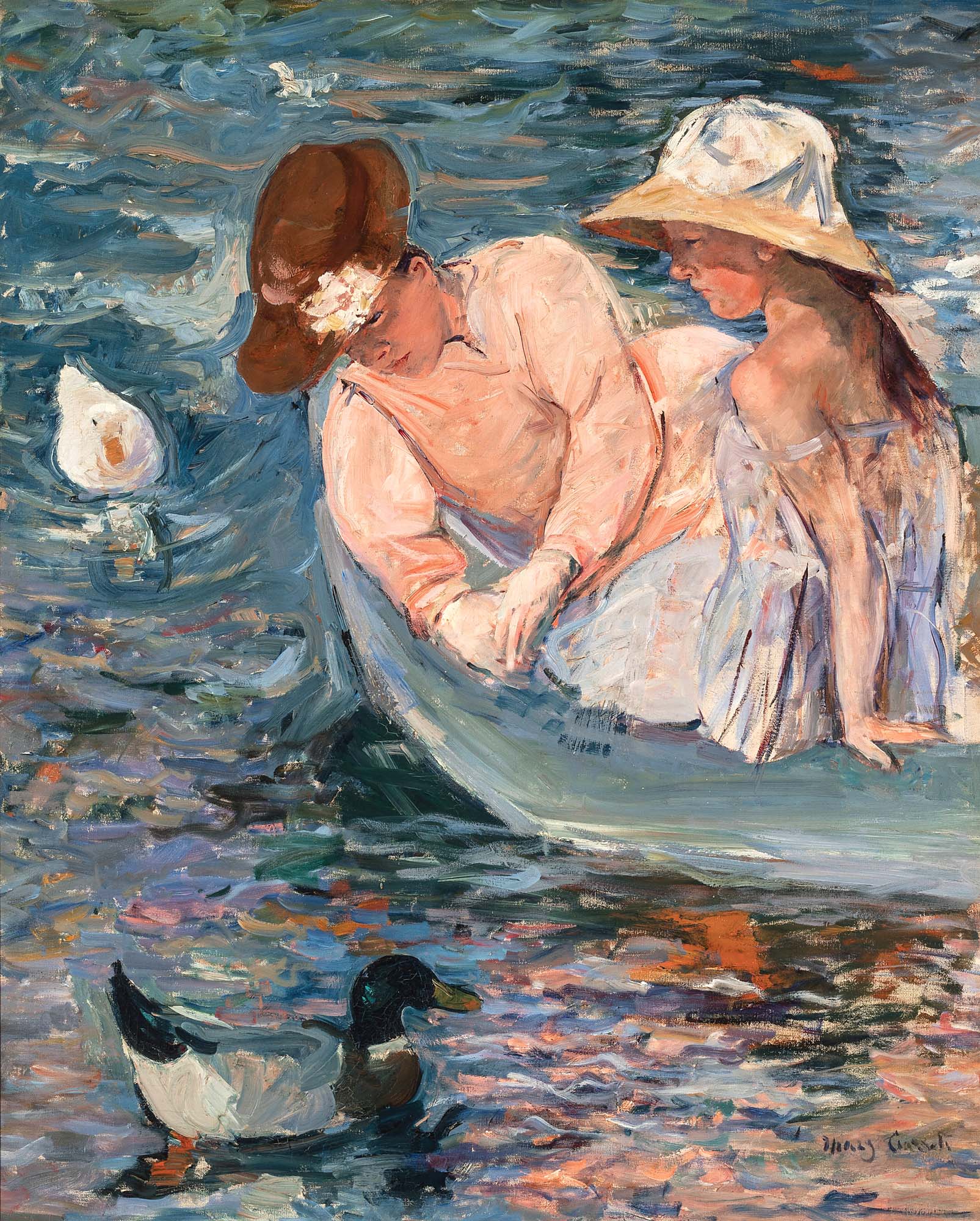
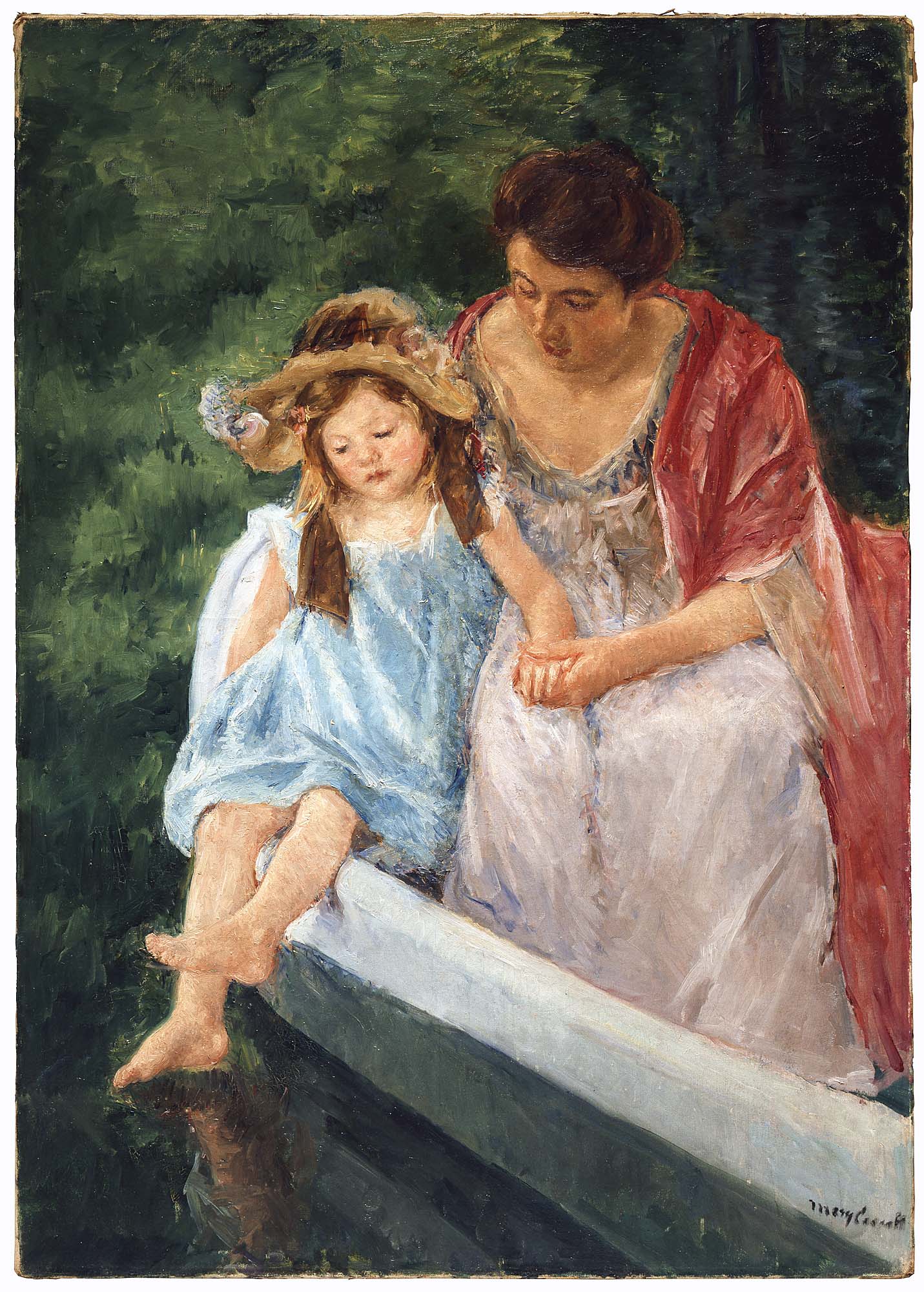
Kelly makes no secret of the fact that Morisot is the “conceptually the most important artist in the exhibition” and the key figure in almost every section of the show. Still, the selected works amply demonstrate that none of these interests were unique to her, and that indeed she was part of a network of women artists who mutually influenced one another. The Bois de Boulogne was also a favored subject for Louise Abbéma, who painted herself and her lover, the actress Sarah Bernhardt, feeding ducks and black swans from a rowboat in one of the park’s lakes. Cassatt, too, lived near the Bois de Boulogne when in Paris, and while her “Summertime” (1894) and “Mother and Child in a Boat” (1908) were probably staged at Château de Beaufresne, her country home in Le Mesnil-Theribus, they call back to that urban oasis. Morisot’s interest in rural agriculture is also echoed in Hoschedé-Monet’s “The Small Grainstacks” (1894), and “Haystack at Giverny” (circa 1893).
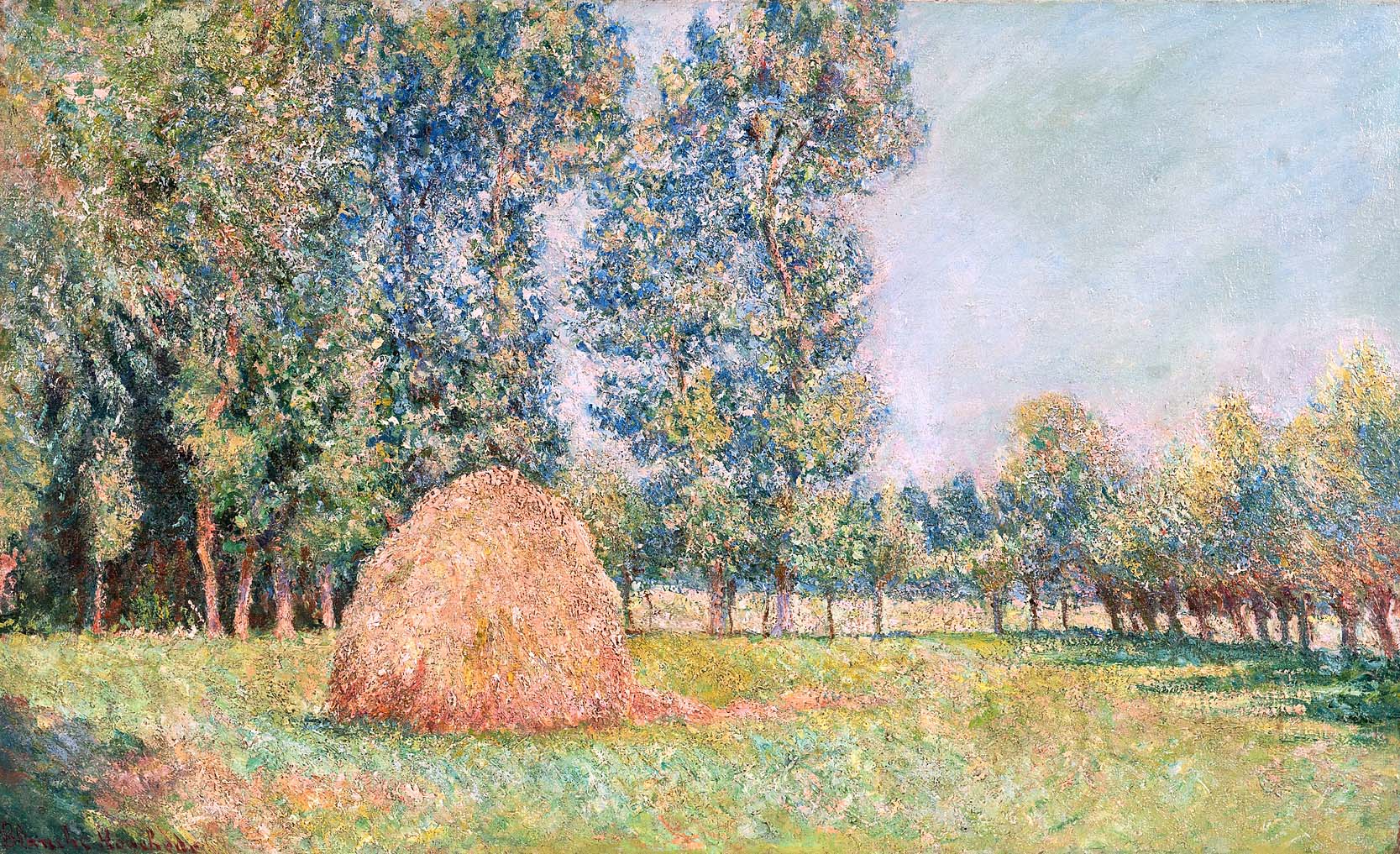
“Haystack at Giverny” by Blanche Hoschedé-Monet, circa 1893, oil on canvas, 19⅞ by 32½ inches. Alice and Rick Johnson 2026.07.
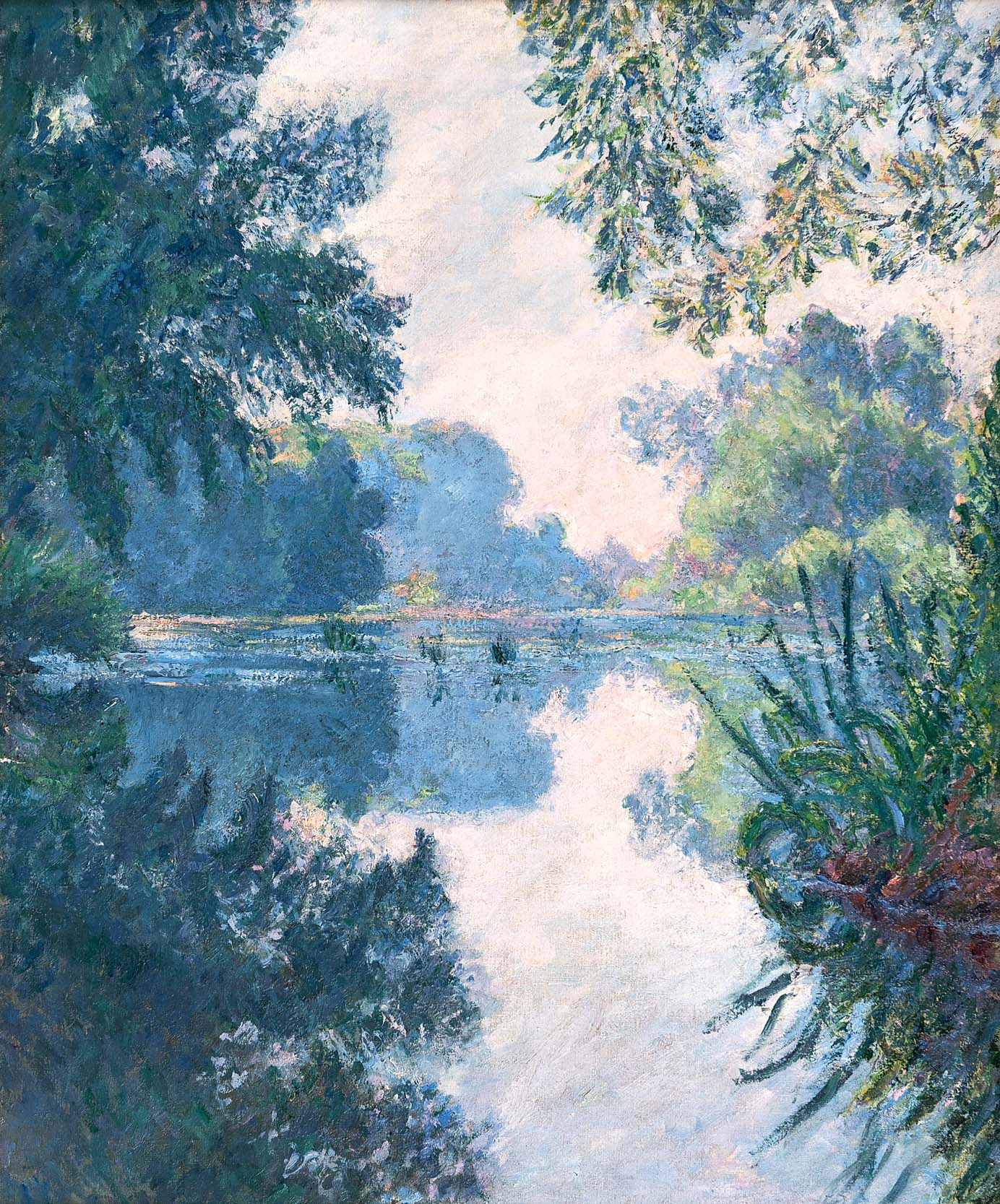
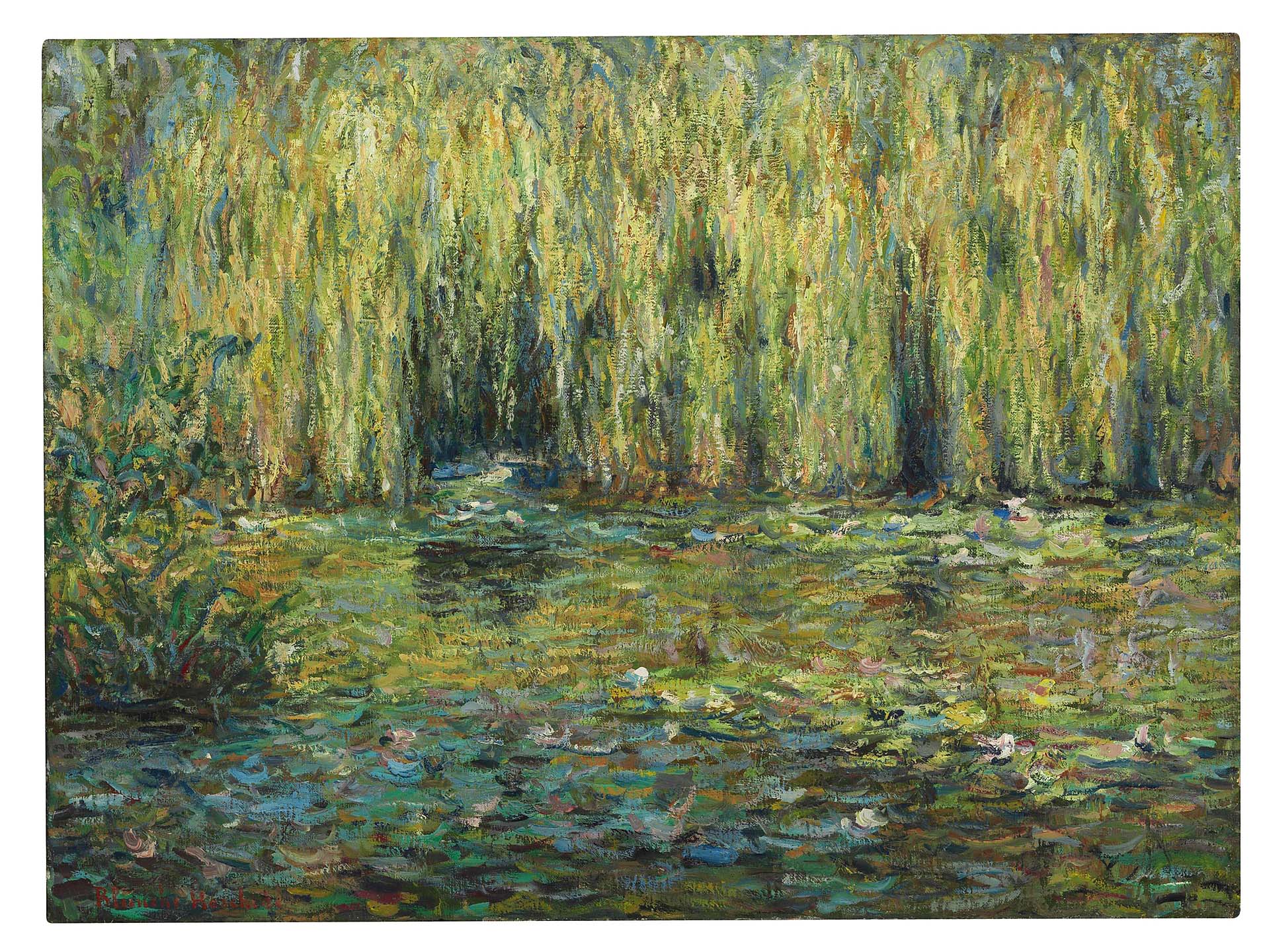
Some of the connections are familial ones, as the names suggest. The Morisots were sisters, the Bracquemonds were married, and Hoschedé-Monet was both the stepdaughter and daughter-in-law of Claude Monet. Berthe Morisot, in turn, married a brother of the painter Édouard Manet, for whom she frequently posed. All were friends or at least acquaintances and frequently visited one another’s country homes — another accessible travel outlet for female painters of the time. The towns along the Seine — including Giverny, where Monet famously made his long-term home and studio into its own aesthetic project — emerge and reemerge as subjects in the work of women impressionists, as in Hoschedé-Monet’s “Morning on the Seine” (circa 1986) and “The Weeping Willows on the Lily Pond at Giverny” (1893-97).
Meanwhile, Cassatt was creating her own habitable work of art at Beaufresne, about 45 miles north of Paris, much as Monet was doing Giverny. Morisot, it bears noting, was also passionate about her own garden at Bougival, the setting of “The Lesson in the Garden” from 1886. Kelly devoted a chapter in the catalog, “My Place in the Country,” and the final section of the exhibition to Cassatt at Beausfresne.“Cassatt is essentially a figure painter; I’m not denying that,” Kelly acknowledged to those doubtful about casting her as a landscapist. Still, he said, “When you go to Beaufresne you realize that the land and her [vocation] as a gardener are really important to her practice,” adding that quantities of her correspondence, mostly unpublished, demonstrate how “she thought of her roses and flower beds as like an artist palette.”
Kelly sees in Cassatt’s work — and much of Morisot’s, and other artists in the exhibition — a “narrative of figures within the landscape” that makes them relevant for inclusion in this exhibition. He proposes an intermediary genre — neither pure figure studies or pure landscape but peopled landscapes — which, Kelly argued, can be broad enough to include large-scale figures. Looking at Impressionist paintings in this integrated way, it becomes clear that there is, in fact, no bright line landscape and figure painting, literally or metaphorically; this is no less apparent in the tiny figures of Morisot-Pontillon’s “Women in Woods” than in the rich greenery of Cassatt’s “Mother and Child in a Boat.” What Sylvie Patry wrote in her catalog essay on Berthe Morisot at Bougival offers a meaningful lens through which to view the work of all the women Impressionists in this exhibition: “Grass and flowers were not merely a verdant background but a subject in themselves, vibrant, moving, powerful and inseparable from her figures.”
Following its close in St Louis, the exhibition will travel to the Minneapolis Institute of Art, where it will open March 6.
The Saint Louis Art Museum is at 1 Fine Arts Drive. For information, www.slam.org or 314-721-0072.