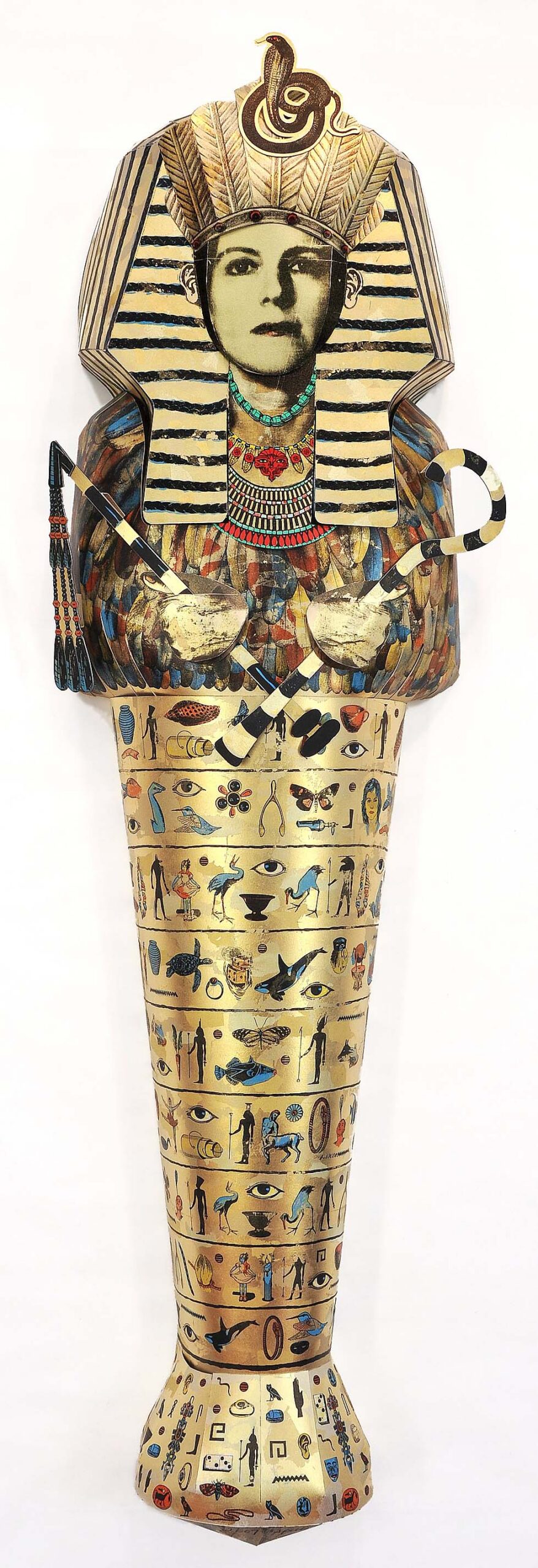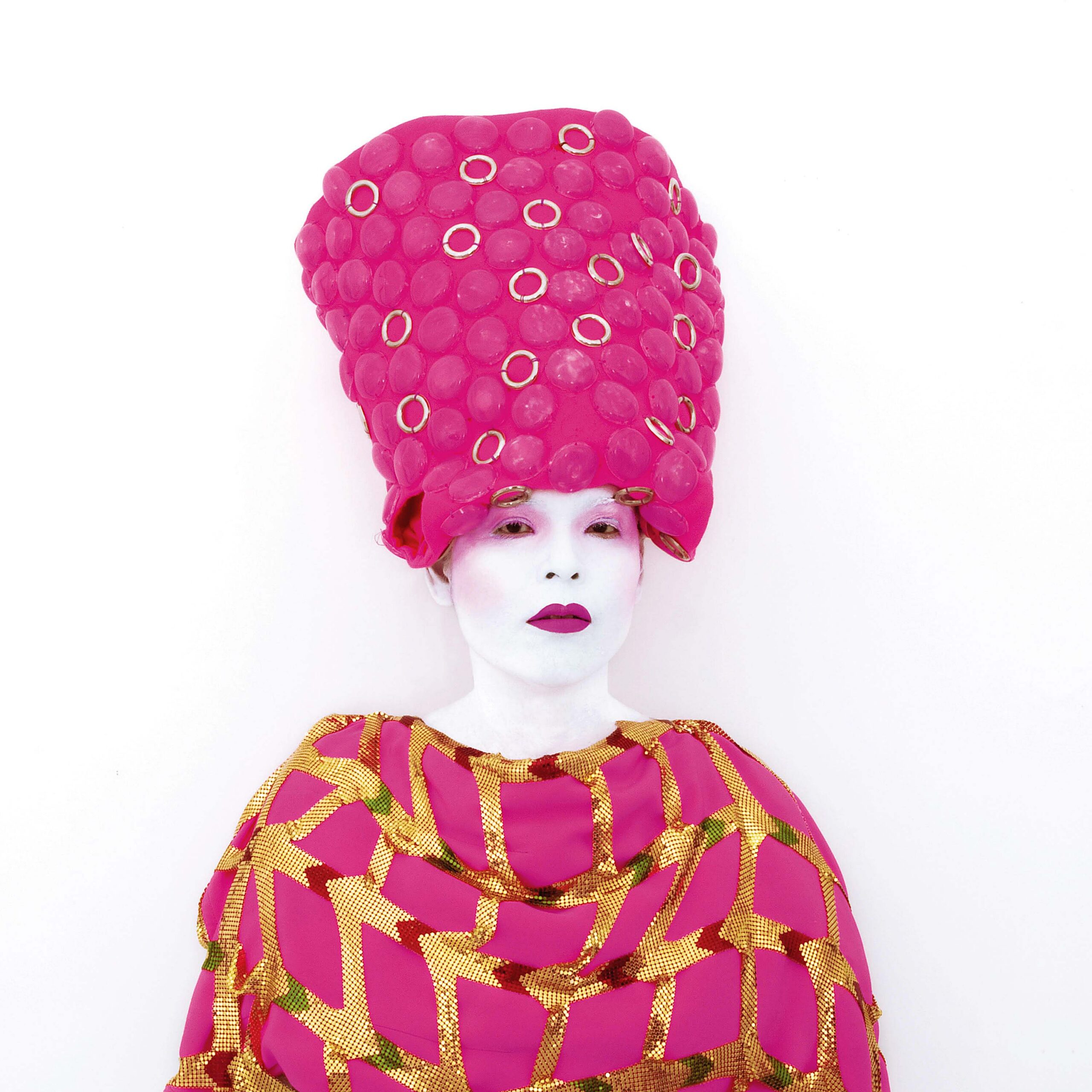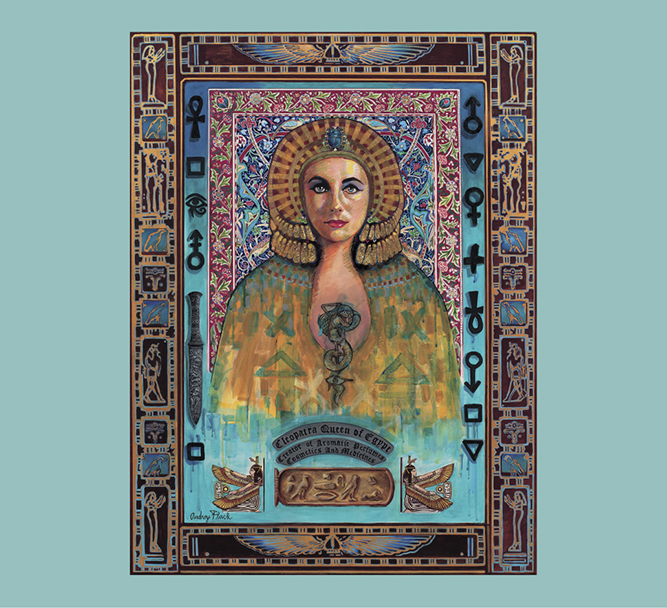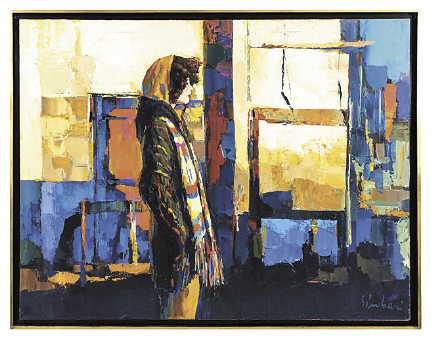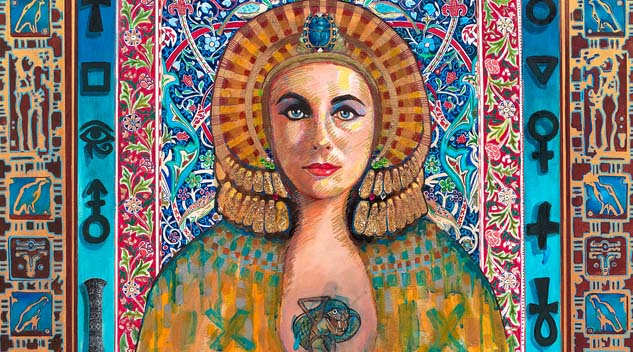
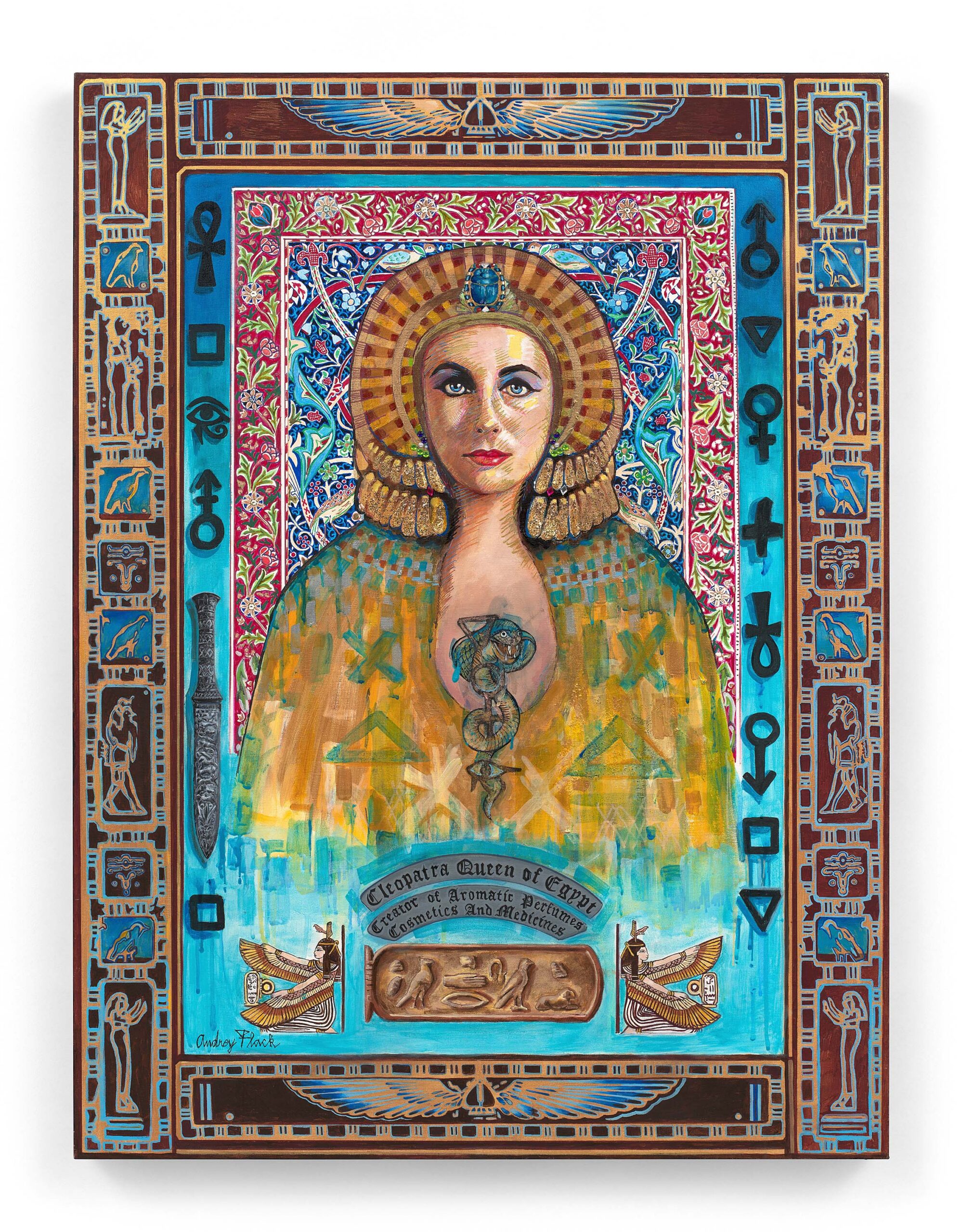
“Lux Eternal” by Audrey Flack, 2022, acrylic and mixed media on canvas. Courtesy of the Audrey Flack Foundation. © Audrey Flack Foundation.
By Linda Tuccio-Koonz
FAIRFIELD, CONN. — The world was captivated by the 1922 discovery of the tomb of King Tutankhamun. You probably know him best as King Tut, the teen pharaoh whose mummified remains were laid to rest inside a gold coffin.
But even before this legendary find, people were fascinated by ancient Egyptian art and culture. Europeans of the Nineteenth Century dubbed it “Egyptomania,” and it persists today. Have you ever seen a mummy movie or Steve Martin’s King Tut dance? Can you picture Elizabeth Taylor in her role as Cleopatra?
The Egyptomania phenomenon is explored in “Hieroglyphs to Hype: The Modern Afterlife of Ancient Egypt,” on view through December 12 at the Fairfield University Art Museum.
“The exhibition looks at how Egyptomania has influenced representations of ancient Egypt,” said curator Megan Paqua, an adjunct instructor of ancient Egyptian archaeology and art history at Fairfield University.
More than 50 paintings, prints, photographs and works of decorative art from the early 1800s to present day are featured. “Many of the works reflect popular ideas about ancient Egypt that developed due to Egyptomania and were often highly simplified or stereotyped,” Paqua said.
“I wanted to put those representations in dialogue with what archaeology tells us today. The exhibition can’t undo two centuries of cultural assumptions about ancient Egypt. But I hope it helps visitors recognize where those assumptions come from and think more critically about them.”
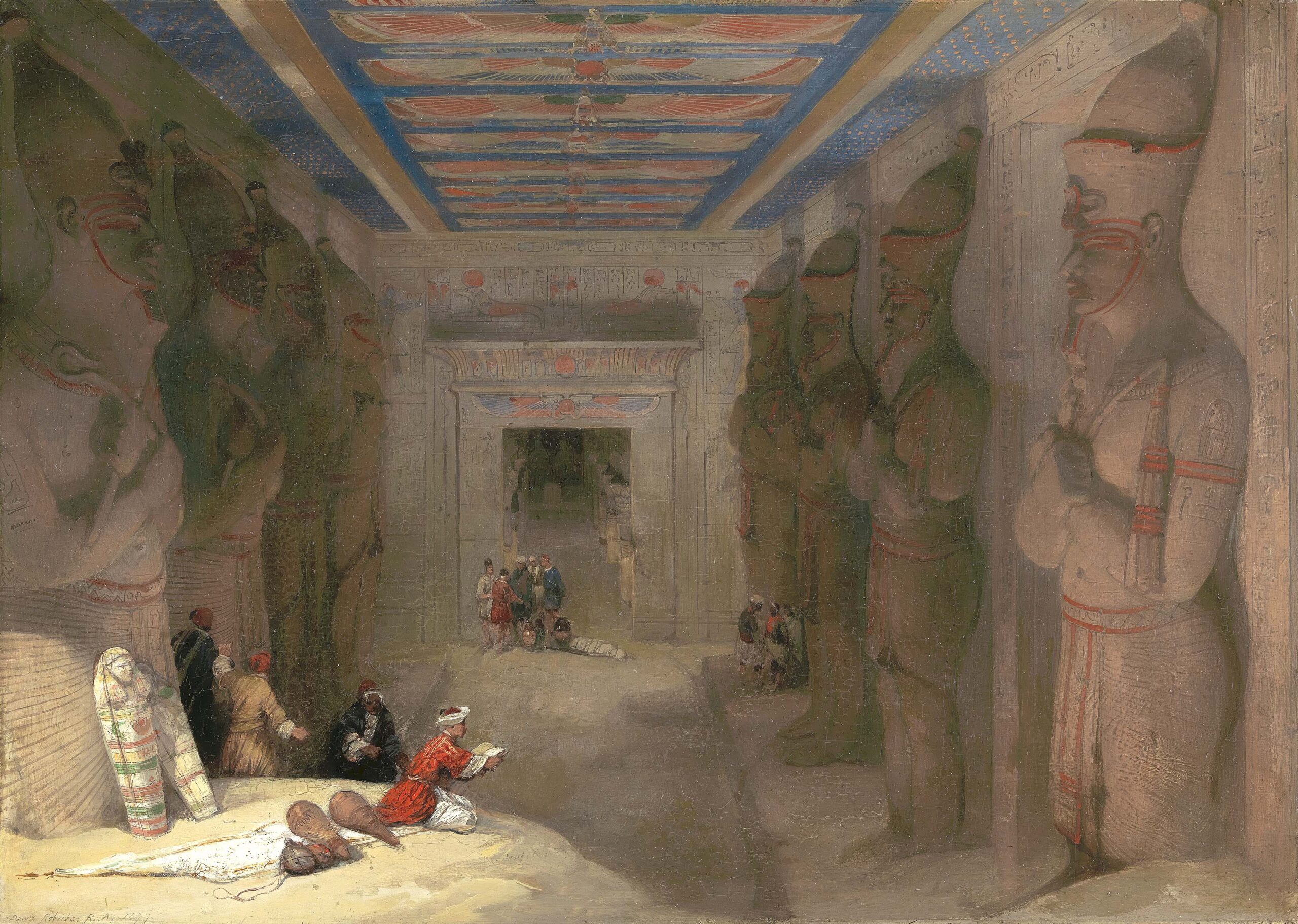
“The Hypostyle Hall of the Great Temple of Abu Simbel, Egypt” by David Roberts, 1849, oil on panel. Yale Center for British Art, Yale Center for British Art, Paul Mellon Collection, B1981.25.534. Image courtesy of Yale Center for British Art.
Influences of Egyptomania are seen in David Roberts’ 1849 painting “The Hypostyle Hall of the Great Temple of Abu Simbel, Egypt.” An interesting aspect is “the combination of careful archaeological observation and deliberate theatricality,” Paqua explained.
“David Roberts traveled through Egypt in 1838, making sketches of the monuments he encountered, and he reproduced many of the architectural details of Abu Simbel quite closely,” she continued. Viewers can see massive figures of Ramses II incorporated into the pillars. The ceiling includes images of the goddess Nekhbet as a vulture.
“But Roberts had also worked as a theatrical set designer, and you can see that influence in the way he stages the scene. The brightly dressed Nineteenth Century figures weren’t part of the ancient temple, of course; they were added to make the composition more dramatic and picturesque,” Paqua added.
“One detail I particularly like is the merchant apparently offering two stone coffins for sale, which may be a sly reference to the antiquities trade catering to European travelers like Roberts himself,” she said.
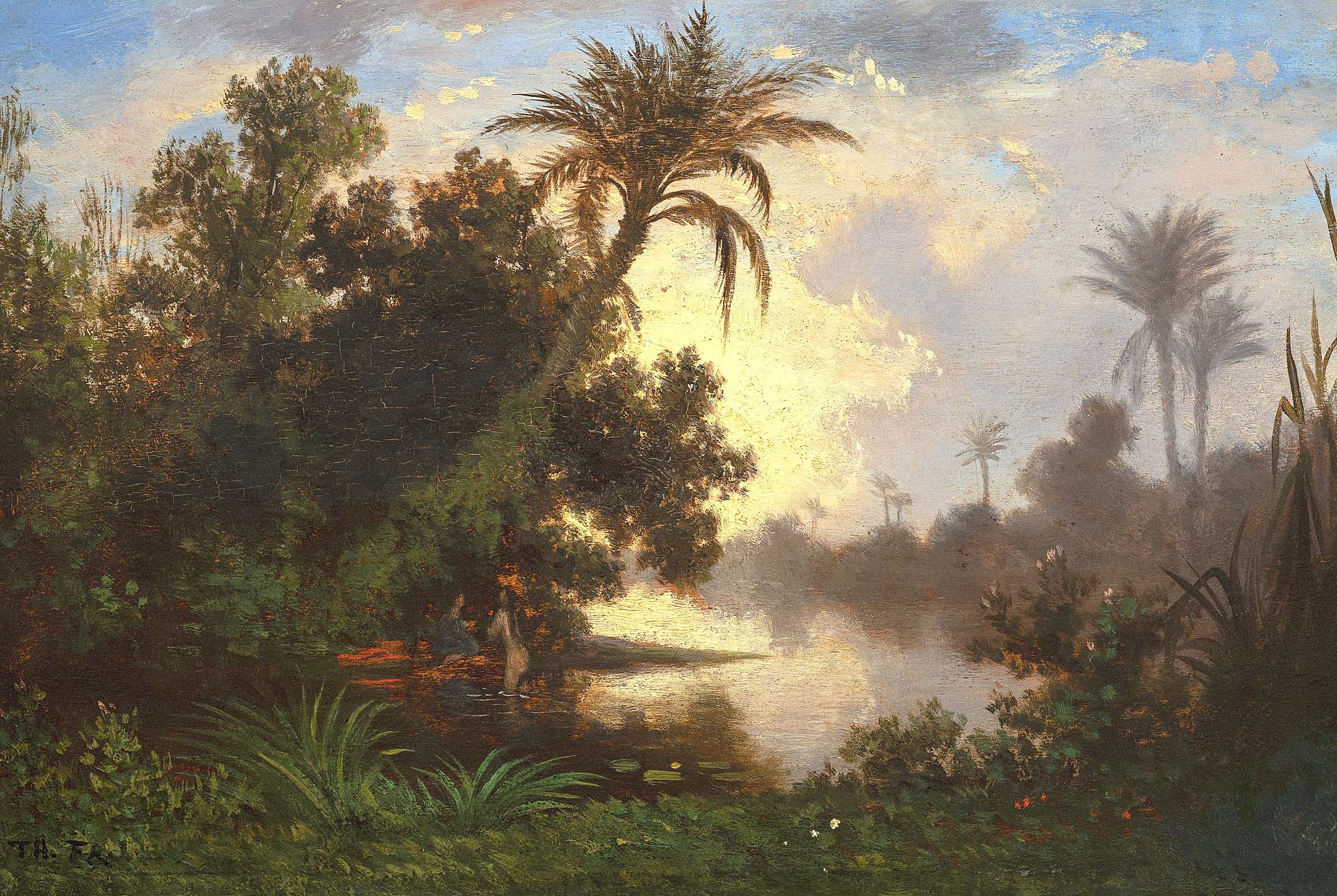
“Along the Nile” by Charles-Théodore Frère, circa 1870, oil on panel. Fairfield University Art Museum, gift of Michael T. Vigario ‘08, 2023, 2023.11.01.
That’s important to the exhibit because “Roberts is recording a real ancient monument, but he is also shaping it into the kind of exotic, visually dramatic image that Nineteenth Century European audiences expected from Egypt.”
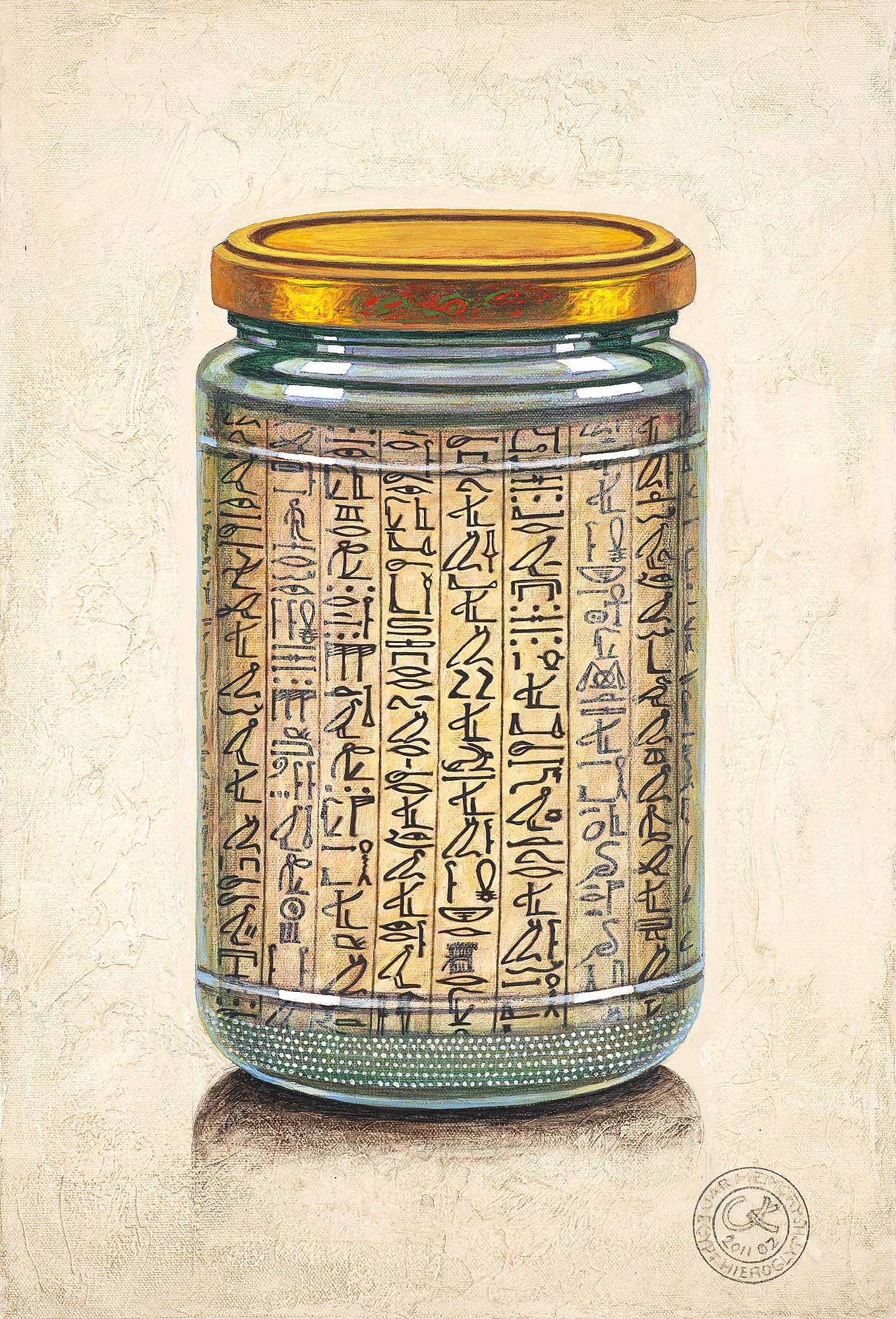
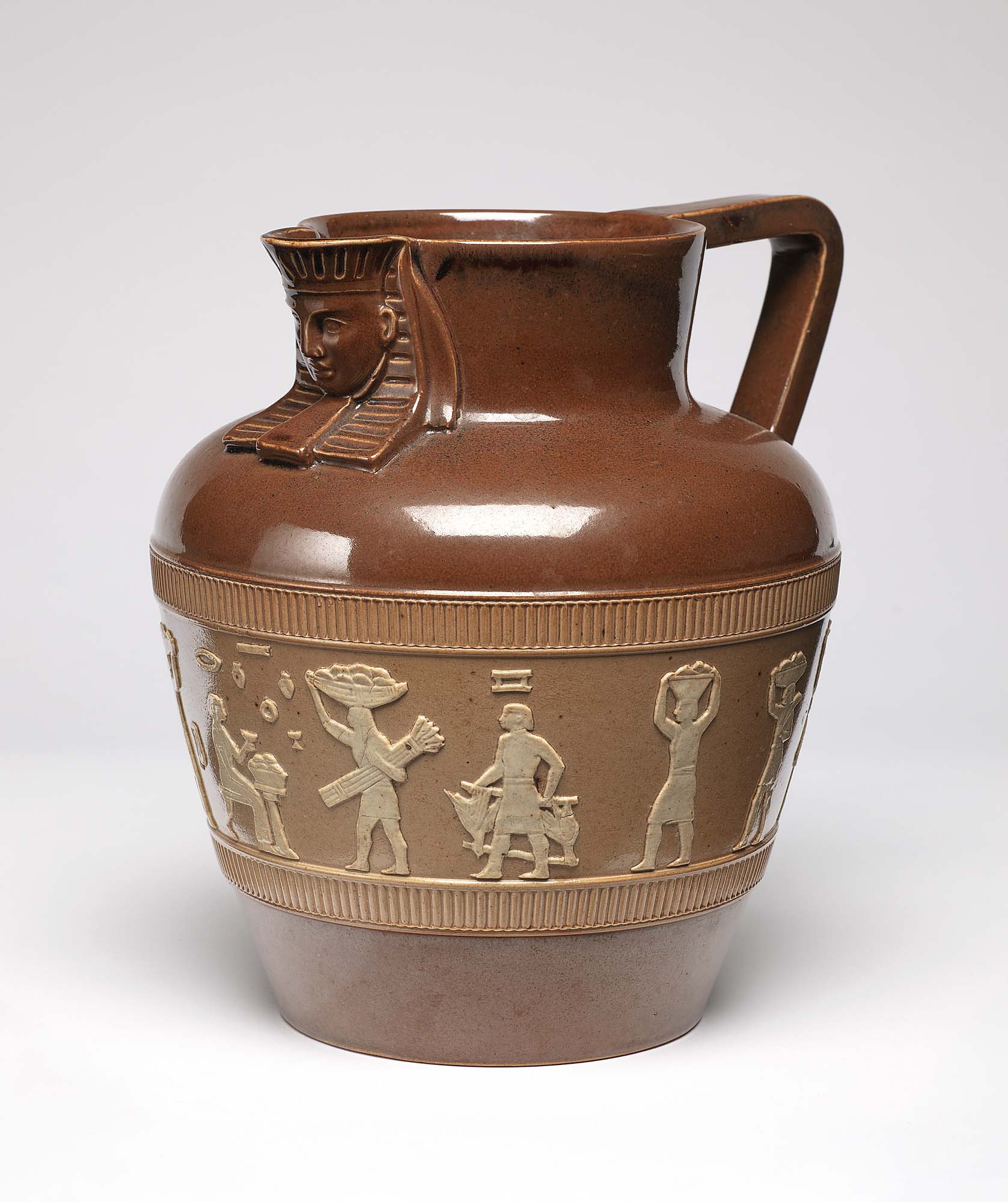
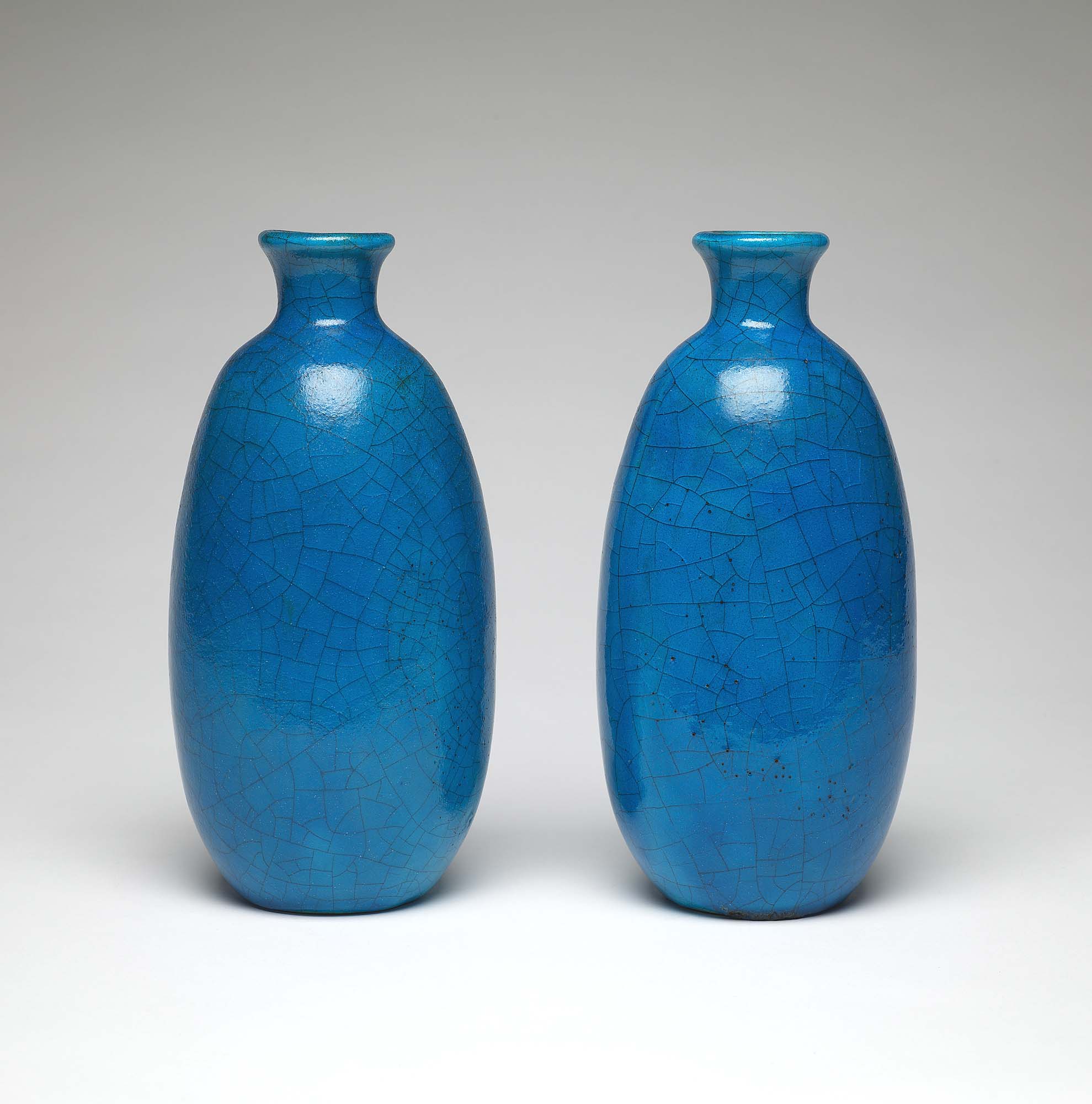
“Hieroglyphs to Hype” features all kinds of objects: think everything from humble and refined to the shamelessly commercial. They represent the range of artistic responses to — and misconceptions about — ancient Egyptian culture.
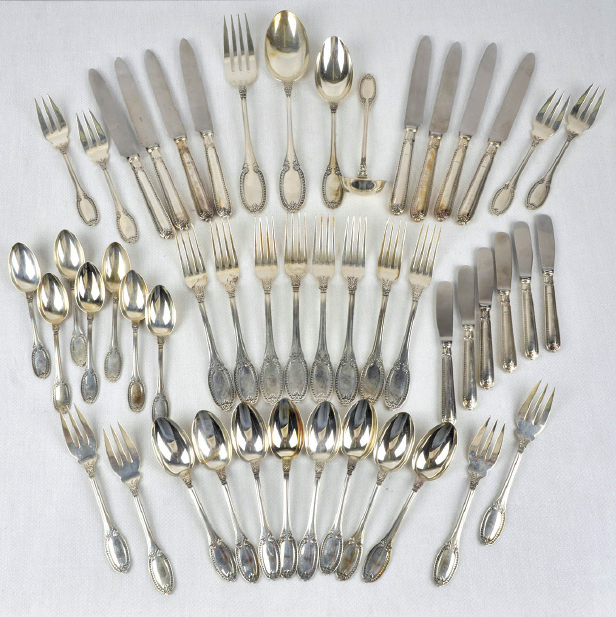
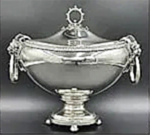
Among the items are silver candlesticks, First Empire Egyptianizing candle holders, circa 1800-10, and sterling silver Egyptian Revival lotus spoons from 1865.
There’s also a colorful circa 1910 Helmar Turkish Cigarettes box — an example of how ancient Egyptian imagery was used to sell a variety of products — from the Egyptian Ideal Cigarette and Tobacco Works. “We included it to point out that Egyptomania was not limited to fine or decorative arts but also advertising, which allowed it to further infiltrate popular imagination,” Paqua noted.
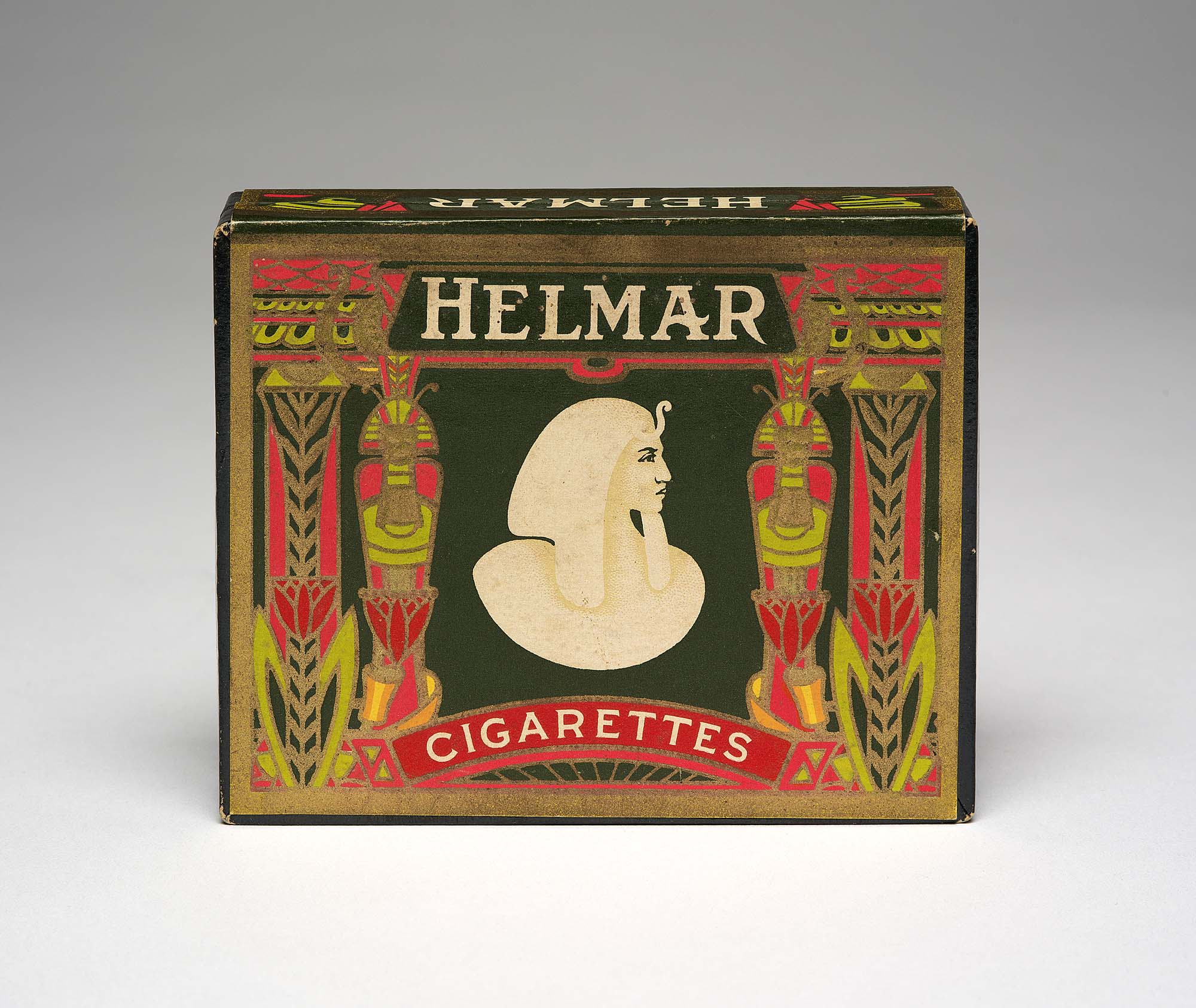
Vintage Helmar Turkish Cigarettes box, Egyptian Ideal Cigarette and Tobacco Works, circa 1910. Lent by Benjamin Ortiz & Victor P. Torchia, Jr.
A common misconception is that ancient Egyptians were unusually preoccupied with death. “In reality, their elaborate funerary practices were much more about eternity than about death itself,” she added. “The ideal afterlife was imagined in many ways as a perfected continuation of life on earth, so preserving the body, remembering the deceased, and preparing for the afterlife were enormously important.” A favorite piece which plays with this idea is Patrick Nagatani’s “Mummified Porsche, From the Area of the Tomb of Horemheb, Saqqara, Egypt (R3/+).” As Paqua explained, “In this case, the object being prepared for eternity just happens to be a Porsche.”
Of course, Cleopatra VII makes multiple appearances in this exhibition. James Henry Haseltine explores her looks (rather than her reign) in his circa 1868 white marble creation, “Cleopatra.”
“What I find particularly interesting about this sculpture is the way Haseltine transforms Cleopatra from a specific historical person into a Nineteenth Century Western fantasy of an Egyptian queen,” Paqua said. “He gives her recognizably Egyptian attributes, including the vulture headdress and broad collar, but those elements have been heavily stylized. The collar, for example, becomes strands of pearls decorated with Egyptianizing motifs such as the winged sun disk, cobras and the scarab beetle.”
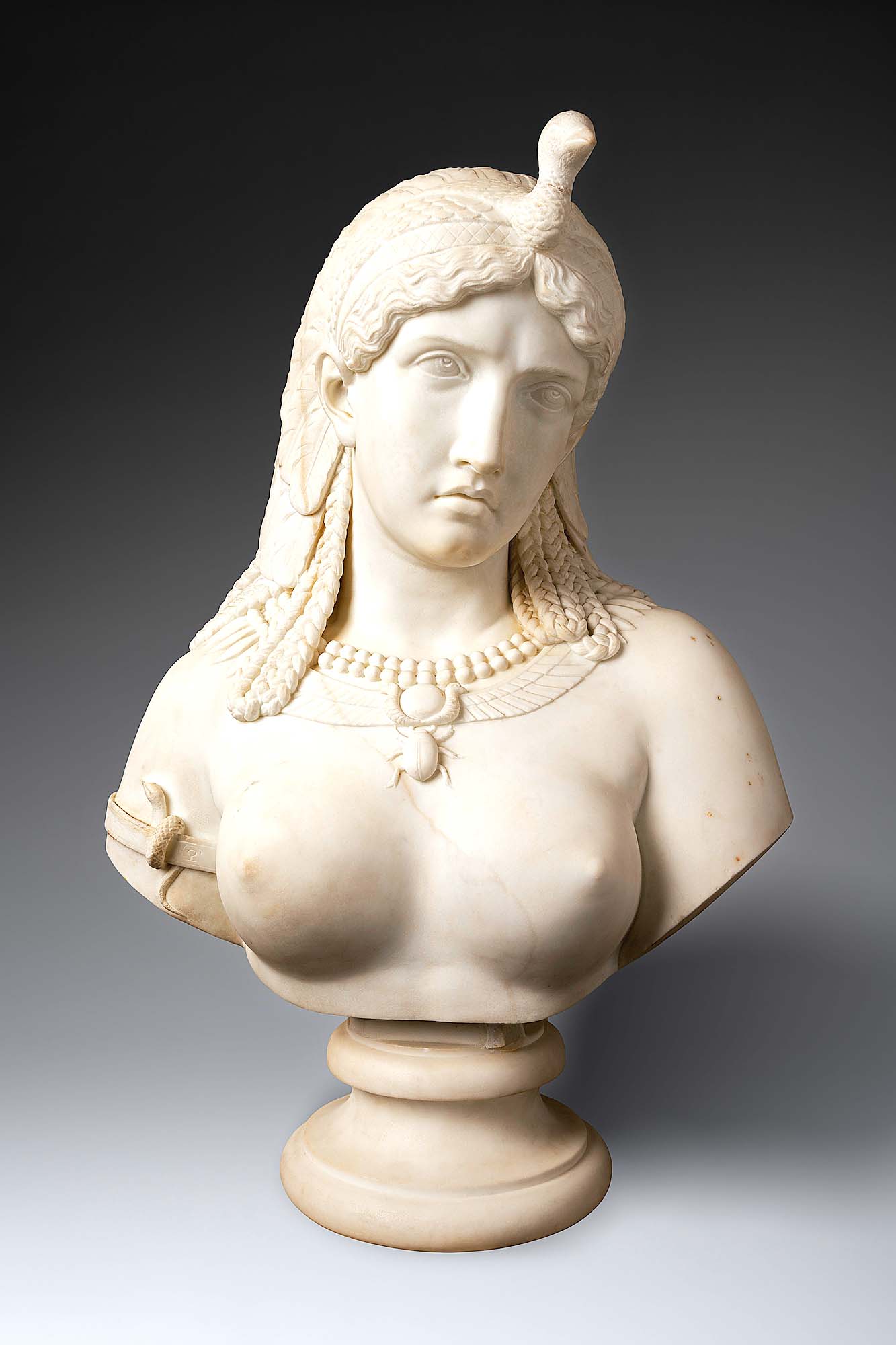
“Cleopatra” by James Henry Haseltine, circa 1868, white marble. Lent by Jack and Mary Ann Hollihan.
Such symbols immediately tell a Western viewer that this woman is “Egyptian” and therefore exotic, mysterious and different. Yet she’s been given features and an idealized beauty that would have been familiar and appealing to Nineteenth Century audiences.
The sculpture isn’t trying to reconstruct what Cleopatra VII looked like or who she was historically. “Instead, it shows us how Nineteenth Century Western culture imagined Cleopatra — and how Egyptian symbols could be detached from their original meanings and repurposed to create an alluring, exotic fantasy.”
Also alluring is Audrey Flack’s “Lux Eternal,” a depiction of Elizabeth Taylor as Cleopatra from the epic 1963 film. Taylor portrayed the renowned ruler as a tragic seductress. Flack’s acrylic and mixed media on canvas painting is from 2022.
Additionally, Cleopatra’s demise is explored in István Szilágyi Nagy’s porcelain piece, “The Death of Cleopatra + Snake Bite,” circa 1930-40. Legend suggests she took her life with help from a poison viper, but Paqua said there’s no proof.
The lure of the Nile is represented in several artworks; one is Charles-Théodore Frère’s “Along the Nile,” circa 1870. This French Orientalist painter visited Egypt several times. “Along the Nile” was painted after his final trip in 1869, when he joined other artists accompanying Empress Eugénie for the opening of the Suez Canal.
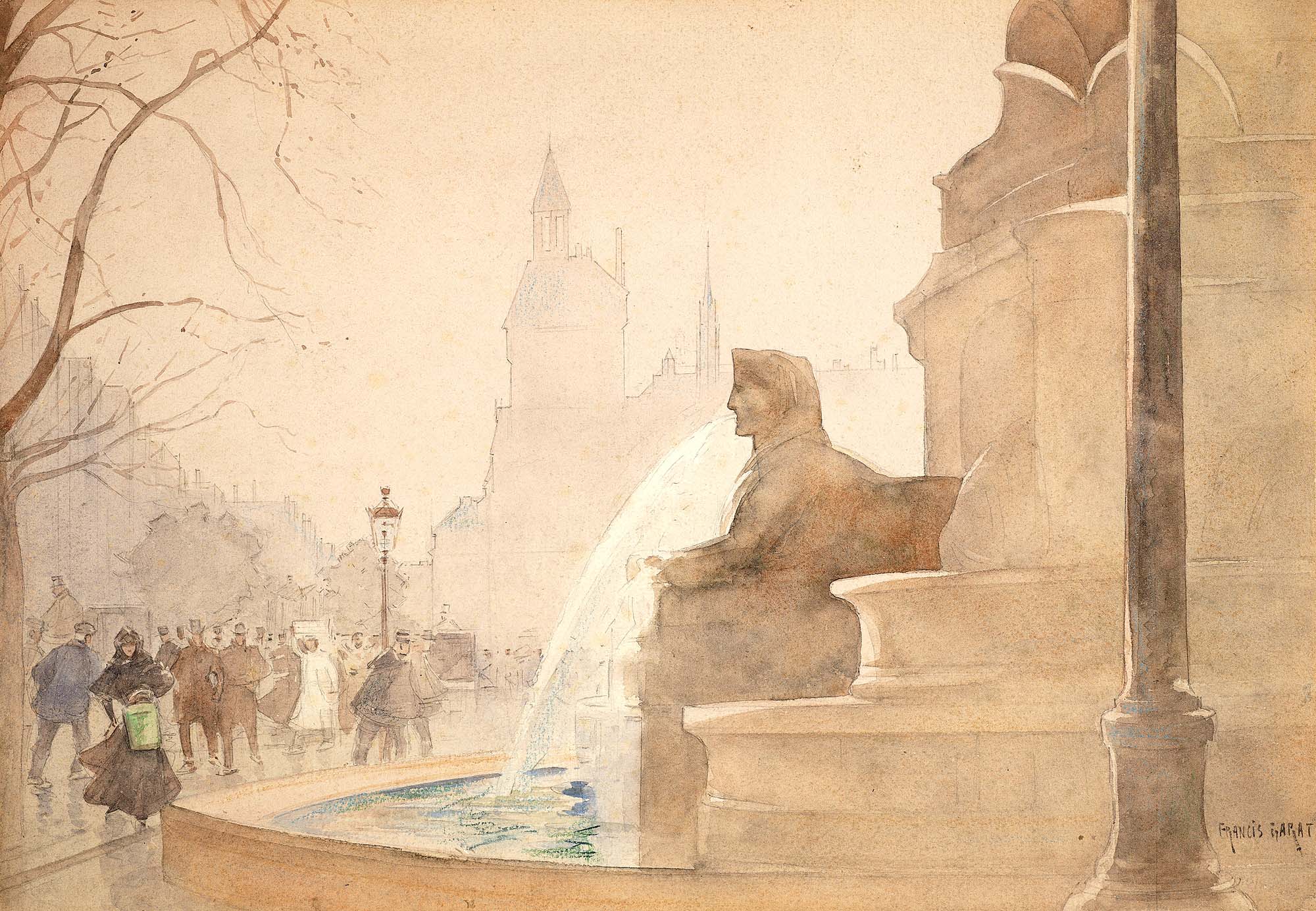
Untitled (View from the Egyptian-Fountain, Paris) by Francis Garat, circa 1890-1900, pencil and watercolor on paper. Lent by Benjamin Ortiz & Victor P. Torchia, Jr.
“Frère was working within a much broader European fascination with Egypt that had intensified after Napoleon Bonaparte’s campaign there at the end of the Eighteenth Century,” Paqua said. “The scholars who accompanied Napoleon documented Egypt’s monuments, landscapes, and material culture in enormous detail, and their work was later published in the monumental Description de l’Égypte.”
Speaking of Napoleon, a fountain he commissioned in 1806 — the Fontaine du Palmier in Paris — is depicted by Francis Garat in an untitled pencil and watercolor, depicting a view from the Egyptian-Fountain, Paris, circa 1890-1900. Paqua said the fountain was meant to celebrate Napoleon’s victories, including the 1798 “Battle of the Pyramids” during his campaign in Egypt. “The sphinxes at the base were actually added later, in 1858 during the reign of Napoleon III, which shows just how long Egyptian imagery remained popular in France after the original expedition.”
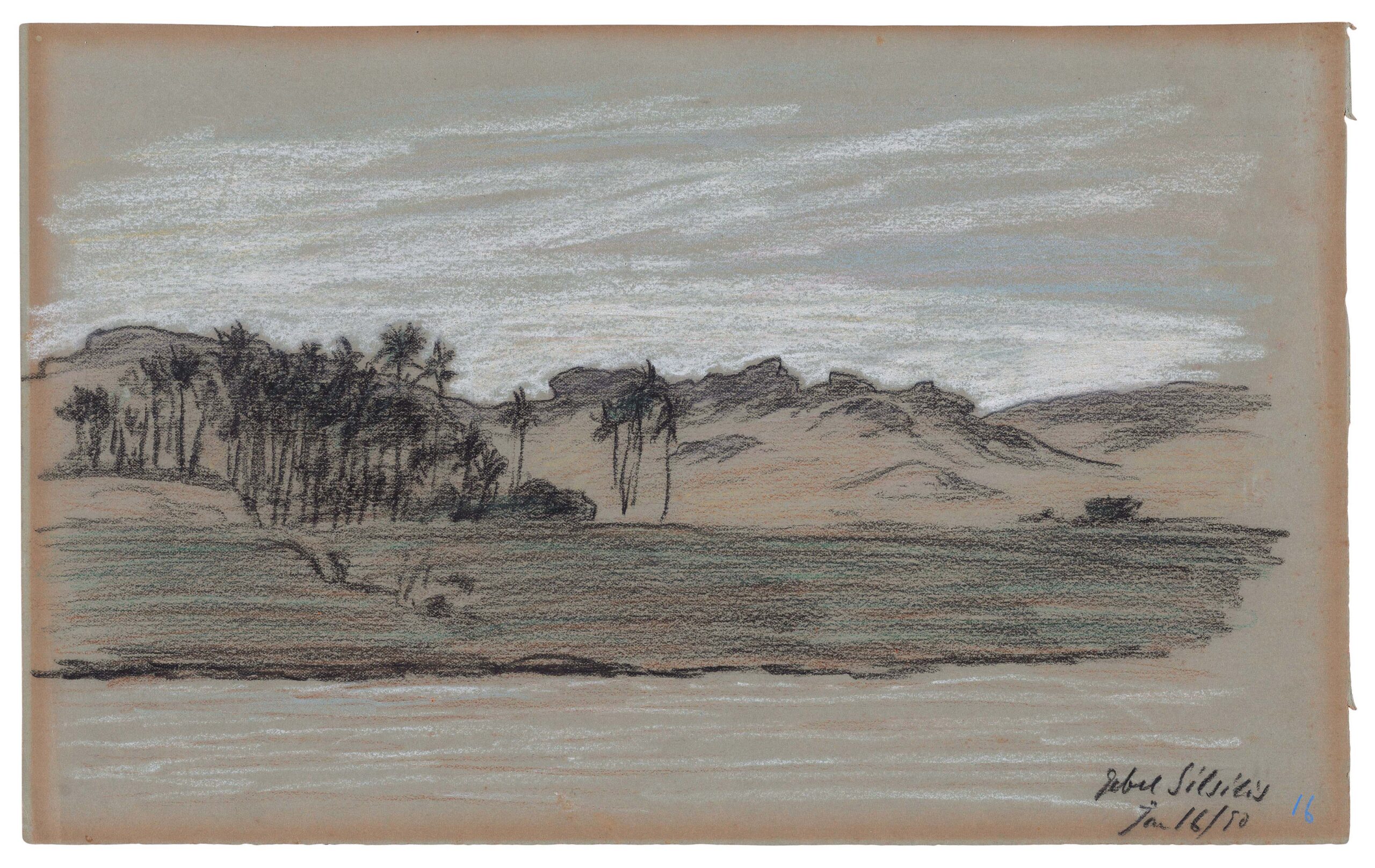
The Nile appears again in Elihu Vedder’s 1890 “Nile Scene,” a pastel on blue paper, and in the print, “General View of the Ruins of Luxor from the Nile,” from David Roberts’ 1838 travels. Roberts’ print shows ancient monuments, but with traditional wooden sailing boats (feluccas) in the foreground. Paqua said similar vessels remain today, commonly used for sightseeing.
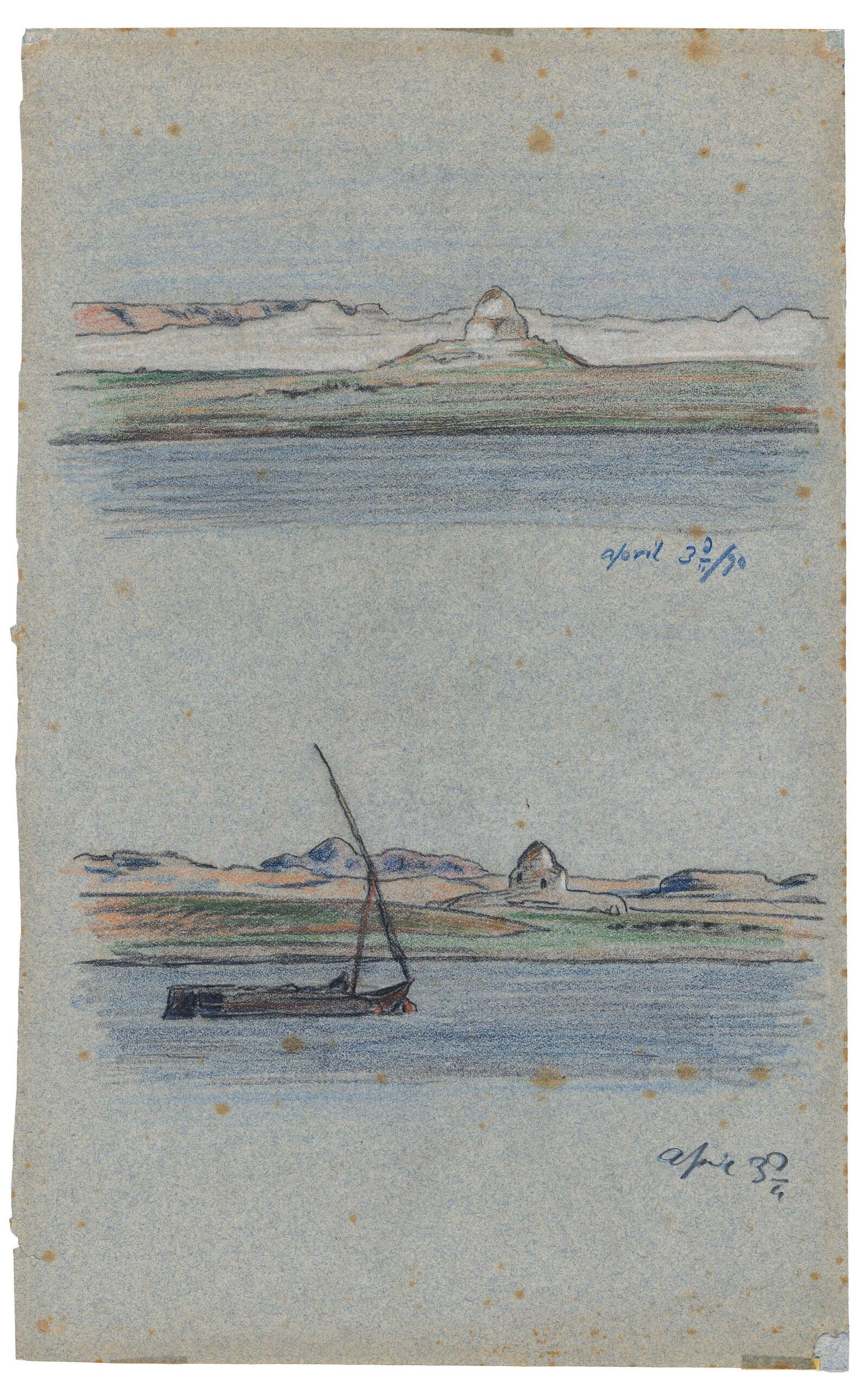
“Nile Scene, April 3, 1890” by Elihu Vedder, 1890, pastel on blue paper. Courtesy Jack Shear Collection.
“The boats and figures place the ruins within the actual inhabited landscape of Nineteenth Century Egypt, emphasizing the contrast between the monumental remains of the ancient past and contemporary life along the Nile at the time of his travels,” she said. “The print therefore reflects the travel culture that helped fuel Nineteenth Century Egyptomania, transforming ancient Egyptian sites into recognizable destinations and scenic landmarks within a modern tourist landscape.”
Clearly, Egyptomania lives on. “Ancient Egypt is visually everywhere in modern Egypt — or at least it was in Cairo when I lived there between roughly 2009 and 2015,” Paqua said. It was inescapable — from corner stores selling Cleopatra cigarettes to the Isis laundromat down the street from her apartment, to Tutankhamun on the one-pound coin.
“I see the persistence of Egyptomania in my classroom as well,” Paqua added. She’s yet to teach a class that doesn’t know the 1999 film The Mummy. And undergraduates come in already recognizing the stereotypical “Walk Like an Egyptian” pose and symbols such as the ankh.
“They may not yet know what those images meant in their original ancient Egyptian contexts, but they’ve encountered them often enough to immediately associate them with ancient Egypt. That kind of familiarity is a good example of just how deeply Egyptomania has embedded ancient Egyptian imagery into modern visual culture.”
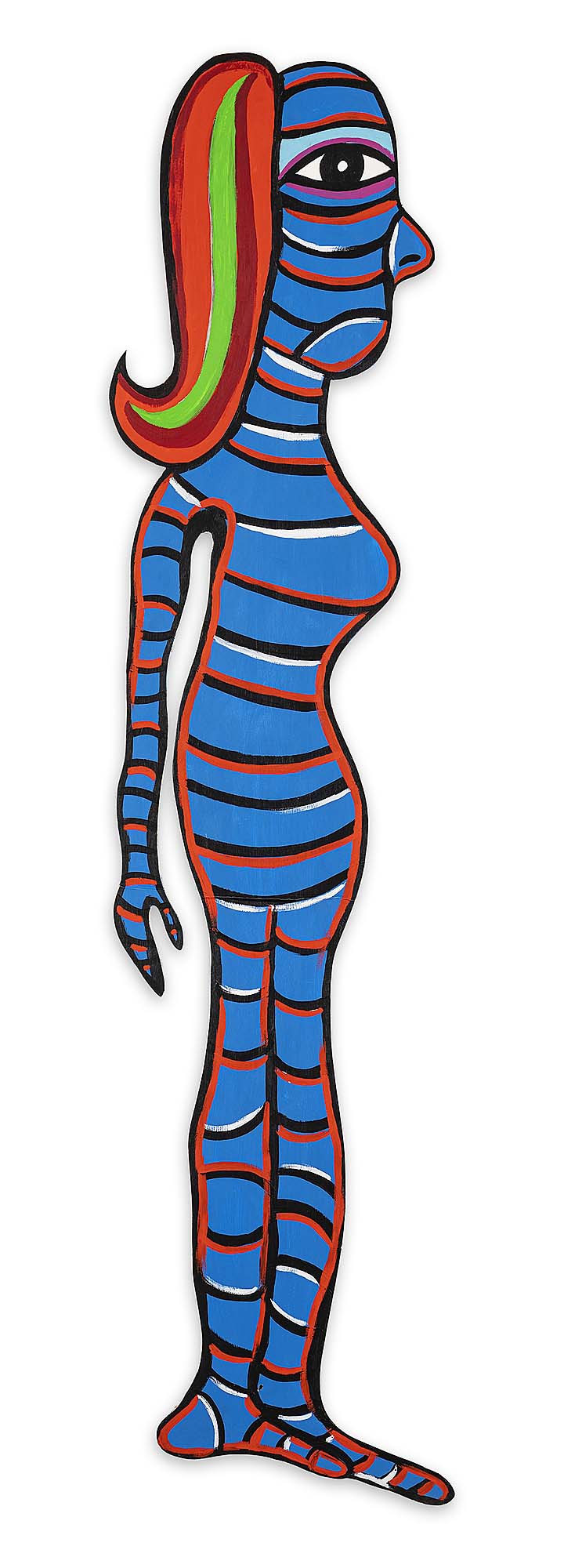
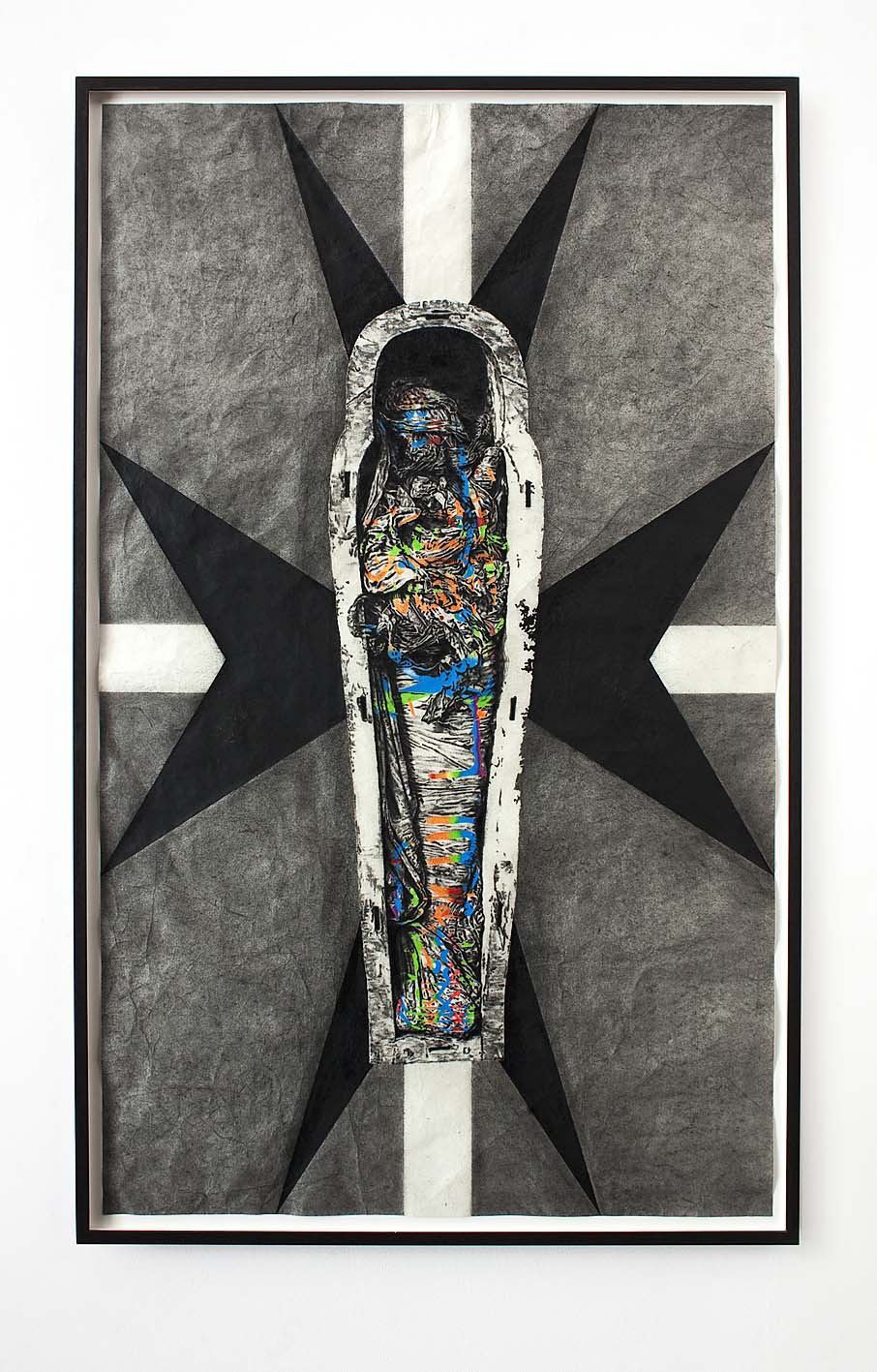
“Mummy No. 2” by Rhonda Wall, 1985, acrylic on foamcore. Housatonic Museum of Art, 2349. © Rhonda Wall. Image courtesy of the Housatonic Museum of Art.
Of course the ways that imagery is used and understood can vary enormously. A concern is that enthusiasm for Egyptian symbols and motifs — pyramids, mummies, pharaohs and hieroglyphs — makes it easy to lose sight of those who created them, contributing to “the erasure of the ancient Egyptian people themselves,” she said.
“Over time popular ideas about ancient Egypt have become more familiar than we know of the reality of ancient Egyptians themselves. That matters because the images and iconography being repurposed from ancient Egypt are not neutral; they shape what we think we already know before we ever encounter the archaeological evidence.”
The Fairfield University Art Museum is at 200 Barlow Road. For information, www.fairfield.edu/museum or 203-254-4046.