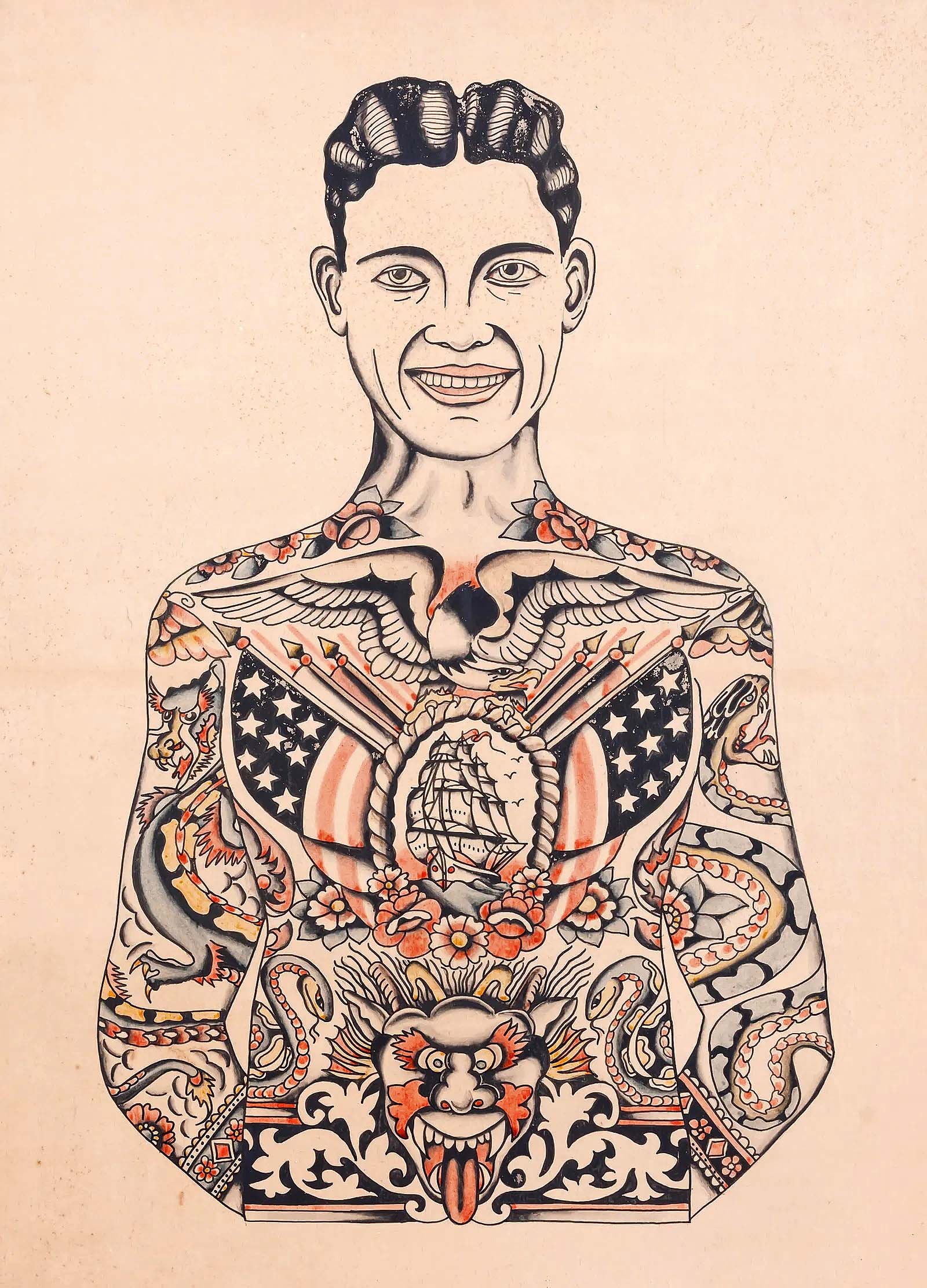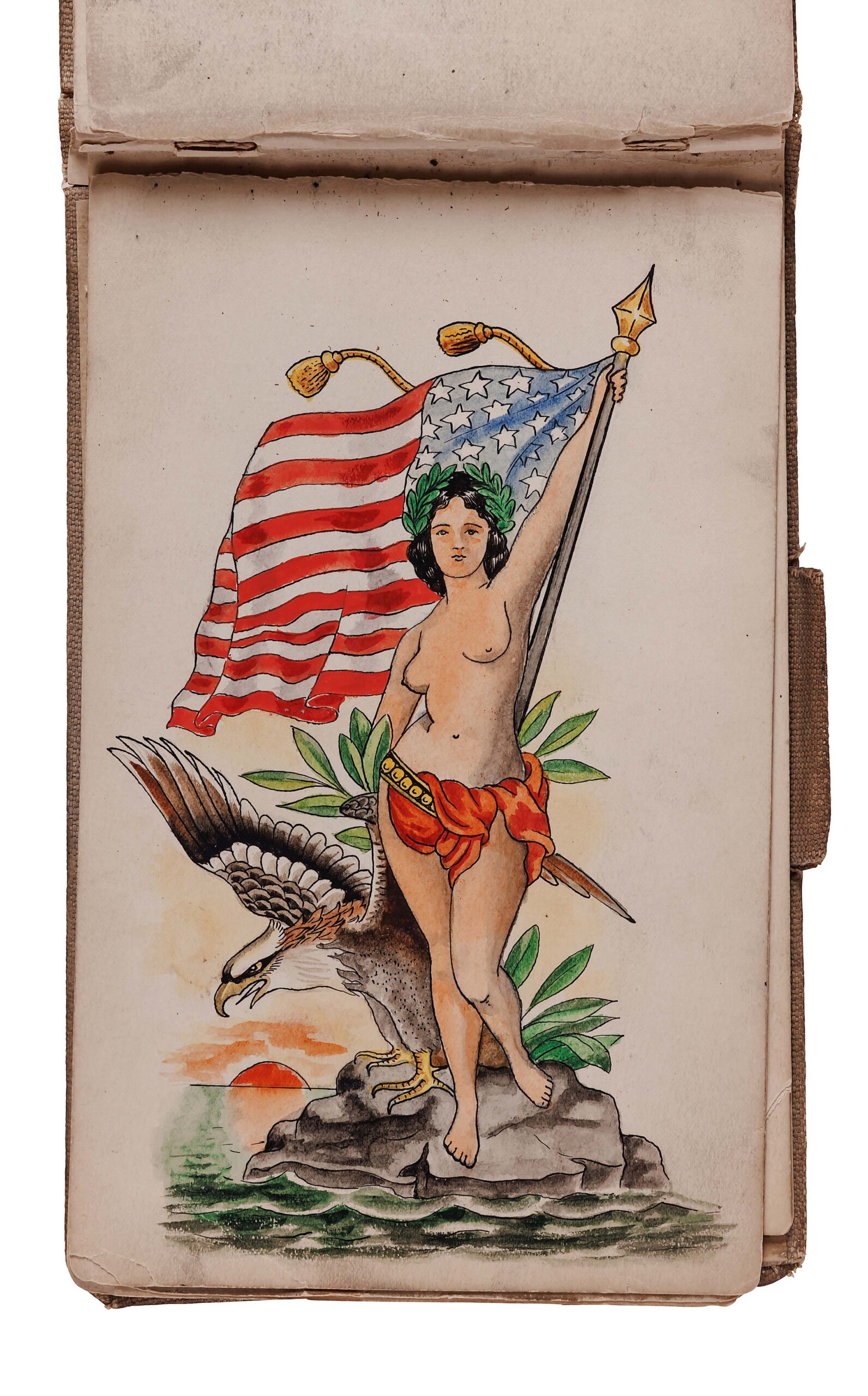
The top lot was this 45-page book of tattoo designs by Ben Corday, circa 1918, which sold just over its $10/20,000 estimate to achieve a record price of $24,600.
Review by Andrea Valluzzo
PORTSMOUTH, N.H. — Bray & Co’s annual Tattoo, Circus, Sideshow & Curiosities auction, now in its fourth year, keeps growing in terms of merchandise, bidders and values. The July 26 sale, comprising just 240 lots, was the firm’s best yet, reaching $500,000 in sales.
Having a background steeped in early American folk art, auctioneer/owner Derin Bray has long had a personal interest in this subject matter and considers this material as fitting into the folk art genre. “A lot of these tattoo artists were itinerant to some degree. Even if they had shops, they might travel to another city or seasonally move and go with the carnival as the case might be,” he said.
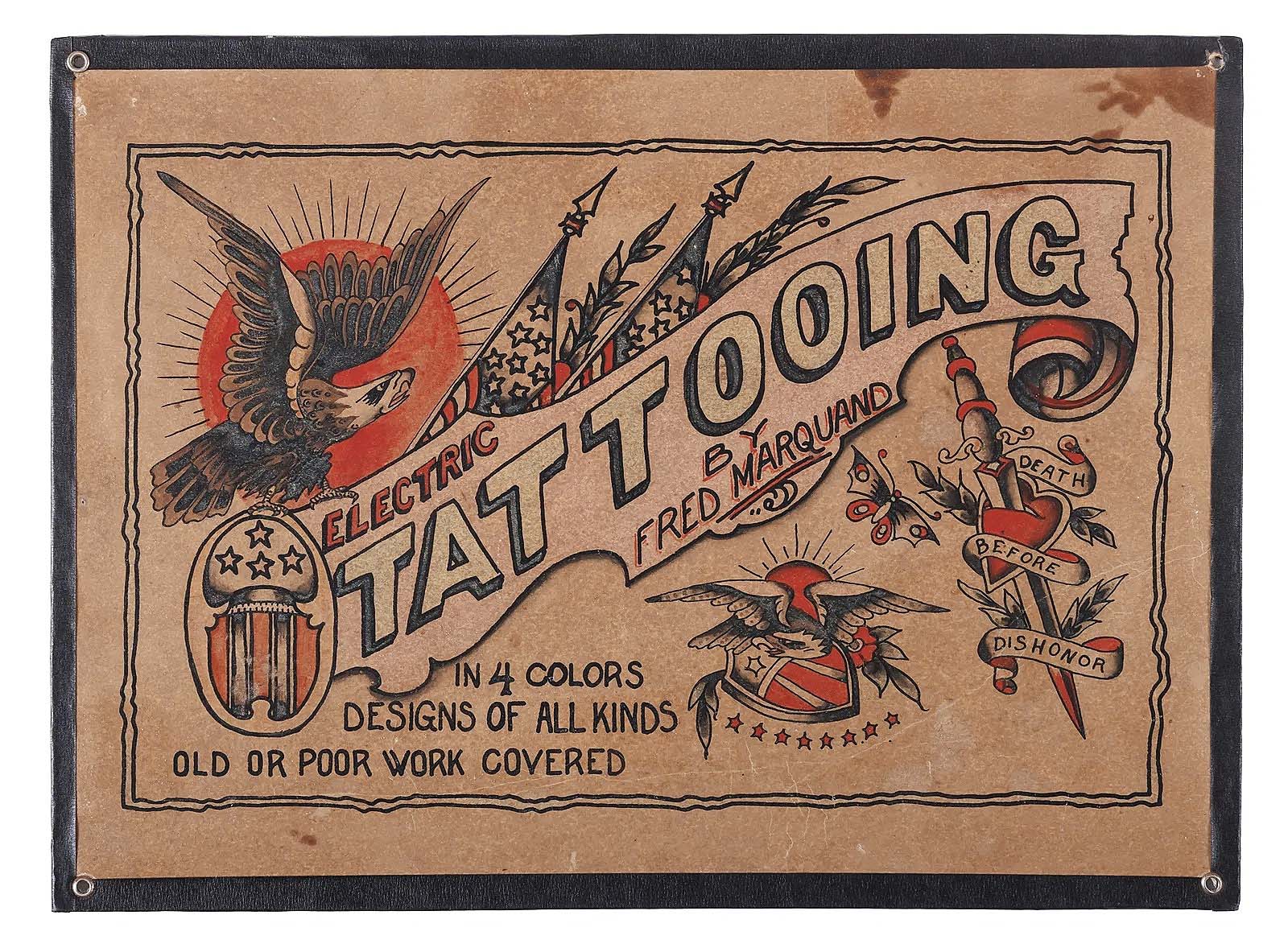
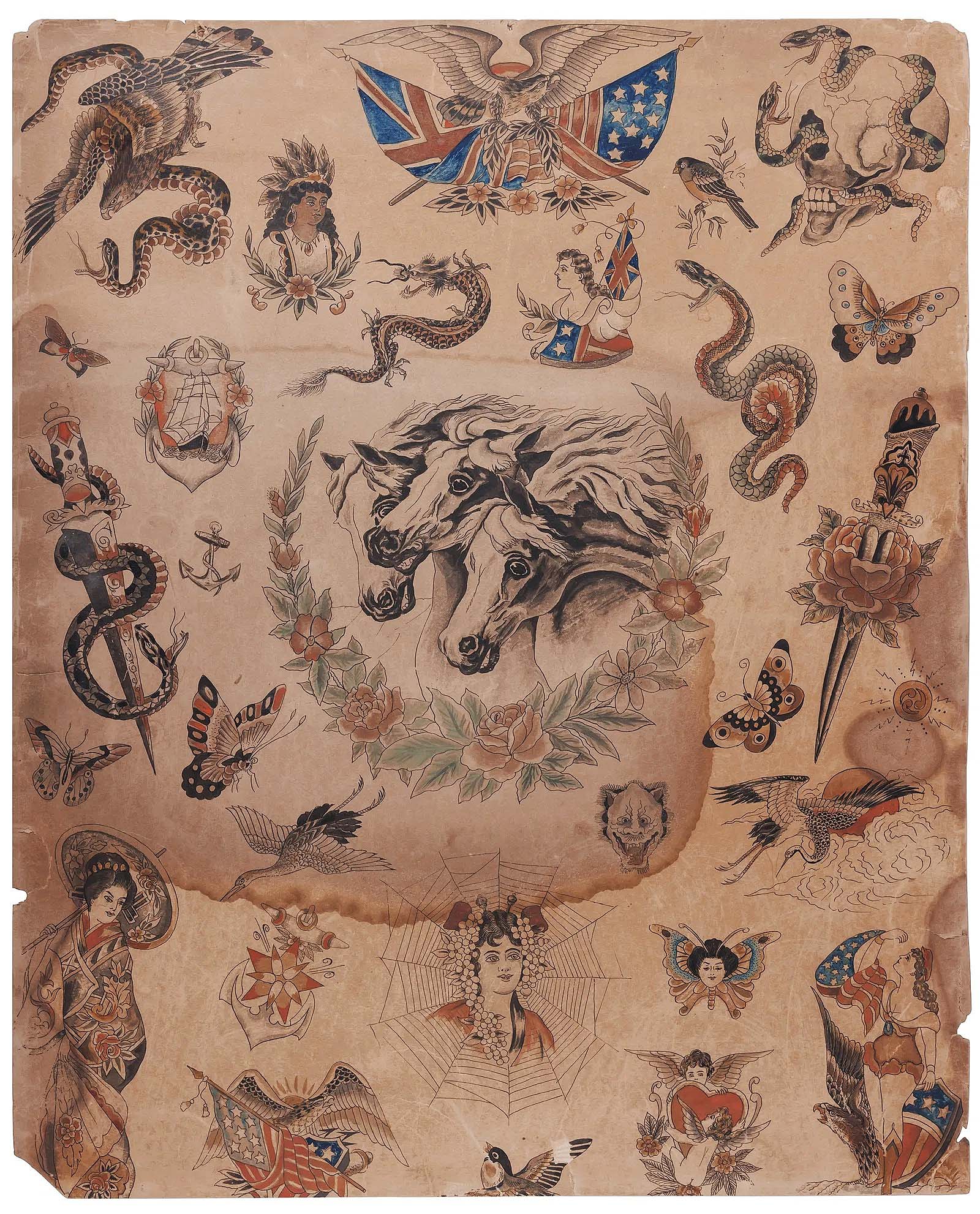
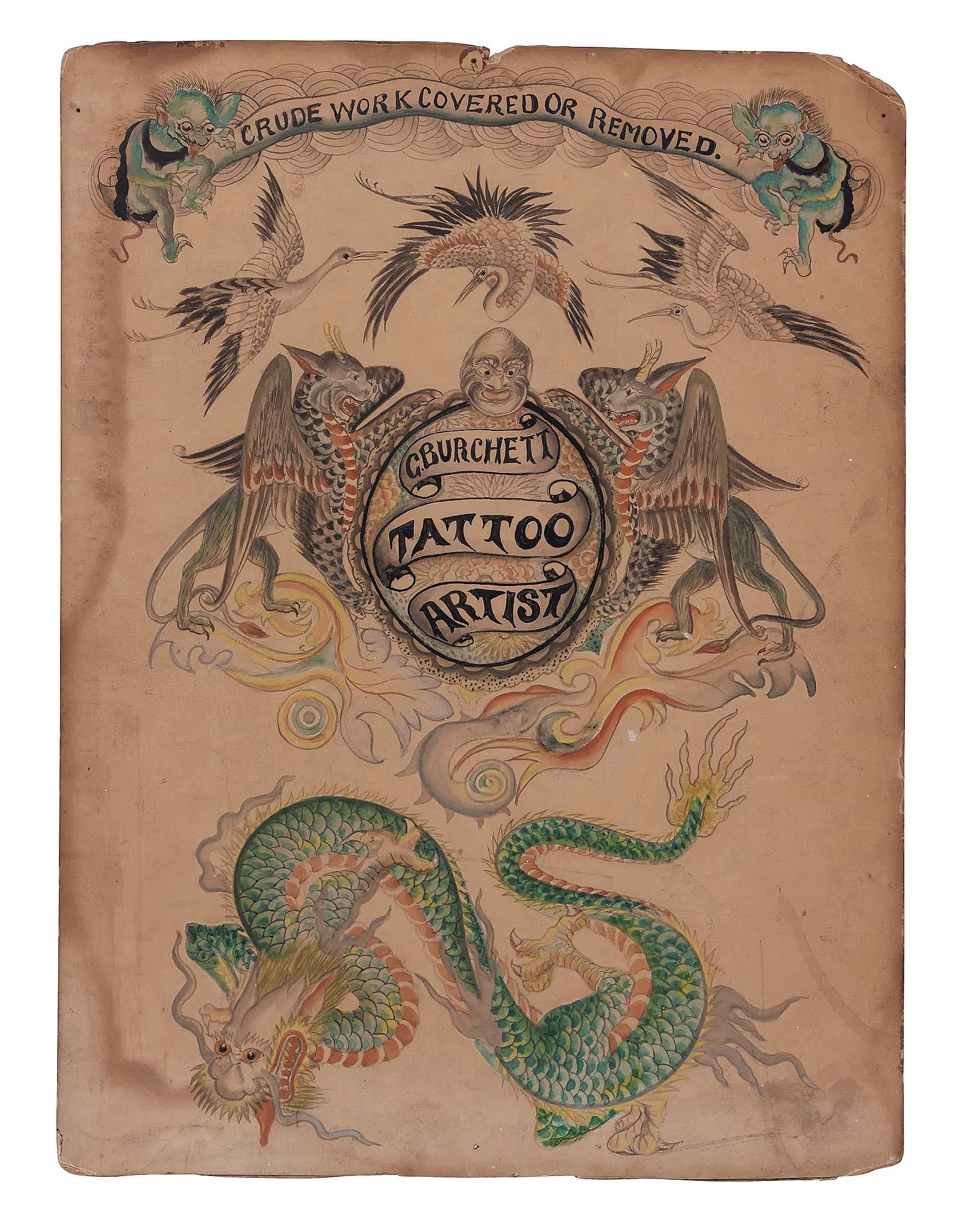
Flash art today is often on display boards that tattoo artists set up at their shop or an event, but it’s long been in the form of books showing off the artist’s skill and standardized designs they could do quickly. “They had these small books that they would take with them. They are rare, and the one we sold this weekend was a record price for a travel book,” Bray added.
The example Bray was referring to was a 45-page book of tattoo designs by Ben Corday (1875-1938), circa 1918 and dating to his time in Los Angeles, which sold just over its $10/20,000 estimate at $24,600. It contained hand-painted tattoo flash art by the pioneering artist and was among the personal collection of Boston tattoo artist Edward “Dad” Liberty (1883-1957), who probably got it during a working trip to the West Coast in 1923.
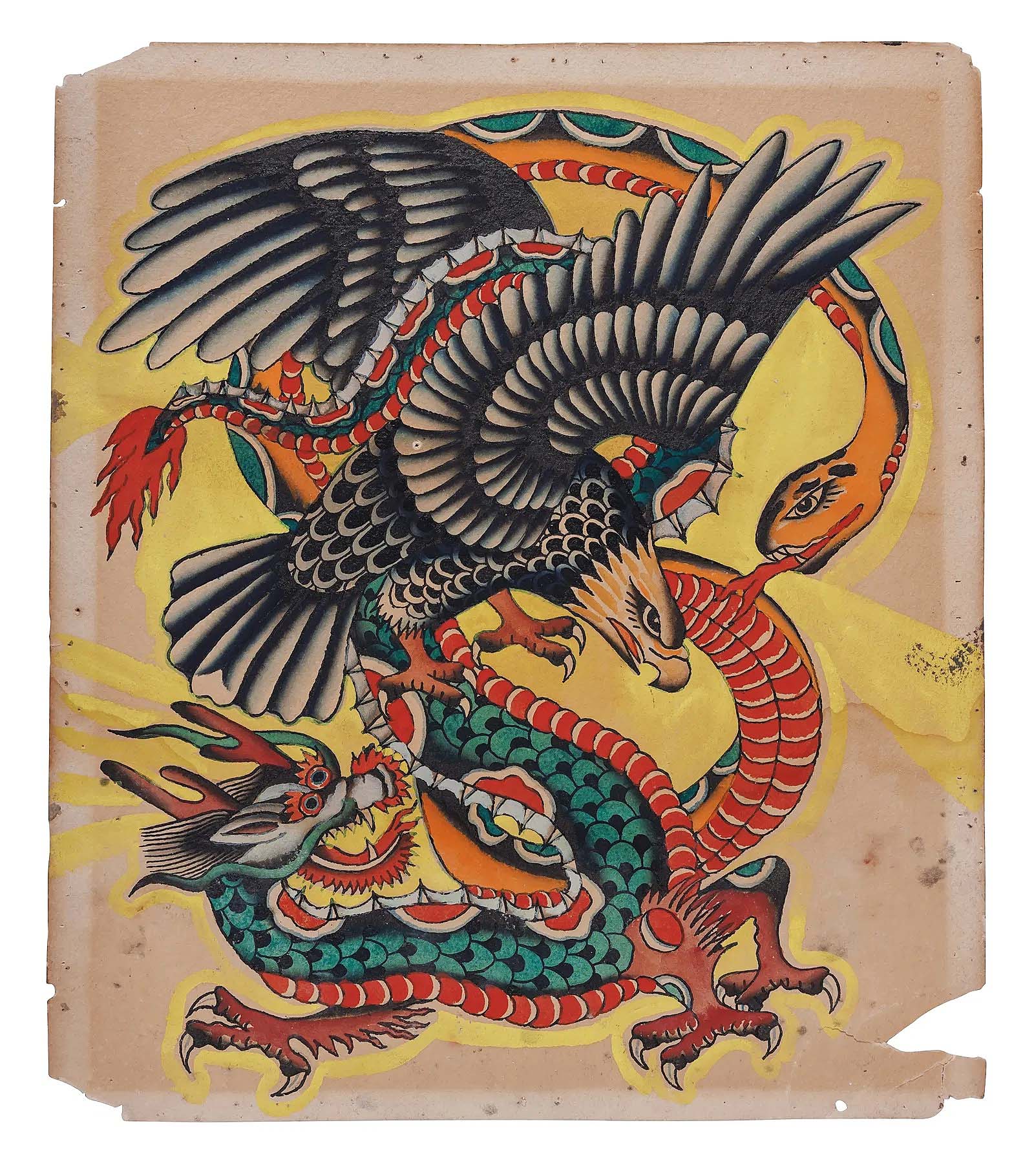
This hand-painted tattoo flash by Bert Grimm, circa 1940, included Battle Royale tattoo designs and tripled its high estimate to earn $9,225 ($2/3,000).
Born in England, India or Singapore, depending on which stories he told that one believes, Corday served in the British Army before moving to the United States and ultimately settling in Los Angeles. He worked as a sideshow attraction and a wrestler for a while, but he is best remembered for his work as a tattoo artist. He set up one of the best-known tattoo studios on the West Coast. His designs are considered at the forefront of modern tattooing and prized for his elegant draftsmanship, balanced compositions, and unusually refined use of color. “Corday helped elevate tattoo flash from purely functional shop display material into a distinctive graphic art form. Though his career was cut short by health problems, Corday’s surviving flash ranks among the rarest and most celebrated works of early tattoo art,” according to the catalog notes.
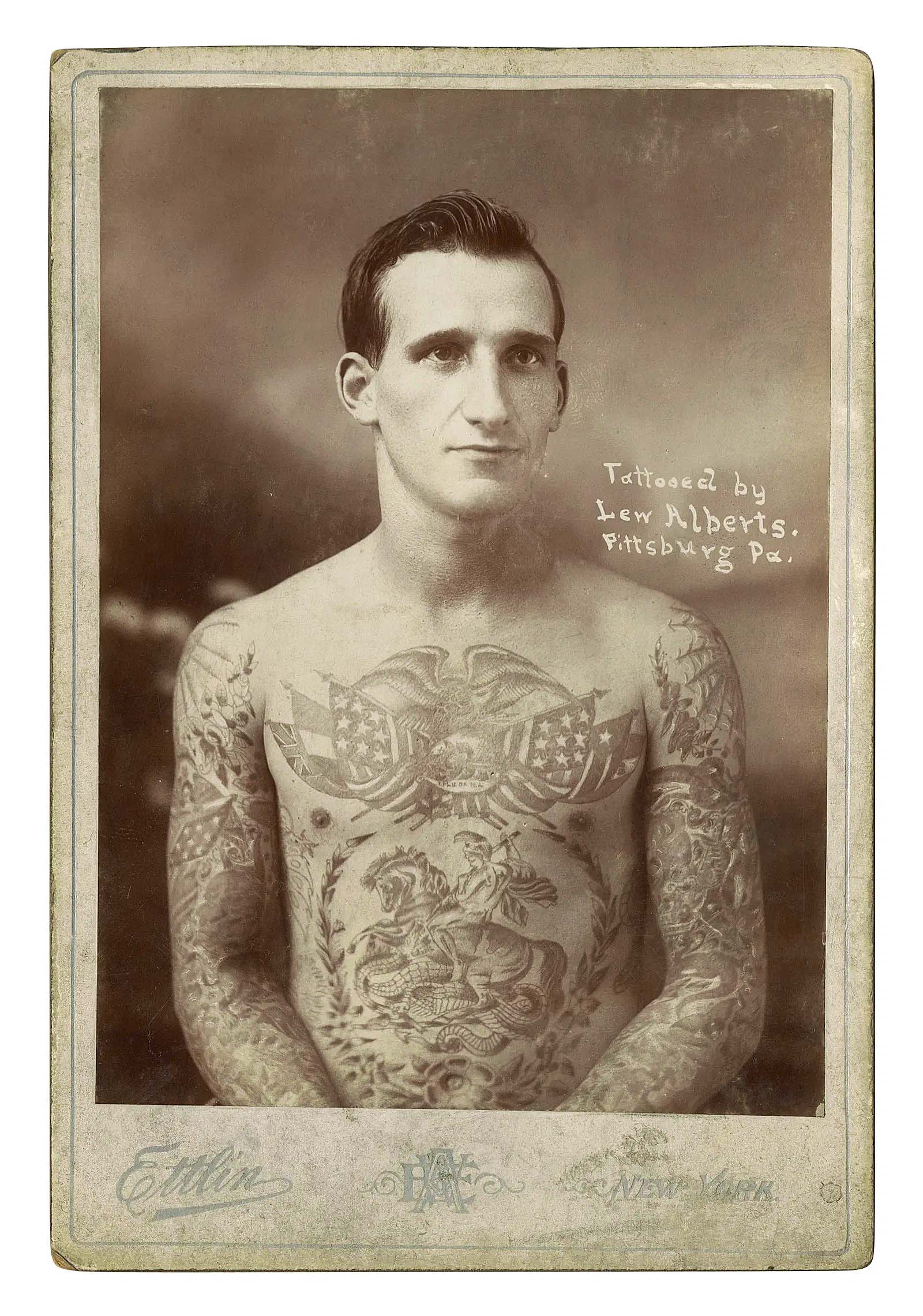
Early photographs of tattooed people and designs also are highly collectible, Bray explained, noting that a cabinet card of a man tattooed by artist Lewis Alberts set an auction record for an Alberts cabinet card when it went past its $1/2,000 estimate to bring $6,080. The photograph was of shirtless man seen from the waist up to show off Alberts’ tattoos. The sitter in the photo is thought to be fellow tattoo artist Harry V. Lawson (1882-1950). Born Albert Morton Kurtzman, Alberts went by “Lew the Jew” and is credited with inspiring many other tattoo artists with his work and techniques. First learning how to create tattoos while serving in the Army in the Philippines in 1898, he made an electric machine that transformed the tattooing process.
Hand-painted flash art by other artists also performed well in the sale, as did tattoo shop signs and tools.
Prices quoted include the buyer’s premium as reported by the auction house. Bray & Co’s next sale will be its Shaker and Americana auction August 15. For information, www.brayco.com or 603-427-8281.