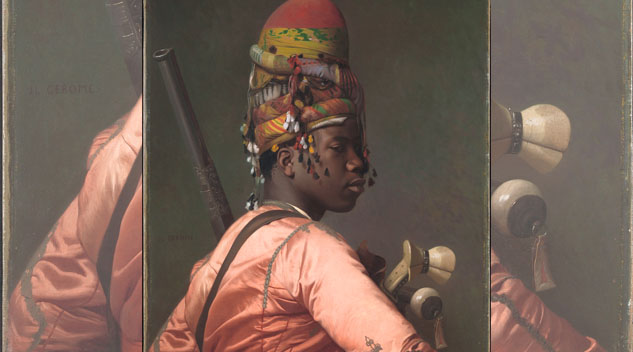
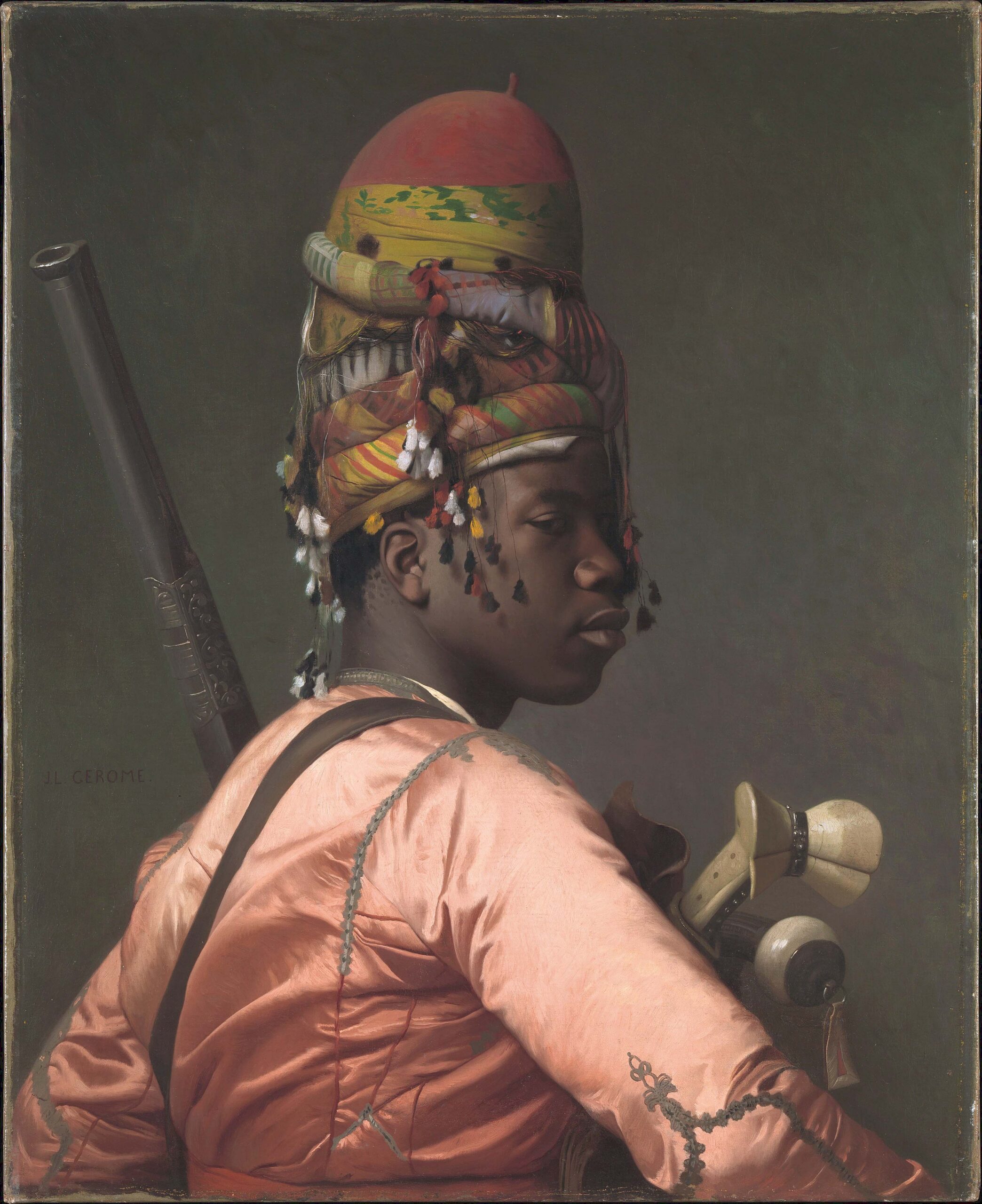
“Bashi-Bazouk” by Jean-Léon Gérôme (French, 1824-1904), Paris, 1868-69, oil on canvas, 31¾ by 26 inches. Gift of Mrs Charles Wrightsman, 2008, 2008.547.1.
By Andrea Valluzzo
NEW YORK CITY — The complexities of Orientalism and how Nineteenth Century artists in the “West” portrayed people and scenes from the “East” become a bit clearer and more nuanced in a new exhibition at the Metropolitan Museum of Art called “Orientalism: Between Fact and Fantasy.” On view through February 28, the exhibition takes on a complex and controversial topic and seeks to present a fresh perspective on how artists in Europe and the Ottoman Empire depicted and advanced the idea of Islamic culture through art and design.
As the Nineteenth Century was winding down, a convergence of colonial and imperial expansion, technical progress and rapidly connecting geopolitics resulting in global marketplaces led to a rise in European art centered on what became known as Orientalism. Some works in this genre were based on artists’ firsthand travels and observations while much is more fantasy, comprising a romanticized version of what artists imagined life in the Orient to be like.
Take a standout image in the exhibition, Jean-Léon Gérôme’s circa 1879 oil on canvas painting “The Snake Charmer,” featuring a nude young boy with a large snake wrapped around his waist and an older man playing a musical instrument, helping to “charm” the snake, as a group of men sit with their backs up against a luminously tiled wall watching the scene. “‘The Snake Charmer’ by Jean-Léon Gérôme is a highly eroticized image and is often considered the quintessential Orientalist painting. Edward Said chose it for the cover of his book Orientalism, first published in 1978, even though the book does not examine visual culture,” said Maryam Ekhtiar, the museum’s Patti Cadby Birch curator of Islamic art, who co-curated this exhibition with Deniz Beyazit, curator of Islamic art, and Asher Miller, the Eugene V. Thaw curator of European paintings.
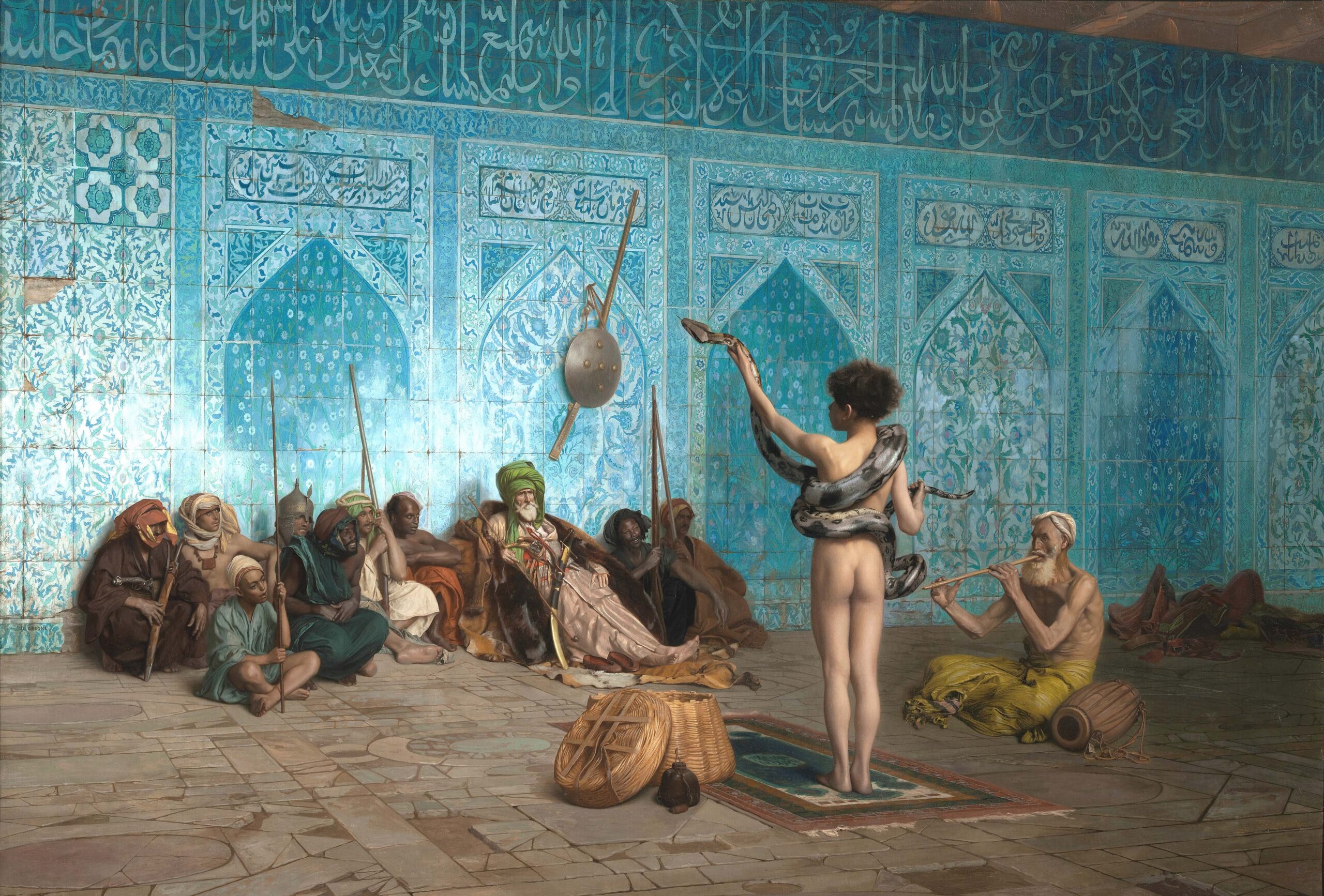
“The Snake Charmer” by Jean-Léon Gérôme (French, 1824-1904), Paris, circa 1879, oil on canvas, 41 by 56 by 4¼ inches framed. Clark Art Institute, Williamstown, Mass., 1955.51. FFO.033.
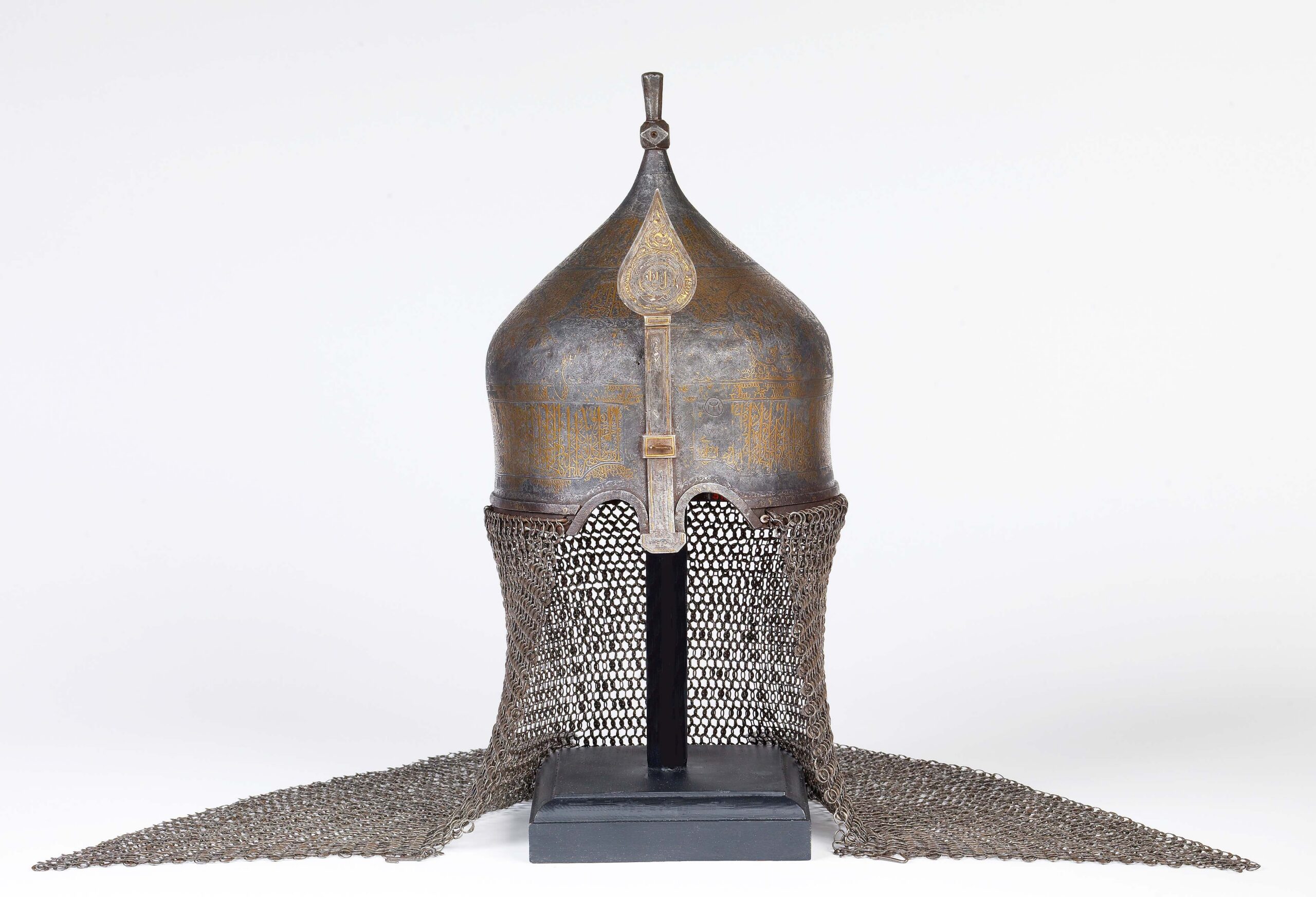
Ottoman Turkish helmets from the Walters Art Museum’ collection are on view, displayed in a nearby case. Audiences who carefully study this painting will notice that instead of a turban, one of the men wears a similar metal helmet. Details like this provide valuable clues into Gérôme’s artistic process and the ways he built his Orientalist works. The artist, who was known for creating scenes like this with photographic precision, actually owned this helmet, and it was included in a photograph of him in his Paris studio.
As exacting as this scene is though, it’s part fantasy and part fact. The tiled paneling was inspired by a photograph the artist had seen of the colorful tiles of the Topkapi Palace in Istanbul, but the floor tiles are more reminiscent of what would have been in a Cairo mosque. “The painting is thus a carefully constructed pastiche, bringing together elements from different places and sources,” Ekhtiar said. “Yet, Gérôme’s remarkably photorealistic style makes the scene appear real, creating the illusion that the viewer is witnessing it firsthand.”
A favorite object for Miller is another sublime oil painting by Gérôme, the circa 1868-69 portrait titled “Bashi-Bazouk,” which joined the Met’s collections in 2008 and was then the first life-size image of a Black man in the Nineteenth Centuries European Paintings galleries. “After about 15 years of seeking a way into this painting, I began to peel back its layers during Covid lockdown,” Miller explained. “It now lies at the heart of a new iconographic category, allowing for reappraisals of other great, overlooked paintings, such as Alexandre-Gabriel Decamps’ ‘The Turkish Patrol’ of 1831 and Gérôme’s ‘Dance of the Almeh’ of 1863 (at the Wallace Collection, London, and the Dayton Art Institute, respectively). Perhaps more importantly, the painting can now be appreciated more fully as a lodestar for broad themes linking West Asia, Europe, Africa and the United States across centuries.” This portrait was the starting point for this exhibition and soon other key artists like Osman Hamdi Bey were added.
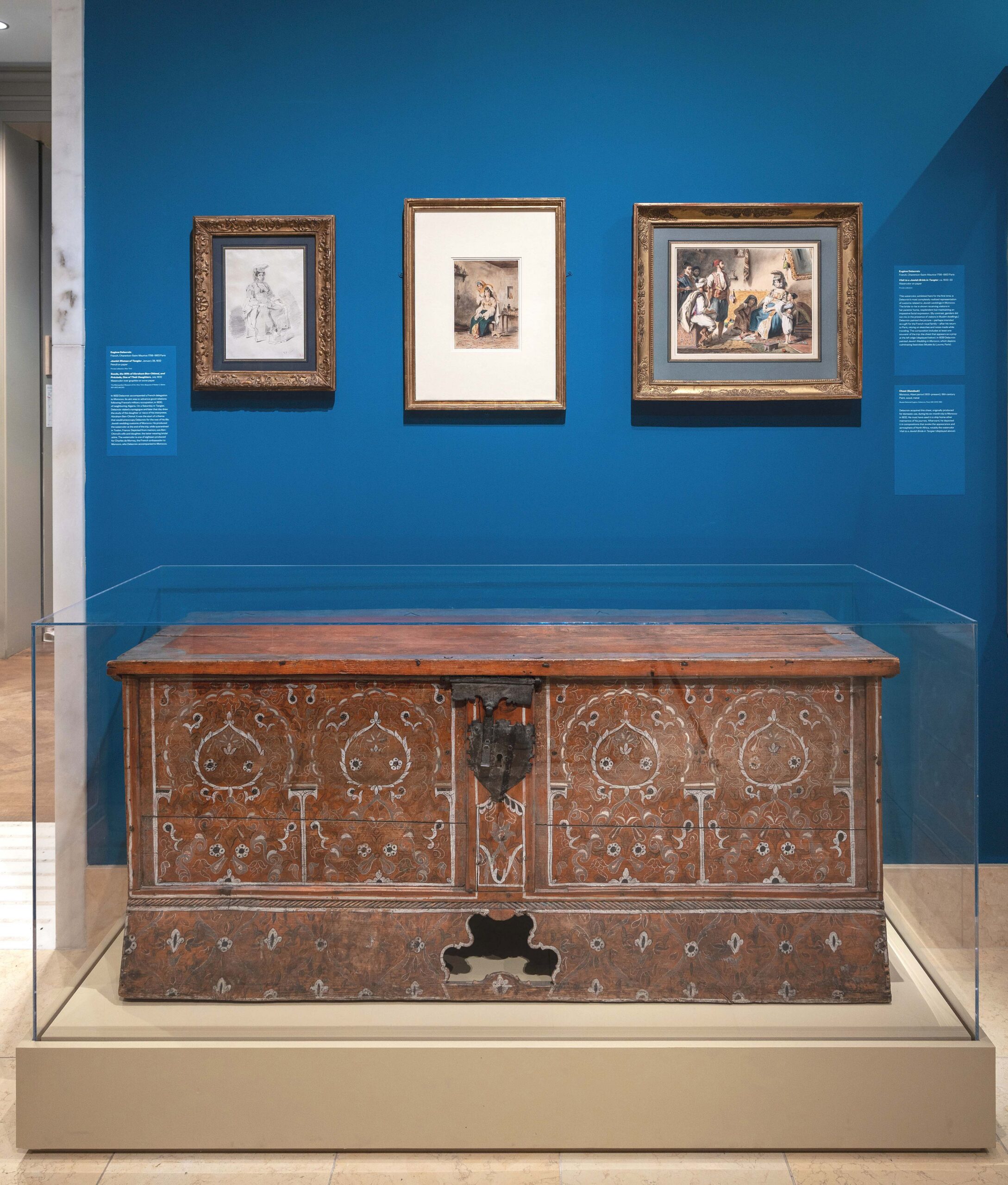
Installation view showing an Eighteenth Century coffre à décor peint (sundouk), wooden chest that Eugene Delacroix brought back from Morocco. Photo by Anna-Marie Kellen, courtesy of The Met.
Artists like Gérôme, who visited the “Orient” (mostly Egypt and Constantinople) multiple times, and others drew upon a variety of sources for artistic inspiration. They collected impressions and interesting objects during their travels as well as relying on published images as well as Islamic art collections that made their way to markets and museums in the West. These objects introduced new visual languages that reshaped interiors, architecture, and artistic production across the Atlantic,” said Met CEO Max Hollein.
In the making for over five years, the exhibition is highly ambitious for its scope. It is not only the first at the Met focused on Orientalism, and the first major collaboration between the departments of European paintings and Islamic art but it exemplifies the diverse abundance of the Met’s collections. Represented are paintings, photography, drawings, armor and arms, decorative objects, textiles and ceramics. When these items were brought into a dialogue with each other in this exhibition, relationships and shared histories that had previously been hidden came to light with familiar objects taking on new meanings.
Featuring about 180 objects from a dozen Met departments as well as seldom seen loans, “Orientalism: Between Fact and Fantasy” takes up four galleries that connect the collection spaces of the departments of European paintings and Islamic art. Offering fresh insights and contexts, the exhibition also invites visitors to look at how these images continue to resonate today while asking audiences to reconsider how factors like race, gender and power helped shape Nineteenth Century views on other cultures.
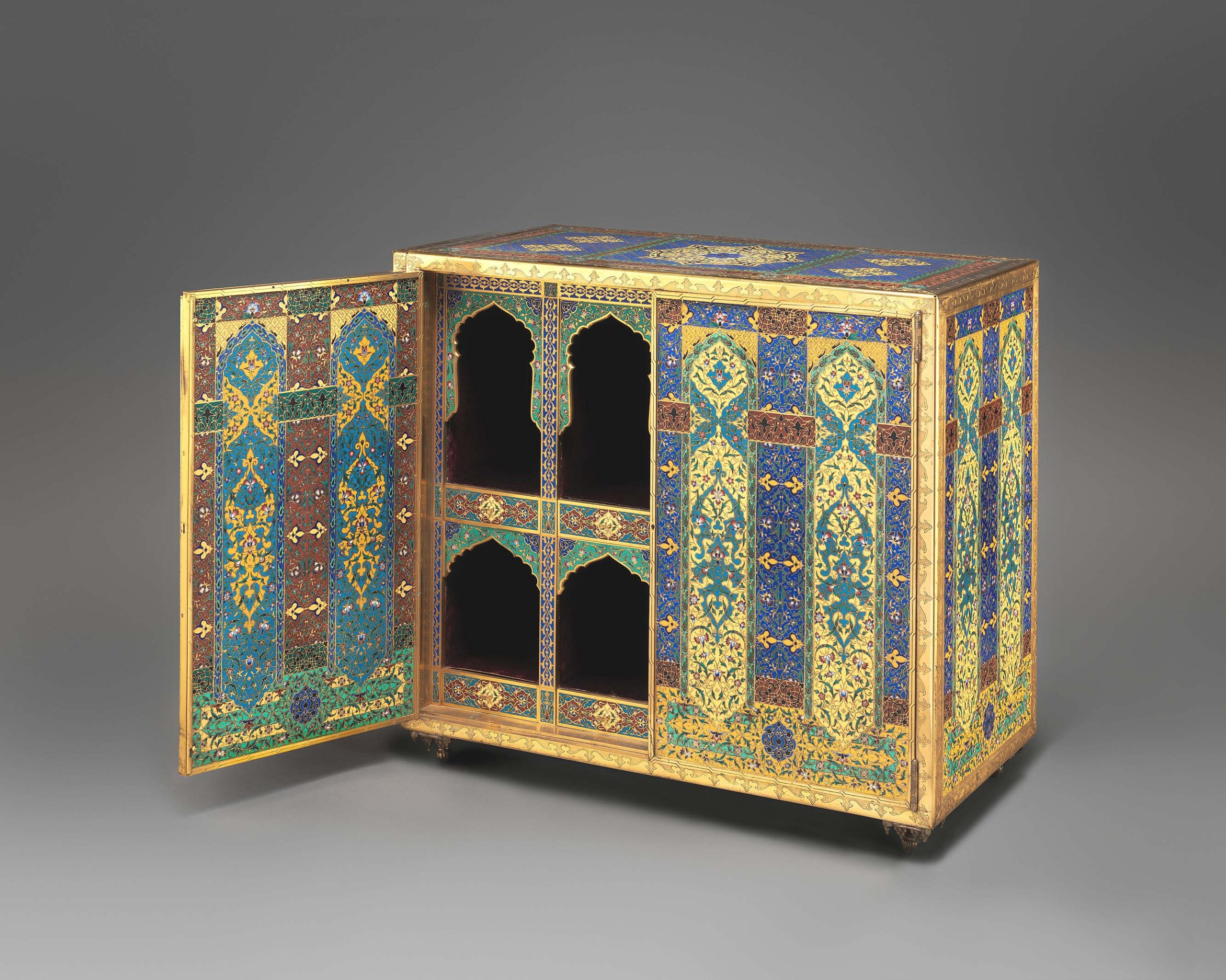
Cabinet by Maison Barbedienne (French, 1834-1954), 1867, designed by Louis-Constant Sévin (French, 1821-1888), workshop director Ferdinand Barbedienne (French, 1810-1892), Paris, brass with polychrome cloisonné enamel and velvet, 25 by 27¼ by 15½ inches. Purchase, bequest of John L. Cadwalader, by exchange, 2017, 2017.666.
The curators together noted that Nineteenth Century Orientalism is today understood as a Eurocentric historical construct, an archaic byproduct of colonialism and imperialism yet this often-misunderstood field is richly diverse and complex and deserving of a new take. By presenting the exhibition from a “holistic” instead of monolithic perspective, they want visitors to walk away with a deeper understanding and appreciation of the creative process across borders. The aim is to get those who might have had little exposure to this subject to see how “seemingly disparate cultures seek to understand one another,” they said. The result is not only a gorgeous exhibition to behold but puts forth a nuanced narrative that speaks to multiple qualities of this extensive and important subject.
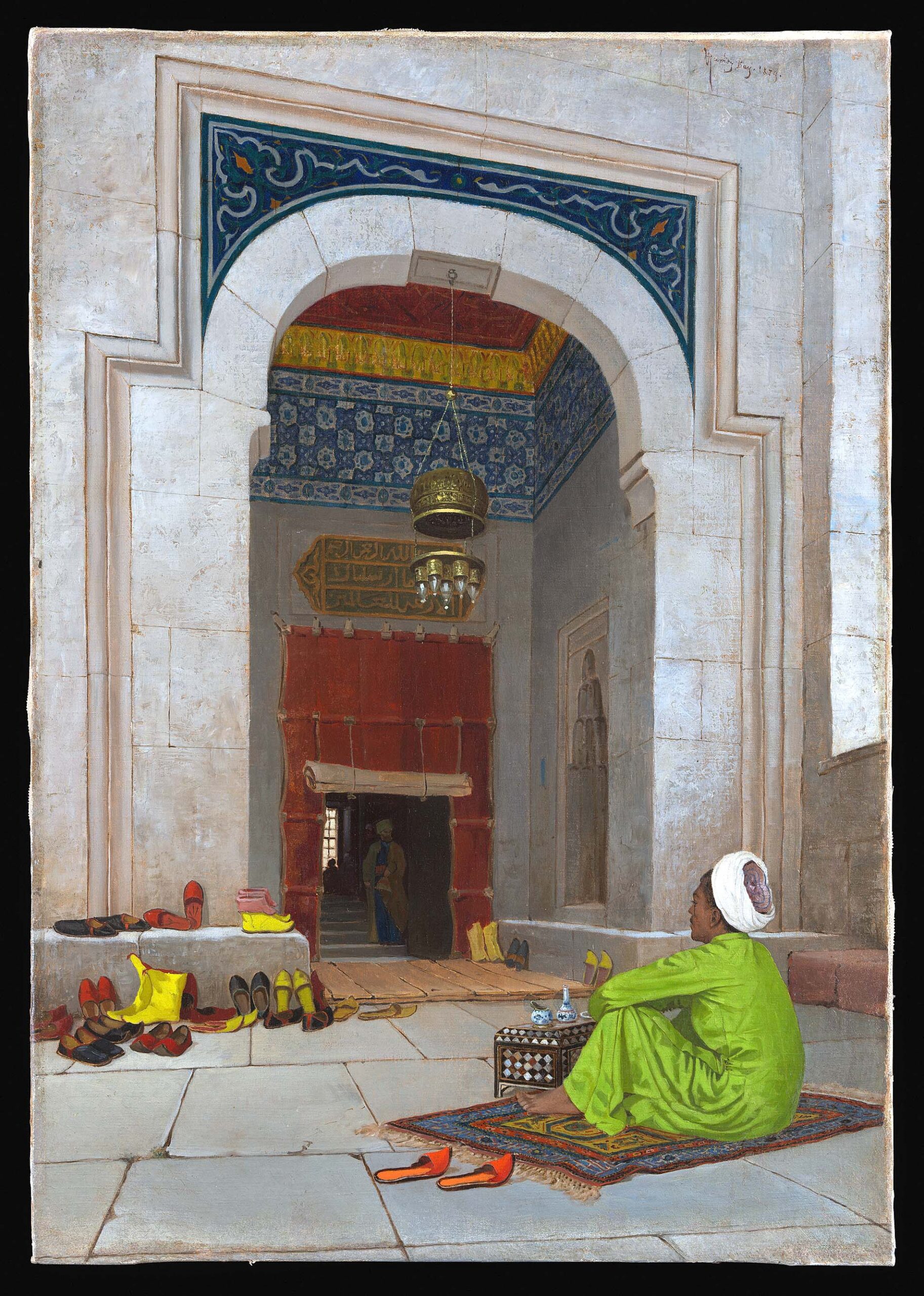
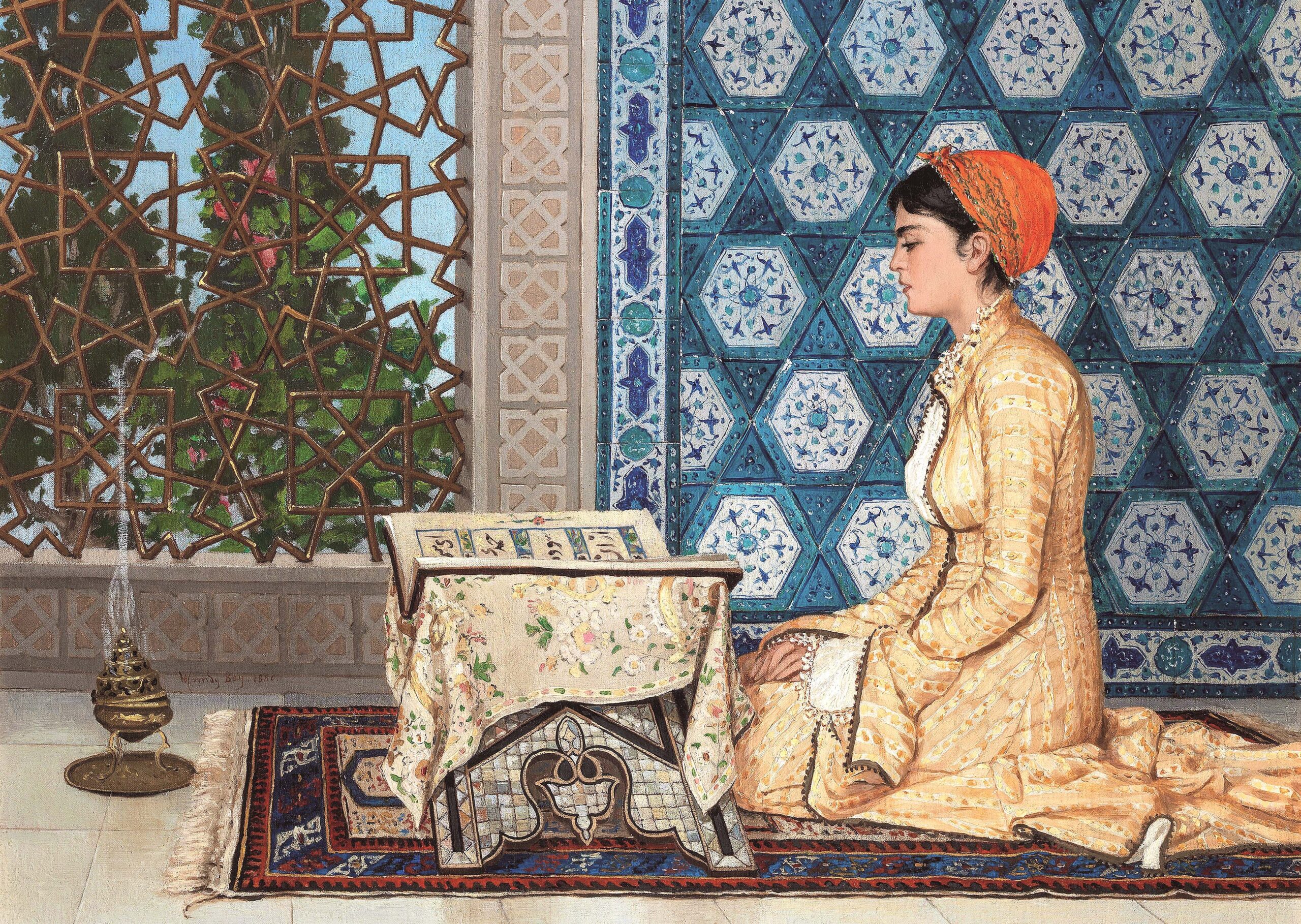
Paintings are lavishly represented in the exhibition and well chosen to put forth an insider’s perspective is the polymath Hamdi Bey, who was not only the first Ottoman director of the Imperial Museum and an antiquities specialist but also a skilled painter. Among his works on view are the pensive and intimate “Man Meditating Over the Qur’an” (1902) and “Turkish Street Scene” (1888), as well as “Young Woman Reading,” a masterful 1880 oil painting.
Seven paintings — most quite large in scale — in all by the artist, who remains little known in the United States, are included in this show, the largest grouping outside Turkey to date. Due to his background, his treatment of subjects is more sensitive, respectful and authentic than some of his European equals, steering clear of the stereotypical depictions that often distinguished Orientalist work done by artists hailing from the West. More than any other Nineteenth Century artist, he embodied modern cosmopolitan life in the Ottoman Empire with an insider’s eye. His inclusion in the exhibition brings home a major goal of the exhibition: to balance Western perspectives with those from the Islamic world. His work is also shown for the first time alongside non-Orientalist works, including examples by French painter Jean-Baptiste-Camille Corot and American John Singer Sargent.
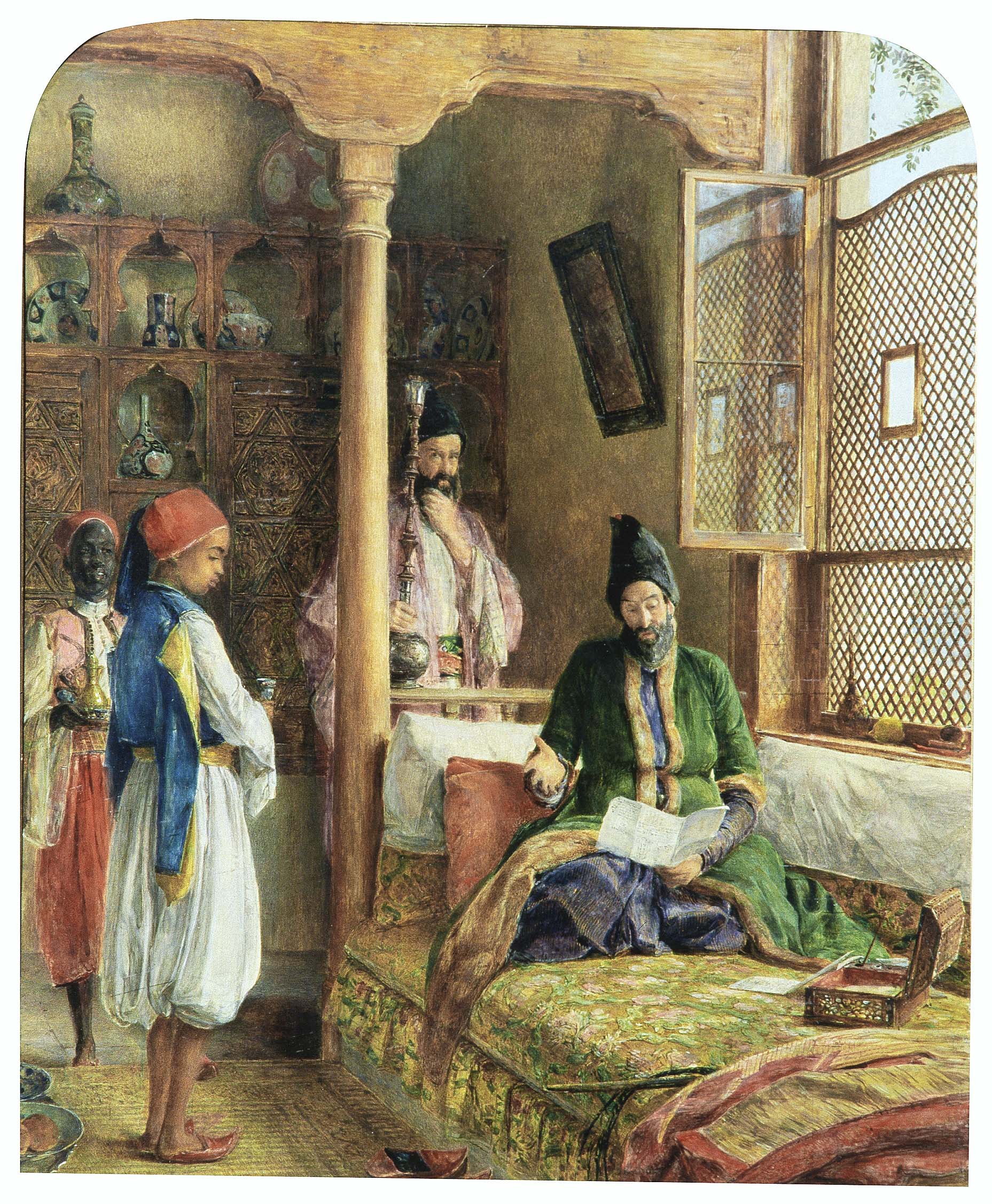
“An Oriental Interior” by John Frederick Lewis (British, 1804-1876), Walton-on-Thames, 1863, oil on panel, 20-13/16 by 18⅞ by 15¾ inches framed. FFO.093.
Ironically, as Hamdi Bey sought appreciation for his art in Europe, his Ottoman background meant that his greatest success came from his Orientalist portraits and subjects; some scholars argue that his success trapped him in this genre. He found ways to break the mold and experimented with this visual language by adding playful and nuanced twists into his paintings. “Young Woman Reading” is a fitting example. Is she reading out of devotion in a religious space, or is this a secular setting? She is depicted sitting upright on a prayer rug, wearing a meditative expression, so one could conclude she is reading the Qur’an. However, the artist’s name in Arabic in the open book in front of her makes that impossible.
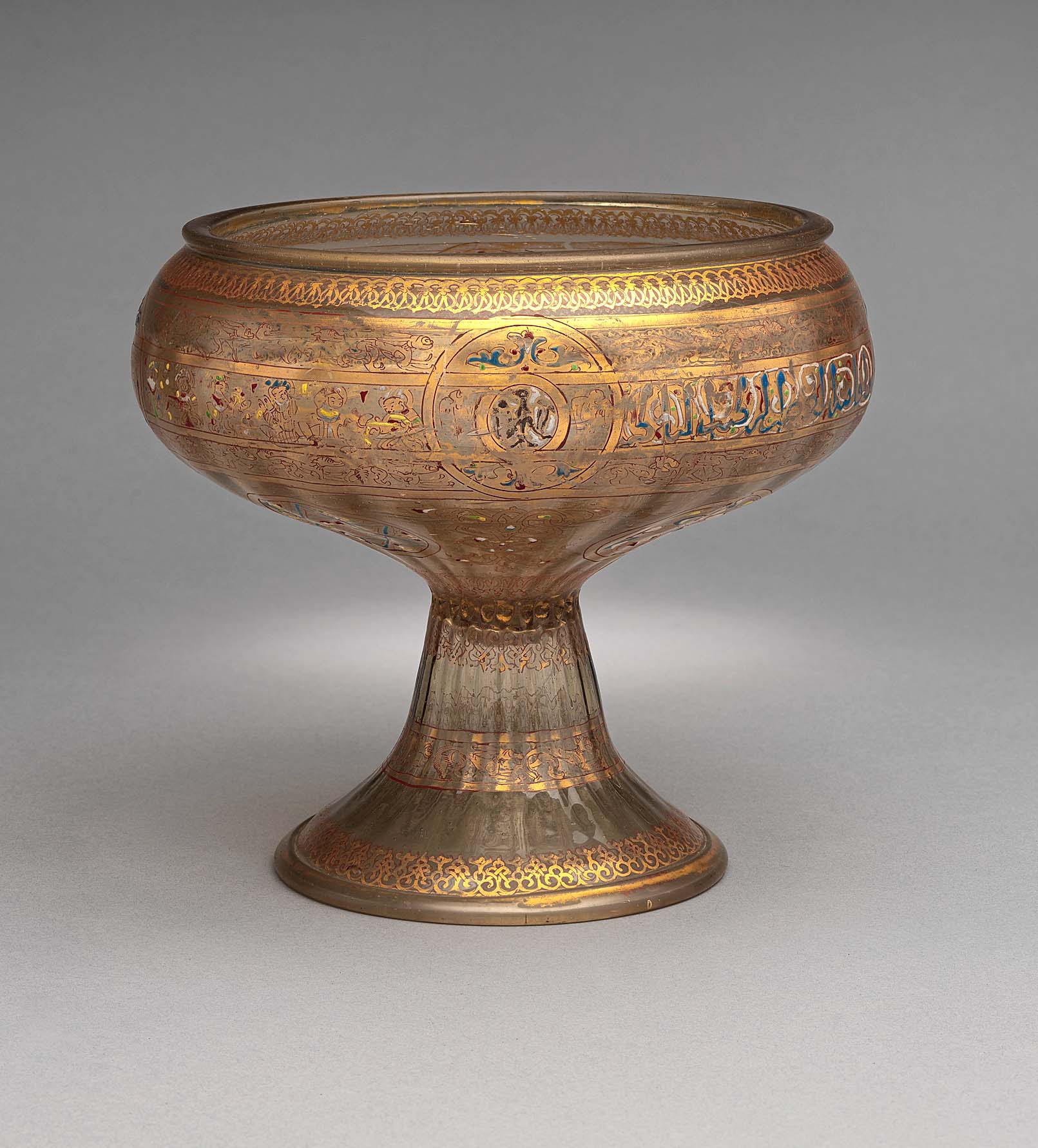
Besides two-dimensional art, a variety of sculptural objects in the show command attention, including the Met’s Thirteenth Century tazza, which Beyazit calls a masterpiece of Syrian craftsmanship. “It was found in Damascus in the 1840s by French collector and scholar Charles Schefer and speaks for the admiration for Islamic decoration techniques and forms,” the curator shared. “Made in the luxurious technique of enameled and gilded glass, it was one of the objects which fascinated the French glass maker Philippe-Joseph Brocard, who studied and revived the medieval technique in the mid Nineteenth Century, through emulations.”
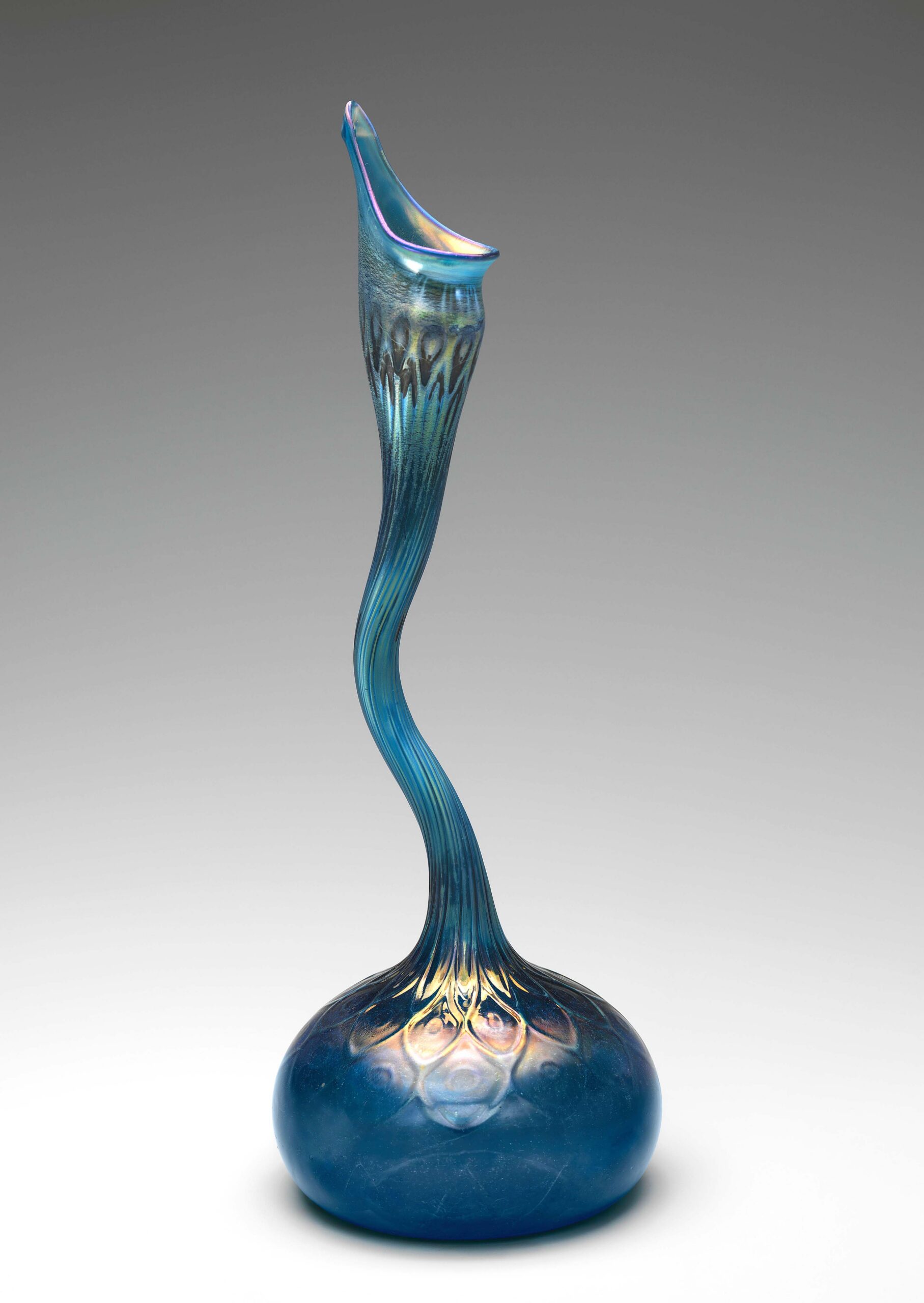
Rosewater sprinkler by the Tiffany Glass and Decorating Company, Stourbridge Glass Company (American, 1892-1902), circa 1896-1900, mold-blown glass, 14¾ inches tall with a 5¼-inch diameter. Purchase, funds from various donors and 2017 and 2018 NoRuz at The Met Benefits, 2023 2023.391.
Beyazit explains, “Brocard made a copy of this object in 1867, and a few years later Eugene Collinot made a copy in ceramics. All three objects were presented in exhibitions in Paris in the 1860s and 1870s. The role it came to play in the taxonomy of Islamic design may be thought of as a European story. But the work’s impact on European design is an Islamic art story that reveals the power of objects to inspire. Later, it was owned by the American Edward C. Moore, the chief designer at Tiffany & Co. When the tazza was bequeathed with Moore’s collection to the Met in 1891, critics praised it as ‘the gem of the collection,’ and a ‘most beautiful as well as valuable’ example of enameled glass. Since the late Ninteenth Century, the Met’s Tazza and its two French emulations have not been shown together. All three objects are reunited for the first time in the exhibition.”
Culture is an inheritance, and each generation carries the responsibility to nurture and renew it. This exhibition goes a long way in undoing the bad reputation Orientalism has carried in recent years. Through their interdepartmental collaborations and selections, the curators have reframed Orientalism by presenting a more nuanced narrative to allow for a deeper understanding of the genre as a means of production in the arts. These historic objects and artworks were not a mere exotic curiosity but were inspirations to Western artists and designers.
The Metropolitan Museum of Art is at 1000 Fifth Avenue. For information, www.metmuseum.org or 212-535-7710.