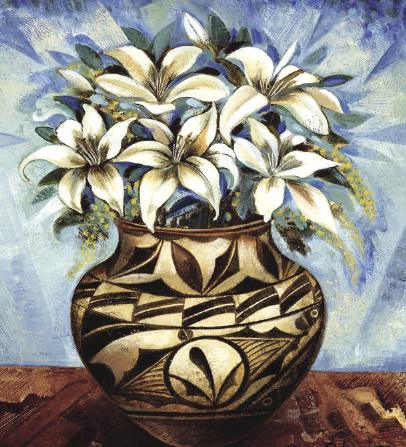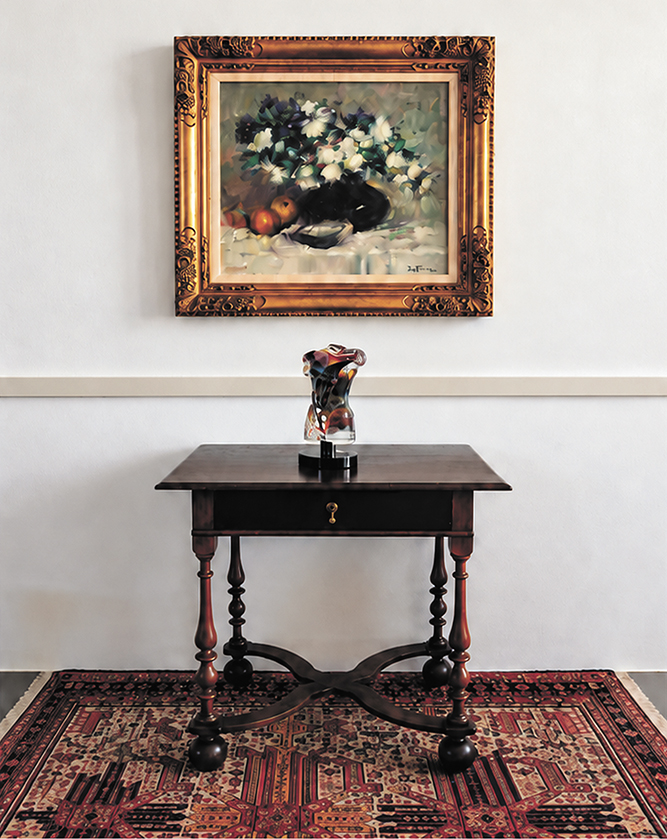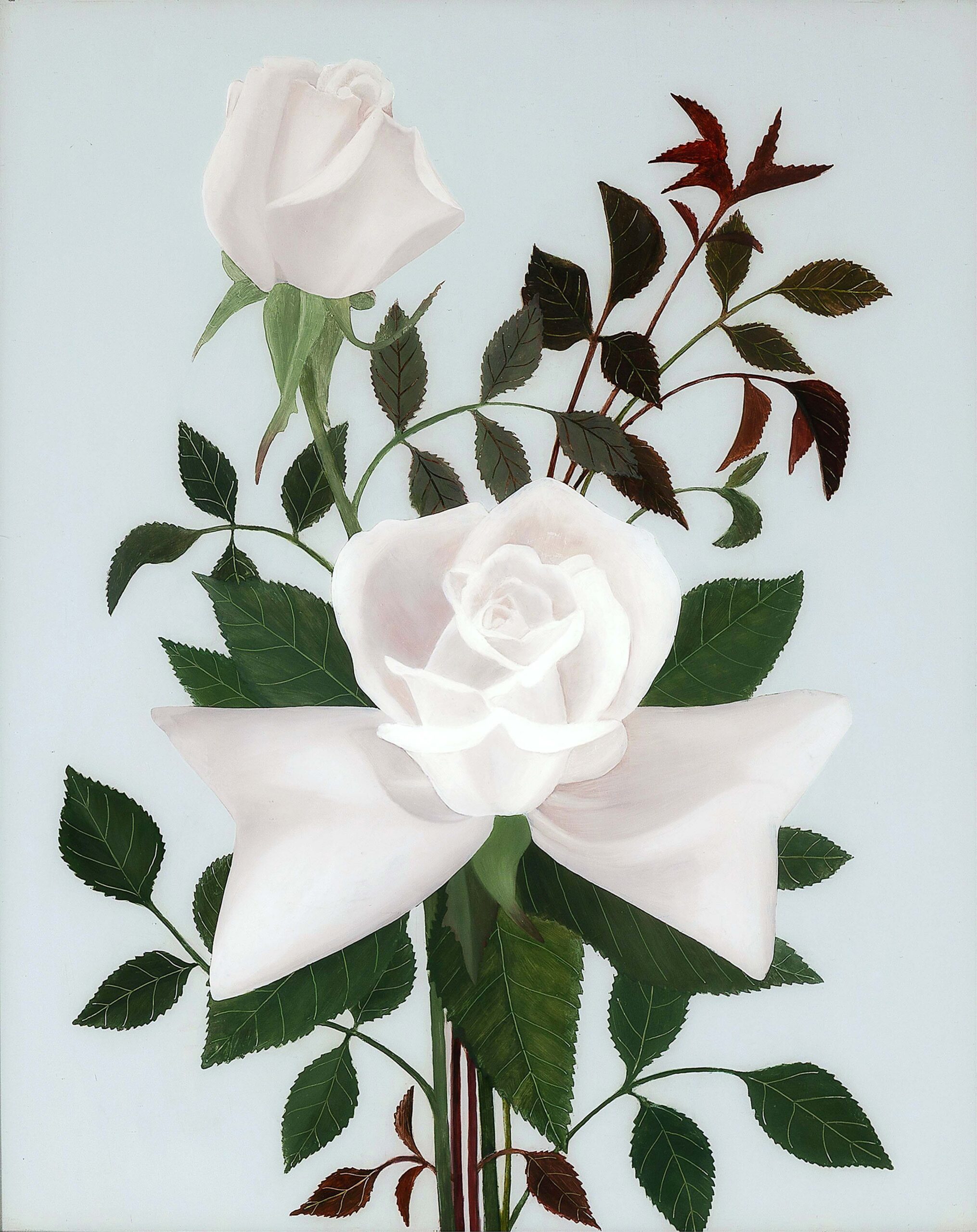
“White Roses at Twilight” by Rebecca Salsbury James (1891-1968), 1941, reverse-painted oil on glass, 21⅛ by 17⅛ inches framed, set a world record for the artist when it achieved $768,750 ($200/300,000).
Review by Eric Murphy
SANTA FE, N.M. — The Signature Sale, conducted by Santa Fe Art Auction (SFAA) from November 6-7, featured more than 450 lots of historic photography, Western painting and sculpture, classic and contemporary works by Indigenous artists and post-war and contemporary painting across three sessions. The auction ultimately resulted in a 95 percent sell-through rate, with many pieces vastly outperforming their estimated ranges, particularly in the first session. The auction was extremely well-attended, setting record hammer prices from in-room bidders and totaled more than $5.5 million in sales with close to 6,000 registered bidders from more than 35 countries.
The highest overall price from the weekend’s auction was awarded during the first session for “The Stetson Set” of Edward S. Curtis’ The North American Indian, a complete collection of 20 photographic volumes and portfolios respectively, selling for $792,000. This price point put it at the higher scale of its estimated range of $600/900,000, as such a complete collection provided rare and valuable insight into one of the most prominent cultural and ethnographic endeavors of the Twentieth Century. The work pictured and described many of the Native peoples of the continental US and Alaska and included other visual aids such as maps, diagrams and “over three thousand pages of text and transcriptions of language and music.” A rather monumental undertaking, the painstaking detail and precision on Curtis’ part reflected what a representative of Santa Fe Art Auction described as his “artistic vision and his determination to document Indigenous traditions he believed were disappearing.”
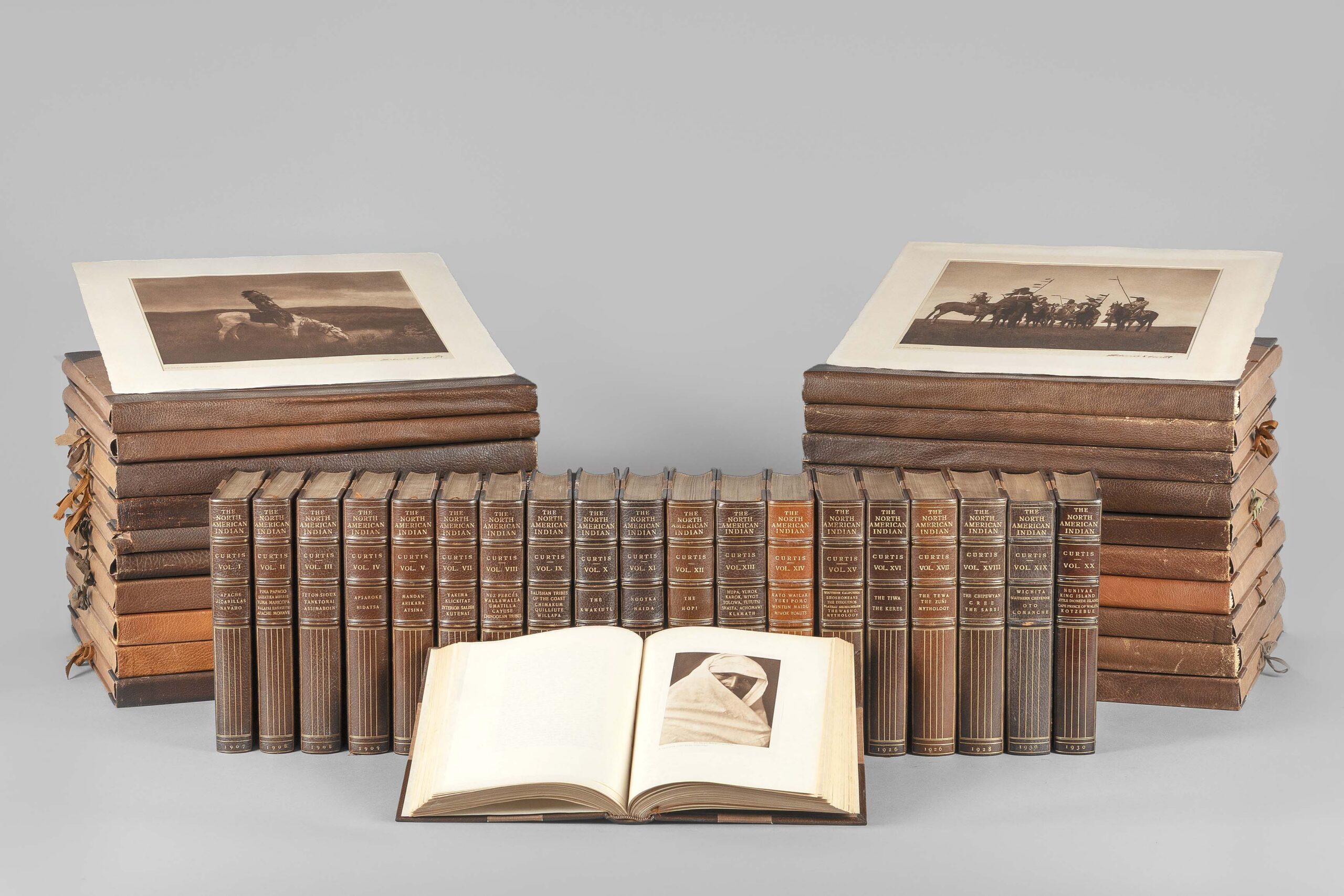
This complete set of 20 volumes and 20 portfolios of Edward S. Curtis’ (1868-1952) The North American Indian, 1907-30, from the John Batterson Stetson, Jr, collection, photogravure on Japanese gampi tissue, letterpress, edition 31 of 500, sold for $799,500 ($600/900,000).
Additionally, the set had provenance to John Batterson Stetson, Jr, who was known for his love of books and whose father pioneered the Stetson cowboy hat, a staple of Nineteenth Century life in the American West. According to the catalog, the set contained 723 portfolio photogravures and 1,505 smaller photogravures, all of which were printed on Japanese gampi tissue. (Of the three original paper stocks chosen for the project, handmade gampi was the rarest and most expensive used: original purchasers paid a premium for these editions, so only about ten to 15 percent of Curtis’ photogravures were on gampi.) In addition to being composed of such unique material, the value of these photogravures was enhanced yet again, as 364 of them were signed by Curtis himself, earning the title of “Special Signed Tissue.” The auction house credited this factor as one of the set’s “defining, and most likely unique, attributes.” SFAA president and CEO Gillian Blitch noted that “Stetson would have negotiated that privately,” reaffirming the singular quality of such a collection.
SFAA had sold three complete volumes of Curtis’ work in the past, though never with the accompanying large-format portfolios. The books themselves managed to maintain their original half morocco and buckram folding case with gilt-impressed portfolio number and had previously been auctioned at Parke-Bernet Galleries in 1953 for $650 and then again at Sotheby’s New York in 1993, yielding a steep price increase up to $662,500 in that auction.
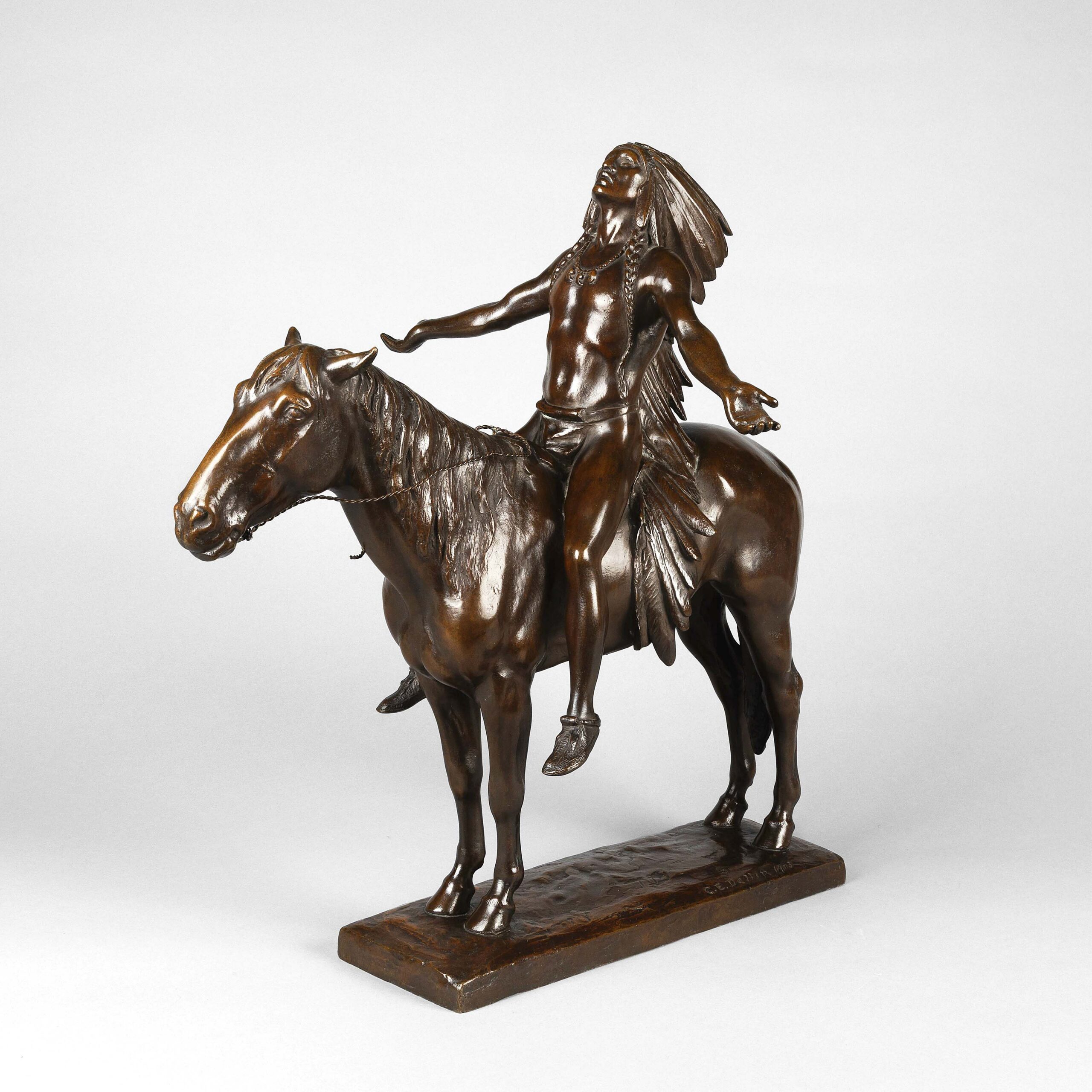
“Appeal to the Great Spirit” by Cyrus Edwin Dallin (1861-1944), 1913, patinated bronze, 21¼ inches tall by 14¾ inches wide by 21¾ inches long, rode well past its estimate to achieve $209,100 ($60/90,000).
Lots depicting Indigenous ways of life consistently achieved notable prices throughout the weekend, including Cyrus Edwin Dallin’s 1913 “Appeal to the Great Spirit,” selling for $209,100, more than twice the high end of its $60/90,000 estimate. The sculpture, composed of patinated bronze, measured 21¼ inches tall by 14¾ inches wide by 21¾ inches long and had provenance to a private collection in Illinois. Blitch characterized the work as “One of the finest pieces in the history of sculpture,” and was excited to share that a 42-inch-tall rendition of Dallin’s “On the Warpath” will be available for bids in the firm’s upcoming auction on December 4.
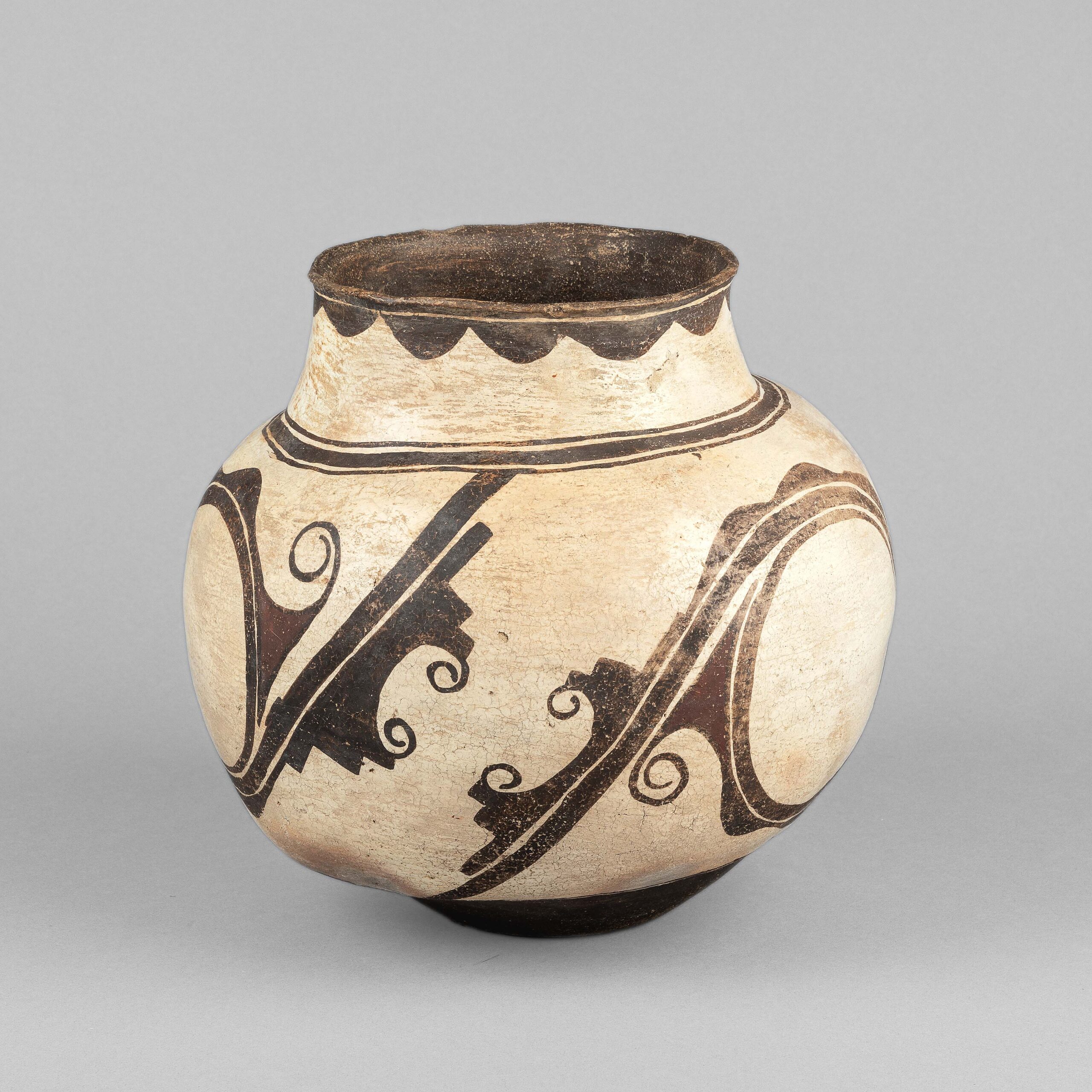
The second session offered a distinguished array of historic and contemporary Pueblo pottery, Diné (Navajo) rugs and Native American jewelry, with much of the bidding activity focused on the Pueblo pottery. According to a post-sale press release from the auction house, a selection of paintings and works on paper by early Santa Fe School artists and Western artists of the Twentieth Century concluded the morning, with highlights including Thomas Silvestre Macaione, Gene Kloss and Narciso Platero.
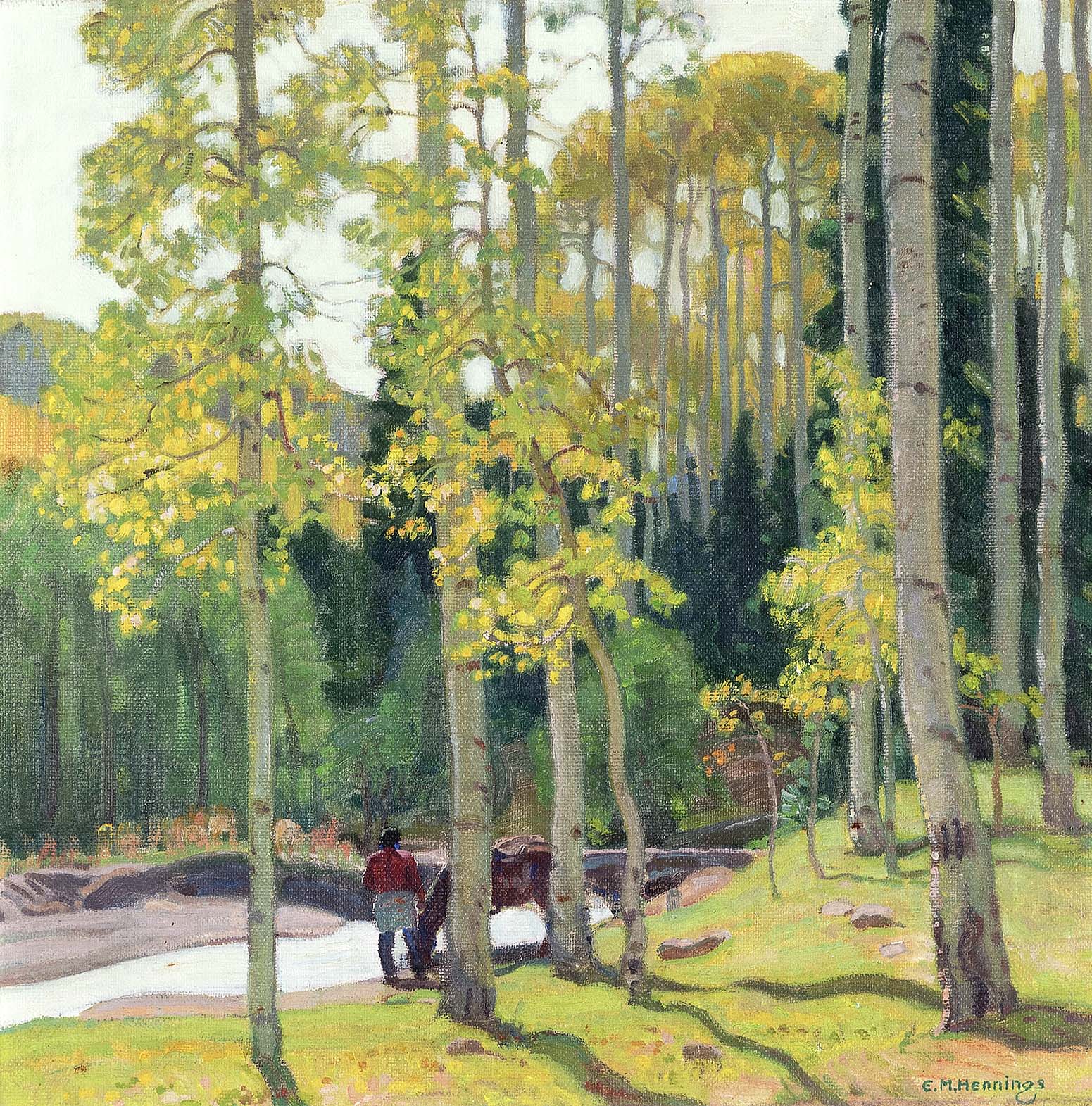
Many artists achieved personal auction sale records, such as the late Kate Cory (“Moonlight Frolic,” $19,680) and Blanche Dugan Cole (“Isleta Indian Maiden,” $22,140), whom Blitch described as “not very well known but important women artists.” Elaborating on the general public’s increasing awareness of such artists, she remarked that “For the first half of the Twentieth Century, many female artists were overlooked,” but that “they are beginning to come into their own and be recognized today.”
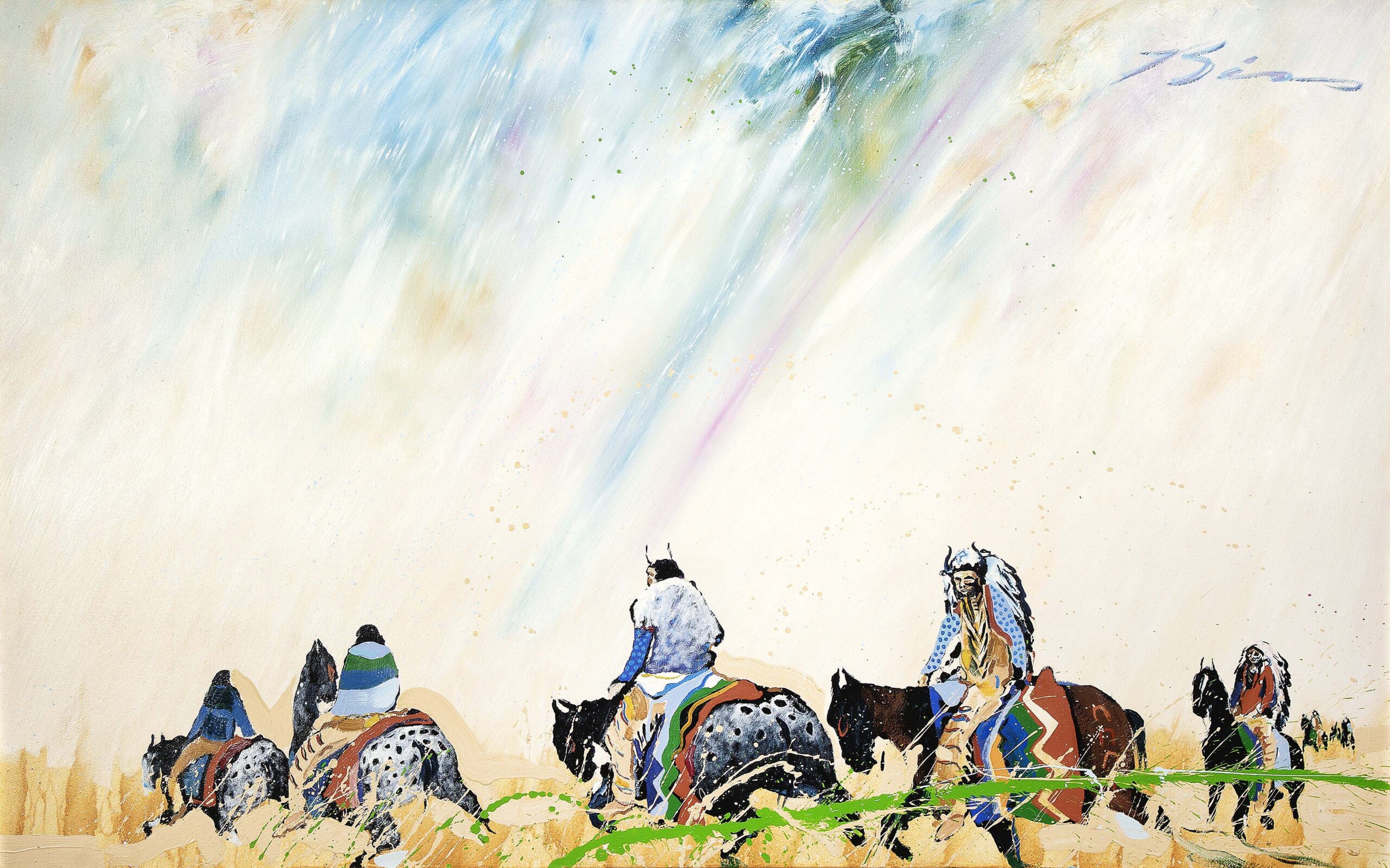
“A Ride in the Sweet Grass” by Earl Biss (Apsáalooke [Crow], 1947-1998), oil on canvas, 57⅛ by 87⅛ inches framed, passed its high estimate to earn $67,650 ($30/60,000).
The third session further illustrated this trend when Rebecca Salsbury James’s 1941 “White Roses at Twilight” greatly exceeded its $200/300,000 estimate to achieve $762,500. Dated, inscribed and signed on the reverse, the work had provenance to the artist and was given to the Blumenschein Memorial Foundation (Taos, N.M.) in 1968. James was a self-taught artist whose work shared close thematic and geographical ties to those of her friend Georgia O’Keeffe, with the two artists finding similar inspiration in the landscape of the American Southwest. As framed, “White Roses” measured 21⅛ by 17⅛ inches and was composed using her signature reverse-painted oil on glass technique, a medium that, according to Blitch, made it “very rare to have survived.”
In praising the work, Blitch described it as being in “absolutely pristine condition,” making note of its “innate aesthetic value… a gorgeous piece in a rare size in remarkable condition by a truly important female artist.” Despite James’ artistic talent, however, she remained largely unknown. “If you’re entrenched in Taos artwork you know who she is,” Blitch continued. “People around here know her, but she wasn’t very prolific.” The piece ultimately sold to an important private collection based outside the New Mexico region, meaning her work continued to connect with audiences beyond its area of origin.
Prices quoted include the buyer’s premium as reported by the auction house. Santa Fe Art Auction’s next sale, on December 4, is The Collector’s Edition, a curated auction featuring museum-quality works that highlight 100-plus years of the American West. For information, www.santafeartauction.com or 505-954-5858.