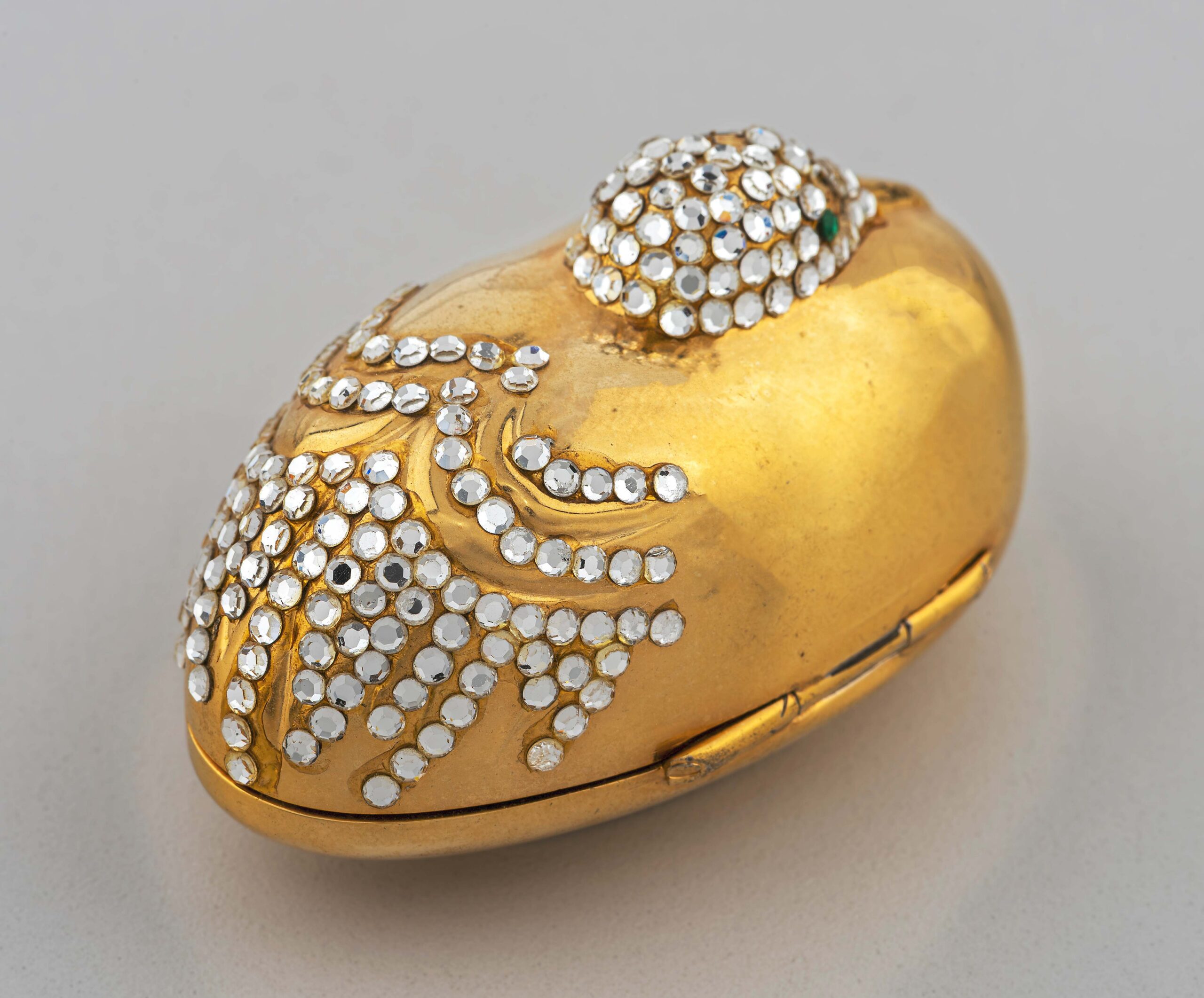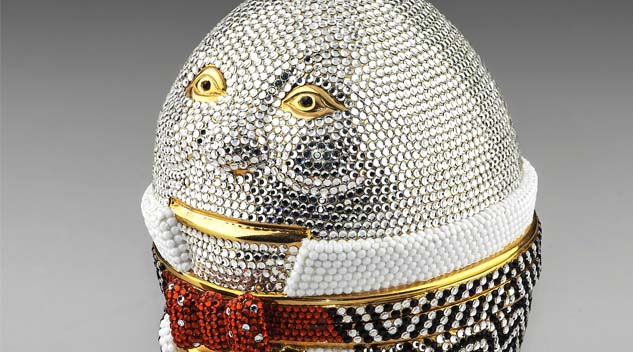
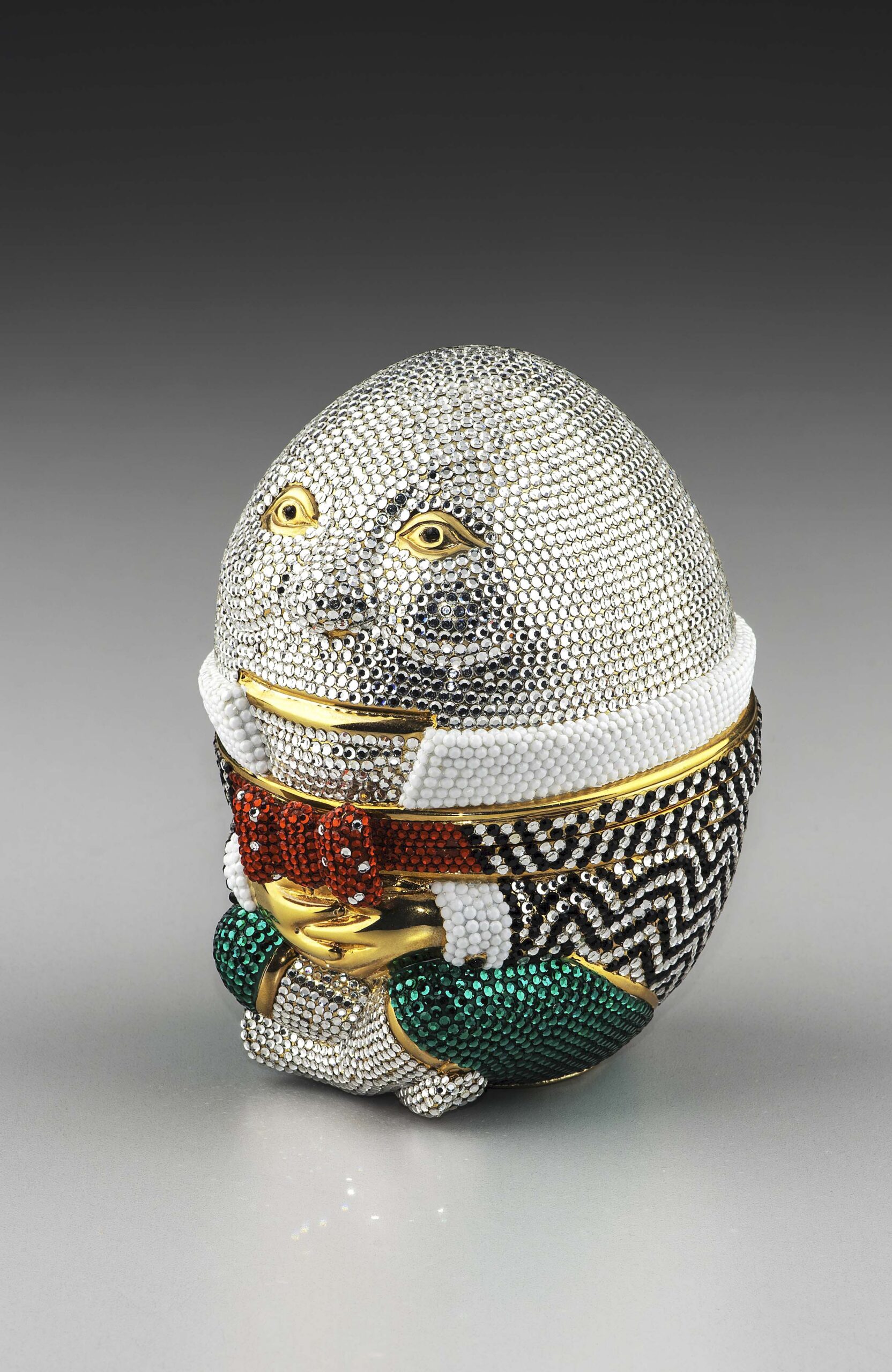
Humpty Dumpty minaudière by Judith Leiber (American, b Hungary, 1921-2018), 1994, gold-plated brass, leather and Swarovski crystals. Gift of the family of Vicki and Jim Mills. 2025.34.34.
By Laura Layfer
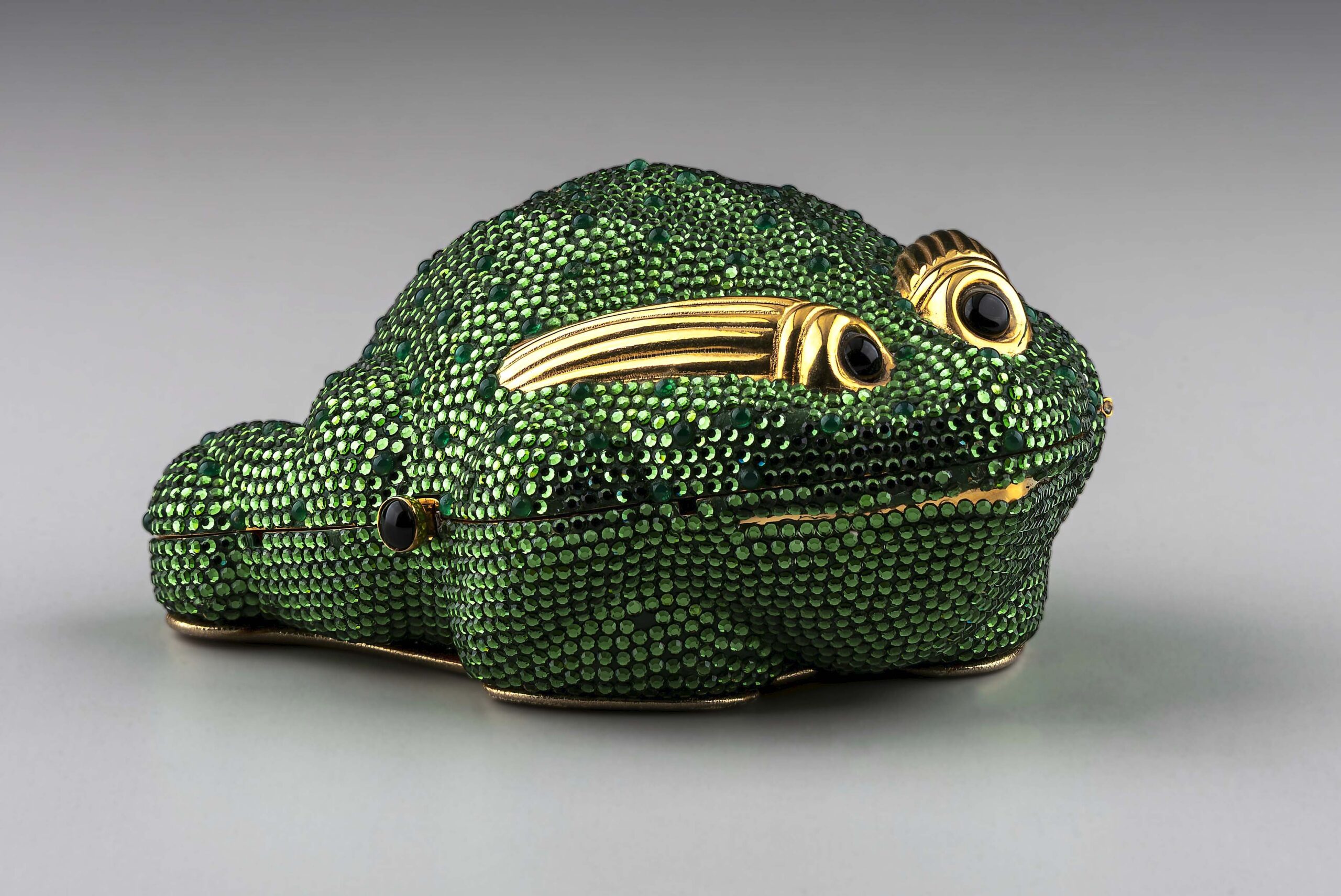
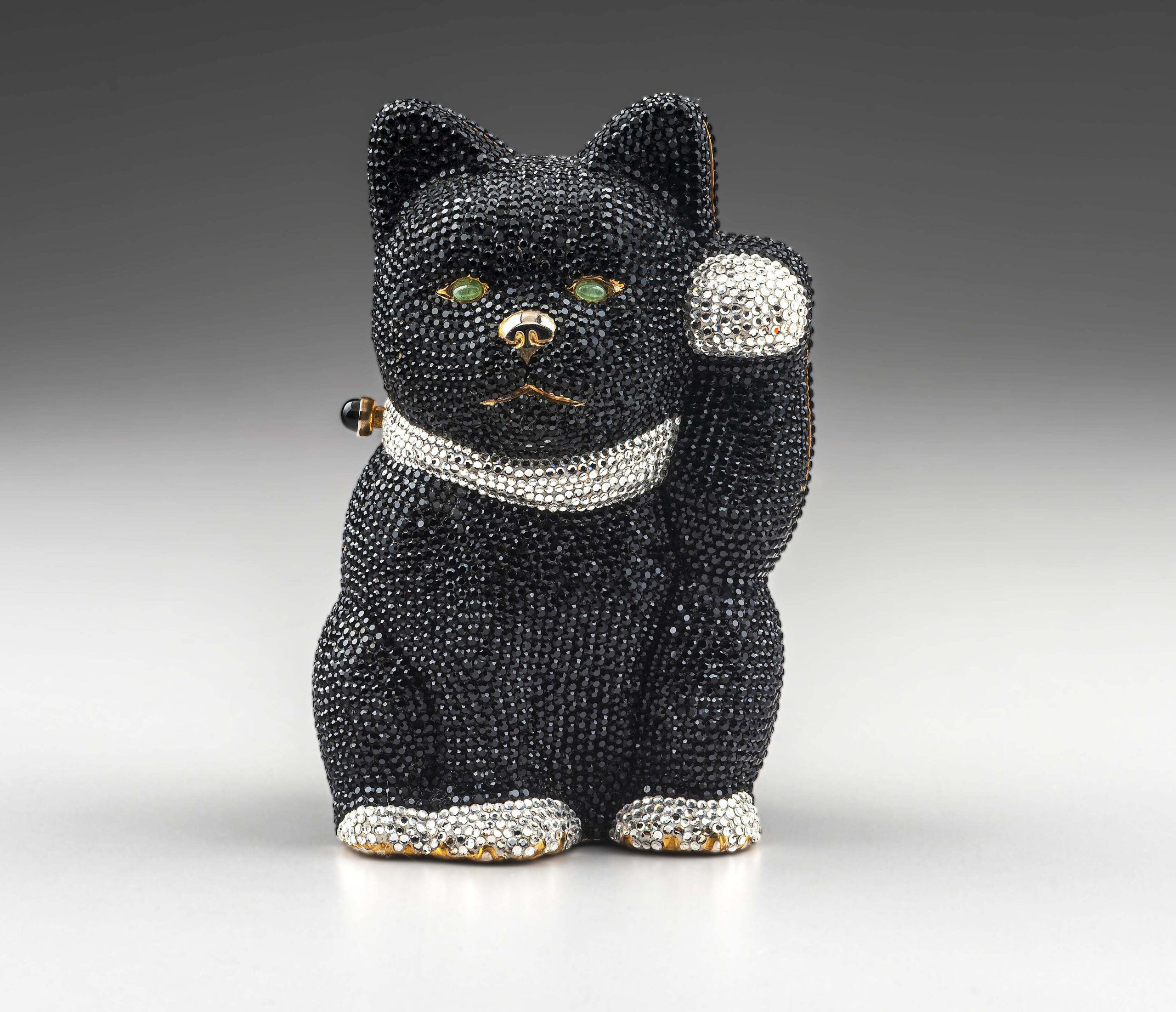
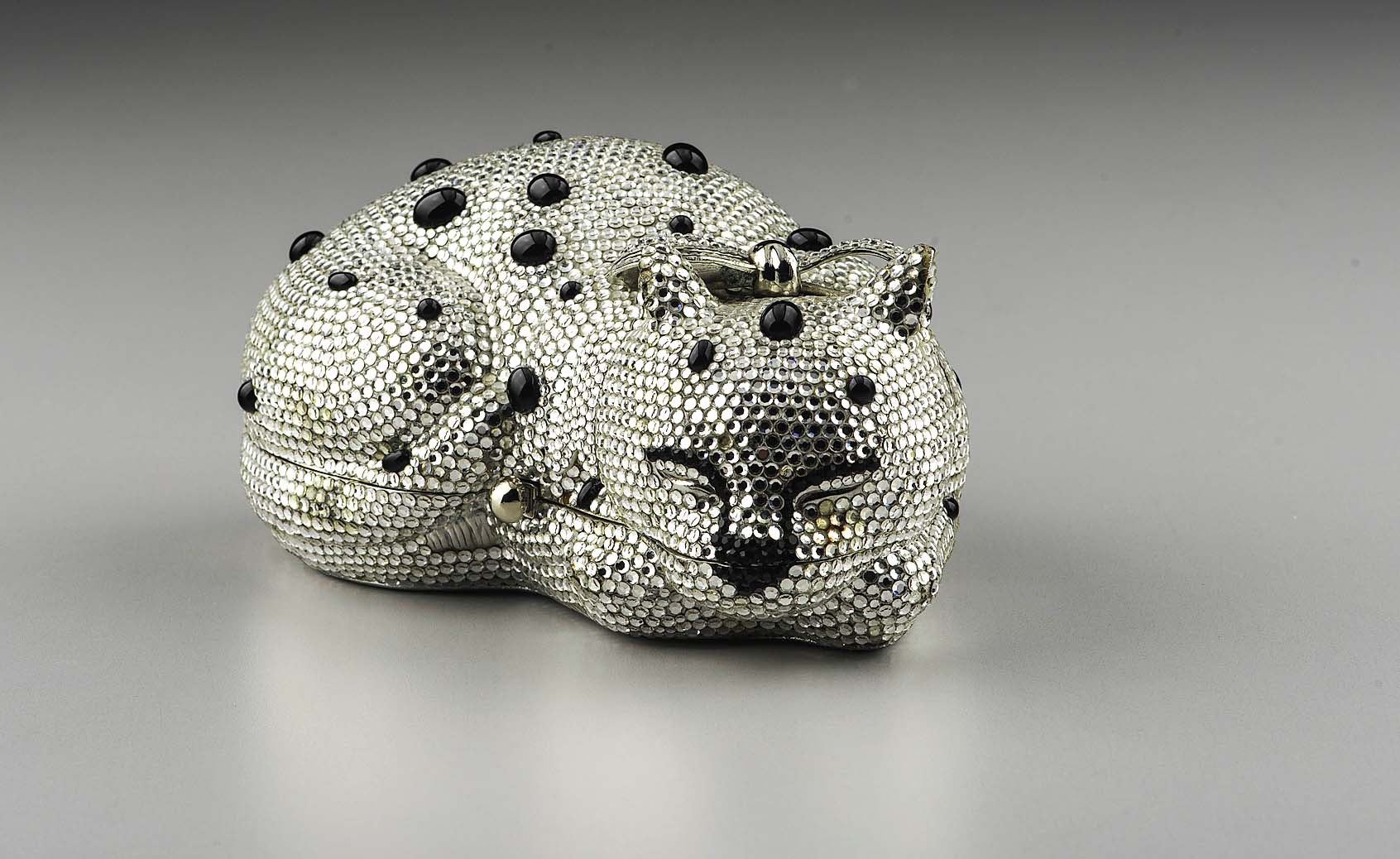
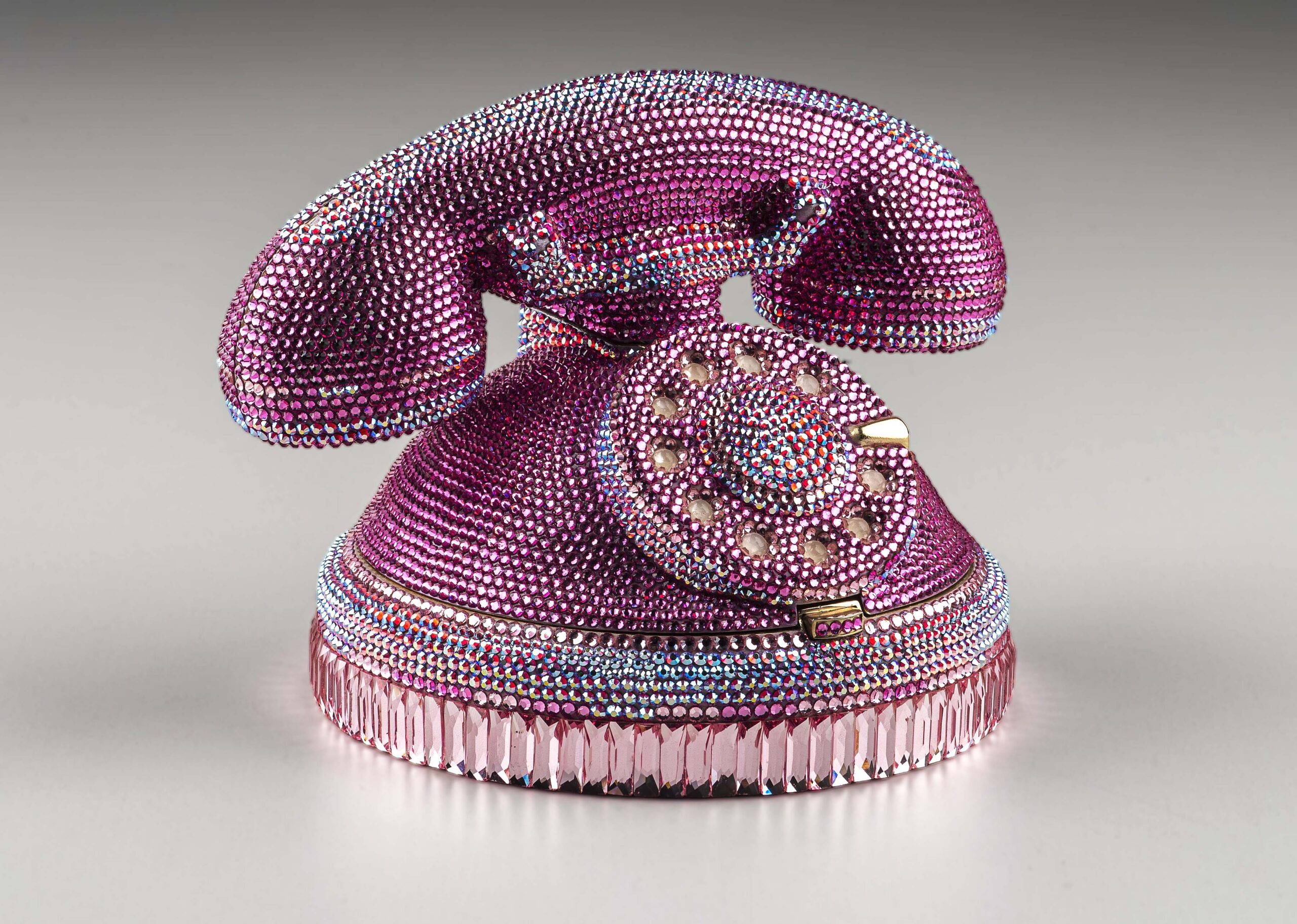
CHARLOTTE, N.C. — How did family pets and favorite foods become fashion fodder for handbags? Hillary Clinton carried one made as a likeness of her beloved cat, “Socks,” while the famed television and film series Sex and the City featured several over the years, including a pink cupcake version that was part culprit in a wedding being called off. For an album debut, Beyoncé held hers that was shaped as a Texas license plate and the owners of the Kansas City Chiefs once gave Taylor Swift a shiny microphone model as a birthday present. Everything from the fairytale figure of Humpty Dumpty and a rotary telephone to a replica of a Louis Comfort Tiffany mosaic ceiling from the former Marshall Field’s department store in Chicago, have served as stylish subject matter.
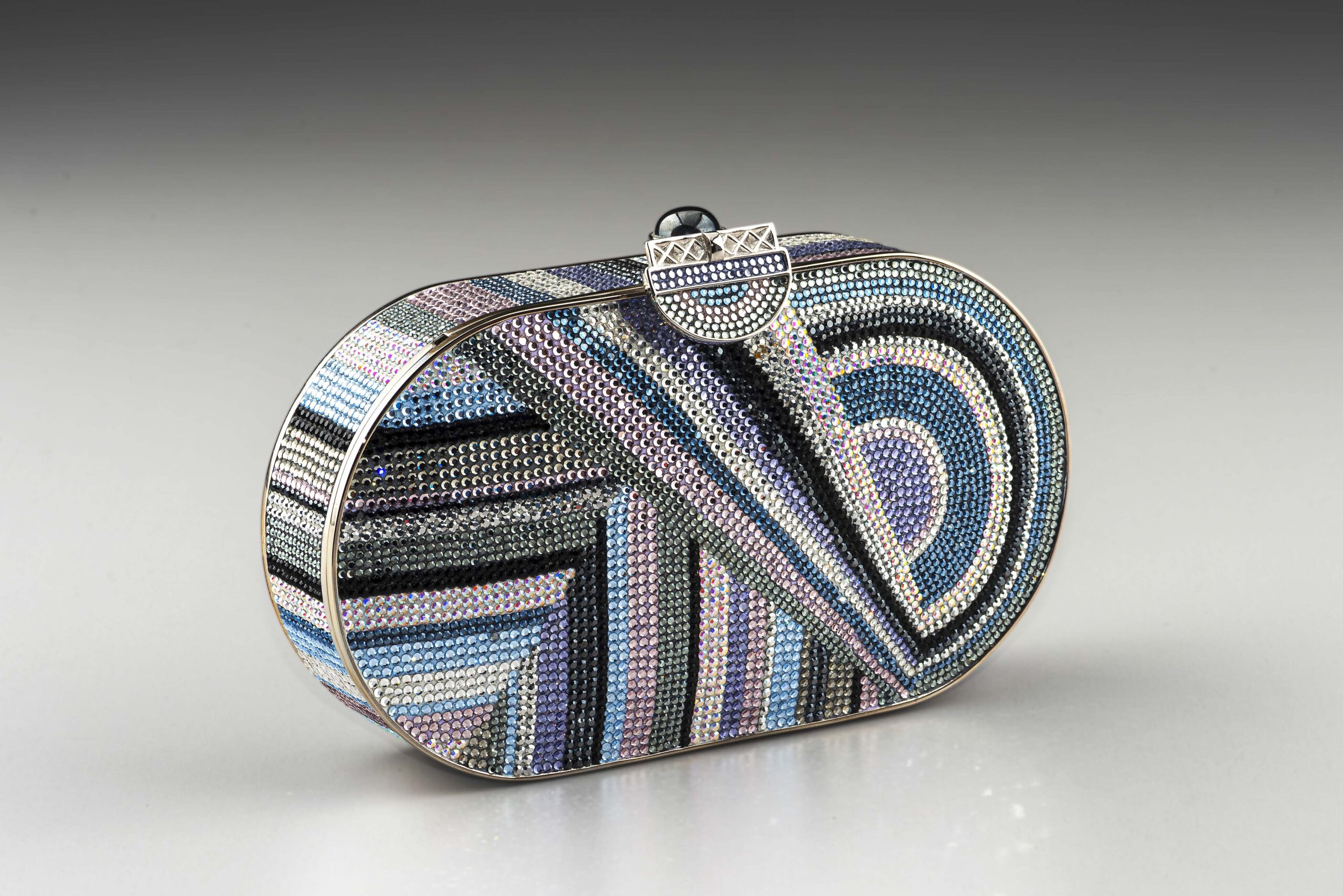
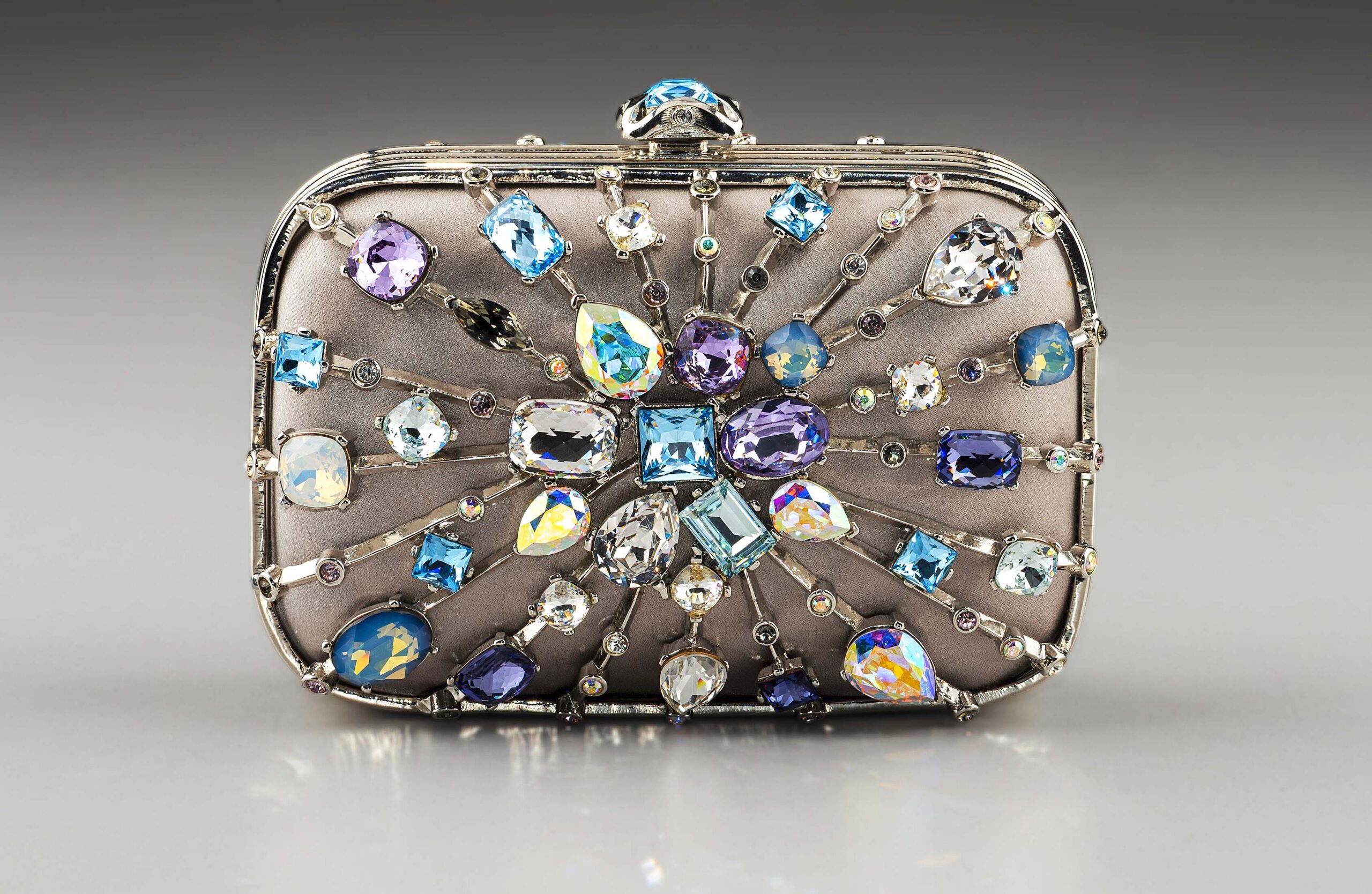
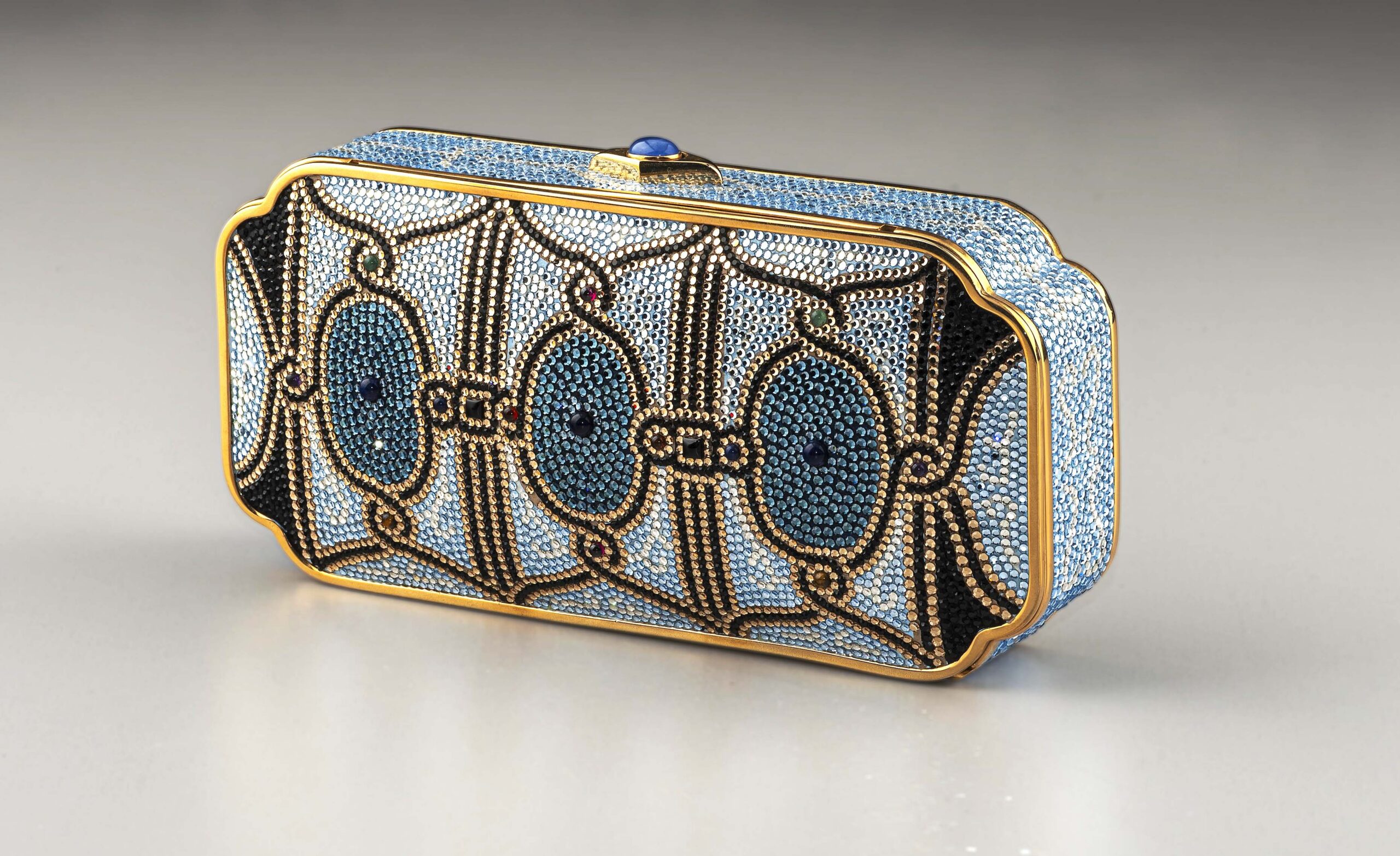
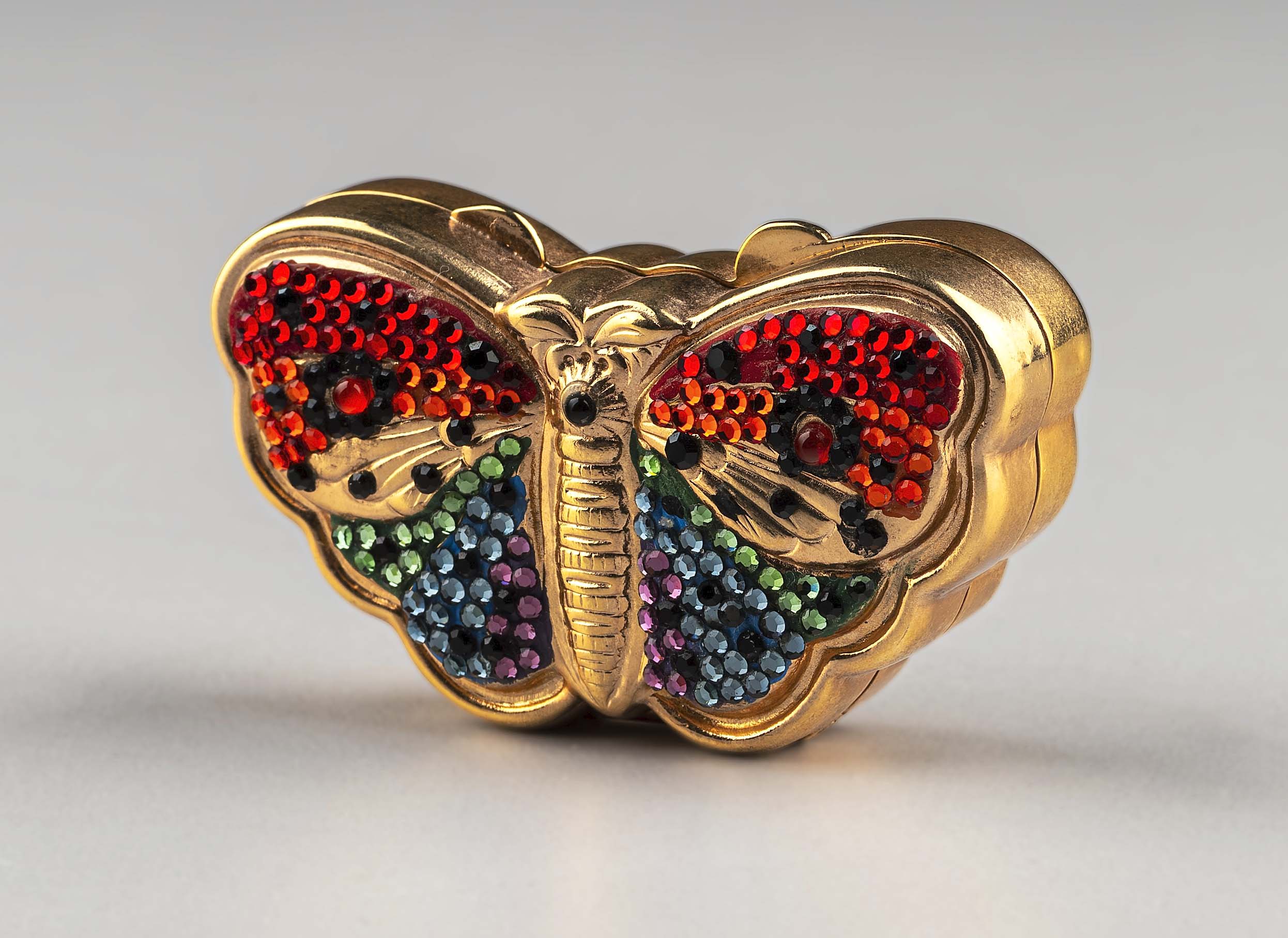
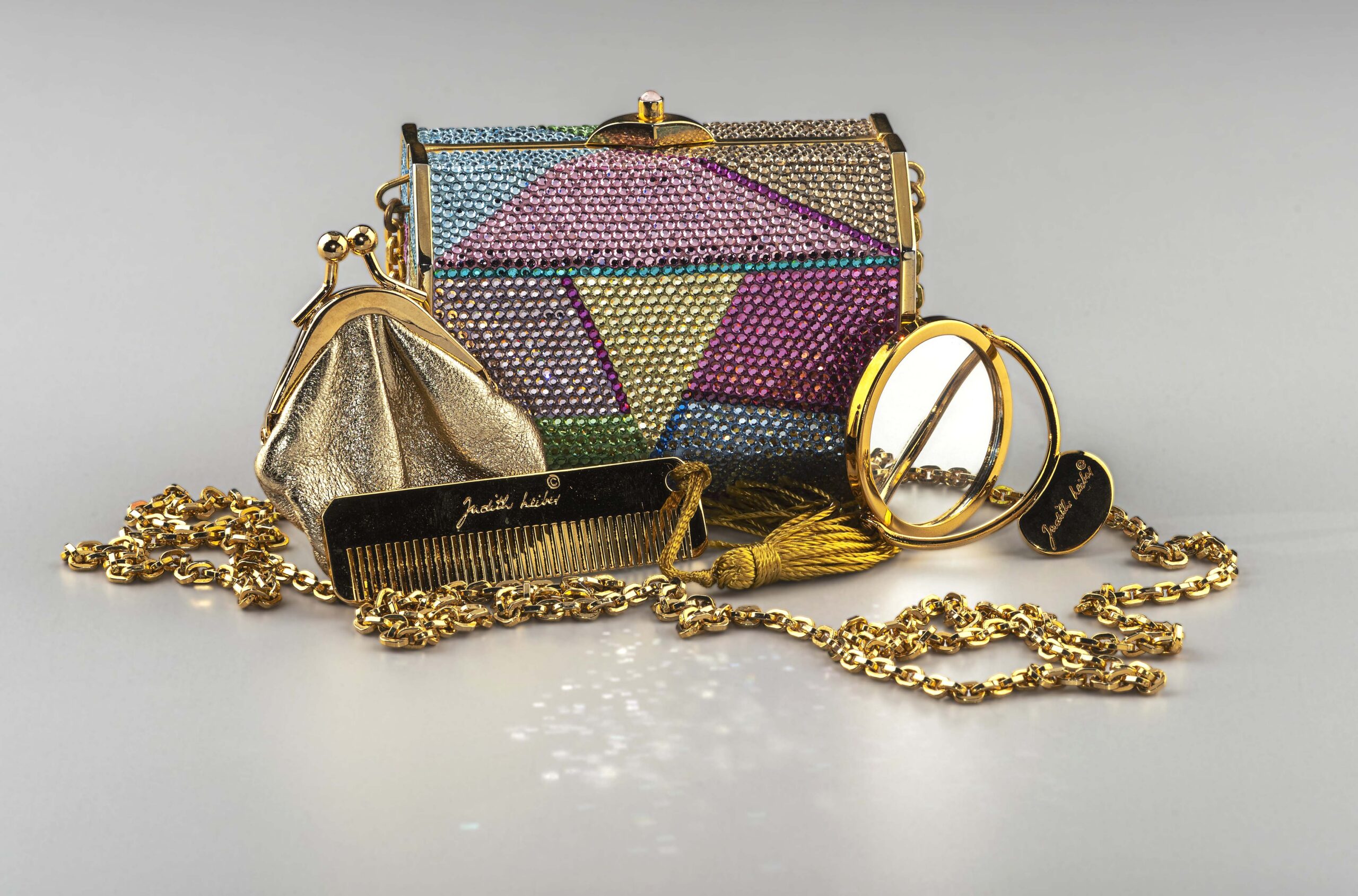
“Brilliant By Design: The Handbags of Judith Leiber” is on view at The Mint Museum’s Randolph location through July 3, presenting more than 100 accessories acquired through a recent gift to the permanent collection. Her signature evening bag, known as a minaudière, was made in metal and adorned with colorful assortments of Swarovski crystals and precious stones. Small in scale with just enough room for a tissue, a tube of lipstick and emergency cash, their sparkle made for big statements. For decades, her pieces have been worn and commissioned by first ladies, celebrities and fashion enthusiasts of all ages.
The exhibition highlights the story of the late designer’s upbringing and her career alongside that of her creations: from her formative years growing up in Hungary and later embarking on a new life in America, to the founding of her namesake brand that remains in production to date. Here, her legacy is recognized for its impact and influence on late Twentieth Century fashion and accessories design.
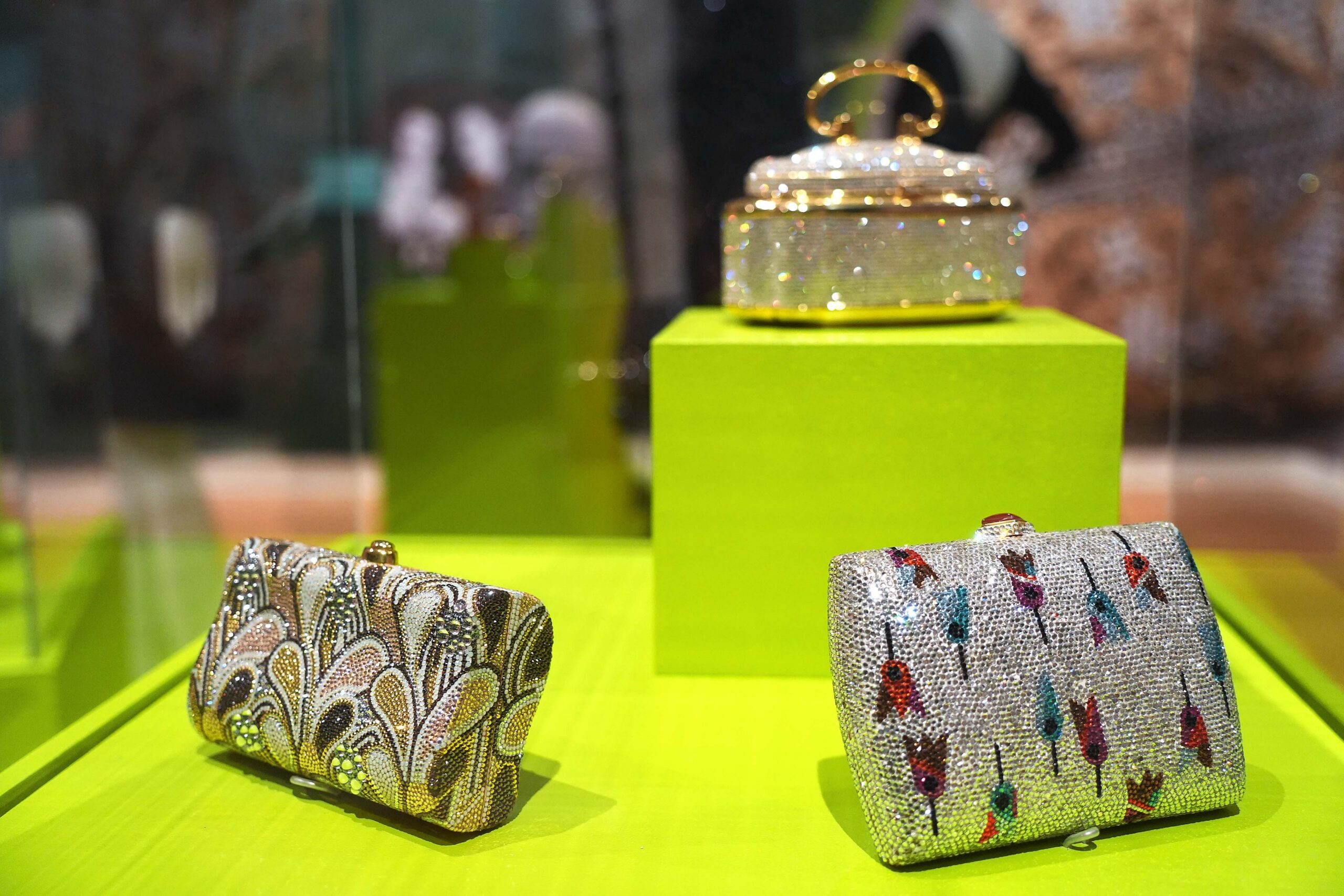
Installation image courtesy of The Mint Museum.
Judith Peto Leiber was born in 1921, in Budapest, and came of age when antisemitism was on the rise throughout Europe. Her parents were well-to-do and well-educated, and her father often bought lavish gifts for Leiber’s mother. As Bridget Kerr, the Mint’s fashion fellow, curator and author of the accompanying catalog suggests, it is possible this is one way the knowledge of a minaudière, a metal vanity case patented by the French jewelry house Van Cleef & Arpels in 1933, might have been known to Leiber from when she was a young girl.
She initially wanted to become a chemist and went to London to study at King’s College. Her hope was to work in the cosmetics industry. That plan was cut short when she returned home on school break and found herself unable to go back to the United Kingdom, needing to stay close to family as World War II erupted. There were few opportunities available to Jewish individuals given the restrictions imposed at that time. Leiber was able to join the Hungarian handbag-makers guild. She became the first female to achieve the title of master craftswoman and the skills she learned ultimately laid the groundwork for her future in more ways than one.
Leiber was selling her handmade handbags to soldiers when she met Gerson “Gus” Leiber, a Brooklyn-born US Army Signal Corps sergeant stationed in Budapest. They married in 1946 and arrived in New York City one year later. Gus went to art school under the GI Bill and went on to become a widely respected modernist painter and sculptor with works now in The Metropolitan Museum of Art and The National Gallery of Art, among other institutions. Leiber took jobs at various manufacturing and fashion firms, including that of designer Nettie Rosenstein. Leiber worked in Rosenstein’s handbag department where in 1953, she designed an evening bag for Mamie Eisenhower’s to match her pink peau de soie inaugural ball gown. It was the start of a tradition that Leiber would continue for US first ladies up until the early 2000s.
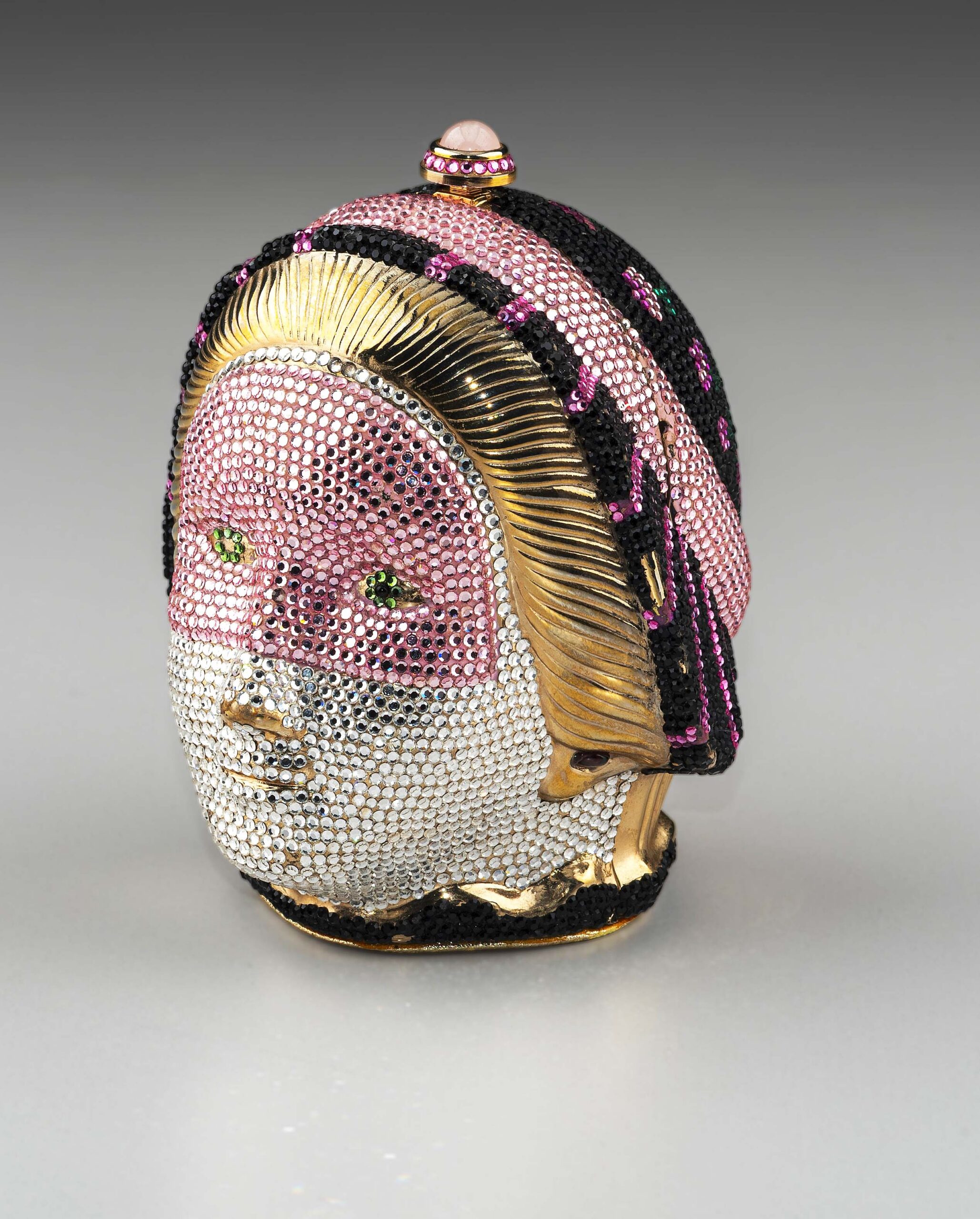
Masquerade head minaudière by Judith Leiber (American, b Hungary, 1921-2018), 1989, gold-plated brass, leather, Swarovski crystals, semiprecious cabochon stone. Gift of the family of Vicki and Jim Mills. 2025.34.14a-d.
In 1963, Gus encouraged his wife to go out on her own, and the couple rented factory space on Madison Avenue, establishing the label Judith Leiber. She oversaw everything, managing the creative and design side while Gus assisted with the business and operations. Leiber made all the samples, primarily in leather, though later the line would incorporate fabrics of silk, satin and an array of exotic skins. She also trained every employee who worked for the brand. “There was not anything in the production process that Leiber could not do herself,” said Kerr.
Immediately the company began hosting and selling to top name department stores, Neiman Marcus and Bergdorf Goodman. It would not be until years later when they embarked on marketing campaigns of any type. Then, in 1967, a shipment of metal handbags imported from Italy had an issue with green tarnishing. Not wanting to discard the imported inventory, Leiber found a solution at the New York jewelry district — Swarovski crystals. She handset each to hide the corrosion of the metal, and in turn developed the artistry of the minaudière that would make her a household name.
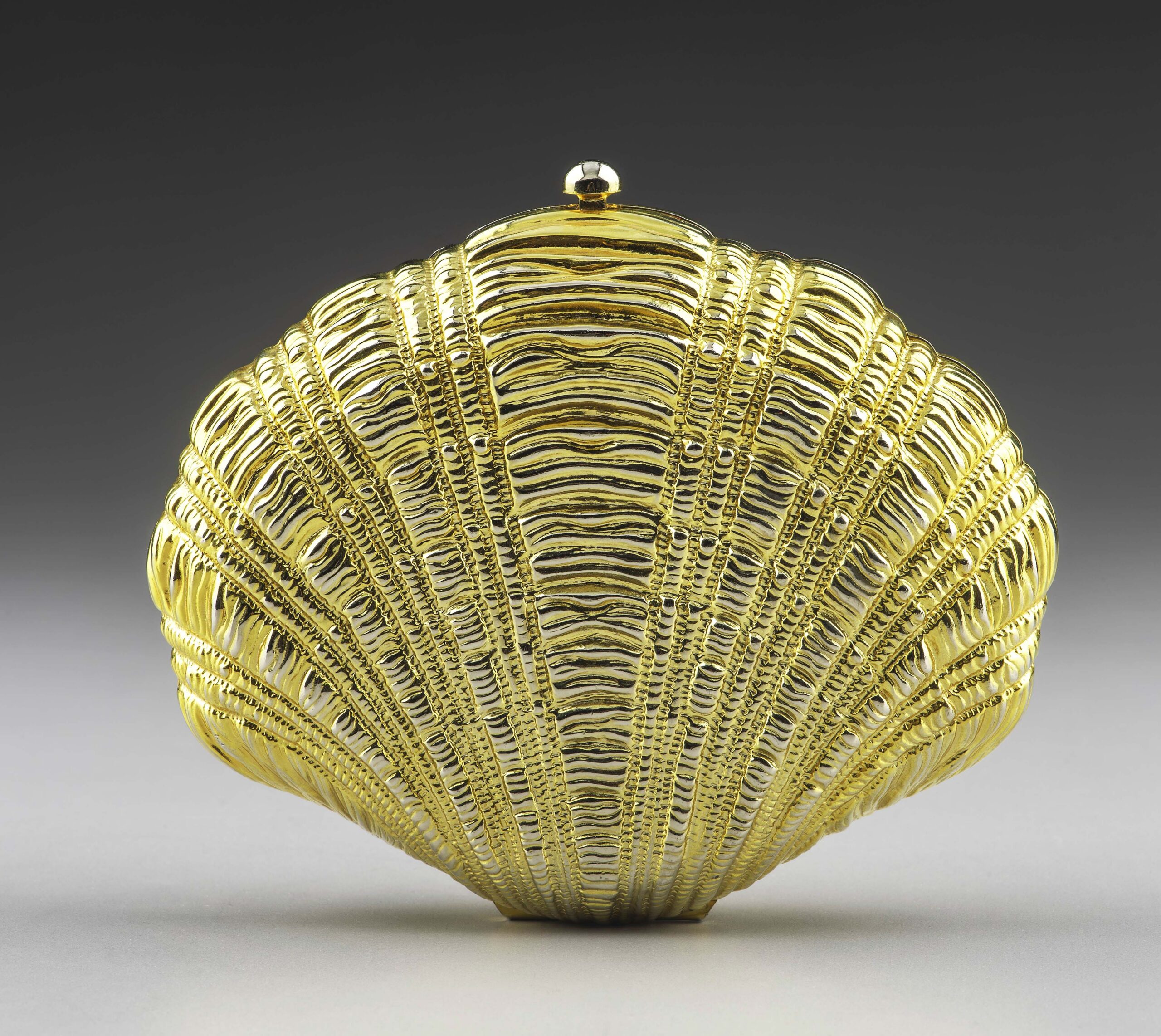
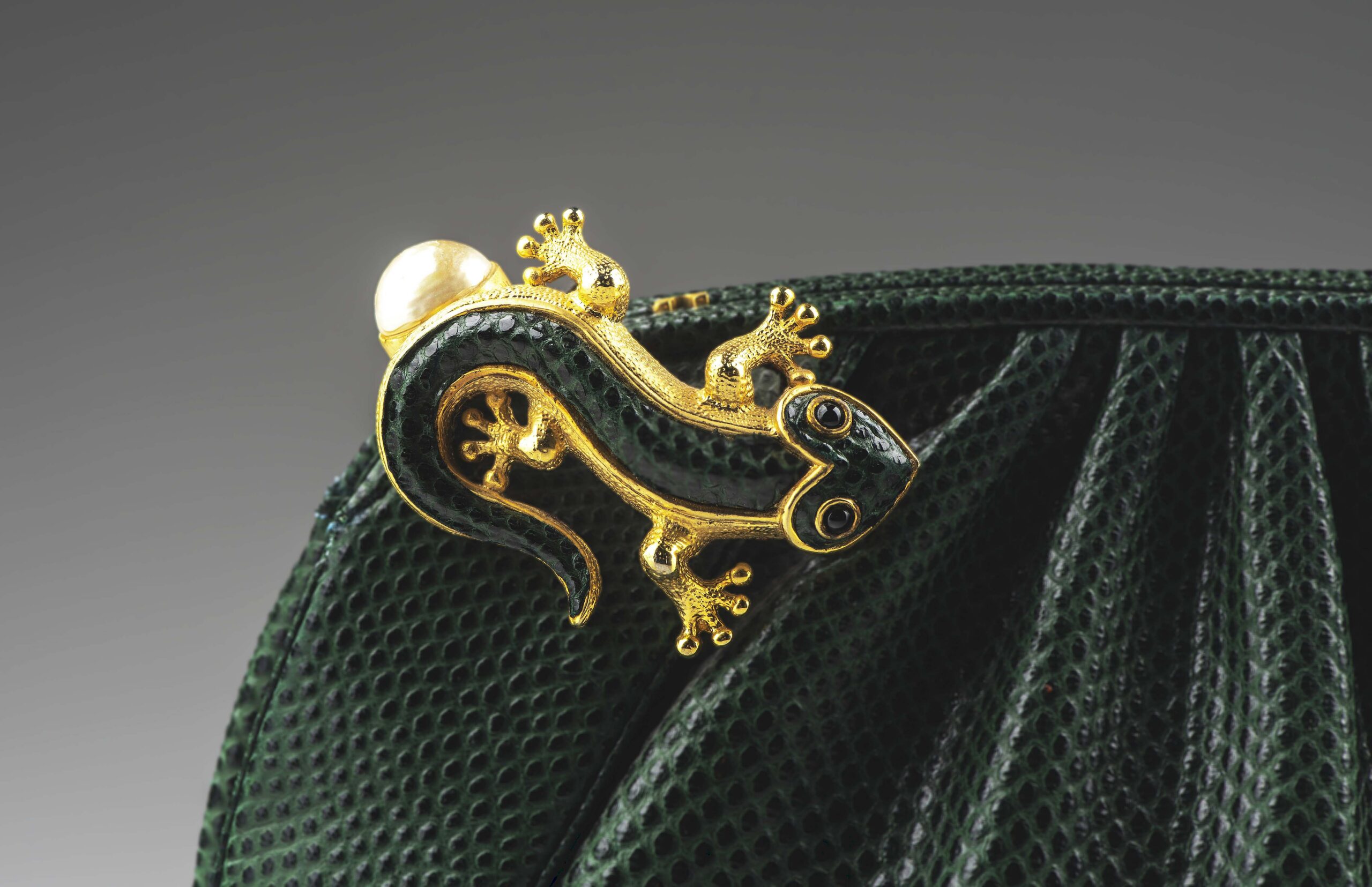
Her ingenuity and inventiveness were not, however, always the most cost efficient. In 1976, she began working with seashells, yet their delicate nature made for expensive experimentation. One of these rare mother-of-pearl evening bags with a gold-plated brass hardware frame is included in the exhibition. Similarly, semi-precious stones were used to fill the eyes of creatures like the green lizard at the corner of a clasp or that of a fish-form clutch. So many of these exquisite details can be seen within the accessories displayed in the galleries. Leiber found sequins equally as desirable in their potential for details as shown in a multi-color patchwork quilt inspired piece. And no topic was off the table. From her famous Fabergé eggs to architectural components such as the clock-shaped work modeled from the exterior of a landmark Chicago building, Leiber’s meticulous detail brought a new enthusiasm and appreciation to monumental treasures.
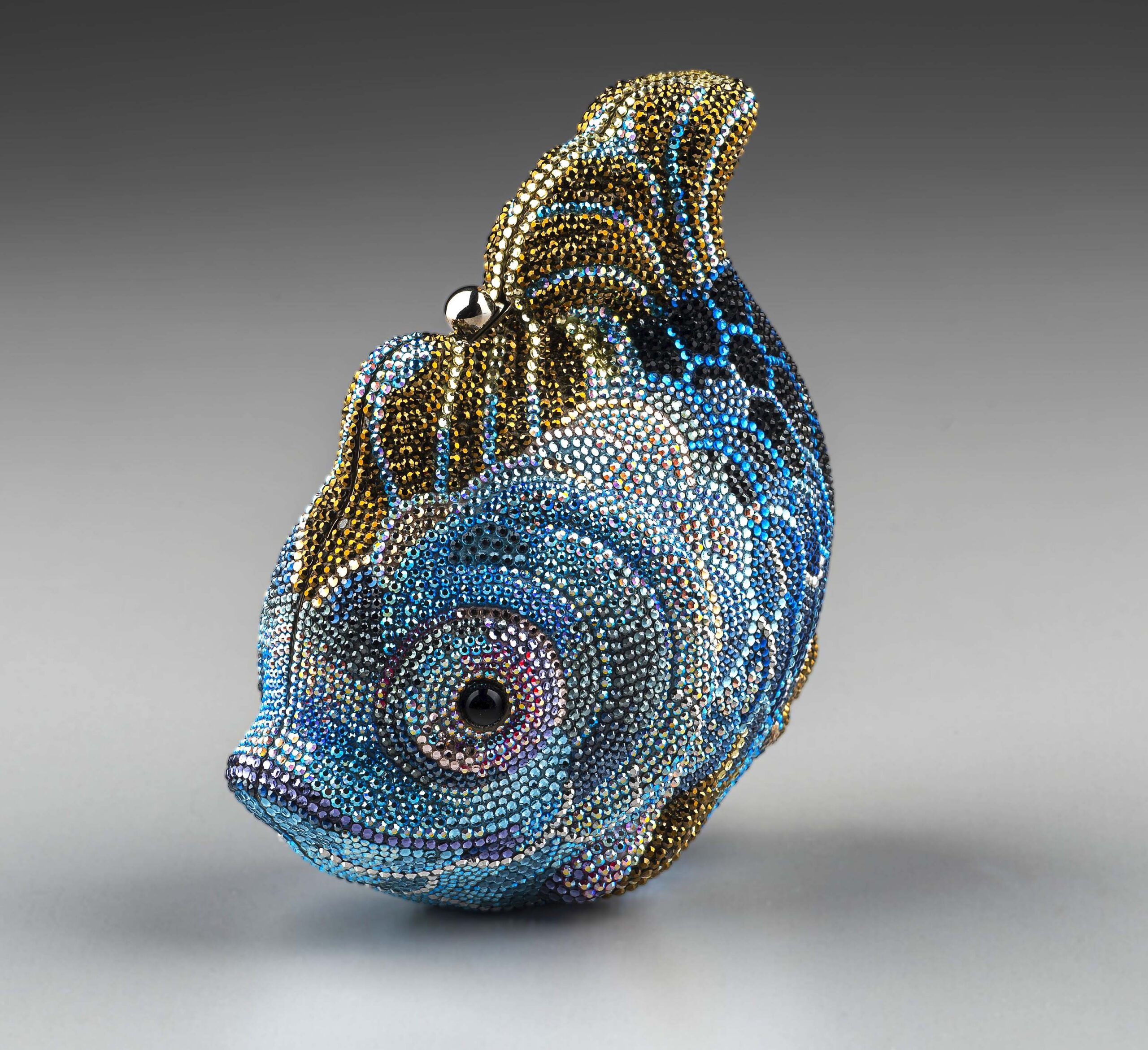
Fish minaudiere by Judith Leiber Couture (United States, 1963-), 2007, silver-plated brass, Swarovski crystals and leather. Gift of the family of Vicki and Jim Mills. 2025.34.12.
Objects are encased in glass boxes and organized thematically, rather than chronologically. Handbags, compacts, pillboxes, belts and wallets present a visual timeline of Leiber’s life and simultaneously provide a glimpse of the collector and her personal connoisseurship. Kerr felt it was important to include garments interspersed with the accessories to further the context and dialogues exchanged between Leiber and her clients. “So many people see these bright and bold handbags and ask what you would wear with it?” Examples selected from the Mint’s holdings include ensembles by French couturier Christian Lacroix, the Italian house of Moschino and American designer Bill Blass, among others, from the 1980s, 90s and early 2000s.
In 1973, Leiber was the first accessories designer to receive a Coty American Fashion Critics’ Award. In 1998, she retired, though she stayed on for several years following the sale of the company. “It wasn’t until then that she began documenting her experience as a Holocaust survivor,” said Kerr, noting that in her research she learned that Leiber credited having made it through long, dark nights in the ghetto by imagining and dreaming of handbag designs.
The Leibers died in 2018, having been married for 72 years; they passed away within hours of each other. They only collaborated their art practices once, in 1992, when his painting entitled “The Much Admired” was depicted on a minaudière. It illustrates a scene of a woman holding a cocktail and a male suitor in profile nearby, and an example of this special and limited edition is on view in the show.
“She could really see a purse in anything,” said Kerr. “If you look at just the work, it’s hard to envision the story of Leiber’s past — these bags can’t help but make you smile.”
The Mint Museum Randolph is at 2730 Randolph Road. For information, www.mintmuseum.org or 704-337-2000.