New Hampshire Antiques Week 2026: Granite State Antique Shows
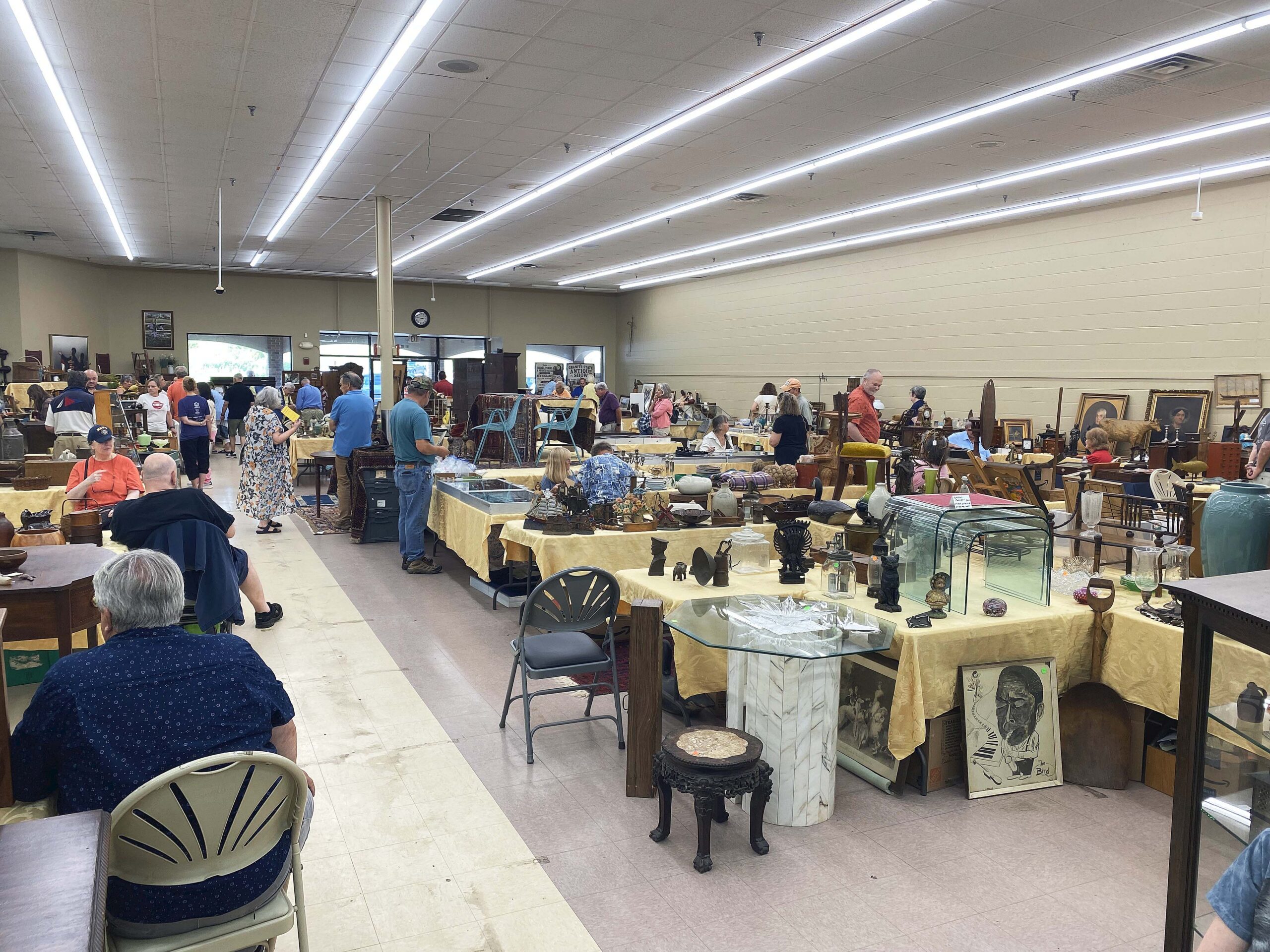
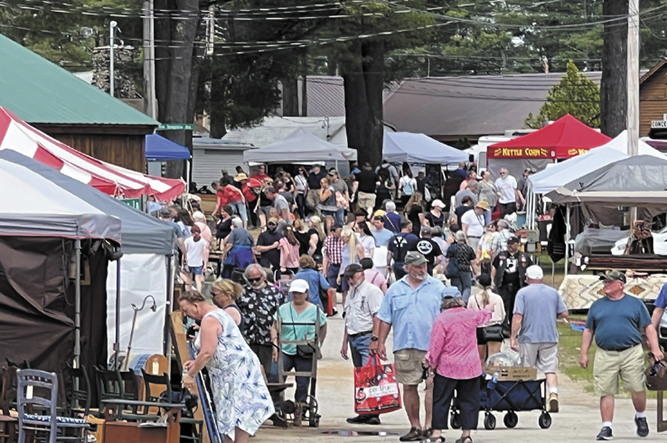
Early buyers picked some booths clean just one hour into opening.
Review & Onsite Photos by Z.G. Burnett
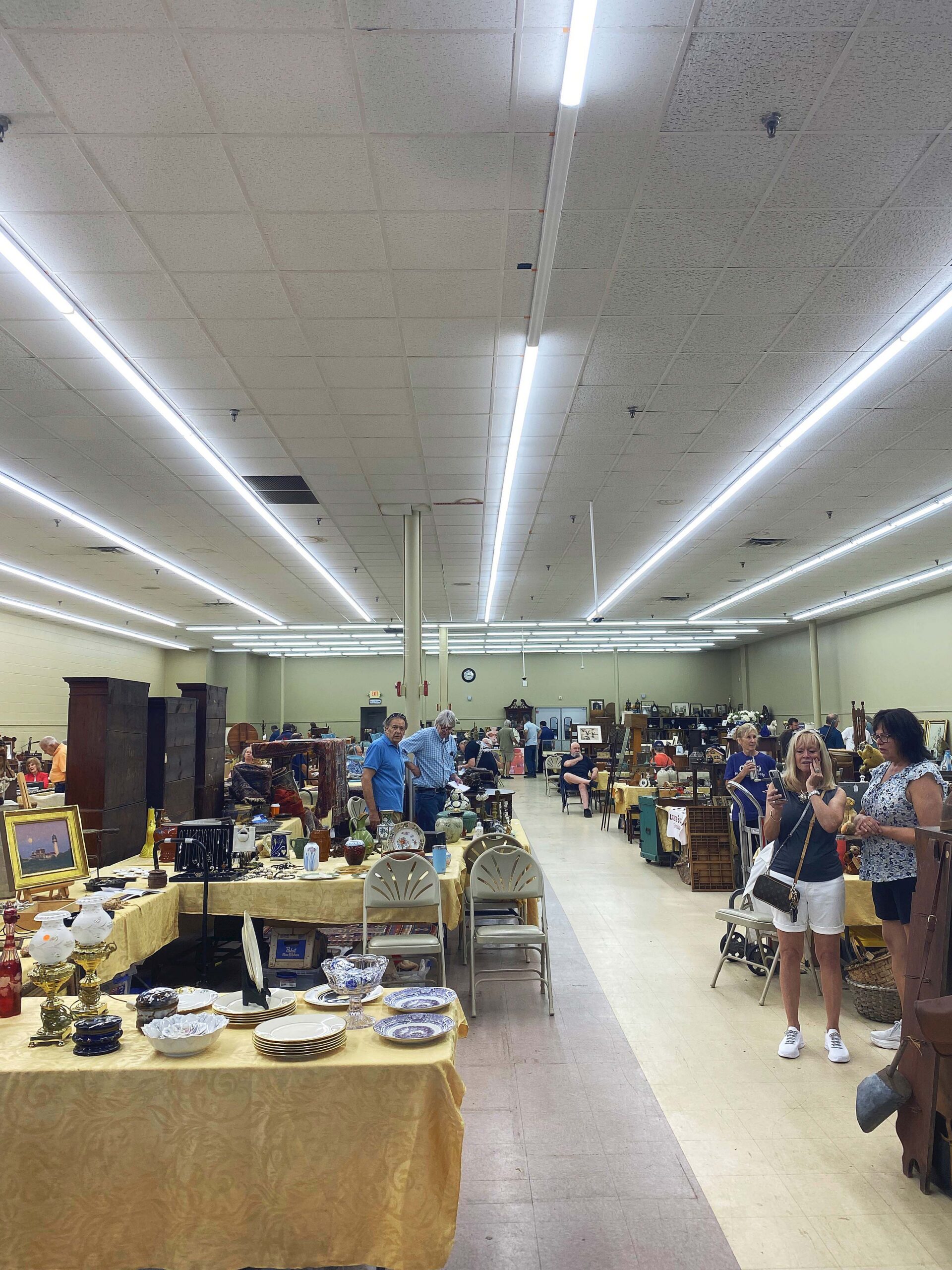
MILFORD, N.H. — Granite State Antique Shows opened its doors to 2026’s New Hampshire Antiques Week on Sunday, August 2, welcoming early buyers at 7 am. Formerly Milford Antique Shows, Granite State is now managed by Stephen P. Cyr, who is proud to carry on the torch.
“There was a lot of positivity… [and] a little bit of uncertainty, knowing that the show was under new management,” Cyr wrote during the following week. “People seemed to like what they saw, and I had a lot of wonderful feedback.” In addition to the wide variety and quality of merchandise presented by over 50 dealers, Cyr assembled a new staff to assist customers with their purchases in the easily accessible parking lot. The complimentary coffee and baked goods were also received well, of course. Between 300 and 400 people shopped at the show, which was open until 2 pm. “It’s a great feeling when you hold an event and it goes so smoothly,” he added.
As heavily curated and social media-ready markets become the business standard, Granite State holds strong with incredible finds from the least likely of places. Casey Smolla shared one such story attached to a pair of stained-glass windows designed by none other than Frank Lloyd Wright (American, 1867-1959). “They were left on a trash pile,” he shrugged. “It’s mostly Americana [at this show], but someone might appreciate them.” Smolla consulted with an expert about restoring the damaged window, who described it as an “easy fix.” The cost would be a small price to pay for revitalizing Wright’s design.
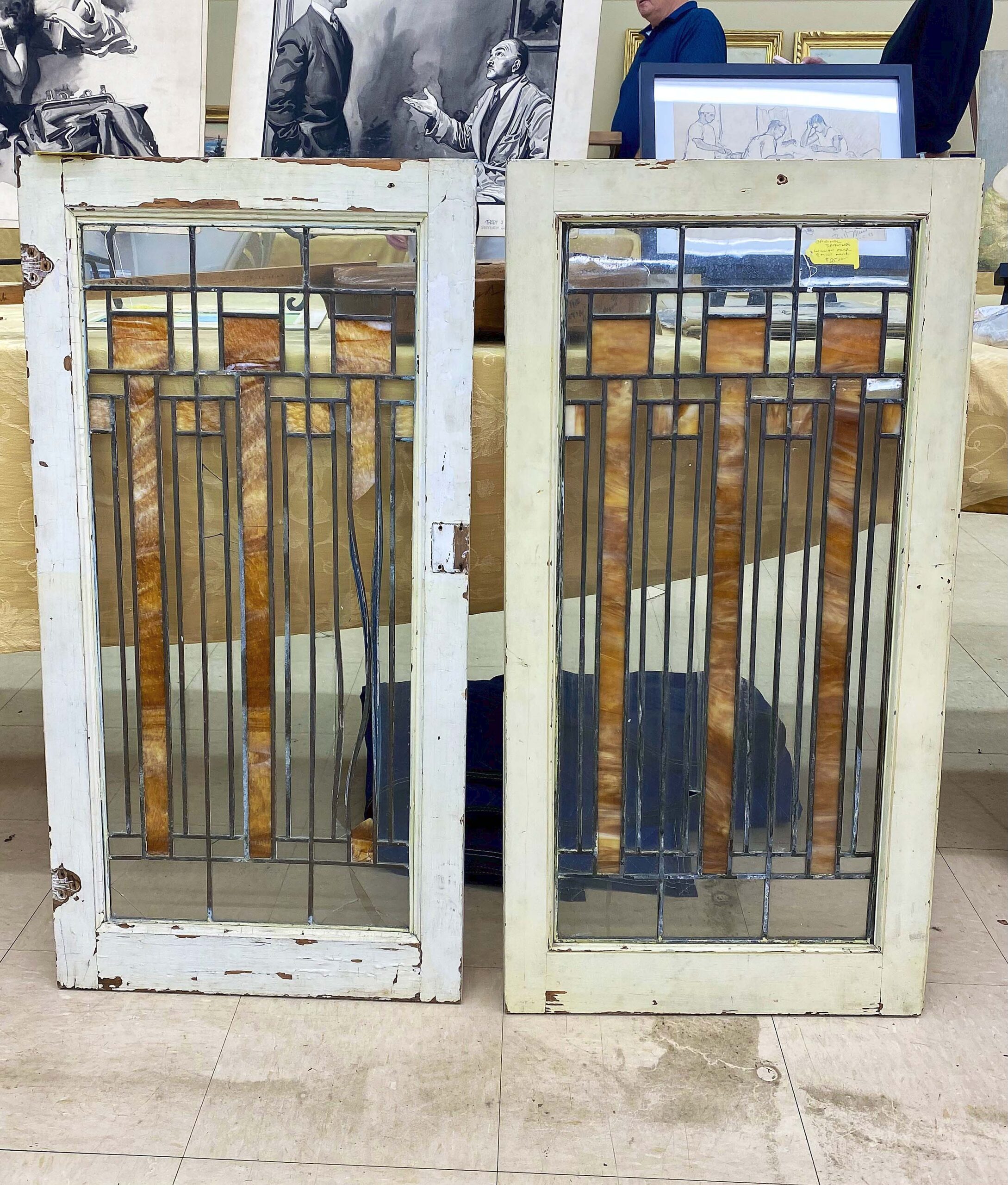
True trash heap treasure finds are few and far between these days, but this pair of Frank Lloyd Wright windows was a notable example. Casey Smolla, Seabrook, N.H.
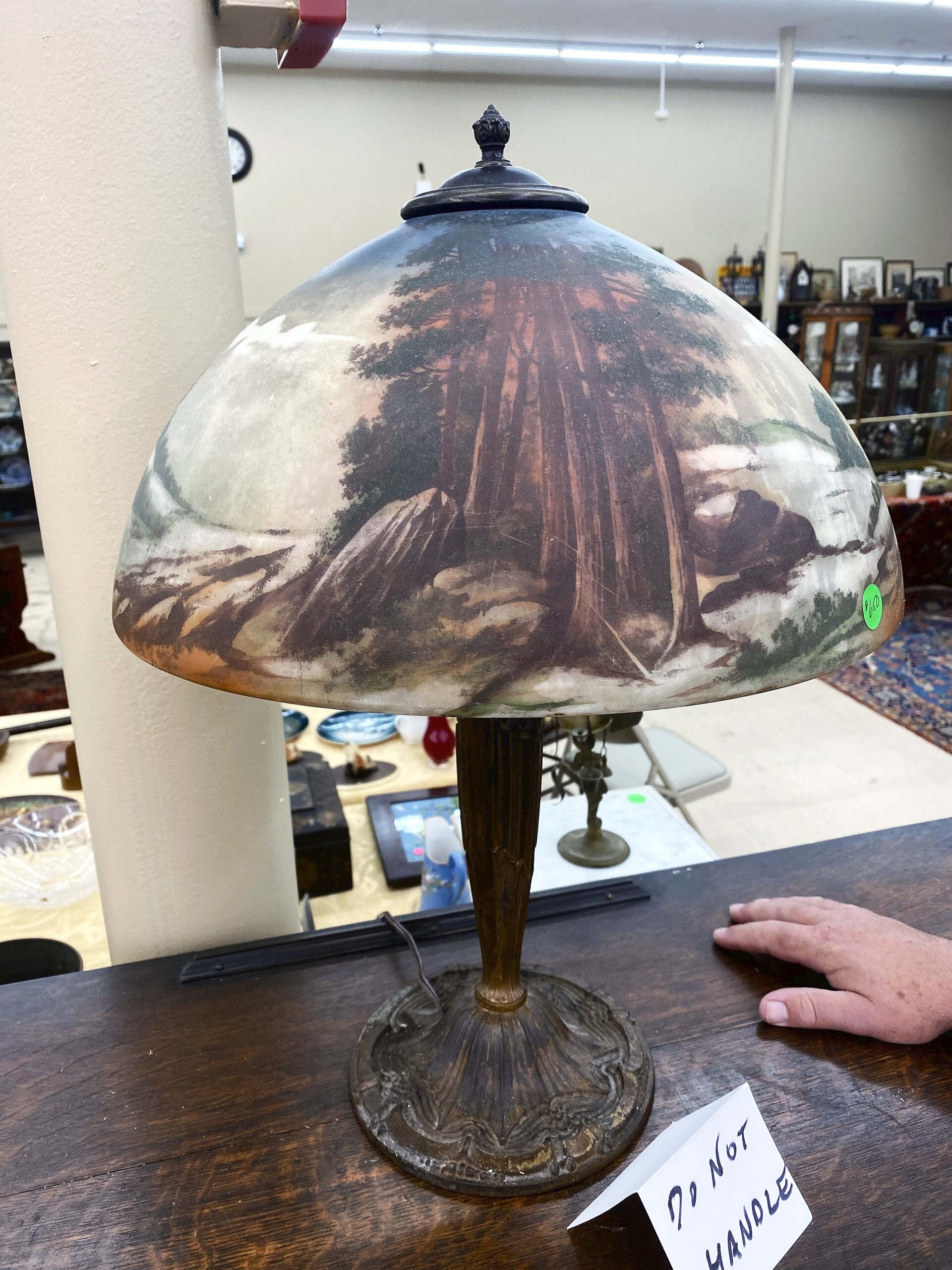
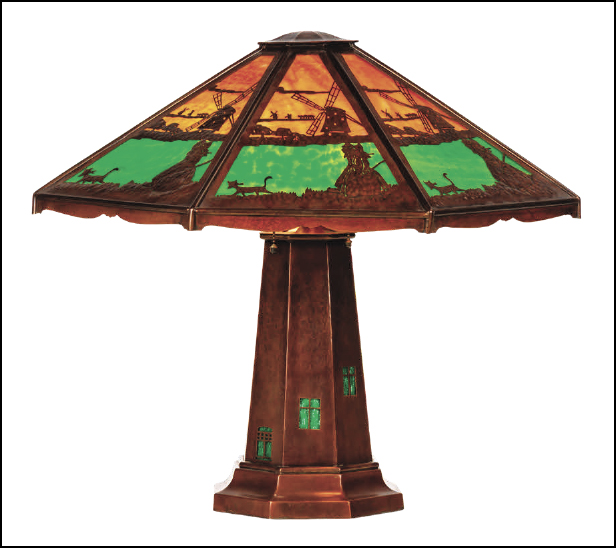
Cyr brought a large offering of objects for sale, as well. One of his showpieces was a table lamp from the Pittsburgh Lamp, Brass and Glass Company that operated in Pennsylvania from 1901 to 1926. Shortened to “Pilabrasgo” on their catalogs, it was one of the United States’ major lamp manufacturers of the early Twentieth Century. Cyr’s retained both the original brass stand and its reverse-painted glass shade; the former showed its age yet was in great condition, and the latter’s scarce forest scene was excellently preserved.
Tim Zalenski showed an even rarer example of goods produced in Nineteenth Century Pennsylvania. Presented in their original carved gilt frames, a pair of vibrant ivorytype portraits had pride of place in his booth, showing a fashionable couple whose garments and set dressing tones matched exactly. Ivorytypes were meant to replicate the appearance of a painted ivory portrait at a lesser cost, and due to their lengthy, complex development process, were only produced by a handful of photographers from around the 1850s and 1860s. According to the Historic New Orleans Collection’s website, two salted, hand-painted paper prints with watercolors would be created from the same glass plate negative. Once the prints were dry, the makers poured a mixture of warm beeswax and gum dammar onto a thick piece of glass and then the more detailed print would be applied. The colors became less prominent during the transfer, creating a more translucent appearance. Next, the second colored print was mounted to a backboard, aligned with the image on glass and taped together before framing or casing. Zalenski’s luminous couple was photographed by B.F. Ferguson of Philadelphia, likely between 1863 and 1867, his label still tacked to the ivorytypes’ frames.
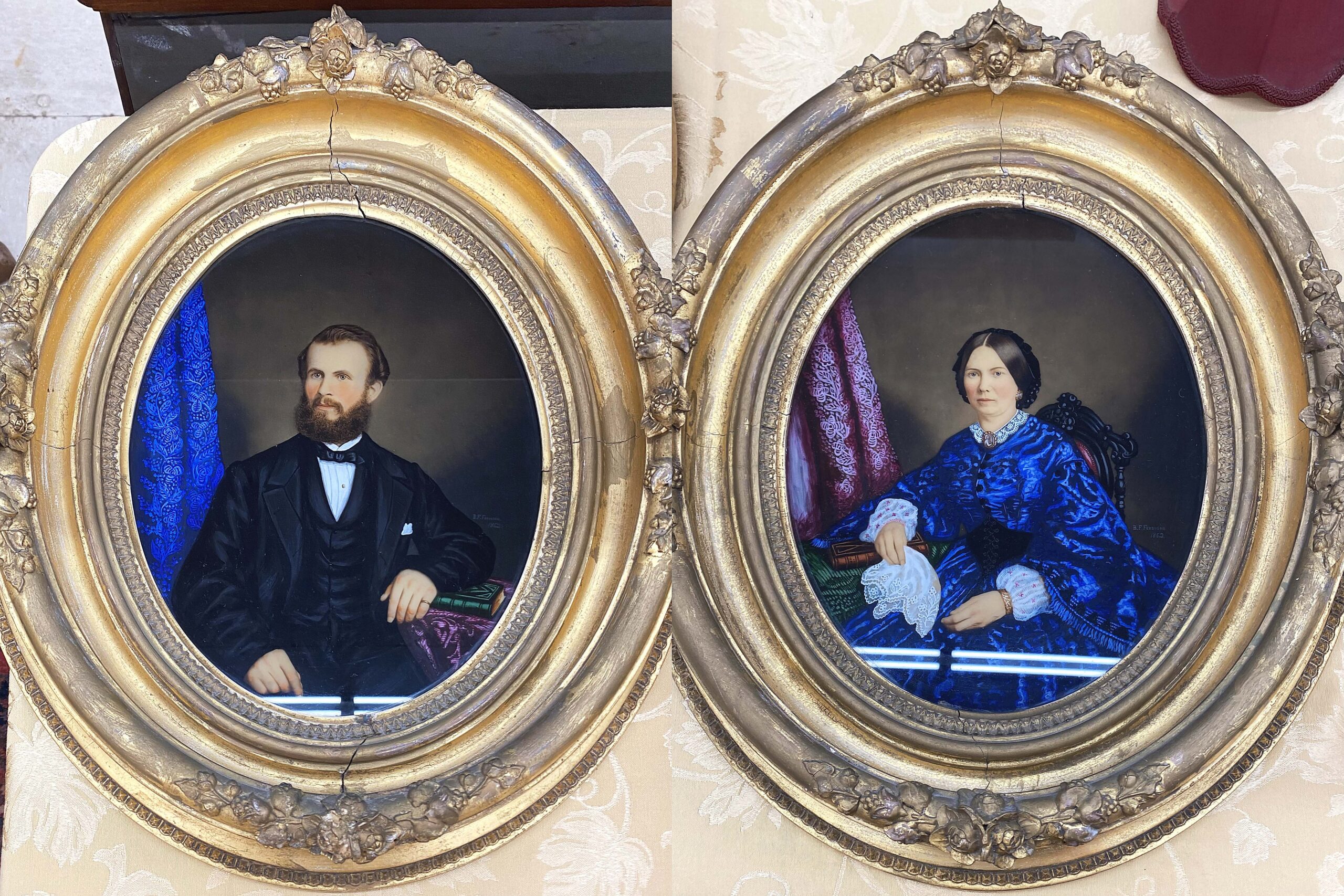
Ivorytypes are an extremely rare format of early photography, and Tim Zalenski presented an intact pair in glowing condition. Peterborough, N.H.
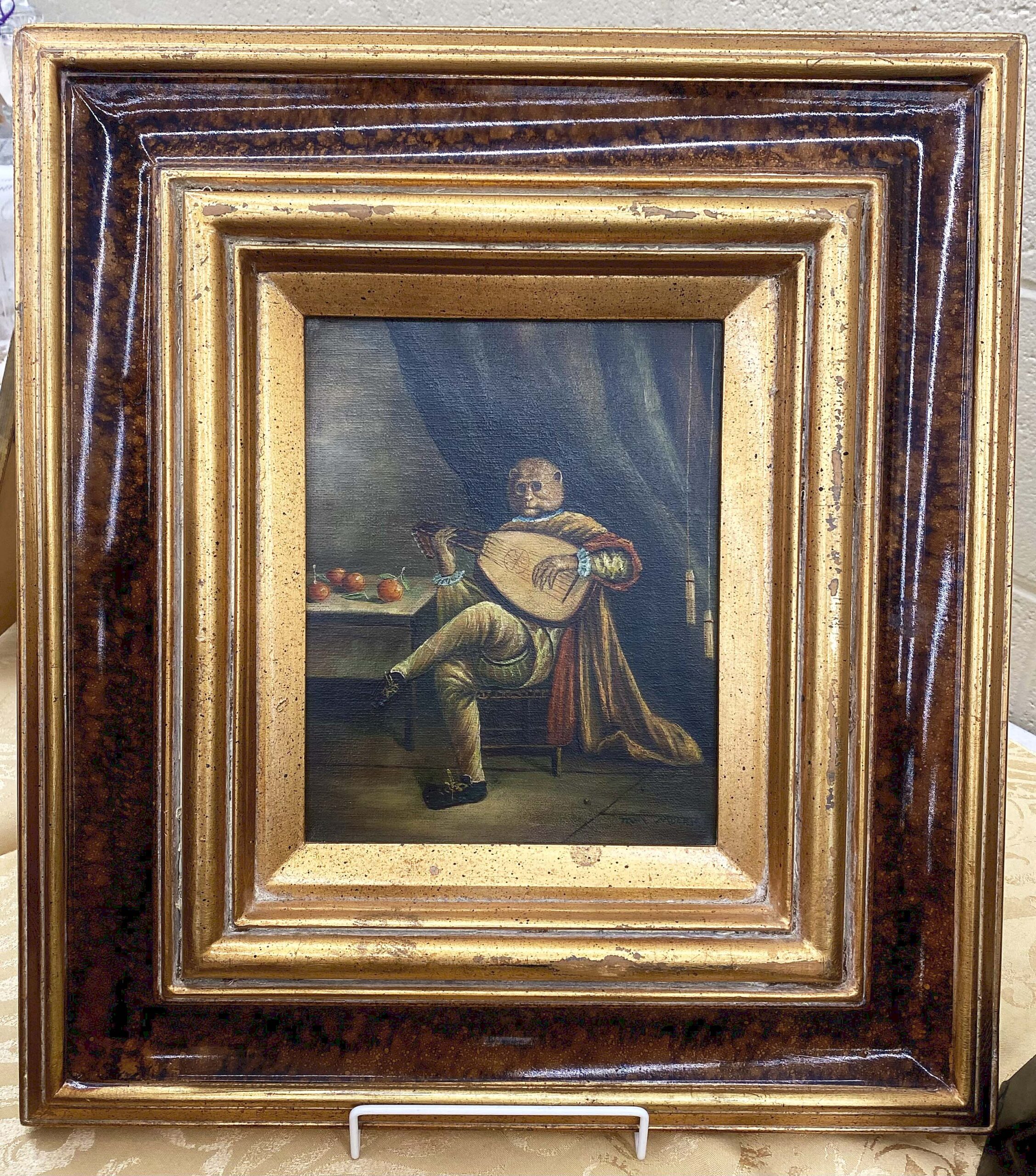
One of the show’s more playful pieces came from Robert DeLuca: a framed oil on canvas painting of a lute-playing monkey that was signed by “Tom Morris.” Anthropomorphized monkeys are a common theme in the European art genre known as singerie, and Morris styled this example after Dutch master Jan Steen’s circa 1663-65 self-portrait. Replicating the usual tone of his genre paintings, Steen portrays himself in good humor with a wry wink at the viewer. Not much is known about Morris, whose monkey pastiches are sparingly offered on the secondary market, but the sitter’s simian transformation suggests that he was in on Steen’s self-deprecating joke.
Where animals playing instruments are, toys are likely to follow. Nearby, Lori Teahen of Greenfield, Mass., had a nursery’s worth of antique teddy bears and other stuffed animals. The Steiff and other early Twentieth Century mohair bears took pride of place on her table, all in varying degrees of condition. The earliest and most valuable was a Steiff “17 PAB,” a 25-centimeter white mohair Teddy bear with its original shoe button eyes, “blank button,” trunk and remnants of a white tag. One of its contemporaries was another white teddy from 1906-08 that measured about 14 inches and also had shoe button eyes, but its foot pads were replaced. Teahen mentioned that it was appraised by Steiff specialist Richard “Dick” Frantz in 1994. Most of the other bears dated to the 1940s.
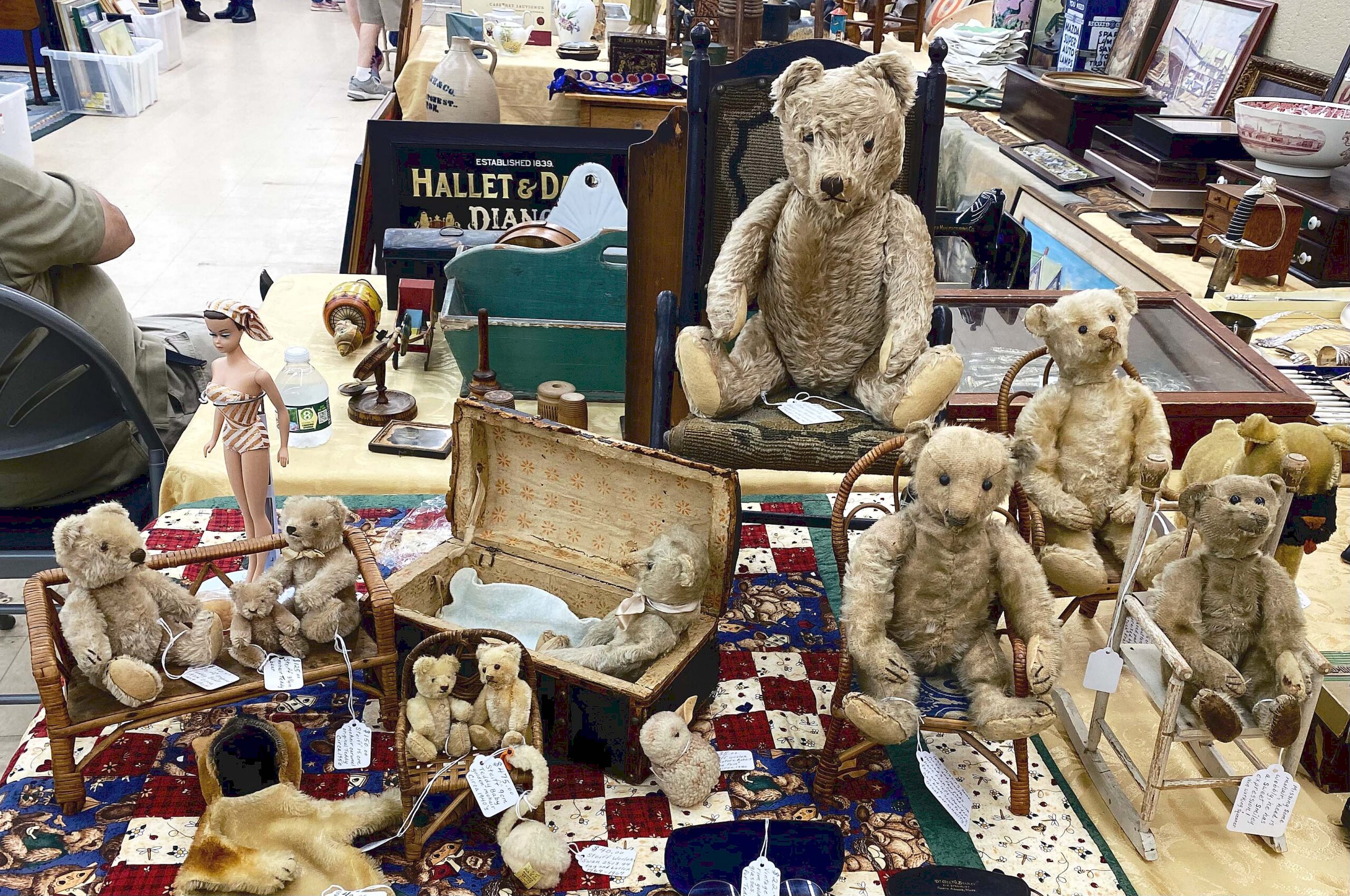
These teddy bears were mostly Steiff, dating from 1905 to the 1940s. Teahen’s Treasures, Greenfield, Mass.
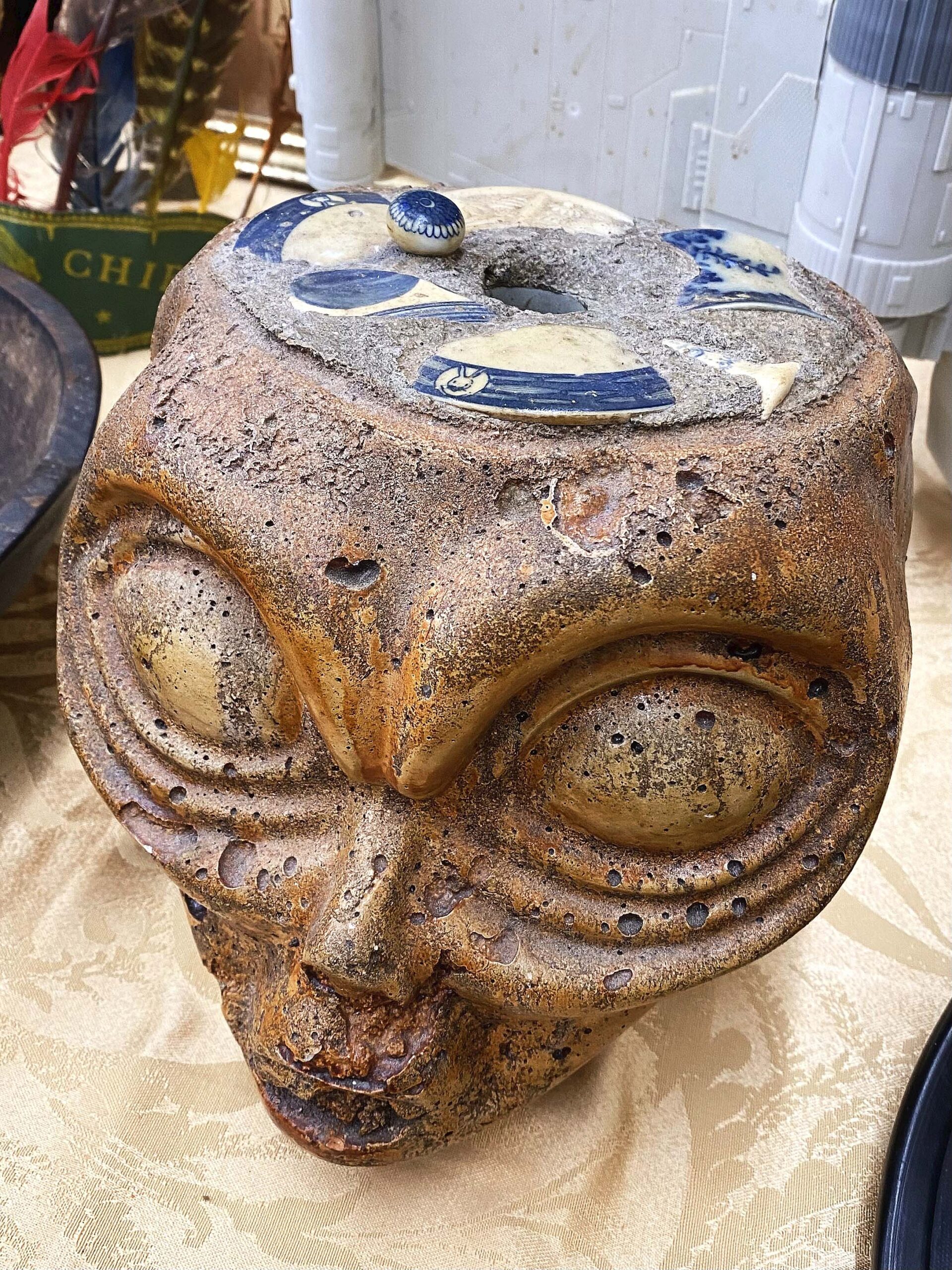
Granite State vendors do not shy away from mixing contemporary objects with classic pieces, and some deserve a closer look. Mod Sanctuary, an eBay-based dealer that also sells at local markets the nearby New Hampshire Antiques Co-op, had a sienna-glazed cast concrete alien head that sported blue-and-white shards in its dome like a memory jug. Even more strange, it was a candleholder! Though not everyone’s idea of Midcentury Modern, “gray” aliens were a common motif in the Atomic Age’s pop culture, especially important to science fiction literature and film. The head was illegibly signed on its base and was dated between 1954 and 1962. Definitely in the realm of Outsider art, it was displayed alongside a group of Nineteenth Century naive-style portraits in a manner that is becoming the norm among collectors. Though from opposite ends of the design spectrum the objects were cohesive as busts, and the alien’s ceramic and porcelain shards were contemporary to some of the portraits. Whatever the era, “what’s good is good,” and that mode of thinking just might be the future of this business.
Granite State Antique Shows is at 185 Elm Street, and the next open show is September 13. Weekly Sunday shows will begin mid October.
For information, www.gsashows.com or 603-506-9848.