Milwaukee Art Museum
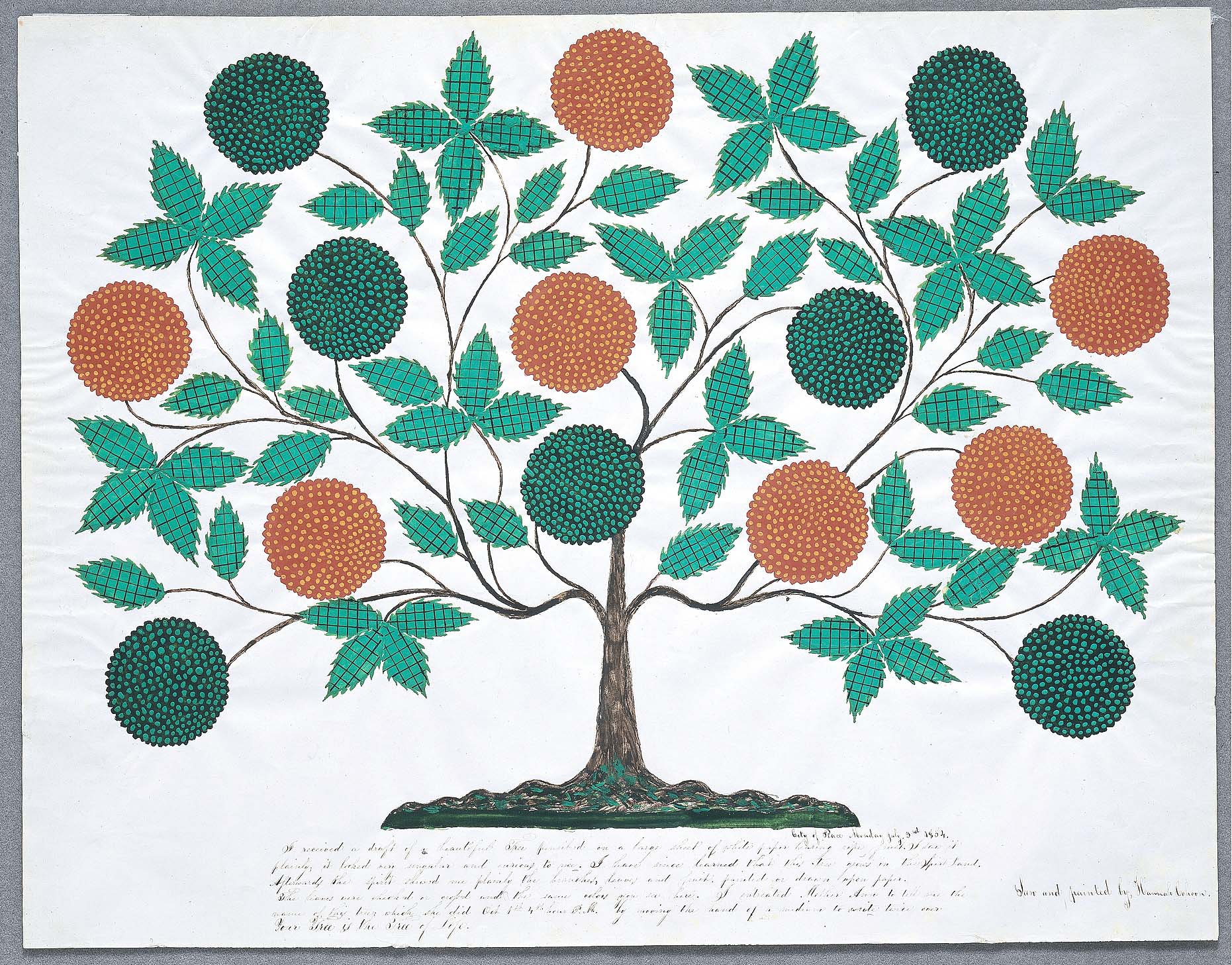
“The Tree of Life” by Hannah Cohoon, Hancock, Mass., 1854. Gift of Dr and Mrs Edward Deming Andrews, Collection of Hancock Shaker Village.
By James D. Balestrieri
MILWAUKEE — At its height in the 1840s, a century after the sect broke away from the Quakers, Shaker membership in the United States peaked at around 5,000. From its inception in Britain in the rapidly industrializing cities of Bolton and Manchester, the Shakers, led by Mother Ann Lee, migrated to the American colonies in 1774.
As noted in the text accompanying “The Shakers: A World in the Making,” on view through January 31 at the Milwaukee Art Museum, the sect “formally known as the United Society of Believers in Christ’s Second Appearing, built entire communities around equality, communal living, shared labor and spiritual purpose. Their furniture, tools, textiles, architecture and domestic objects reflected those beliefs, demonstrating how design could shape everyday life. Every object served a purpose. Every space was carefully considered. Nothing was made without intention.” Today, only two or three Shakers remain in Sabbathday Lake Shaker Community in Maine.
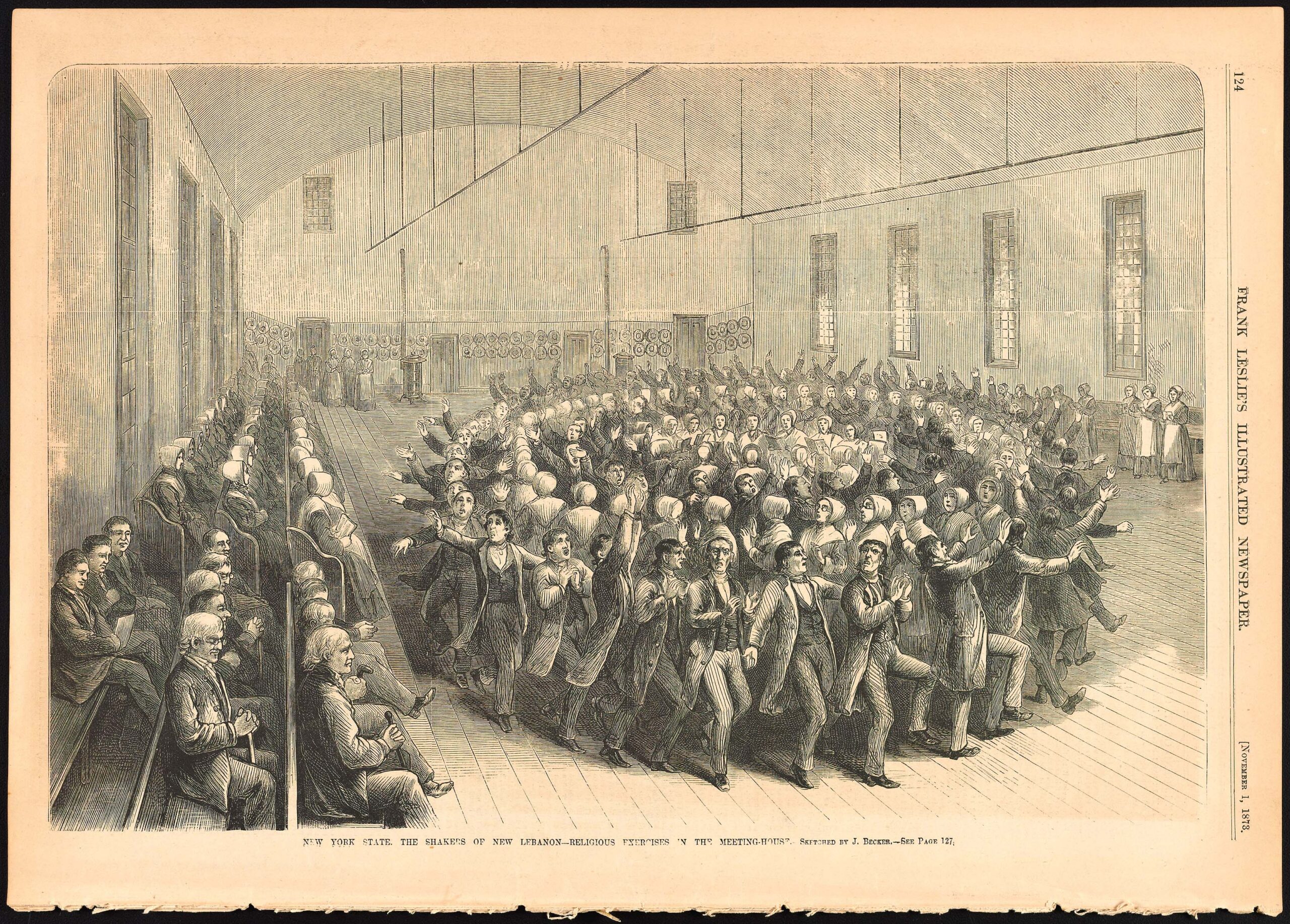
Shakers acquired their name because of the ecstatic possession of their bodies during worship that was seen as a physical sign of divine manifestation and of the absolute commitment of the Shaker, soul and flesh. Such expression, which would later extend to spirit drawings, dances and songs, as well as the furnishings that have made them famous meant that the body itself was a vessel for spiritual awakening, a tool with a purpose.
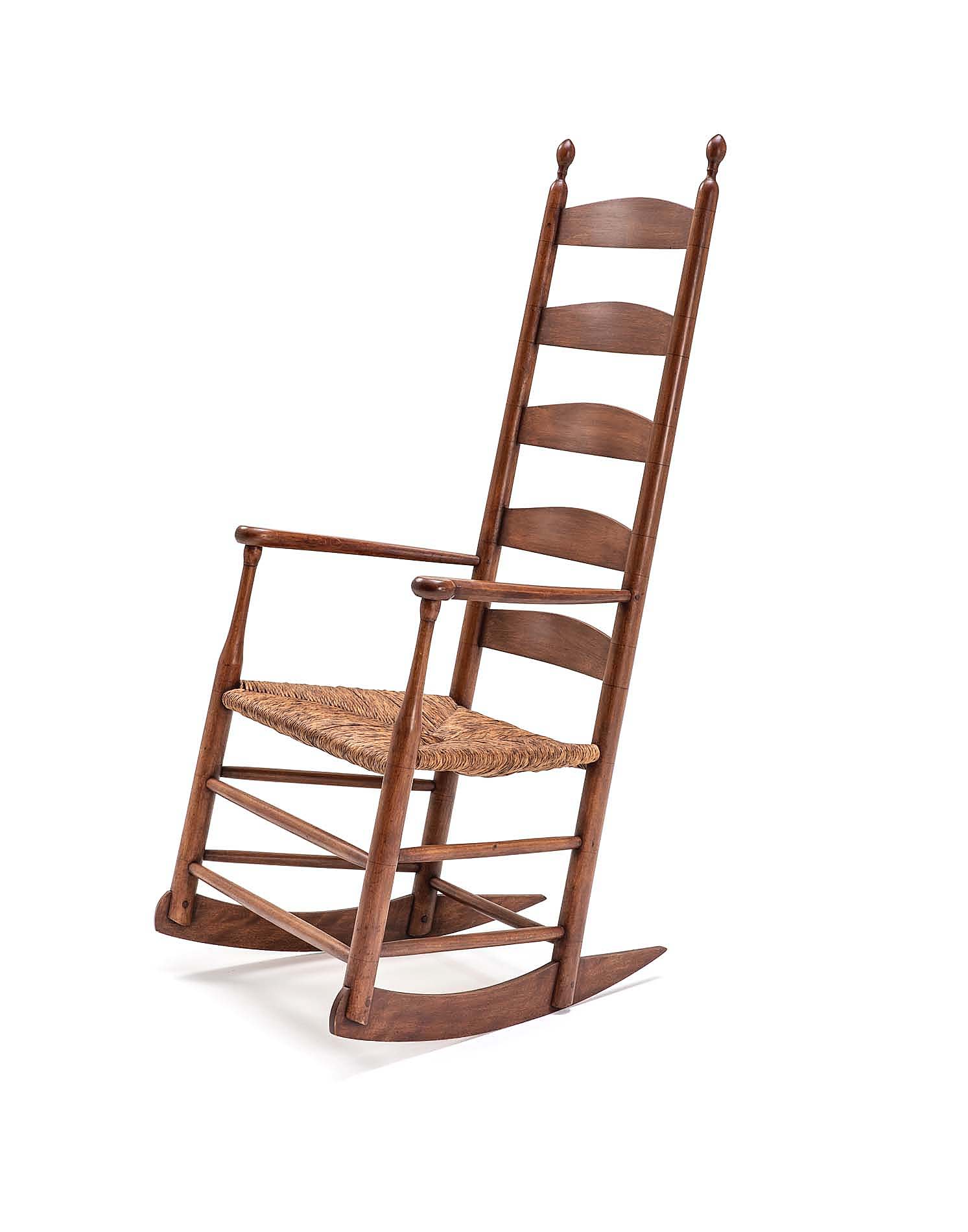
Rocking Chair, Mount Lebanon, N.Y., circa 1850-70. © Vitra Design Museum. Photo: Andreas Sütterlin.
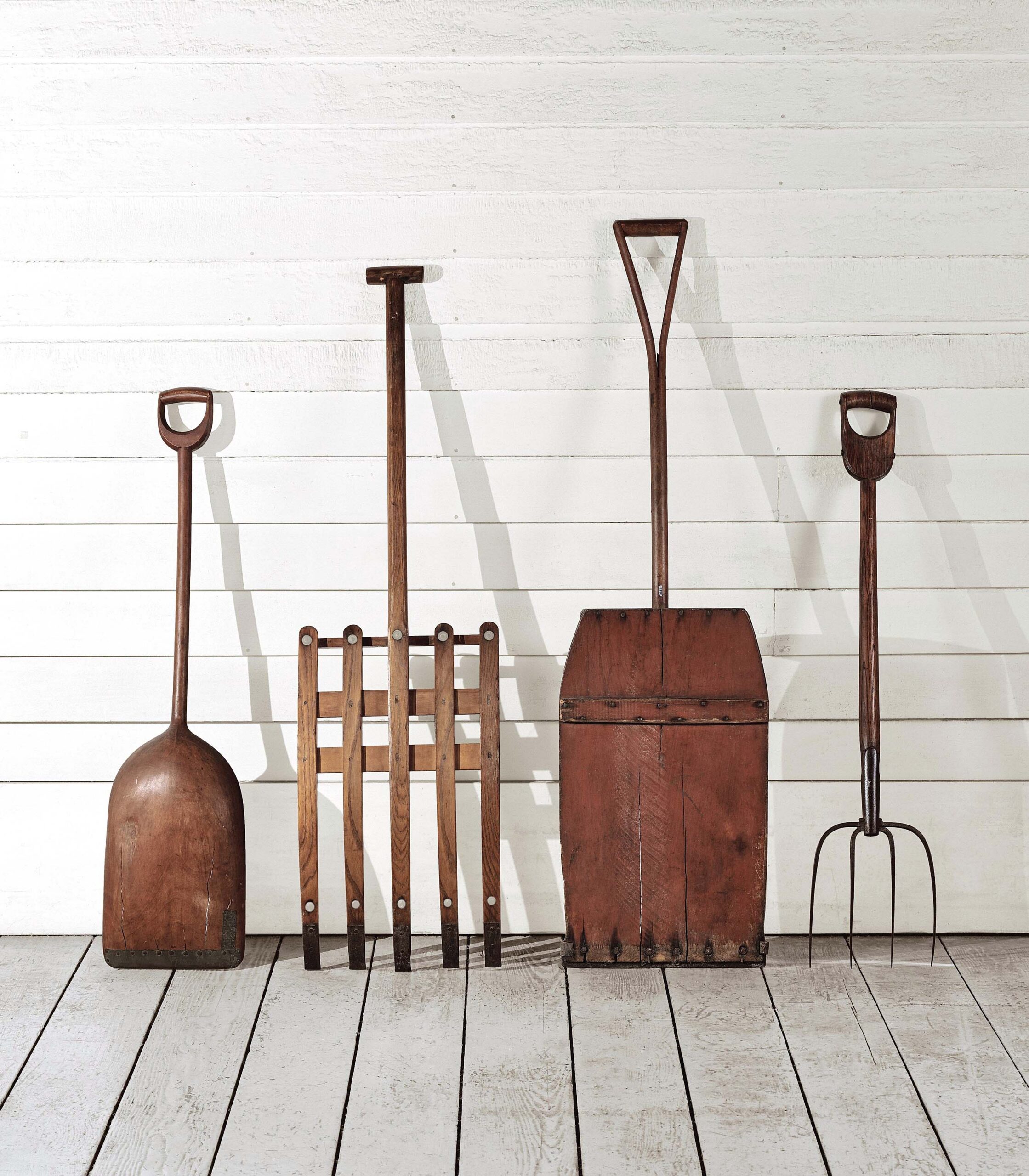
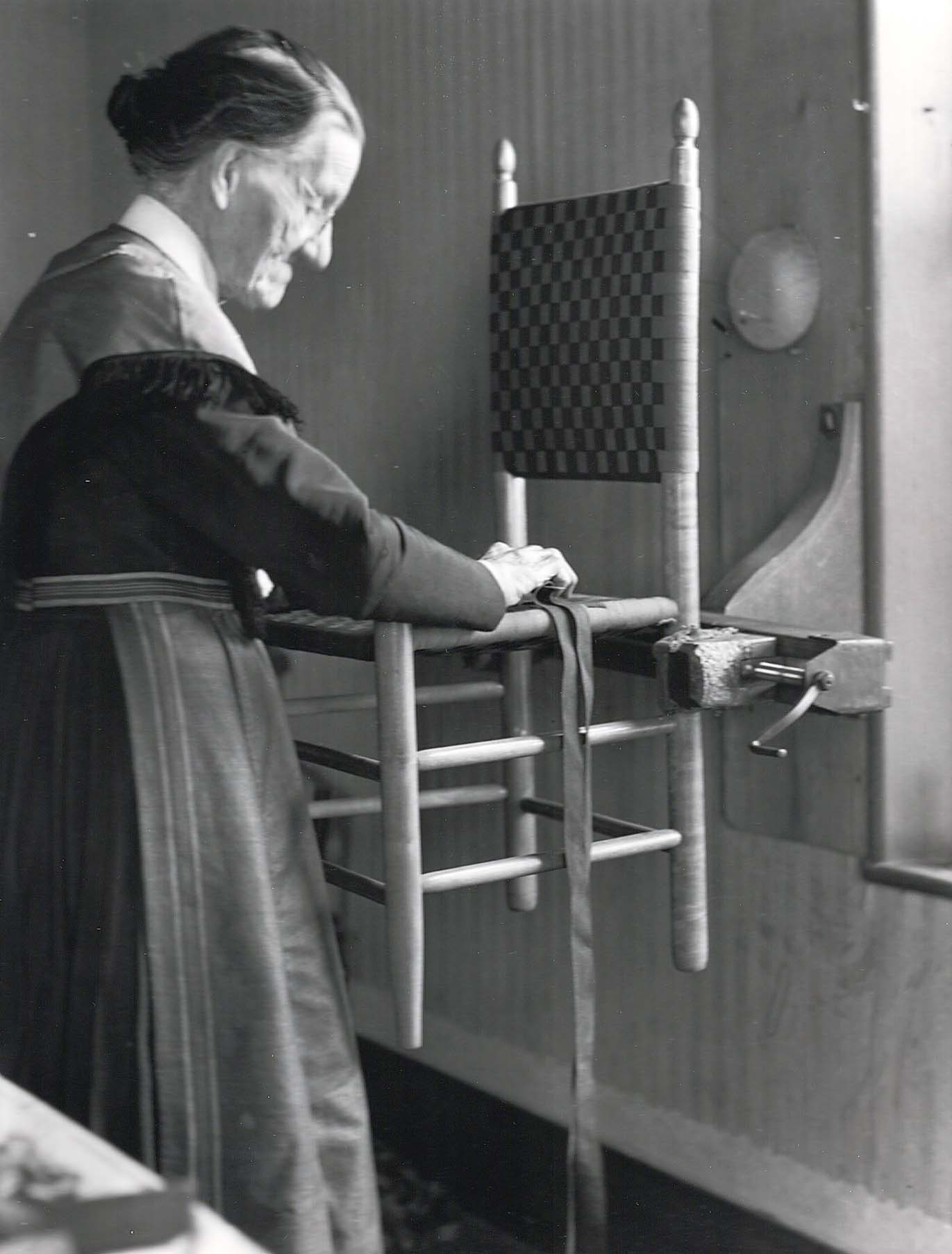
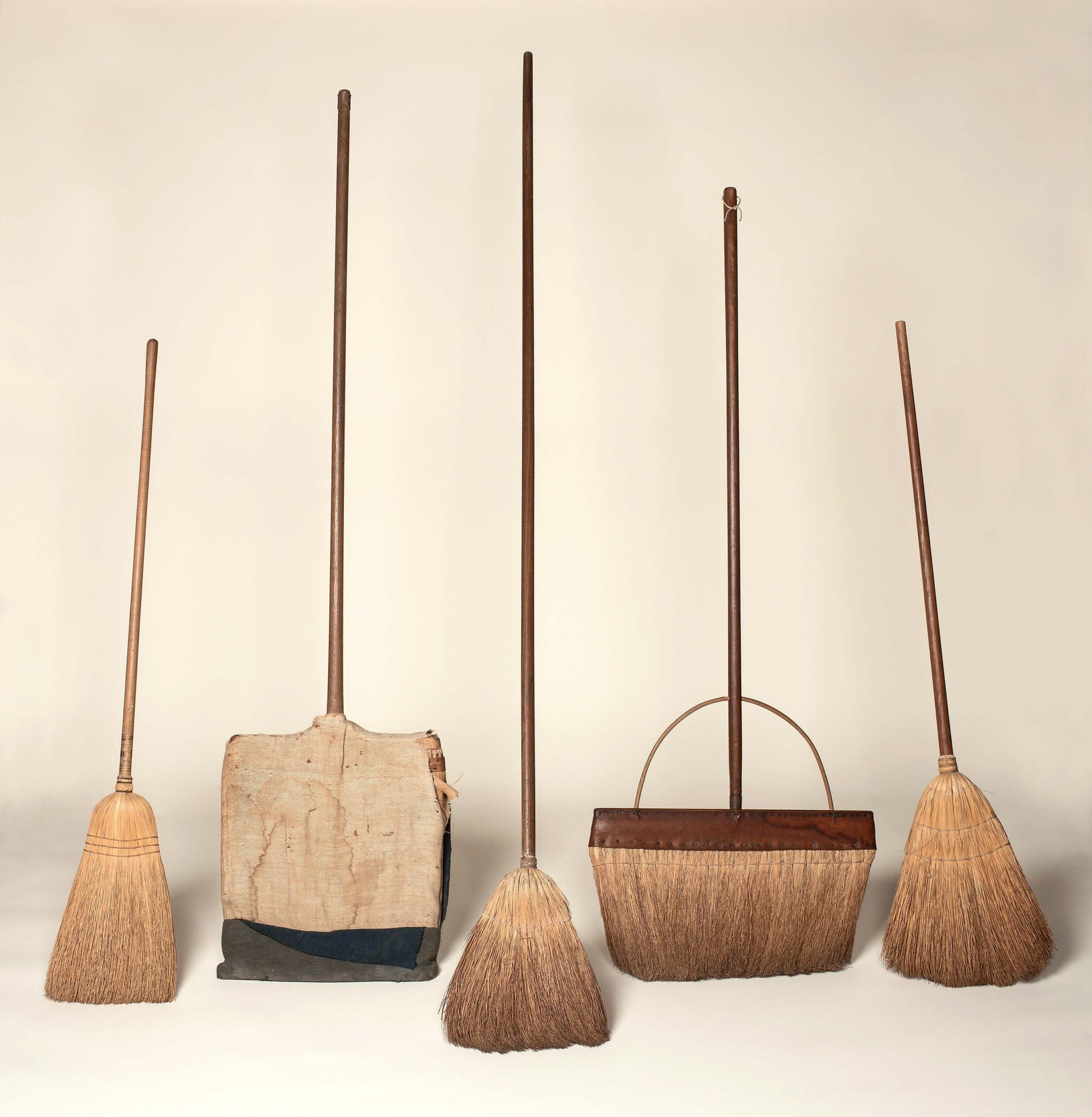
This wasn’t new, of course. The spiritual possession of the body is part of many practices. But three things distinguish Shaker theology from other schismatic Christian sects. The first was the vow of celibacy that all Shaker members had to adhere to. Sex and procreation were the first sins and were therefore to be avoided. Within the community, work was segregated by gender. New members, therefore, had to come from outside the community as opposed to being born into it. As a result, membership fluctuated as members departed to start families, but it also ensured that Shakers stayed true to their purpose and labors. The second distinction in Shaker theology is the equality of women. Administration of the communities was split between genders, and, indeed, in 1770, just prior to their exodus from England, Mother Ann Lee was proclaimed the second coming of Christ. Third, despite their penchant for a simplicity in design and craftsmanship — they saw work as a form of prayer — the Shakers never avoided technology, inventing a host of objects, appliances and tools, though they never patented them. These include the circular saw, the rotary harrow, the clothespin, the flat broom, the wheel-driven washing machine, metal pens, a type of fire engine, a hernia truss, looms for weaving palm leaf and processing broom corn and ball-and-socket tilters for chair legs.
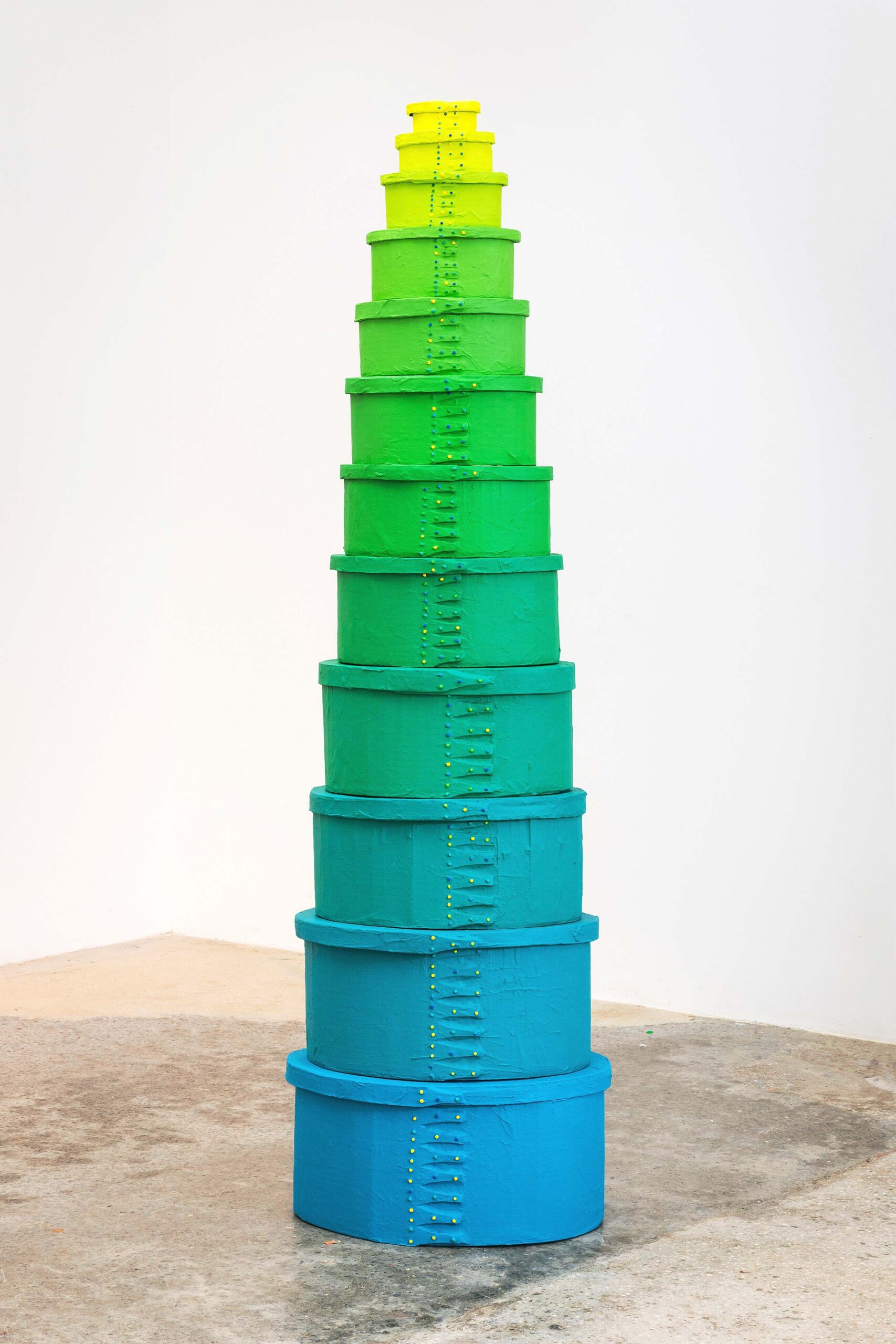
With this background in mind, “The Shakers: A World in the Making” places, as the exhibition text states, “extraordinary Shaker objects alongside the contemporary artists and designers they continue to inspire. Organized in partnership with the Vitra Design Museum and the Institute of Contemporary Art Philadelphia, and featuring rare loans from the Shaker Museum, the exhibition brings together more than 150 historic objects and contemporary installations in a landmark exploration of design, ideas and how we live.”
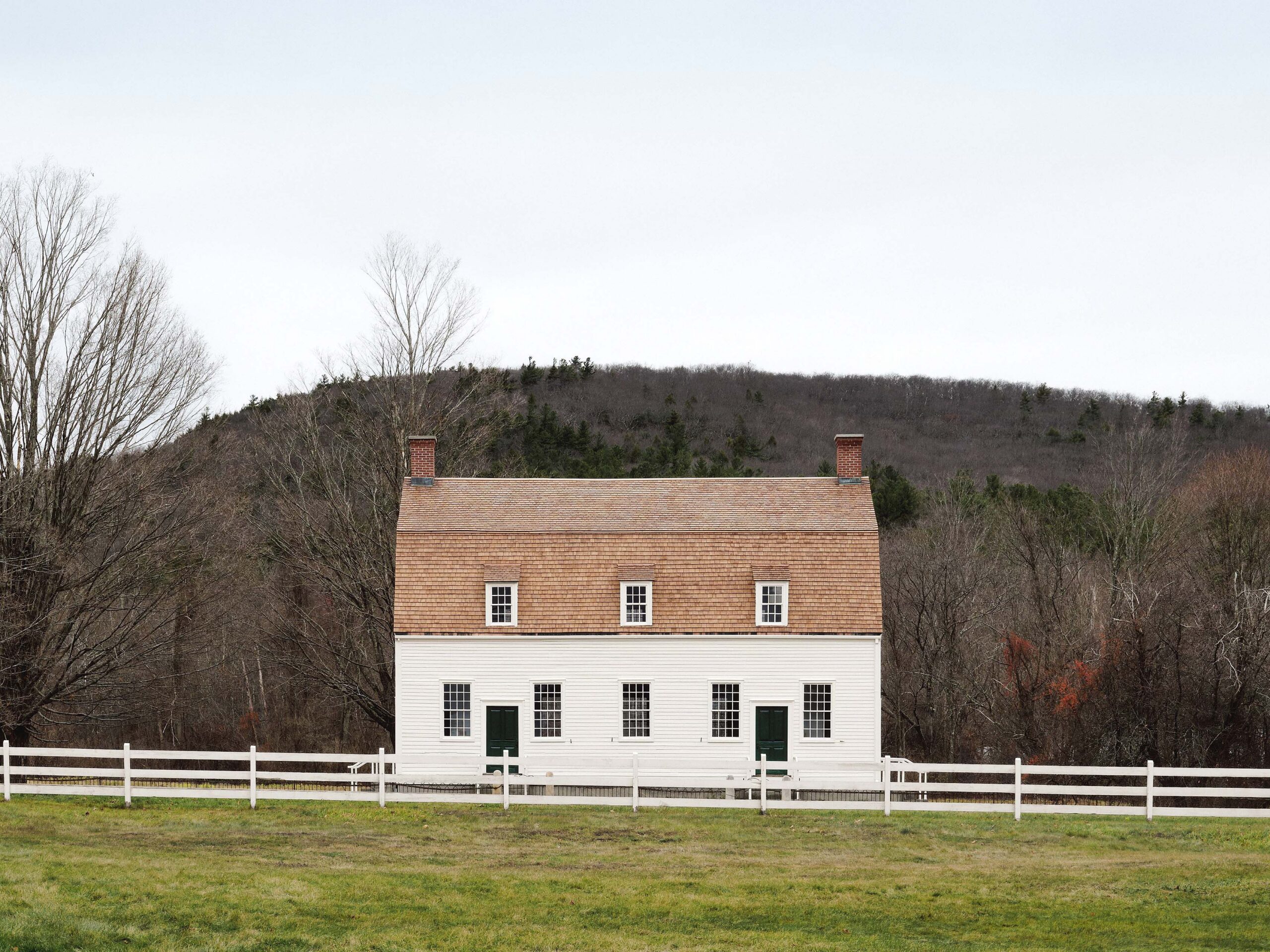
Meetinghouse (1793), Hancock Shaker Village, Hancock, Mass., 2024. Photo: © Vitra Design Museum / Alex Lesage, courtesy Hancock Shaker Village.
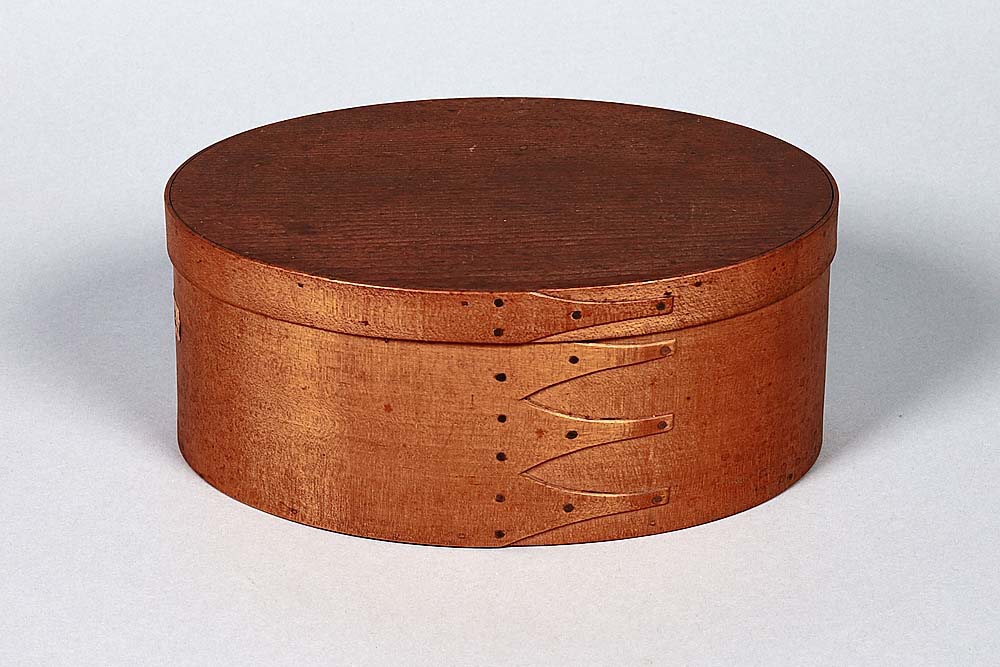
The idea of purpose underpins all of Shaker design; it is also what links Shaker design to Modernism. Indeed, when you think about it, Shaker design is akin to Scandinavian design in that it is so integrated into contemporary life that it is all but invisible. Form is function. Function is art. Employing materials — principally woods such as pine — Shaker furniture, as well as their architecture — is light, strong, balanced. Nothing is wasted, nothing is extra. Later, however, as the Shakers saw the popularity of Victorian ornateness, the style of their furnishings evolves to include some ornaments.
In the years of the early republic, Shaker membership remained steady. As the Second Great Awakening, a Protestant revival, arose and grew in the United States, so did interest in the Shakers. From the 1820s through the 1850s, the Shakers entered what they termed an Era of Manifestations, as members had visions and dreams: messages from Ann Lee and other elders of the utopian paradise that awaited true believers. As well as designs for living, members composed dances, songs and spirit drawings based on their mystical experiences.
Hannah Cohoon’s 1854 painting “The Tree of Life,” one of the most important — perhaps the most important — Shaker spirit drawing exemplifies the transcendental beauty of these visions and the ways in which they resemble, and exceed, folk art. It’s worth repeating Cohoon’s inscription underneath the spreading roots of the tree:
“City of Peace, Monday, July 3rd, 1854. I received a draft of a beautiful tree penciled on a large sheet of white paper bearing ripe fruit. I saw it plainly; it looked very singular and curious to me. I have since learned that this tree grows in the Spirit Land. Afterwards, the spirit showed me plainly the branches, leaves, and fruit, painted or drawn upon paper. The leaves were checked or crossed and the same colors you see here. I entreated Mother Ann to tell me the name of this tree; which she did Oct. 1st, 4th hour P.M. by moving the hand of a medium to write twice over Your Tree is the Tree of Life. Seen and painted by Hannah Cohoon.”
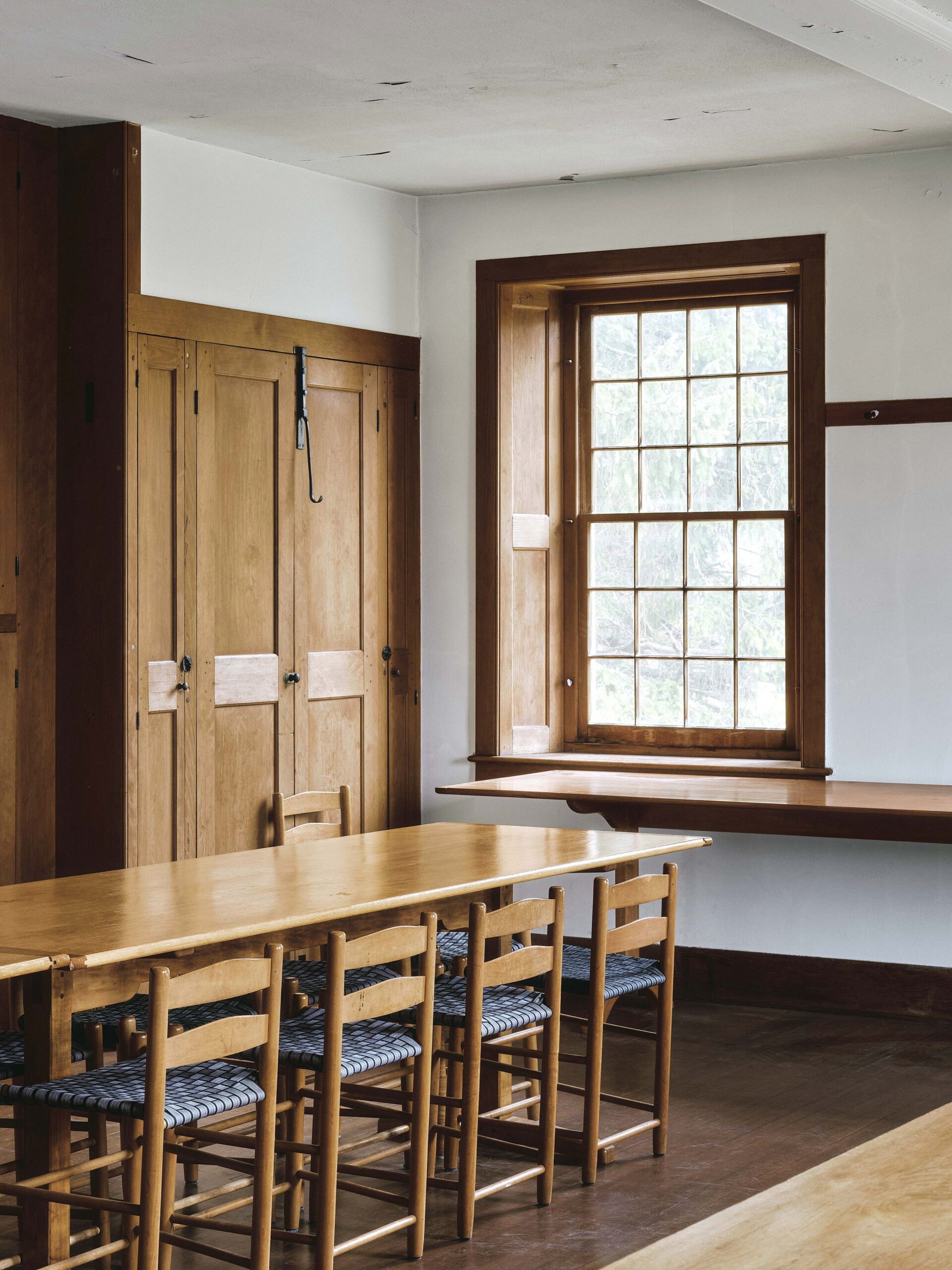
Interior of the Brick Dwelling House, Hancock Shaker Village, Hancock, Mass., 2024. Photo: © Vitra Design Museum / Alex Lesage, courtesy Hancock Shaker Village.
Note that Cohoon does not sign the work. Instead, she writes, “Seen and painted by Hannah Cohoon.” Again, the body is a vessel, one that serves a higher purpose as a conduit for the spiritual. Therefore, she “sees” the painting before she “paints” it. The Tree is a transmission received and translated into an image. The beautiful balance between the finely sinuous branches, the circular fruit with concentric dots and the checked leaves may not be found in earthbound nature, but they ask us to look again at the forms in nature we take for granted. Still, while “The Tree of Life” may be art to us; to Cohoon, it was much more.
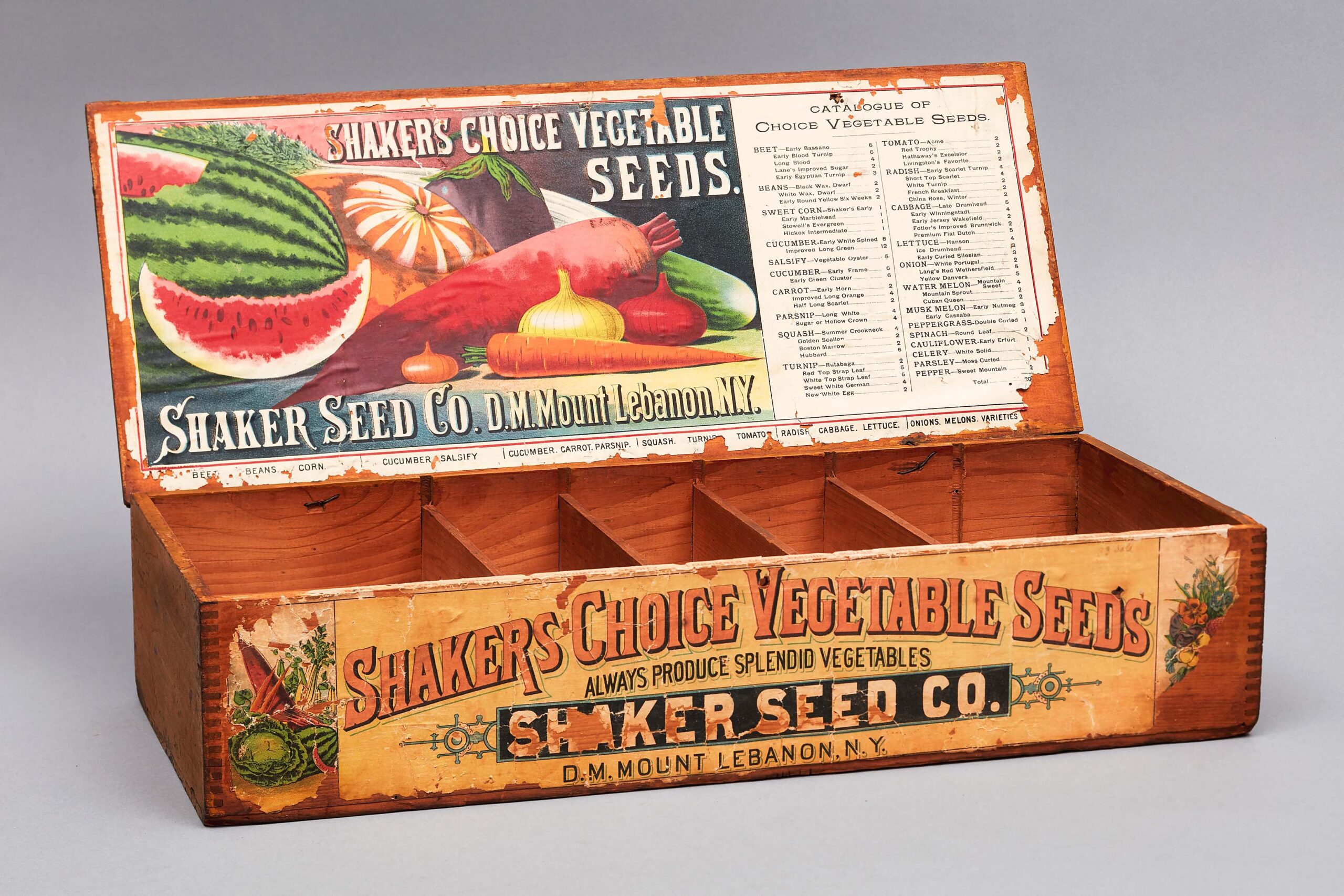
As mentioned at the outset, despite the fact that part of Shaker theology was removal from the world, the Shakers seemed to have been acutely aware of the world outside their communities. They sold seeds and herbal remedies, and one of their ladder-back chairs received a medal at the 1876 Philadelphia Centennial Exhibition.
One of the most astonishing objects in the exhibition is the Shaker “Radio,” circa 1922-23. The dials, tubes, headphones and the speaker in the shape of a horn, all contained in inlaid cabinetry remind one that early technology — radios, hi-fis, TVs — were often fashioned as fine furniture meant to be part of the furnishings of the home. The Shakers may well have anticipated the era to come, an era that would last through the wood-grain plastic cabinets of the 1970s and 80s.
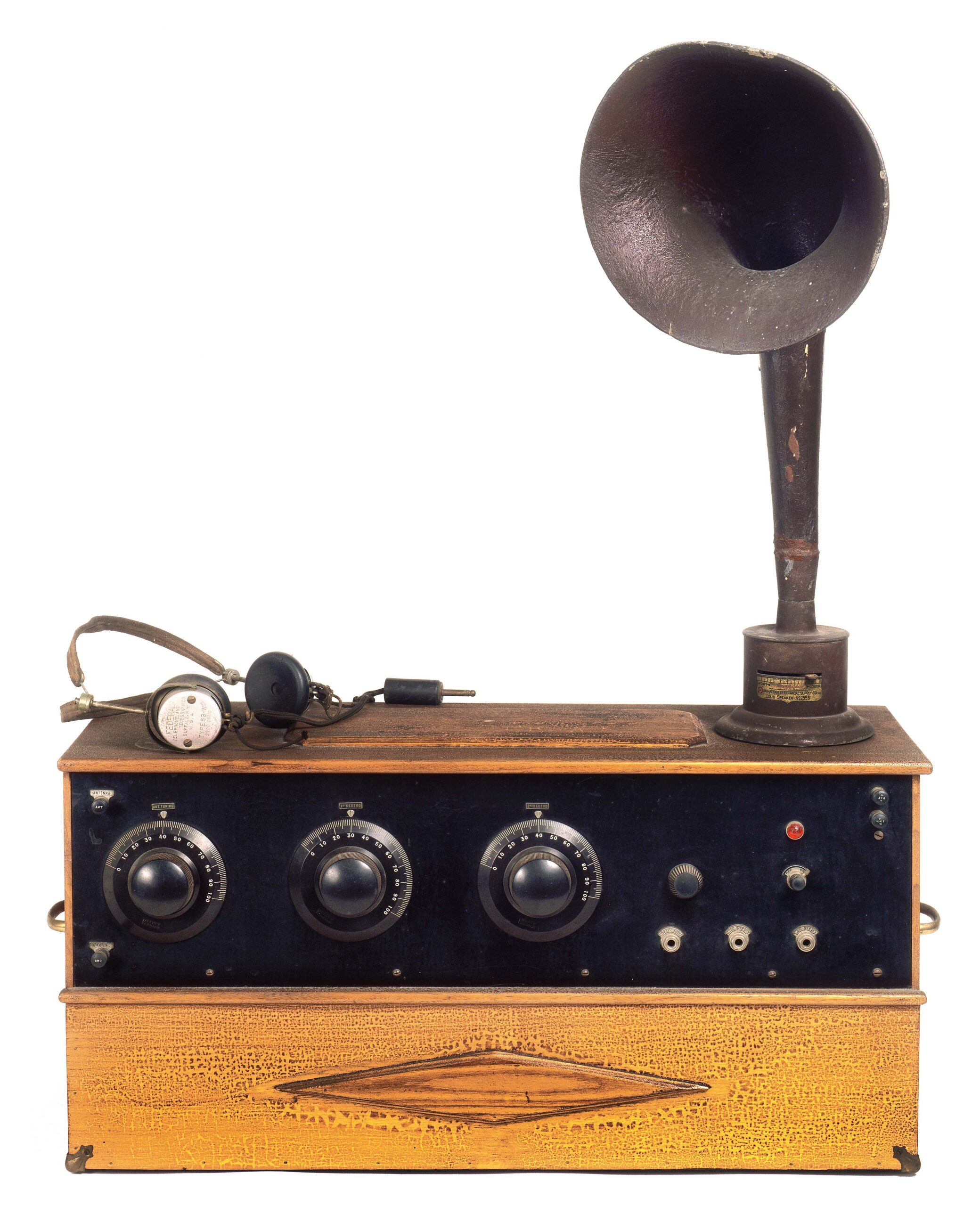
Radio, Canterbury, N.H., circa 1922-23. Shaker Museum, Chatham, N.Y.
Perhaps the most enduring artifact of Shaker culture is the song “Simple Gifts.” Composed in 1848 by Elder Joseph Brackett, who was living in the Shaker community at Alfred, Maine, it is almost always misattributed to the Puritans. The simple melody and message — “’Tis a gift to be simple, tis a gift to be free, tis a gift to come round where you ought to be, and when we find ourselves in the place that is right, ’twill be in the valley of love and delight” — fit into the ideology of America as a new Eden. “Simple Gifts,” which inspired the finale of the Aaron Copland/Martha Graham ballet Appalachian Spring, as well as many other musical and dance works, has since become a sort of second anthem, though the Eden Brackett has in mind is not of this earth. At the cost of its true message, the song appears to have disappeared into the fabric of the larger American culture.
Though the Shakers never numbered more than 5,000 or so, they still constitute the largest and longest-lasting millenarian movement in the nation’s history. Their doctrine of purpose and simplicity manifests in the artifacts of their culture. The arts — architecture, painting, sculpture, music, writing, dance and so on — are often all that has been left to us of vanished cultures. Even if, one day, there are no Shakers, their ideas will certainly outlive their movement. Perhaps Shaker philosophy, as expressed in their style, is the residual energy of the movement. If so, perhaps we will one day say that Shakers achieved their aims, that is, seeding the ideas of humility, simplicity and purpose. It remains for us to harvest and heed them.
The Milwaukee Art Museum is at 700 North Art Museum Drive. For information, www.mam.org or 414-224-3200.