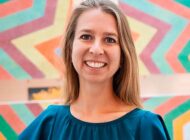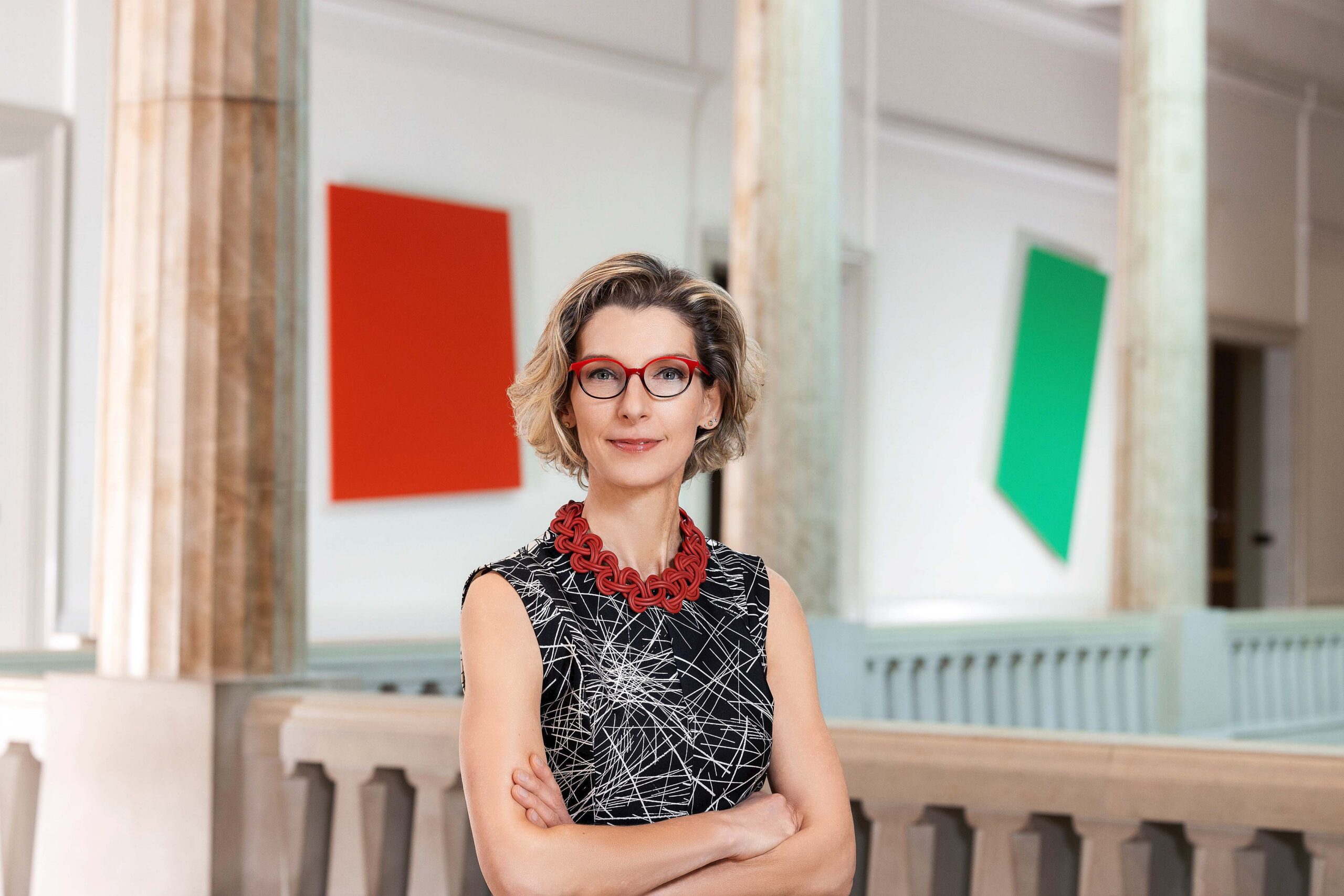
Francesca Casadio. Photo by Clare Britt.
On June 9, the J. Paul Getty Trust announced the appointment of Francesca Casadio as the next John E. and Louise Bryson director of the Getty Conservation Institute. Casadio currently serves as the vice president and Grainger executive director of conservation and science at the Art Institute of Chicago and will assume her position at Getty in the early fall of this year. When Antiques and The Arts Weekly caught wind of Casadio’s new role, we reached out to get the scoop on the switch, and what she is looking forward to in the coming months.
Congratulations on your new position as the John E. and Louise Bryson director of the Getty Conservation Institute! This feels like a full-circle moment. How and why did you decide to come back to Getty after spending more than two decades at the Art Institute of Chicago?
Thank you! For me to be able to come back as the director of the Institute after having the Getty Conservation Institute launch my career in the States… It’s incredibly meaningful.
It also underscores how important it is that young people who are just coming out of their training are offered opportunities to receive professional development within institutions. I’m looking forward to paying it back to all of the many cohorts of interns that call the Getty Center home for a year, and afterward, they’ll go to other places to do great things.
To answer the second part of your question, it’s been very rewarding to build a career at the Art Institute, serving an amazing collection and having an impact on the city. Getty, however, is much more than a museum. It includes a museum, a conservation institute, a research institute and a foundation. So, to me, this is an opportunity to have a much larger impact on a global scale.
How will your new position at Getty differ from your current role as vice president and Grainger executive director of conservation at the Art Institute of Chicago?
The conservation and scientific research department I currently lead focuses on advancing our knowledge of the Art Institute’s collection and sharing it with our visitors, as well as online and with our city. At Getty, the difference is not only the scale but how these aspects of conservation — the research, the outreach, the dissemination and the innovation — push development on new methods to study and understand art and preserve it for future generations, as well as foster collaborations with other researchers and partners.
In addition, Getty has a thriving program, not only of conservation and study of movable visual art — what we think about as collections of paintings, objects, photographs, sculptures and so on — but also a very robust program of site conservation and preservation of intangible culture. Those are areas I have not had the opportunity to oversee or engage with in my current role at the Art Institute, and it’s something I’m really looking forward to thinking about holistically: What archaeology, built heritage, material and cultural production mean for people. For some, what’s really meaningful are objects that you can carry with you and admire, and for others, it’s a site, or even a song, and it’s wonderful to be able to think about that in a much more comprehensive way at Getty.
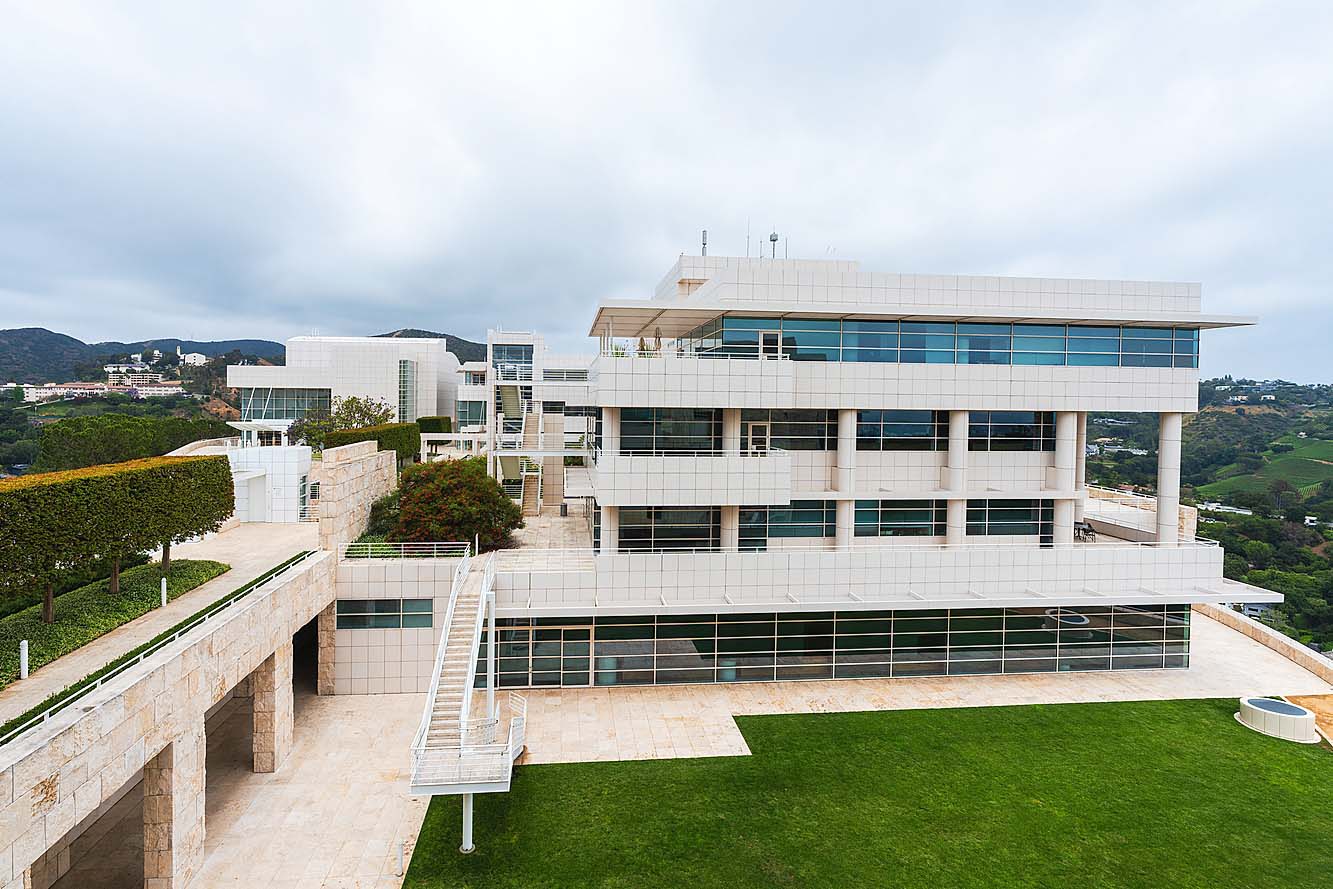
Getty Conservation Institute. Image © 2025 J. Paul Getty Trust.
You have a PhD and MS degrees in chemistry from the University of Milan, Italy. How does this area of study translate to the conservation field?
Excellent, excellent question. I’ll start with a story from the beginning of time. In prehistoric times, people who traveled in the Mediterranean basin, for example, from Africa and the Near East, moving to the European continent through Cyprus, brought little stone carved objects or non-functional objects to remind them of home, of memories and people and things that made up their identities. However, beautiful things like those are subject to degradation and damage that are linked not only to external forces but also to what they’re made of. That’s where chemistry and material science can really be valuable in terms of understanding the material composition of works of art, understanding how they behave and how they will behave in the future. This applies to both sites and works of art. For example, Getty and the Art Institute have amazing Van Gogh paintings. Van Gogh used some pigments in his paints, pigments and dyes, especially in the pinks, that faded with time. Chemistry can help you understand what was there that is no longer there and now, with the help of computational modeling, even predict what it looked like. So, you have Van Gogh’s “Irises,” which are mostly blue now, but with the help of these tools, you can re-infuse the purple color that has disappeared over time. That’s where the chemistry and scientific studies of artworks and sites help.
In Italy, unlike in the United States, you can specialize in the chemistry of cultural heritage. My PhD dissertation was done climbing scaffolding on the Duomo, the Gothic cathedral in Milan, which may initially seem counterintuitive for a chemist. My last project in Italy focused on the conservation of Michelangelo’s “David,” which was exposed outdoors before being brought into the Accademia.
Scientists bring an extremely valuable perspective to the Getty Conservation Institute. There’s a very robust scientific division that employs more than 25 different professionals, and the beauty of this system in the United States is that the scientists work in an environment where they are together with the conservators and the art historians. So, you’re able to look at the art objects holistically. Where I was trained in Italy, it’s a little bit more siloed. The scientific research happens in academia, and then the scientists publish their papers in hopes that conservators and art historians will read them.
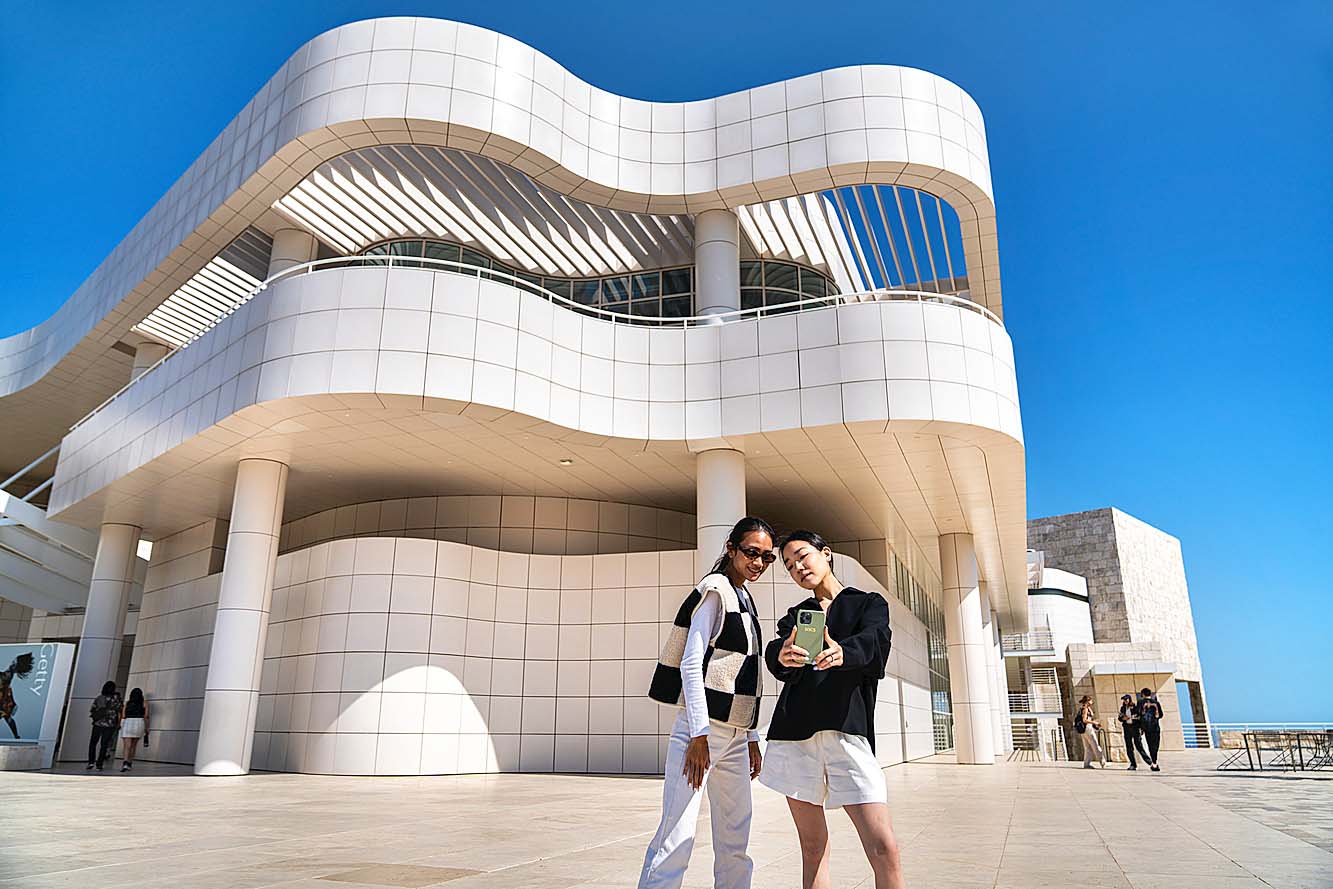
Getty Museum visitors take a selfie at the Getty Center. Photo by Cassia Davis. © 2022 J. Paul Getty Trust.
In the press release announcing your appointment, you explain that conservation is what makes viewing works of art in a museum possible. Can you elaborate on this line of reasoning further?
If you think of paintings from, let’s say, the Seventeenth or Eighteenth Century, the varnish may have darkened, or they may have been kept in homes or estates where there’s been dust, water leaks or even a fire. There are many threats to works of art, and conservators are a part of this chain of custody, where, with their expertise, they can treat these objects to bring them back as close as possible to what the artist originally intended and what the original experience of viewing the painting would be like. They are also prolonging the life span of these works of art by keeping them in an environment that has less extreme variations of temperature and humidity, where they are not exposed to too much light and are protected from fire, water, earthquakes and things of the like. Without this chain of custody and the expertise of conservators, we would lack access to the work because it might have been destroyed, or we would see only a shadow of what the artists had intended due to accumulated deterioration.
With physical sites, this is even more important because if not for architects, archaeologists and preservationists, any stone structure, any unfired brick structure, when exposed to the elements, will eventually crumble. So, the fact that we can visit these sites, whether at home or abroad, is due to efforts by expert architectural conservators and also by communities that contribute to the upkeep of those sites.
There’s also an aspect that relates to unlocking the work’s meaning. What I mean is that when the work is in good condition, conservators and scientists can also unlock stories from material aspects discovered that may reveal something about the life of the artist or the life of the object. On a deeper level, we wouldn’t have these kinds of discoveries at all without institutions or individuals collecting objects, preserving them and prolonging their lifespan with professional treatment. To a certain extent, the conservator is the doctor, the surgeon, the personal trainer and the nutritionist. It’s about intervention, but it’s also about setting up conditions that will extend the time in which we can enjoy a healthy artwork or architectural site.
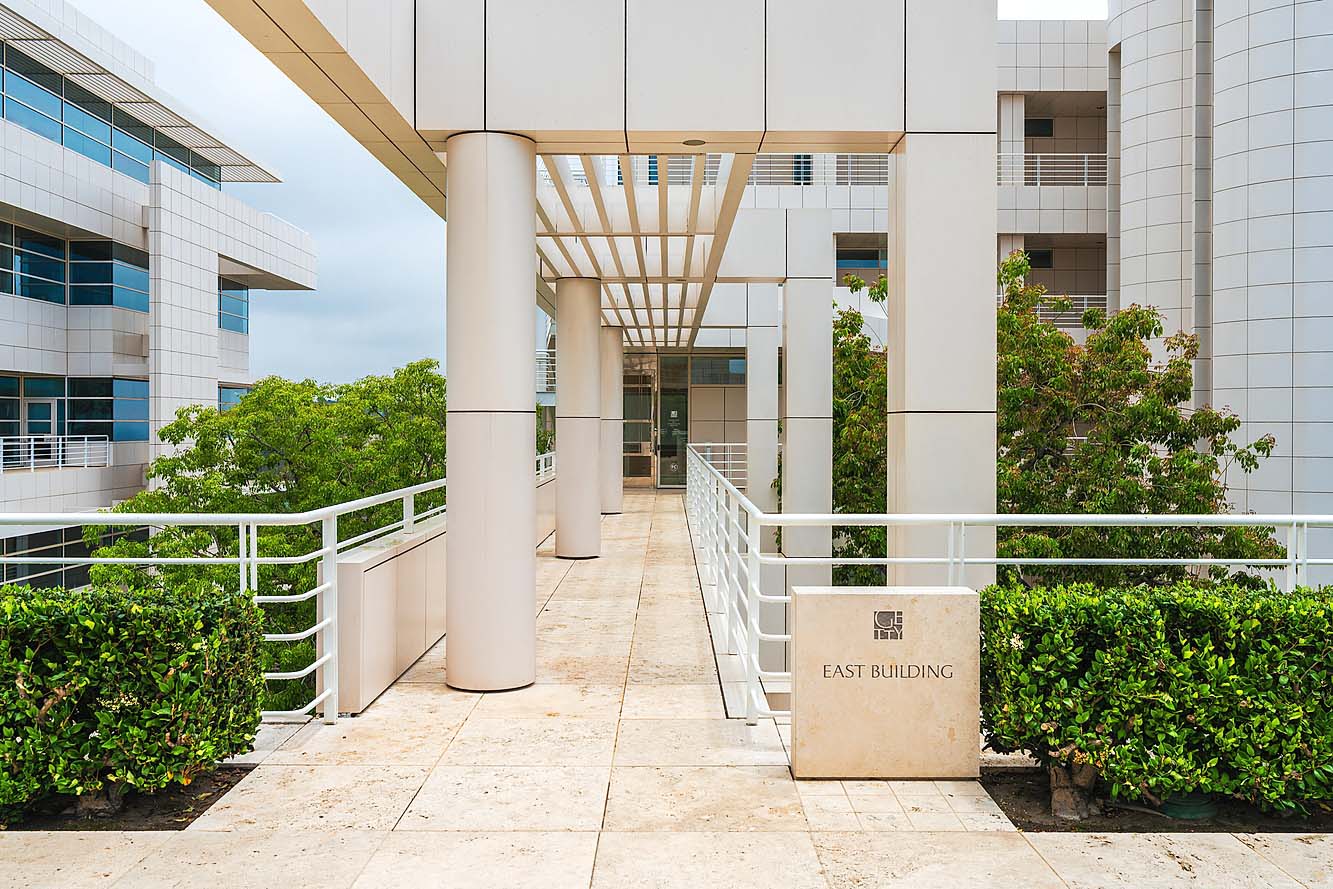
Getty Conservation Institute. Image © 2025 J. Paul Getty Trust.
What are you looking forward to most as you embark on this new journey in the fall?
Oh, so many things! As I said, Getty overall, and the Getty Conservation Institute, is such a Pandora’s box of talent that I’m just giddy with excitement about all of the smart, dedicated people I will get to meet.
The second aspect that I’m looking forward to is that there will be a portfolio of activities on my desk already, and yet I can feel some energy in terms of developing even more new ideas, especially since we’re all surrounded by the buzz of AI. What can the cultural sector and a powerhouse like Getty do in terms of ethically using AI to really accelerate discovery in the arts and culture, combining both the strength of the archive and the strengths of the material studies that the Getty Conservation Institute does? To give you an example, the Getty Research Institute recently remodeled their amazing Provenance Index, which is now very dynamic, where you can look at and search the history of objects that have been collected and exchanged with the institution over time. It would be super cool to add material information about not only where that painting or object has been since, say, the 1700s or 1800s, but also what does the back of it look like? What kind of labels are there? If you X-ray it, what do you find underneath? Things like that. I think it would be amazing to then make it openly accessible so that other people can make new discoveries, and we don’t keep our knowledge close to our chests. That’s what I’m really excited about.
The third part, because I’ve been in Chicago for 23 years, is that I’m looking forward to not another Chicago winter!
— Kiersten Busch