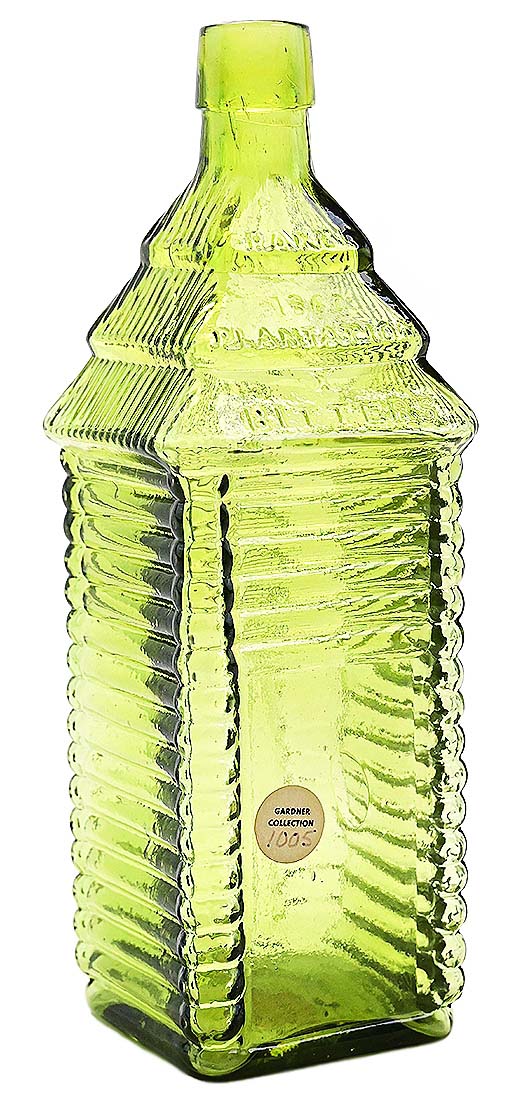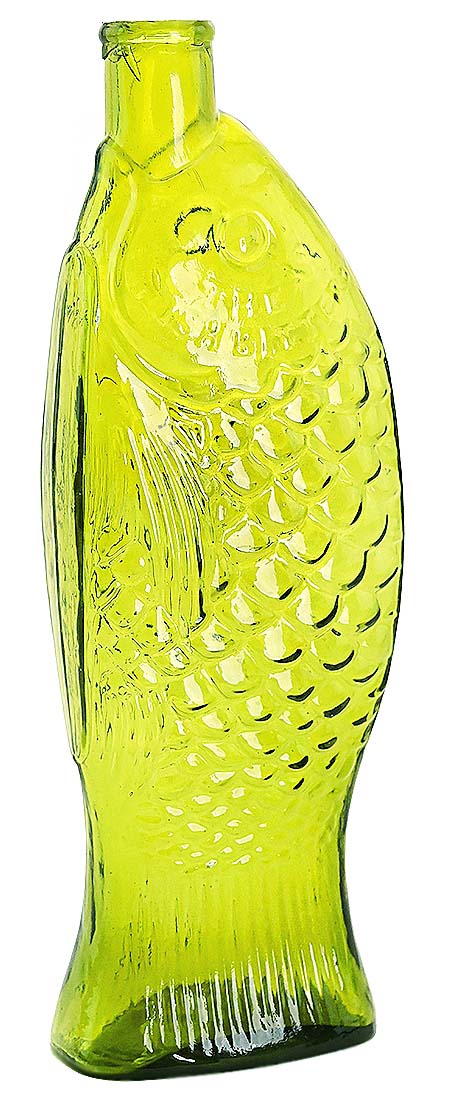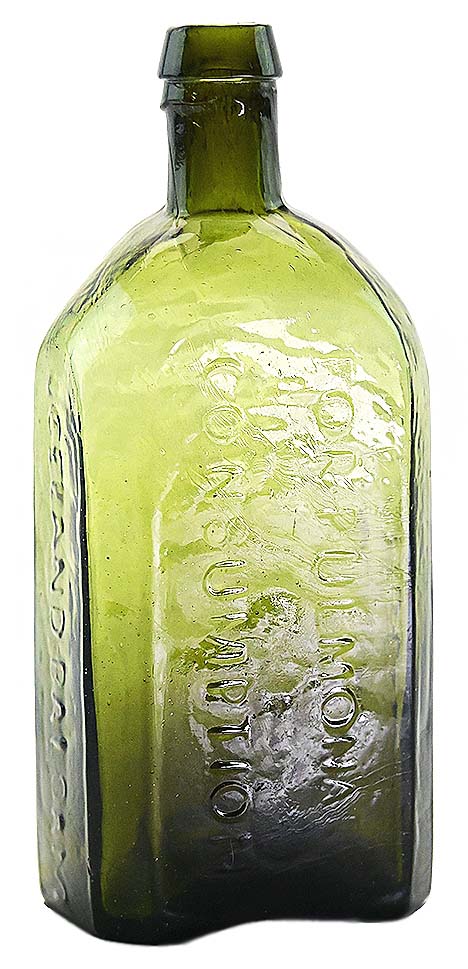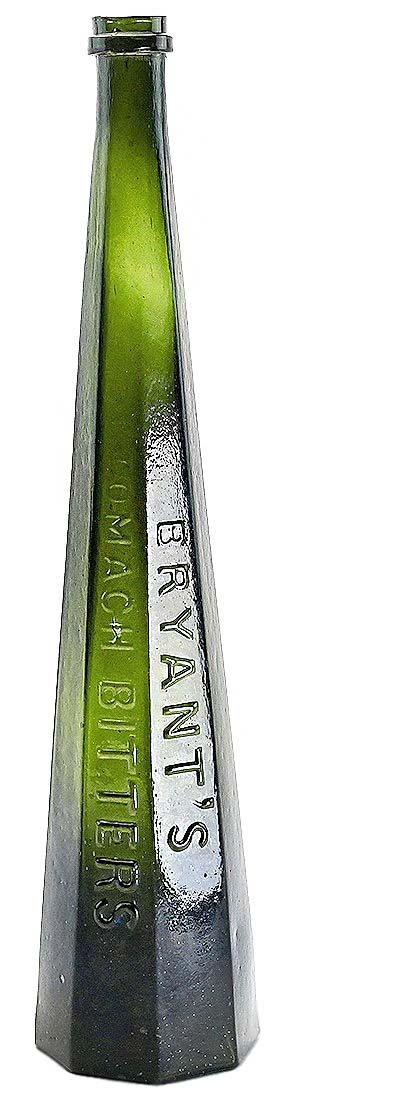
The top lot was this Bryant’s Stomach Bitters cone bottle, circa 1857-62, which attained $63,180. Surviving intact examples are seldom found on the West Coast, but this example was discovered years ago in the “big dig” in San Francisco, during which buried glass bottles, most broken, were recovered from a recycling plant ($40/60,000).
Review by Andrea Valluzzo
PENNSBURG, PENN. — Rare forms and color variations among fine examples from sophisticate collections drove bidding at Glass Works Auction in its most recent premier auction that closed October 19.
Featuring important and scarce items with provenance through such esteemed collectors as Bil Ham, Ron Sieling, Don Fritschel, George Waddy, Bryan Grapentine and Charles Gardner, the auction included bitters with nearly 50 fine examples making this the largest category represented, whiskies, medicines, inkwells, historical flasks, cologne bottles, sodas and more.
“We were very pleased with the auction,” said auctioneer Jim Hagenbuch. “Like most auctions today, you have your highs, and then you will have your lows. Fortunately, the highs outnumbered the lows in this one.”
Proving his point were a group of bitters that kicked off the auction with the sale’s very first lot attracting the most interest and highest price. Achieving top-lot status was an important California bitters — a Bryant’s Stomach Bitters bottle in olive green, circa 1857-62. The cone-shaped bottle elicited nearly 30 bids and sold just over high estimate at $63,180. Hagenbuch explained that there it has been 15 years since one of these cones was last auctioned. “This is a very important California bitters battle. It’s rated as one of the top California bitters known,” he said, adding that only a few examples of this bottle made for the California market are known and several of those are damaged instead of intact as this one is. “It’s one of the top two or three known examples that are in the best condition.” Most were broken over the years.
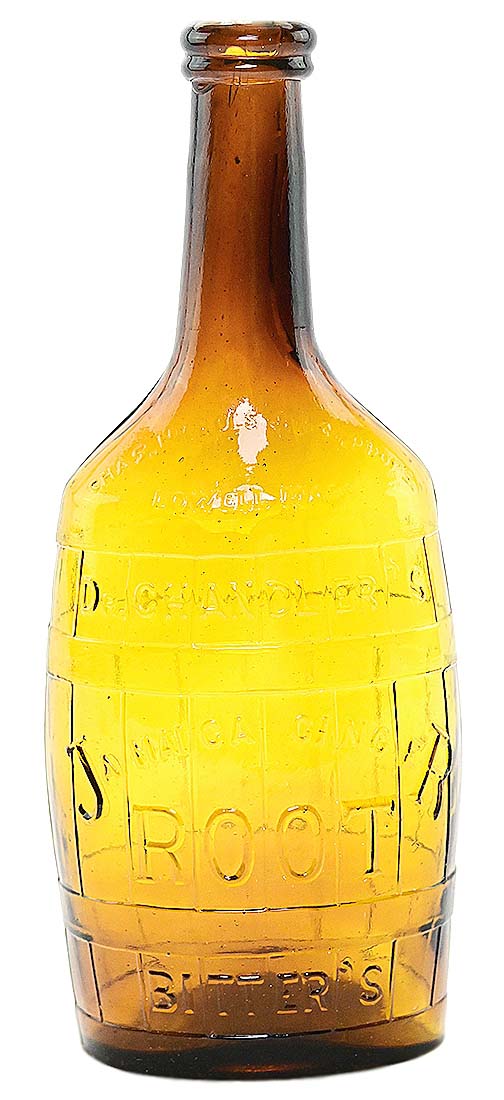
The parade of stellar bitters across the block included this Dr Chandler’s Jamaica Ginger Root Bitters bottle, Chas. Nichols Jr & Co Props, Lowell, Mass., circa 1875-85, having a medium yellowish-amber barrel. In fine condition, it drew $22,230 ($15/25,000).
A number of glass bottles, including this one, were unearthed during what was called a “big dig” in San Francisco, when diggers found and recovered artifacts from the past under demolished buildings, he said. “These were made during the Gold Rush, and they were sent out to California. At that time, here in the East, glass was recycled. Bottles were broke up and sent back to the glass house but there was no glasshouse in California at that time. So these things were just thrown away or reused but a lot of them were broke. And there was never a whole lot that were sent out there because of the distance that was involved so there were very few of them to be made to begin with.”
Of the surviving examples, many were found in various digs that were done out there in the 60s and early 70s, he added.
Another standout crossing the block early on for $36,270 was a rare teal blue-green cabin-form bottle for Kelly’s Old Cabin Bitters, which was patented in 1863. The circa 1863-70 bottle made in New York is part of a grouping of desirable Kellys. “A number of Kellys exist and as a mold is oftentimes considered to be the most desirable of all the cabin form bottles,” Hagenbuch said, noting most are in amber, a lesser amount in yellow olive or dark olive color. “This is one of what is believed to be only two or three known examples in this highly desirable and sought after green coloration. Add this one to your collection and you have quite a nice ‘brag’ about bottle!”
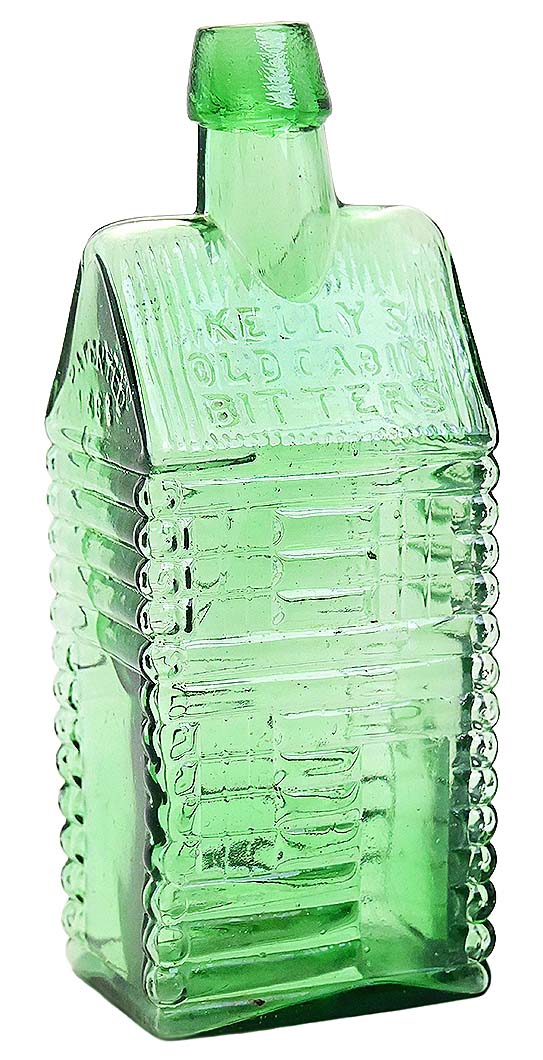
Leading the offerings from the Ron Sieling collection was this Kelly’s Old Cabin Bitters bottle in a rare teal blue green that fetched $36,270 ($25/35,000).
This example came out of the Ron Sieling collection and was originally in the Bryan Grapentine Collection that sold in 2007. More items from Sieling’s collection will be auctioned with Glass Works starting in early 2027.
Also from Sieling with provenance to the Gardner, MacKenzie and Grapentine collections earlier was a Dr Chandler’s Jamaica Ginger Root bitters bottle, Lowell, Mass., having a medium yellow-amber barrel that fetched $22,230. Described as one of the great rarities in the world of barrel bitters by Hagenbuch, this barrel dated to circa 1875-85 and was in “pristine perfect ‘attic’ mint condition.”
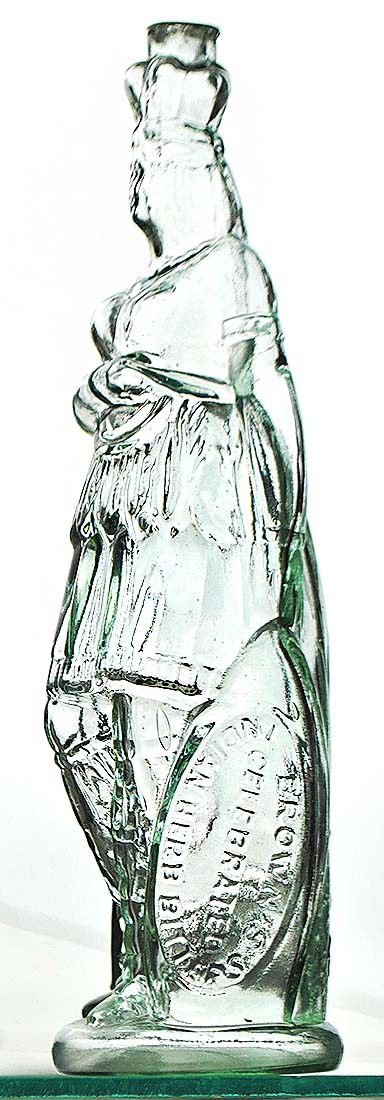
Sieling clearly had an eye for good bitters bottles as another of his performed well in this auction: a Brown’s Celebrated Indian Herb bitters bottle that was in clear glass notable for having a faint green tint. Hagenbuch has previously sold several clear glass Indian Queens, including one boasting a hint of amethyst, but this variant is quite scarce.
Of the bottle that realized $18,720, he said, “A number exist, but most of them tend to be in various shades of amber and yellow-amber. Of the known examples that are not in that color, this is one of the only ones that is in clear glass with a hint of green.”
The auction moved on to other collecting categories and buying continue to be robust with many lots selling within and above estimate. A New Granite Glass Works, Stoddard, N.H., pint bottle with a 13-star American flag, circa 1850-60, in yellowish “old” amber with olive tone, made $13,000. “We sold this several years ago in a collection from Colorado, and we were glad to see it come back through, this time consigned by an early New Hampshire collector,” Hagenbuch said.
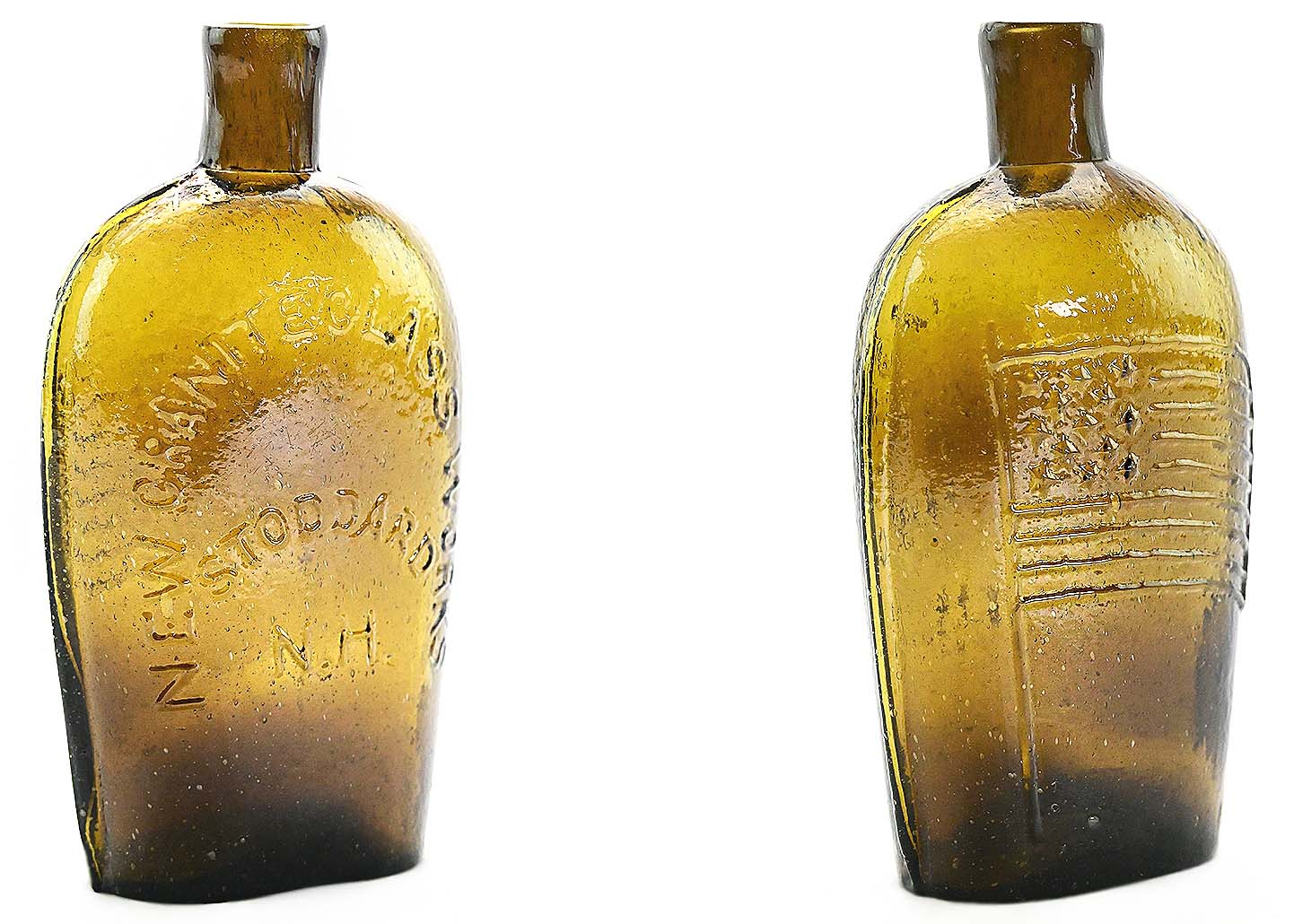
This New Granite Glass Works, Stoddard, N.H, amber pint bottle with a 13-star American flag, circa 1850-60, was arguably the most important piece of glass blown at the Stoddard Glass Works. Earning $13,000, it was rated a “10” in McKearin’s Most Desirable Flasks – Group B ($10/15,000).
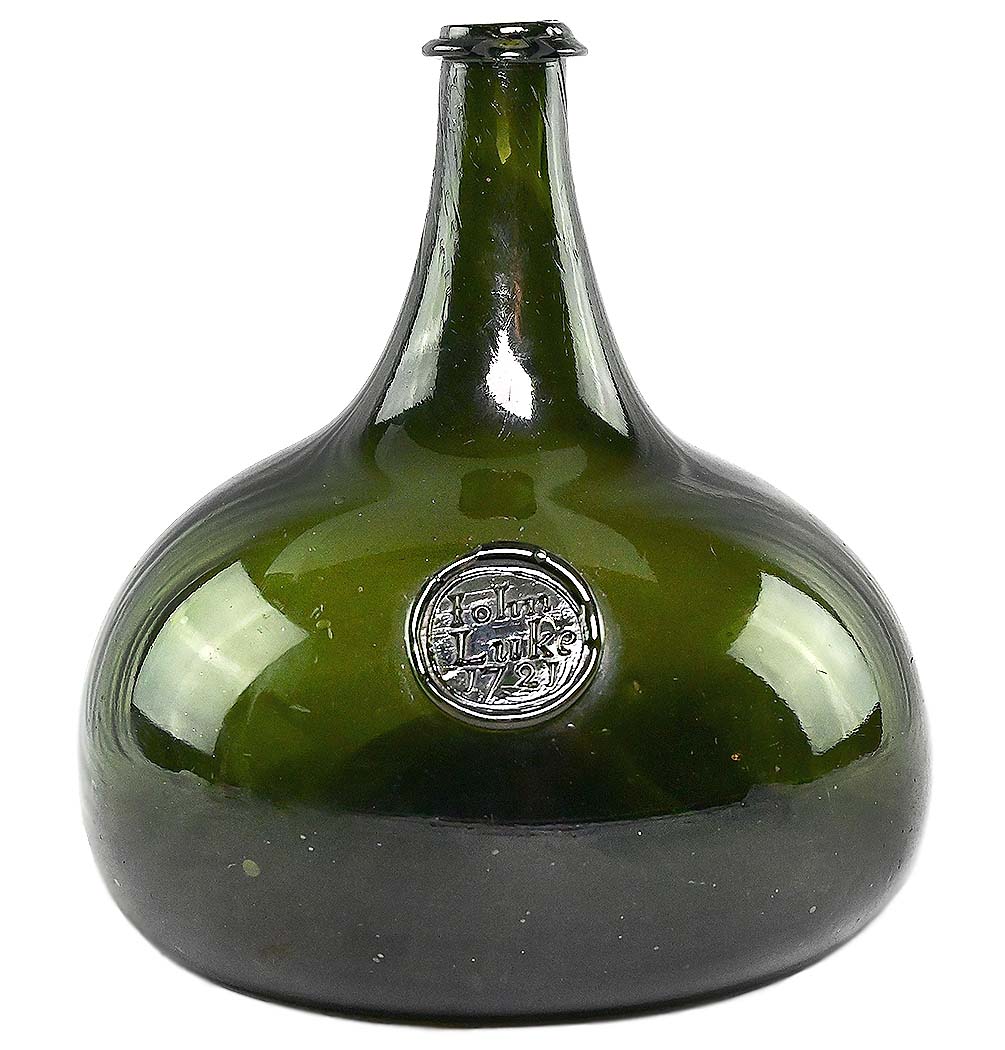
Bottles from all over were represented and a fine upstate New York example was a rare Iceland Balsam bottle for pulmonary use, circa 1840-60, in medium olive green and standing 6½ inches tall. Hagenbuch was told the proprietor whose product was advertised here was based in Utica, N.Y. One of only three known examples, it brought $7,020. From the other side of the pond came an onion-form magnum wine bottle with “John/Luke/1721” within a lined border that was made in England that retained its luster and bright-olive green color, selling for $3,802. Depicted in Burton’s Antique Sealed Bottles, 1640-1900 book, second volume, this magnum sealed wine bottles of such quality is scarce.
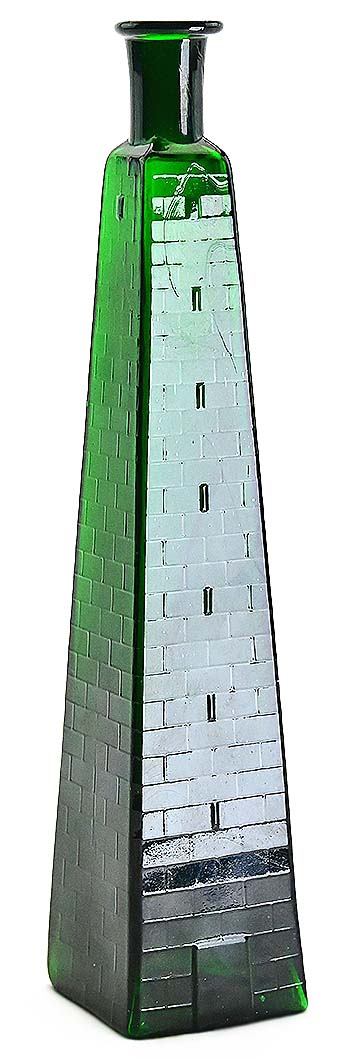
Several Bunker Hill Monument form bottles crossed the block with the nicest example being a circa 1850-70 example in a medium to deep emerald green color and in a hard to find size of 9¾ inches tall. Coming out of the Waddy collection, it attained $3,510.
“Of the known sizes, this is considered to be the hardest to obtain,” Hagenbuch explained. “The color is exceptional, very rare and accented by darker green striations that travel across three of the panels. This is a premier piece and a welcome addition to any Bunker Hill cologne collection.”
Prices quoted include the buyer’s premium as reported by the auction house. Glass Works Auctions is conducting its next auction that will close November 16. For information, www.glassworksauctions.com or 215-679-5849.