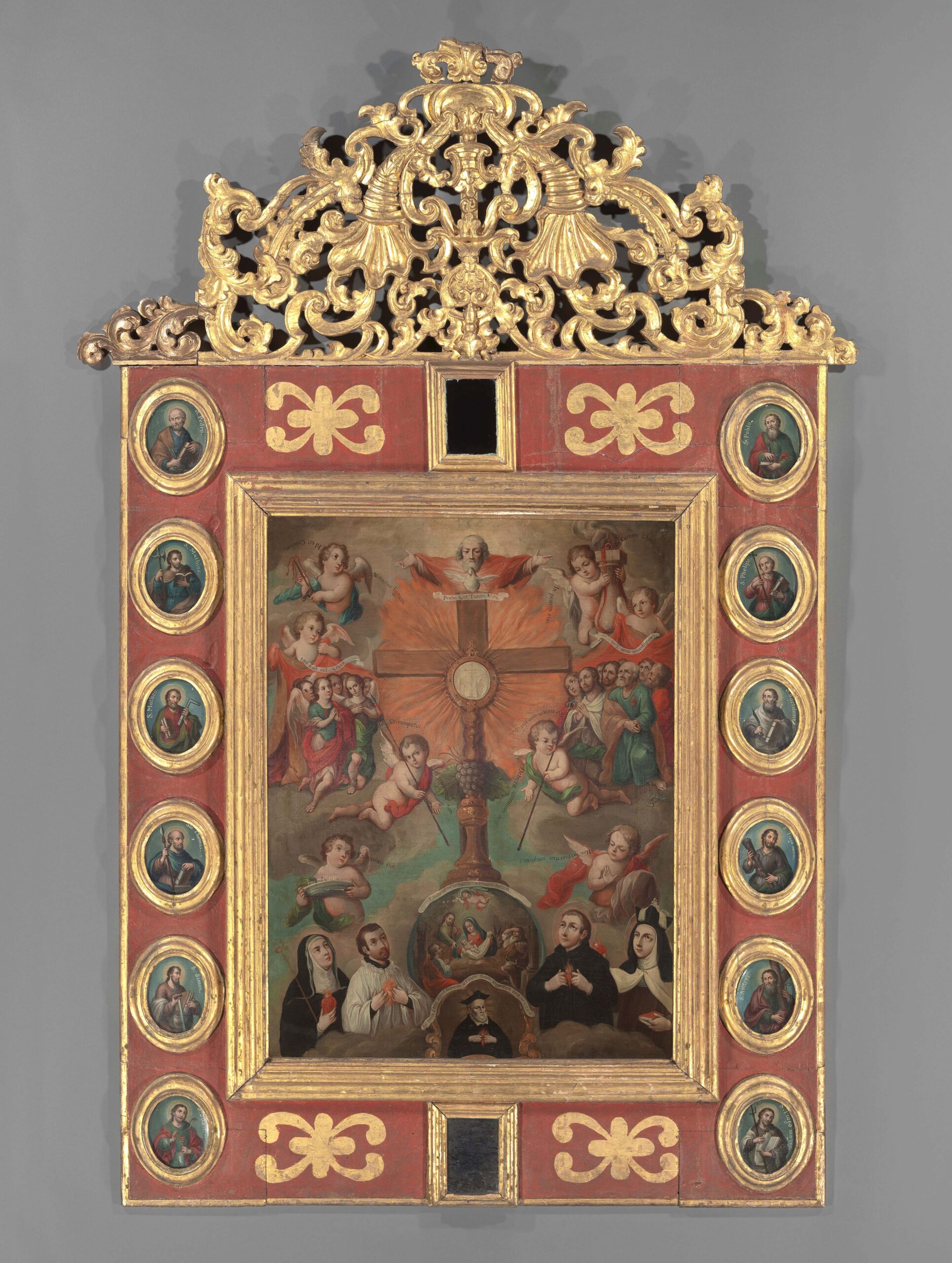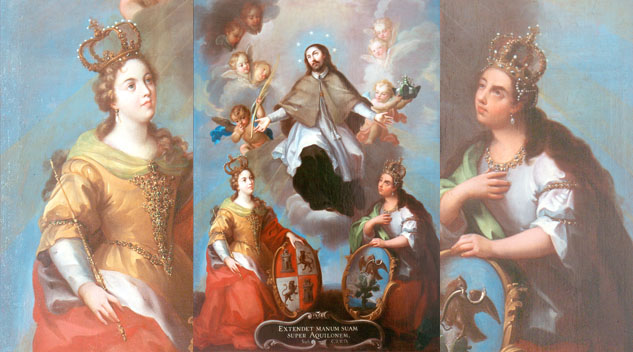
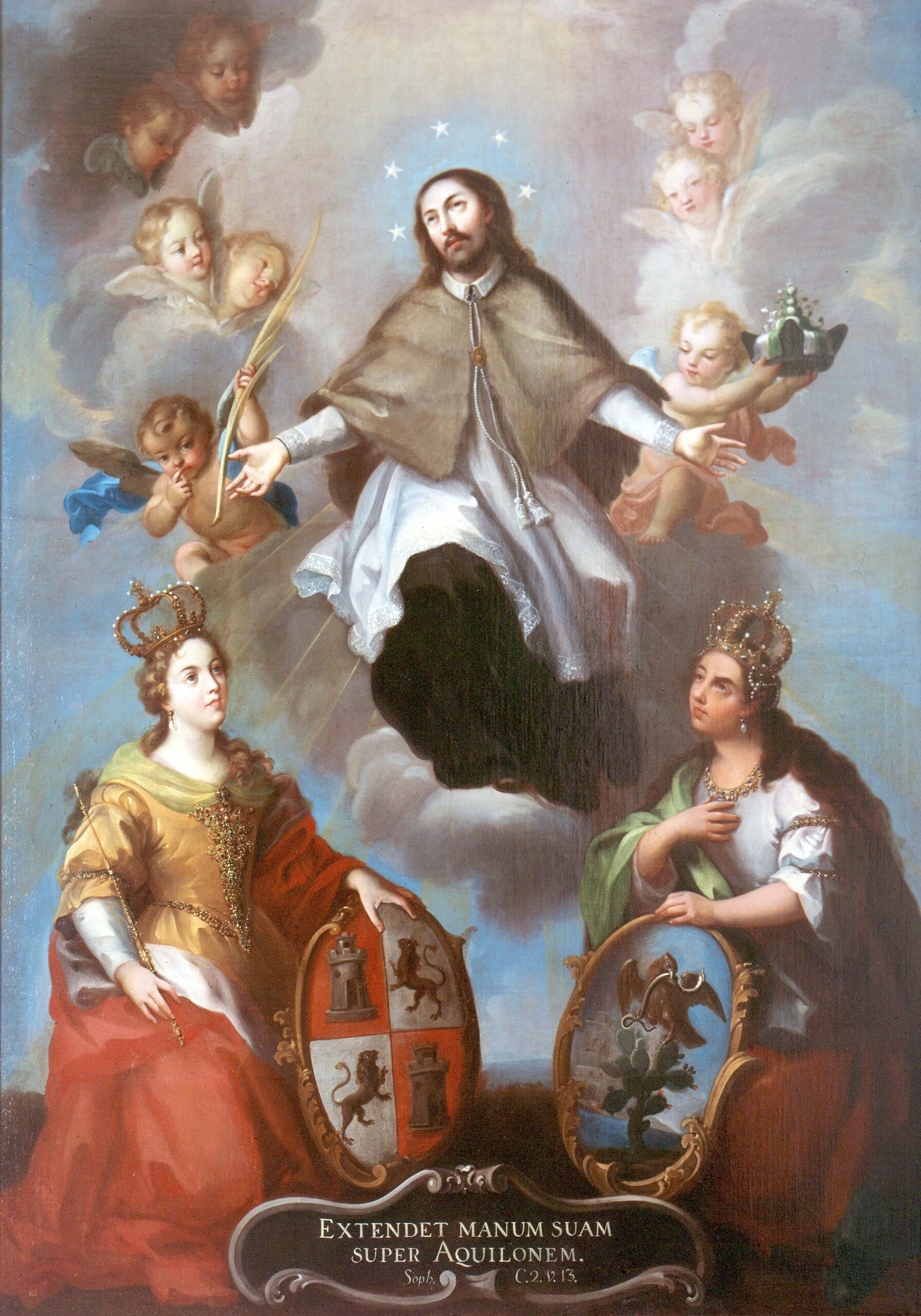
“Allegory of the Mother Homeland Representation of the Union of Spain and New Spain through the Christian Faith,” artist once known (New Spain), Eighteenth Century, oil on canvas, 115 by 86 inches. Museo Nacional de Historia Castillo de Chapultepec, Secretaría de Cultura, INAH, MX, Mexico.
By Ruben C. Cordova
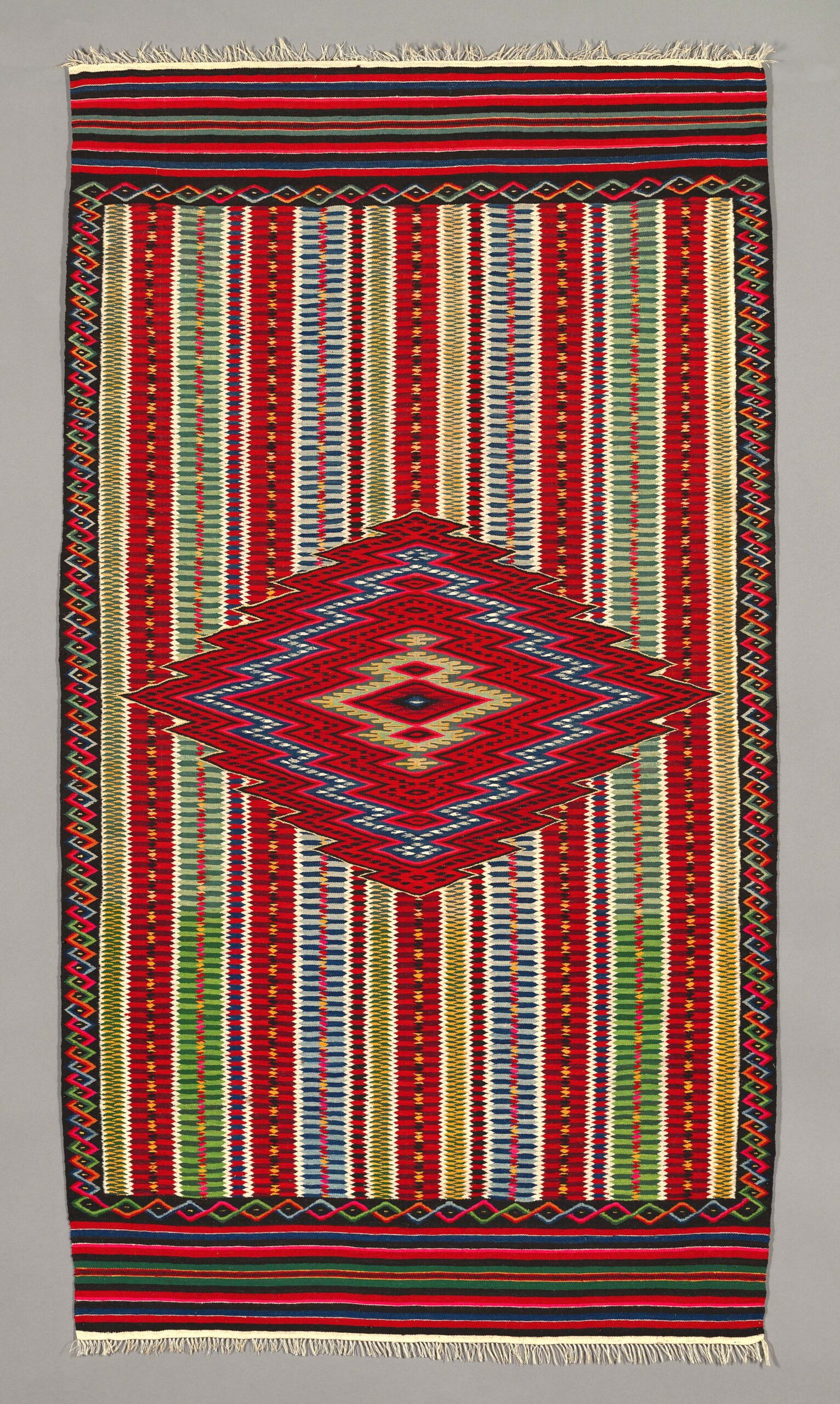
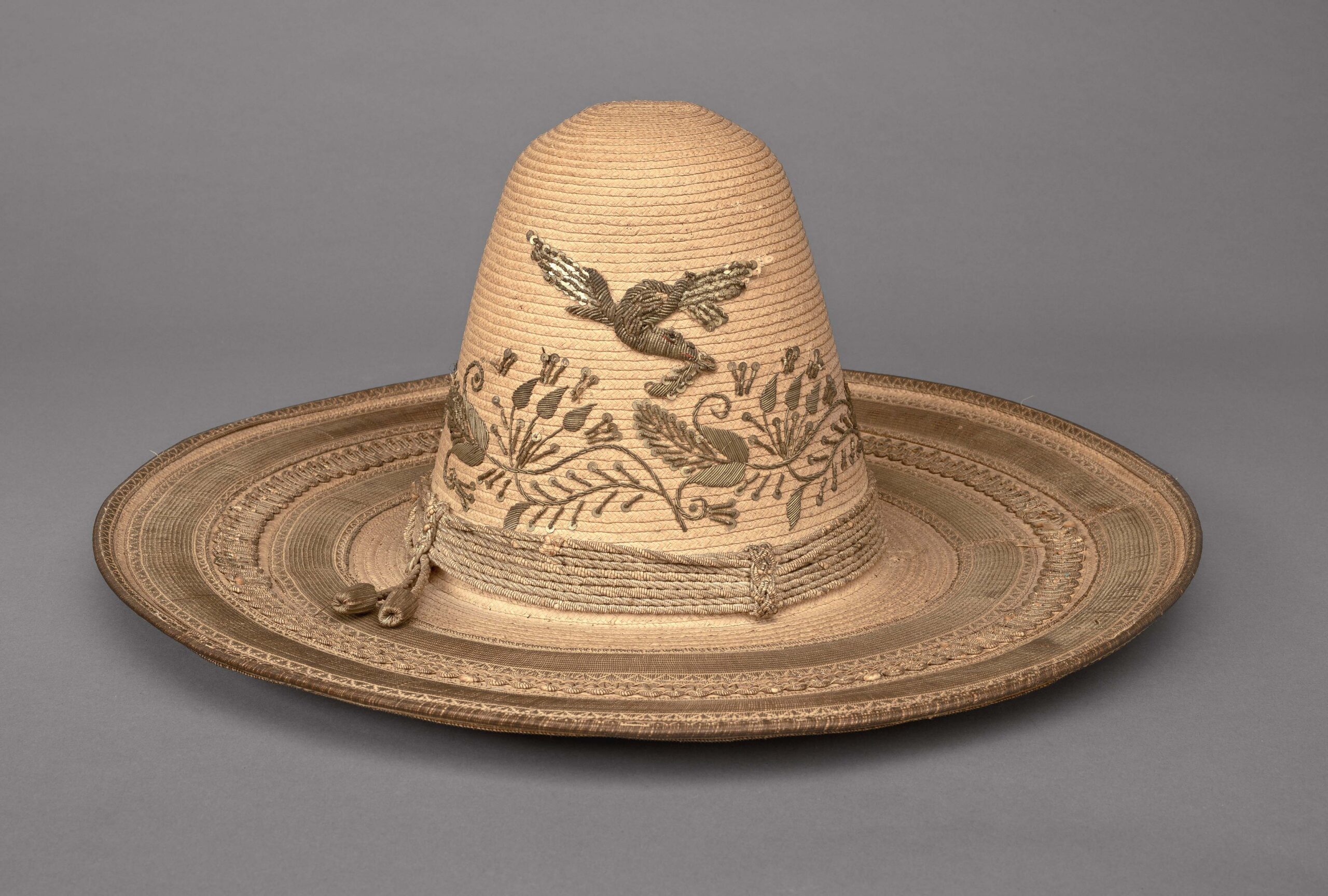
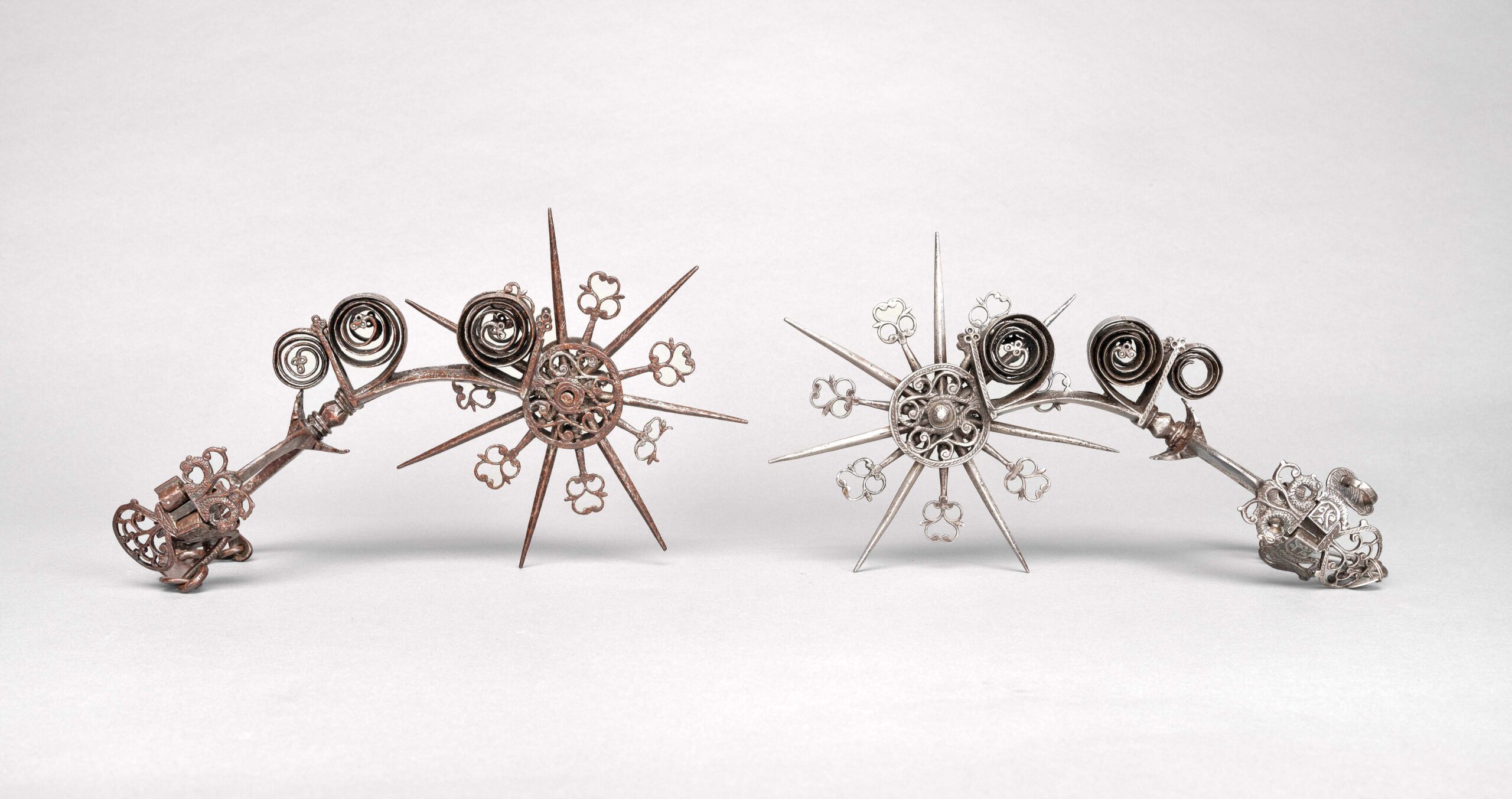
SAN ANTONIO — For the United States’ 250th anniversary, the Briscoe Western Art Museum aims to celebrate the vaquero culture that provided the basis for cowboy culture, which is often conceived in Anglo-centric terms. With more than 100 objects dating back to a stupendously ornate pair of spurs that belonged to a Spanish conquistador, circa 1550, “Tejano Legacy: Another American Origin Story,” on view through January 18, highlights the legacies of New Spain and Mexico.
Liz Jackson, president and CEO of the Briscoe, calls the bilingual exhibition “an invitation to experience a richer, more complete understanding of the American West,” including the often unacknowledged contributions of Tejanos (Texans of Mexican descent) that “have been woven into the fabric of Texas and our nation.”
The Briscoe, named after former Texas governor Dolph Briscoe, Jr, and his wife, Janey Slaughter Briscoe, opened in 2013. It inhabits a beautiful limestone building designed by Herbert S. Green. Framed by busts of Shakespeare and Cervantes on its facade, the landmark building served as San Antonio’s main library from 1930 to 1968. Beginning in 1942, it displayed a circus collection as a division of the library, which became its primary public focus after the rest of the library relocated. The building housed the Hertzberg Circus Collection and Museum from the 1980s until 2001, when the circus collection passed to the possession of the Witte Museum (San Antonio).
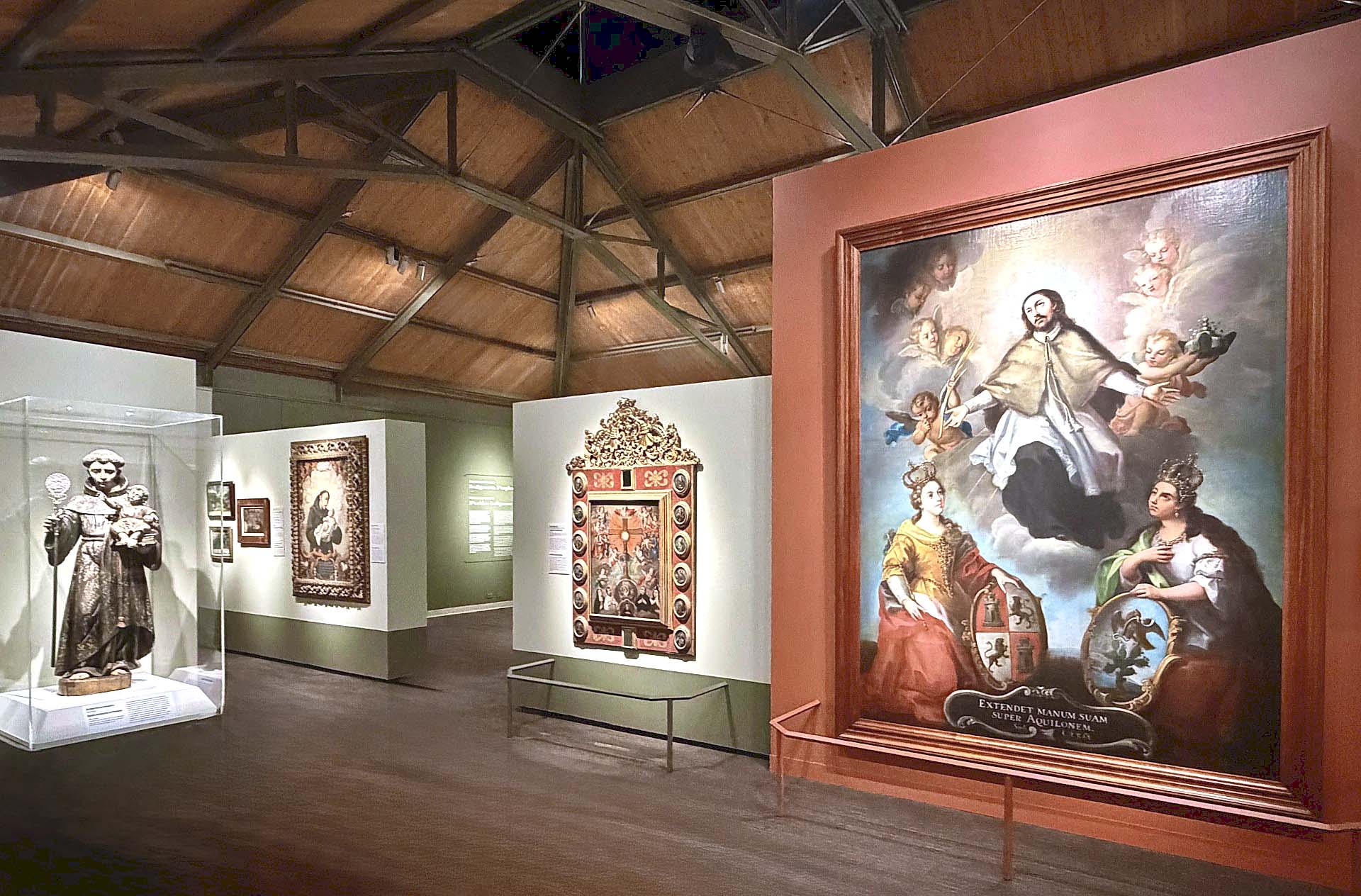
“Tejano Legacy” installlation shot. Photo by Ruben C. Cordova.
The Tejano exhibition began as a salute to an anonymous South Texas collector and longtime supporter of the Briscoe who was a 12th generation Tejano. Along the way, it was re-envisioned to become a broader, more inclusive story intended to resonate with local audiences and visitors from afar.
Independent curator Gabriela Gámez was brought on to curate the exhibition in 2022. Born in McAllen, Texas, and raised in Mexico City, Gámez moved to San Antonio in 2008. An architect by training, she has focused on the art of New Spain and Mexican costumbrista painting for a decade. Her goal, she says, is for the exhibition to tell “the story of the Tejanos and their profound contributions to the history, culture and identity of Texas.”
After touring the collection in South Texas, she concluded that the collector (who had died a few years prior) possessed “a great eye.” She judged the finest pieces to be on par with the outstanding objects in Mexican national museums. To supplement the private collection at the heart of the exhibition, she utilized the museum’s collection, loans from US museums and 16 works from Mexican museums, some of which are making their US debut.
“Tejano Legacy” is divided into sections, from “The Spiritual Conquest” to “The Porfiriato.” Additionally, some contemporary works by Tejano artists are placed on the last two walls, without explanatory labels.
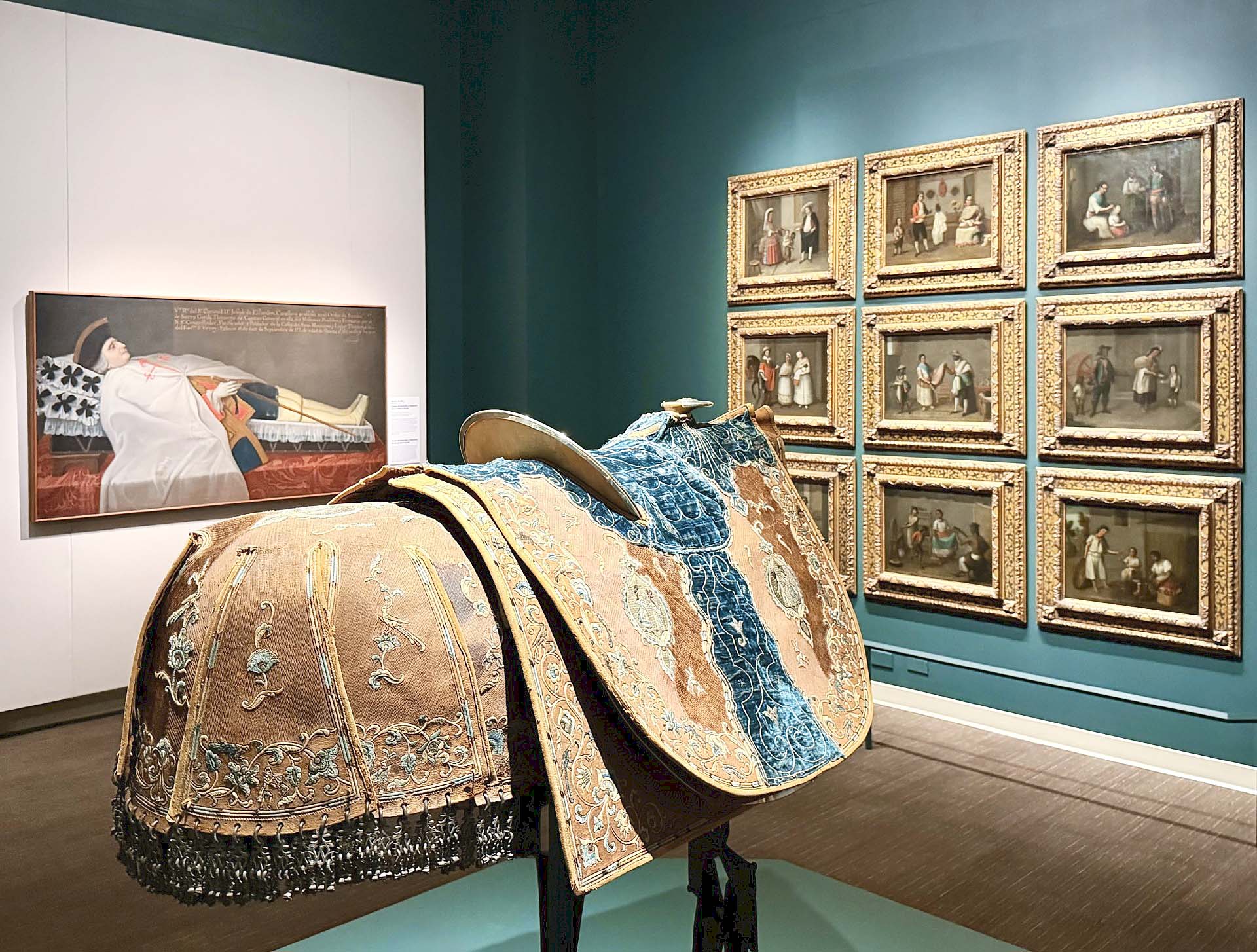
The viceroy saddle, circa 1750, is displayed near a funerary portrait (left) and casta paintings (right). Photo by Ruben C. Cordova.
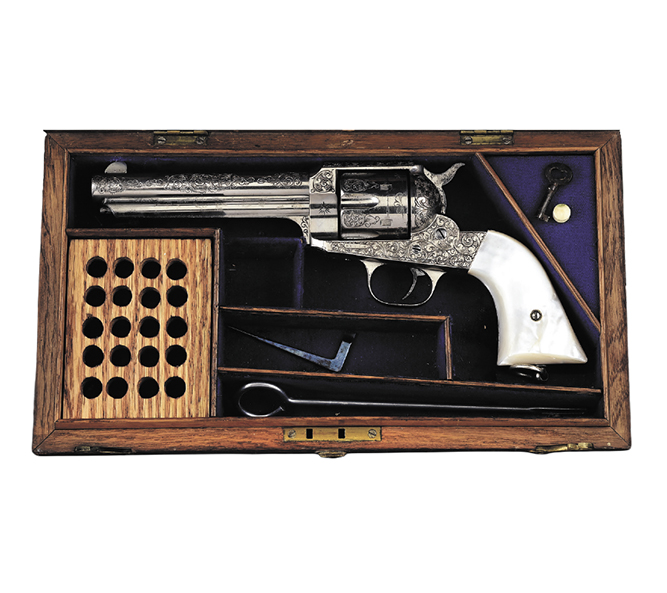
The “Spiritual Conquest” section begins with a bang, with three pairs of circa 1700 Spanish flintlock pistols and the aforementioned spurs. The latter, so large and elaborate, and so un-Spanish in their ostentation, were dress-to-impress ceremonial objects rather than functional ones. Gámez is aware of only a single spur of equal quality in Mexico.
A circa 1750 viceroy saddle is a rare and extraordinary luxury object made for New Spain. Rich in silk and velvet, it is adorned with silver elements. A suite of nine Nineteenth Century casta paintings, each of which treats one of the specifically defined permutations of caste, offer pictorial testament to Spanish obsessions with racial mixing, birthplace status and social hierarchy; such prejudices led to the War of Independence (1810-1821). A large circa 1770 mortuary portrait of the Count of Sierra Gorda exemplifies a tradition that will be continued in paintings of difuntos (the deceased) by Siqueiros and Kahlo, and by photographers. Three Eighteenth Century ex-voto paintings provide fascinating windows on daily life and the belief in miraculous intervention.
“Introduction of Hernán Cortés to a Native Lord by an Interpreter,” cataloged as early Eighteenth Century, is a telling painting: the interlocutor is a tonsured monk who holds a bible in his left hand while he fingers a cannon barrel with his right. The conquistadors, meanwhile, grasp their weapons in menacing fashion. Cortés, seated on a trunk, closely resembles European depictions of Jesus, implicitly presaging the triumph of the Spanish forces through the agency of Christ. It is likely by a French artist, later than early Eighteenth Century, given the Rococo treatment of the tree and other painterly elements.
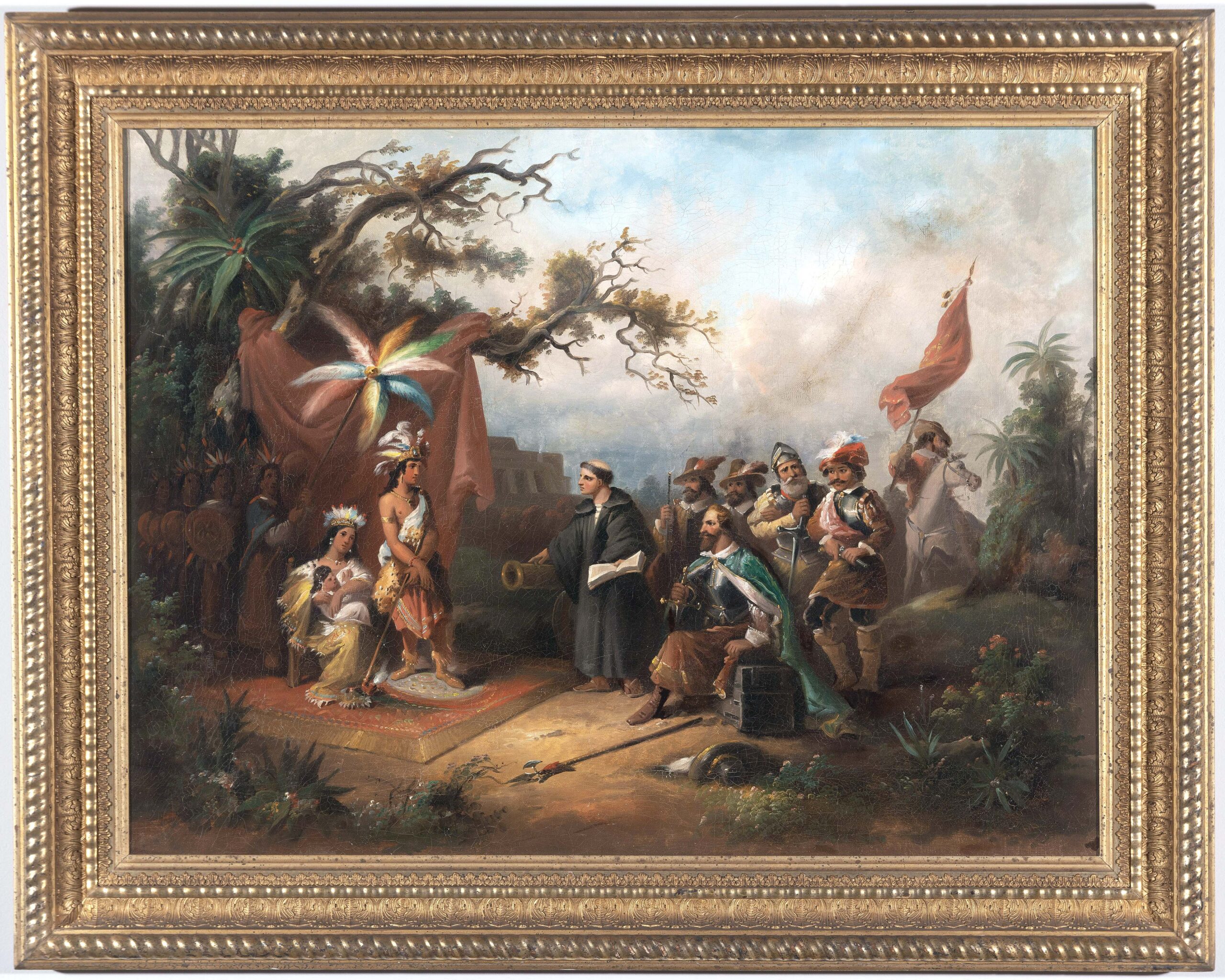
“Introduction of Hernán Cortés to a Native Lord by An Interpreter,” artist once known (Spain), early Eighteenth Century, oil on canvas, 38½ by 48¼ inches. Private collection.
Highlights of this treasure-filled section include rare paintings: “Allegory of Spanish and Indigenous Authorities” (1809), “Allegory of the Mother Homeland Representation of the Union of Spain and New Spain Through the Christian Faith” (Eighteenth Century), “Allegory of the Eucharist” (Eighteenth Century) and an especially beautiful mid Eighteenth Century M. María Loreto de la Sangre de Cristo monja coronada (crowned nun), a work typically painted when religious vows made a young woman the spiritual bride of Christ. Objects include an elaborate Eighteenth Century silver eucharist container with four rampant dragons and St Michael vanquishing Lucifer on the lid, as well as an Eighteenth Century holy water travel container, decorated with a raised silver cross adorned with grapes and leaves.
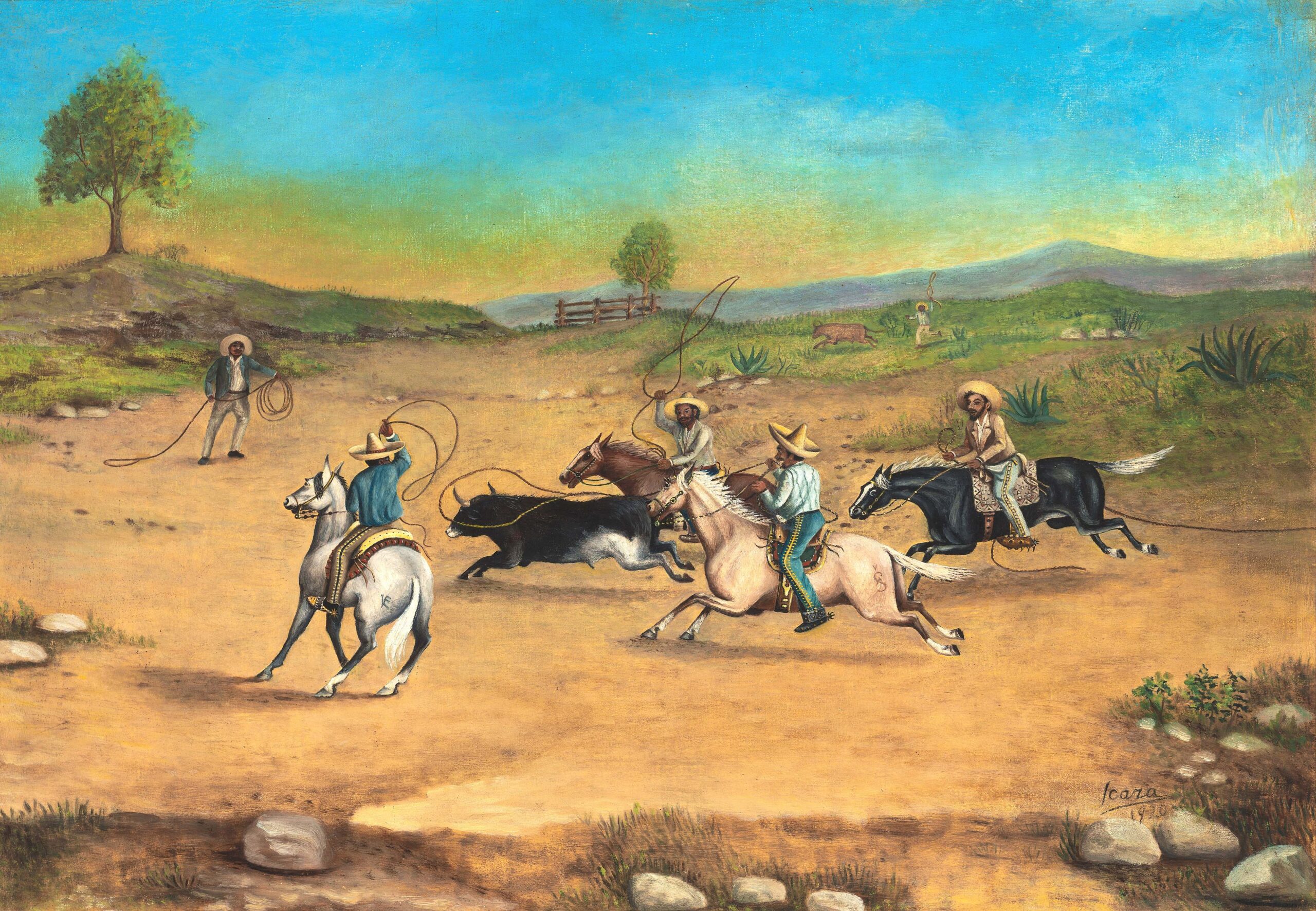
A buckskin and velvet Comanchero jacket, circa 1750, which belonged to someone who traded with the native tribes (particularly the Comanches), highlights the “Relations with Indigenous Peoples” section. The “Ranching Communities” section features depictions of vaqueros in action. A label notes that the Spanish introduced horses and cattle, and “developed riding, roping and branding skills that formed the foundation of the American cowboy style.” “Vaquero,” L. Serrano’s 1858 painting of a proud man, was a crowd-pleaser at the opening I attended.
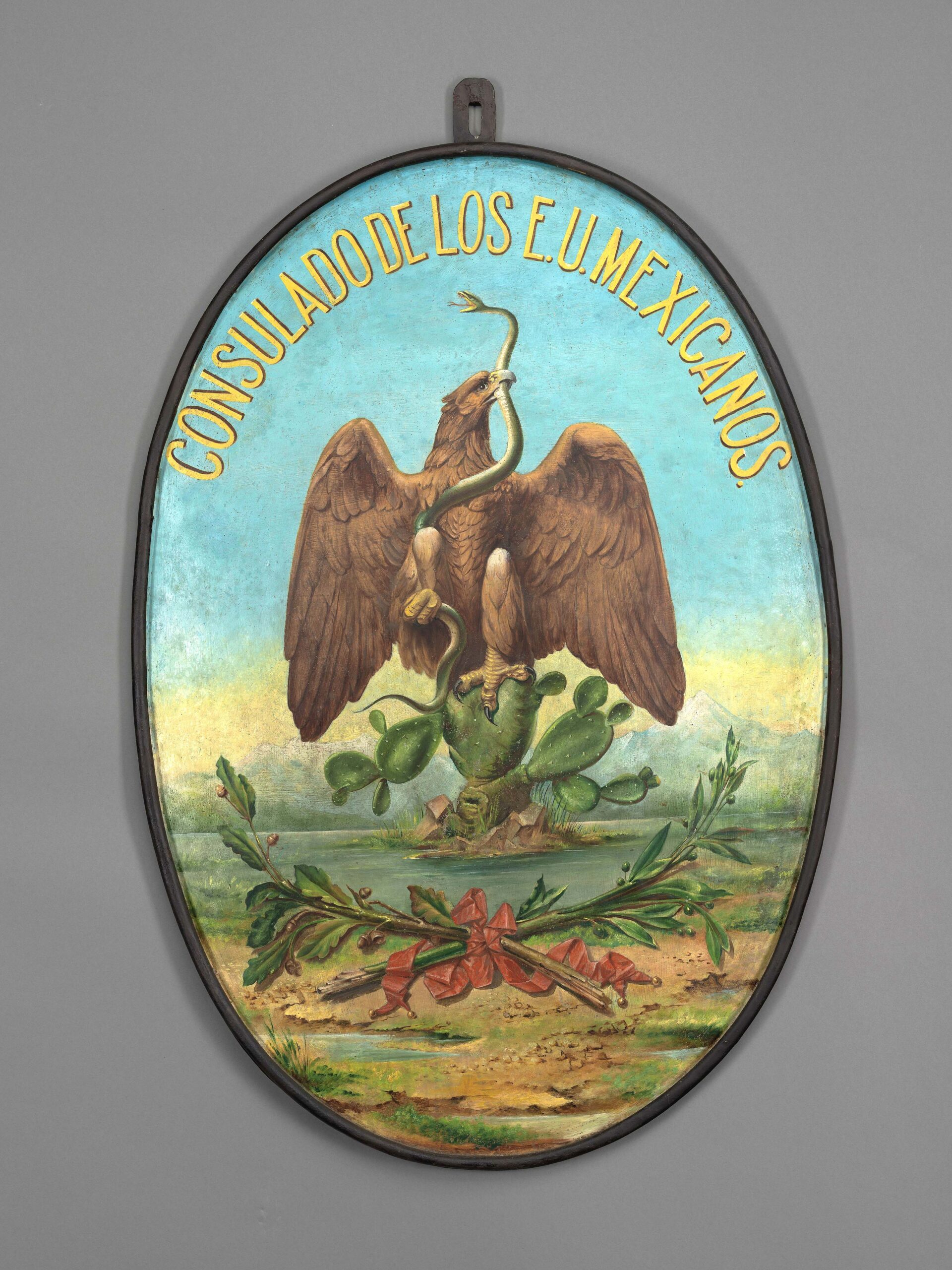
Despite a remarkable section on elite viceregal material, “Tejano Legacy” falls short of its professed goal of illuminating Tejano contributions. It is an excellent treasures of Mexico exhibition, but almost none of the luxury objects that dominate it had a direct connection to Texas or Tejanos before they were bought or borrowed, long after they were made. The show needs more Texas-specific works, such as the 1823 “Mexican War Drum” from a Texas volunteer unit, with a crowned eagle on its face and skulls on its side (each of the latter sport four green feathers in a headband), or “The Alamo,” a painting of the roofless church by Théodore Gentilz, made in the latter half of the Nineteenth Century. Sections devoted to the short-lived, French-imposed Emperor Maximilian and the excessively long-ruling Mexican dictator Porfirio Díaz, with their plethora of military regalia, medals and bemedaled portraits, resemble a military exhibition. The commentary on Maximilian seems less from a Tejano perspective than from that of a Nineteenth Century European imperialist. “Occupation” and “Revolution” would have been better section headings, which could have contained material more relevant to Tejanos, including prints, documents, photographs, etc.
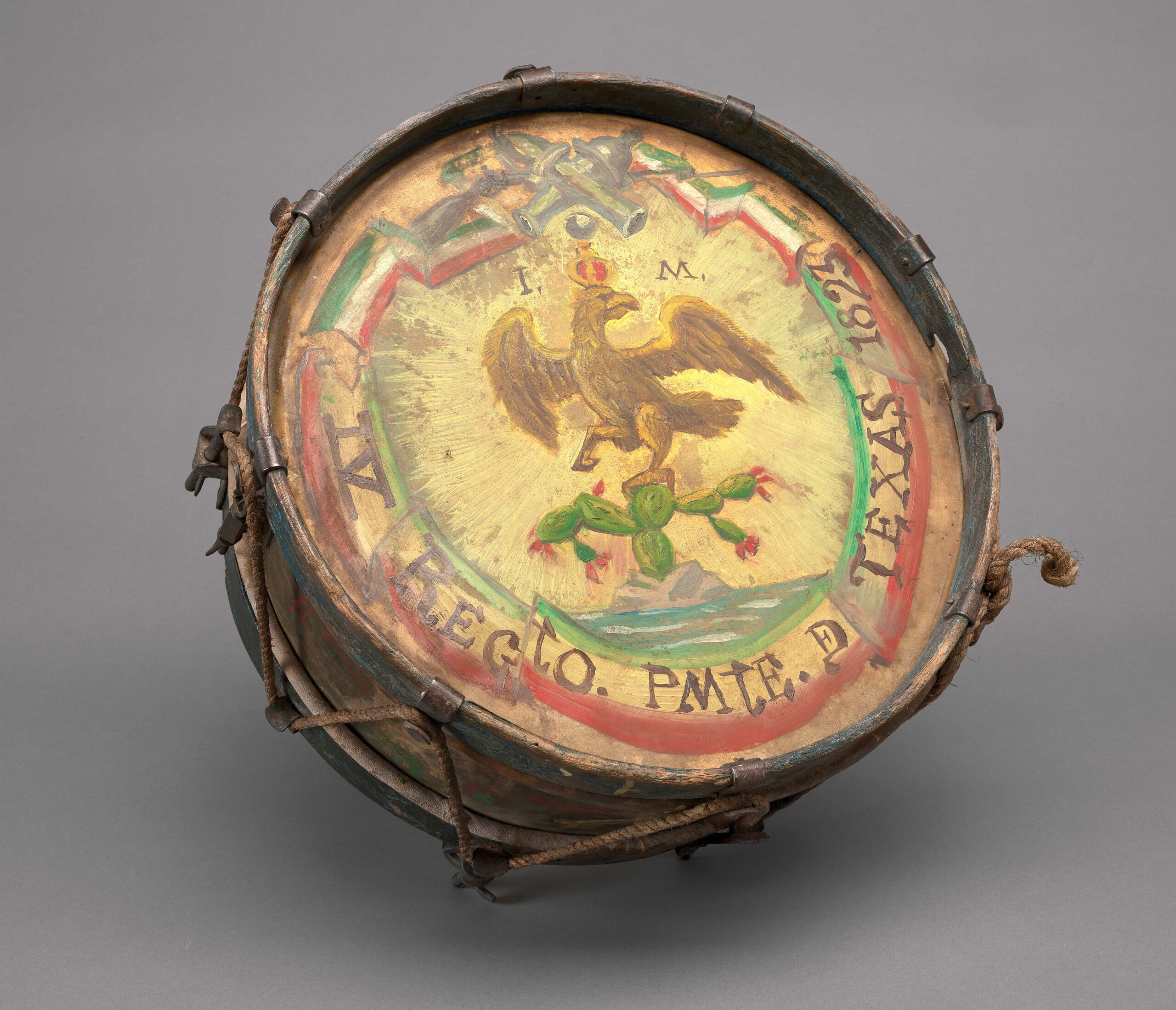
Mexican Empire war drum, artist once known (Mexico), 1823, mixed media, 15 by 15 by 7 inches. Private collection.
History is treated inadequately. One of Díaz’s portraits appears to have been slashed multiple times, warranting explanation for his unpopularity (his refusal to leave office) and the negative impact of his policies (he favored foreign corporations and his ministers were racist Social Darwinists). The Mexican Revolution was directly rooted in San Antonio: the Flores Magón brothers fled there in 1904, where they fomented rebellion and resumed publishing Regeneración, their anti-Díaz newspaper. Subsequently, Texas became a haven for Mexicans who settled there to escape the violence of the Revolution.
With the objectives of seizing the northern half of Mexico and expanding the territory open to slavery, President Polk utilized a false Texas border to provoke war with Mexico. That is why Texas is emphasized in his exhibited portrait.
The violations of the Treaty of Guadalupe Hidalgo, which provided rights for Tejanos, is an especially important topic, given the massacres and desperate flights from Texas that ensued.
No Tejano was a greater supporter of the Texian cause than Juan Seguín. But the label on his portrait does not mention that he was forced to flee to Mexico out of fear for his life, after a massive incursion of racist Anglo-Americans into Texas.
Crucial parts of the Tejano narrative are missing. It is not enough to note that Tejanos were the first cowboys. The rarest and the most precious objects, which almost always originate from afar, including the finest saddles and hats, do not tell the story of Texas, nor are they sufficient objects to illuminate the intertwining of cultures. A follow-up exhibition has been mentioned, and it would be advisable to utilize more prosaic objects to chart the evolution from Tejano culture to cowboy culture, explicitly detailing the many direct connections between them. Art created by contemporary Tejanos could also be utilized to focus analytically and specifically on the history and culture of Texas after independence from Mexico, and its relevance to this nation.
Following its run at the Briscoe, “Tejano Legacy” will travel to Western Spirit: Scottsdale’s Museum of the West, in Scottsdale, Ariz. (March-September 2027) and the Bullock Texas State History Museum in Austin (October 2027-February 2028).
The Briscoe Western Art Museum is at 210 West Market Street. For information, www.briscoemuseum.org or 210-299-4499.