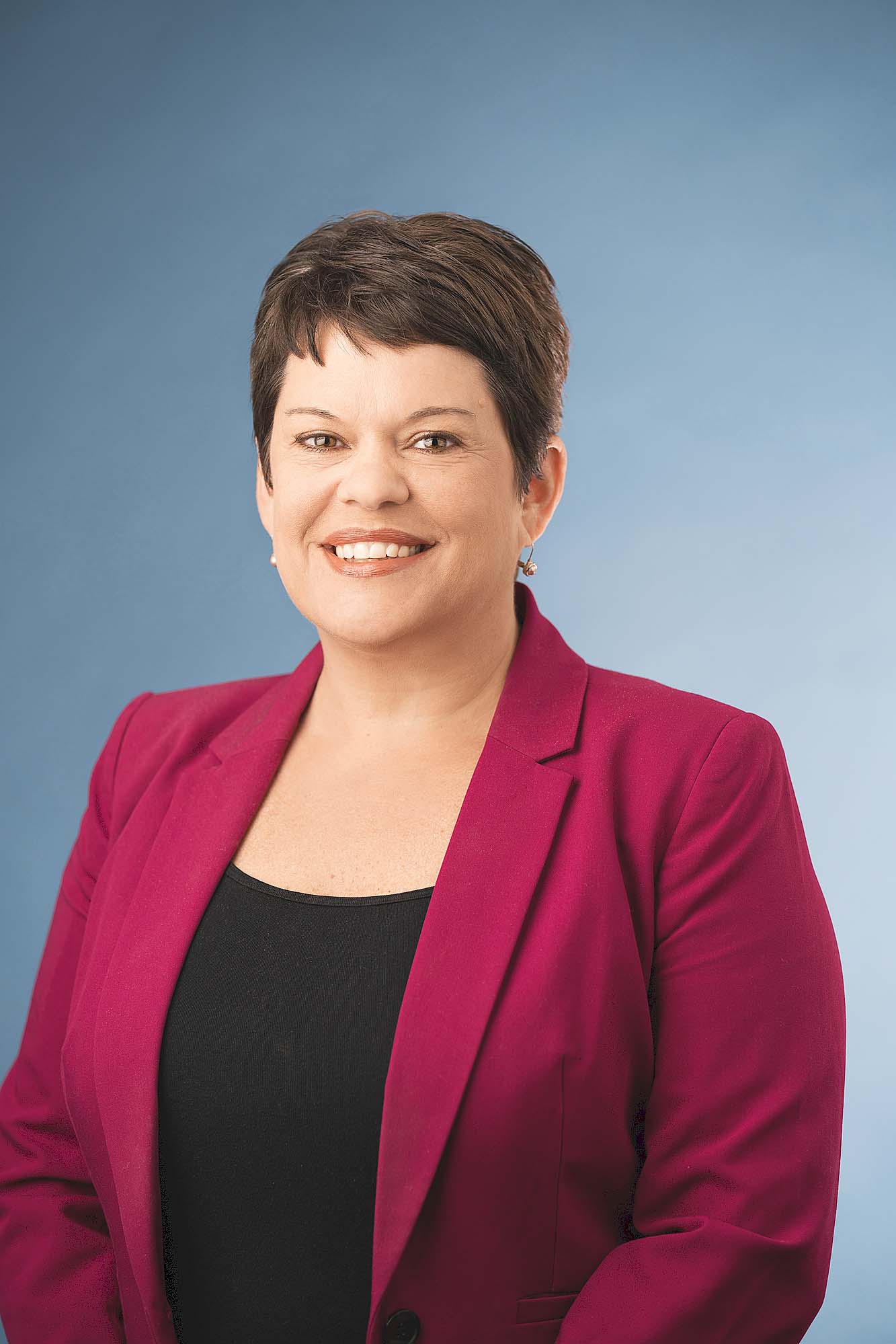
Tricia Edwards has recently begun her position as director of the Smithsonian Libraries and Archives (SLA) after serving as the interim director since September 2025. Previously, she was deputy director of the Smithsonian Institution Traveling Exhibition Service and Smithsonian Affiliations, and before that she was the head of education at the National Museum of American History’s Lemelson Center for the Study of Invention and Innovation. We reached out to learn more about this latest chapter in her already impressive Smithsonian-filled resumé.
Congratulations on the new role! Before serving as the interim director, were you already working at the Smithsonian Libraries and Archives?
I have been at the Smithsonian for about 20 years — I just celebrated 20 years in March. Before coming to the Libraries and Archives I was with the Smithsonian Institution Traveling Exhibition Service (SITES) and Smithsonian Affiliations, where we were focused on getting the Smithsonian out into communities beyond DC.
As the director, what are some of your primary responsibilities?
It’s really to provide overall leadership for our 20 libraries and the institutional archives we operate: managing institutional goals and working with the individual libraries and archives staff — making sure the trains keep running. It also involves working with the advisory board to drive goals forward.
Is your time split between the Libraries and the Archives, or do you oversee them together as a singular entity?
The Libraries and the Institution’s Archives used to be separate organizations at the Smithsonian, but in 2019 they decided to merge them as a single entity, which makes a lot of sense.
Since the SLA is so expansive, I expect you work with a whole host of specialists, researchers, librarians and institutions. Who do you work most closely with?
Our team consists of trained librarians and archivists; conservation and preservation teams, whose job is to ensure our collections are maintained and preserved; drivers, who are important for the interlibrary loan program to pick up and drop off books and materials; and the programming team responsible for organizing exhibitions and programs. Also, the finance and administration team are, of course, an important part of the SLA team! All those folks working with the Libraries and Archives ensure researchers have access to materials and will be able to share their research.
Outside of SLA, I also work with museums and research centers. I am anxious to start building relationships with other academic and research libraries, such as the Library of Congress, to be in collaboration with peer institutions to see how we can learn and gain from their work and how they can learn and gain from our work. We’ve done an amazing job to support our Smithsonian colleagues, but there’s a lot more we can do with other institutions, and the staff is really excited about those opportunities.
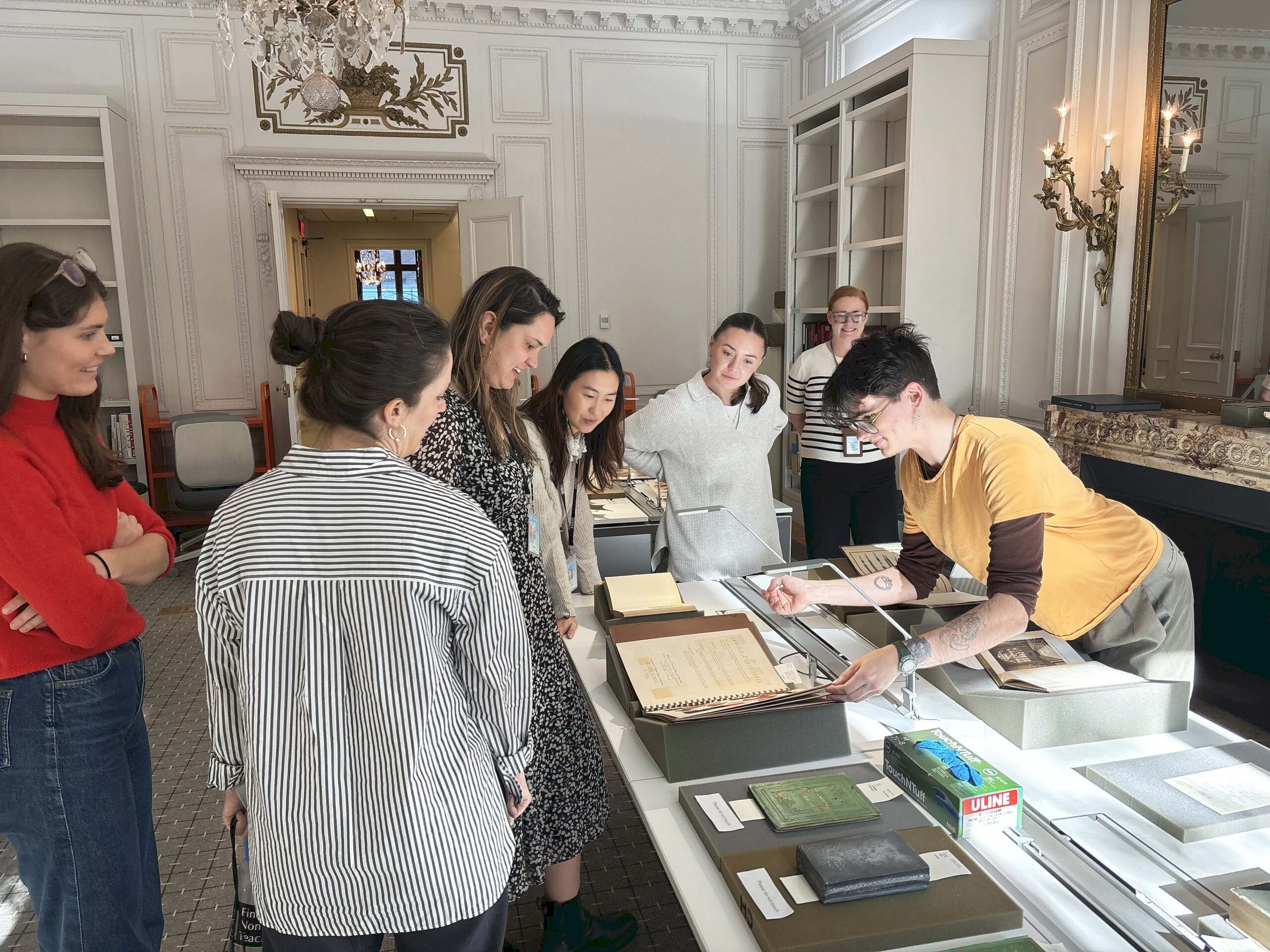
Smithsonian staff and visitors engage with collections, reflecting the collaborative work of librarians, archivists, preservation specialists and public facing teams who bring research and discovery to life. Courtesy Smithsonian Libraries and Archives.
How would you characterize the importance of the work the Smithsonian Libraries and Archives is doing in these present times?
The Smithsonian as a whole, we understand our role as a trusted source, and the SLA has a trusted reputation. People are often skeptical of what they see online these days, and we can be a trusted source for people to come and learn with confidence.
Information literacy is extremely important right now. How do we understand what is real and what is true? Libraries in general, but especially the SLA, play a critical role for not only researchers but the public at large when it comes to developing information literacy.
How do you stay grounded knowing the impact of this work?
Really, I’m so inspired by our staff. We get unsolicited testimonies from people who use our materials — whether it’s online or they come in to do their work — and they talk about the collection, noting that it’s stuff they can’t find elsewhere. But they also talk about our staff and how great and helpful they are. The collections are just things without the staff. When I get those emails from researchers, I save them and actually go back to them if I’m having a rough day. They remind me, this is why we’re doing what we’re doing. Through our work and their work, we do have a really big public impact.
Are there any challenges to the work that you’re doing?
For sure. I think most of it is good and exciting. One is just being a really big and dispersed organization. The Libraries and Institutional Archives are all over the DC area, but there’s also the Smithsonian Tropical Research Institute in Panama and the Cooper Hewitt library in New York City. We work on connecting these different organizations and maintaining culture within the workforce, making sure everyone’s on the same page with goals and strategies. Of course, there are different goals and strategies within such different organizations — for instance the Natural History Museum versus the American Art Museum. The Smithsonian Institution focuses on all assets of history, arts and culture, so how do we make sure we’re leveraging all of those assets? Thinking broadly, how do we promote all of these assets and see how we can reach everyone who can be using our materials?
In what ways have your previous roles within the Smithsonian network prepared you for this position?
As you can imagine, the Smithsonian is a big and complex place. Understanding how the system works and how to get things done is helpful. Also, I’ve built a great network and it’s great being able to rely on those relationships to continue the work of the libraries and move us all forward. My whole career with the Smithsonian has really been about providing information and access to libraries or museums. At the Smithsonian, we take our role as a public institution seriously. Our whole ethos of the Smithsonian is education, support and access for all. This perspective has carried through my entire Smithsonian career up to now.
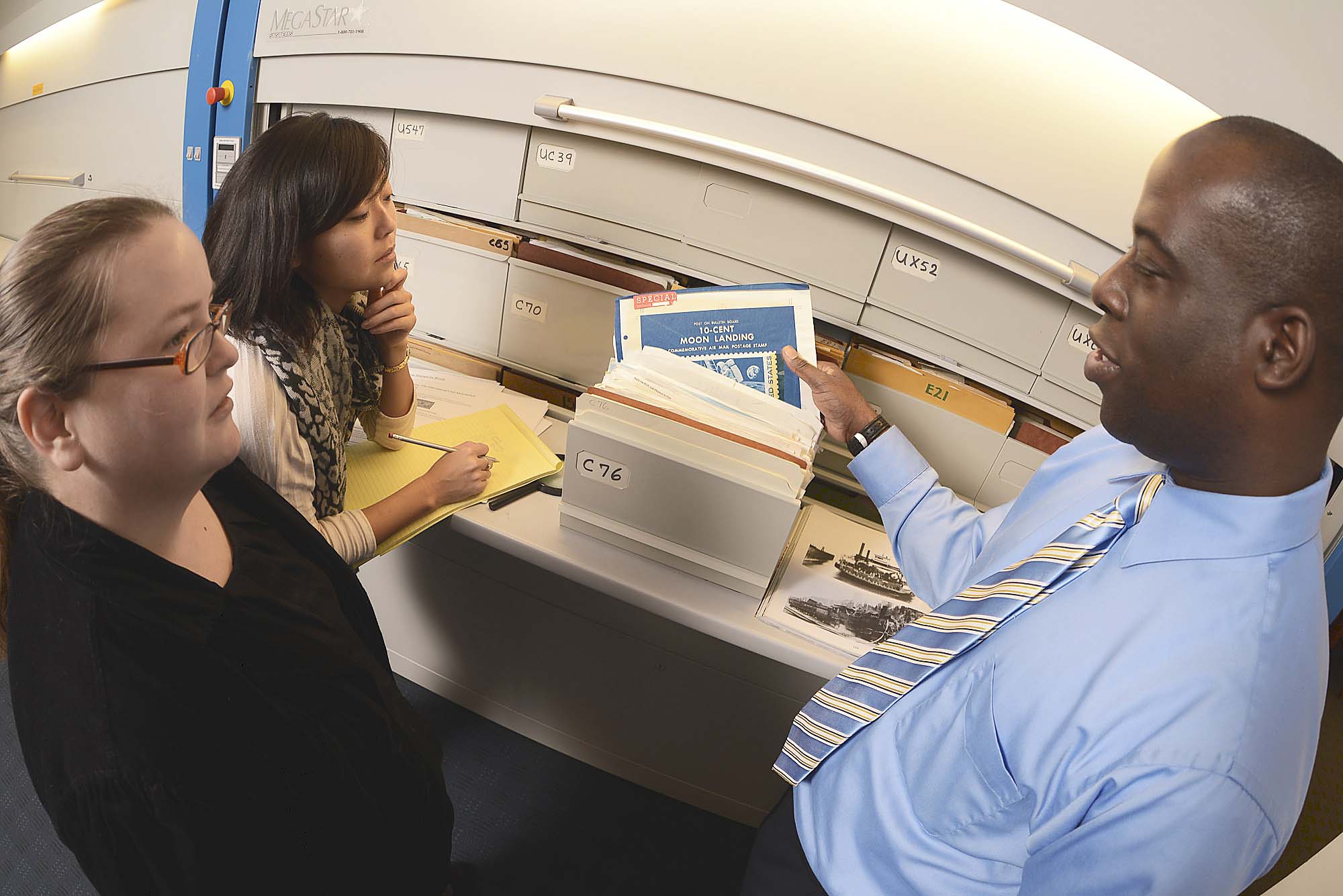
Museum staff work with archival materials in storage, supporting researchers by preserving, organizing and providing access to the Smithsonian’s vast collections. Courtesy Smithsonian Libraries and Archives.
As technologies have changed over the years, SLA has grown and improved substantially. Are there any new developments in the works that you can share with us?
One of the things we’re working on right now is implementing a new library services platform. This will be the way researchers will access materials online, and also how we will manage the backend of library work, including interlibrary loans. The new system will make discovery of materials easier, increase access and also take some of the load off our staff.
We are also looking at different demand-driven acquisition (DDA) methods: We ask ourselves how do we build our collection when we think of access, time and space? Can we do this differently? With DDA, if someone wants a book we don’t have in our collections, they can still request it and we’ll send it to them digitally and we’ll pay a fee based on usage rather than paying outright and storing books here. This will also include on-demand access for individual articles since journal subscriptions can be expensive and, of course, take up a lot of space. We are trying to be strategic about what we “own” versus what we can provide access to. All of these systems will ease the burden on staff, build capacity we don’t have and meet the needs of researchers.
I read that you previously worked as a preschool teacher before transitioning into the museum world. How did that background inspire you to continue working in education from a different angle?
I think there’s a lot of continuity for me. For me, education is the thread that’s run through my entire career. It’s really important to me to be in a mission-driven institution. It all goes back to access — How do we provide quality access to education, whether it’s in a preschool or at the Lemelson Center for the Study of Invention and Innovation. How do we provide access to all of these opportunities to ensure quality educational opportunities for all?
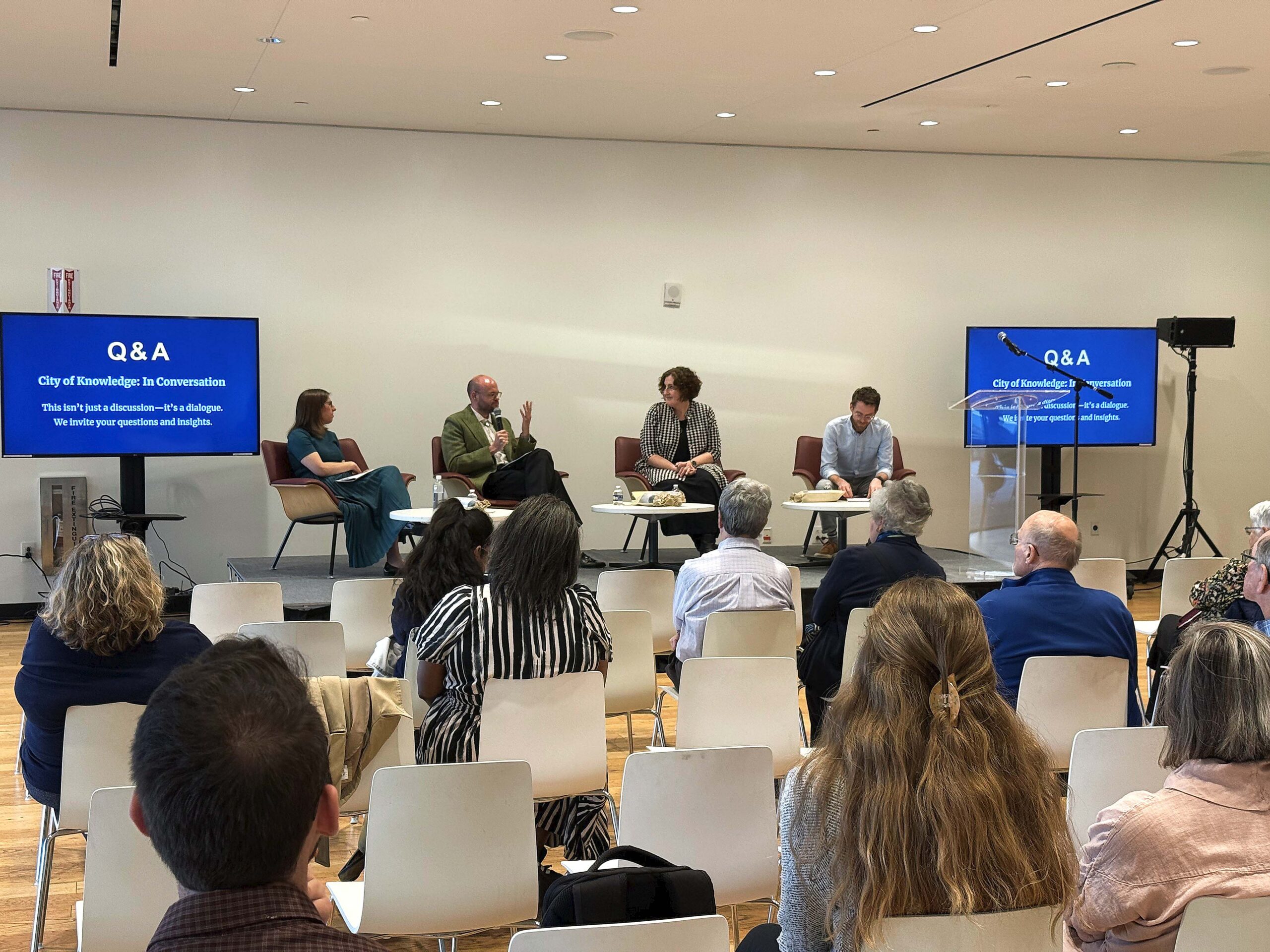
Participants take part in the Smithsonian’s City of Knowledge program, illustrating how exhibitions and public programs connect collections, scholarship and community engagement. Courtesy Smithsonian Libraries and Archives.
Are there any upcoming programs or exhibitions you are especially excited about and would like to share with our readers?
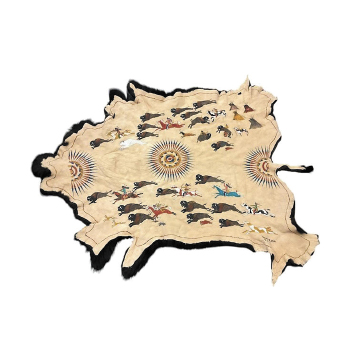
We have a new exhibition opening at Museum of Natural History on May 21, “Imagining Bison.” This is companion exhibit to “Bison Standing Strong” at the National Museum of Natural History, which is the largest bison exhibit. “Imagining Bison” uses items from the archive collections to share the history of the bison, and the history of the bison at the Smithsonian. In October, we’ll open “American Stories” at The American History Museum, which is telling American stories and features artist books from the library collection. These are kind of artistic interpretations of books and “books” — some look like traditional books and some take different forms. The exhibit shows how artists reflect the American experience through works of art.
In June, we also have a program around the Burpee seed company that connects with a new book, The Burpee Seed Company: Planting US History since the Nineteenth Century. Chris DeMairo, the author, used our collections in writing the book and will talk about his research.
Later this fall we are hosting a book talk with Chris Sweeney, the author of Feather Detective. The book is about scientist Roxie Laybourne, who worked at the Natural History Museum and pioneered this field of bird forensics. She worked with the FAA to figure out what happens when a bird gets sucked into a plane and helped engineers design planes with this in mind. We have her papers and materials in archives. Her labs still exist and there’s another scientist, Carla Dove, who continues her work. She has quite the legacy at Smithsonian and beyond, so that talk will be really neat.
What are you most looking forward to in this role?
There’s a lot with the Smithsonian Libraries and Archives that I’m excited about, but really, it’s the opportunity to work with the incredible staff to think about “What is the work we’re doing now that we’re proud of? Where are there opportunities for technological advancements? Where do we want to be in 20 years and how do we get there?”
—Carly Timpson