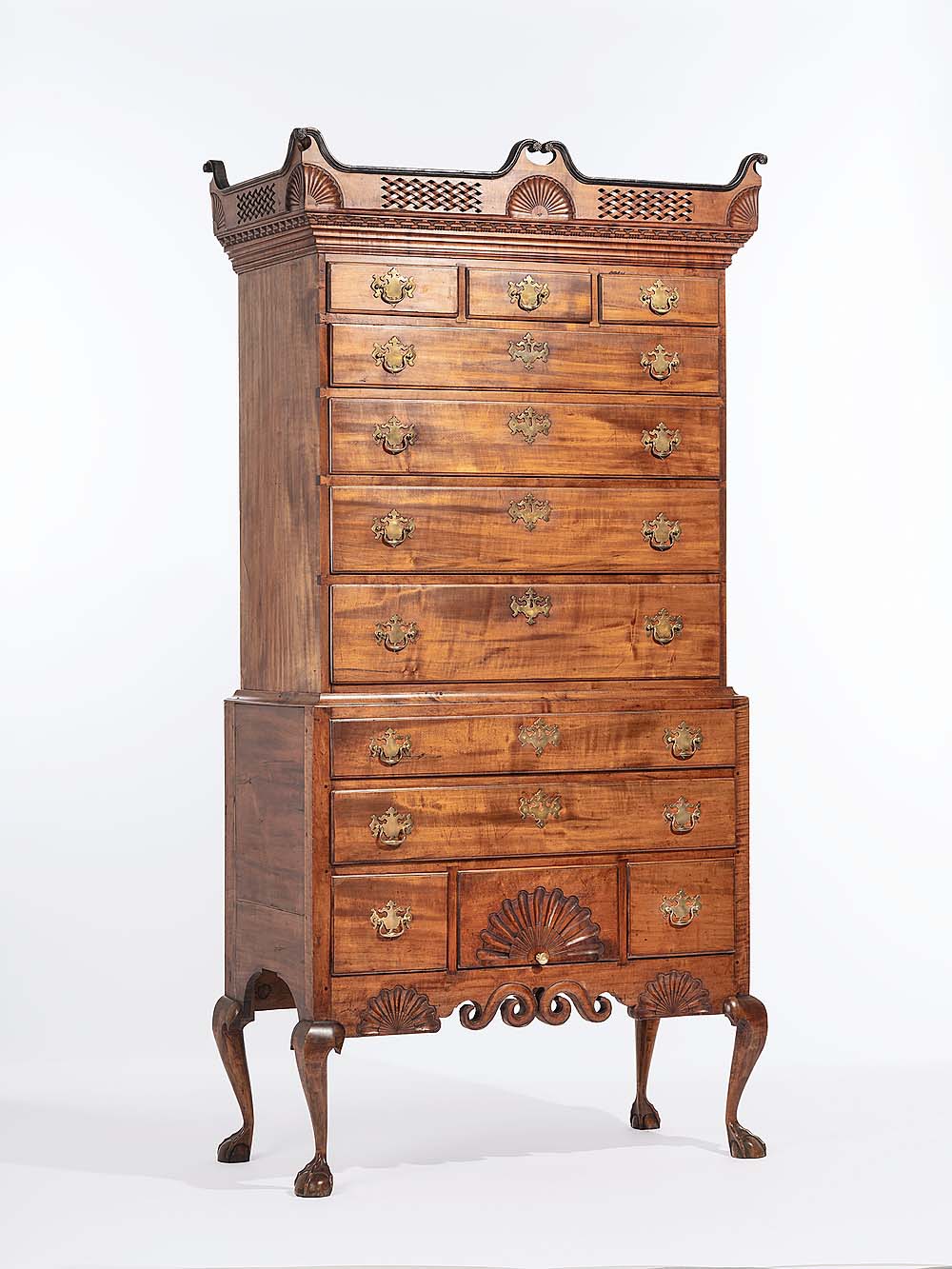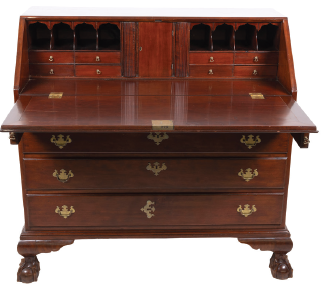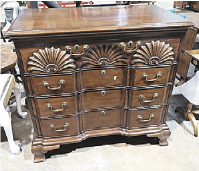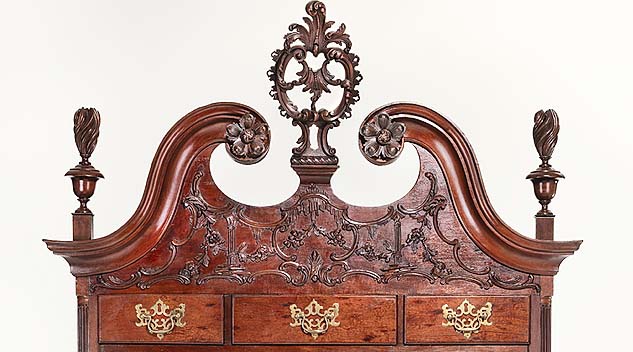
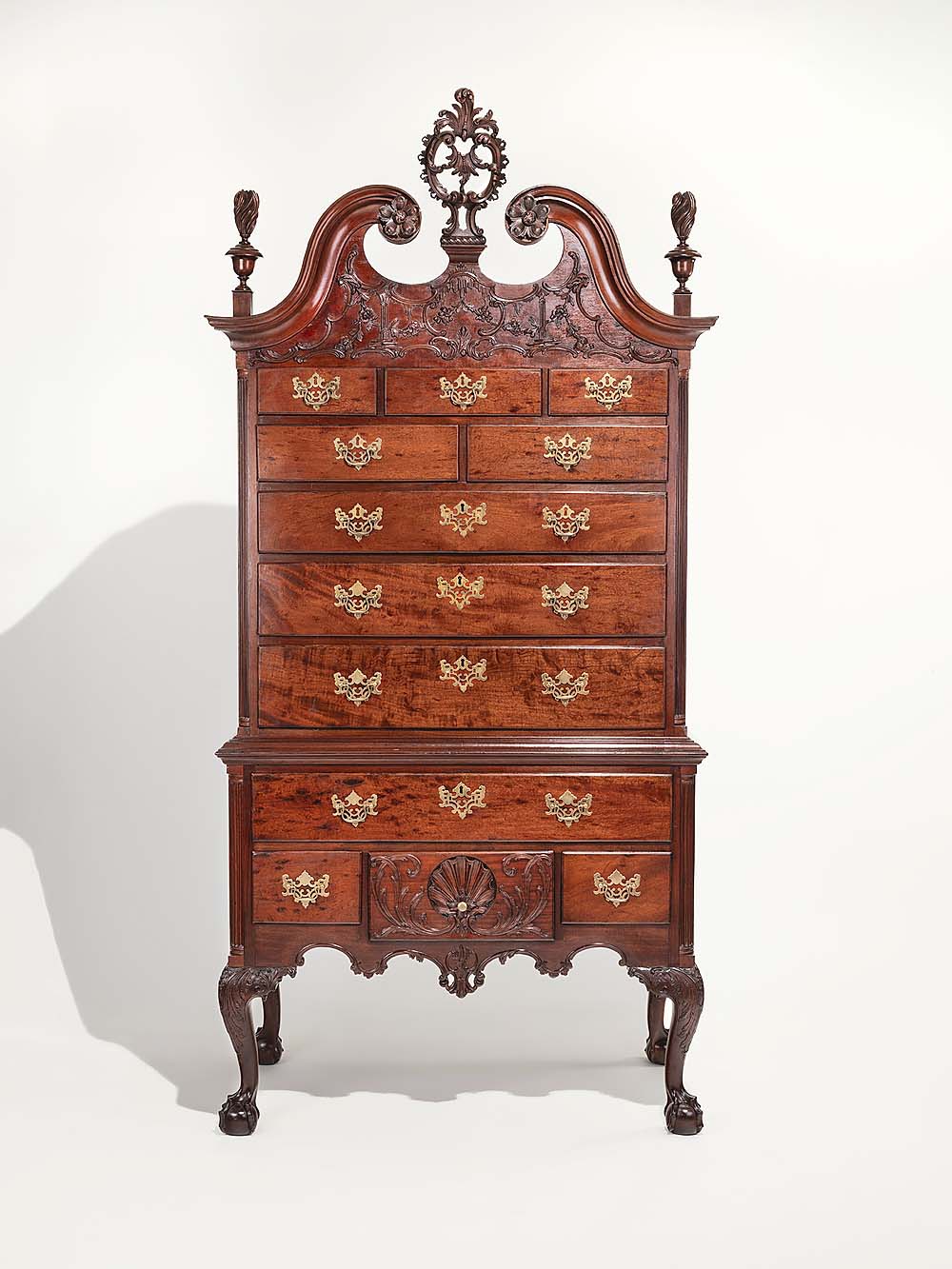
Van Pelt high chest, Philadelphia, 1765-80, mahogany, tulip poplar, oak, yellow pine, cedar. Winterthur Museum, gift of Henry Francis du Pont. 1958.0592.
By Madelia Hickman Ring
WINTERTHUR, DEL. — Have you ever wondered what constitutes a masterpiece and who decided the parameters for that assessment? When it comes to early American furniture, there is perhaps no better museum to re-evaluate these questions than Winterthur, the estate of Americana collector and horticulturist Henry Francis du Pont (1880-1969), which became a museum in 1951 and, since then, has developed into not only a center for researching early American material culture but has become an incubator for curators in the field through its graduate program partnership with the University of Delaware.
With the 75th anniversary of Winterthur Museum, Garden & Library coinciding with the American semiquincentennial, the timing was right to return to its roots. The museum has launched its newest exhibition on one of the things it is best known for: its iconic collection of masterwork examples of American furniture.
On view through May 2, “Challenging Masterpieces: Art and Identity in American Furniture” highlights more than 70 standout examples from the museum’s collection, each chosen for exceptional craftsmanship, inventive design or use of rare and/or unexpected materials.
“It has been over a decade since Winterthur has mounted a furniture exhibition, and institutionally we were especially eager to highlight the furniture collection in this 75th anniversary year of the museum’s founding in 1951,” said Joshua W. Lane, Winterthur Museum, Garden & Library’s Lois F. and Henry S. McNeil curator of furniture. “It treats a long tradition in this country of storytelling with objects to shape national identity.”
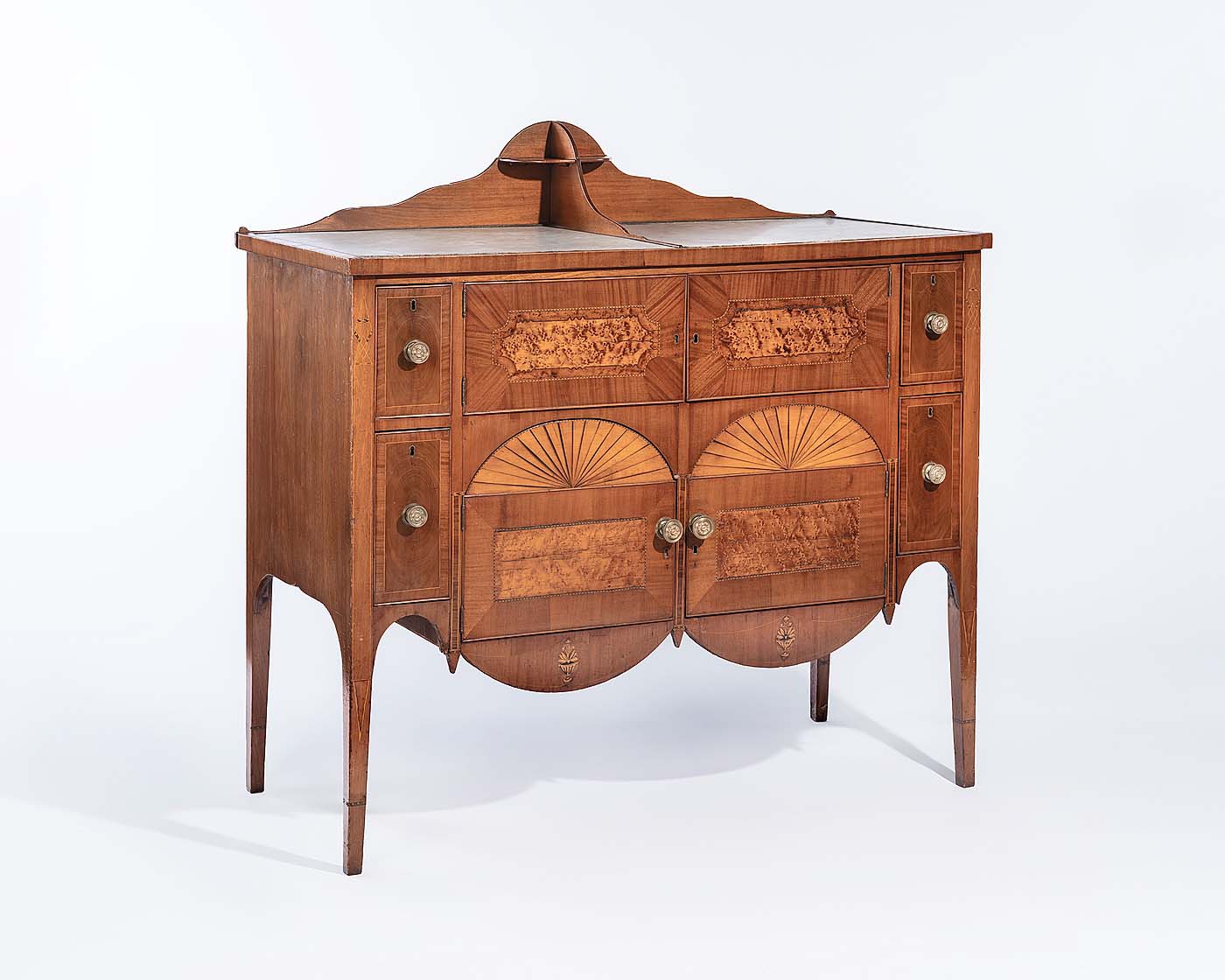
Sideboard, attributed to Abner Toppan, Newburyport, Mass., 1795-1815, mahogany, mahogany veneer, bird’s eye maple, white pine, basswood, marble. Winterthur Museum, bequest of Henry Francis du Pont. 1957.0848.
Lane noted the title of the exhibition was chosen to inspire dialogue around the historically and culturally constructed term, “masterpiece,” which is open to a variety of interpretations, interrogations and expansions.
Antiques and The Arts Weekly asked Lane if it is known how Du Pont himself defined the term, “masterpiece”?
“We can only guess how H. F. du Pont defined ‘masterpiece.’ However, he describes being inspired by the American Wing at the Metropolitan Museum of Art, which opened in 1924. He hired Metropolitan Museum of Art curators, including associate curator Charles Over Cornelius, to advise on architecture and objects for room settings, and, later, curator Joseph Downs to further develop and catalog the collection,” said Lane. “Du Pont was very much in tune with the vision that Metropolitan Museum of Art curators expressed in the period-room displays of the American Wing.”
In preparing the exhibition, Lane was surprised to find how quickly Du Pont decided to collect Americana. “In the fall of 1923, at age 43, he dove head-first into the field and never looked back. I am struck by the speed and confidence with which he acted to build the collection, and how quickly he learned as he developed his connoisseurly skills and refined the collection.”
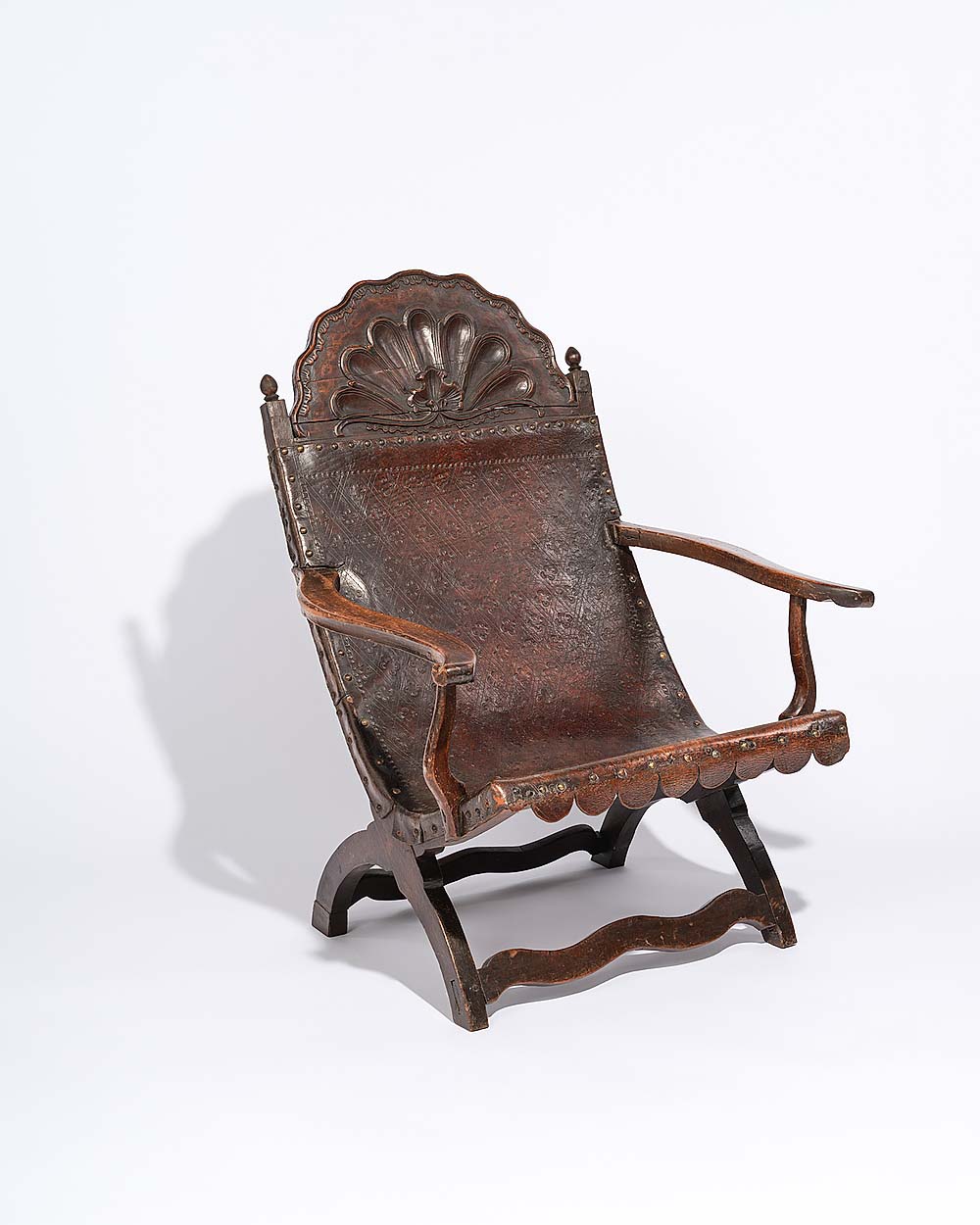
Campeche chair, Campeche, Mexico, 1740-80, mahogany. Winterthur Museum, museum purchase with funds drawn from the Centenary Fund. 2022.0006.
Lane reflected on Cornelius’ 1922 Antiques (now The Magazine Antiques) article “The Museum and the Collector: What Is a ‘Museum Piece?’” as one that Du Pont, known to be an avid reader of the periodical, probably read. Cornelius urged collectors and curators to avoid “the quirky and novel” — the “freak” object “whose chief recommendation is that it is “quaint and curious” — in favor of high-style urban examples that exemplified “the best national art of its time.” Du Pont pursued such objects at the high end of the market that had been tagged as “masterpieces.”
In 1961, the Walpole Society’s Note Book published an essay by Charles F. Montgomery, which outlined 14 points of connoisseurship, a methodology for identifying and authenticating objects; Du Pont’s membership in the Walpole Society likely exposed him to such connoisseurship discussions.
The exhibition is introduced by the Van Pelt high chest, which was made in Philadelphia between 1765 and 1780 and named for the family that owned it during the Nineteenth Century. Du Pont acquired it in 1929, outbidding William Randolph Hearst and paying the then-astronomical and record-setting price of $44,000, when it was offered at American Art Galleries’ auction of the estate collection of legendary collector Howard Reifsnyder.
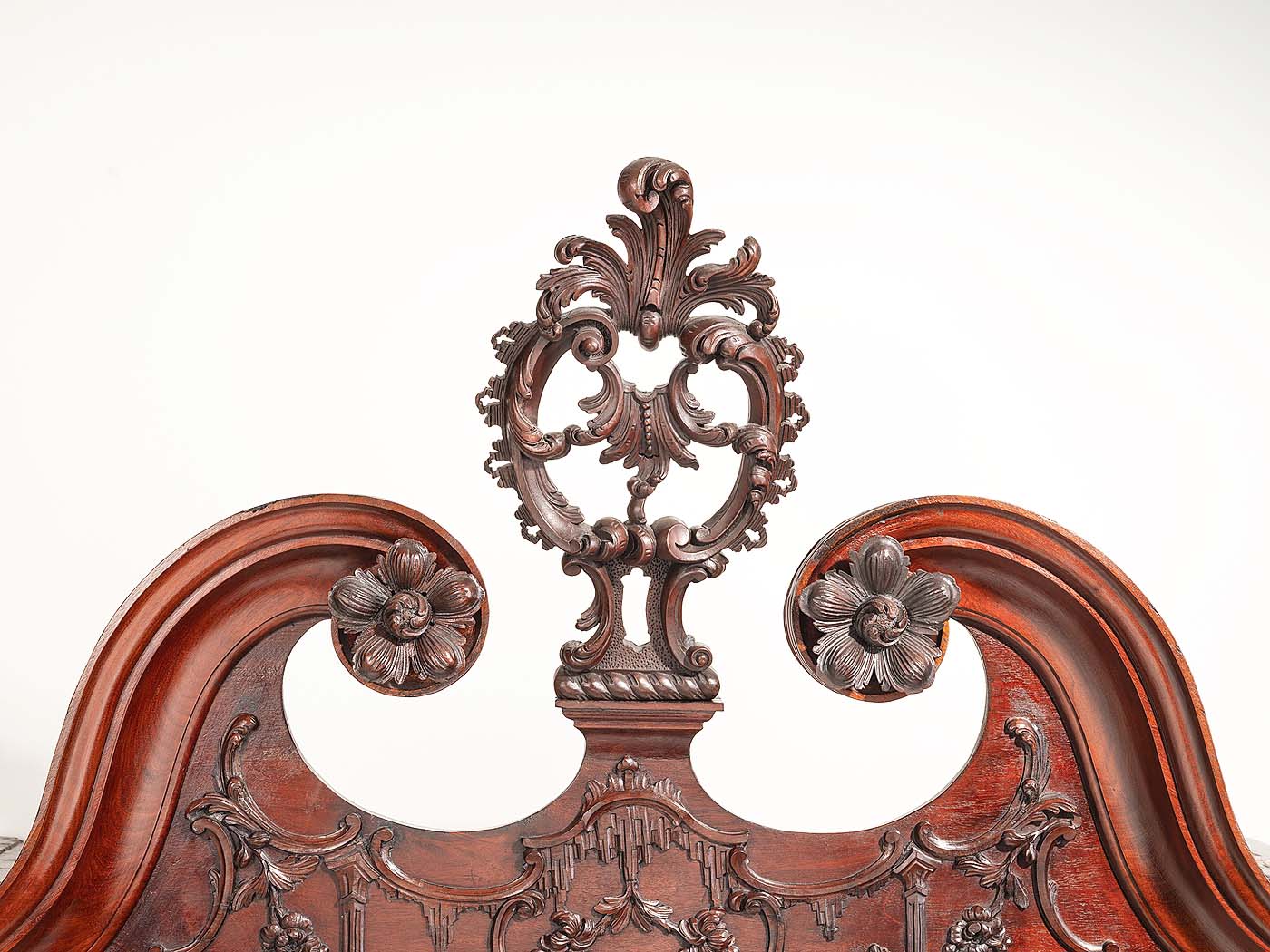
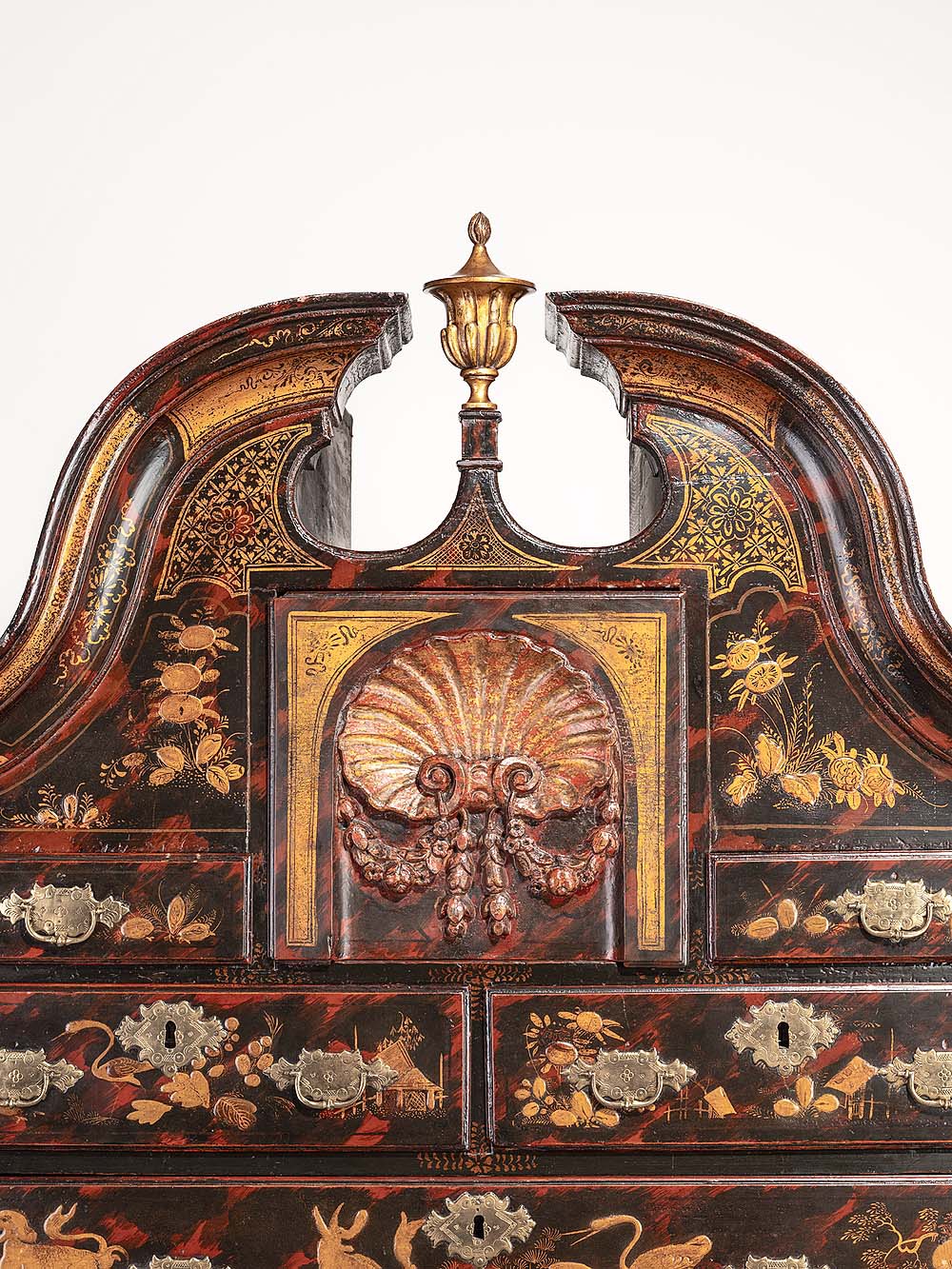
Detail of Van Pelt high chest, Philadelphia, 1765-80, mahogany, tulip poplar, oak, yellow pine, cedar. Winterthur Museum, gift of Henry Francis du Pont. 1958.0592.
As Homer Eaton Keyes, editor of Antiques, noted in his April 1930 editorial “Furniture Items from the Year’s Sales,” the “excellence of untouched condition, superiority of proportions and just application of ably wrought ornamental carving, it must be rated among a very small group of the most perfectly conceived and executed highboys made in pre-Revolutionary Philadelphia.”
Two primary themes divide the exhibition: the first explores the idea of the masterpiece among early Twentieth Century collectors while the second theme surveys more recent interpretations of the term.
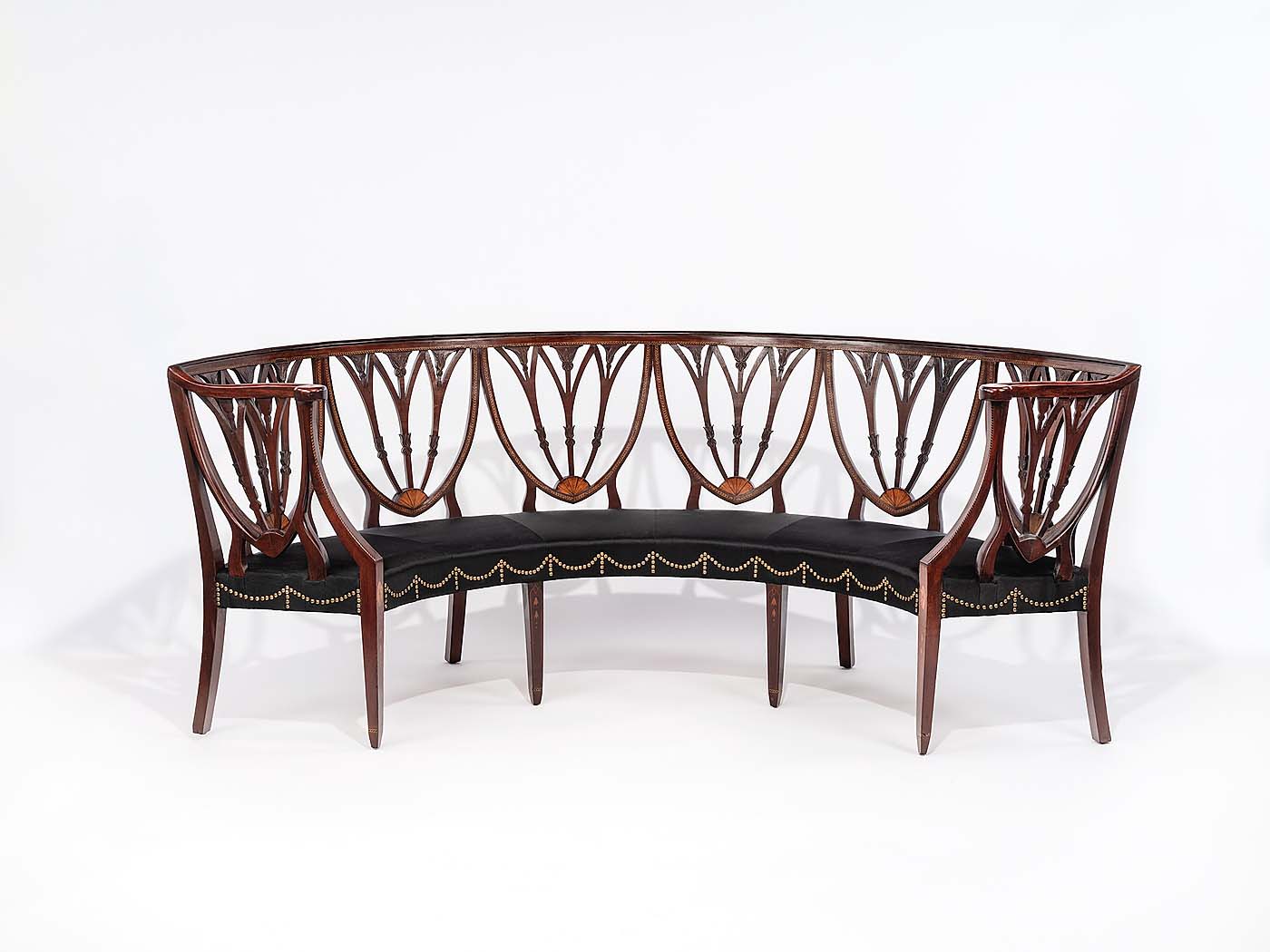
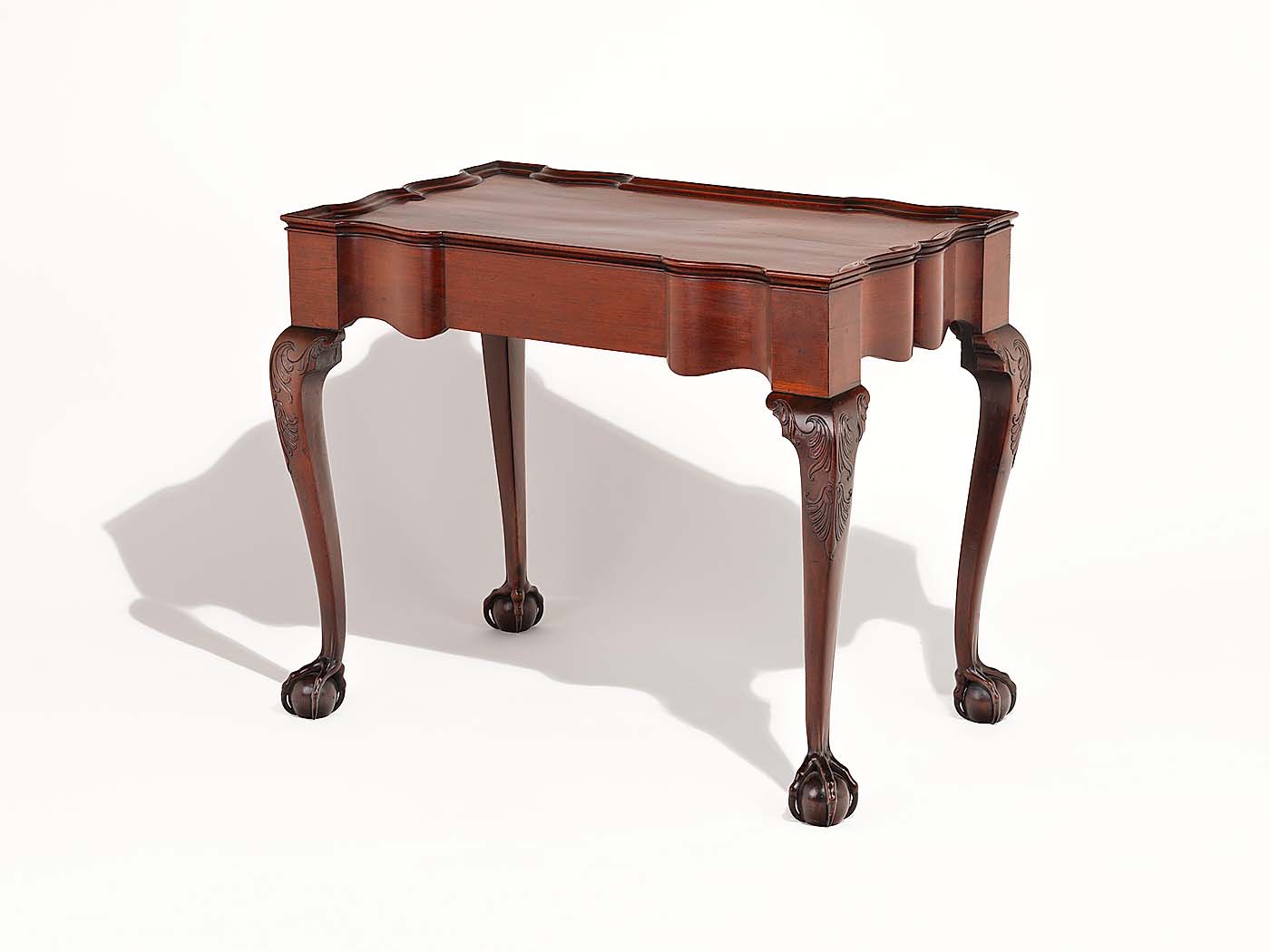
Early auction catalogs, issues of Antiques (which was founded in 1921) and books on collecting, including Albert Sack’s essential 1950 primer, Fine Points of Furniture: Early American — Good, Better, Best, are plumbed for examples of what were considered masterful examples at the time. Here, exhibition visitors will see a tea table made in 1763 by Newport, R.I., cabinetmaker, John Goddard; a settee attributed to Langley Boardman that was made in Portsmouth, N.H., circa 1799-1800; and an armchair attributed to New York City cabinet- and chairmaker Elbert Anderson. A selection of miniature furniture is also included.
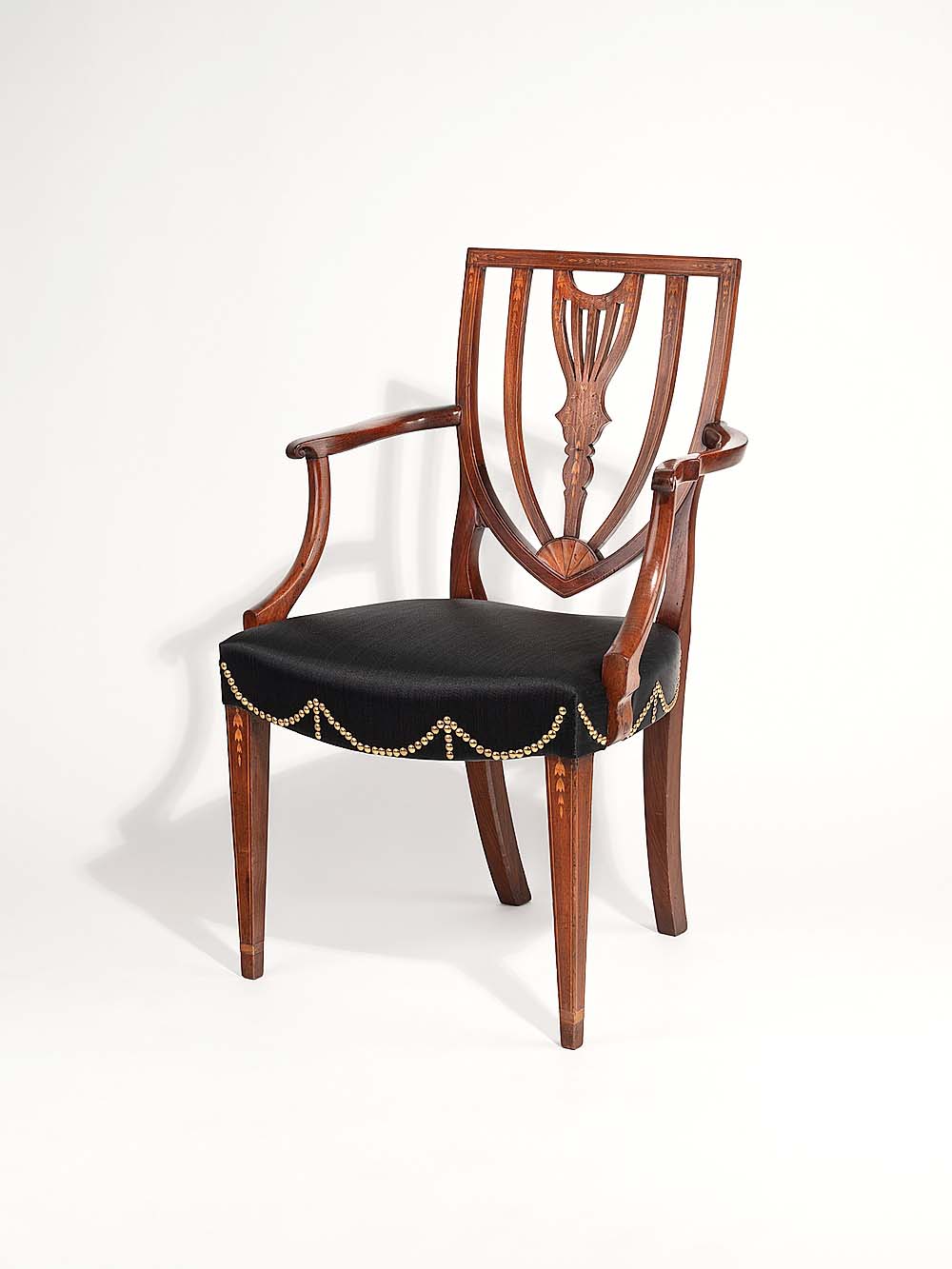
Armchair, attributed to Elbert Anderson, New York City, 1795-1805, mahogany, maple. Winterthur Museum, gift of Mr and Mrs Lammot Copeland, Jr. 2021.0002.001.
The second section explores how the canon of masterpiece has expanded beyond the early Twentieth Century and into the present. It looks at Du Pont’s collecting practices — which Lane characterizes as “capacious” — and identifies pieces Du Pont acquired, as well as those added after his death, “that have since become foci for reappraisal and new appreciation.”
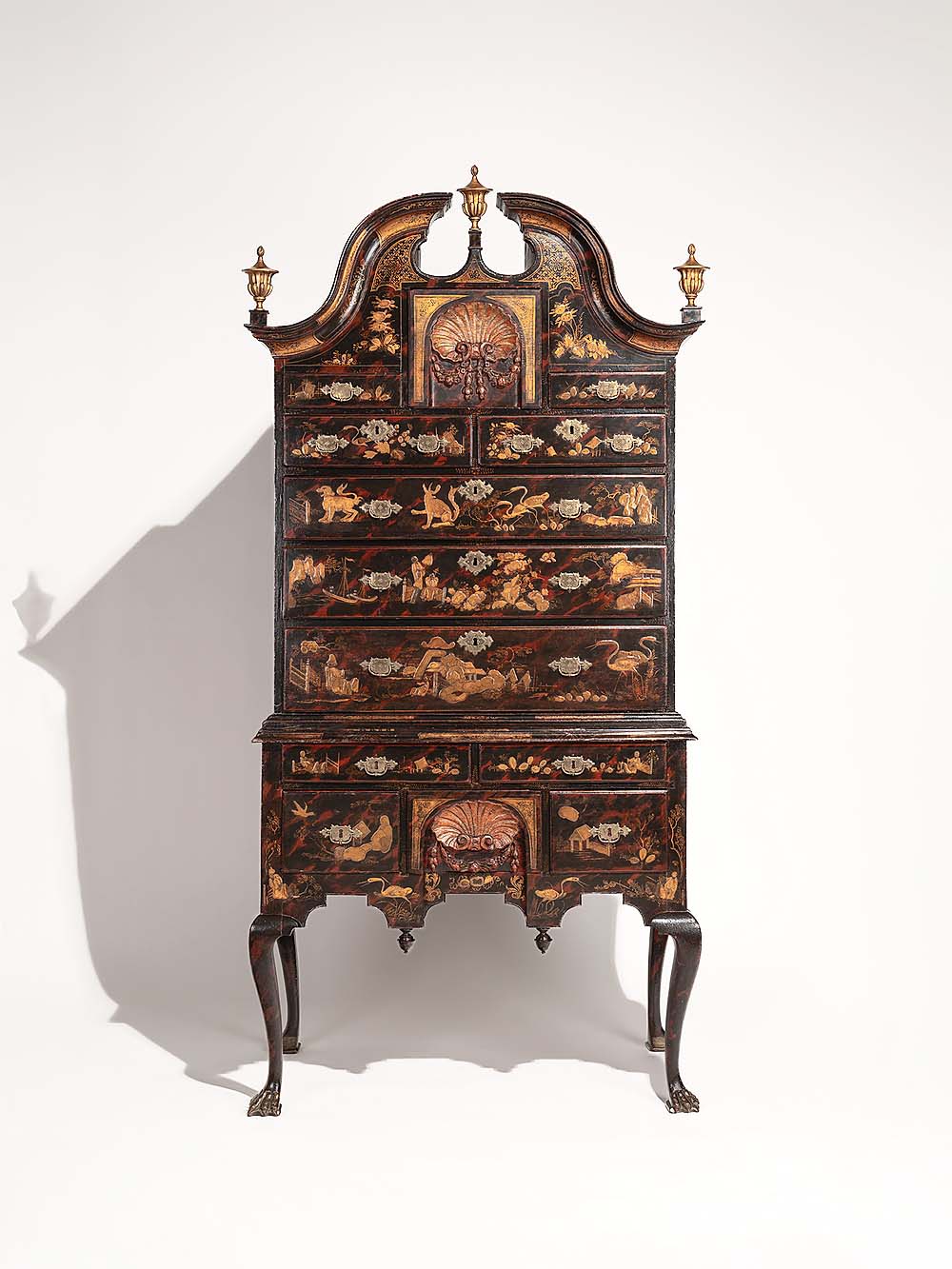
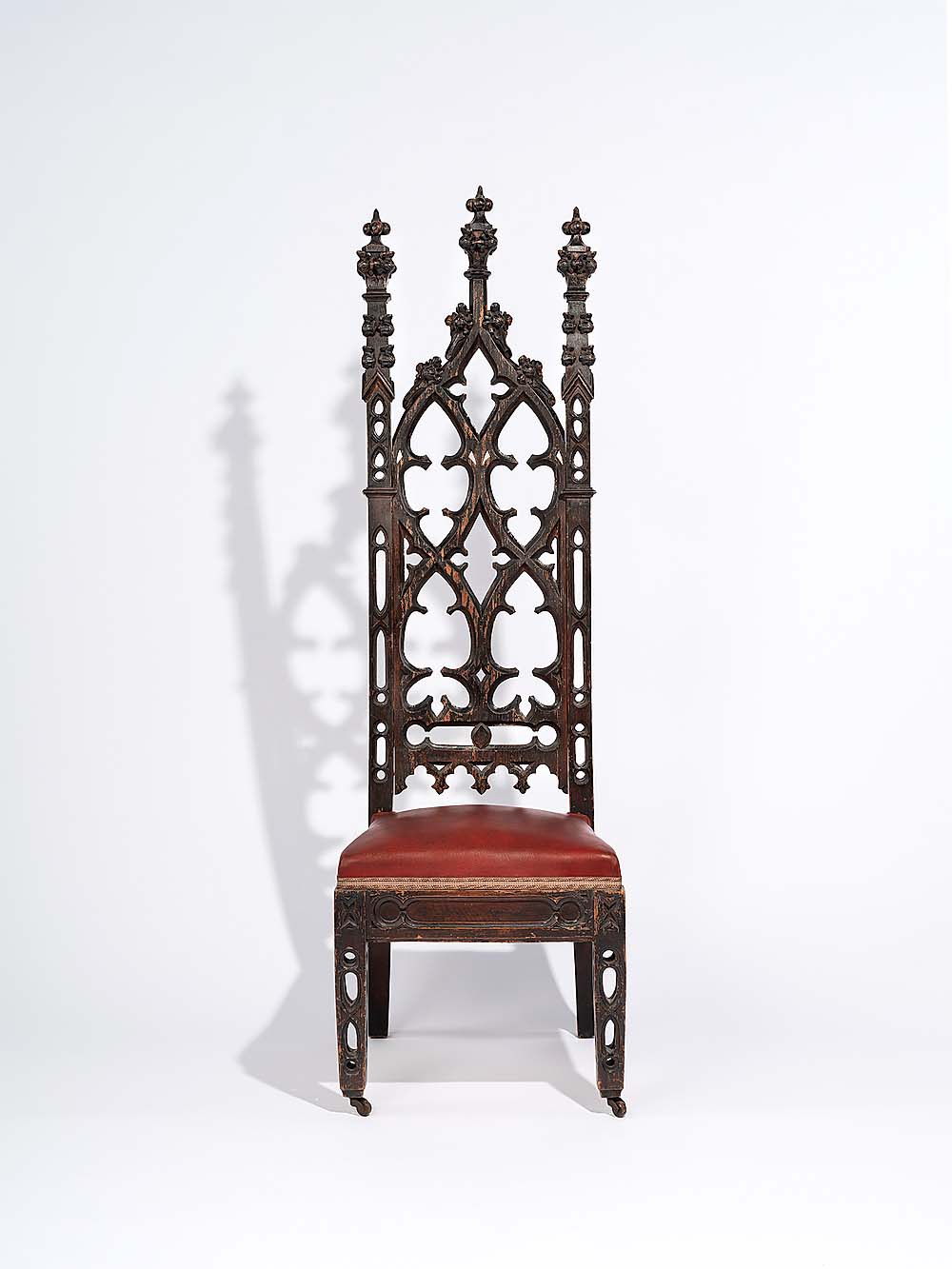
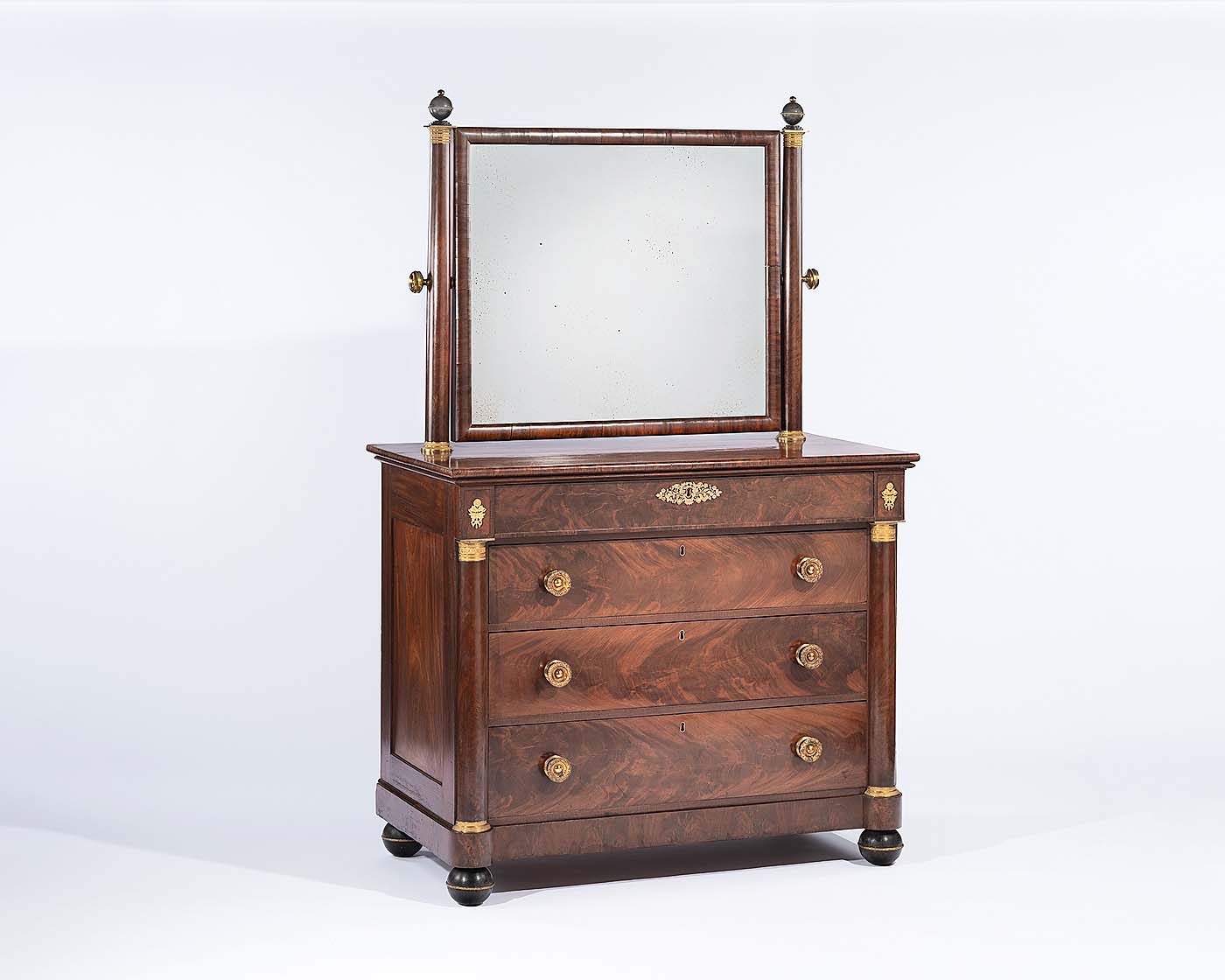
Featured works include a sideboard attributed to Abner Toppan of Newburyport, Mass.; a Japanned high chest made in Boston between 1740 and 1750 by John Pimm; William Houston’s chest of drawers; a marble-topped pier table with dynamic serpentine legs; a Gothic revival side chair made in New York City around 1850; and a dressing bureau made between 1820 and 1825 by Thomas Seymour while he was working for Isaac Vose & Son of Boston.
“Curators, art historians and scholars agree connoisseurship remains critical to scholarship…yet many also view the authentication of art and antiques for the marketplace, and the designation of works as masterpieces, as serving what art historian Alan Wallach calls ‘commodity fetishism,’” Lane continued. “First writing in the 1990s, historian Carlo Ginzburg offered a way forward by calling for connoisseurship that considers ‘the full range of information an object can tell us — interdisciplinarity from within.’ This approach continues to resonate with, and guides, our work at Winterthur.”
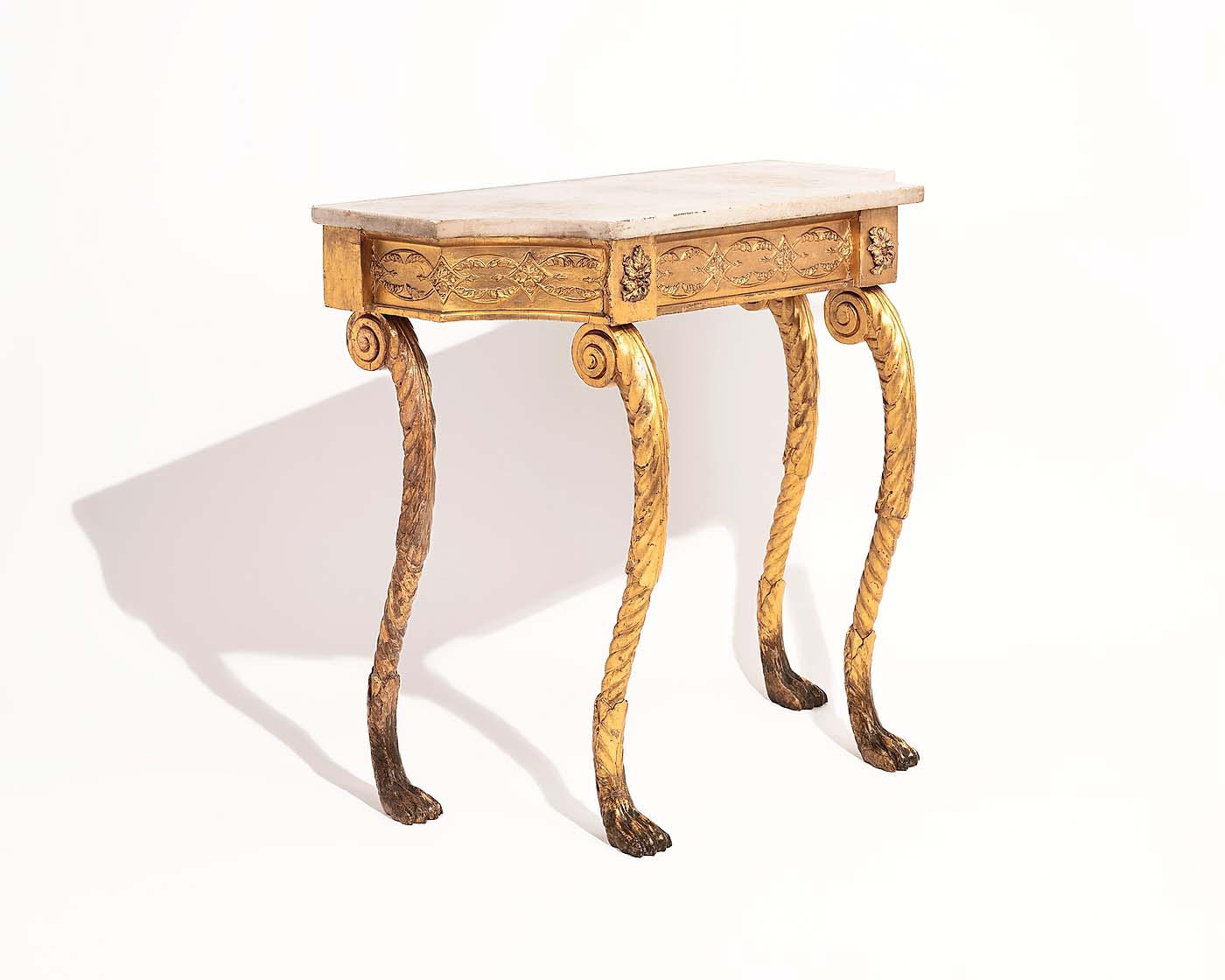
Pier table, Philadelphia, 1815-30, white pine and marble. Winterthur Museum, museum purchase with funds provided by the Special Fund for Collection Objects. 1991.0063.
The museum has gradually expanded its collection strategy to broaden how it interprets the term “masterpiece.”
“In 2018, the board of trustees approved revisions to the collecting policy that removed a cut-off date of 1840 and expanded the parameters to include works made through the Nineteenth and Twentieth Centuries to the present,” said Lane. “We are also working to develop stronger regional representation (furniture made outside the East Coast, i.e., the Midwest, Southern Piedmont, Mississippi Valley and beyond) and to include forms not previously recognized as collection-worthy (such as punched-tin pie safes, sugar desks, so-called Jackson presses).”
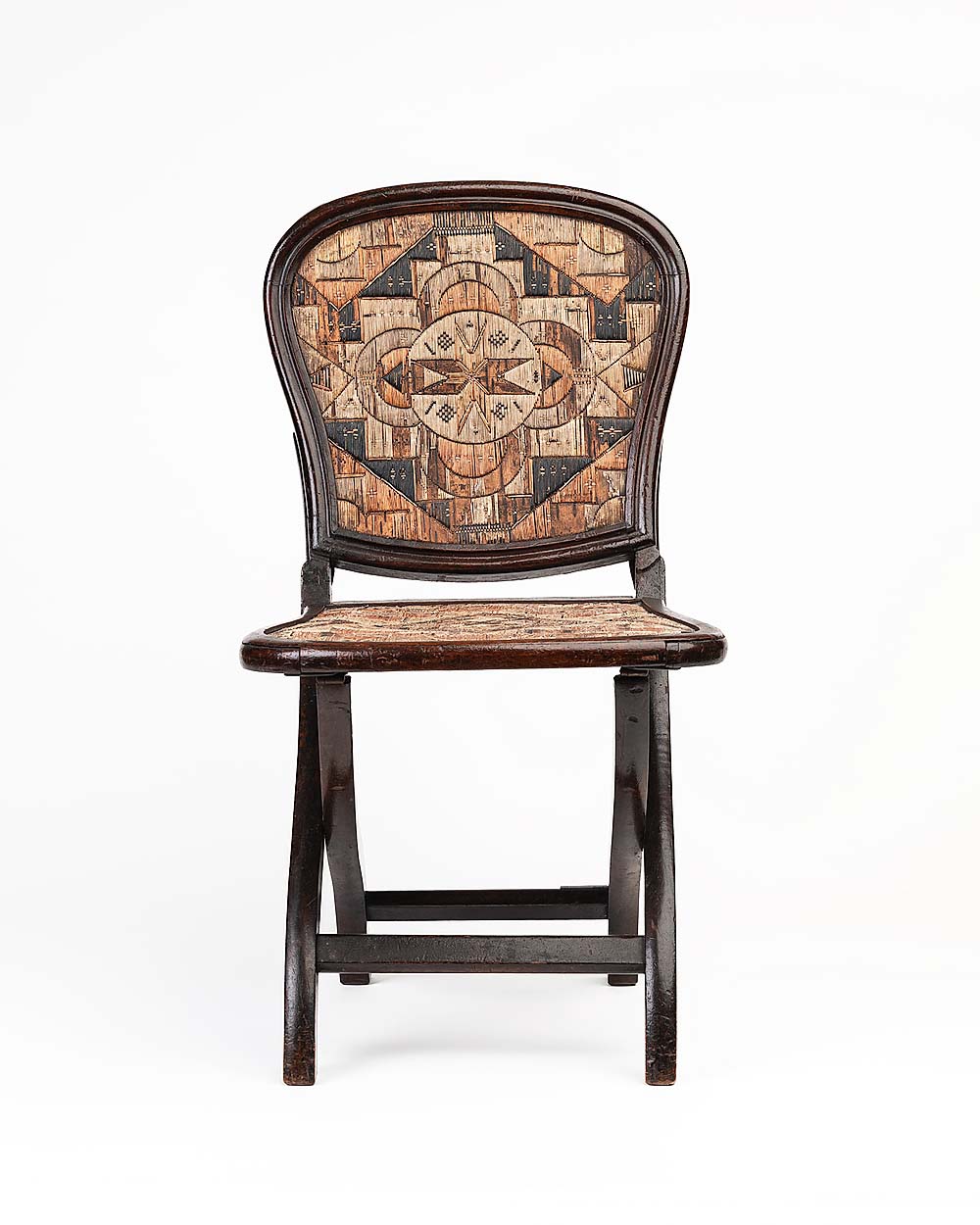
A Campeche chair, made in Campeche, Mexico, between 1740 and 1780, and a side chair made in the Canadian Eastern Maritimes by an unidentified Mi’kmaq artist during the second half of the Nineteenth Century are both included in “Challenging Masterpieces,” as evidence of this modified working philosophy and revised collections policy.
What would Lane like to see visitors leave the exhibition with? “We are in a new time, one in which we want people to practice sustainability and to understand and appreciate what has been inherited from the past — be it a grandparent’s single dresser, side table or an entire museum collection chronicling diverse styles and aesthetics,” said Lane. “I hope the exhibition deepens visitors’ enjoyment of, and appreciation for, antique furniture by seeing it in a new way. I hope the exhibition expands their vision of creative possibilities, and empowers them to think about what ‘masterpiece’ means in their own work and lives.”
Winterthur Museum, Garden & Library is at 5105 Kennett Pike. For information, www.winterthur.org or 800-448-3883.